
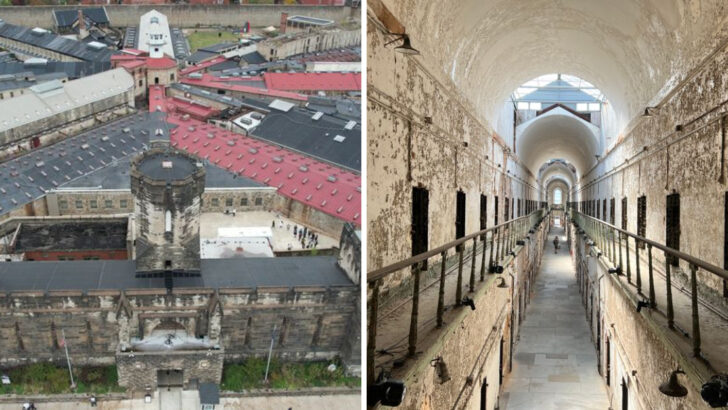
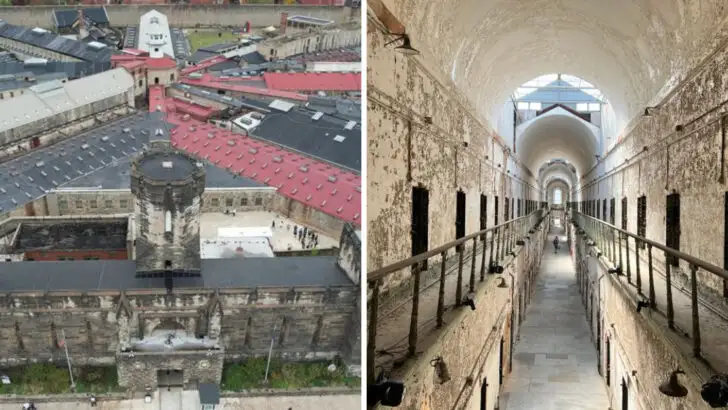
This is not just a prison—it’s a stone-built warning carved into Philadelphia’s streets.
Eastern State Penitentiary rises like a medieval fortress, complete with battlements, looming walls, and a gate that feels ready to repel an invading army rather than admit prisoners.
Opened in 1829, it shocked the world with a radical idea: total isolation as a path to repentance. Inmates lived alone in vaulted cells beneath skylights called the “Eye of God,” watched by silence and stone.
Its hub-and-spoke design turned architecture into authority, allowing guards to survey cellblocks from a single point, like sentries in a castle keep.
Abandoned for decades, Eastern State now stands as a haunting ruin—part history, part myth, and proof that some places never loosen their grip on the imagination.
A Prison That Looks Like a Fortress
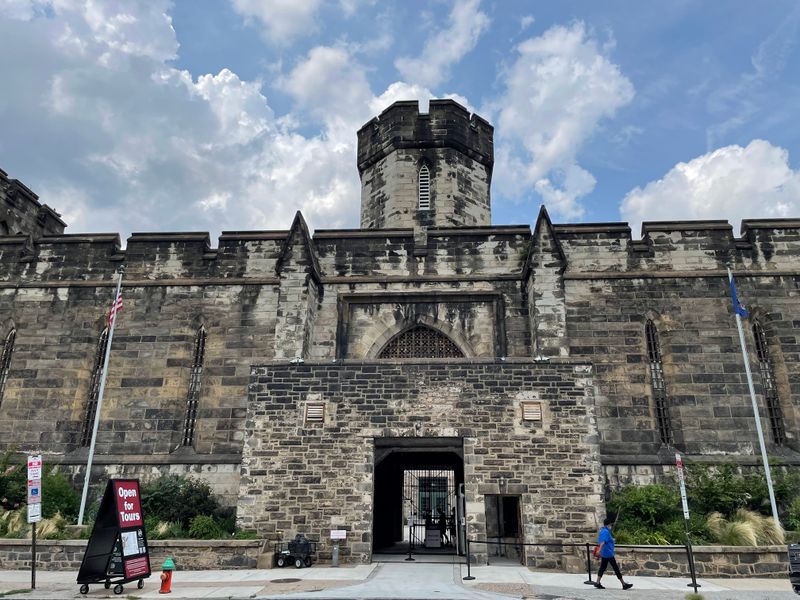
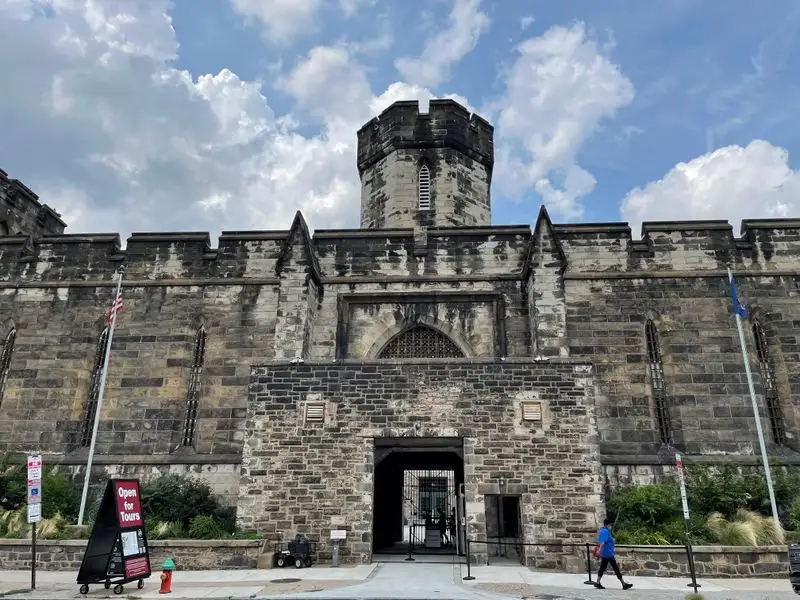
Approach Eastern State Penitentiary and the first impression lands hard. The gatehouse rises like a keep, flanked by crenelations and squat towers that suggest archers might still be pacing the parapets.
Thick, battered stone seems to remember every winter and every stare from curious passersby.
It feels less like a correctional facility and more like a fortified border between two worlds. You sense power concentrated in symmetry, a deliberate intimidation written into every block.
The walls do not whisper, they declare permanence and control at full volume.
Philadelphia’s street grid presses up against this medieval mood, creating a fascinating tension. Stand here a moment and you can imagine drawbridges and heraldic banners, even though traffic hums just beyond.
The fortress look was no accident, and it still works on you today.
Built to Reform, Not Just Punish
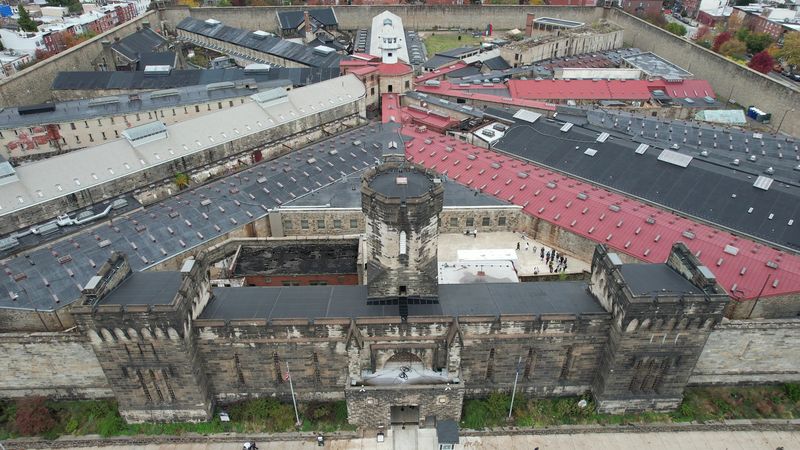
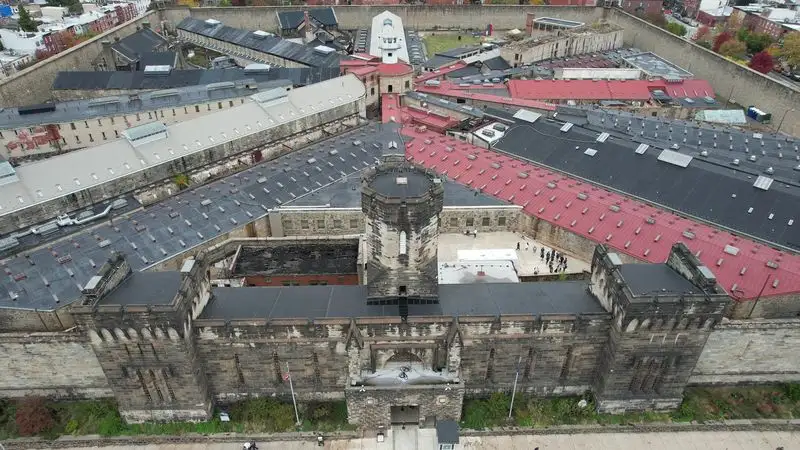
In the 1820s, reformers believed isolation could turn a life around. They imagined solitude as a clean slate where conscience might speak louder than chaos.
Eastern State became their laboratory, staking its mission on reflection and moral repair instead of simple retribution.
You can still feel that ambition echoing through the cellblocks. Each individual space was designed to sever corrupting ties, to shut out noise so repentance could take root.
Officials promised humane conditions, steady work, and spiritual guidance to cultivate inward change.
This was bold and controversial, a social experiment wearing stone armor. The goal was not breaking bodies but reshaping minds, a promise that now reads as both hopeful and chilling.
Walk the corridors and you are walking a thesis about human nature, written in masonry.
Castle-Inspired Architecture With a Purpose
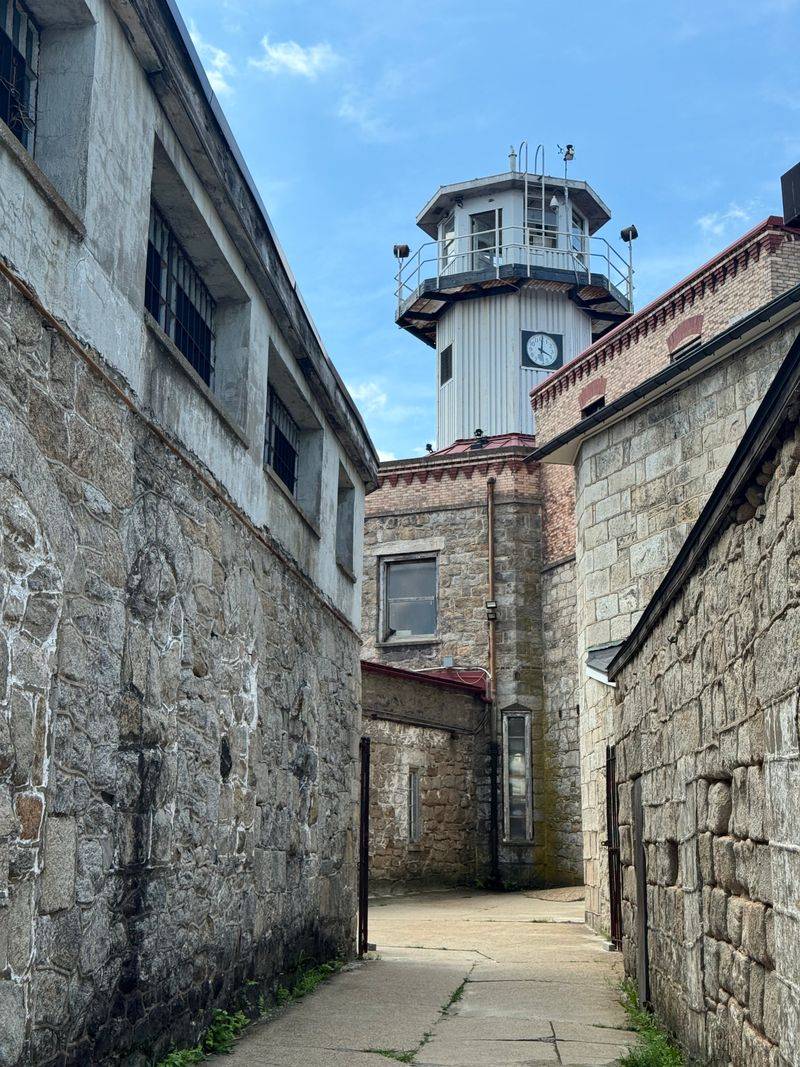
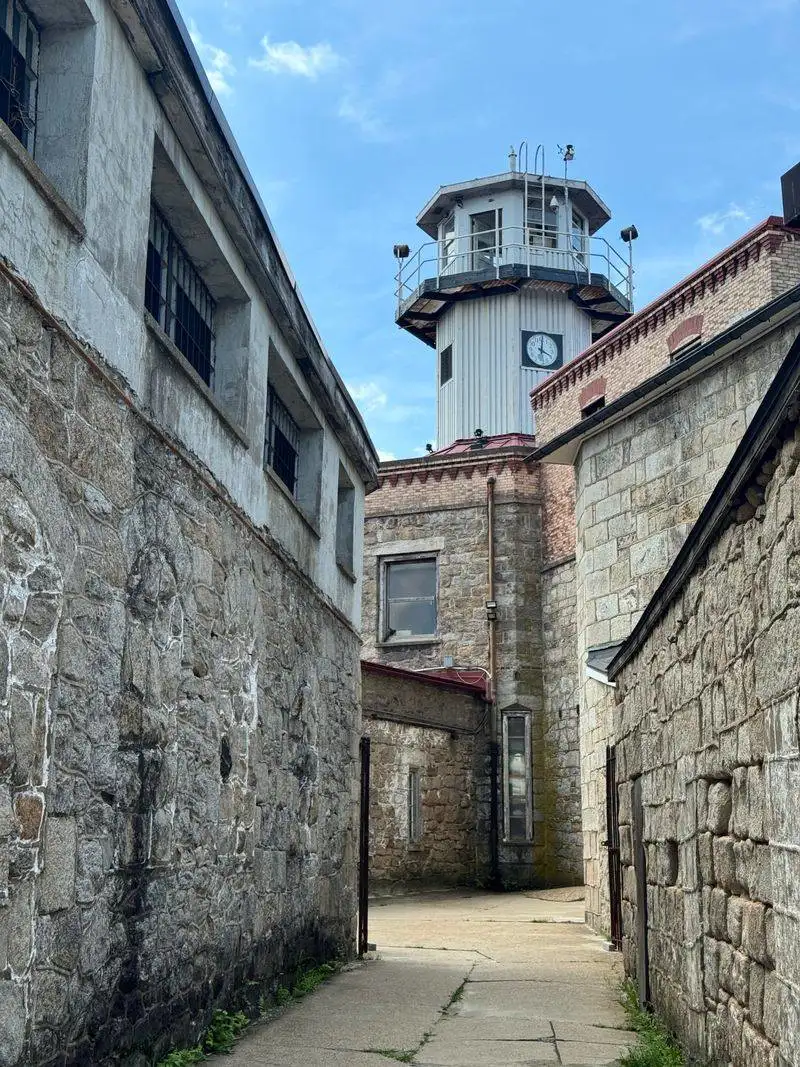
The Gothic Revival vocabulary here looks theatrical, but it served a message. Narrow openings and muscular walls made escape feel impossible, while projecting the moral authority of the state.
From the street, it broadcasts a clear signal: order rules within.
Designers chose fortress cues to produce a psychological effect on citizens and inmates alike. The composition is symmetrical, stern, and carefully choreographed so your eye reads stability before nuance.
Even the gatehouse functions as a stage, setting the tone for what lies beyond.
You notice the details only after the massing settles in your bones. Crenelations line the skyline like a crown, small windows blink like arrow slits, and stone courses march with military regularity.
Beauty and intimidation share the same vocabulary, and you feel both at once.
The Revolutionary Radial Cellblock Design
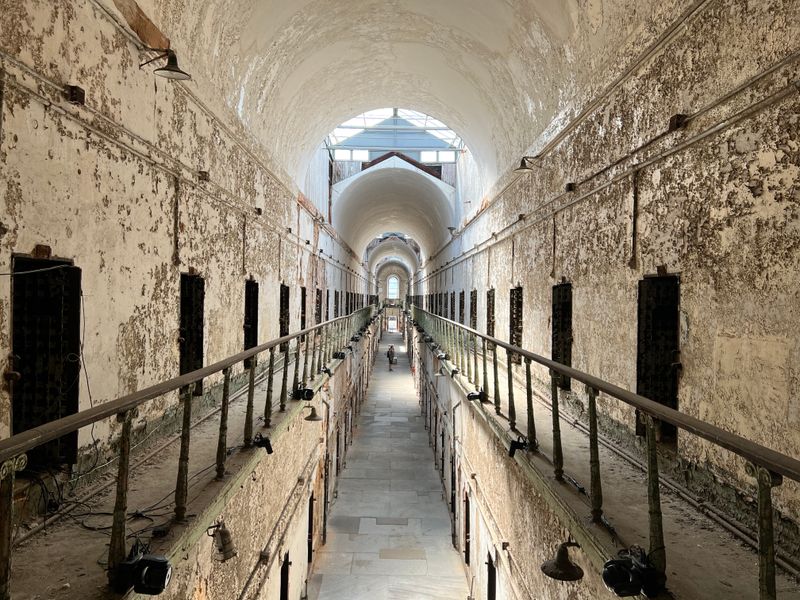
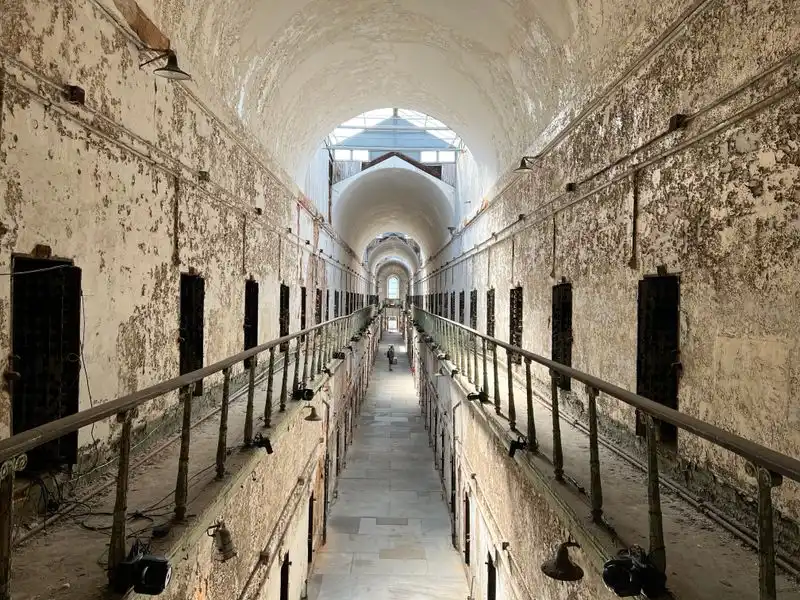
Step into the rotunda and the whole plan reveals itself like a wheel. Cellblocks radiate outward in long spokes, each corridor aligned so a single guard could survey multiple lines at once.
Efficiency becomes a geometry lesson you can literally walk.
This design transformed surveillance into architecture. Instead of roaming endlessly, staff stood strategically and watched everything unfold down the vanishing-point corridors.
The building itself behaved like a tool, extending human sight and authority.
As you turn slowly, each spoke frames a different mood: light, dust, echoes. The symmetry feels almost hypnotic, pulling you toward each corridor’s horizon.
It is impressive and chilling, a reminder that the plan was built to see you even before you see it.
Solitary Confinement as a Humane Experiment
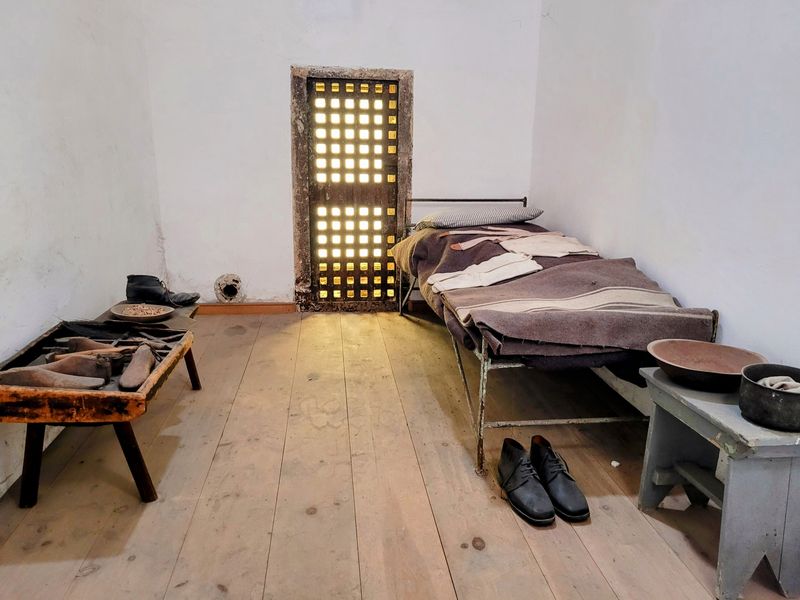
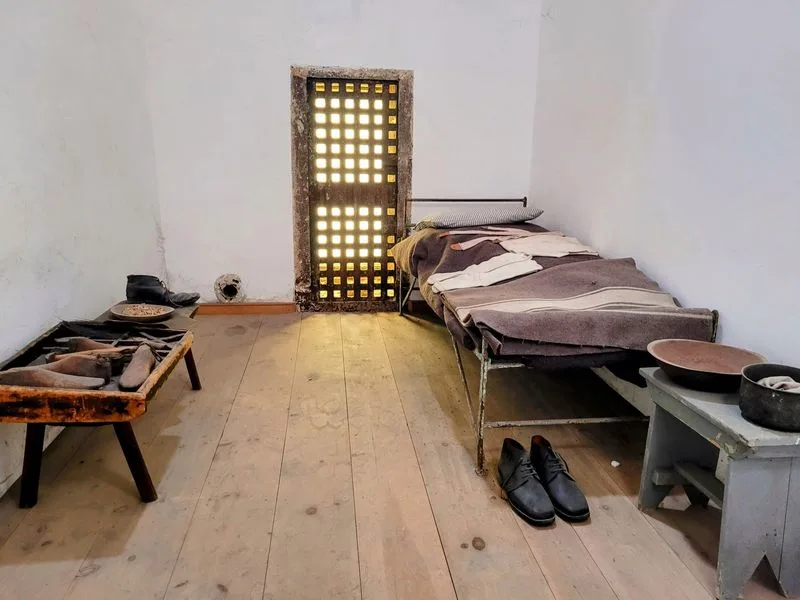
Each inmate lived alone, working, praying, and eating within a single small room. A skylight pierced the ceiling, nicknamed the Eye of God, casting a beam that suggested watchfulness and grace.
Privacy was enforced to the point of invisibility.
Reformers praised this as humane, a controlled silence where conscience could speak. Over time, the silence pressed too hard.
Stories of anxiety, depression, and unraveling minds turned that supposed mercy into a documented harm.
When you stand under the skylight, the light feels thicker than air. You want to call it hopeful, yet the isolation is impossible to ignore.
The idea was noble on paper, but the human cost hangs in the dust motes drifting through the beam.
Life Behind the Stone Walls
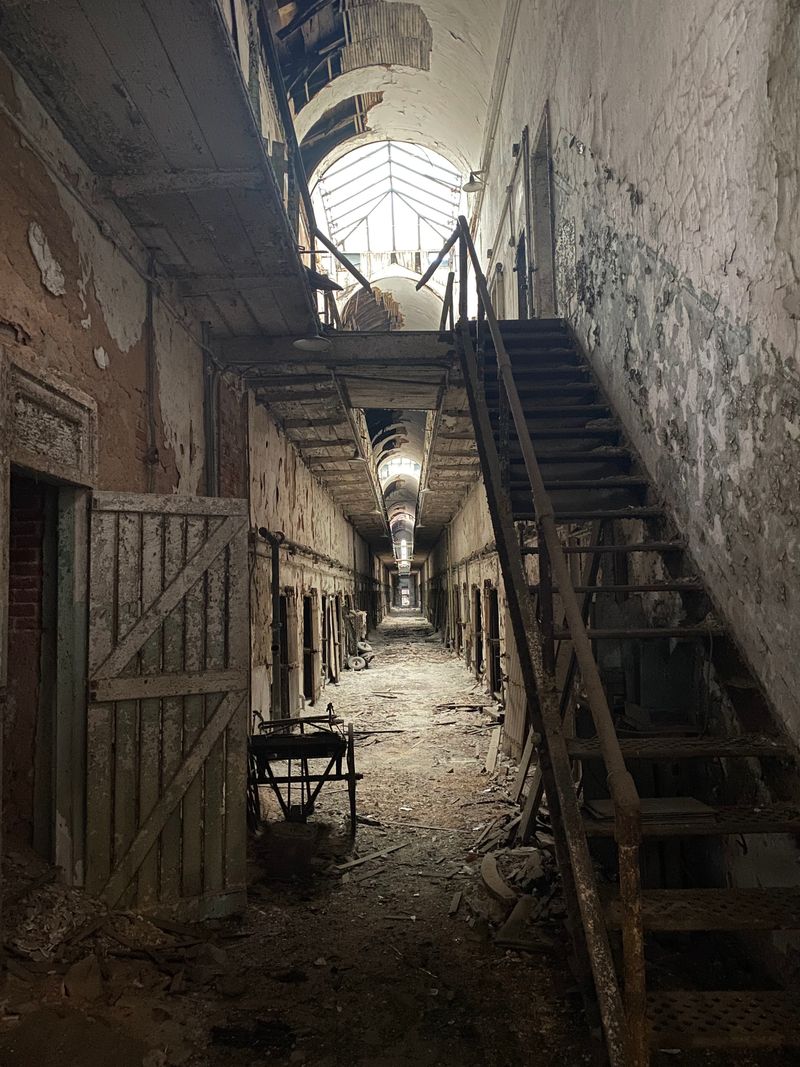
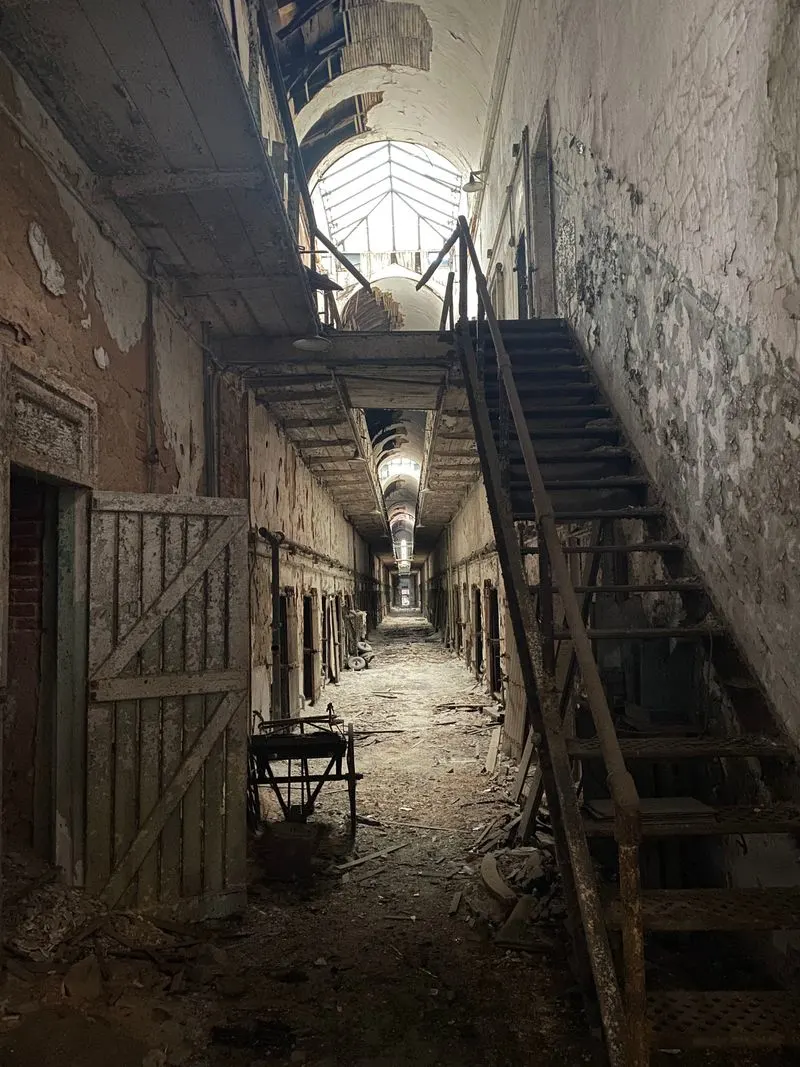
Daily life unfolded under strict rules that erased the collective. Silence governed movement, and hoods hid faces so inmates would not recognize one another.
Work arrived in small tasks, measured and supervised like a clock refusing to skip a second.
Architecture did more than house routines. It choreographed them.
Narrow corridors compressed footsteps, heavy doors set the rhythm, and the rotunda’s sightlines directed every decision.
You can feel that choreography in your body as you walk. The building nudges you into line, suggesting where to pause and where to submit.
It is a lesson in how design shapes behavior, and how a wall can be both boundary and instrument.
Notorious Inmates and Infamous Stories
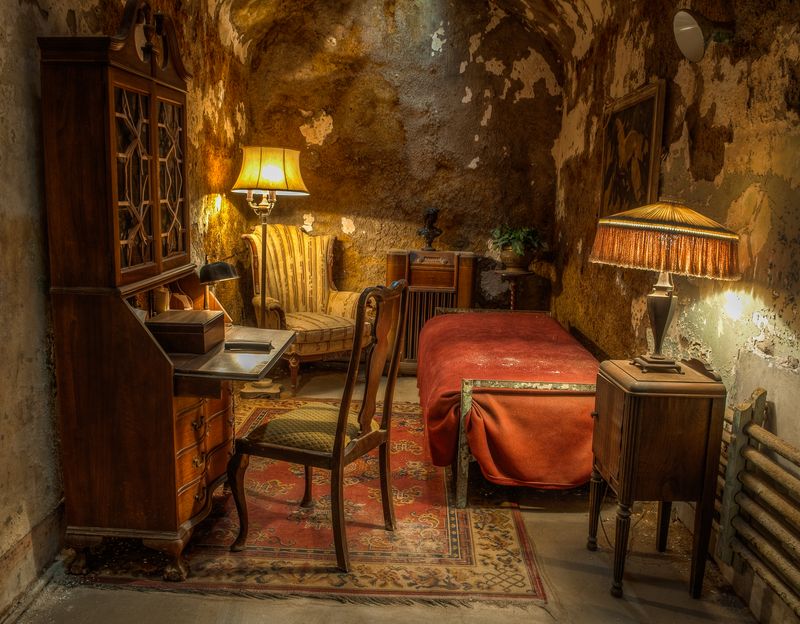
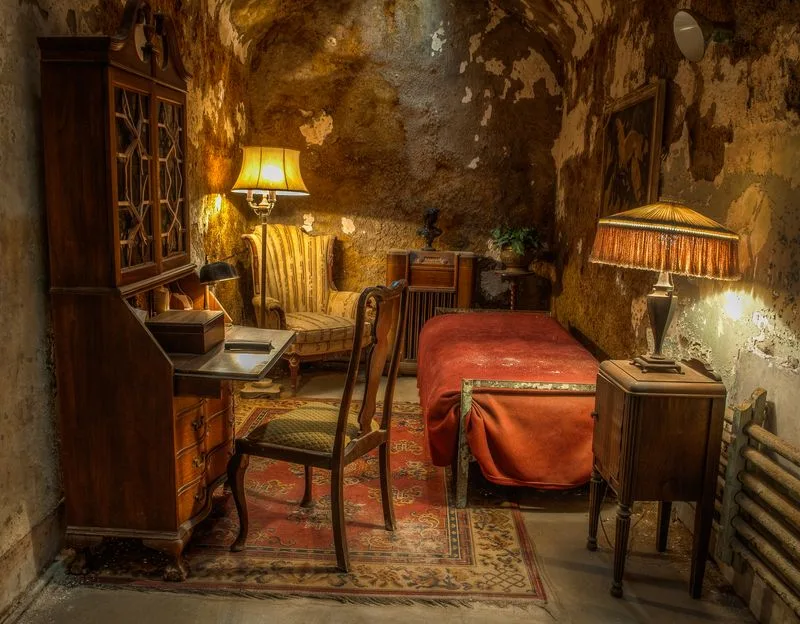
Names echo here, and none louder than Al Capone. His cell, surprisingly plush, displayed rugs, a lamp, and framed art that softened the stone.
The contrast bites: a notorious figure nestled in relative comfort inside a fortress bent on reform.
Stories cling to the corridors. Escape attempts, contraband radios, and whispered alliances threaded through the strict regime.
You start to realize policy is one thing and practice another, especially when power and celebrity enter the scene.
Peer into Capone’s room and you feel the friction between image and reality. The prison preached equal discipline while making room for spectacle.
That tension makes the legends memorable, and the walls seem to hold a smirk along with their secrets.
Abandonment, Decay, and Preservation
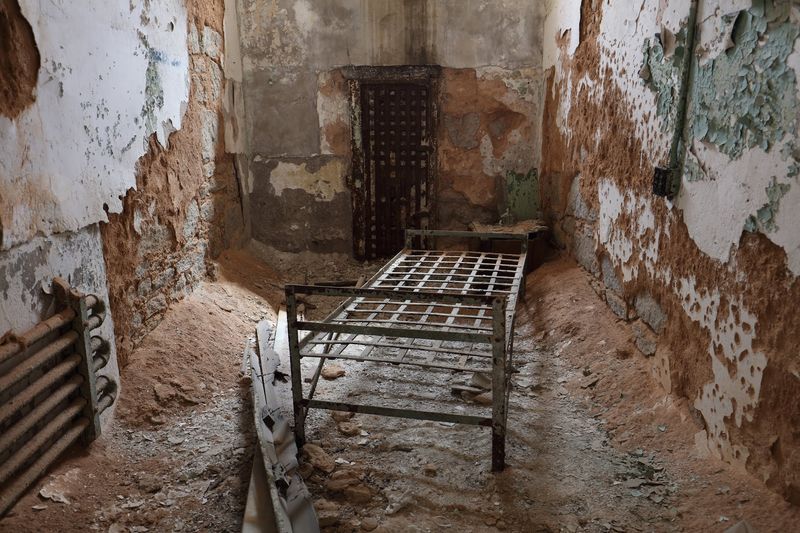
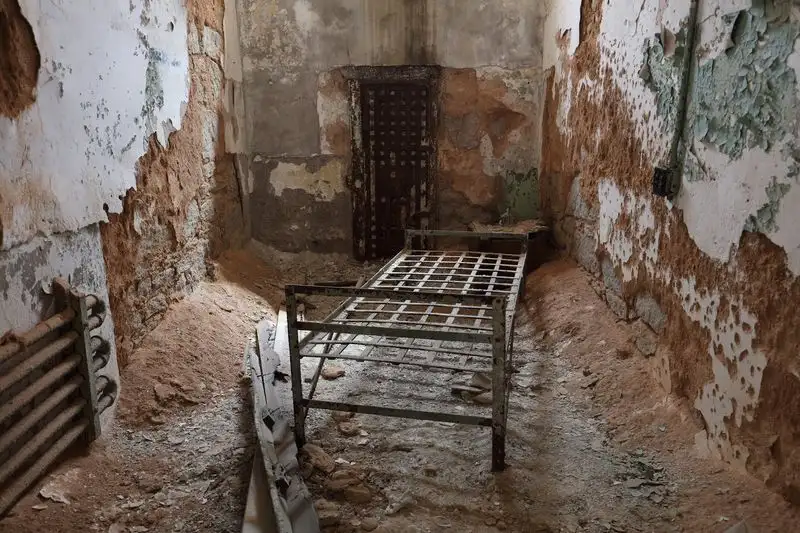
After closure in 1971, silence returned, but this time nature answered. Vines probed cracks, water mapped the ceilings, and daylight carved ragged paths where roofs gave way.
The ruin became beautiful in a dangerous, uninvited way.
Preservationists arrived with hard hats and patience. Stabilizing a ruin is a delicate art, keeping the poetry of decay without letting it collapse.
The goal was honest storytelling, not a shiny restoration that erases hard truths.
Walk the stabilized cellblocks and you read time in layers. Rust, moss, and scaffolds share the same frame, each marking a chapter.
The building survives because people chose to protect its scars, and those scars do the talking.
A Castle of Ghosts and Cultural Influence
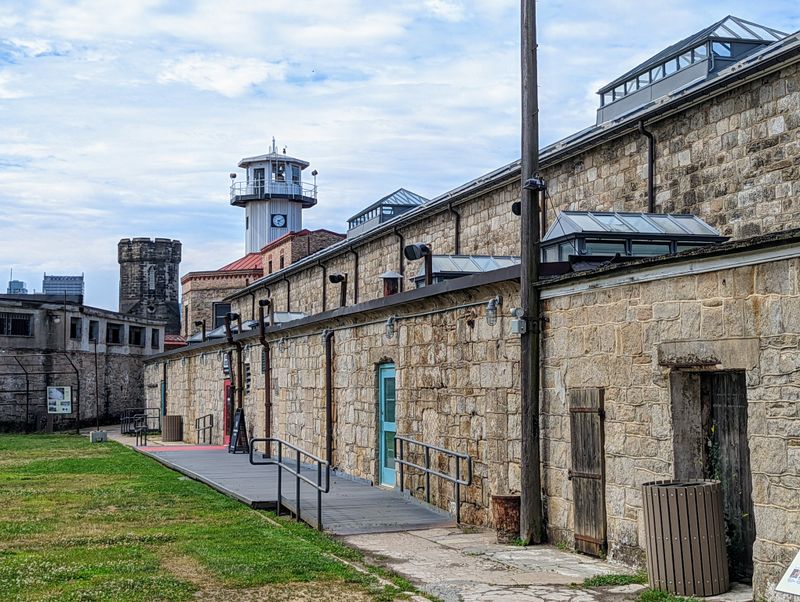
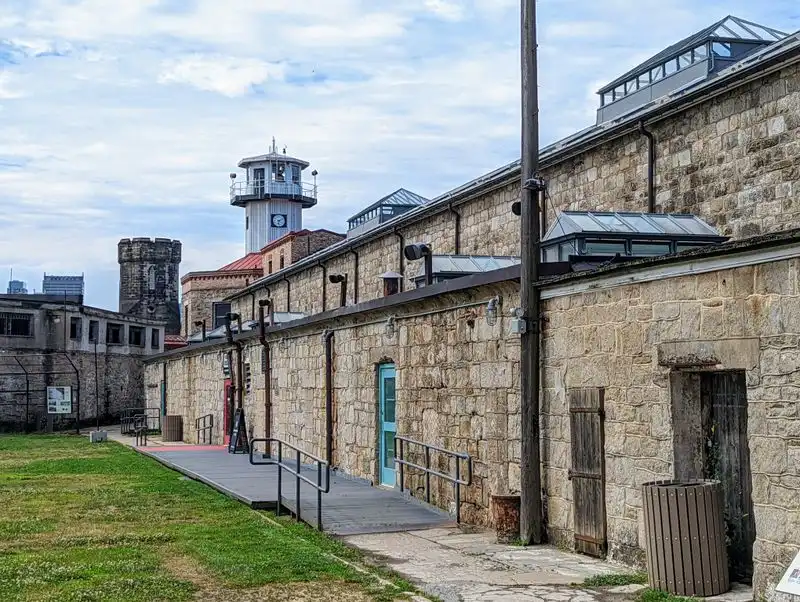
Ghost tours lean into the night stories, and the setting delivers. Long corridors hold shadows like water, and a stray breeze can sound like a whisper.
Whether or not you believe, the atmosphere encourages your senses to reach.
Beyond hauntings, the prison’s influence traveled widely. Radial plans and separate systems appeared from Europe to South America, each adapting the idea to local needs.
Eastern State became both blueprint and cautionary tale.
Stand under the towers after dark and you feel the dual legacy. It haunts culture as much as it shaped concrete policy.
The castle look amplified the myth, and the myth keeps the place alive in the public imagination.
Visiting Eastern State Today
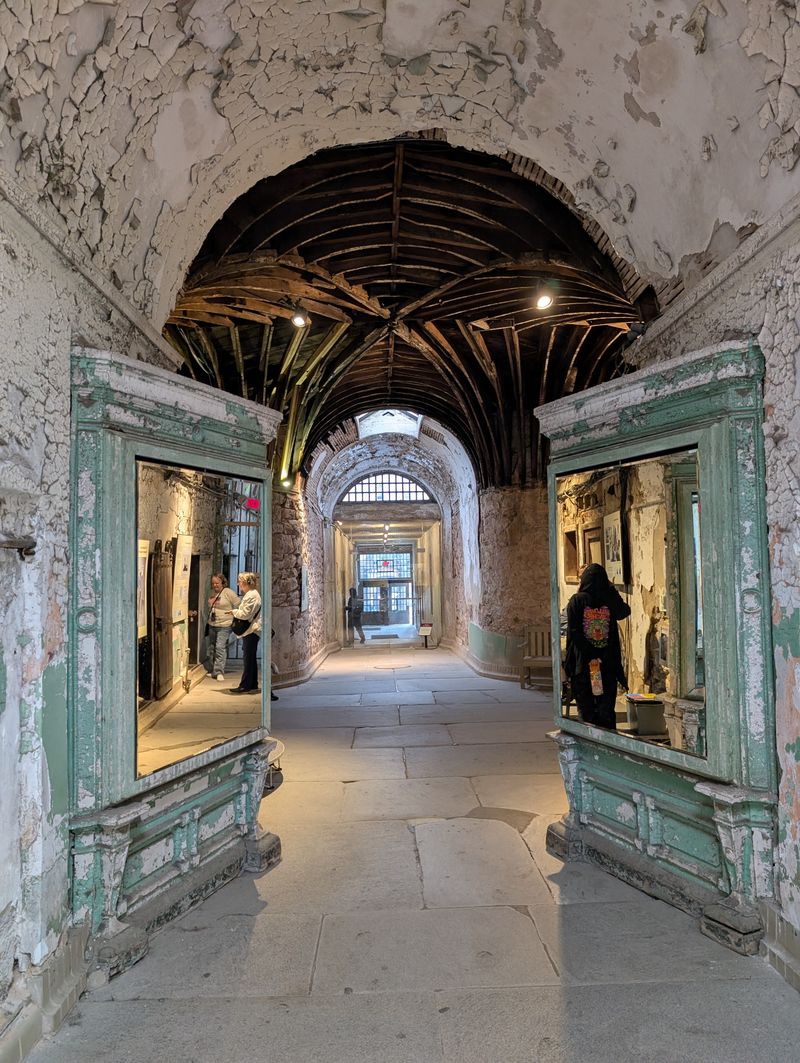
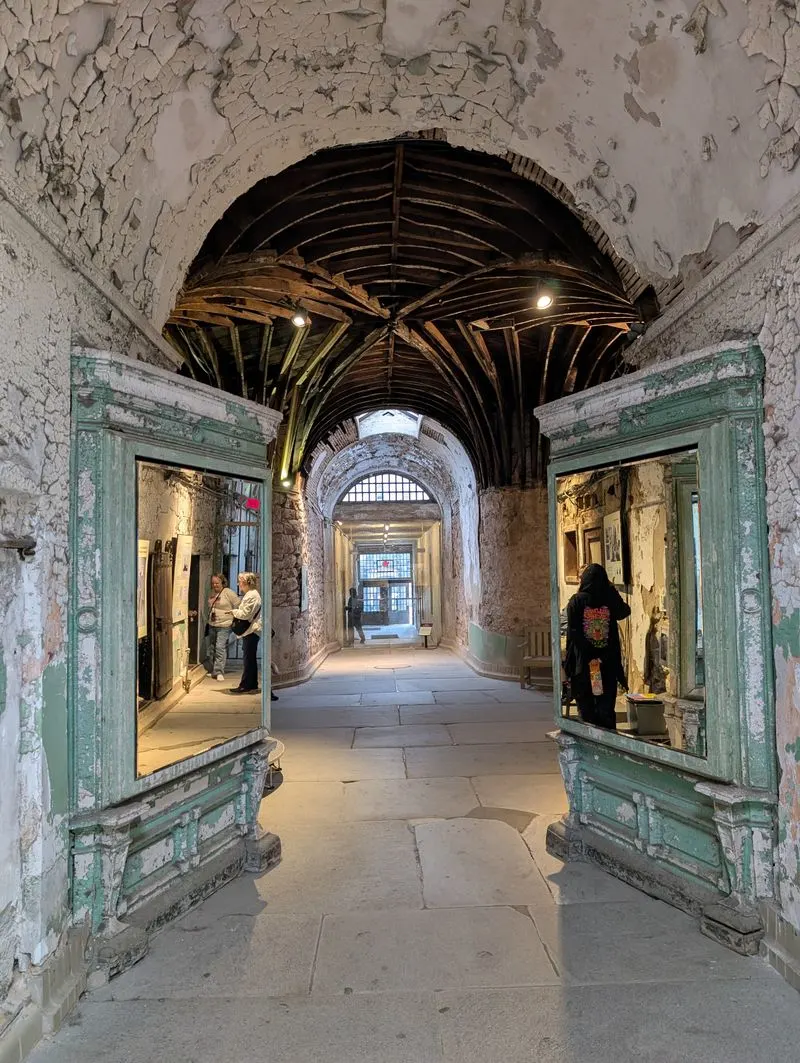
Today you can wander cellblocks at your own pace, guided by an audio tour that lets the building speak. Crumbling plaster and shafts of light frame every step.
Exhibits explain policy, people, and the uneasy balance between safety and humanity.
Peer into cells frozen mid-story, then step into the rotunda to feel the design click into place. Seasonal programs and special installations add fresh layers each year.
You walk away with dust on your shoes and history under your skin.
Bring curiosity and comfortable shoes. The address is 2027 Fairmount Avenue, Philadelphia, PA 19130, and the gatehouse is impossible to miss.
Give yourself time to linger, because the details arrive slowly and stay long after.
Why It Still Feels Like a Castle
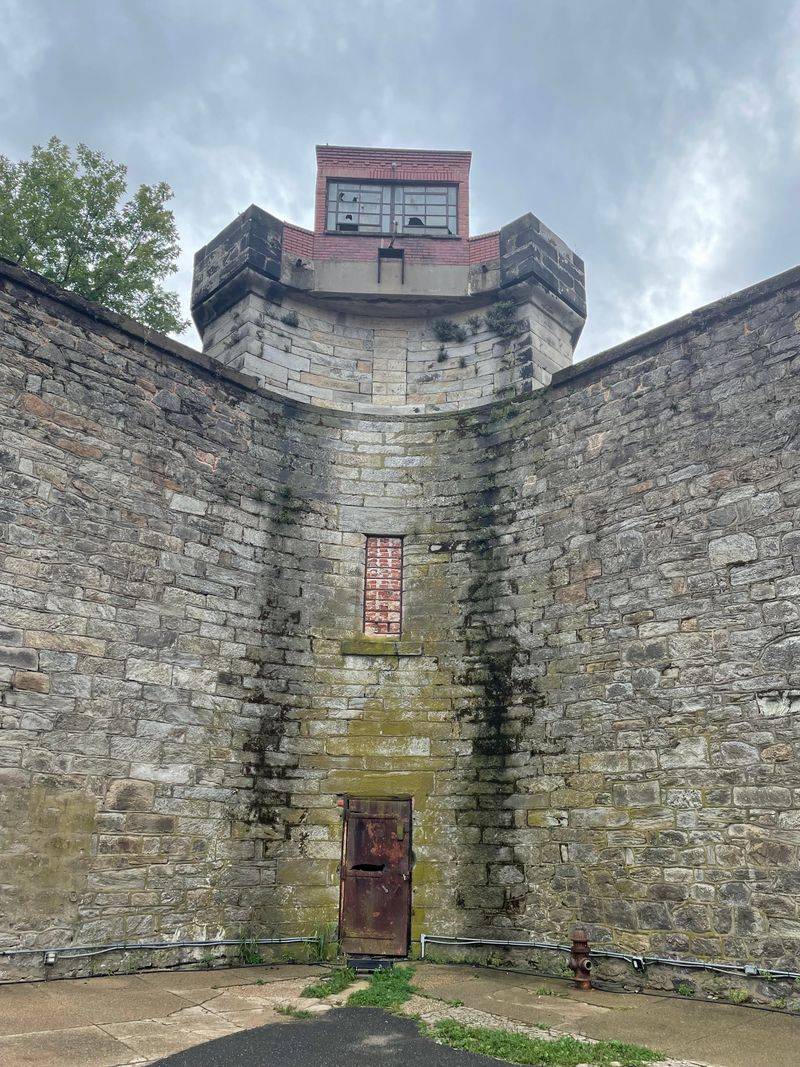
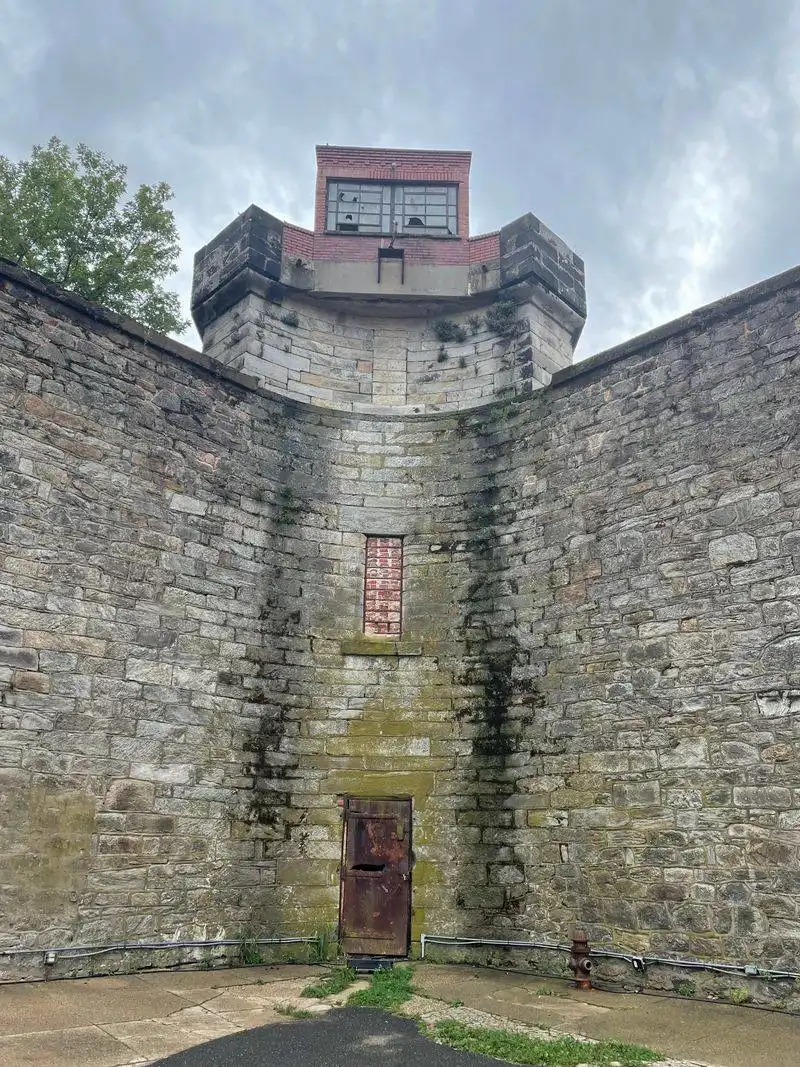
Castles project power through stone, height, and story. Eastern State retains all three, even as a museum.
The walls still command, the towers still punctuate the sky, and the legend still charges the air you breathe.
Architecture, ideology, and history fused here into a single silhouette. You feel the reformers’ hopes, the inmates’ realities, and the city’s fascination layered like sediment.
That mixture reads as sovereignty, even in retirement.
When you step back onto Fairmount Avenue, the fortress follows you in memory. It is a fallen stronghold of justice, a reminder that buildings can argue long after the judges go home.
You leave knowing the castle feeling was engineered, and it still works.