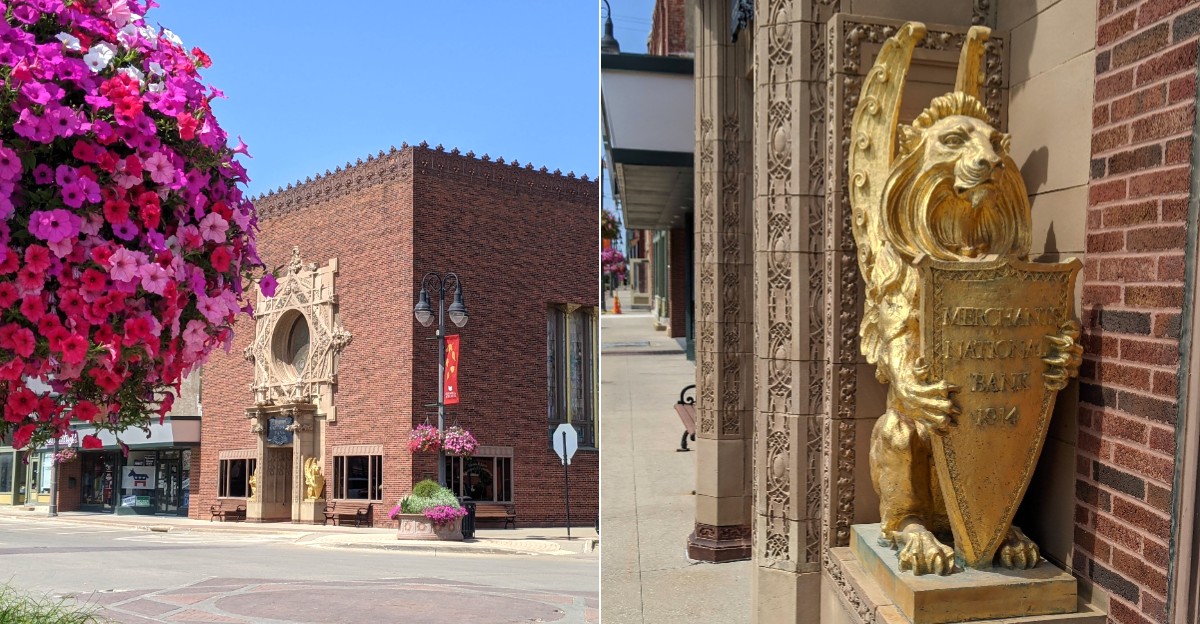
A pair of griffins guards the front door of a small-town bank, and the originals now live safely indoors. That alone made me stop.
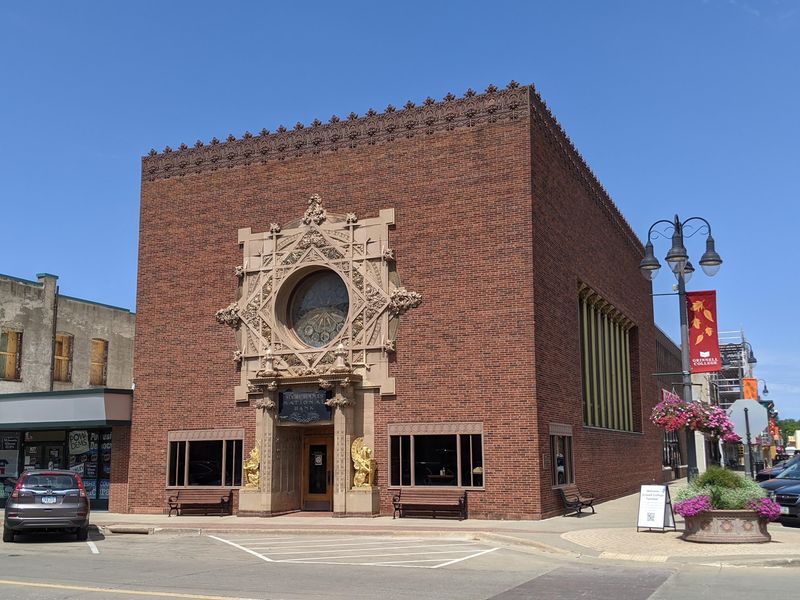
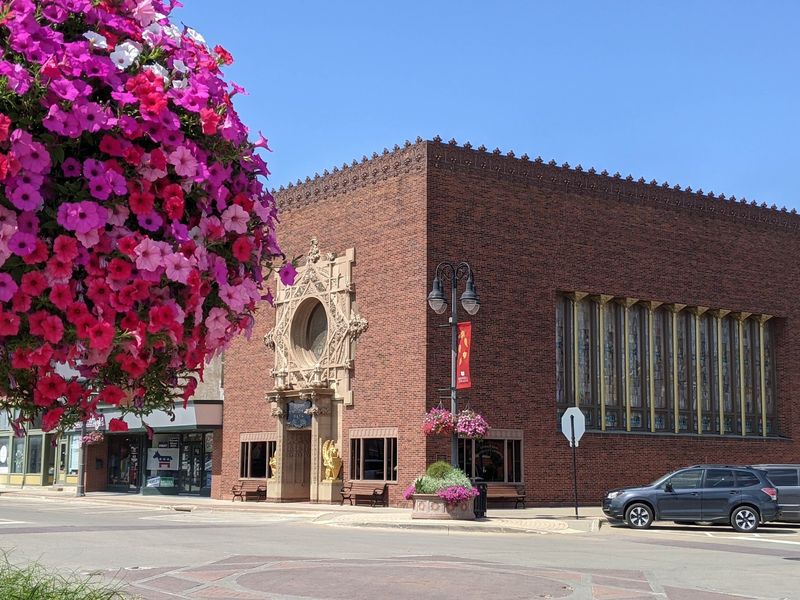
The building is a plain brick box with an explosion of terra-cotta ornament around its entrance. A giant circular stained-glass window sits above it.
The architect was the same man who mentored Frank Lloyd Wright.
He built only eight of these banks across the Midwest, and this Iowa one opened on New Year’s Day in 1915. I love that a farm-country town said yes to something this daring.
The tellers are long gone, but the doors still open on weekdays. Inside, there’s pink marble underfoot and colored light pouring through huge windows.
How many banks make you want to stay longer?
Louis Sullivan Called It a Jewel Box, and He Wasn’t Kidding
Famous architects rarely name their own building styles, but Louis Sullivan did. He called these small Midwestern banks jewel boxes, and the Merchants National Bank in Grinnell proves the nickname fits.
Sullivan designed only eight of these banks, and each one is different. That makes this Iowa example a rare piece of a very small family.
The idea was simple and clever. Start with a plain brick box, then pack it with dazzling details like gems inside a case.
Sullivan wasn’t some small-town builder who got lucky. His style began in the 1880s and helped shape the steel-framed skyscraper.
He also mentored Frank Lloyd Wright, which is quite the bonus line on a resume. So when Grinnell hired him, the town landed one of America’s most important design minds.
The building was completed in 1914 and cost about sixty thousand dollars at the time. Its grand opening came on January 1, 1915.
I like thinking about folks starting a brand-new year by visiting a brand-new bank. It must have felt like the future had arrived on Main Street.
Honestly, it still feels a little that way.
Those Bricks Are Way More Colorful Than They Look From the Car
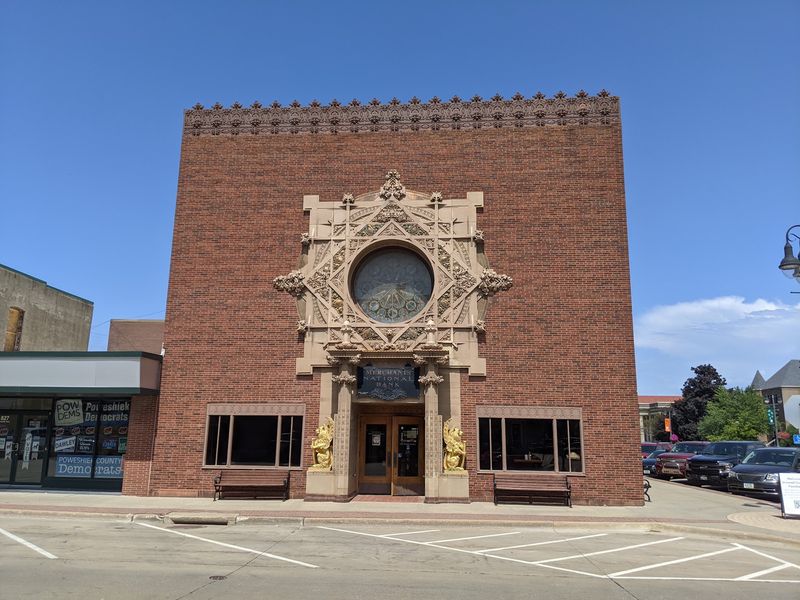
From a distance, the walls look reddish-brown and calm. Get closer, though, and the bricks start showing off.
Sullivan chose bricks in many shades, from blue-black to golden brown. Blended together, they create that warm overall color you notice first.
It’s a smart trick that rewards anyone who slows down. A quick glance gives you one color, while a careful look gives you dozens.
The shape of the building is almost stubbornly simple. It’s basically a rectangle, with no towers or fancy rooflines fighting for attention.
That plainness is the whole point. The simple box makes the ornament pop like frosting on a sheet cake.
Here’s a fun tip for your visit to Merchants National Bank. Walk slowly along the sidewalk and watch how the brick colors shift as light changes.
Bring a phone camera, but don’t just snap one wide shot and leave. Some of the best details live at close range, right at eye level.
Iowa sunshine does a lot of the work here. On a bright afternoon, those golden bricks practically glow against the darker ones.
Good Luck Walking Past That Terra-Cotta Doorway Without Staring
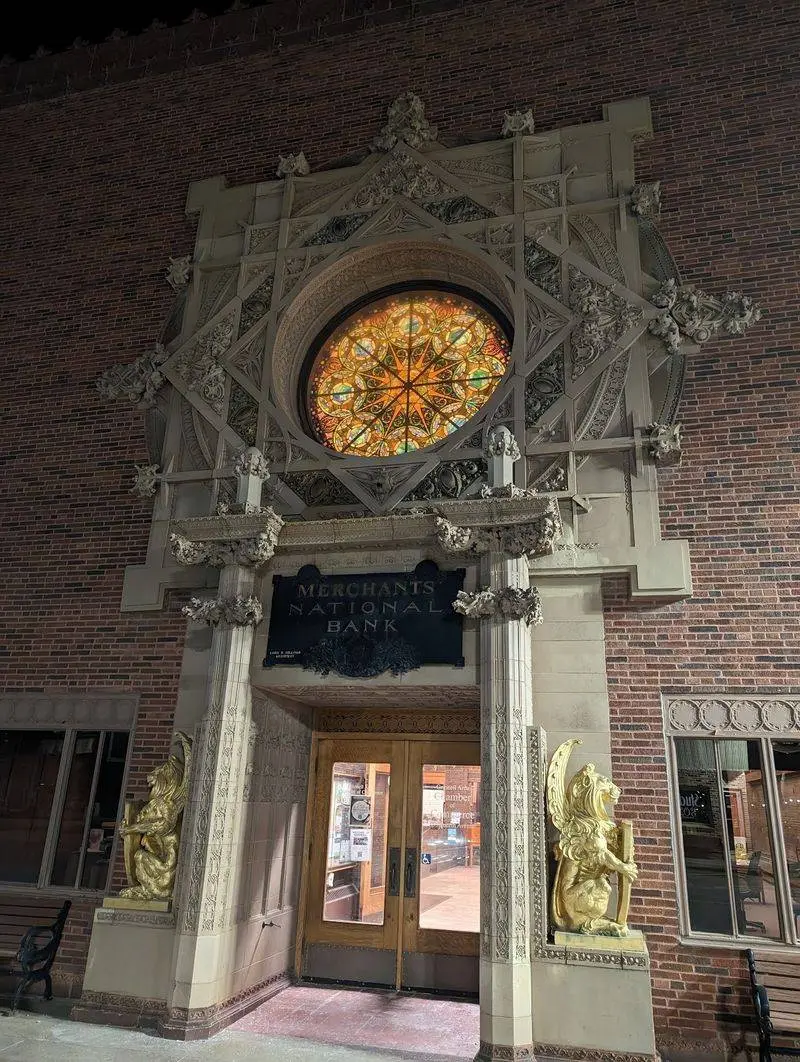
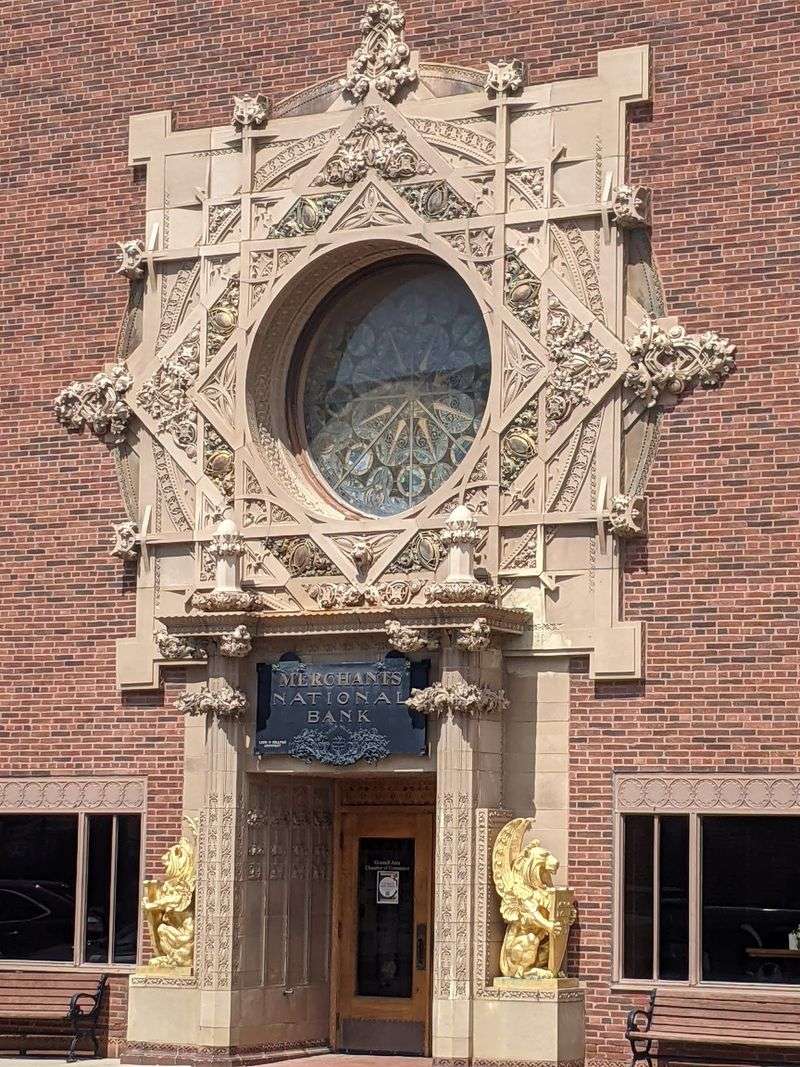
Swirling, leafy, three-dimensional terra-cotta frames the front entrance. It’s the most recognizable feature of the whole building, and it earns that title fast.
The ornament doesn’t sit flat against the wall. It bursts outward with curves and geometric shapes that seem to grow like plants.
That organic feel was a Sullivan signature. He loved mixing nature-inspired forms with crisp patterns, and this portal shows both at full volume.
Above the doorway, a giant round stained-glass window completes the scene. Together, they turn a plain wall into a stage.
People travel from around the world just to study Sullivan’s ornament. Seeing it here, in a downtown Iowa business district, feels wonderfully unexpected.
Try looking at the portal from across the street first. You’ll see how the decoration works as one big shape.
Then walk right up and look at the smaller pieces. Each section has its own twists and patterns hiding in plain sight.
It’s a little like reading a book twice. The second time, you notice everything you missed.
Meet the Griffins Who Took Their Guard Duty Seriously
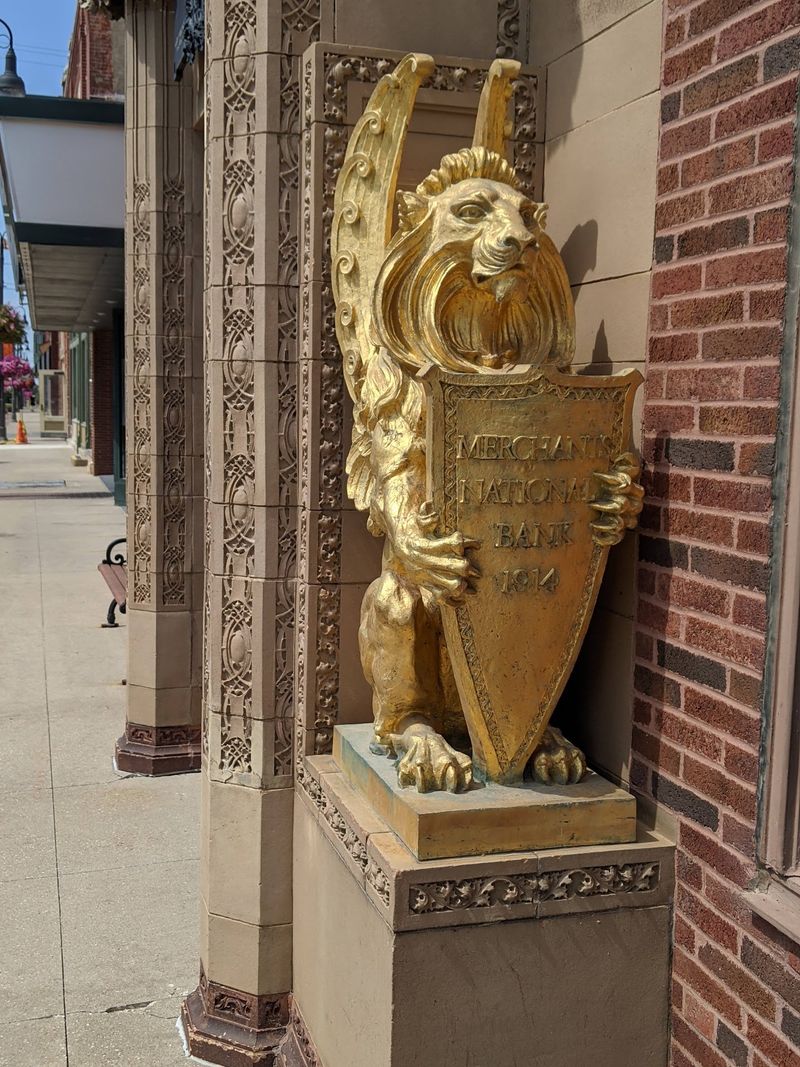
Every jewel box needs a security team. At this bank, the job goes to a pair of griffins standing watch at the entrance.
Griffins are mythical creatures, part lion and part eagle. They make a fitting choice for a building once filled with people’s savings.
The pair you see outside today are reproductions. The original griffins were vandalized, so they moved indoors for safekeeping.
Inside the Merchants National Bank, one original survives in good condition. Pieces of the other sit behind glass, still on display.
I like that the town didn’t toss the broken one aside. Keeping those pieces tells an honest story about how fragile history can be.
It’s also a quiet reminder to treat old buildings gently. Ornament like this can’t simply be ordered from a catalog.
Kids especially tend to love the griffin hunt. Spotting the outdoor guards, then finding the originals inside, turns the visit into a small mission.
So say hello to the new guards on your way in. Then go meet the retired veterans resting comfortably indoors.
The Rose Window Might Steal the Whole Show
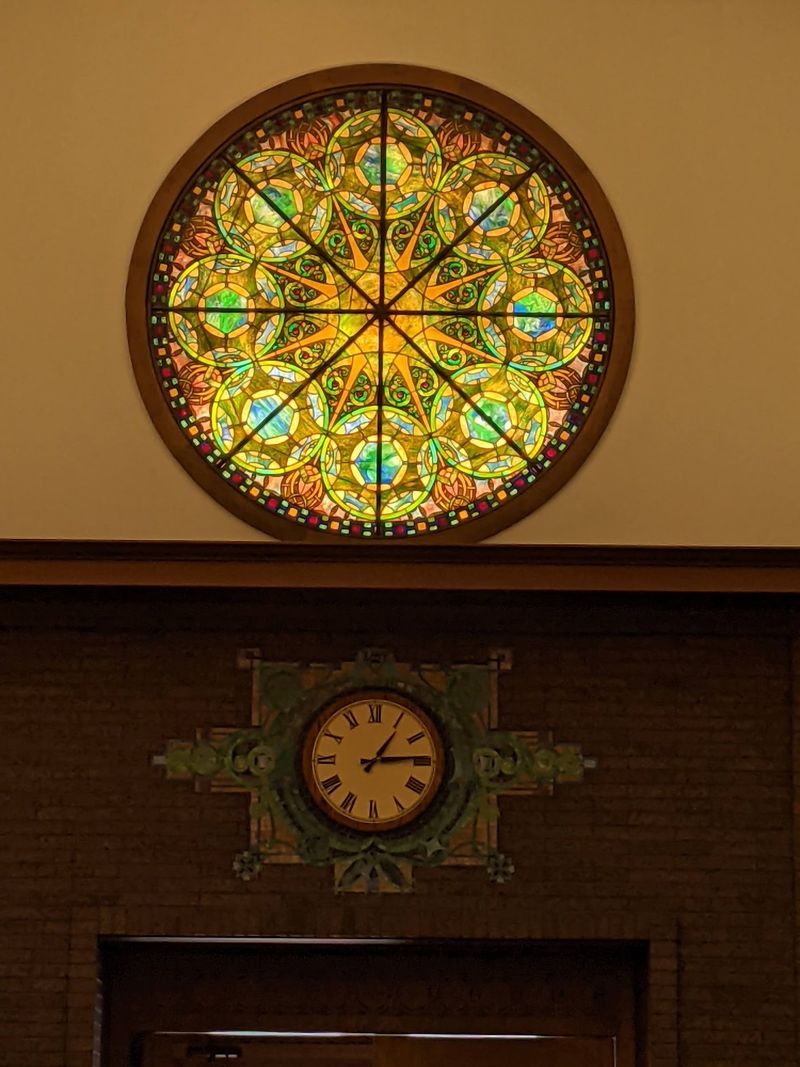
Round windows usually belong on cathedrals, not banks. Sullivan apparently didn’t care about that rule.
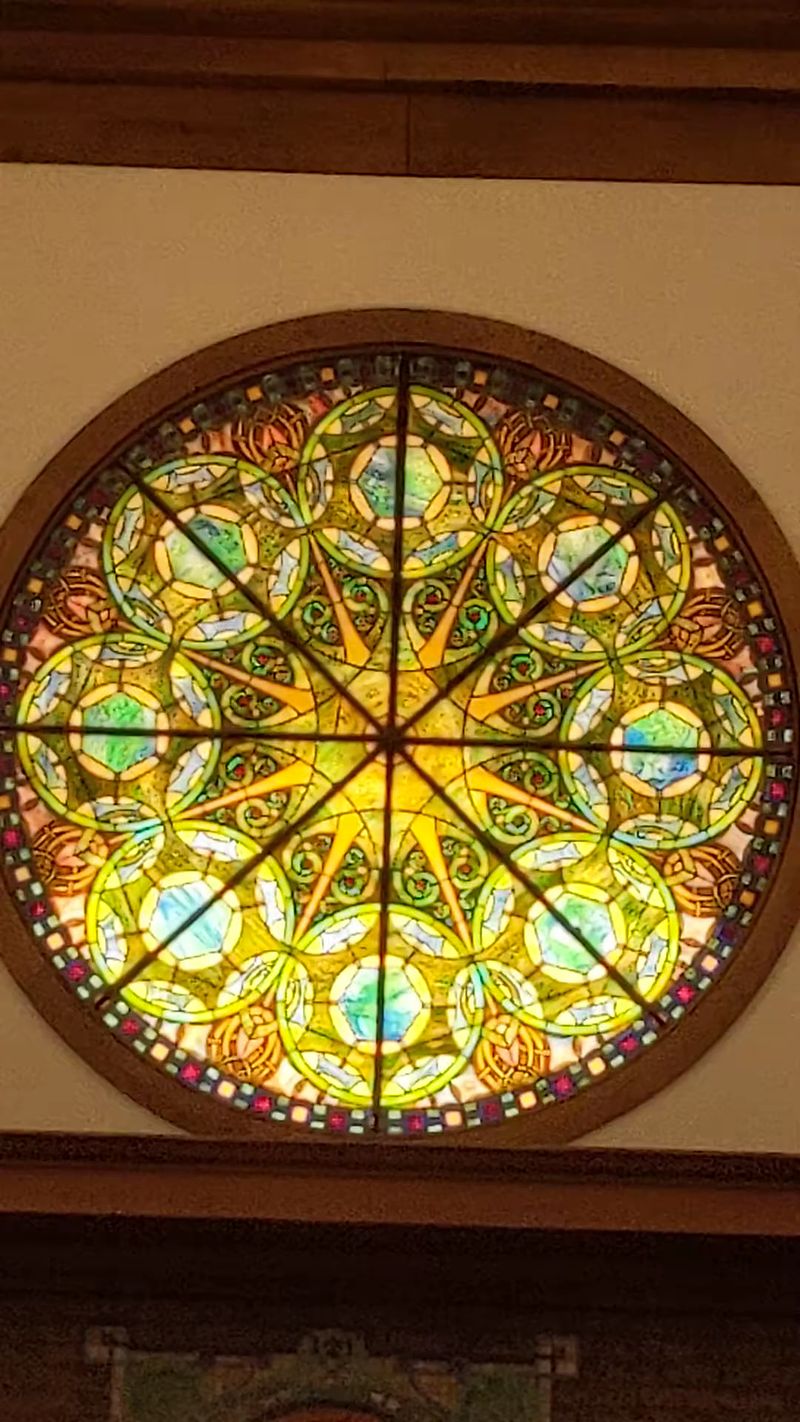
The rose window is a spectacular circle of stained glass above the entrance. Its design mixes sharp geometric lines with flowing, organic shapes.
From outside, it acts like a giant medallion on the brick wall. It’s the kind of feature you notice from down the block.
Inside, the story changes completely. Light passes through the colored glass and fills the space with a softer glow.
That’s what makes stained glass so fun. The same window offers two different experiences, depending on which side of the wall you’re standing on.
If you visit, check both views. Admire the pattern from the sidewalk, then step inside and look back at it.
Time of day matters too, since sunlight shifts around the building. A morning stop and an afternoon stop could feel quite different.
Sullivan packed a lot of ideas into one circle. Somehow, it still feels balanced and calm, like a perfectly cut gem set into the wall.
Forty Feet of Stained Glass Changes Everything Inside
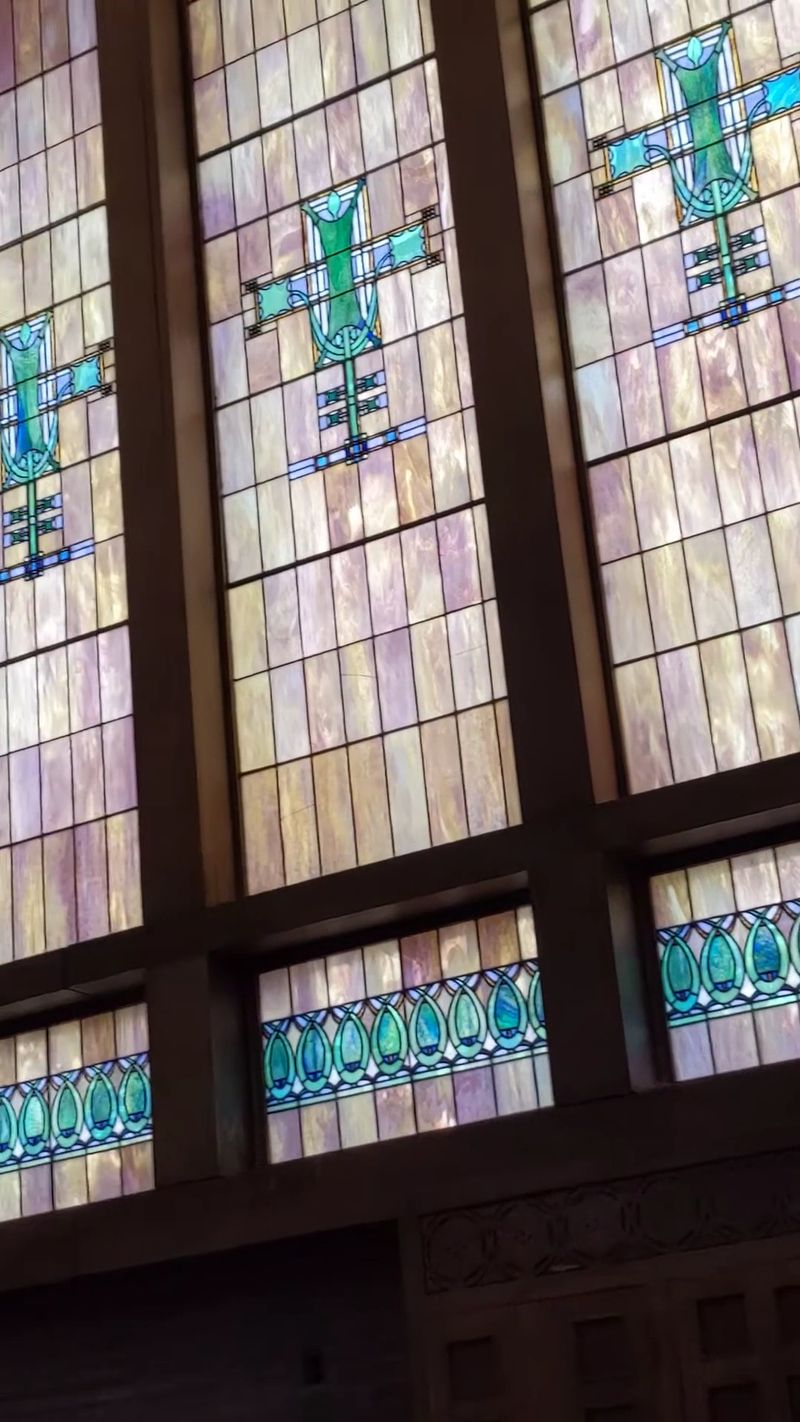
Fifteen feet tall and forty feet wide. Those are the measurements of the monumental stained-glass windows on the building’s east side.
That’s a wall of glass bigger than many living rooms. For a bank built in 1914, it was a bold way to bring in daylight.
The windows fill the interior with color and brightness. Instead of a dark, serious money vault, the room feels open and welcoming.
Under your feet, the floors are pink Tennessee marble. Yes, pink, and it pairs beautifully with the glowing glass.
The interior also features organic terra-cotta designs echoing the exterior. Sullivan wanted the inside and outside to feel like one story.
Some changes happened over the years. The tellers’ cages and savings department, once semi-enclosed, now appear more open.
That openness actually helps modern visitors. You can stand back and take in the windows without old partitions blocking the view.
An addition was also built, and it was designed to complement the original. It references the old windows without overwhelming them, which is good manners in architecture.
Even the Clock and the Check Desk Got the Fancy Treatment
Most banks hang a basic clock and call it done. Here, the clock sits inside an elaborate glass mosaic.
The mosaic was designed by artist Louis Millet, a frequent Sullivan collaborator. It turns checking the time into a small art moment.
Now picture filling out a deposit slip in 1915. Customers did it at a hand-carved wooden check desk, which is still part of the interior.
That desk shows how far the design reached. Sullivan’s team cared about big windows and tiny everyday objects alike.
It’s a lesson anyone can use at home, honestly. Small, useful things deserve beauty too.
When you tour the Merchants National Bank, slow down near these pieces. They’re easy to miss next to the giant windows.
Look at the carving on the desk from a few angles. Then step back and study how the mosaic colors frame the clock face.
These details explain why people call Sullivan’s ornament unmatched. He didn’t just decorate a building; he decorated the whole experience of using it.
Plan Your Weekday Visit Like a Pro
Good news for curious travelers: you can actually go inside. The bank closed in 1999, and the building now houses the Grinnell Area Chamber of Commerce.
You’ll find it at 833 4th Ave W, Grinnell, IA 50112. It sits within the Grinnell Historic Commercial District.
Weekday hours run Monday through Friday, from 8:30 a.m. to noon. The doors reopen from 1 to 4:30 p.m.
Notice that midday break. Showing up at 12:15 means a bonus lunch, not a tour.
Weekend tours are available by appointment. Calling ahead is smart, since availability can change.
The building earned National Historic Landmark status in 1976. In 1991, it also became a contributing property in the historic district.
Those honors make this one of Iowa’s true architectural treasures. Yet it still works as a busy, everyday office.
Be polite during your visit, since people are working there. A friendly hello goes a long way.
Give yourself time to look outside first, then head in. The full experience deserves more than a quick peek.
Turn Your Bank Visit Into a Grinnell Afternoon
After all that ornament, you’ll probably want a snack and a stroll. Luckily, the chamber inside the Merchants National Bank points to plenty nearby.
Saints Rest Coffee House offers coffee and tea in a cozy setting. It’s a fine spot to scroll through your new building photos.
Hungry for something heartier? Chuong Garden serves casual dining for a relaxed meal.
Shoppers can browse Bates Flowers By Design. Cyclists might enjoy a look around Bikes To You.
Art lovers have options too. The Grinnell Area Arts Council hosts events and exhibits throughout the year.
Keep an eye out for the Creatures of Grinnell Public Art Project as you wander. It adds a playful scavenger-hunt feel to downtown.
That pairs nicely with your griffin spotting from earlier. Creatures seem to be a theme in this Iowa town.
I believe the best trips mix one wow moment with easy, small pleasures. A Sullivan masterpiece, a warm drink, and some public art make a pretty great day.
Not bad for a stop at the bank.