Georgia hides a place that barely looks real.
One minute you’re driving through metro Atlanta traffic. The next, you’re standing on giant waves of bare granite that feel ripped straight from a sci-fi movie.
Arabia Mountain National Heritage Area is wild, strange, and completely unforgettable.
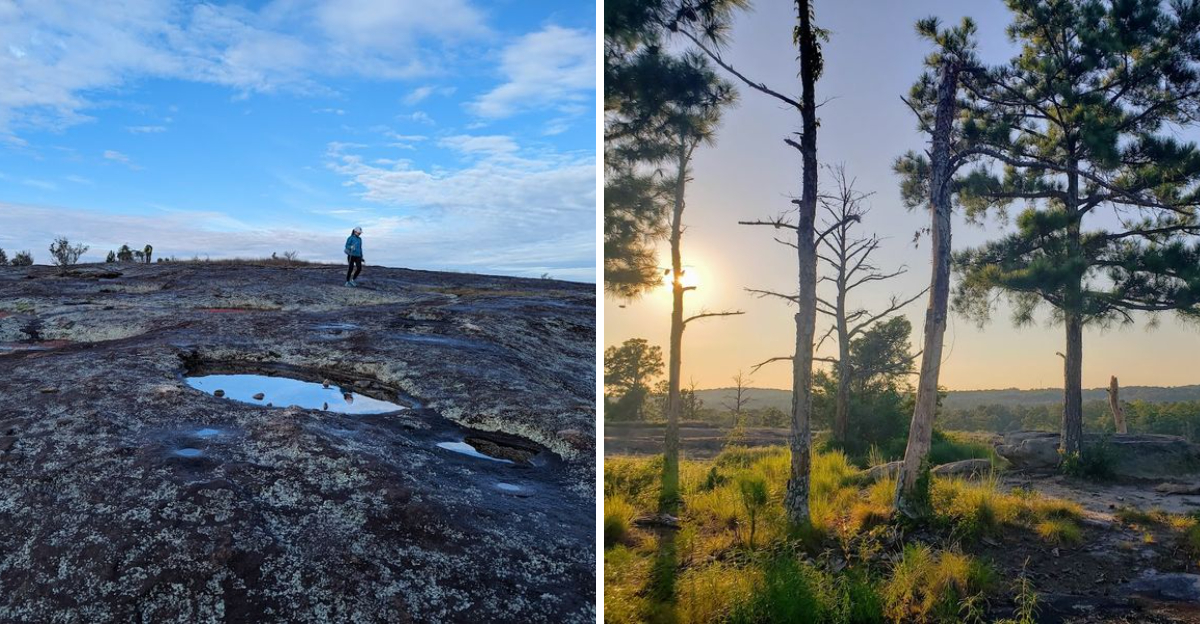
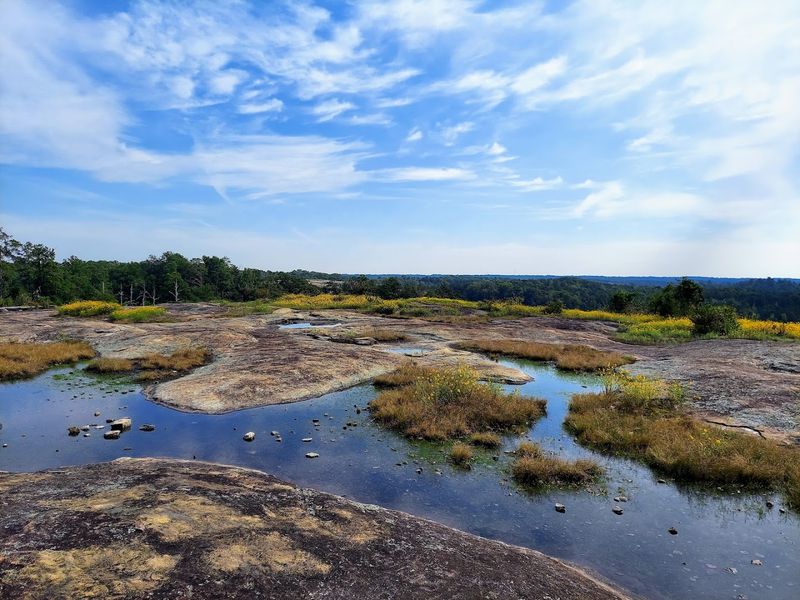
The scenery flips everything you expect from a Georgia park. Thick forests suddenly give way to huge stone domes, shallow pools, and streaks of swirling rock that glow under the sun.
During cooler months, rare red diamorpha plants spread across the granite like someone splashed paint over the mountain.
Then come the views.
Open sky in every direction. Quiet trails marked by stacked stone cairns.
Endless slabs of granite stretching far beyond the trees. It feels remote, eerie, and weirdly peaceful all at once.
Arabia Mountain isn’t the kind of place people accidentally forget. It’s the kind of place that makes you stop mid-hike and wonder how this even exists in Georgia.
A Granite Landscape That Looks Almost Alien
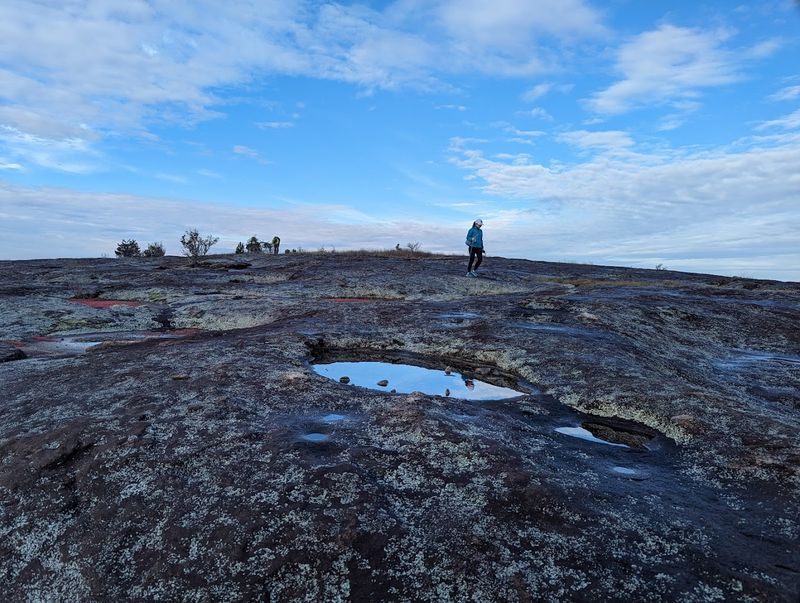
Walking across Arabia Mountain feels like exploring the surface of Mars without leaving Georgia. Massive granite outcrops rise from the earth in smooth, sweeping domes that stretch far beyond what your eyes can take in at once.
The exposed monadnock terrain creates a surreal environment where bare rock replaces forest floors.
Unlike anywhere else in the Southeast, these granite expanses give you unobstructed views in every direction. The stone beneath your feet shows swirling patterns formed over millions of years.
Very few trees interrupt the openness, making the landscape feel vast and untamed.
During sunrise or sunset, the granite glows with warm colors that enhance the alien atmosphere. Shadows stretch across the smooth surfaces, highlighting every curve and depression in the rock.
Many visitors describe feeling transported to another world entirely, where nature follows completely different rules than the typical Georgia woodlands just miles away.
The Fascinating Geology Behind The “Otherworldly” Terrain
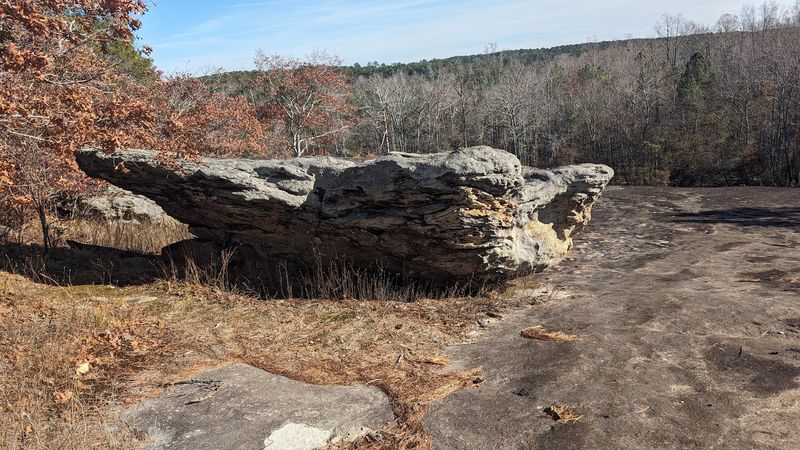
Four hundred million years ago, molten rock cooled deep underground to form the granite you see today at Arabia Mountain. Over countless centuries, erosion slowly stripped away the softer soil and rock layers covering it.
What remained were these incredible domes of extremely hard granite that resisted weathering far better than surrounding materials.
The swirling patterns across the granite surface tell stories of mineral flows from ancient times. Different colors in the rock show where various minerals crystallized as temperatures dropped.
Geologists call these formations monadnocks, which are isolated rocky hills that stand above eroded plains.
Wind, rain, and temperature changes continue shaping the granite even today. Water collects in shallow depressions called solution pits, where it slowly dissolves minerals and deepens the pools over time.
The flowing appearance of the stone comes from how the granite fractured and weathered along natural planes of weakness, creating wave-like patterns that seem almost impossible in solid rock.
Rare Plants Growing Straight From Bare Rock
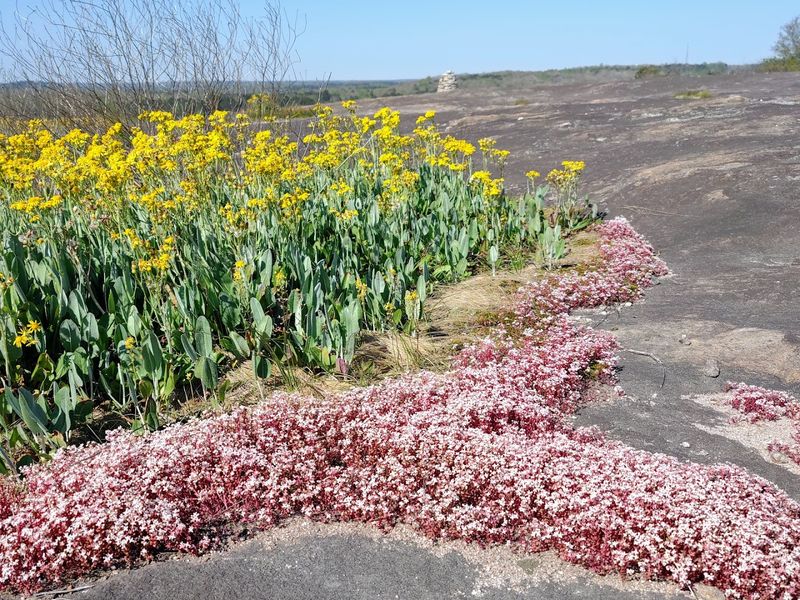
Something magical happens when winter arrives at Arabia Mountain. Tiny red plants called diamorpha transform bare granite into a living canvas of brilliant crimson.
These rare succulents somehow thrive in shallow pools where almost no soil exists, clinging to life on naked stone.
The granite vernal pools support unique plant communities found in very few places worldwide. During cooler months, diamorpha turns bright red as temperatures drop, creating stunning natural artwork across the rock surface.
When spring arrives, they bloom with tiny white flowers before drying up completely.
Other remarkable plants also call these harsh granite environments home. Mosses, lichens, and specially adapted wildflowers survive in conditions that would kill most vegetation.
Their ability to grow directly from rock with minimal water and nutrients makes the landscape feel truly extraterrestrial, as if alien life forms colonized the stone itself rather than ordinary Georgia plants establishing themselves in familiar soil.
Hiking Trails With Endless Open-Sky Views
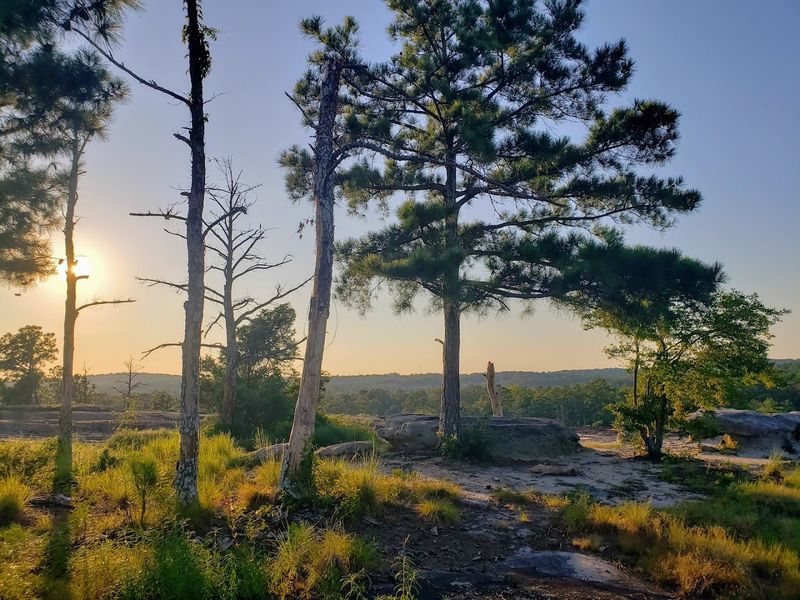
Forget tunnel-like forest paths where trees block every view. Arabia Mountain’s trails take you across wide-open granite slabs where the sky stretches endlessly overhead.
The exposed terrain creates a hiking experience completely different from typical Georgia wooded trails, giving you panoramic views that seem to go on forever.
Several routes wind through the preserve, mixing granite crossings with sections through pine forests and wetlands. The main summit trail leads to the highest point, where on clear days you can spot Atlanta’s skyline shimmering in the distance.
Sunlight reflects off the smooth stone beneath your feet with almost blinding intensity.
The lunar atmosphere of these hikes attracts photographers who arrive before dawn to catch incredible sunrise shots. Without tall trees blocking light, the entire landscape glows during golden hour.
Hiking across bare rock also means feeling exposed to weather, so visitors experience sun, wind, and rain more intensely than in protected forest environments.
The Famous Cairn-Marked Mountain Trail
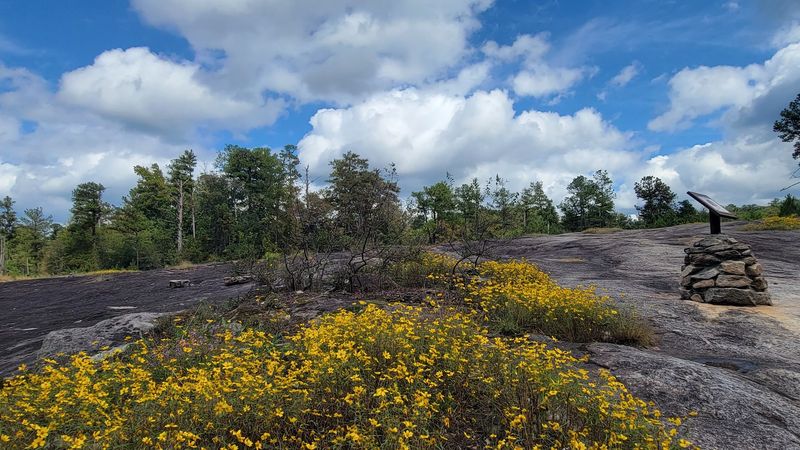
How do you mark a trail where no trees exist for blazing? Arabia Mountain solves this challenge with carefully stacked rock cairns that guide hikers across the bare granite.
These man-made stone piles serve as breadcrumbs leading adventurers safely across the otherwise featureless rock surface.
Following the cairns becomes part of the adventure itself. You scan the horizon for the next stack of stones, picking your own route between markers.
The experience feels wildly different from simply walking a clearly defined dirt path, adding an element of exploration and discovery.
Building and maintaining these cairns requires ongoing effort from park staff and volunteers. Each stack must be visible from the previous one while respecting the natural landscape.
Some hikers find following cairns exciting and freeing, while others feel nervous without traditional trail markers, but everyone agrees it creates a uniquely memorable way to experience this unusual terrain that resembles hiking on another planet more than walking through typical Georgia parks.
Hidden Lakes, Wetlands, And Quiet Forests
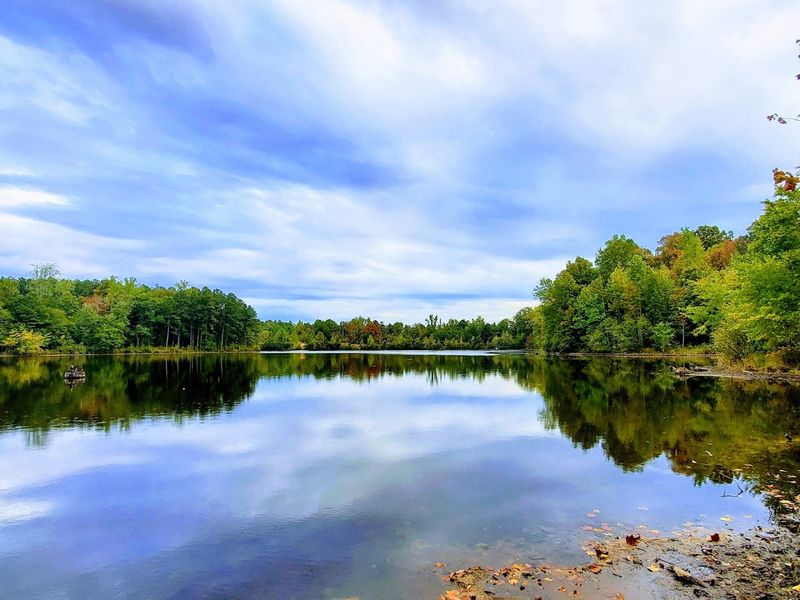
Not everything at Arabia Mountain looks like a desert planet. Beyond the granite domes, the heritage area protects diverse ecosystems including peaceful lakes, thriving wetlands, and pine forests that provide dramatic contrast to the stark rocky landscapes.
Bradley and Klondike Lakes offer quiet spots for reflection and wildlife watching. Great blue herons stalk fish in the shallows while turtles sun themselves on logs.
These water features support completely different plant and animal communities than the harsh granite environments nearby.
Wetland areas stay soggy year-round, nurturing cattails, water lilies, and moisture-loving trees. Walking from exposed granite into cool forest shade feels like crossing between different worlds within the same preserve.
Streams trickle through wooded sections, their gentle sounds contrasting with the silent, sun-baked stone expanses. This variety makes Arabia Mountain special because you can experience multiple distinct environments during a single visit, from alien-looking rock fields to traditional Southern woodlands full of birdsong and green shade.
A Landscape Shaped By Quarrying History
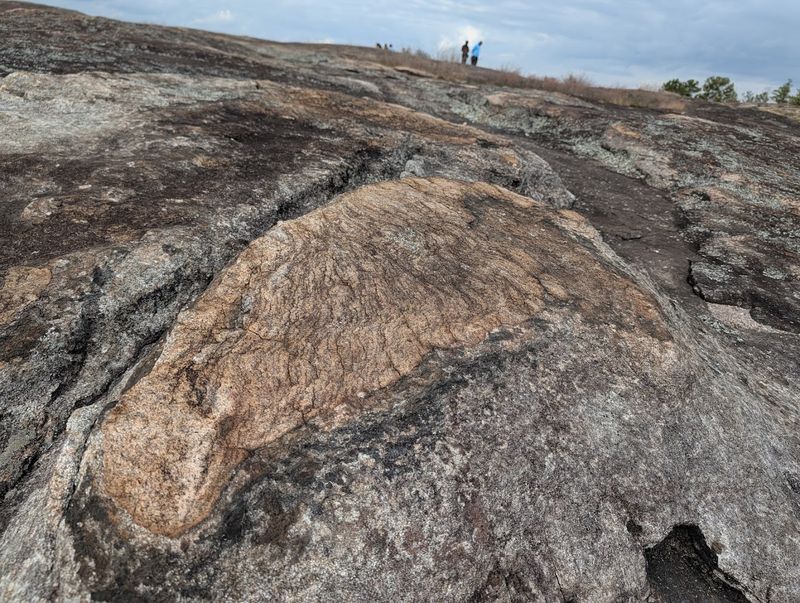
Arabia Mountain’s granite didn’t just sit around looking pretty for millions of years. For over a century, workers quarried the tough stone to build parts of Atlanta and surrounding communities.
This industrial past left its mark across the landscape in ways that add character and historical texture today.
Old quarry sites scatter throughout the preserve, showing where workers cut and hauled massive stone blocks. You can still see drill marks, cut edges, and abandoned stone pieces that weren’t quite good enough for construction projects.
Some areas reveal where crews blasted and carved geometric shapes into natural rock.
The famous Granite Capital of the South, nearby Lithonia, grew wealthy from this stone mining. Arabia Mountain granite helped construct buildings, bridges, and monuments that still stand strong.
Today, these quarry remnants serve as outdoor museums where visitors can imagine the dangerous, difficult work that once took place. Rather than detracting from natural beauty, the historical quarrying elements enhance the otherworldly feeling by showing human interaction with this ancient stone.
The Arabia Mountain PATH Trail Adventure
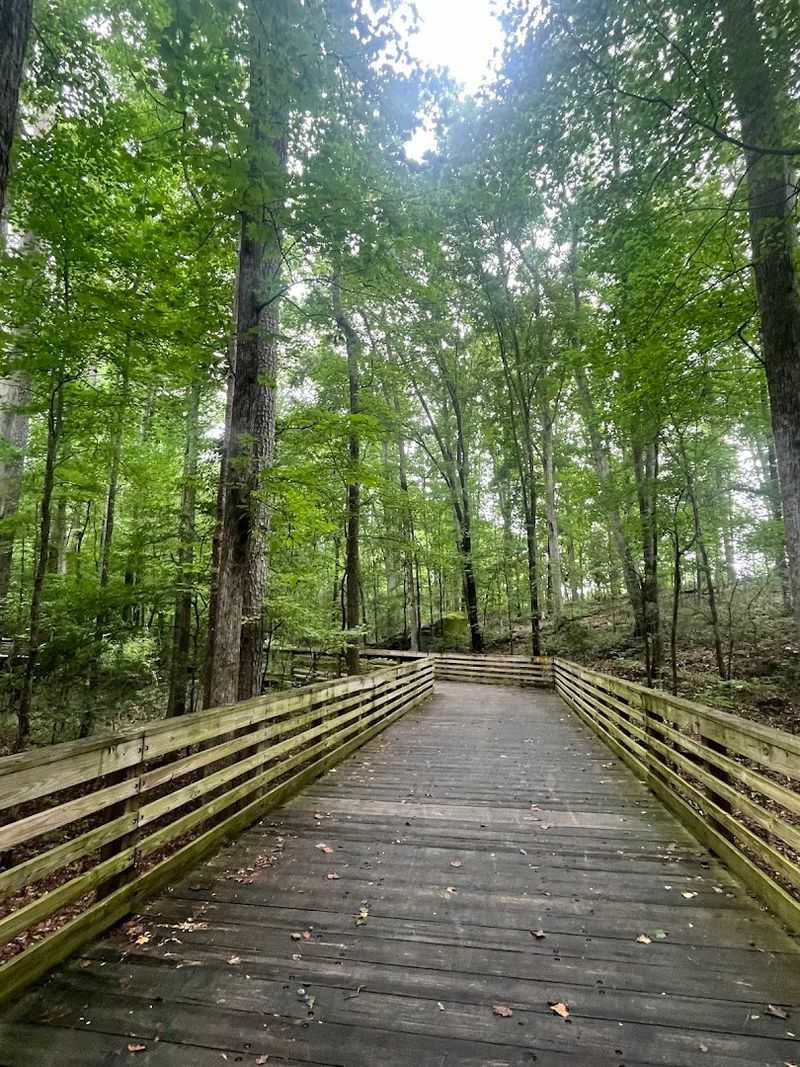
Thirty miles of connected trails make up the Arabia Mountain PATH network, creating one of Georgia’s best multi-use trail systems. This paved path links scenic viewpoints, historic sites, forests, wetlands, and neighboring preserves into one amazing adventure perfect for biking, walking, or running.
The PATH system connects Arabia Mountain to other attractions including the Monastery of the Holy Spirit and downtown Lithonia. Scenic bridges cross streams and wetlands, while interpretive signs teach visitors about local ecology and history.
Families love that the paved surface makes the trails accessible to strollers and wheelchairs.
Cyclists particularly enjoy this network because it offers long-distance rides through varied terrain without dealing with car traffic. You can easily spend an entire day exploring different sections.
The trail also connects to Stone Mountain PATH, extending your adventure even further. Whether you’re seeking a quick nature walk or an all-day bike journey, this extensive trail system provides endless opportunities to experience the strange beauty of this alien-like landscape.
Historic And Cultural Sites Hidden Within The Preserve
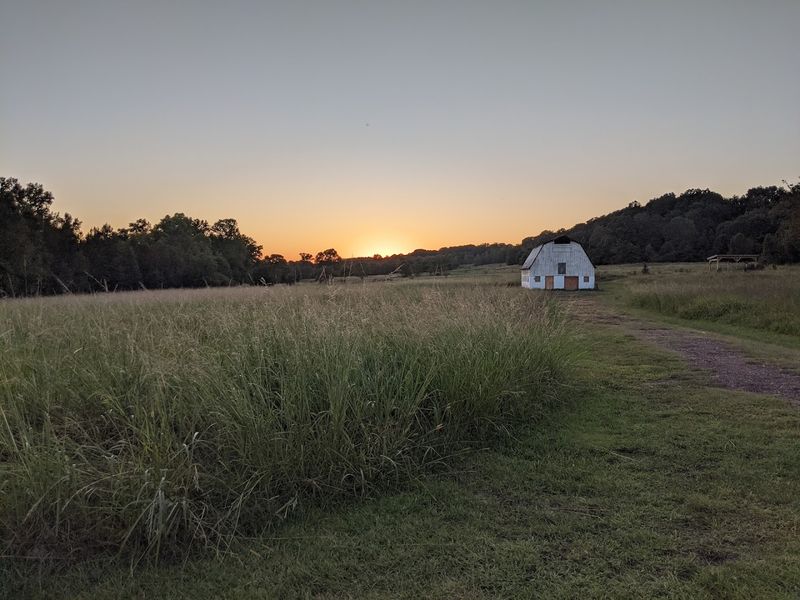
Arabia Mountain National Heritage Area protects more than just natural wonders. Important historical and cultural sites hide within the preserve, telling stories of the people who lived, worked, and worshiped here over generations.
The historic Flat Rock African American community holds special significance. Founded by freed slaves after the Civil War, this settlement maintained its identity for decades.
Today, preserved structures and archaeological sites help visitors understand this important cultural heritage that might otherwise be forgotten.
Lithonia’s downtown area showcases granite heritage through historic buildings constructed from locally quarried stone. The nearby Monastery of the Holy Spirit offers peaceful gardens and a beautiful abbey where monks have lived and prayed since 1944.
These cultural layers add depth to your visit, transforming the preserve from simply a geological oddity into a place where natural history and human stories intertwine. Learning about quarry workers, farming families, and spiritual communities helps visitors appreciate how this strange landscape has touched many lives throughout history.
Visitor Info And Tips Before You Go
Planning your visit to Arabia Mountain takes some preparation since the exposed terrain presents unique challenges. The main access point is Davidson-Arabia Mountain Nature Preserve parking area off Klondike Road in Stonecrest, where you’ll find trail maps and basic facilities.
Timing matters significantly for the best experience. Visit during late winter and early spring to see the famous red diamorpha plants at their peak.
Early morning offers cooler temperatures and stunning sunrise photography opportunities across the granite. Summer afternoons get brutally hot on exposed rock with zero shade available.
Bring more water than you think you’ll need because the sun reflects intensely off granite surfaces. Wear sturdy shoes with good grip since smooth rock can be slippery.
Sunscreen and hats are essential for protection. Check weather forecasts carefully because lightning storms are extremely dangerous on exposed granite with nowhere to take shelter.
Biking requires mountain or hybrid bikes tough enough for occasional rough sections. Allow several hours to properly explore this fascinating preserve that truly does feel more like another planet than a Georgia state park.