
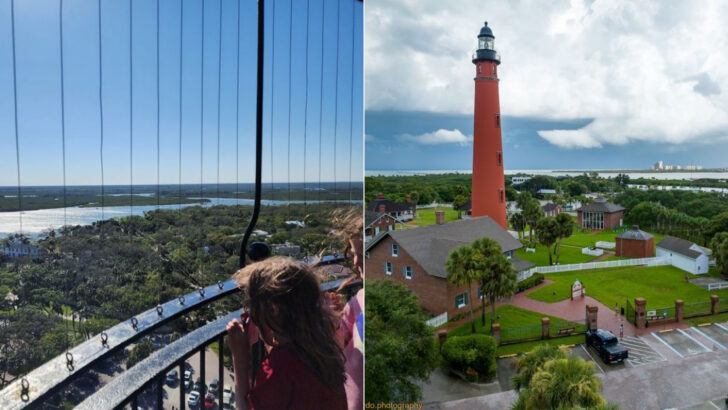
Standing tall along the Florida coast, the Ponce de Leon Inlet Lighthouse is one of the most impressive historic landmarks in the entire state. Built in the 1880s, this stunning brick-and-granite tower stretches 175 feet into the sky and holds the title of Florida’s tallest lighthouse.
Whether you’re a history lover, a family looking for a fun outing, or just someone who enjoys breathtaking ocean views, this place has something special waiting for you. From climbing 203 stairs to exploring keeper’s cottages and fascinating museum exhibits, a visit here is truly unforgettable.
The Climb to the Top: 203 Steps Worth Every Breath
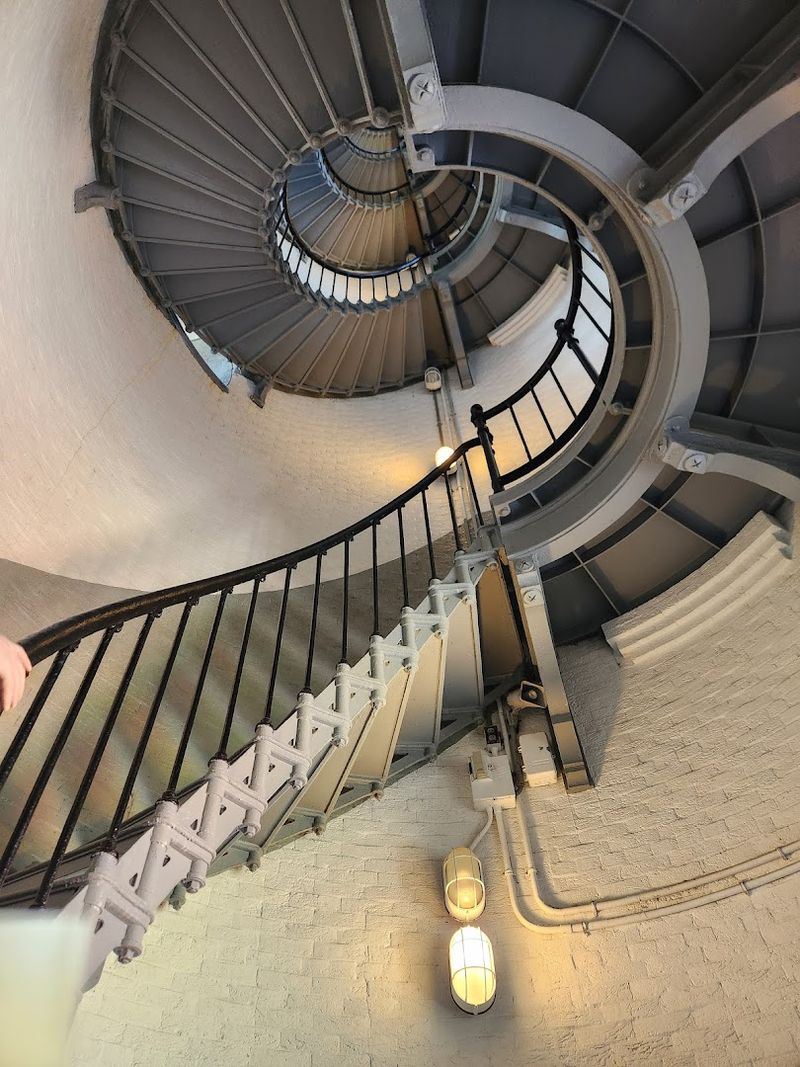
Few experiences in Florida match the thrill of climbing 203 winding stairs inside a 175-foot lighthouse that has stood since the 1880s. The staircase is narrow and steep, with iron railings to hold as you make your way up.
It might feel like a workout, but every landing offers a chance to catch your breath and take in the beautifully preserved interior.
As you near the top, the excitement builds with every step. The spiral design is both dizzying and mesmerizing, and the brick walls around you tell a quiet story of craftsmanship from over a century ago.
Visitors of all ages have made this climb, though it helps to wear comfortable, closed-toe shoes — sandals are not permitted on the stairs for safety reasons.
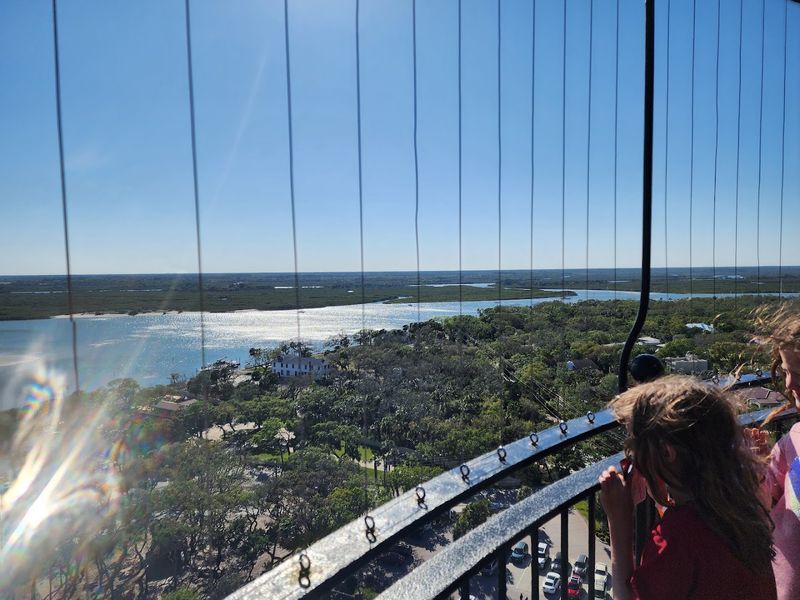
Once you step out onto the observation deck, the reward is immediate and breathtaking. Ocean breezes cool you off after the climb, and the panoramic views stretch across the inlet, the coastline, and the surrounding landscape.
Many visitors say the climb down feels even trickier than going up, so take your time, hold the rail, and enjoy every moment of this one-of-a-kind Florida experience.
Panoramic Views from Florida’s Tallest Lighthouse
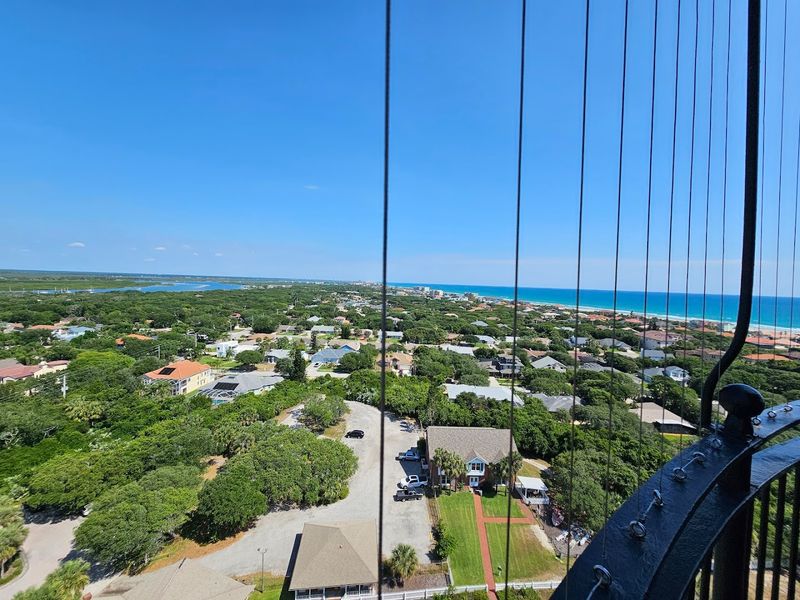
Standing at the very top of the Ponce de Leon Inlet Lighthouse, you get a view that feels almost unreal. On a clear day, you can see for miles in every direction — the Atlantic Ocean glittering to the east, the calm waters of the inlet below, and the green treetops of Ponce Inlet stretching out to the west.
It is genuinely one of the best vantage points in all of Florida.
Photographers absolutely love this spot. Whether you have a professional camera or just a smartphone, the images you capture from up here are stunning.
Sunrise visits are particularly magical, when the golden light spills across the water and the sky turns shades of orange and pink. Even on an overcast day, the views carry a dramatic, moody beauty all their own.
Families often say this is the highlight of their entire trip to the area. Kids love spotting boats on the water far below, while adults appreciate the sense of history and perspective the height provides.
The observation deck wraps around the lantern room, giving everyone a full 360-degree view. Bring a camera, soak it all in, and take a moment to appreciate how stunning Florida’s coastline truly is.
The Lighthouse’s Rich History Dating Back to the 1880s
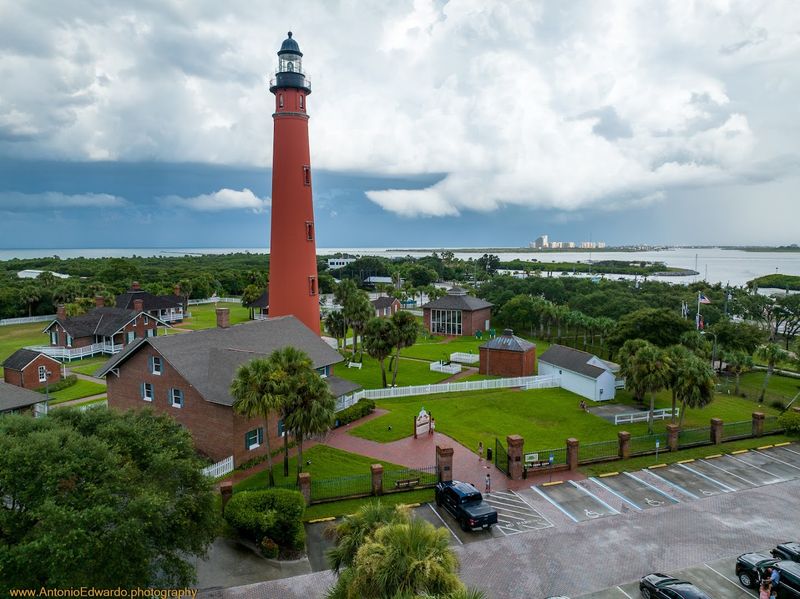
History has a way of coming alive when you are standing next to a structure built over 140 years ago. The Ponce de Leon Inlet Lighthouse was completed in 1887 after years of construction challenges, including a failed earlier attempt that left a partially built tower abandoned for decades.
The determination it took to finally finish this lighthouse speaks volumes about the era’s dedication to maritime safety.
The lighthouse guided countless ships safely past the treacherous inlet, which was known for its dangerous shifting sandbars. Before its light began shining, ships frequently ran aground in this area.
Once operational, the lighthouse became a vital beacon for commercial vessels, fishing boats, and travelers making their way along Florida’s eastern coast.
Today, the lighthouse is listed on the National Register of Historic Places and is recognized as one of the best-preserved lighthouse complexes in the United States. Visiting feels like stepping back into a different era.
The original Fresnel lens, the keeper’s quarters, and the surrounding outbuildings all contribute to an atmosphere that feels remarkably authentic. Learning about the construction struggles, the keepers who lived here, and the maritime history of the region makes every corner of this property worth exploring.
Exploring the Keeper’s Cottages and Original Outbuildings
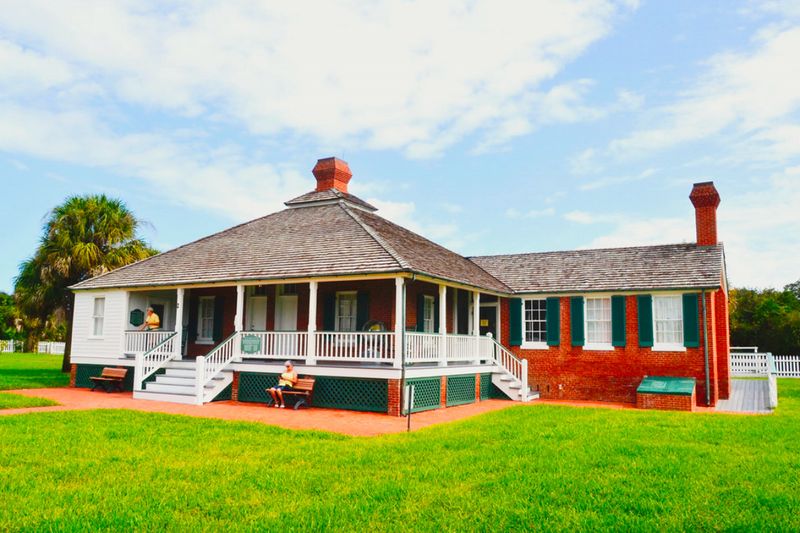
Wandering through the keeper’s cottages at Ponce de Leon Inlet feels like flipping through the pages of a living history book. Several original structures have been lovingly restored and filled with period-accurate furnishings, giving visitors a real sense of what daily life looked like for the men and women who maintained this lighthouse over a century ago.
It is the kind of place where you half expect someone in Victorian-era clothing to walk through the door.
Each cottage tells a slightly different story. One home might focus on the head keeper’s family, while another highlights the assistant keepers who shared the responsibility of keeping the light burning through storms and long nights.
Exhibits inside include original furniture, cooking tools, clothing, and personal items that paint a vivid picture of lighthouse life.
Beyond the cottages, other outbuildings on the property include an oil storage house and a watch room building, each with its own exhibits. The self-guided tour format means you can spend as much time as you like in each space, reading the informational displays at your own pace.
Many visitors say the keeper’s homes were their favorite part of the entire property, offering a warm and deeply human connection to Florida’s maritime past.
The Museum Exhibits: Artifacts, Scale Models, and Maritime History
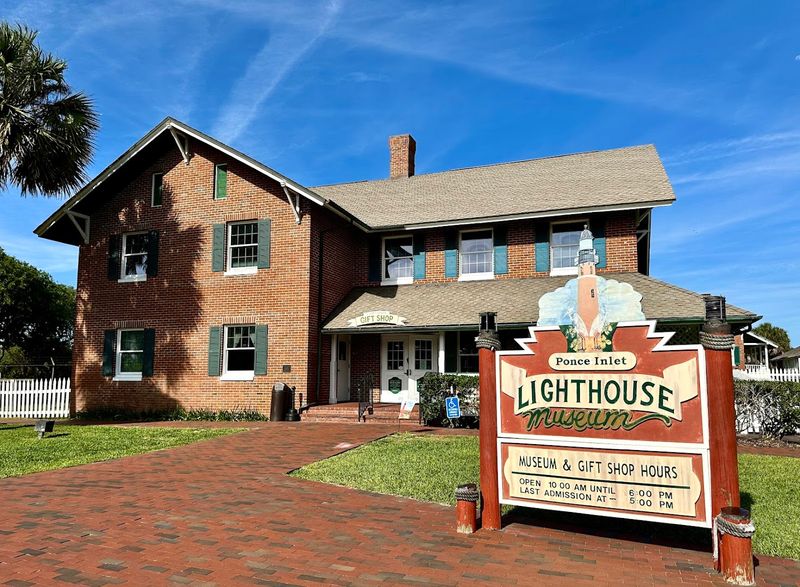
Museum lovers are in for a real treat at Ponce de Leon Inlet. The exhibits spread across multiple buildings on the property, so the experience never feels crowded or rushed.
Detailed scale models of the lighthouse complex are among the most impressive displays, showing visitors exactly how the entire grounds were laid out during the lighthouse’s operational heyday. The craftsmanship that went into these models is remarkable.
Maritime artifacts fill the exhibit spaces, from antique navigation tools and ship logs to photographs and personal belongings of the lighthouse keepers. Each item is carefully labeled and placed in context, making it easy for visitors of all ages to understand the significance of what they are looking at.
Kids especially seem to light up when they see the hands-on displays and interactive elements scattered throughout.
One particularly fascinating exhibit focuses on the Fresnel lens system used in the lighthouse. These intricate glass lenses, designed to magnify and project light over enormous distances, were engineering marvels of their time.
Seeing one up close gives you a genuine appreciation for the ingenuity that kept sailors safe before modern navigation technology existed. Whether you spend twenty minutes or two hours in the museum, you will leave knowing far more about Florida’s coastal history than when you arrived.
The Original Fresnel Lens on Display
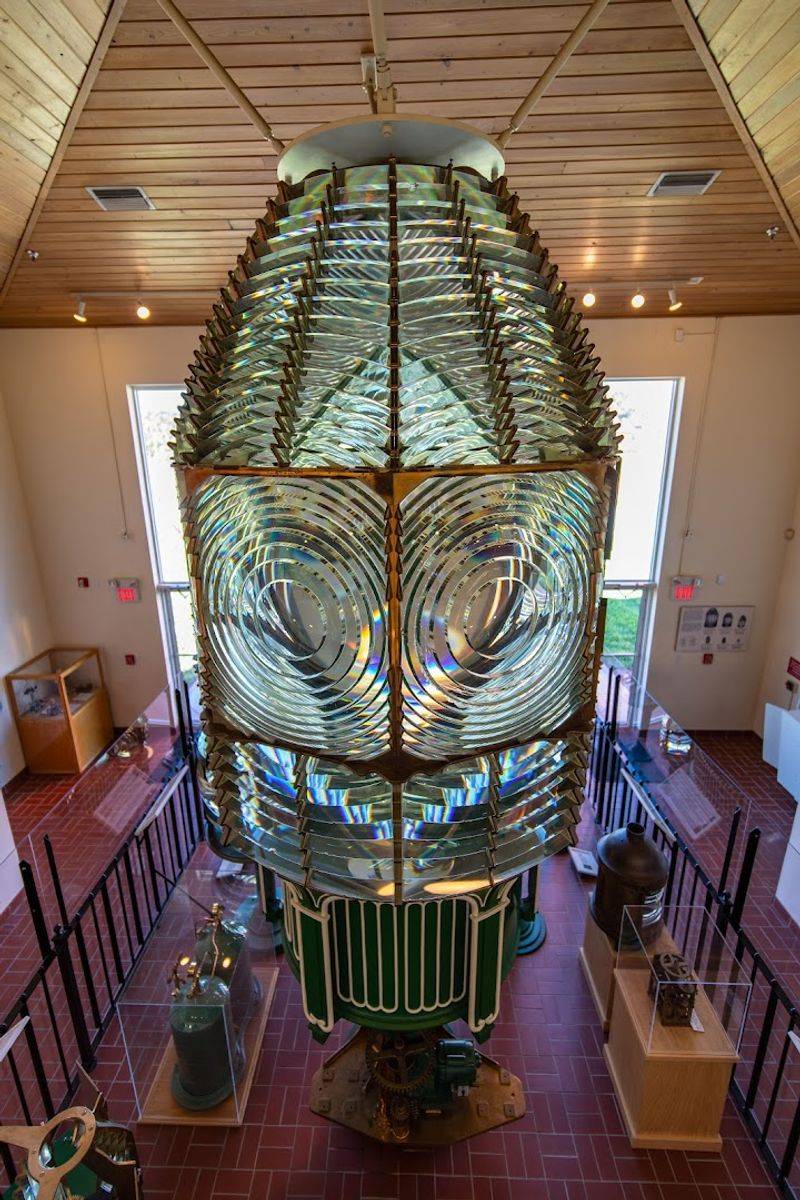
One of the crown jewels of the Ponce de Leon Inlet Lighthouse museum is its original Fresnel lens, and seeing it in person is genuinely jaw-dropping. These lenses were invented in the early 1800s by French physicist Augustin-Jean Fresnel, and they revolutionized lighthouse technology by allowing a relatively small light source to be projected with enormous power across the water.
The craftsmanship involved in creating each lens is extraordinary.
The lens at Ponce de Leon Inlet is a first-order Fresnel lens, which is the largest classification available. Made up of hundreds of precisely cut glass prisms arranged in a beehive-like pattern, the lens could project light visible from more than 20 miles out at sea.
Standing next to it, you immediately understand why sailors depended on these devices for their very survival during storms and dark nights.
Exhibits surrounding the lens explain how it was installed, maintained, and eventually replaced by modern automated lighting systems. The lens itself has been preserved with incredible care, and the display allows visitors to walk around it and admire its construction from every angle.
Many people say that seeing the Fresnel lens was a highlight they did not expect — proof that sometimes the best surprises at a museum are the ones hiding in plain sight.
The Constance D. Hunter Historic Pacetti Hotel Museum
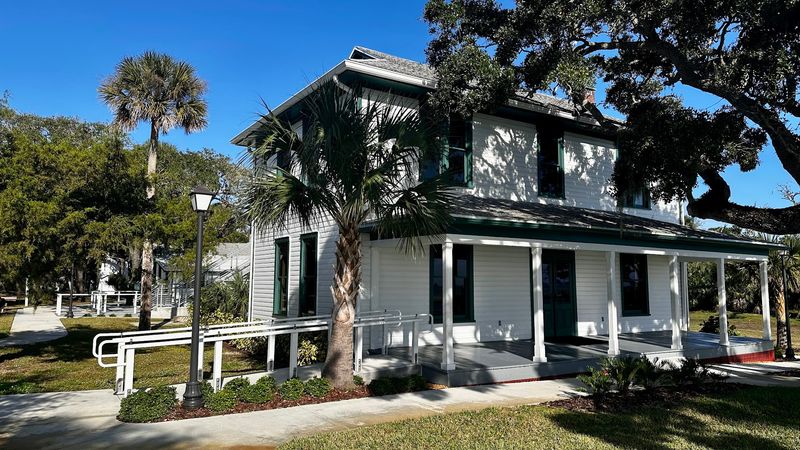
Just a short walk or a brief drive from the main lighthouse grounds sits one of the most overlooked gems in the entire complex: the Constance D. Hunter Historic Pacetti Hotel Museum.
Many visitors almost miss it entirely, so it is worth asking the staff for directions before you leave the main property. A small parking lot near the hotel makes it accessible even if walking the full distance is not an option.
The Pacetti Hotel dates back to the late 1800s and once served as a gathering place for travelers, fishermen, and early Florida tourists who came to enjoy the natural beauty of the inlet area. Stepping inside feels like traveling back in time to an era when Florida was still a wild frontier destination rather than the bustling tourist hotspot it is today.
The building itself is a fascinating example of old Florida vernacular architecture.
Exhibits inside the hotel tell the story of the Pacetti family and the early tourism industry along this stretch of Florida’s coast. Old photographs, furniture, and personal items help bring the story to life in a way that feels both personal and historically significant.
Visitors who make the effort to seek out this additional stop consistently call it one of the most rewarding parts of their entire visit to the lighthouse complex.
Affordable Admission and Family-Friendly Atmosphere
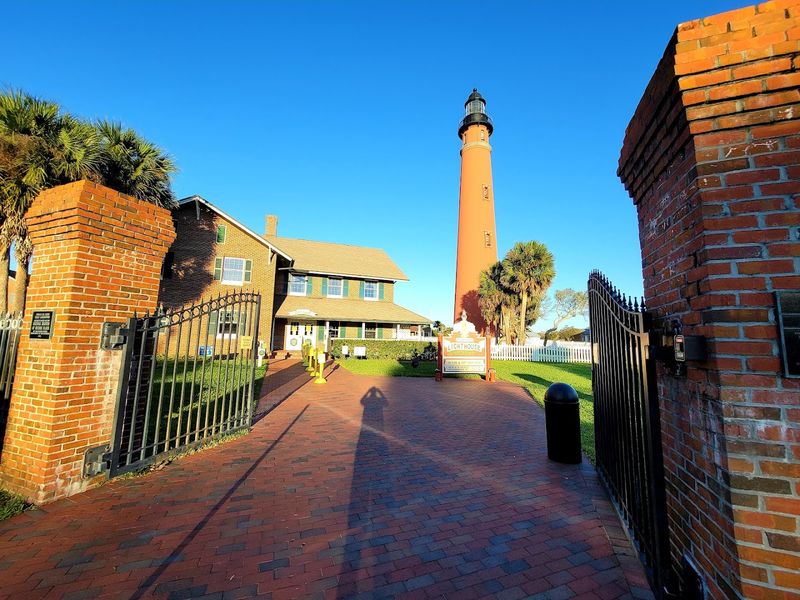
Here is something that might surprise you: visiting one of Florida’s most impressive historic landmarks does not have to cost a fortune. Admission to the Ponce de Leon Inlet Lighthouse and Museum is remarkably affordable, with tickets running around seven to twelve dollars per person depending on age and current pricing.
That fee covers access to the entire property, including all the keeper’s cottages, the museum buildings, and the lighthouse climb itself.
Families with children find this place especially welcoming. There is a playground on the grounds that younger kids enjoy, and the self-guided tour format means you can move at whatever pace works best for your group.
The staff members are consistently praised in visitor reviews for being friendly, patient, and genuinely helpful — whether you have a question about the history or just need directions to the nearest restroom.
Pets are welcome in the parking area and near the gift shop, but are not permitted further into the property. Comfortable walking shoes are a must, and it is worth noting that sandals are not allowed on the lighthouse stairs.
Plan to spend at least two to three hours here to truly enjoy everything the property has to offer. For the price of admission, it is one of the best value experiences on Florida’s east coast.
Practical Tips for Planning Your Visit
Getting the most out of your trip to Ponce de Leon Inlet Lighthouse starts with a little planning. The lighthouse is open daily from 10 AM to 6 PM, which gives you plenty of time to explore without feeling rushed.
Arriving earlier in the day is a smart move, especially during peak tourist season, since the parking lot can fill up and the staircase inside the lighthouse can get busier as the afternoon goes on.
Wear comfortable, closed-toe shoes — this cannot be stressed enough. Sandals are not allowed on the lighthouse stairs, and the grounds involve quite a bit of walking on grass, brick paths, and uneven surfaces.
A hat and sunscreen are also wise additions to your bag, since much of the property is outdoors and Florida sun is no joke, even on mild days.
The lighthouse is located at 4928 S Peninsula Dr, Ponce Inlet, FL 32127, and can be reached by calling +1 386-761-1821 or visiting ponceinlet.org for current pricing and event information. Wheelchair accessibility is available on the grounds, though some interior buildings may have limitations.
Bonus tip from fellow visitors: the ice cream shop across the street makes for a perfect post-visit treat after all those stairs.