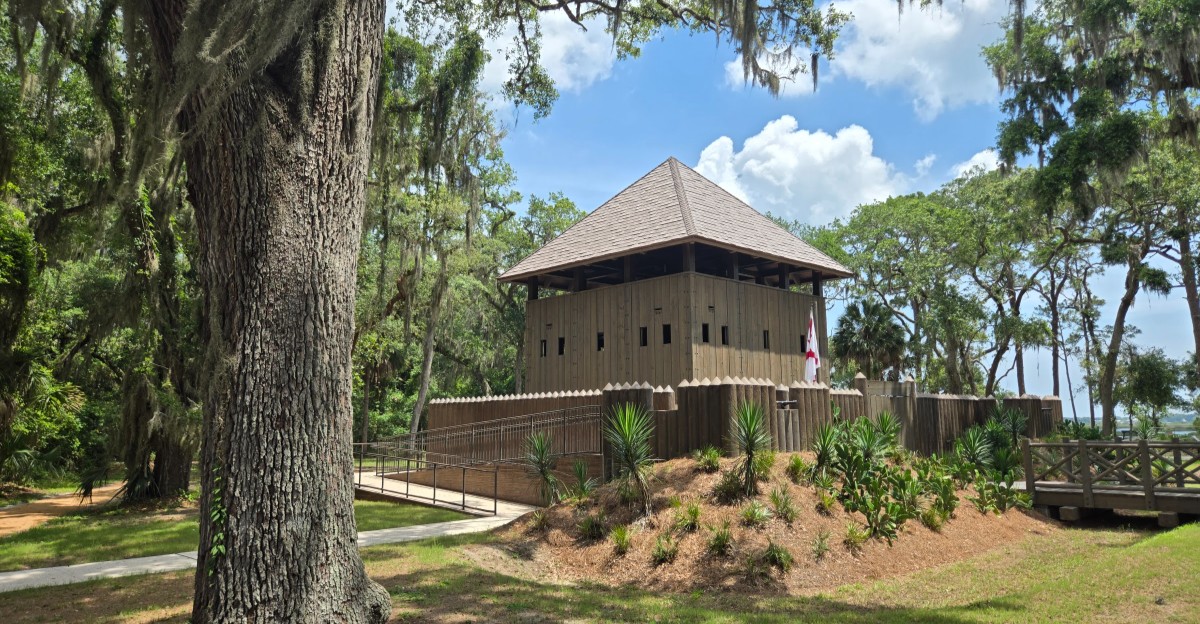
A brand-new, three-story fort replica opened to visitors beside this salt marsh in 2025. It copies a 1738 original that sheltered people who had escaped slavery in the Carolinas and Georgia.
Those freedom seekers did not just hide here.
Spain’s colonial government legally recognized their freedom, and their community became the first sanctioned free African settlement in what would become the United States.
I can’t imagine a more powerful story sitting this quietly beside a Florida marsh. Today you can walk a woodland trail about their journey, stroll a boardwalk over the water, and hear muskets fire on certain Saturdays.
I believe this place deserves a spot on every history lover’s list, right next to the famous forts nearby.
The First Free African Settlement In The Future U.S. Started Right Here
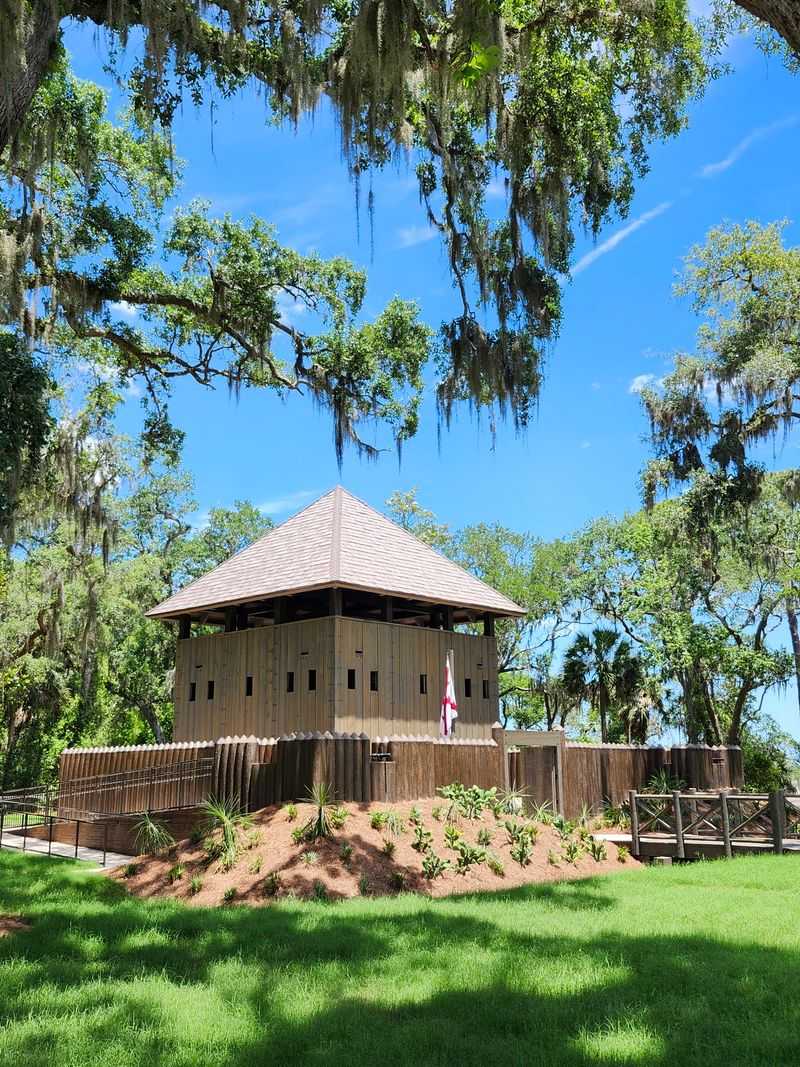
Freedom had a legal address in 1738, and it sat just north of colonial St. Augustine. Fort Mose Historic State Park protects the site of Gracia Real de Santa Teresa de Mose.
Spanish governor Manuel de Montiano chartered the settlement that year. It became the first legally sanctioned free African community in what would become the United States.
The deal was clear, if not simple. People escaping slavery in the British Carolinas and Georgia gained freedom by pledging loyalty to Spain’s king and joining the Catholic faith.
Freedom seekers had been arriving in Spanish Florida since as early as 1678. By 1738, more than 100 had settled here and built a community of their own.
Their leader is a name worth remembering. Captain Francisco Menendez, a formerly enslaved African, commanded the free Black militia that helped guard the northern approach to St. Augustine.
Life here blended Native American, Spanish, and English customs into something entirely new. That mix makes the story richer than any single textbook paragraph could manage.
Fun fact for your next trivia night: the name is pronounced mo-ZAY. Say it right at the gate and you’ll sound like you’ve been studying.
You Can Climb Inside A Full-Scale Fort That Opened In 2025
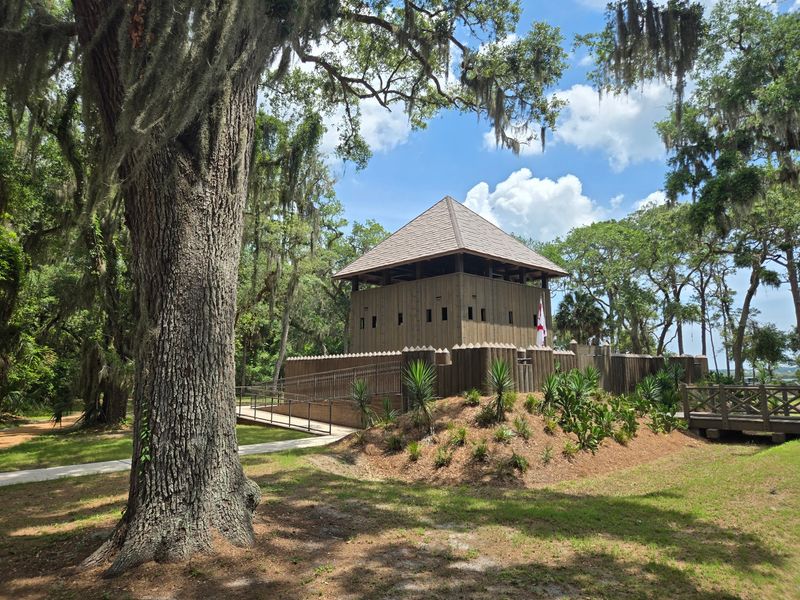
Wood or concrete? Your eyes will vote for wood, but the newest star of the park actually uses a reinforced concrete frame built to look like timber.
The full-scale replica of the original 1738 fort was completed in 2025. It rises three stories, giving the old story a very real shape you can stand inside.
That matters more than it sounds. Reading about a frontier fort is one thing, but seeing its actual size helps the history click into place.
Smart builders chose that concrete frame for a reason. Florida’s coastal weather is tough on wooden structures, so this approach should help the replica last for generations of visitors.
Guided fort tours usually run at 10 a.m. and 1 p.m. on days the visitor center is open. Each one lasts about an hour, so plan your morning or afternoon around it.
A tour adds the human voices behind the walls. You’ll learn who lived here, what they guarded, and why this spot mattered so much.
Tip from one history fan to another: visit the museum first. The fort makes even more sense once you know the people behind it.
Start With The Museum, Because The Fort Hits Harder Afterward
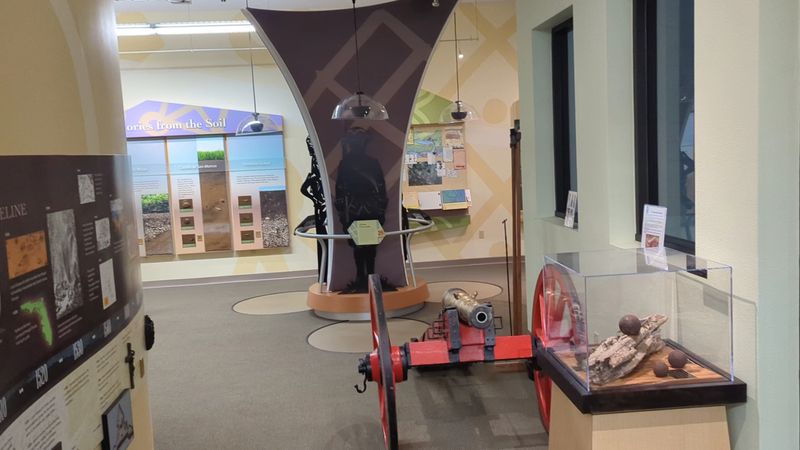
Fifteen minutes is all it takes to go from curious to completely hooked. That’s the length of the film shown in the visitor center, titled Take a Walk Through History!
The movie sets the scene before you explore. Think of it as the trailer that makes the whole feature make sense.
After the film, the interactive museum takes over. Multimedia exhibits, historical videos, paintings, and historic maps walk you through the people and events of Fort Mose.
Archaeology fans get their moment too. Artifacts recovered from the site are on display, and hands-on learning stations let younger visitors touch and test as they go.
The site itself has a comeback story. Archaeologists rediscovered Fort Mose in the late 1980s and early 1990s after centuries of the location fading from view.
The museum keeps a different schedule than the grounds. It opens Thursday through Monday and closes Tuesdays and Wednesdays, so check before you head over.
There’s a small museum fee, and kids under six get in free. Restrooms are inside the building, which every parent will quietly appreciate.
Give yourself time here instead of rushing out to the fort. The details you pick up now will pay off outside.
Follow The Footsteps Of Freedom Seekers On A Shady Woodland Path
Some trails are about the view. The Flight to Freedom Trail is about the journey, and it tells that story one interpretive panel at a time.
The path winds through lush woodland with shade overhead. Along the way, panels illustrate how people escaping slavery traveled south toward Spanish Florida.
Walking it gives the history a physical feel. You’re moving forward step by step, just as freedom seekers once pushed ahead toward safety.
The walk is easygoing, so families can manage it without much fuss. Kids can treat each panel like a checkpoint, which keeps little legs moving.
Bring water and a bit of patience for reading. The panels reward anyone who stops long enough to take in the art and the words.
Bug spray is a smart idea too, since this is coastal woodland. Florida mosquitoes rarely miss a chance to say hello.
I like how this trail turns a quiet walk into something meaningful. It reminds you that freedom here was earned through miles of risk and courage.
Pair it with the museum and the fort for the full picture. Together, they tell one connected story from start to finish.
Bring Binoculars, Because That Marsh Boardwalk Is Birding Heaven
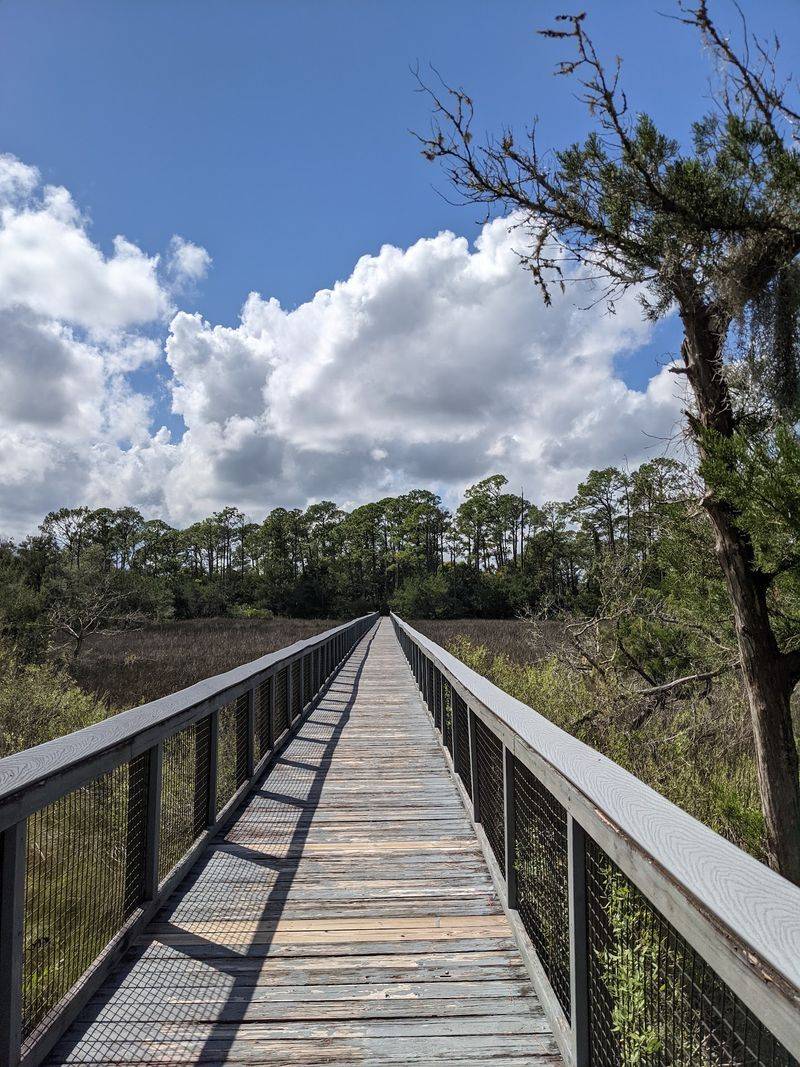
Roseate spoonbills, wood storks, and bald eagles all make the guest list here. Not bad for a park best known for its history.
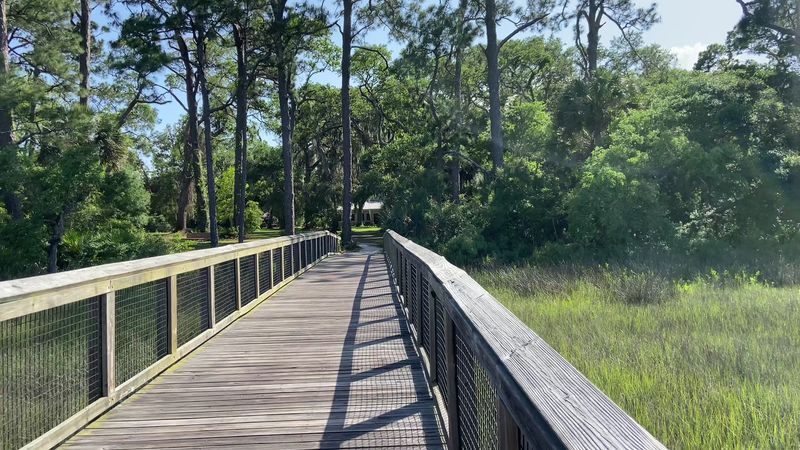
Two wheelchair-accessible observation boardwalks stretch out over the salt marsh. One runs roughly 650 to 700 feet, which gives you plenty of room to scan the horizon.
The marsh opens wide in every direction. It’s a calm, roomy view that feels miles away from the busy streets of St. Augustine.
Birders can watch for great blue herons, white ibis, green herons, and marsh wrens. Keep your ears open for common yellowthroats and red-bellied woodpeckers in nearby trees.
Other wildlife shows up too. White-tailed deer, river otters, raccoons, alligators, and even bobcats have been spotted around the park.
Patience is your best gear after binoculars. Stand still for a few minutes and the marsh starts revealing who’s been hiding in plain sight.
Interpretive signs along the way explain the plants, wildlife, and history of the area. That means even non-birders will walk away a little smarter.
Sunny days can get warm on open boardwalks. A hat and sunscreen will make your marsh time far more pleasant.
Paddlers, Check The Tide Chart Before You Launch
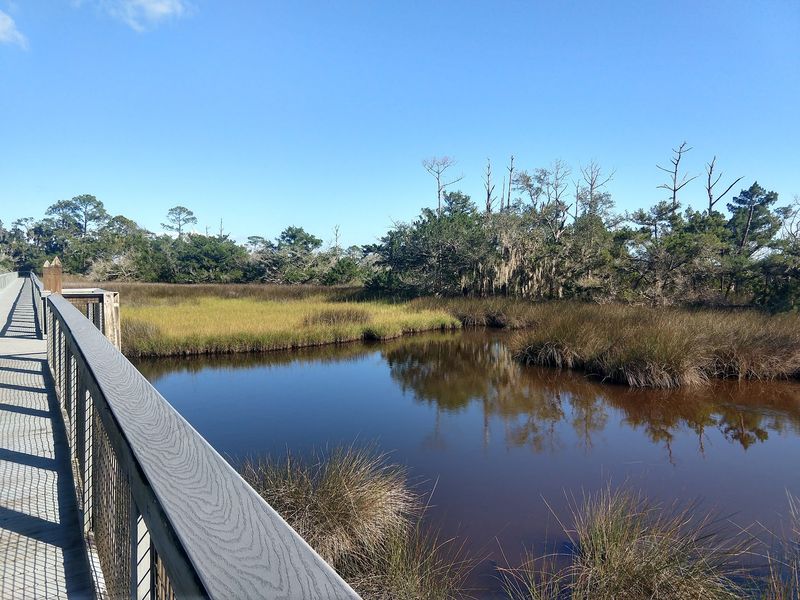
Timing is everything on the water here. The kayak and canoe launch boardwalk sits on a tributary that’s accessible at high tide.
Show up at low tide and you might just be admiring mud. Show up at high tide and a whole marsh route opens in front of you.
From the launch, paddlers can connect to Robinson Creek and the Tolomato River. That’s a scenic way to see the same marsh the boardwalk overlooks, only closer.
Gliding through these waters adds a fresh layer to the history. Water routes mattered in colonial Florida, and the replica barca chata on the grounds hints at that.
Bring your own kayak or canoe, plus a life jacket. Check the weather and wind before heading out, since open marsh can get breezy fast.
Wildlife watching gets more personal from a boat seat. Wading birds, fish, and maybe an otter could share the creek with you.
Pack water, sun protection, and a dry bag for your phone. A wet phone is a sad souvenir.
Paddling here feels peaceful and slow in the best way. It’s a lovely way to end a morning of museum learning.
Kids Can Join The Militia On The First Saturday Of Every Month
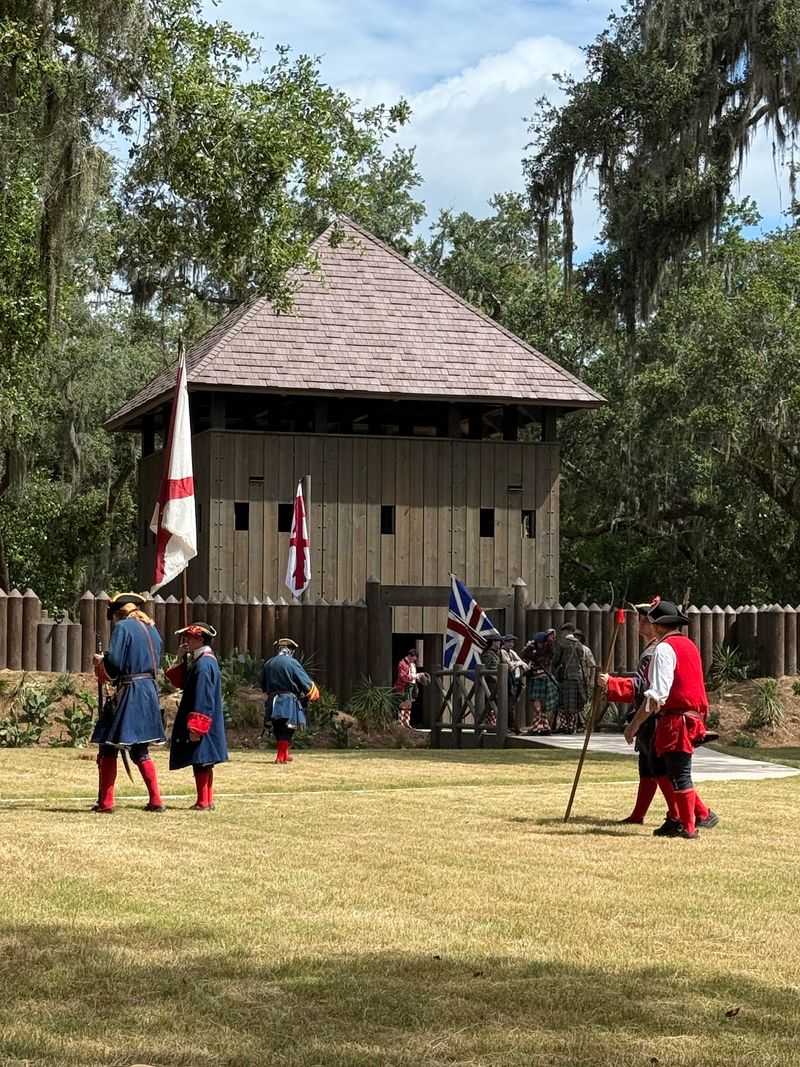
Musket smoke and wooden toy muskets make for one memorable Saturday. The First Saturday Monthly Militia Muster brings the Fort Mose Militia to life with firing demonstrations.
Kids get in on the action too. Junior Militia training lets young recruits drill with wooden toy muskets, no actual gunpowder required.
It’s a smart way to teach history without a single worksheet. Children remember marching and drilling far longer than any date on a page.
The militia’s real story gives these demonstrations weight. Captain Francisco Menendez led free Black soldiers who helped defend Spanish Florida’s northern frontier.
In June 1740, the original fort saw battle with British troops and was largely destroyed. The community later rebuilt nearby and lived there from 1752 to 1763.
Special events fill out the calendar beyond the muster. Look for Flight to Freedom programs, Fort Mose Founders Day, and Fort Mose First Harvest.
The park has also hosted the Fort Mose Jazz and Blues Series. Music on historic ground is a pretty great way to spend an evening.
Event schedules can shift, so check the park calendar before visiting. Planning around a muster turns a good trip into a fantastic one.
Pack A Lunch And Claim A Table Under The Oaks
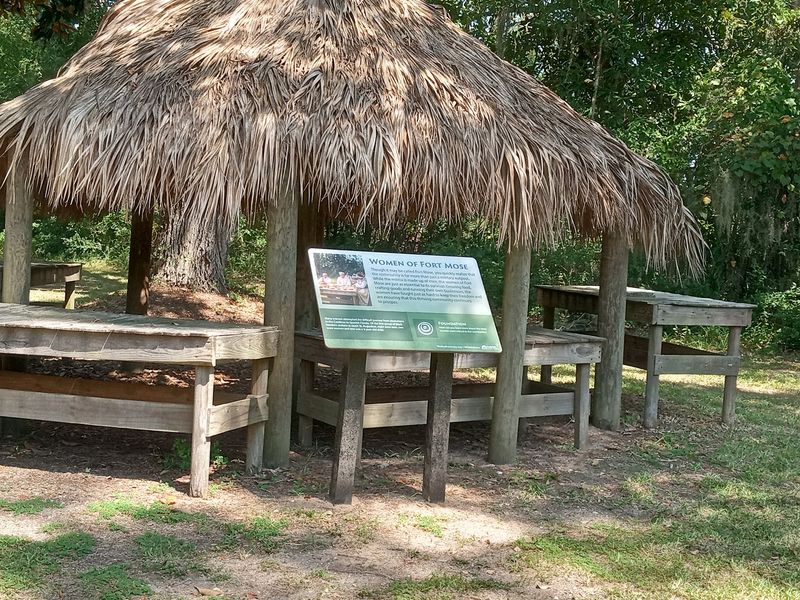
Ten tables under a shady oak canopy sounds like a pretty solid lunch plan. That larger picnic area sits right behind the visitor center.
A second option is a sheltered, accessible picnic pavilion. It’s handy when Florida’s sun or a passing shower gets a little too enthusiastic.
There’s no food service listed for the park, so pack your own meal. Sandwiches taste better after a morning of marsh views and museum discoveries anyway.
While you’re snacking, take a look at a few smaller features nearby. The grounds include a replica chosa, which is a cooking hut, plus a small historic garden.
A replica barca chata, a Spanish flat boat, sits near the fort too. These pieces show how daily life worked for families at the settlement.
Accessibility gets real attention here. The restrooms, visitor center, and main boardwalks are wheelchair accessible.
Manual wheelchairs are available first-come, first-served during visitor center hours. So are iPods with assisted listening devices for audio tours.
Geocachers have something to hunt as well. Bring your app and see what the park has hiding out there.
Leave your table cleaner than you found it. The oaks deserve that much respect.
Plan Your Trip, Then Let The Story Travel Home With You
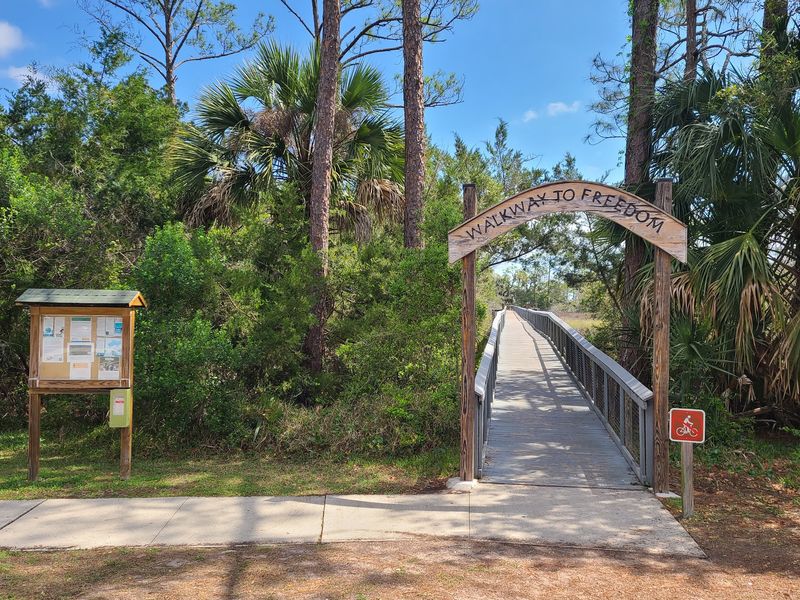
Getting there is the easy part. Fort Mose Historic State Park sits at 15 Fort Mose Trail, St. Augustine, FL 32084, just a short drive from the historic downtown.
The grounds are generally open daily, while the museum keeps Thursday through Monday hours. Times can change, so confirm before you go.
Recognition for this site keeps stacking up. It became a National Historic Landmark and joined the National Register of Historic Places on October 12, 1994.
In 2009, the National Park Service named it a precursor site of the National Underground Railroad Network to Freedom. That’s a big title for a quiet marsh-side park.
It’s also part of the Gullah Geechee Cultural Heritage Corridor. The Florida African American History Trail includes it too, which makes it a great anchor for a wider heritage road trip.
The settlement’s story didn’t end here. When Spain handed Florida to Britain in 1763, residents relocated to Cuba to keep their freedom.
I believe that ending makes the visit even more moving. These families chose freedom again, even if it meant starting over across the sea.
Give yourself a few unhurried hours. This story deserves more than a quick photo stop.