
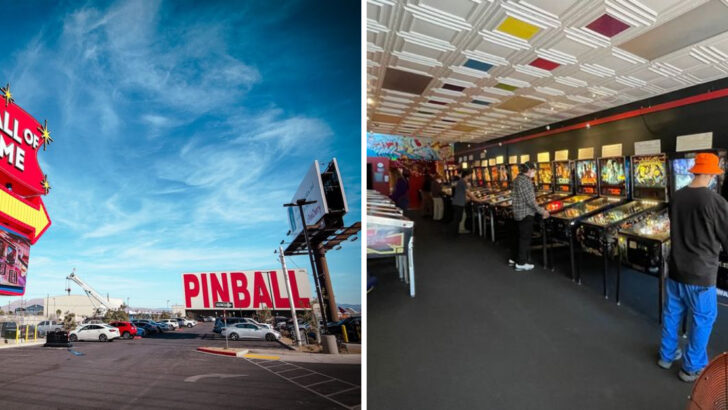
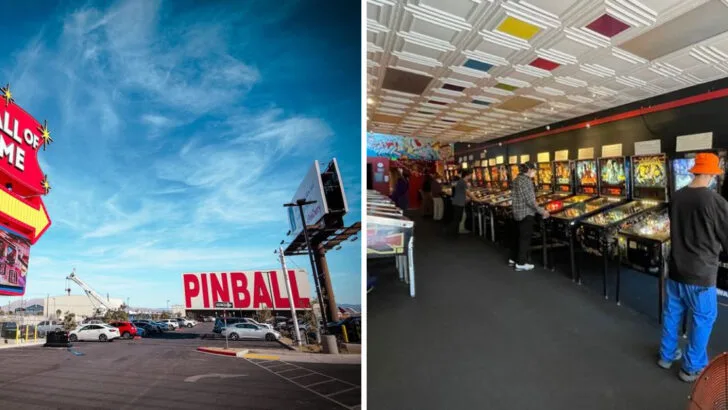
Tucked along the famous Las Vegas Strip, the Pinball Hall of Fame is unlike anything else in the city — no slot machines, no shows, just rows upon rows of glowing, chiming, totally playable pinball machines.
This nonprofit museum is widely considered home to one of the world’s largest publicly accessible collections of playable pinball machines, featuring hundreds of tables spanning several decades.
Whether you’re a longtime pinball fan or someone who’s never touched a flipper in your life, this place has something special waiting for you.
Get ready to drop some quarters and step back in time.
A One-of-a-Kind Hands-On Pinball Museum
Forget passive exhibits behind velvet ropes — at the Pinball Hall of Fame, every machine is meant to be touched, played, and enjoyed. This nonprofit museum is entirely dedicated to playable pinball machines and classic arcade games, making it one of the most interactive museums you’ll ever visit.
Most museums ask you to look but not touch. Here, the whole point is the opposite.
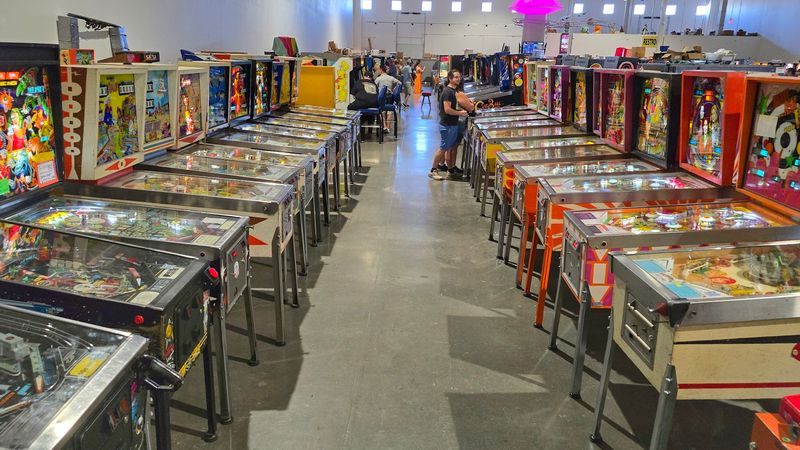
Hundreds of machines line the floor, each one restored and ready for play. Visitors of all ages wander the aisles, quarters in hand, choosing their next game from decades worth of pinball history.
What makes this place truly special is its volunteer-run, community-driven spirit. Nobody’s here chasing profit — the people keeping this museum alive genuinely love pinball.
That passion shows in every polished bumper and every machine humming with life. There’s no flashy casino gimmick, no overpriced gift shop pressure.
Just pure, old-school fun in a welcoming space that feels like stepping into someone’s ultimate pinball dream come true.
Founding and History of the Museum
Every great museum starts with one person who refuses to stop collecting. For the Pinball Hall of Fame, that person is Tim Arnold, a dedicated pinball enthusiast whose personal obsession with the game eventually grew into something the whole world could enjoy.
Arnold spent years accumulating machines, repairing them, and dreaming of a space where the public could experience pinball history firsthand. After significant fundraising efforts and strong support from the Las Vegas community, the museum officially opened its doors in 2006.
It wasn’t an overnight success — it was the result of years of hustle, heart, and a whole lot of technical know-how.
What started as one collector’s passion project has since become a beloved Las Vegas landmark. The museum’s nonprofit status reflects Arnold’s original vision: this was never about getting rich.
It was about preserving a piece of American gaming culture for future generations. Today, thousands of visitors walk through those doors each year, all because one guy loved pinball enough to share it with the world.
That’s a pretty remarkable origin story for any museum.
Growth and Relocation to Las Vegas Boulevard
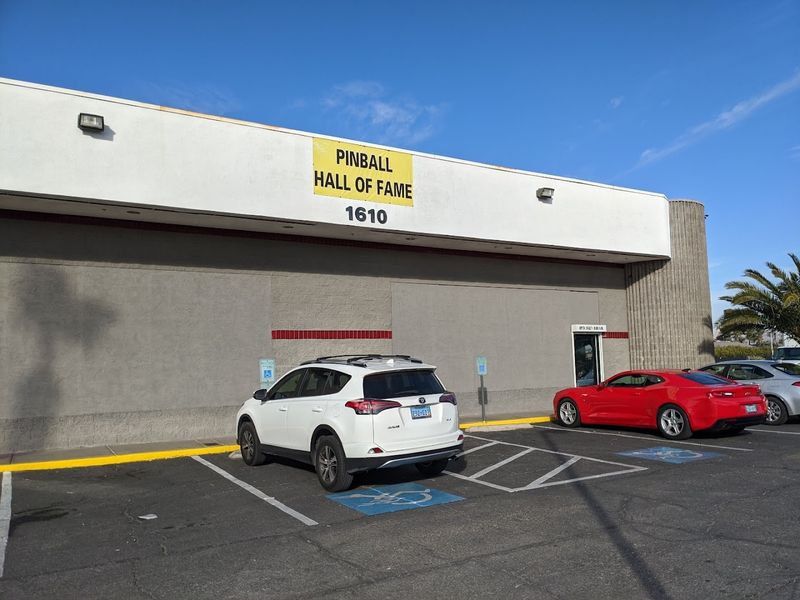
Back in its early days, the Pinball Hall of Fame operated out of a much smaller space near Tropicana Avenue. As the collection grew and the crowds followed, it became clear that the museum had outgrown its original home.
Something bigger was needed — and something better was coming.
Throughout the 2000s, the museum steadily expanded its collection and its reputation. Word spread among pinball fans, tourists, and locals alike that this was a must-visit Las Vegas attraction.
The growing popularity created a happy problem: not enough room for all the machines and all the people who wanted to play them.
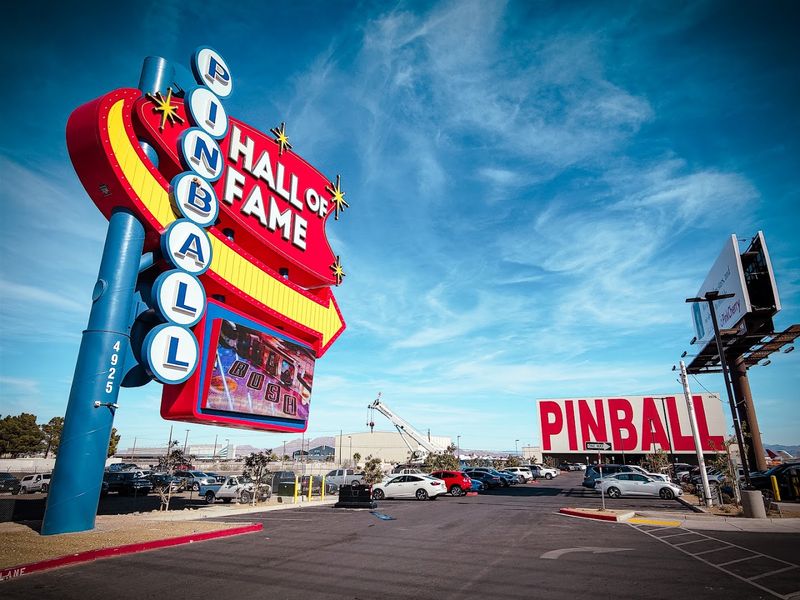
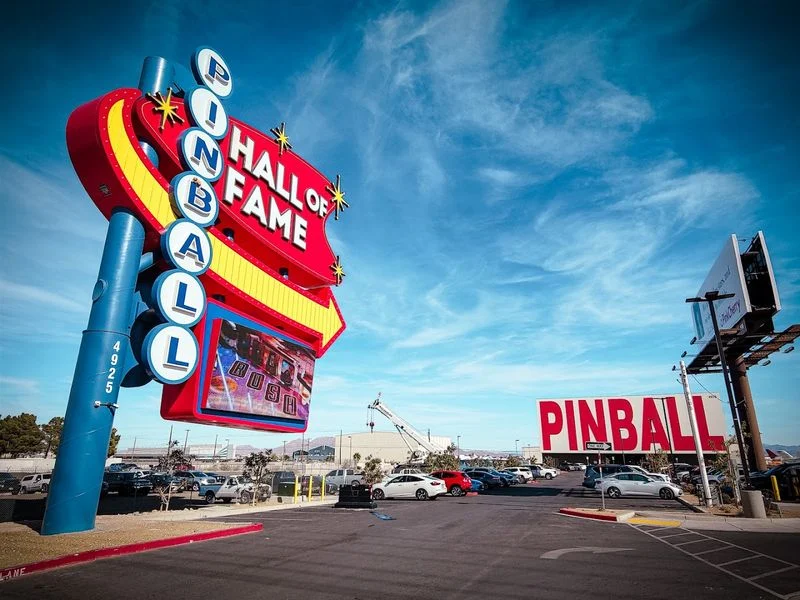
In 2021, the Pinball Hall of Fame made a major move to a brand-new, purpose-built facility at 4925 Las Vegas Blvd S. The new building clocks in at an impressive 25,000 square feet — giving the collection room to breathe and giving visitors room to roam.
Sitting right on the famous Las Vegas Strip, the new location puts the museum in excellent company. It’s now easier than ever to find, and the extra space means even more machines are available to play.
The move was a game-changer in every sense of the word.
The Incredible Scope of the Collection
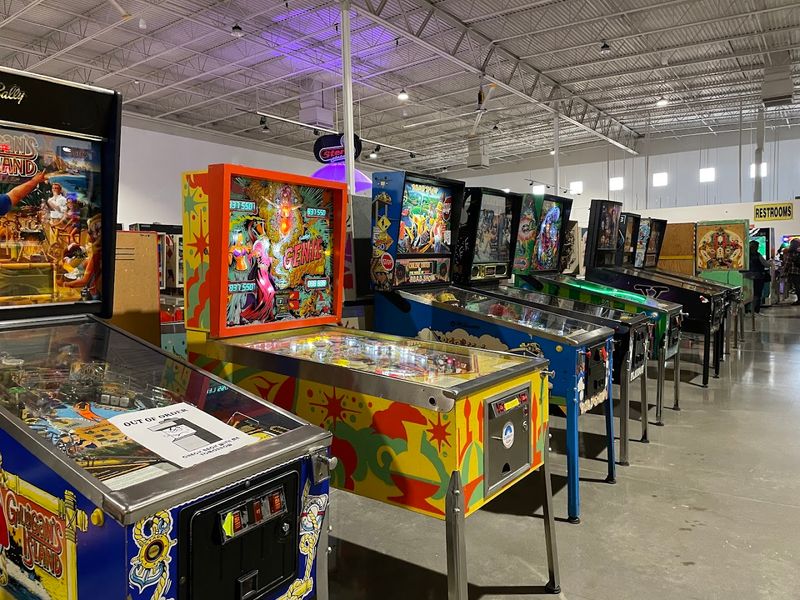
Hundreds of pinball machines. Decades of history.
One roof. The collection at the Pinball Hall of Fame is genuinely staggering in its size and variety, covering a huge stretch of pinball’s golden age from the 1950s all the way through the 1990s.
You’ll find early electromechanical tables from the 1950s and 1960s, where the sounds are purely mechanical — clicks, bells, and chimes produced without a single microchip. Move further down the rows and the machines evolve: solid-state electronics replace the old relay systems, digital displays replace the spinning number wheels, and the themes get wilder and more elaborate.
By the time you reach the 1990s machines, you’re looking at full-color artwork, multiball modes, ramps, loops, and licensed themes based on movies and TV shows. Each era has its own personality, and the museum preserves all of it.
Seeing a 1958 machine sitting just a few feet from a 1995 machine puts pinball’s entire evolution right in front of you. For anyone curious about how games and technology changed over half a century, this collection tells that story better than any textbook ever could.
The Fully Playable, Hands-On Experience
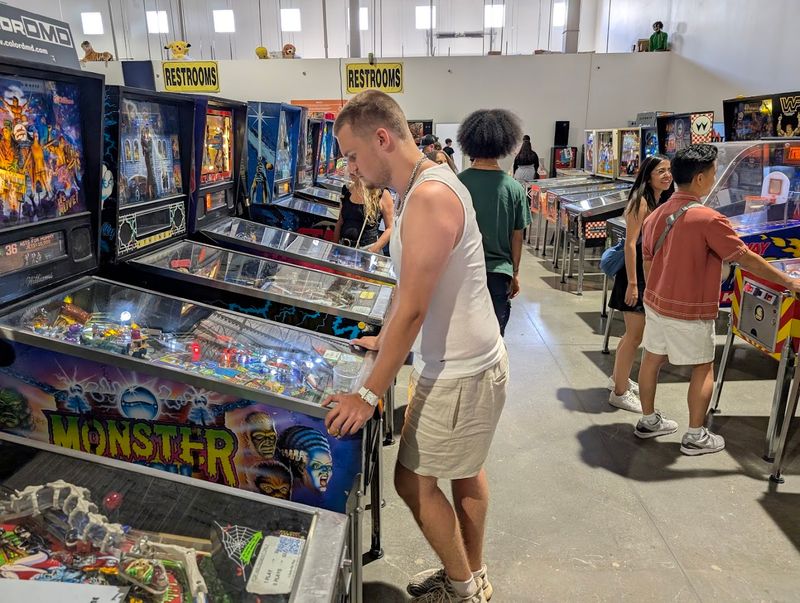
Some museums make you feel like you have to whisper and walk on tiptoes. The Pinball Hall of Fame is the complete opposite — this place practically begs you to make noise, celebrate your high score, and keep feeding quarters into the machines.
Every single pinball machine and arcade game on the floor is available for play. Older machines typically cost just 25 cents per game, while newer or more complex tables run around 50 cents.
That means you can spend an afternoon playing dozens of different games without spending much money at all. Bring a roll of quarters and you’re set for hours.
The hands-on nature of this experience is what separates it from every other museum in Las Vegas — or anywhere, really. You don’t just read about pinball history; you live it.
Pull back that plunger, watch the steel ball launch, and try desperately to keep it from draining. That thrill doesn’t get old, no matter how many times you’ve played.
Kids who’ve never seen a pinball machine before leave completely hooked, and adults who grew up with these games get a rush of pure nostalgia. It’s interactive history at its most fun.
Restoration and Maintenance by Dedicated Volunteers
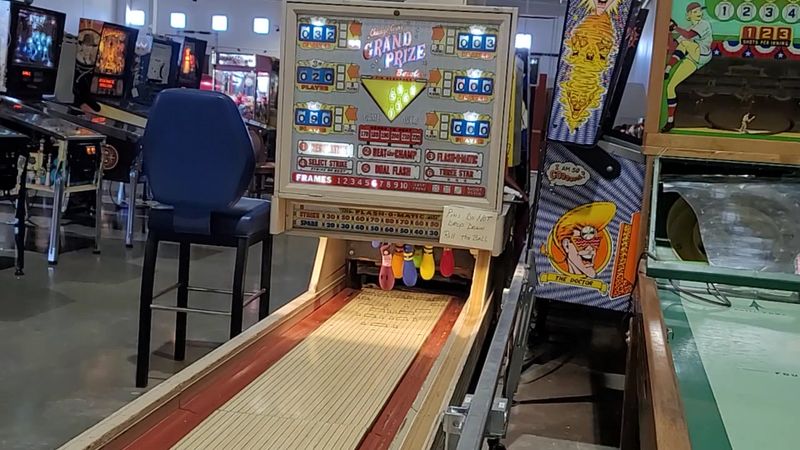
Keeping hundreds of vintage pinball machines in working order is no small task. These are old, complex machines with thousands of moving parts — springs, solenoids, flippers, bumpers, and circuit boards that were built decades before most of today’s visitors were born.
Maintaining them takes real skill and serious dedication.
That’s where the museum’s volunteer technicians come in. These are pinball fans who also happen to know their way around electronics and mechanics.
They work to keep each machine as close to its original condition as possible, prioritizing playability without sacrificing authenticity. It’s a labor of love that never really ends.
Because of the sheer size of the collection and the age of many machines, you might occasionally find a game marked out of order. That’s just the reality of running a museum of this scale with vintage equipment.
But the volunteers do an impressive job keeping the vast majority of machines up and running at any given time. Their commitment to preservation goes beyond just fixing broken parts — they’re protecting pieces of cultural history.
Every repaired flipper and every recalibrated bumper is a small act of keeping the past alive for future generations to enjoy firsthand.
Ambiance and Atmosphere Inside the Museum
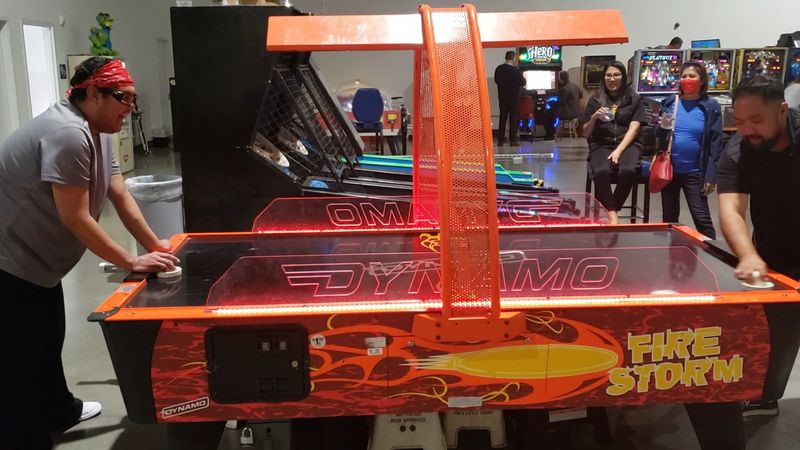
Walk through the doors of the Pinball Hall of Fame and the atmosphere hits you instantly. The air hums with the sound of steel balls ricocheting off bumpers, electronic sound effects firing in every direction, and the occasional triumphant clang of a jackpot being hit.
It’s sensory overload in the best possible way.
Rows of machines stretch out in every direction, each one glowing with its own colorful artwork and backglass. Some machines feature elaborate hand-painted scenes; others show licensed characters from movies and TV.
The visual variety alone is worth the visit. No two machines look exactly alike, and every turn of the aisle reveals something new to discover.
There’s a particular kind of magic that comes from being surrounded by decades of pinball design all at once. The older machines create a warm, mechanical soundtrack — clicks and bells that feel almost musical.
The newer ones add synthesized voices and digital sound effects to the mix. Together, it creates an atmosphere that feels like stepping through a time machine.
Whether you’re eight years old or eighty, that feeling of walking into this room for the first time is something you won’t forget anytime soon.
Affordability and Accessibility for All Visitors
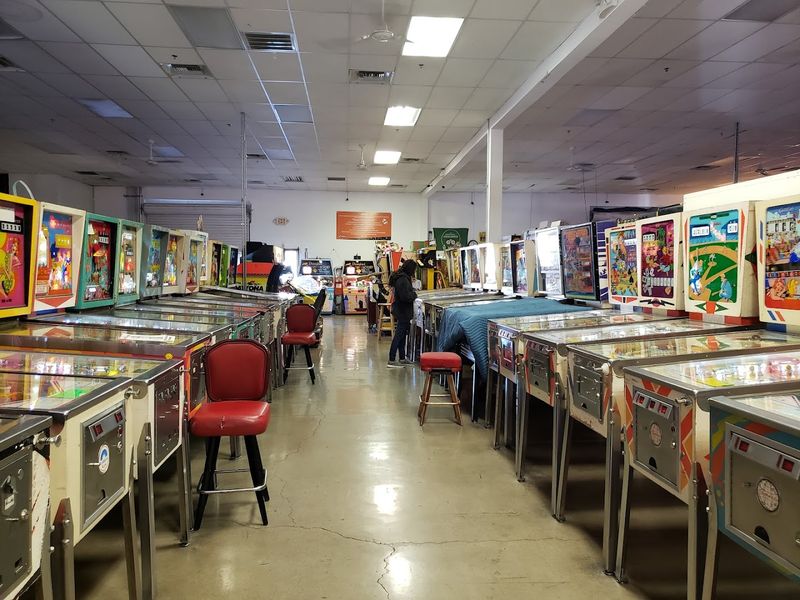
Las Vegas has a well-earned reputation for being expensive, but the Pinball Hall of Fame flips that script entirely. Walking through the front door costs you absolutely nothing.
There’s no admission fee, no ticketing line, no wristband to buy. You simply walk in and start exploring.
The only money you spend is on the games themselves, and the prices are refreshingly old-school. Many of the vintage machines cost just a quarter per play — the same price they charged when these games were brand new.
Even the newer machines top out at around 50 cents. For a Las Vegas attraction, that kind of pricing is almost unheard of.
This affordability makes the museum genuinely accessible to everyone. Families on a budget can spend a couple of hours here without worrying about the cost adding up too fast.
Solo travelers can wander through at their own pace. Groups of friends can challenge each other for high scores without anyone feeling financially pressured.
The no-admission-fee policy reflects the museum’s core values — this is a community space built for everyone, not just those with deep pockets. In a city full of expensive entertainment options, that openness is genuinely refreshing.
Community Spirit and Charitable Mission
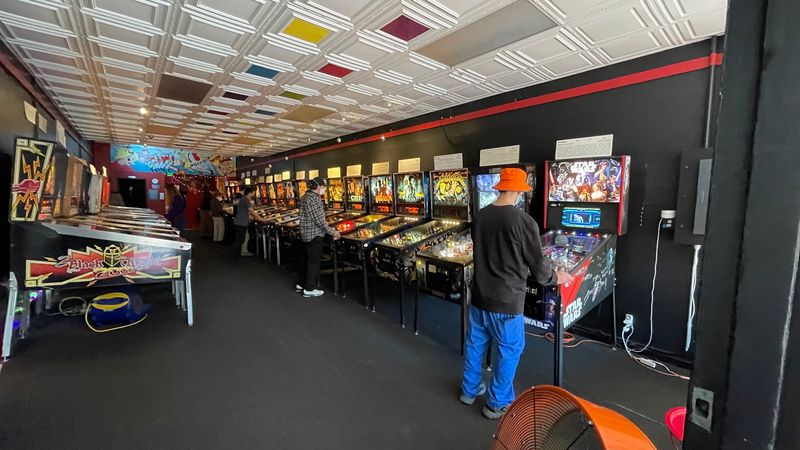
There’s something extra meaningful about having fun at the Pinball Hall of Fame — because your quarters aren’t just buying you a game. They’re helping support local charities in the Las Vegas community.
The museum operates as a nonprofit project of the Las Vegas Pinball Collectors Club, and any revenue beyond what’s needed to keep the lights on and the machines running goes straight to charitable causes.
That philanthropic mission gives every visit a feel-good dimension that most entertainment venues simply don’t have. You’re not filling the pockets of a casino corporation or a for-profit entertainment company.
You’re contributing to something bigger — a community-driven organization that genuinely cares about the people around it.
The volunteer-run model reinforces this spirit even further. The people staffing the museum and maintaining the machines aren’t doing it for a paycheck.
They’re doing it because they believe in the mission. That kind of dedication is rare and worth appreciating.
When you visit the Pinball Hall of Fame, you become part of a small but meaningful chain of good — a pinball enthusiast having fun while simultaneously helping neighbors in need. It’s hard to think of another Las Vegas attraction that can say the same thing.
Essential Visitor Tips Before You Go
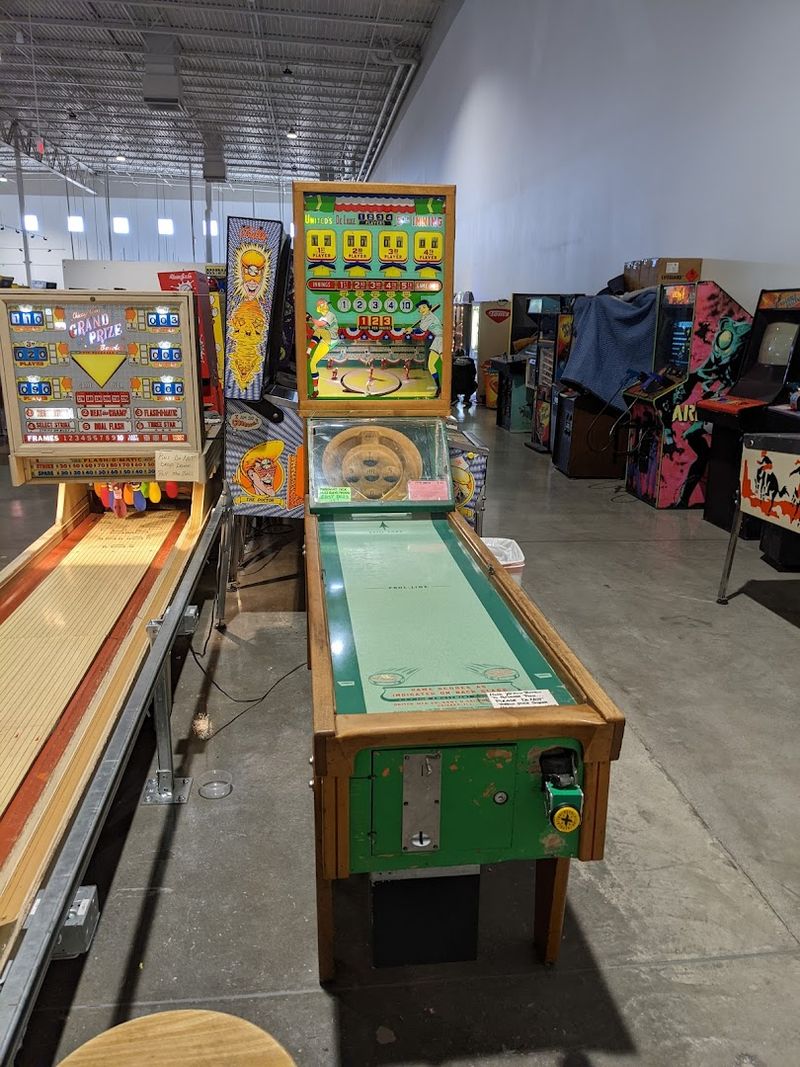
Planning a visit to the Pinball Hall of Fame is easy, and a little preparation goes a long way toward making the most of your time there. The museum is located at 4925 Las Vegas Blvd S., Las Vegas, NV — right on the famous Strip, which makes it easy to combine with other nearby attractions.
The museum is open year-round, typically from morning through the evening on most days. Hours can occasionally shift, so checking their official website or calling ahead before you visit is always a smart move.
Free parking is available on-site, which is another rare perk for a Las Vegas Strip location.
The most important thing to bring? Quarters.
Lots of them. While some locations nearby may have change machines, coming prepared with a decent supply of quarters will save you time and keep you playing without interruption.
The museum is family-friendly, welcoming visitors of all ages, and the layout is easy to navigate. Wear comfortable shoes — you’ll be on your feet exploring row after row of amazing machines.
Whether you’re popping in for 30 minutes or spending half the day there, the Pinball Hall of Fame delivers a genuinely unique Las Vegas experience that’s fun, affordable, and totally unforgettable.