Somewhere in the Missouri Ozarks, a river starts its life by bursting straight out of the bottom of a bluff.
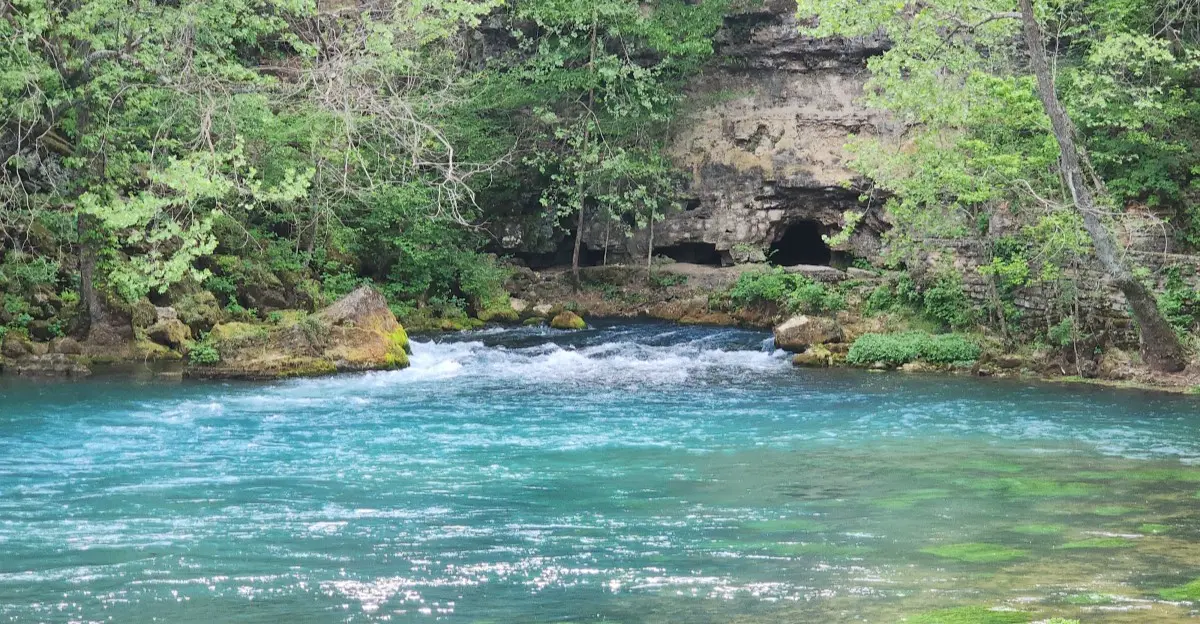
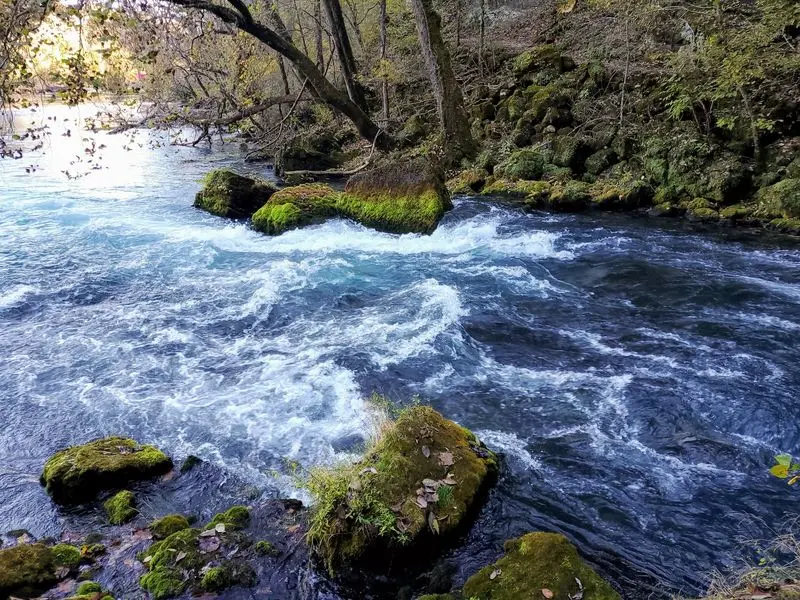
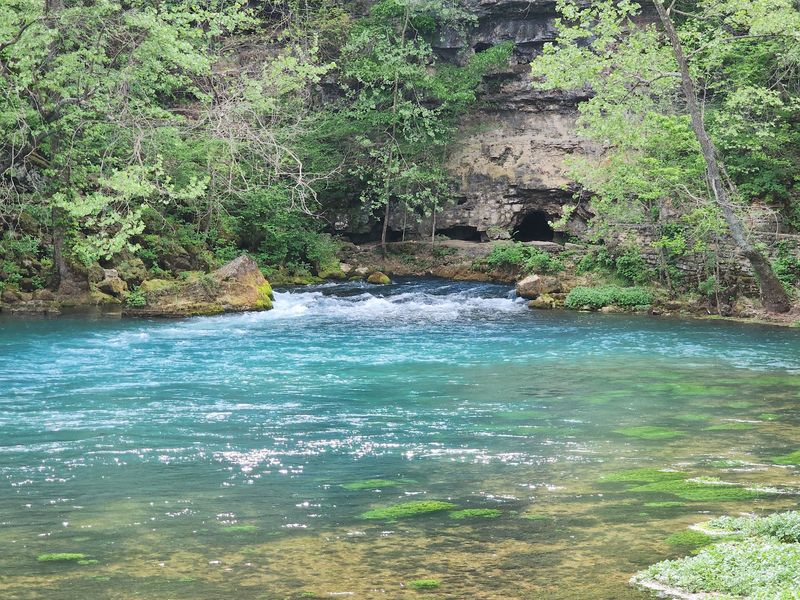
Each day, millions upon millions of gallons rise from underground and rush away in a channel so blue it looks edited.
There is no ticket booth, no gate fee, and no closing time. Kids stare at it, grandparents stare at it, and phones come out every few seconds for photos.
The spot sits near the small town of Van Buren, far from traffic jams and office towers.
It ranks among the largest springs in the country, yet many people have never heard of it.
Where the River Begins
Some road trip stops are just for stretching your legs. Big Spring – Ozark National Scenic Riverways is the kind of stop that makes you cancel the next three plans.
The spring sits just outside Van Buren, MO 63965, in the southeastern Missouri Ozarks of the United States. It belongs to the Ozark National Scenic Riverways, a park run by the National Park Service that protects the Current and Jacks Fork rivers.
Getting there is simple. From Van Buren, a short drive south along a paved park road takes you right to the spring area, with parking close to the water.
The water itself comes up at the foot of a towering dolomite bluff. From there, it races through a short branch before joining the Current River nearby.
Here is the part people love most: the park is open 24 hours a day, every day of the week. There is no entrance fee, so you can pull in early in the morning or late in the day.
Bring a full gas tank, though, because services thin out once you leave town.
Numbers That Sound Made Up
Two hundred eighty-eight million gallons. That is roughly how much water Big Spring pushes out on an average day, and on some days the figure climbs even higher.
It is hard to wrap your head around that number. So try this: the flow is strong enough to create its own river branch the moment it leaves the ground.
Big Spring is often called one of the largest springs in the United States. It is also counted among the largest springs in the world, which is a big title for a spot tucked into a quiet Missouri forest.
All that water comes from rain and streams that soak into the ground across a wide area. It travels through underground passages in the rock before finding its way out here.
Scientists have used dye tracing to learn that some of the water travels many miles underground before surfacing.
Fun fact for the kids in the back seat: the spring never takes a day off. It keeps flowing in every season, which means your visit always comes with a full show.
Why the Water Turns That Blue
First-timers usually ask the same question within about ten seconds of arriving. Is that color real?
Yes, it really is. The deep turquoise comes from the water itself and the tiny bits of dissolved minerals it carries from deep in the rock.
As water moves through underground limestone and dolomite, it picks up minerals. When sunlight hits the clear water, those minerals help reflect blue and green tones back to your eyes.
Depth matters too. Deeper sections tend to look darker blue, while shallow edges shift toward aqua.
Photos rarely capture the color the way it looks in person. Still, sunny days give you the best chance at a great shot, especially when the light reaches straight down into the channel.
For photographers, a tip worth remembering is to try a polarizing filter or simply tilt your phone to cut glare. Your friends back home might accuse you of using filters anyway, so go ahead and save the original files as proof.
A Built-In Cool Zone
Missouri summers can get hot and sticky. Big Spring has a quiet trick for that problem.
The water comes out of the ground at around 58 degrees Fahrenheit all year long. That steady temperature means the air right above the water often stays noticeably cooler than the parking lot.
On warm days, breezes moving across the spring carry that coolness along the path. Many families end up lingering near the edge longer than they planned simply because it feels so comfortable.
Go ahead and dip your fingers in near the spot where the water rises. It is a small moment, but plenty of people call it the highlight of their stop.
Keep in mind that the same cool temperature works in reverse during winter. On chilly mornings, the water can actually be warmer than the air, and you may spot mist floating above the surface.
So pack a light jacket even in summer. You might not need it, but it is nice to have when you settle in for a long look.
Little Caves Along the Bluff
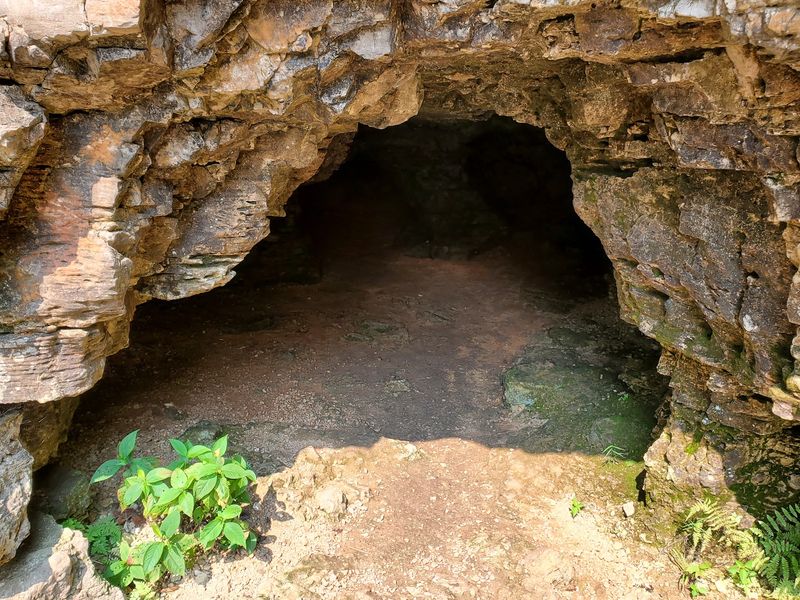
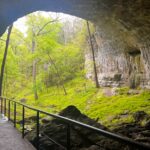
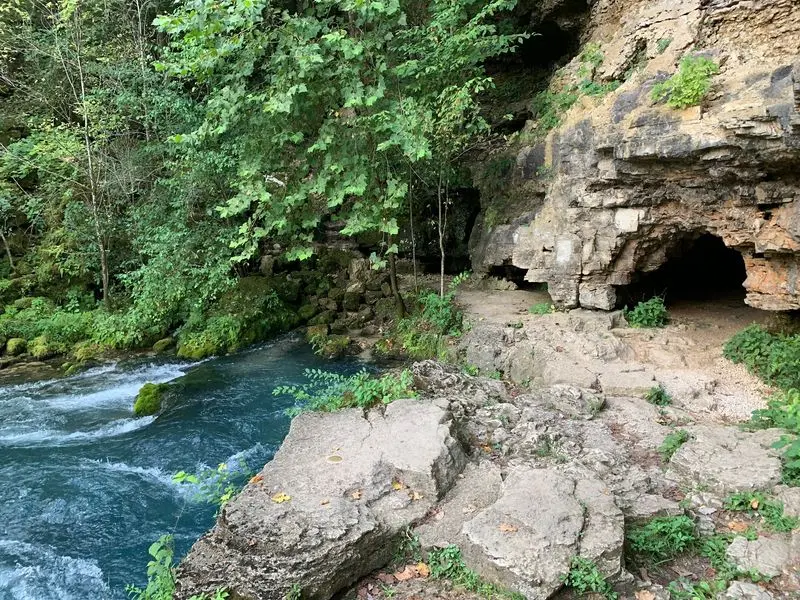
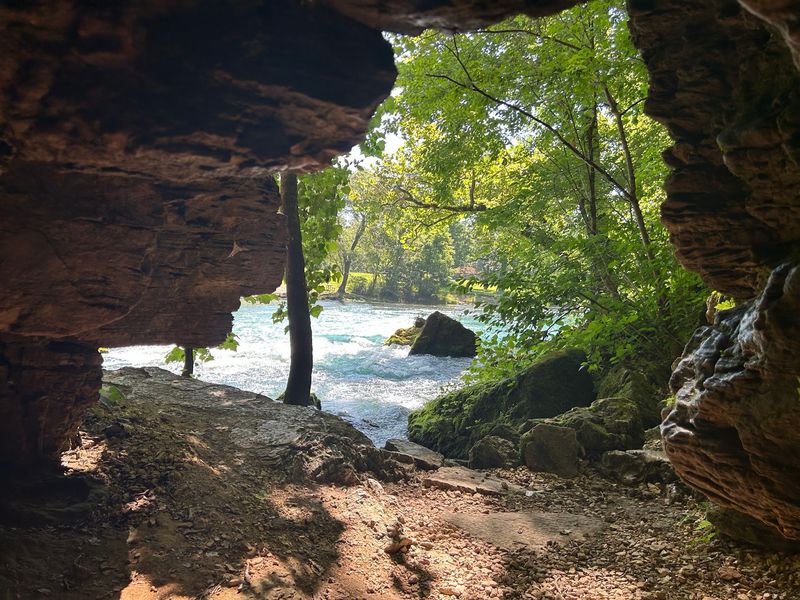
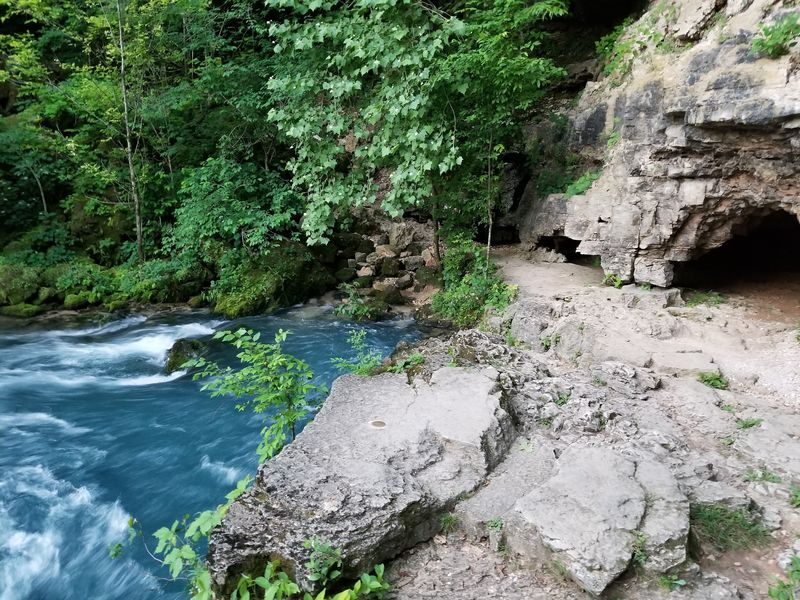
Right next to the rushing water, the bluff hides a few surprises. Small caves and rock shelters open up along the path that curves around the spring.
They are not giant caverns with guided tours. Instead, they are bite-sized openings that are fun to peek into, especially for kids who like a little adventure.
Paved paths lead most of the way toward the caves. Closer to the rock, the ground gets uneven and can be slippery, so this is not the place for flip-flops or slides.
Sturdy sneakers or hiking shoes make a big difference here. Your ankles will thank you later.
Treat the caves gently by staying on established paths and leaving rocks where you find them. Bats and other wildlife may use some of these spaces, and the park works to protect them.
A quick flashlight or phone light helps you see into the shadows. Just remember the goal is to look and wonder, not to squeeze into tight spots.
Trails for Every Kind of Walker
Not everyone wants a tough hike, and that is perfectly fine here. The walk from the parking area to the spring is short, easy, and mostly paved.
Grandparents, strollers, and little legs can usually manage it without trouble. Within minutes, you are standing right beside the boiling blue water.
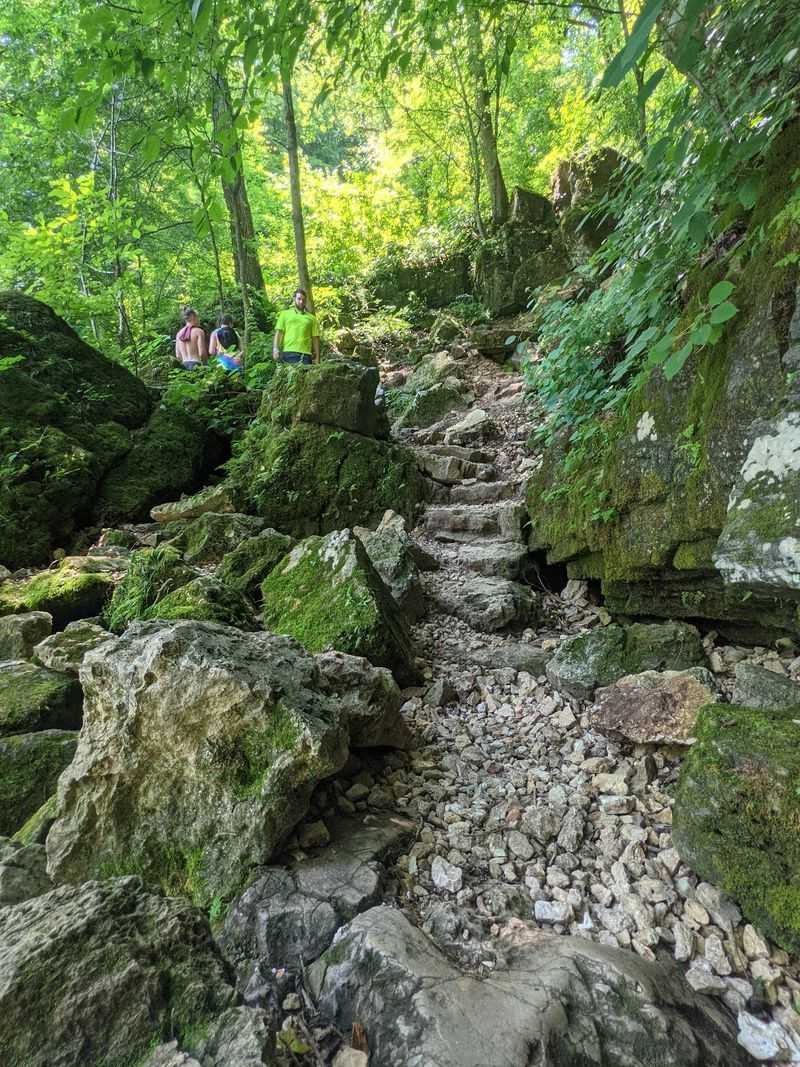
Those who want more can head for the longer trails. Paths climb the bluff and wind through the forest, giving a moderate workout and a fresh view of the area from above.
The Slough Trail and Chubb Hollow Trail are two names to look for on park maps. Each one adds extra miles of quiet woods to your day.
Bring water, wear real shoes, and check trail signs before you start. Some routes include rocky or steep spots that feel harder than they look on paper.
Couples, families, and solo walkers all find a pace that suits them. Pick an easy stroll, a longer climb, or both in one afternoon.
Picnic Tables With a Front-Row View
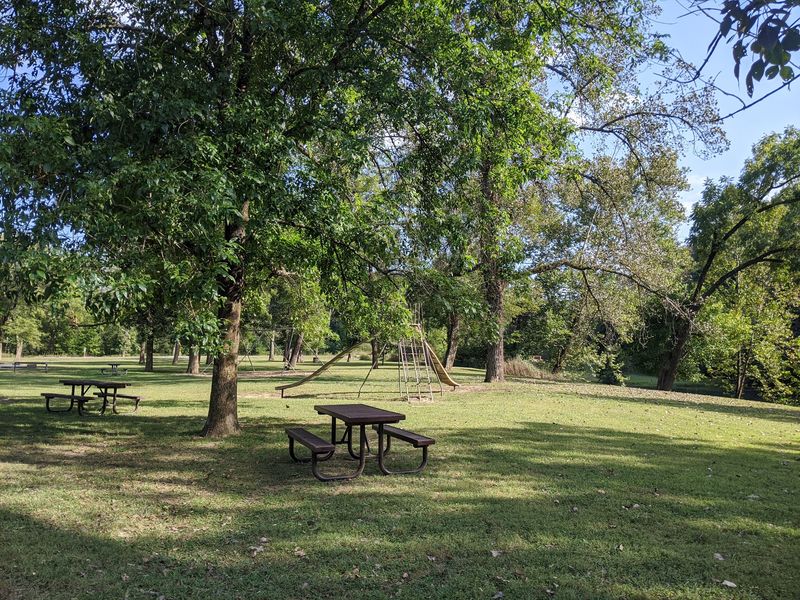
Lunch with a view does not get much easier than this. Plenty of picnic tables are spread across the grassy areas near the spring branch.
Small families can grab a single table, while bigger groups can usually find space to spread out. The lawns are kept mowed and tidy, which makes setting up simple.
Pack your cooler in town before you arrive. There are no restaurants right at the spring, so bringing your own meal saves a lot of hunger-driven grumbling.
Weekends, especially in summer, can get busy. Arriving early or visiting on a weekday improves your odds of snagging a table close to the water.
Please carry out what you bring in, and keep food away from wildlife. Raccoons are clever, and they do not need help learning new tricks.
Once the meal is done, the water is only a few steps away. It is the rare picnic spot where the after-lunch stroll is just as good as the food.
Stone Buildings With a Backstory
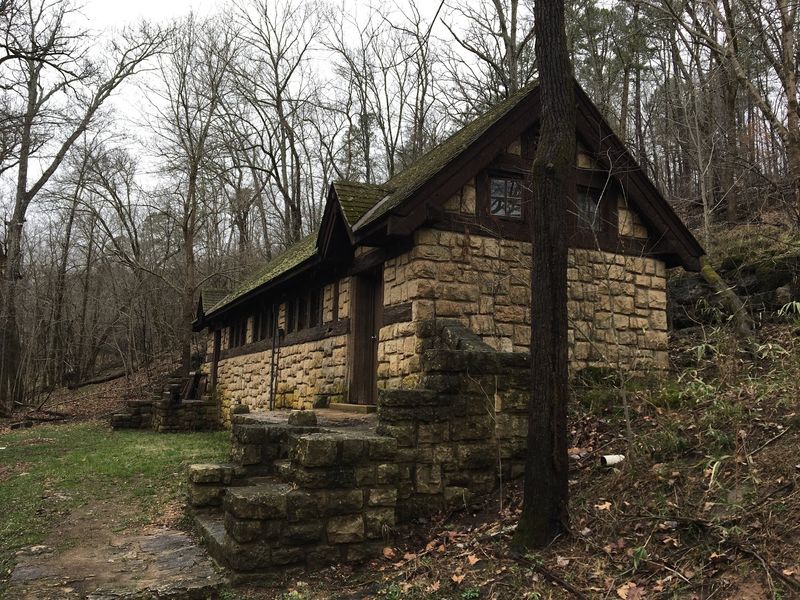
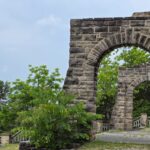
Back in the 1930s, young men from the Civilian Conservation Corps arrived with tools and a big job. They built many of the stone and timber structures still standing around Big Spring today.
Big Spring was once a Missouri state park before becoming part of the Ozark National Scenic Riverways in the 1970s. The CCC work from that earlier era gives the area its rustic, handmade style.
The dining lodge and cabins are the most famous examples. Their thick stone walls and heavy wood beams show careful craftsmanship.
The historic district has been recognized for its importance in national park design. Restoration work on the lodge and cabins has been underway, aiming to bring them back for future guests.
Check the National Park Service website before your trip for the latest updates. Projects like these can change what is open from season to season.
Even from the outside, these buildings tell a story worth a few minutes of your time. They remind everyone that the park itself took a lot of hard work.
Look, But Leave the Swimsuit
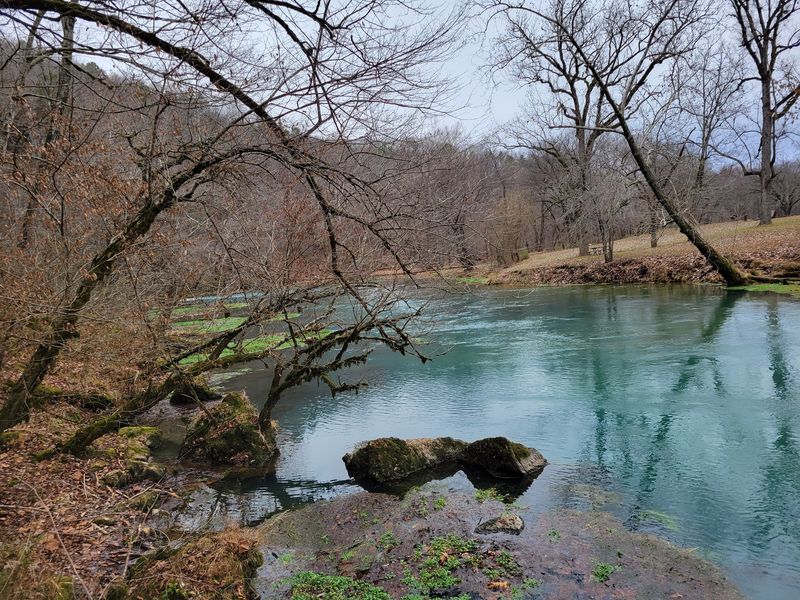
That bright blue water looks like a giant invitation. Here is the catch: swimming is not allowed in the spring area.
The current is powerful, and the water is cold all year. Rules help protect both people and the fragile spring itself.
Wading in to cool off is not the plan here. Instead, enjoy the view from the paths and the edge where the park allows it.
Still craving a swim? The Current River is close by, and the wider Ozark National Scenic Riverways area is famous for floating, canoeing, and kayaking.
Local outfitters around Van Buren rent canoes, kayaks, and tubes during the warmer months. Many people pair a morning at the spring with an afternoon float.
Always check river conditions and wear a life jacket on the water. Levels can rise quickly after heavy rain.
So pack two plans: one for looking and one for paddling. The combination turns a quick stop into a full day outdoors.
Neighbors With Fur and Feathers
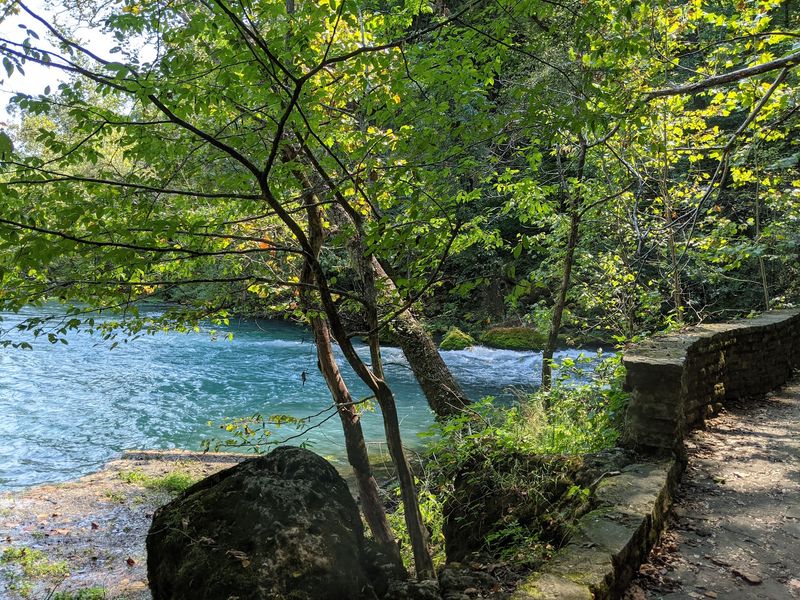
Keep your eyes open on the drive in. White-tailed deer are regular guests around Big Spring, often grazing near the edges of the woods and fields.
Early morning and evening are usually the best times to spot them. Slow down on park roads, since deer can step out without warning.
The Ozarks are home to many other creatures too. Turkeys, squirrels, songbirds, and the occasional black bear live in the surrounding forests.
Bears are not common sights, but they do live in this region. Store food properly, especially if you camp, and never approach any wild animal.
Bird lovers should bring binoculars. Herons and kingfishers sometimes hunt along the water, while woodpeckers work the tall trees.
Wildlife photos are best taken from a respectful distance. A zoom lens beats getting too close every time.
Spotting animals adds a little treasure-hunt energy to the trip. Kids especially love keeping a tally of every critter they see.
Camping Close to the Current
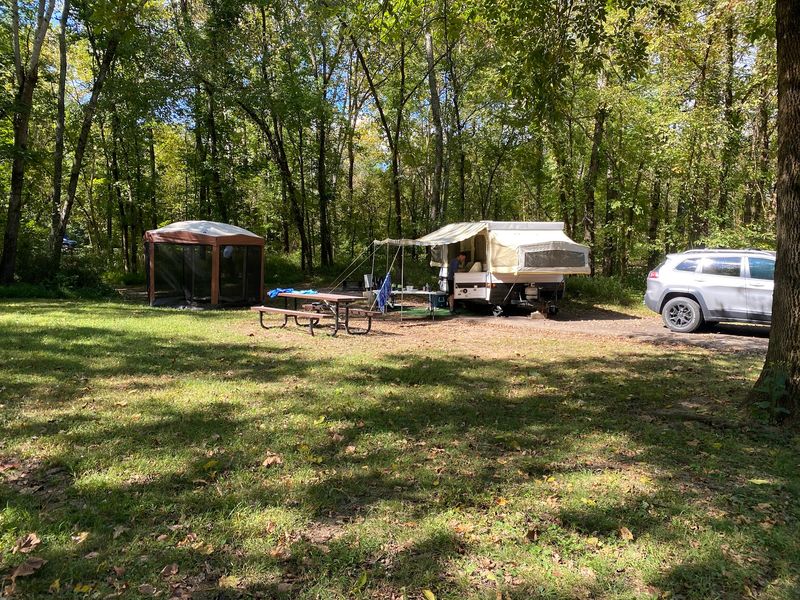
One day often turns out to be too short. That is where the Big Spring Campground comes in.
The campground sits near the spring and the Current River. It offers sites for tents and RVs, with some loops providing electric hookups.
A bathhouse, water spigots, and a shared dump station help make longer stays easier. Trash stations are also available.
Electric sites can fill up quickly, especially in busy seasons. Reservations are handled through Recreation.gov, so booking early is smart.
Some loops get crowded on summer weekends. Campers looking for a quieter stay may prefer weekdays or the shoulder seasons of spring and fall.
Respect quiet hours and keep your site clean. Good camp manners make the experience nicer for everyone around you.
Waking up close to the river gives you a head start on the trails. You can be at the spring before most day-trippers have even left home.
Smart Timing and Easy Extras
Timing can make or break a visit. Early mornings and weekdays usually bring smaller crowds and easier parking.
Since the park never closes, sunrise is a fantastic option. Fewer people means better photos and calmer moments by the water.
Fall paints the surrounding forest in rich colors, while spring brings fresh green leaves and wildflowers. Summer is busy but still worth it, thanks to that cool air off the water.
A small information station near the spring area can help with maps and questions. Rangers and staff often share useful tips about trails and nearby sites.
Big Spring also works as a great starting point for exploring the wider Ozark National Scenic Riverways. Other well-known springs, such as Alley Spring and Blue Spring, are within driving distance.
Plan for a few hours here rather than a full day. Then use the rest of your trip to see more of this river region.
That way, the blue water becomes the opening chapter of a bigger adventure.