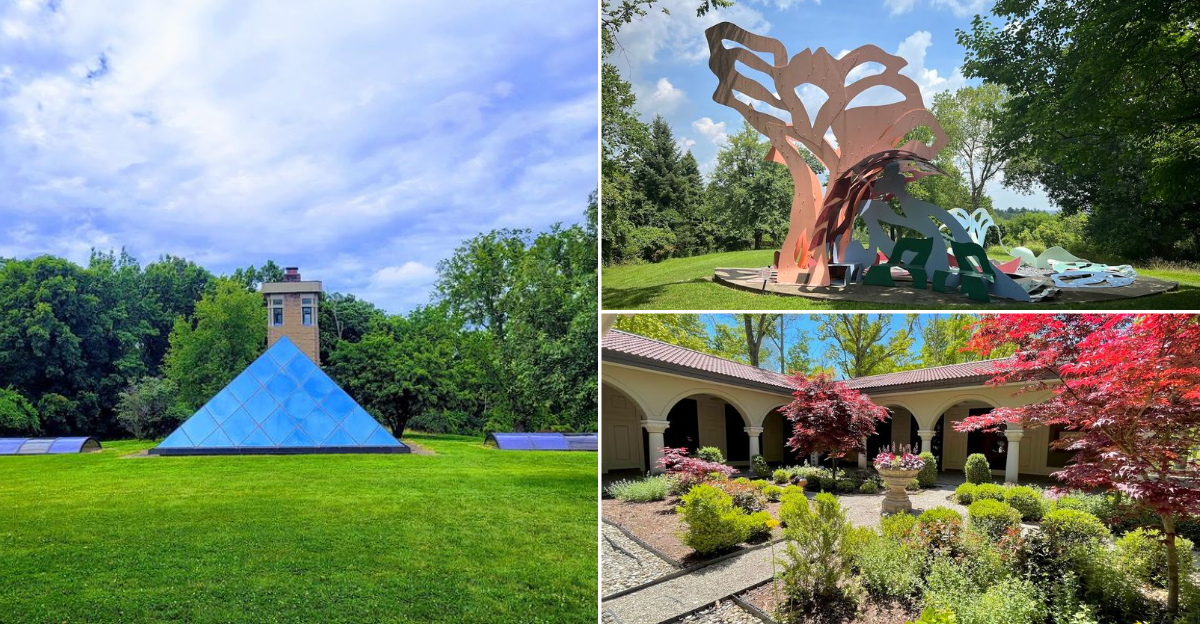
You probably would not expect a simple visit to a museum to turn into a full outdoor art adventure, but Pyramid Hill Sculpture Park & Museum cheerfully proves you wrong.
Here, giant sculptures rise from rolling hills, ancient artifacts hide inside a dramatic glass pyramid, and even a simple stroll feels like you accidentally wandered into the coolest art class on earth.
You will not be stuck choosing between an ordinary museum visit or nature walk because this is the kind of place where you can have it all; hike, drive, or cruise by Art Cart while collecting wow moments at every turn.
If you love your culture with fresh air, big views, and a little delightful weirdness, this Ohio gem deserves a prime spot on your must-visit list.
A Museum That Breathes Outside
Forget stuffy galleries because Pyramid Hill turns the whole landscape into the exhibit.
This nonprofit sculpture park in Hamilton blends art and nature across more than 300 acres, with some sources putting the property closer to 470.
Rolling hills, open meadows, pockets of forest, lakes, and trails create a setting that feels part museum, part daydream, and part extremely classy scavenger hunt.
The park officially opened to the public in 1996 after founder Harry T. Wilks began buying land in 1987.
His goal was to protect the property from development and create a place where people could experience major art in the open air.
That mission still guides the park today under the memorable phrase, Bringing People to Art in Nature.
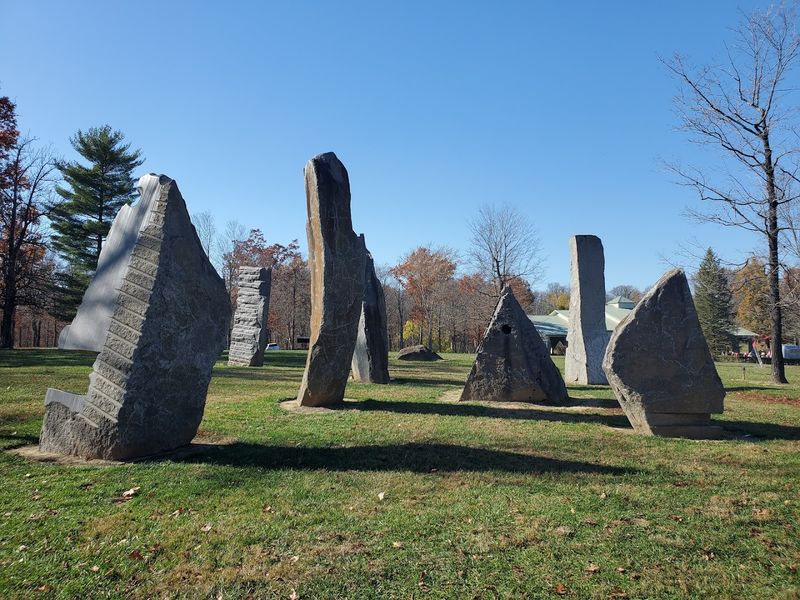
What makes the first impression so strong is scale. Pyramid Hill is home to more than 70 monumental outdoor sculptures, with works in bronze, steel, stone, and wood scattered across the terrain.
Instead of racing from one wall label to the next, you look up, look around, and suddenly the sky becomes part of the composition.
That big-shouldered beauty has earned attention, too. The park has been recognized as Butler County’s premier cultural tourist attraction and was voted the fourth best sculpture park in the country by USA Today readers.
Not bad for a place that lets your museum visit come with birdsong.
The Art Cart Advantage
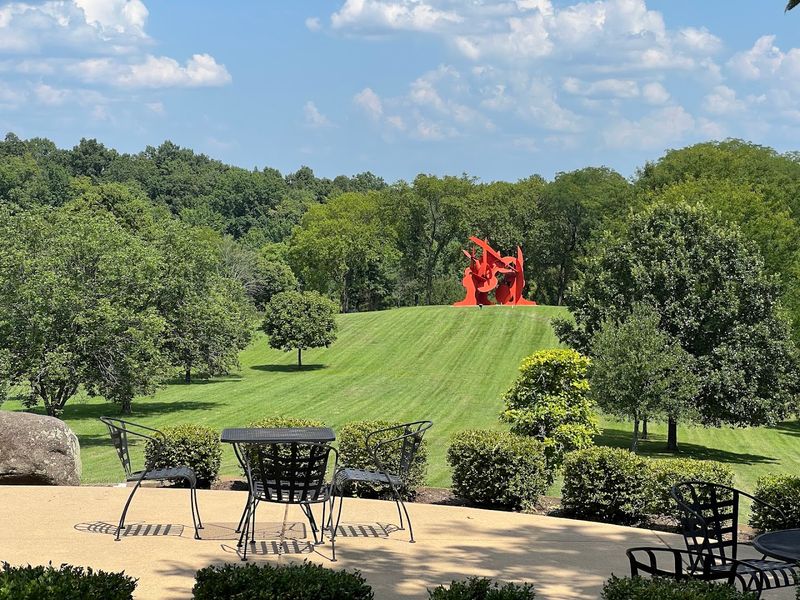
Nothing says art adventure quite like touring a museum by golf cart.
Pyramid Hill’s famous Art Carts are one of its smartest features, especially because the grounds are expansive, hilly, and full of tempting detours.
The park even says it is the only museum where you can drive an Art Cart to see the exhibits, which is a sentence that deserves its own trophy.
If you prefer a slower pace, there are options. You can walk the paved Gallery Loop and additional trails, or drive your own car along the approximately 1.75-mile loop with pull-off spots near popular works.
Reviews regularly mention that walking gives better perspective, but the carts help visitors cover more ground in less time.
That flexibility matters because Pyramid Hill is not a one-note stroll. Some sculptures sit near the road, while others reward a little extra wandering.
Several visitors note that the carts are especially helpful if time is limited, if the hills look a bit too ambitious, or if your group includes different mobility levels.
The best strategy is simple: arrive ready to choose your own pace. Walk if you want immersion, drive if convenience wins, or rent an Art Cart for maximum fun with minimum foot complaints.
Suddenly, a museum visit feels less like a formal outing and more like a very cultured road trip through the countryside.
Monumental Sculptures Around Every Bend
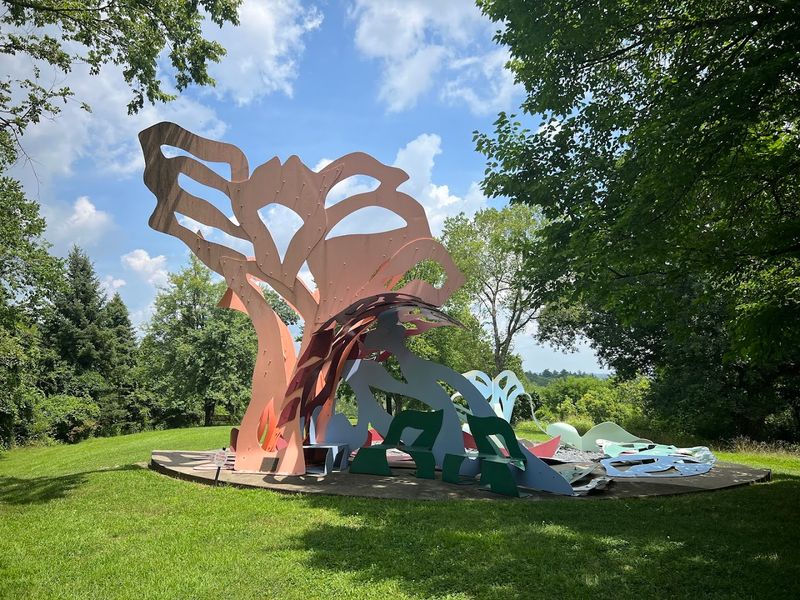
Just when you think you have the landscape figured out, another giant sculpture appears around the bend.
Pyramid Hill’s outdoor collection is packed with variety, from abstract steel forms to figurative pieces in bronze and carved stone.
Some works feel playful, some feel meditative, and some look like they were designed to make your camera work overtime.
The park’s permanent collection includes more than 70 monumental sculptures, and the tallest reaches about 50 feet.
That size changes the experience completely. You are not merely looking at art here; you are approaching it across a hillside, noticing how sunlight hits one edge, how clouds frame another, and how distance can turn a sculpture into a surprise.
Materials matter, too. Bronze develops warmth, stone carries gravity, steel catches light with a sharper mood, and wood feels rooted in the landscape around it.
Because the pieces are placed among meadows, trees, and open views, each one gains a shifting backdrop that changes with season, weather, and time of day.
This is also why repeat visits make sense. A sculpture in summer green can feel entirely different under autumn color or winter snow, something recent visitors have pointed out in reviews.
Pyramid Hill rewards curiosity over checklist behavior, so the best plan is to wander with loose expectations and let the next hill deliver the next artistic plot twist.
The Pyramid House Steals the Scene
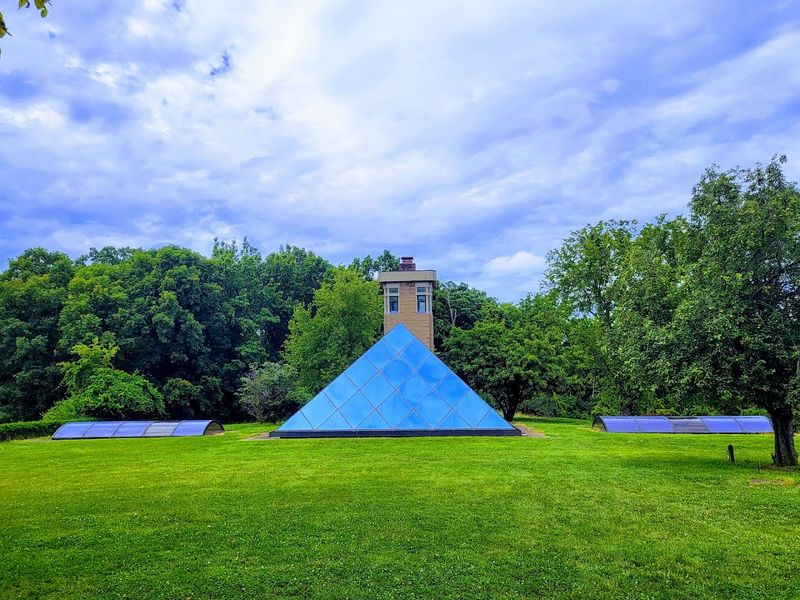
Then the architecture enters like a diva and absolutely earns it.
The Pyramid House is the signature landmark at Pyramid Hill, and it looks exactly like the kind of place a movie villain or a visionary collector would choose for a hideaway.
Built as founder Harry T. Wilks’s home, the structure is mostly underground, with a striking glass pyramid rising from the earth.
It is not just unusual. It is famous.
The house was once featured in Architectural Digest, and even photos do not fully prepare you for the effect of seeing it set into the landscape.
Part futuristic statement, part buried treasure, it gives the park a strong visual identity before you even step inside.
The house matters because it tells the origin story of the whole property. Wilks began with about 40 acres in 1987 to build this residence, then expanded by acquiring neighboring parcels over time.
That personal project eventually grew into the public nonprofit sculpture park visitors know today, which is a pretty dramatic upgrade from ordinary backyard plans.
What I love most about the Pyramid House is how it matches the spirit of the park.
It is bold without being gimmicky, theatrical without losing purpose, and memorable in a way that makes the visit feel singular.
In a place full of oversized art, the building itself still manages to command a very respectable share of the applause.
Ancient Art Inside the Hill
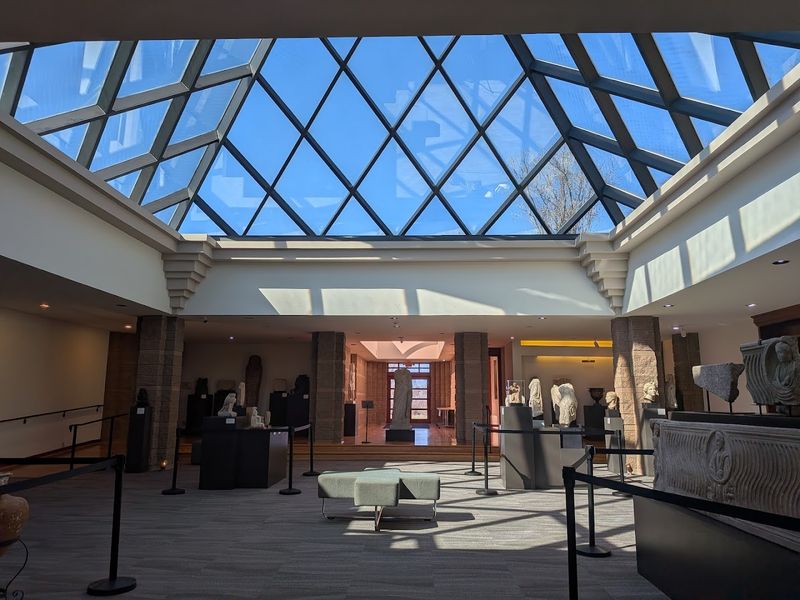
Plot twist; this outdoor art park also hides an ancient world inside. Located within the Pyramid House, the Ancient Sculpture Museum adds a completely different layer to the Pyramid Hill experience.
One minute you are walking through Ohio hills, and the next you are face to face with artifacts tied to civilizations most of us usually meet only in textbooks.
The collection includes Greek, Roman, Etruscan, Syrian, and Egyptian antiquities, with pieces dating as far back as 1550 BCE.
The museum, which opened in 2007, was designed with inspiration from ancient Roman homes, so the setting supports the collection rather than simply storing it.
That thoughtful presentation helps the space feel intimate, scholarly, and surprisingly transportive.
Among the notable works is the Seated Scribe, a piece that gives the museum a genuine sense of depth and rarity.
Visitors often mention how unexpected it feels to encounter antiquities here, and that surprise is part of the fun.
Pyramid Hill is not content to be one kind of destination when it can be several at once.
This indoor component also balances the day beautifully. If the weather turns, if you need a break from the hills, or if your brain wants a shift from monumental contemporary forms to ancient craftsmanship, the museum delivers.
It expands the visit from scenic outing to cultural deep dive, and that combination is where Pyramid Hill really flexes.
More Than One Museum, More Than One Season
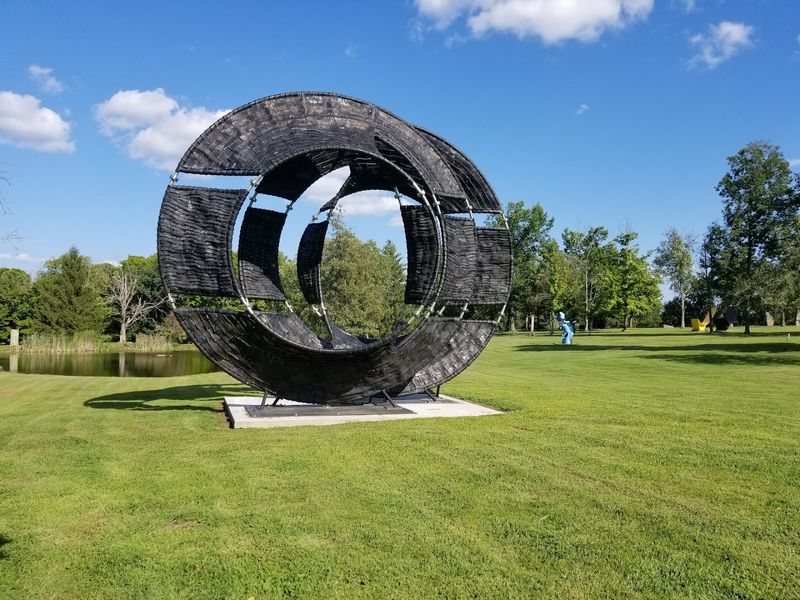
As if giant outdoor sculptures and a glass pyramid were not enough, Pyramid Hill keeps adding layers.
The park also features a Gallery Museum, opened in 2016, with rotating exhibitions by local, regional, and national contemporary artists.
That means the experience is not frozen in time, which is great news for repeat visitors who like their culture with a side of novelty.
The changing exhibitions give the park fresh energy throughout the year. You might come for the landscape and leave talking about a temporary show, or return to see how indoor contemporary work complements the permanent outdoor collection.
It creates a nice rhythm between the epic and the intimate, between open sky and white-wall focus.
Programming helps keep that momentum going. Pyramid Hill hosts annual events such as Holiday Lights on the Hill, Art Fair, Art and Earth Day, and Founder’s Day, plus summer programs for children and workshops for adults.
Activities have included glass soldering, printmaking, and collaborative dance, which is an excellent reminder that art is not only for observing politely from six feet away.
The park operates 361 days a year, closing only on Thanksgiving, Christmas Eve, Christmas Day, and New Year’s Day.
That broad schedule makes it easier to work a visit into real life rather than waiting for perfect conditions. In other words, Pyramid Hill is not just a pretty place to wander; it is an active cultural hub with year-round personality.
Trails, Picnics, Dogs, and Smart Visitor Perks
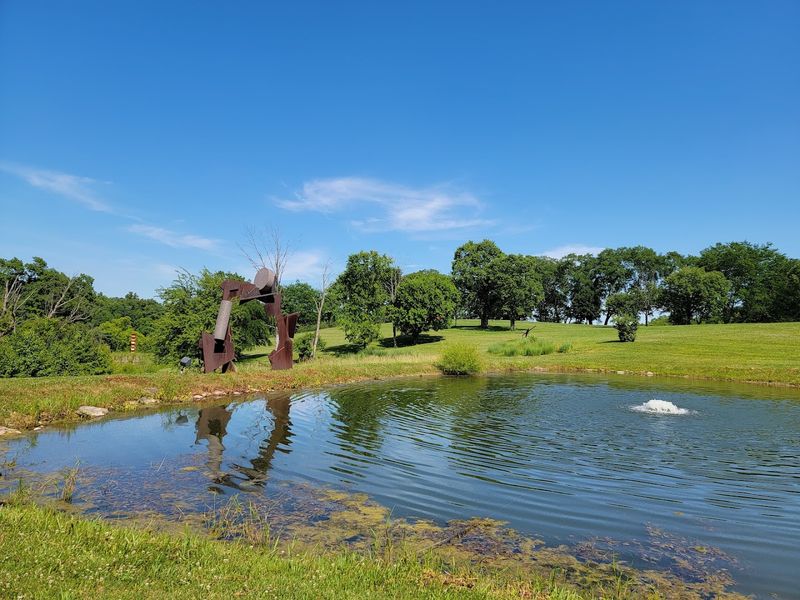
Here is the kind of museum advice you do not hear every day: pack a picnic and bring the dog.
Pyramid Hill encourages visitors to settle in and enjoy the setting, which makes perfect sense once you see the hills, lakes, and sculpture-dotted lawns.
Leashed pets are welcome, so your most opinionated walking companion can come along and silently judge abstract art with you.
Picnicking is a natural fit because the grounds invite lingering.
The park has also made meaningful accessibility efforts. In collaboration with the Clovernook Center for the Blind and Visually Impaired, Pyramid Hill introduced tactile sculptures that allow visitors to explore forms and textures through touch.
That kind of initiative supports a broader audience and reflects the park’s mission in a practical, thoughtful way.
For added context, the Otocast app provides information about artworks and includes insights from artists themselves.
It is a handy way to deepen the experience without forcing your day into a rigid guided-tour schedule.
Between the trails, pet-friendly policy, picnic appeal, and digital tools, Pyramid Hill feels refreshingly welcoming rather than precious, which is a lovely trait in any cultural destination.
What to Know Before You Go
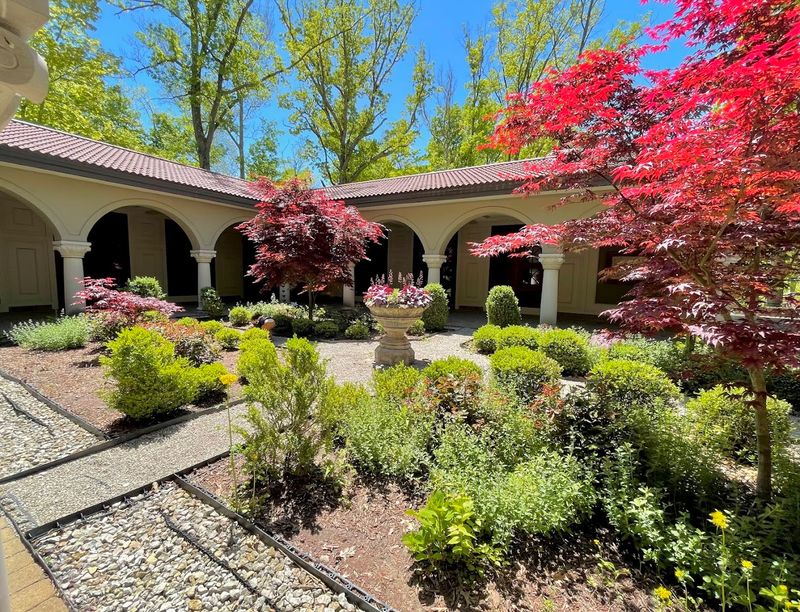
Before you lace up your walking shoes or claim your Art Cart throne, a few practical details can make the day smoother.
Pyramid Hill Sculpture Park & Museum is located at 1763 Hamilton Cleves Road in Hamilton, Ohio.
The park is generally open Wednesday, Thursday, and Monday from 9 AM to 5 PM, and Friday through Sunday from 9 AM to 8 PM, while Tuesday is closed.
That schedule gives you options, but timing still matters. Evening hours at the end of the week are especially useful if you want softer light on the sculptures or a less rushed visit.
Reviews also suggest checking plans for indoor museum access and remembering that this is a large property, so water, comfortable shoes, and realistic expectations are your best friends.
Visitors consistently praise the friendliness of the staff, the beauty of the grounds, and the flexibility of being able to walk, drive, or rent a cart.
Some note that signage and walkability can vary in places, especially if you want to reach works farther from the main route. In plain English: this is not the museum for speed-running.
Give yourself time, stay curious, and let the day stretch a little. Pyramid Hill rewards patience with panoramic views, unexpected artworks, and the kind of relaxed discovery that makes you wonder why more museums do not come with hills, fresh air, and a picnic blanket.
History Still Lives on the Grounds
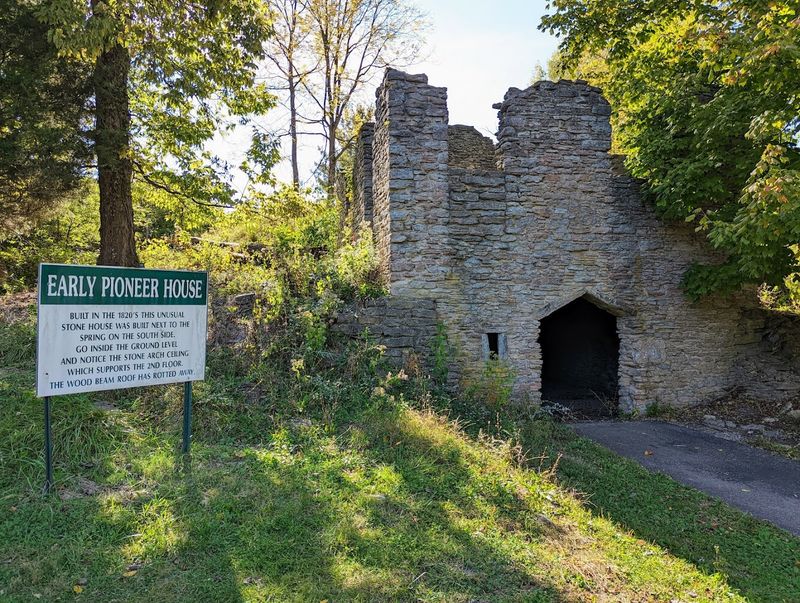
Beneath the polished museum experience, Pyramid Hill still has a strong sense of local history.
Beyond contemporary sculptures and ancient artifacts, the grounds include a historic pioneer house dating to the 1820s.
Its unusual arched ceiling gives it an extra point of interest, like a quiet little architectural footnote tucked inside a very expansive visual story.
The property also includes Fortified Hill, a 2,000-year-old Hopewell cultural site donated to the park in 2019 by the Harry T. Wilks Family Foundation.
It is being prepared for public access with hiking trails and educational signage, which adds another layer of meaning to the land itself.
Instead of serving only as a backdrop for art, the landscape becomes part of a much longer human timeline.
That blending of eras is one of Pyramid Hill’s strongest qualities. You can move from a modern sculpture to a historic structure to an ancient museum collection and still feel like the day has a coherent thread.
The park never treats history as an afterthought, even when the headline attractions are big, bold, and camera-ready.
Visitors who enjoy places with depth will appreciate this side of the experience. It is not only about pretty views or eye-catching installations, though you will certainly get those.
Pyramid Hill quietly reminds you that land, culture, and creativity have been intersecting here in different forms for a very long time.