
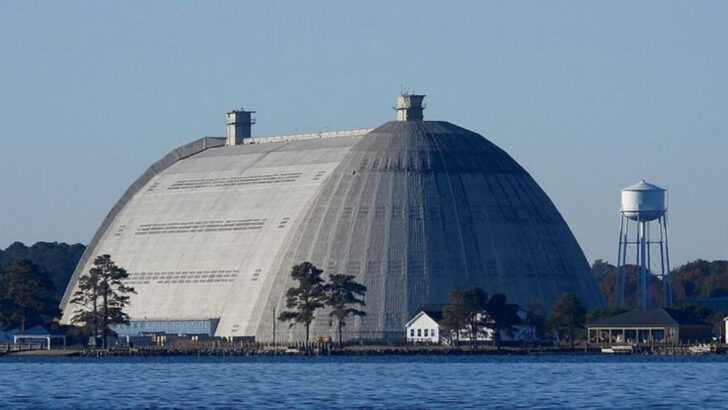
Tucked away near Elizabeth City, North Carolina, stands one of the most jaw-dropping relics of World War II you probably never knew existed.
The Weeksville Dirigible Hangar is a colossal steel structure that once sheltered massive Navy blimps used to protect America’s coastline from German submarines.
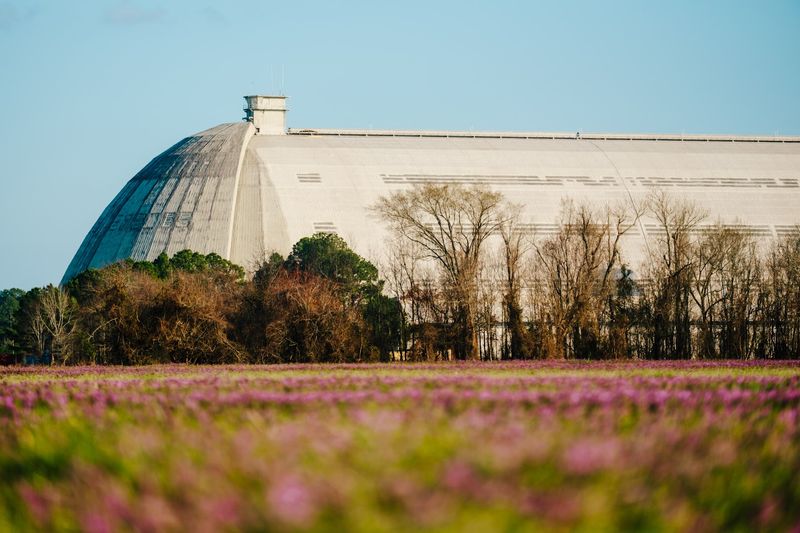
Built in the early 1940s, this towering landmark is nearly 1,000 feet long and soars about 20 stories into the sky.
If you love history, engineering, or just things that are incredibly big, this hidden gem deserves a spot on your must-see list.
A Giant Built for War
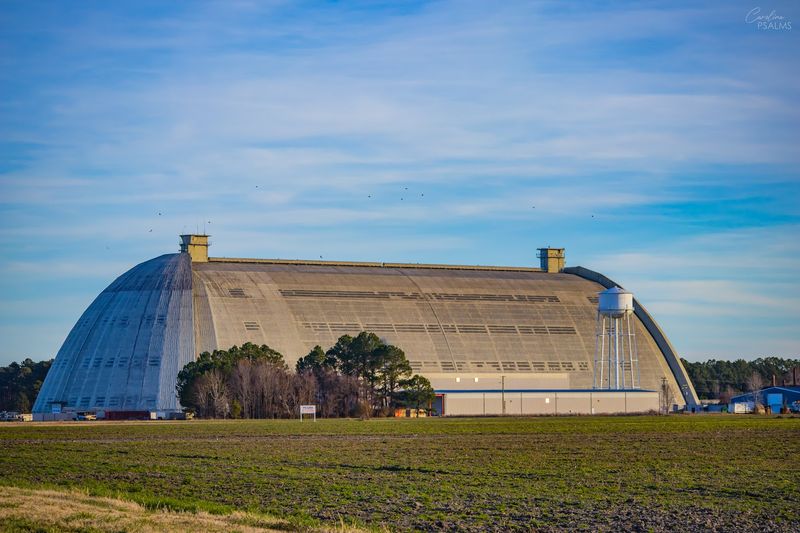
Before the first blimp ever floated through its doors, the Weeksville hangar was already making history. Construction began in 1941 and wrapped up in 1942, making it one of the fastest large-scale military builds of the era.
The U.S. Navy needed it badly, and they needed it fast.
The hangar was built as part of Naval Air Station Weeksville, a base specifically designed to support the Navy’s lighter-than-air aircraft program. Blimps might seem old-fashioned today, but during World War II, they were considered cutting-edge tools for coastal surveillance and defense.
The government poured serious resources into making this base fully operational in record time.
What makes this story even more remarkable is that the hangar wasn’t just functional — it was built to last. Engineers designed it to withstand the harsh coastal weather of North Carolina’s Albemarle Sound region.
Decades later, that steel frame still stands strong, a silent tribute to the workers and military planners who believed in the power of airships to protect American shores. Standing near it today, you can almost hear the hum of wartime activity that once filled this enormous space.
Fighting the U-Boat Threat
German U-boats were terrorizing the American East Coast in the early years of World War II. Merchant ships carrying vital supplies were being sunk at an alarming rate, and the Navy desperately needed a way to spot and deter these underwater predators.
Blimps turned out to be one of the most effective answers.
Operating from Weeksville, Navy blimps flew long, slow patrol routes along the Atlantic coastline. Their ability to hover and move at low speeds made them ideal for spotting submarines lurking just below the surface.
Pilots and crew would radio in sightings, allowing surface ships and aircraft to respond quickly.
The results were remarkable. Historians credit blimp patrols with dramatically reducing the number of successful U-boat attacks along the Carolina coast.
In fact, not a single ship under blimp escort was lost to a submarine attack during the entire war — a stunning record that speaks volumes about how effective these missions were. The blimps based at Weeksville weren’t just big, slow balloons; they were a genuine military force that saved lives and protected the flow of goods that kept the Allied war effort running strong.
A Structure of Astonishing Scale
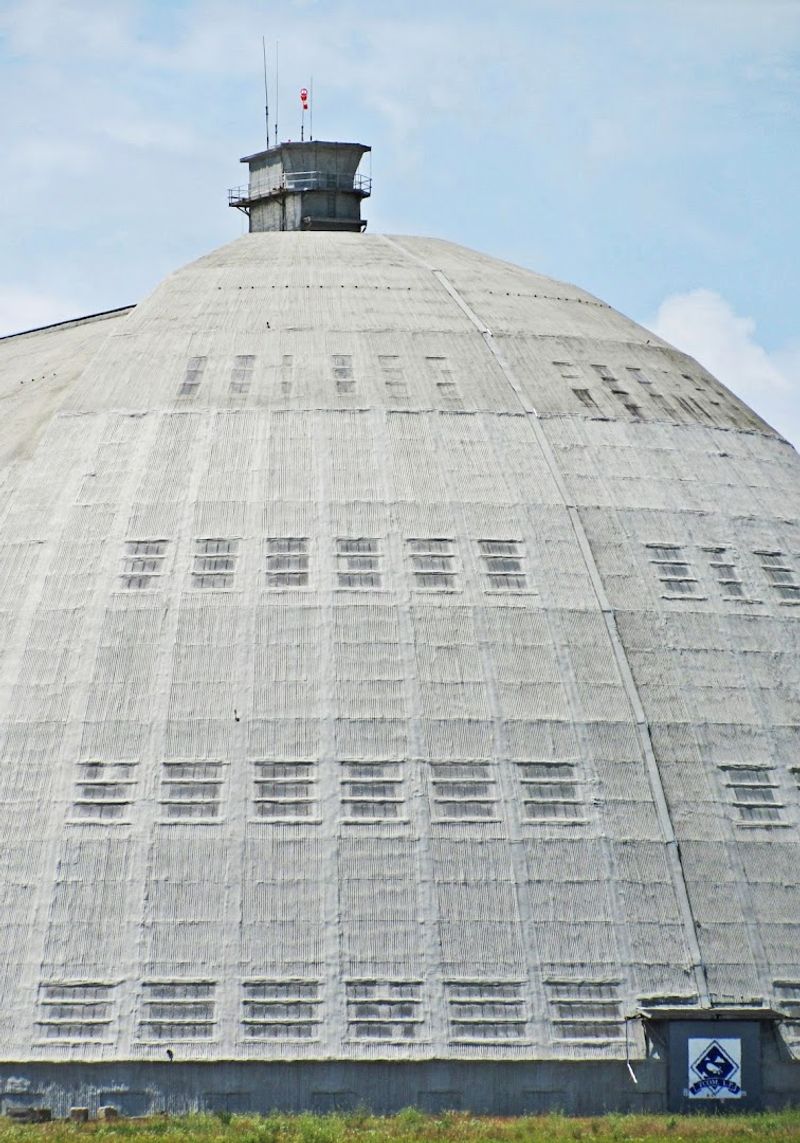
Numbers alone can’t fully capture how big this hangar truly is, but let’s try anyway. The surviving steel structure stretches nearly 1,000 feet in length — roughly the same as three football fields laid end to end.
Its roof arches about 20 stories above the ground, making it taller than most office buildings in the region.
Inside, the hangar could comfortably house multiple K-class blimps at once. Each of those blimps was itself enormous, measuring around 250 feet long.
Yet inside this hangar, they looked almost small. The sheer interior volume is hard to wrap your head around until you’re actually standing next to the structure.
For comparison, the hangar is considered one of the largest structures of its kind ever built anywhere in the world. Even today, with modern construction technology, building something this massive would be a serious engineering challenge.
Back in the early 1940s, completing it in just a year or so was nothing short of extraordinary. Visitors who drive past for the first time often stop their cars simply because they can’t believe what they’re seeing.
It’s the kind of structure that makes your jaw drop without any warning at all.
Engineering Designed for Airships
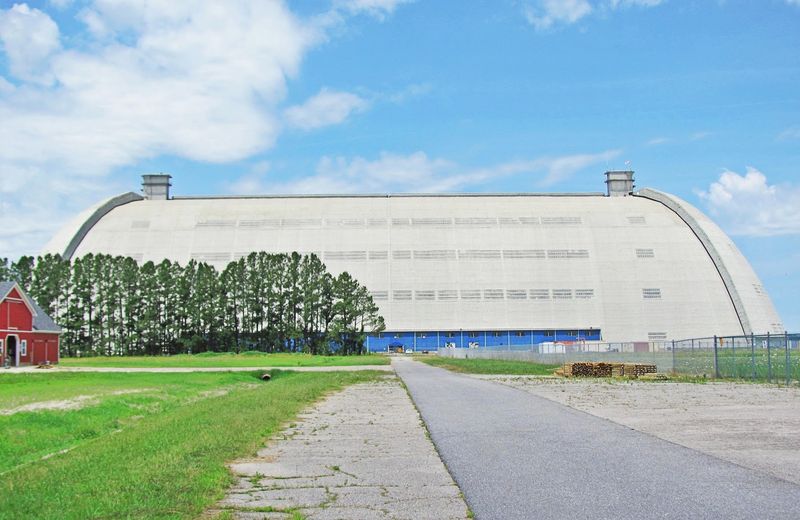
Getting a blimp in and out of a hangar sounds simple enough — until you realize just how massive those blimps actually were. The engineers who designed the Weeksville hangar had to solve a very specific problem: how do you build doors big enough for a 250-foot airship without the doors themselves collapsing under their own weight?
Their solution was the iconic clamshell door design.
Each clamshell door weighs hundreds of tons, yet they were engineered to swing open and closed with surprising efficiency. The doors curve upward and outward, clearing the way for blimps to glide in and out without their envelopes catching on anything.
It’s a brilliant piece of mechanical thinking that holds up even by modern standards.
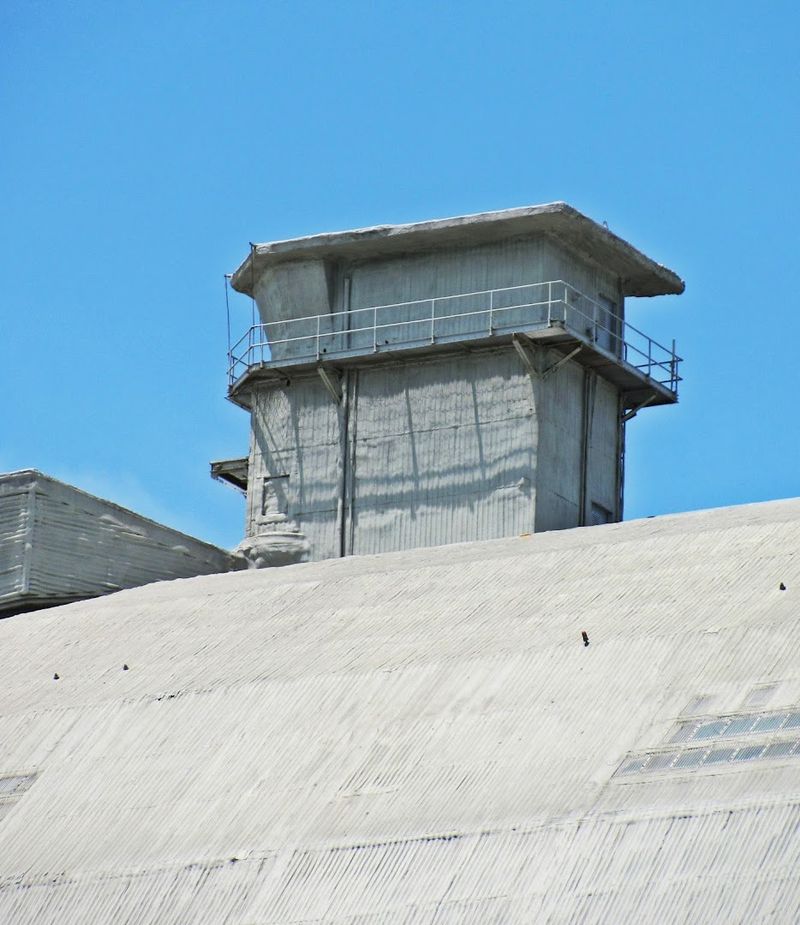
Inside, the arched steel framework creates a completely unobstructed interior space. There are no columns or supports breaking up the floor area, which was essential for maneuvering large, delicate airships.
The engineering team essentially had to reinvent how large structures were built to make this work. Today, architects and engineers still study the hangar’s design as an example of innovative wartime problem-solving.
The structure is as much a monument to human ingenuity as it is to military history.
Once Home to Two Massive Hangars
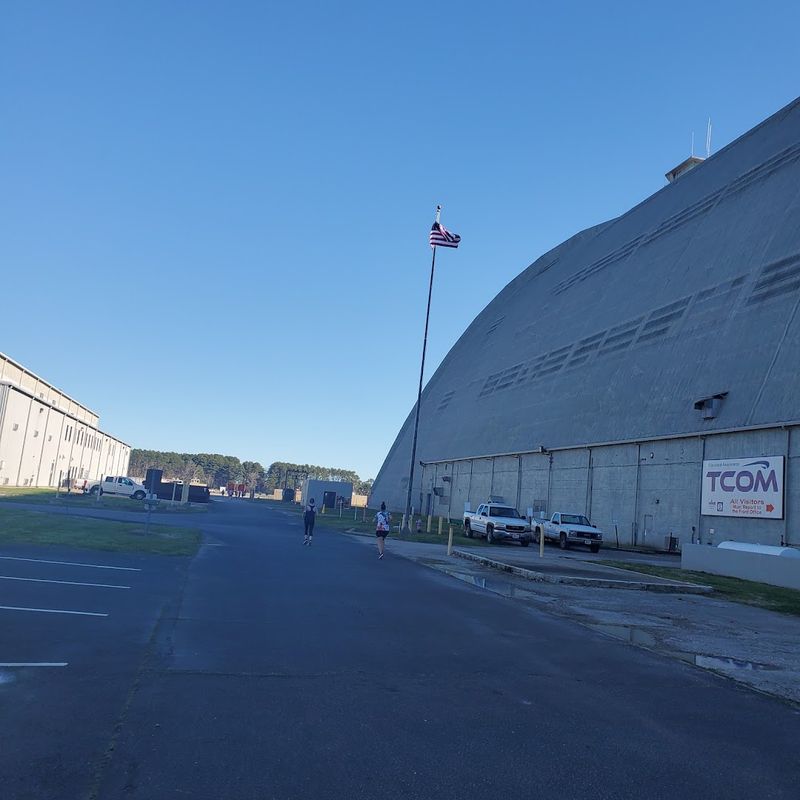
Most people don’t realize that the Weeksville base originally had not one but two enormous hangars standing side by side. The steel hangar that survives today had a wooden companion that was, by some accounts, among the largest wooden buildings ever constructed anywhere in the world.
Together, they made Weeksville one of the most impressive airship facilities on the planet.
The wooden hangar served its purpose faithfully through the war years and into the post-war era. But on a dramatic night in 1995, fire broke out and consumed the massive wooden structure.
Despite its enormous size, the building burned with terrifying speed, and there was little anyone could do to stop it. By morning, one of the world’s most remarkable wooden structures was gone forever.
The loss was felt deeply by historians and preservationists who had long argued for protecting the site. Photographs from before the fire show just how stunning the two hangars looked together — twin giants standing watch over the flat North Carolina landscape.
Today, the steel hangar stands alone as the last survivor of that original pair, carrying the full weight of the site’s history on its broad, curved shoulders. It’s a sobering reminder of how quickly history can disappear.
A Key WWII Coastal Defense Hub
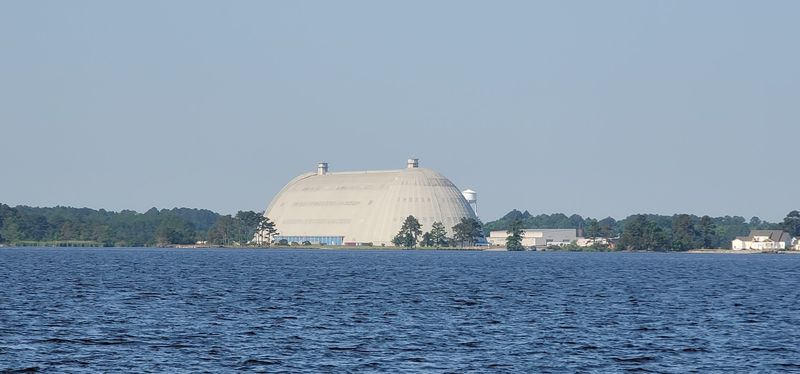
Location is everything in military strategy, and Weeksville’s placement was no accident. Sitting near the Albemarle Sound and close to major Atlantic shipping lanes, the base put its blimps within easy flying distance of the most vulnerable stretches of the East Coast.
Planners chose this spot carefully, and the results proved them right.
Blimps launched from Weeksville could quickly reach patrol zones where merchant convoys were most at risk. Their slow, steady flight patterns were perfectly suited for scanning wide stretches of open water.
When a U-boat was spotted, the blimp crew could immediately radio for backup while keeping a watchful eye on the submarine below.
Beyond just spotting submarines, the blimps also provided direct escort for convoys, flying alongside ships as a visible deterrent. A U-boat captain who saw a blimp overhead knew that attacking would be extremely risky.
The psychological effect alone was significant. Weeksville also benefited from its proximity to other naval installations in the region, allowing for coordinated defense operations across a wide geographic area.
The base wasn’t just a hangar and some blimps — it was a carefully integrated piece of a much larger coastal defense network that helped turn the tide against German submarine warfare in American waters.
Life at Naval Air Station Weeksville
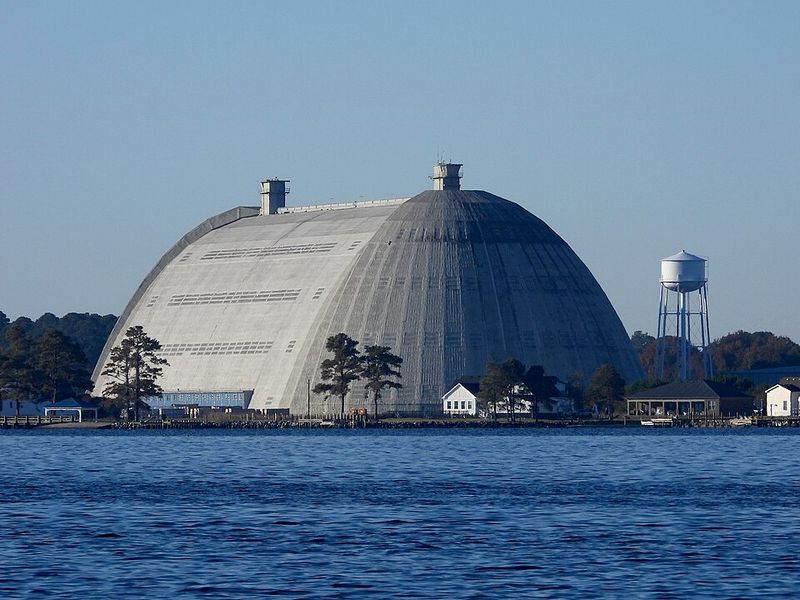
At its wartime peak, Naval Air Station Weeksville was a thriving, self-contained military community. The base sprawled across more than 800 acres and housed hundreds of sailors, officers, mechanics, and support staff.
For many of the young men stationed here, it was their first time living away from home — and the base became their whole world.
Daily life revolved around the demanding schedule of airship operations. Ground crews spent long hours inspecting, refueling, and repairing the blimps.
Pilots and airship crews prepared for missions that could keep them airborne for up to two full days at a stretch. Navigating a blimp for 48 hours while scanning for enemy submarines required serious skill and concentration.
Off-duty hours were spent in barracks, recreation halls, and the small communities surrounding the base. Elizabeth City became a popular destination for sailors looking for a meal, a movie, or just a change of scenery.
The relationship between the base and the local community was warm and mutually beneficial — local businesses thrived, and residents felt the reassuring presence of the military protecting their coastline. That sense of shared purpose during a frightening time created bonds between military personnel and civilians that many veterans later described as the defining experience of their lives.
From Military Base to Aerospace Innovation
When the war ended and the blimps were retired, the Weeksville site didn’t sit idle for long. The enormous hangar and surrounding facilities were simply too valuable to abandon, and the post-war years brought a fascinating new chapter to this already remarkable place.
Science and technology moved in where wartime aviation had once ruled.
One of the most exciting developments came when the site became connected to NASA’s Project Echo — an early satellite program that used large, reflective balloon satellites to bounce radio signals around the Earth. The massive hangar provided an ideal space for testing and inflating these enormous balloon structures before they were launched into orbit.
It was a surreal sight: a WWII-era military building hosting the cutting edge of the Space Age.
Later, private airship manufacturers saw the potential in the site and set up operations there, continuing the hangar’s original purpose in a commercial context. The transition from wartime blimp base to aerospace research hub to private airship production facility is a remarkable story of adaptive reuse.
Few buildings in America can claim such a varied and consequential history. Each era left its mark on the site, layering meaning onto an already extraordinary structure that keeps finding new ways to stay relevant decades after it was first built.
One of the Last of Its Kind
Across the United States, WWII-era blimp hangars have been disappearing one by one. Some were demolished when their military bases closed.
Others, like Weeksville’s wooden companion, were lost to fire or natural disaster. A small handful survive, but the Weeksville steel hangar stands out as one of the best-preserved examples still in existence.
What makes this survivor especially meaningful is that it hasn’t just been preserved as a museum piece — it’s still actively being used for airship and aerostat production. Aerostats are tethered balloon systems used today for surveillance, communications, and border monitoring.
The hangar that once sheltered WWII blimps now helps build the high-tech balloon systems of the 21st century, maintaining an unbroken thread of lighter-than-air aviation history on the same site.
Preservation advocates have worked hard to ensure this hangar receives the recognition it deserves. It has been listed on the National Register of Historic Places, giving it a layer of official protection that many similar structures never received in time.
Walking past it today, you’re looking at living history — a building that has witnessed nearly a century of American aviation, military strategy, and technological change without losing a single rivet of its original character. That kind of continuity is genuinely rare.
Essential Visitor Info
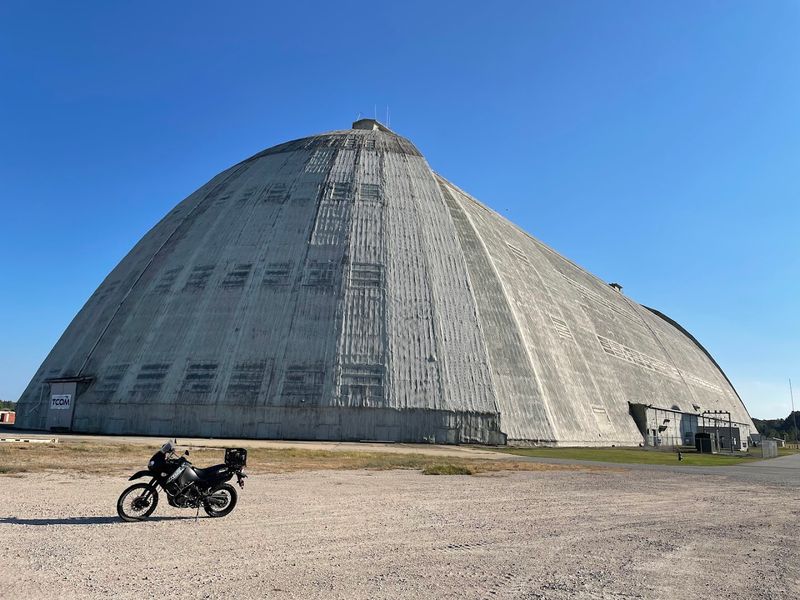
Planning a visit to the Weeksville hangar requires a little preparation, since this isn’t your typical walk-in museum. The hangar is located at 173 T Com Dr, Elizabeth City, NC 27909, in the small community of Weeksville just outside the city.
Because it’s part of an active industrial site, public access to the interior is generally not available to casual visitors.
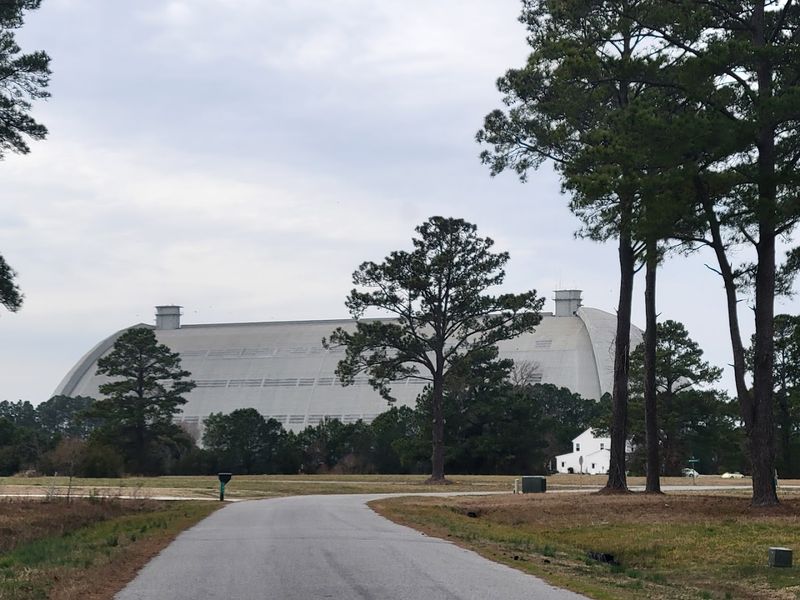
The good news is that the sheer size of the structure makes it completely visible and impressive from nearby roads. Many visitors find that a roadside stop is more than satisfying — the curved silhouette rising above the flat North Carolina landscape is genuinely stunning from a distance.
Bring a camera with a wide-angle lens, because you’ll struggle to fit the whole thing in a single frame up close.
Pairing this stop with other regional attractions makes for a great day trip. Elizabeth City has a charming downtown with restaurants and shops, and the area is rich with WWII and aviation history worth exploring.
The best time to visit is during clear weather when the full scale of the hangar is visible against an open sky. Early morning or late afternoon light gives the steel structure a dramatic, almost cinematic quality that makes every photo look like a history book cover.