
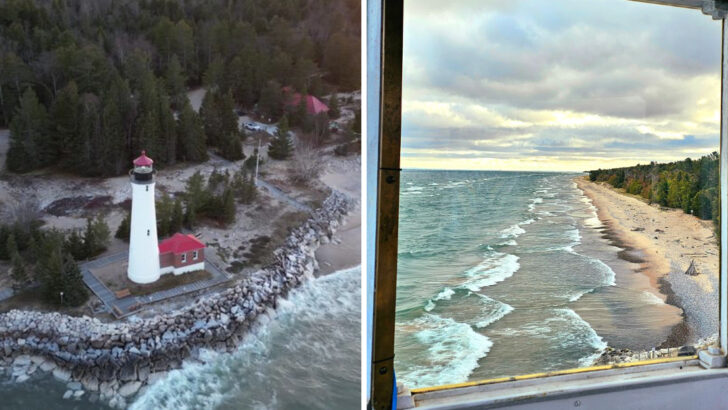
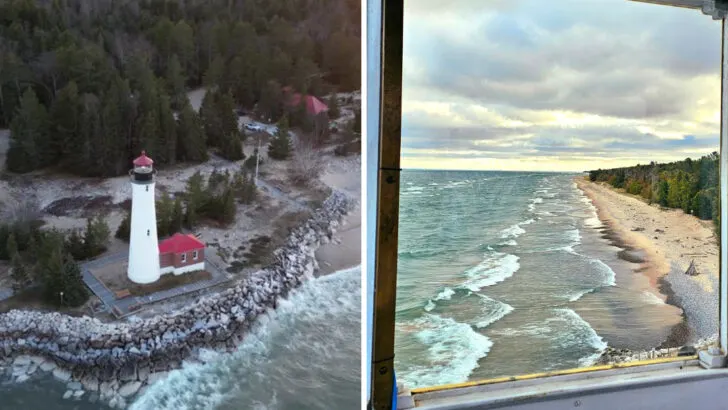
Hidden on the rugged edge of Lake Superior, Crisp Point Lighthouse waits in silence.
Most visitors never make it here, lost to the dense forests and twisting shoreline. But those who push past the crowds are rewarded with haunting views where waves crash like drumbeats against jagged rocks.
Built in 1904, this ghostly sentinel has guided sailors through some of the Great Lakes’ deadliest waters. Its weathered tower, battered by storms, tells stories of shipwrecks and daring rescues that few ever hear.
Visiting Crisp Point is more than a photo op—it’s stepping into a piece of raw, untamed history.
Every creaking board, every rusted railing whispers adventure off the beaten path.
Getting There: The Infamous Dirt Road Approach
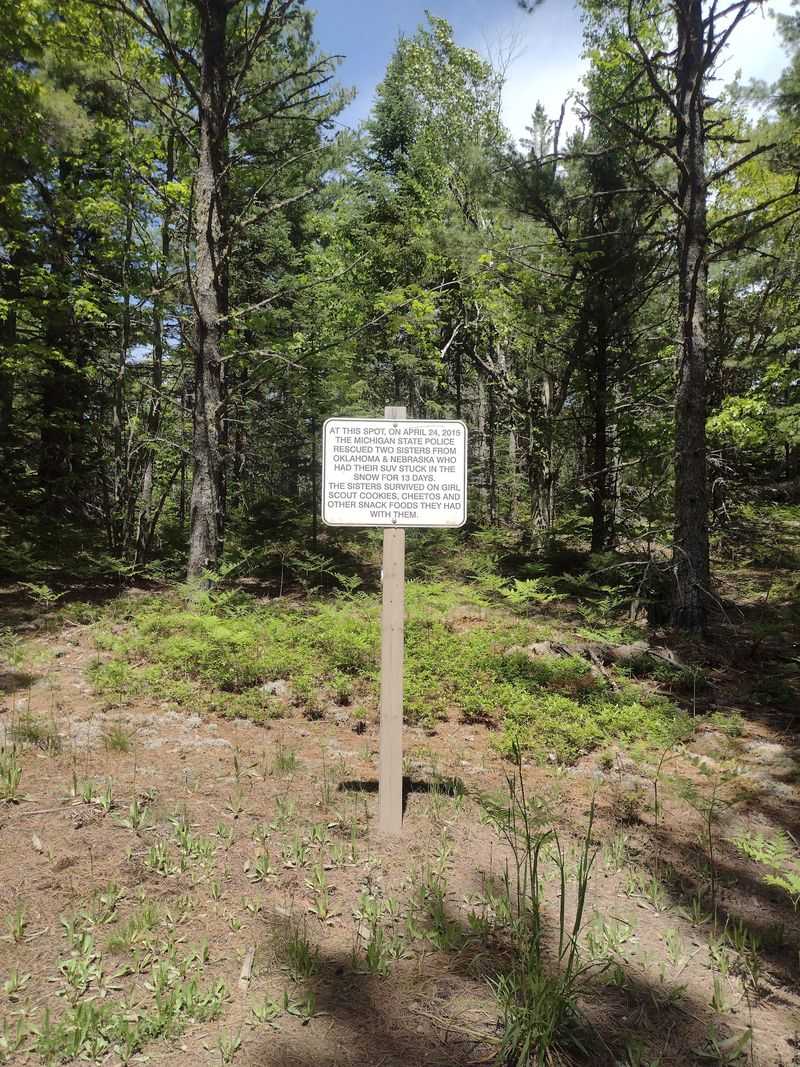
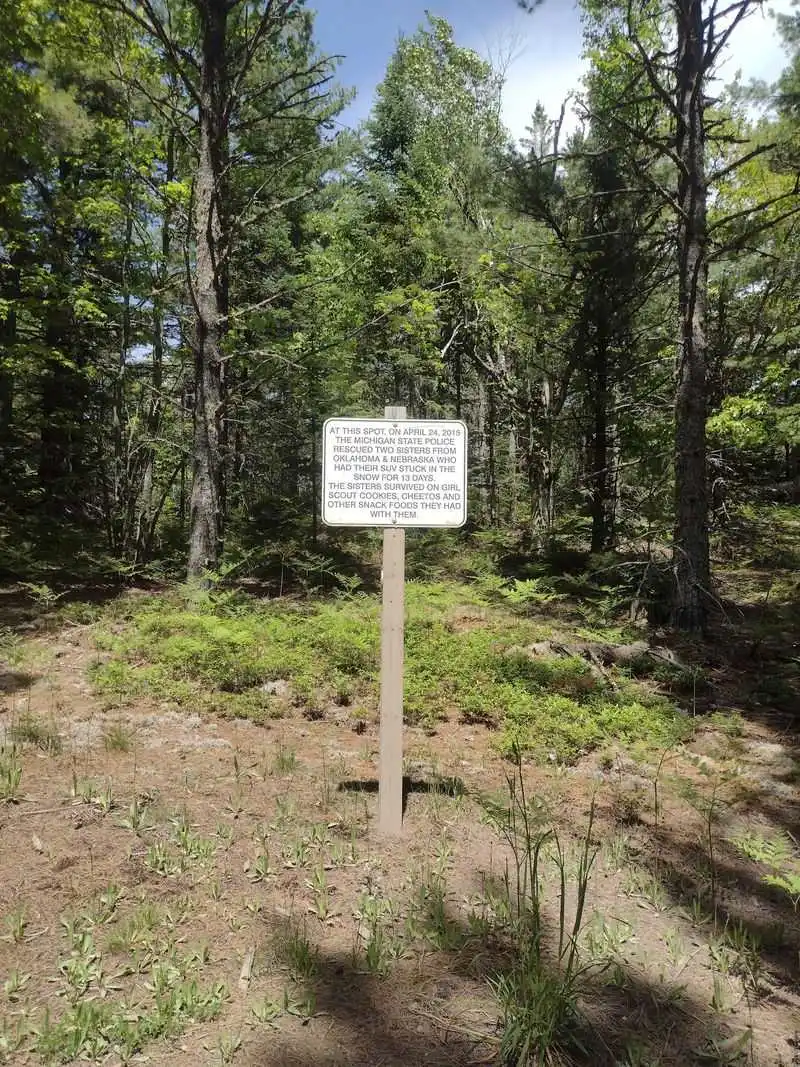
You will earn Crisp Point the moment your tires leave pavement. The drive in is long, slow, and strangely hypnotic, with sand, washboard ripples, and puddles that swallow sunlight.
Take it easy, keep an eye on your fuel, and let your expectations reset with every bend.
Most vehicles can make it when conditions are dry if you go slow and steady. After rain, ruts deepen and puddles widen, so higher clearance or AWD feels comforting.
Download offline maps, because service drops to zero and signs appear just when doubt starts whispering.
Pack patience and treat the road like part of the attraction, not a nuisance to rush. You will pass quiet marshes, thick spruce, and stretches where the forest presses close.
Then, like a curtain lifting, the trees part and Superior throws open a cold blue welcome.
First Glimpse: Tower, Keeper’s Quarters, And Sky
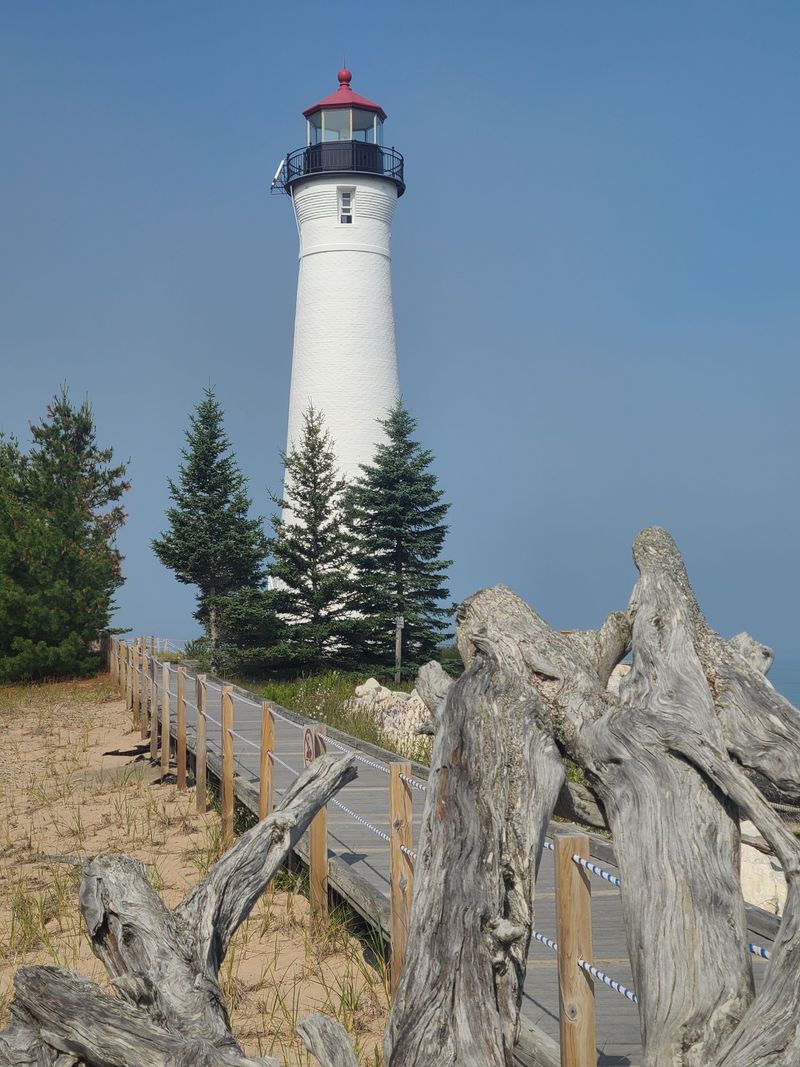
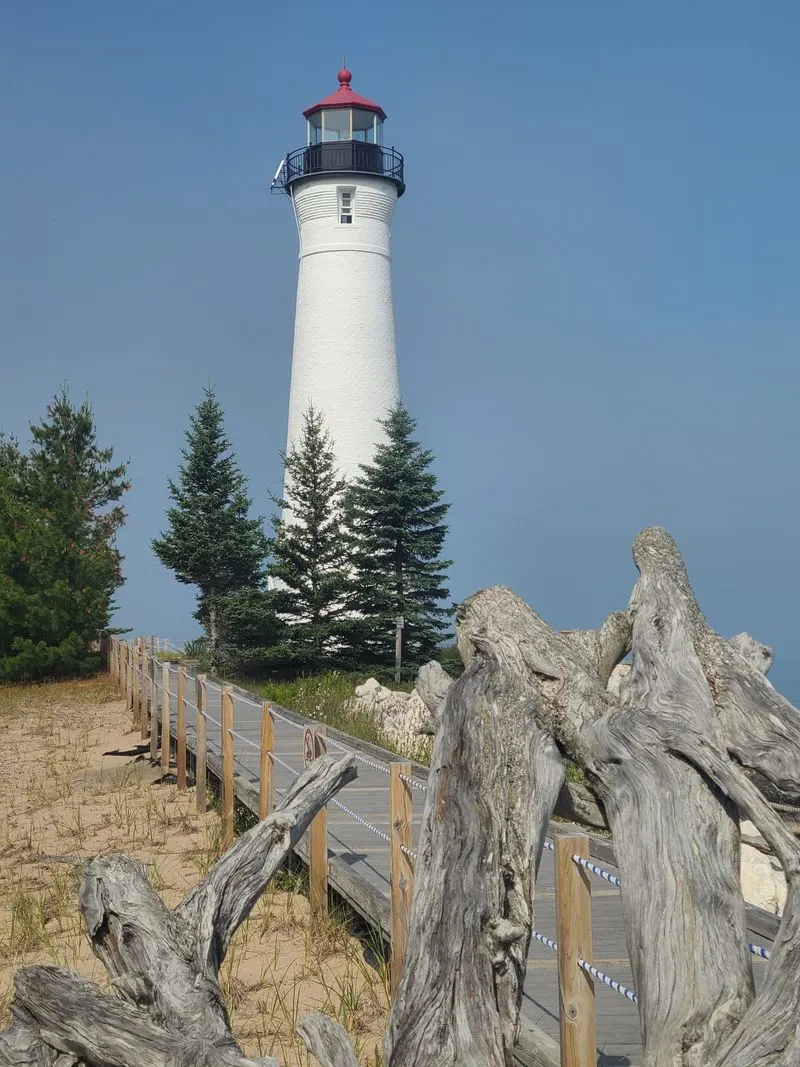
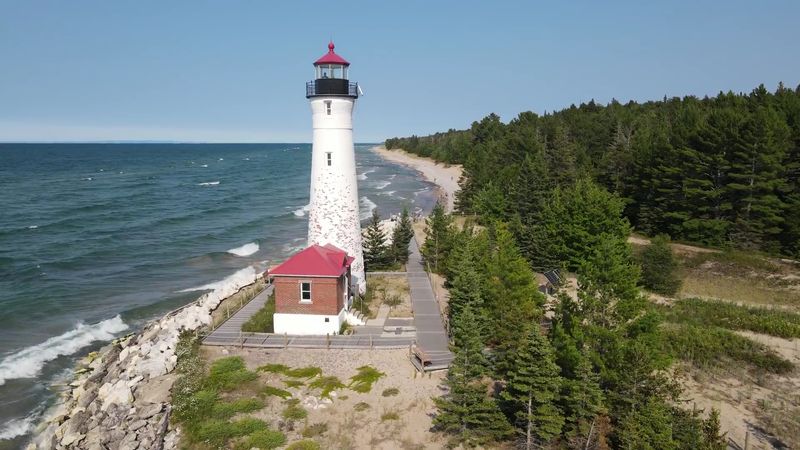
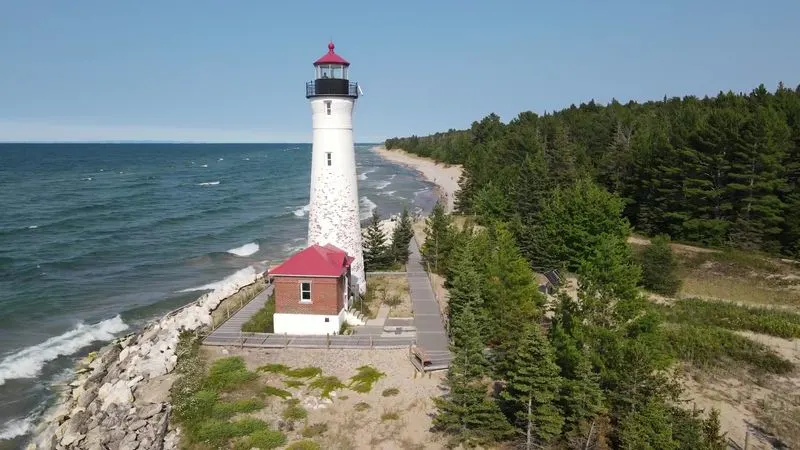
Stepping from the car, the wind hits first, carrying the low roar of Superior and the tang of wet stone. The lighthouse rises clean and bright, red cap shining against a huge sky.
It feels both delicate and stubborn, like a survivor that chose grace over grudge.
Take a slow lap around the grounds. The keeper’s quarters and outbuildings sit neat and cared for, proof of volunteer devotion.
Angle your camera low to frame the tower with dune grass and driftwood, then stand back and let the expanse swallow the edges.
You came for quiet, and you will find it in between gusts, under gull calls, within the metronome crash of waves. Even with a handful of visitors, the place breathes spaciously.
It is a first glimpse that feels like an exhale.
Climbing The Light: Views From The Lantern Room
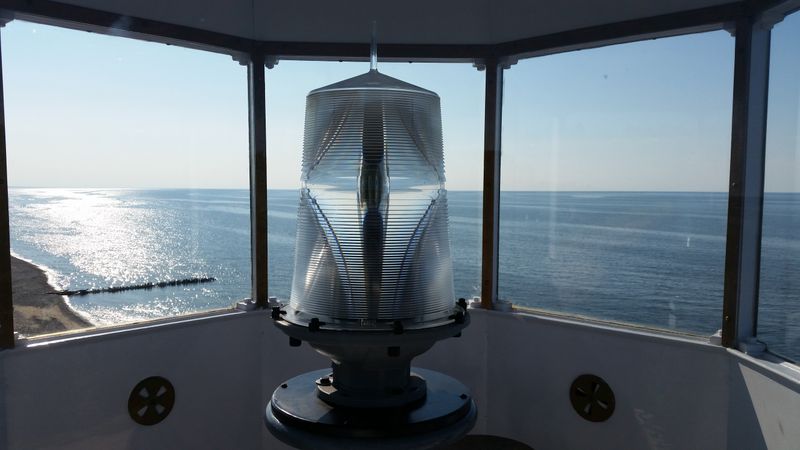
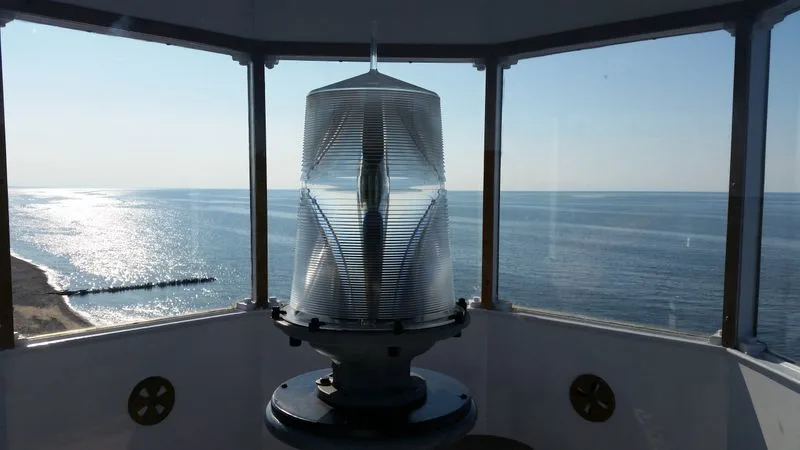
The spiral staircase narrows as you go, metal treads ringing faintly under careful steps. Your hand glides the rail, cool and slightly gritty with salt and time.
At the top, a burst of light and wind pushes through the hatch like a greeting.
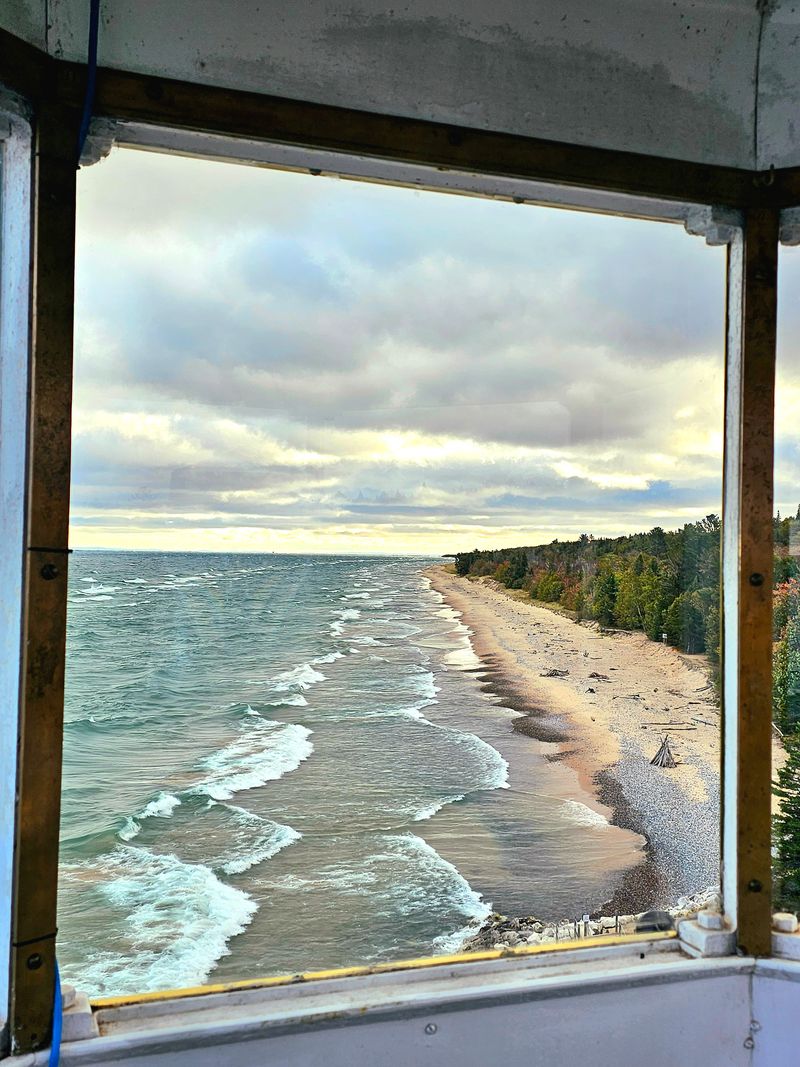
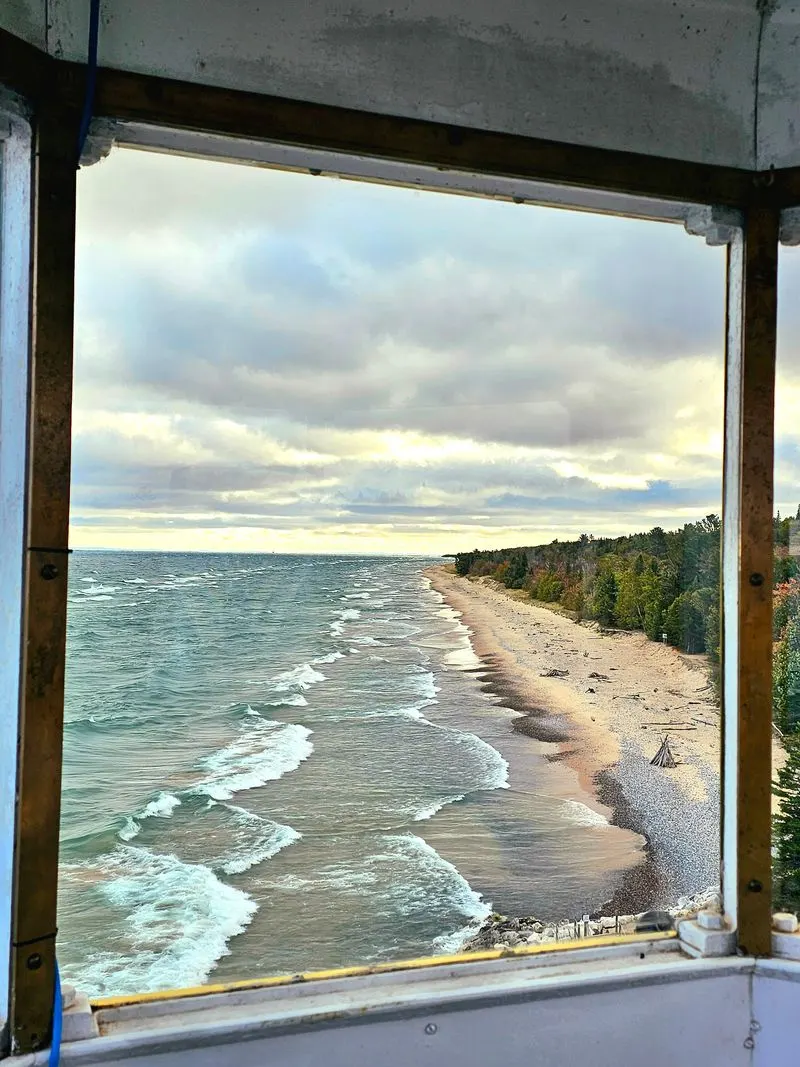
From the lantern room, Superior spreads out like hammered steel. The beach curls both ways, stitched with driftwood, agate hunters, and tiny footprints in damp sand.
Clouds run lanes across the water, changing colors by the minute.
Take your photos, then just stand there and breathe. You will understand why keepers stayed, through storms and isolation, because this view rearranges priorities.
Climb down slowly, brimming with a perspective that sticks to your ribs.
Beaches For Miles: Walking, Quiet, And Space
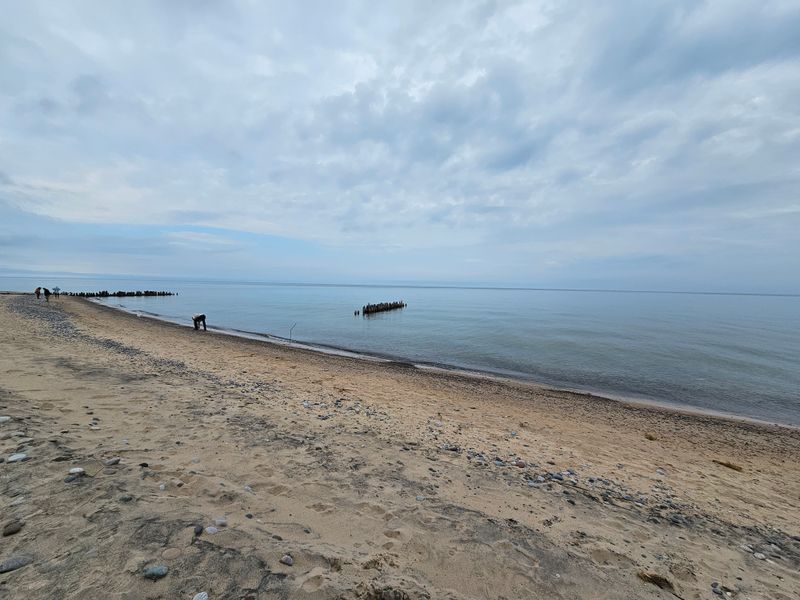
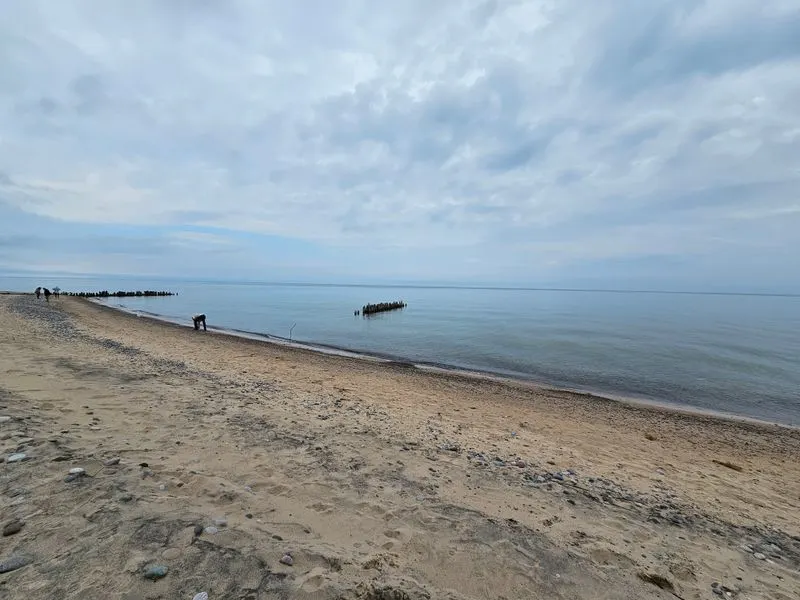
The beach unspools in both directions, an invitation with no fixed end. Sand gives way to smooth stones, then back again, each patch humming a different rhythm underfoot.
Waves nibble the shore in patient bites, rearranging your path with every pass.
Leave time to wander. You will see boardwalk access, a few picnic tables, and enough room to feel alone even with company.
Sandals help on rockier sections, but barefoot is doable when the stones warm in afternoon sun.
Look for strips of polished gravel where Superior tumbles treasure. The farther you walk, the quieter it gets until the lighthouse shrinks to a toy on the horizon.
It is the kind of beach that turns hours elastic.
Rockhounding 101: Agates, Yooperlites, And Ethics
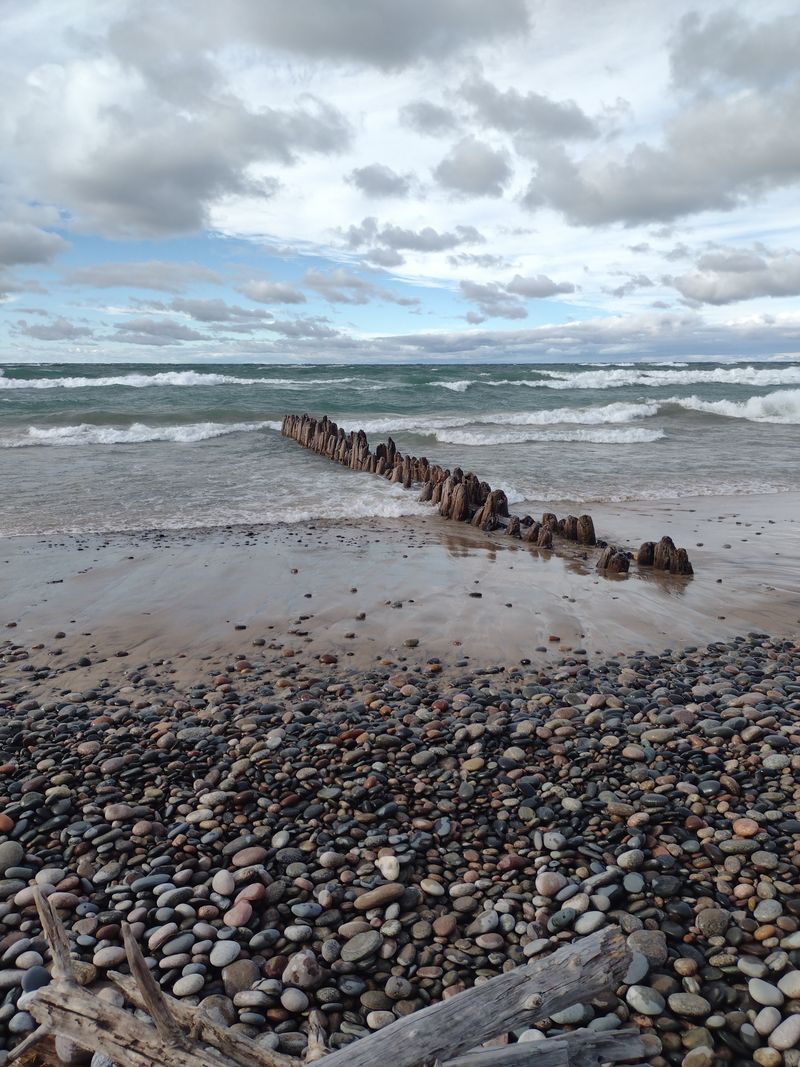
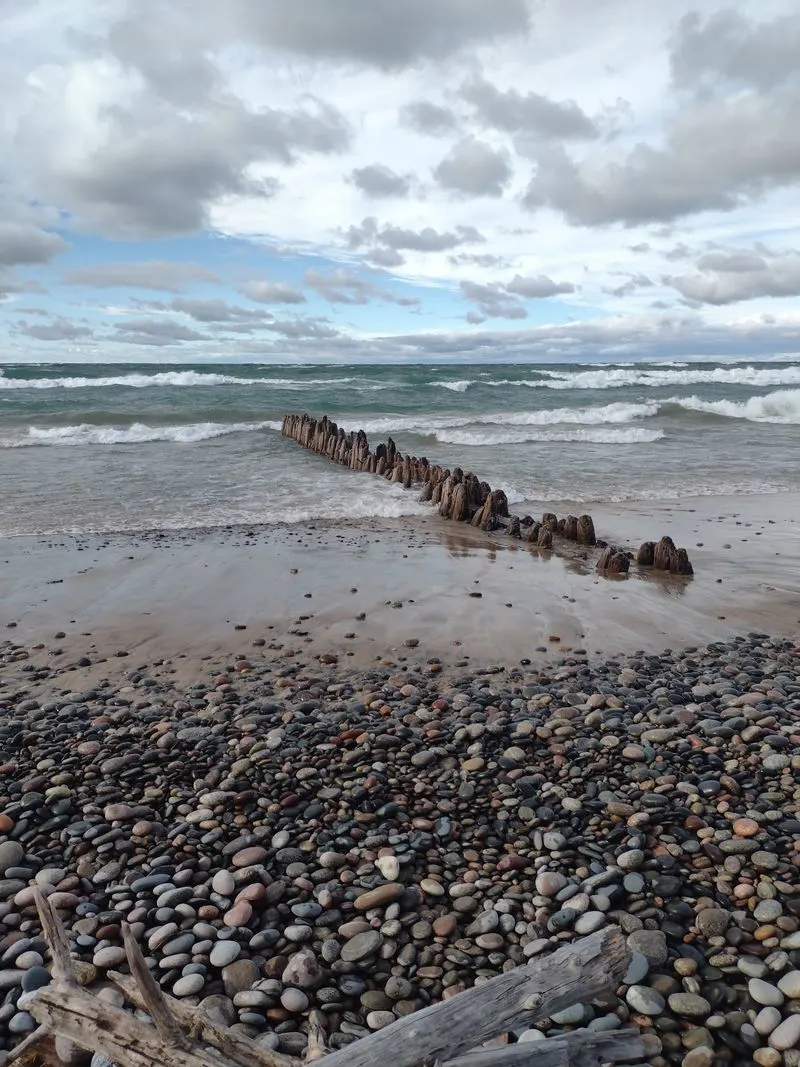
If collecting calls your name, this stretch delivers. Lake Superior agates hide in wet gravel bands, showing stripes and translucence when splashed.
After sunset, a UV flashlight can reveal yooperlites glowing like little galaxies underfoot.
Work slowly and keep your eyes low. Turn stones in the wash zone where waves rinse away sand, and watch for that glassy, banded look or orange fire inside.
A small pouch is plenty, because the thrill lives in the hunt.
Practice good ethics. Take only reasonable amounts, leave rare or significant pieces for others, and pack out every scrap you brought.
The beach will thank you, and the next seeker will feel the same quiet joy.
Weather And Seasons: Reading Superior’s Mood
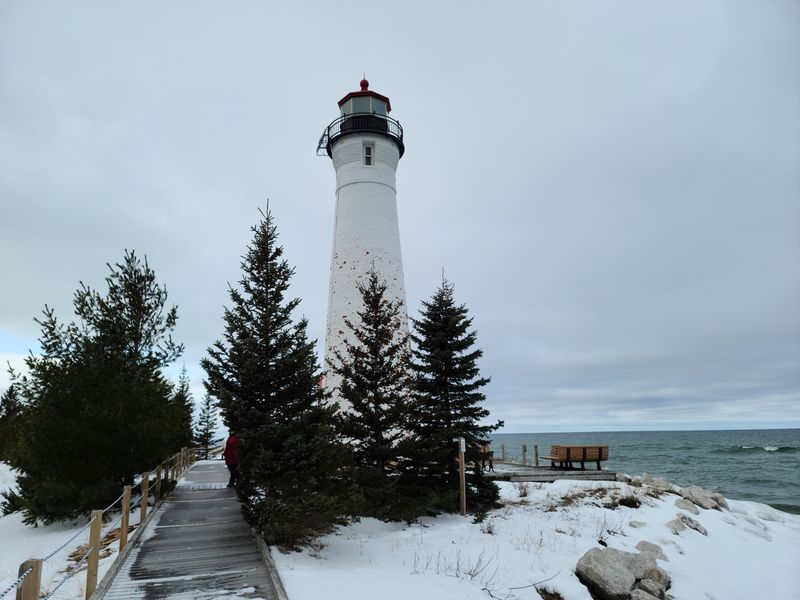
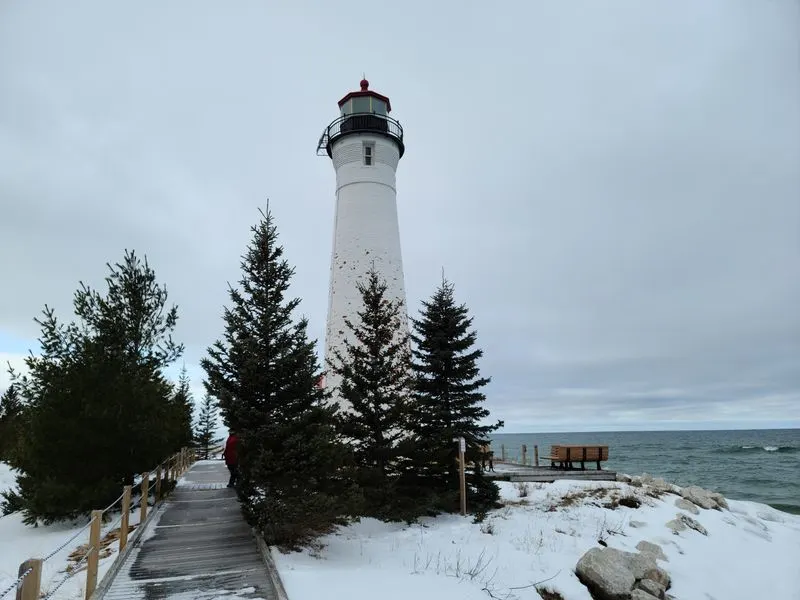
Superior writes its own forecast, so plan for variety and layers. A sunny morning can slip into fog by lunch, then clear to crystal blue by evening.
Wind is a constant, changing the lake’s voice from whisper to drumbeat.
Spring brings cold brilliance and fewer people, with water too frigid for more than ankle braving. Summer softens the edges and invites long beach days, though bugs can appear when the breeze dips.
Fall is color and drama, a painterly backdrop for photo lovers.
Winter is another world entirely if roads allow, stark and dangerous without preparation. No matter the season, stash extra water, snacks, and a dry layer.
When the sky flips a switch, you will be glad you came ready.
Facilities, Volunteers, And The Little Gift Shop
Out here, amenities feel like kindnesses. The small gift shop carries patches, mugs, stickers, and that iconic I survived the trip swag.
When open, you will also find friendly volunteers who keep the place running and stories flowing.
There are restrooms during open hours, picnic tables, and a tidy boardwalk to help more visitors reach the base. Entry and the climb are free, but donations matter.
Every purchase helps maintain the buildings, stabilize the shoreline, and keep the light welcoming.
Say thank you and pack your trash back out. The caretakers do heroic work at the edge of nowhere, and your support stretches far.
It is community, made visible in fresh paint and swept steps.
Safety And Navigation: What To Know Before You Go
Navigation apps can misbehave here, so download offline maps and mark the turns before leaving M-123. Cell service vanishes, and signage thins on the return.
A paper map feels old school, but it works when bars disappear.
Fuel up in Newberry, check tires, and bring extra water plus a simple first aid kit. After heavy rain, expect deep puddles and slow progress.
Keep speed modest to spare your suspension and your nerves.
Let someone know your plan and timeline. Weather shifts fast, and dark adds drama to every puddle.
With a little foresight, the adventure stays pure fun instead of a rescue story.
Photography Guide: Light, Angles, And Timing
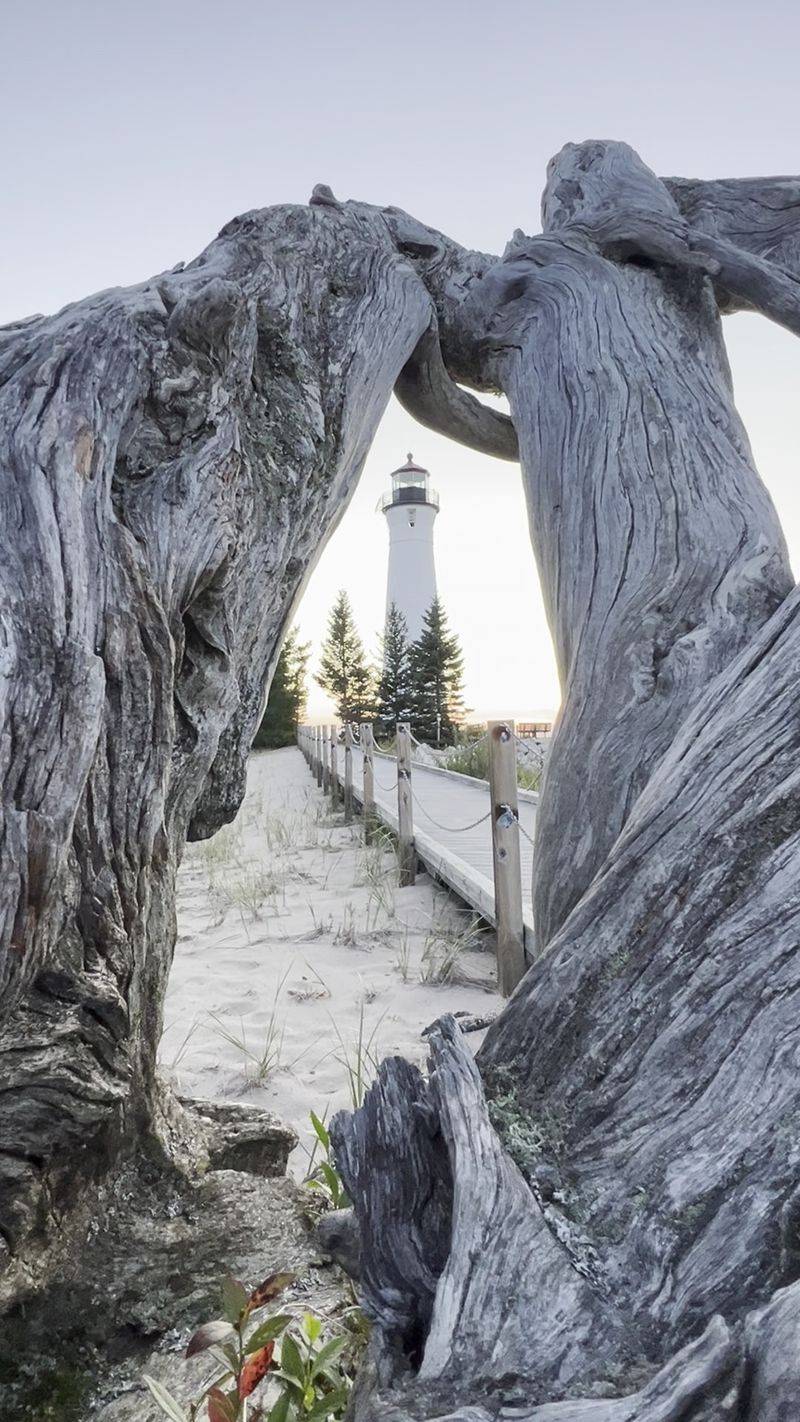
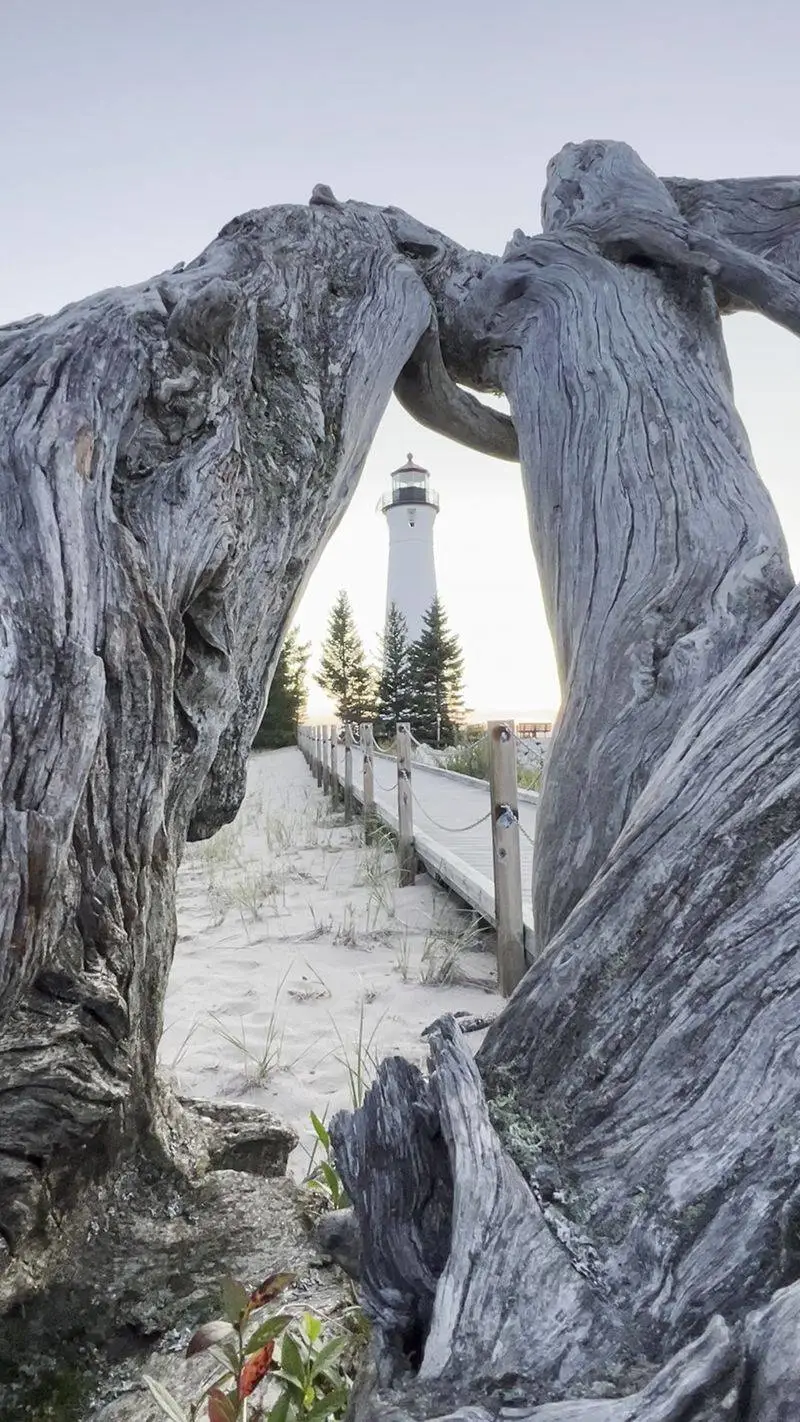
Golden hour paints the tower warm and the surf silky, especially with high clouds to bounce light. Shoot low through dune grass for depth, or frame the lantern room against a wide sky for scale.
Long exposures smooth Superior into brushed metal if you pack a tripod.
Walk north for reflections in wet sand and cleaner sightlines. Climb the tower for a top down sweep, then switch to details like bolts, lens glass, and brickwork seams.
Even on overcast days, contrast pops when waves rim the stones.
After dark, bring a UV flashlight for yooperlites and try wide lens star shots if the sky opens. Keep light painting subtle to respect the site and others.
You will leave with cards full and still wish for one more frame.
A Brief History: Loss, Restoration, And Resilience
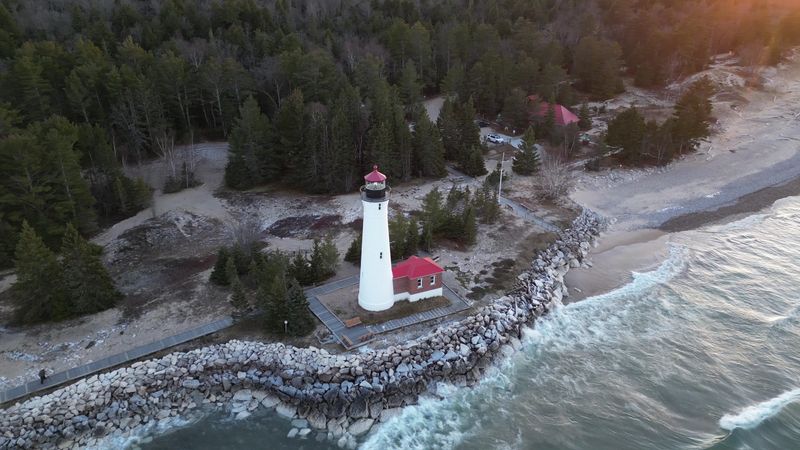
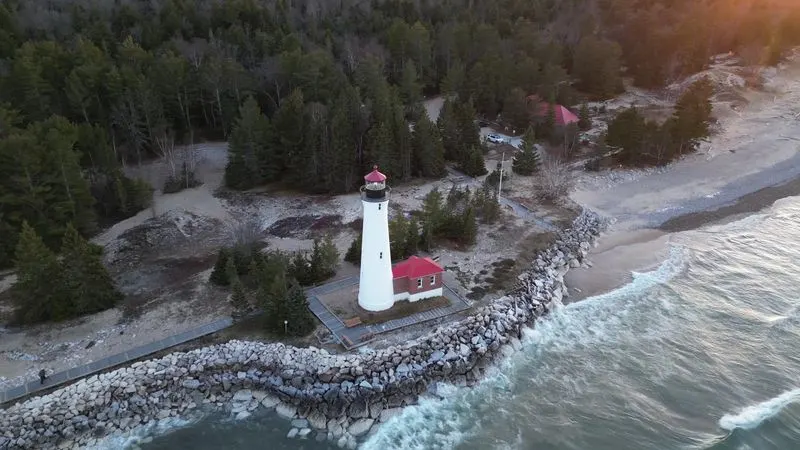
Crisp Point began as an early 1900s light, one of several along this wild Superior shore. Storms and erosion chewed at the site, and buildings vanished to weather and time.
The tower might have followed if not for a stubborn community with a plan.
Volunteers and donors rallied, stabilizing shoreline, restoring structures, and reopening the light to visitors. The result is not a museum behind glass, but a working conversation with the landscape.
Every painted board says someone cared enough to show up.
Walking here, you feel the absence of what was lost and the presence of what persists. It is a lesson in patience, grit, and shared stewardship.
The past is not gone so much as carried forward, one careful season at a time.