
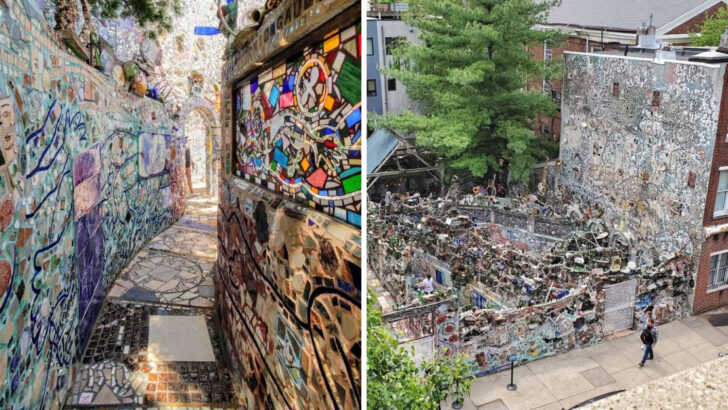
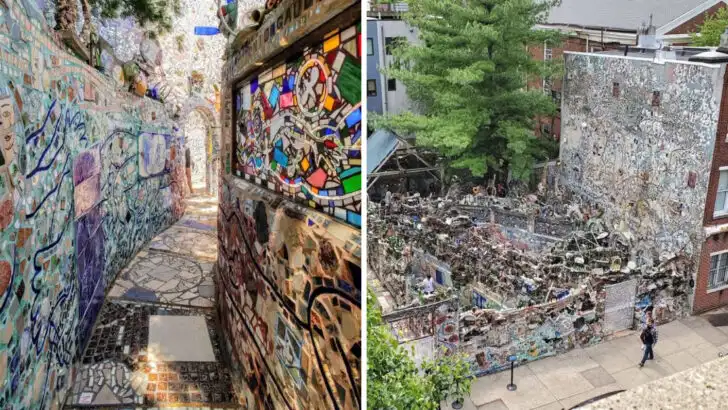
Step into a world where walls dance with color and floors whisper stories.
Philadelphia’s Magic Gardens isn’t just a gallery — it’s a living, breathing maze of mosaics that swallows you whole. Every corner twists, every surface glimmers, and suddenly you’re part of the art itself.
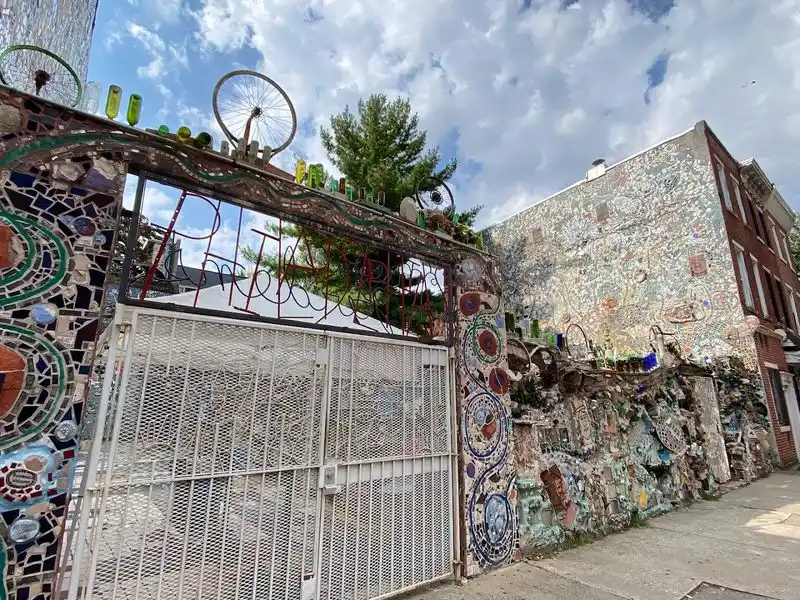
Glass bottles, tiles, bicycle wheels, and mirrors collide in chaotic harmony, forming patterns that are impossible to ignore. Indoors or out, the space pulses with the obsessive energy of Isaiah Zagar, whose decades of work turn the ordinary into something magical.
Exploring here feels like wandering through a dream you can touch. Every step reveals new textures, tiny sculptures, and hidden messages. This is a place to get lost, to linger, and to leave feeling delightfully disoriented.
A Labyrinth of Mosaic Pathways

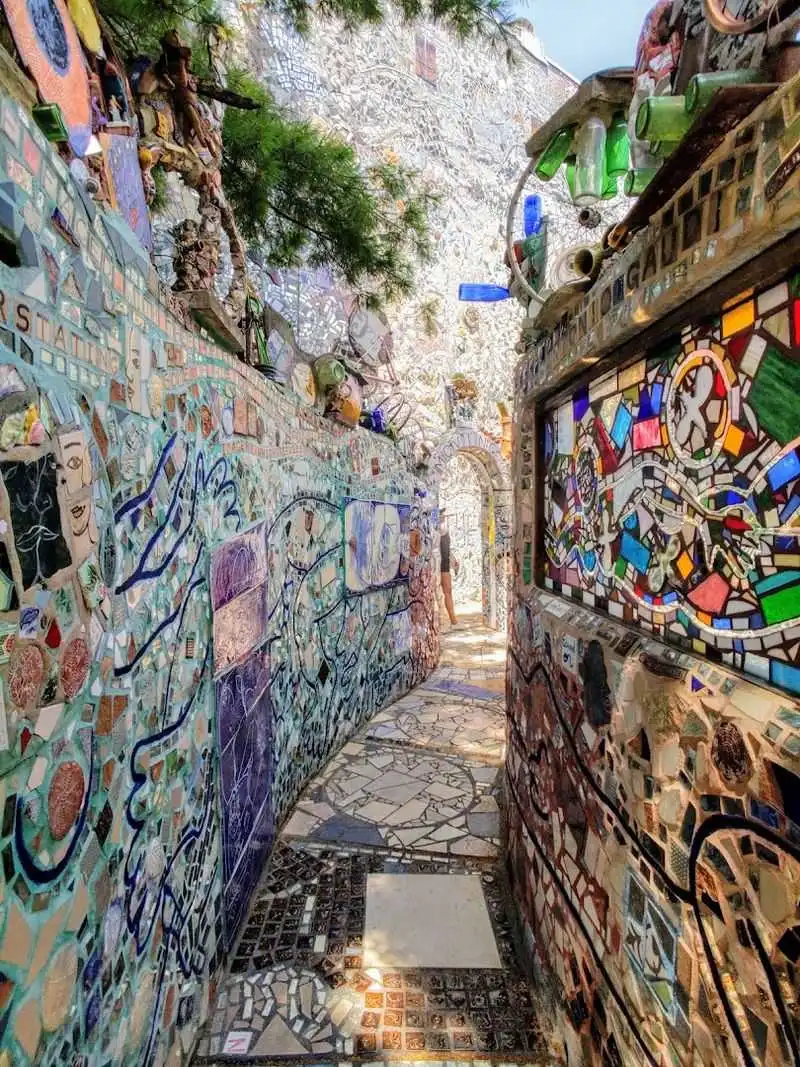
You do not just enter these pathways, you surrender to them. Tiles crunch softly underfoot, mirrors scatter daylight like confetti, and the route doubles back without warning.
Walls narrow, then open onto courtyards of light, coaxing you to slow down and look twice.
Turn left, and colors surge in a river of turquoise and saffron. Turn right, and a handwritten fragment whispers from the grout, half secret, half invitation.
Every choice creates a new composition, as if the floor plan is sketching you in real time.
Stand still and the maze keeps moving anyway, reflections slicing scenes into kaleidoscopes. Details keep stacking, bottle glass over tile over ceramic script, layering stories you cannot fully finish.
The path does not ask to be solved, only walked, again and again.
The Vision of Isaiah Zagar
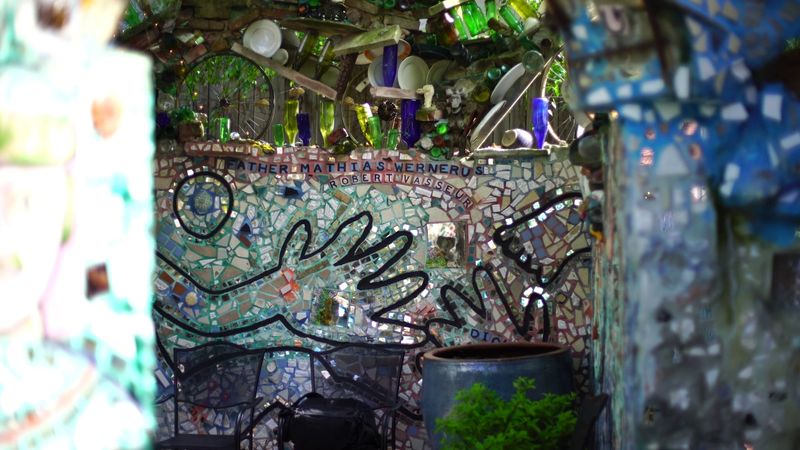
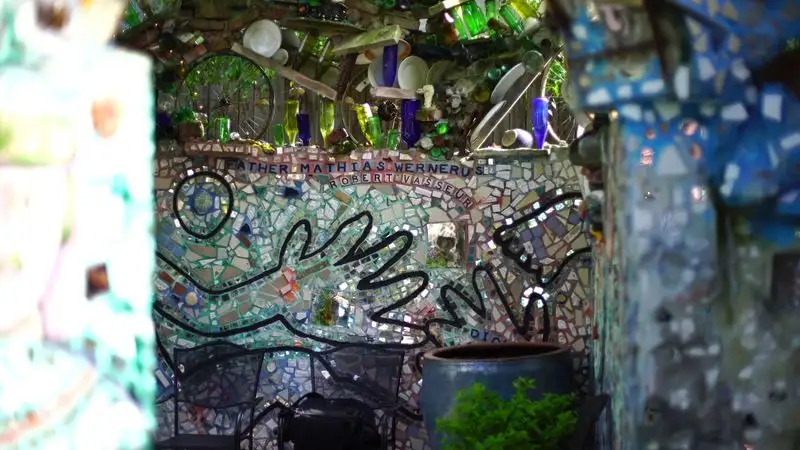
This place feels like a diary written in tile. Isaiah Zagar’s vision spills across walls and ceilings, an evolving narrative that folds memory into material.
You feel the decades in every shard, the rhythm of a hand repeating shapes until they become language.
There are faces, suns, snakes, and stars, each reappearing like friends across the block. Glazed ceramics echo personal stories, while mirrors multiply them into chorus.
The artist’s script slides between images, not captions exactly, but breath marks guiding how your eyes move.
What makes it astonishing is the stubborn generosity of it all. Zagar turns ordinary surfaces into portals, insisting that cities can be canvases and that art belongs at walking speed.
You leave sensing the work is still speaking, and it wants you to answer back.
Found Objects Turned Into Art
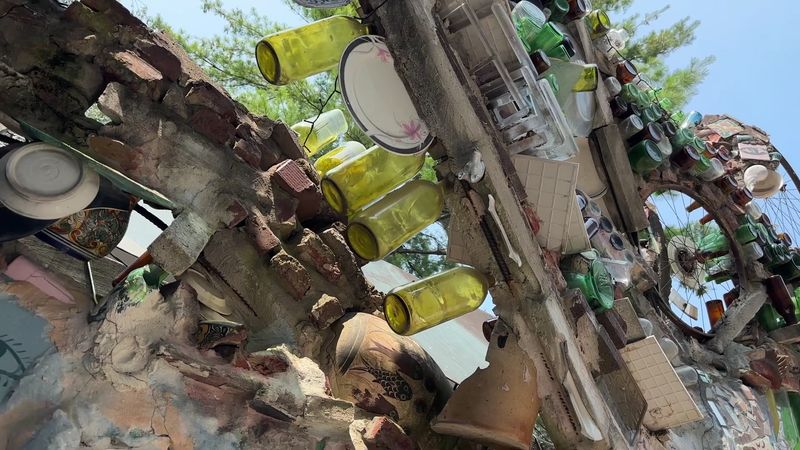
Bottle necks catch the sun and pour it back in green. Bicycle wheels become halos, spokes sketching light on the walls.
Broken tile fractures into geometry, while mirror shards pace the rhythm so nothing ever sits still for long.
There is a gentle defiance here, turning discards into declarations. Clay faces peek from mortar like neighbors gossiping over a fence.
You run a hand near the surface and feel the city’s leftovers humming, proof that beauty is a habit, not a product.
Every object seems to remember a past life and volunteers it to the story. The bottles once clinked at tables, the wheels traveled streets, the tiles belonged to kitchens with steam and laughter.
Together they announce a different kind of value, one stitched from patience and possibility.
Indoor Galleries That Feel Like Installations
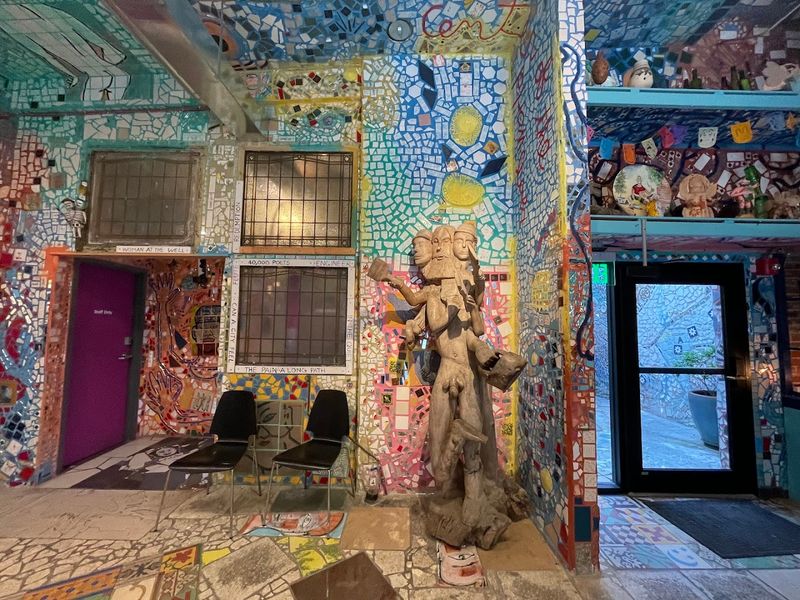
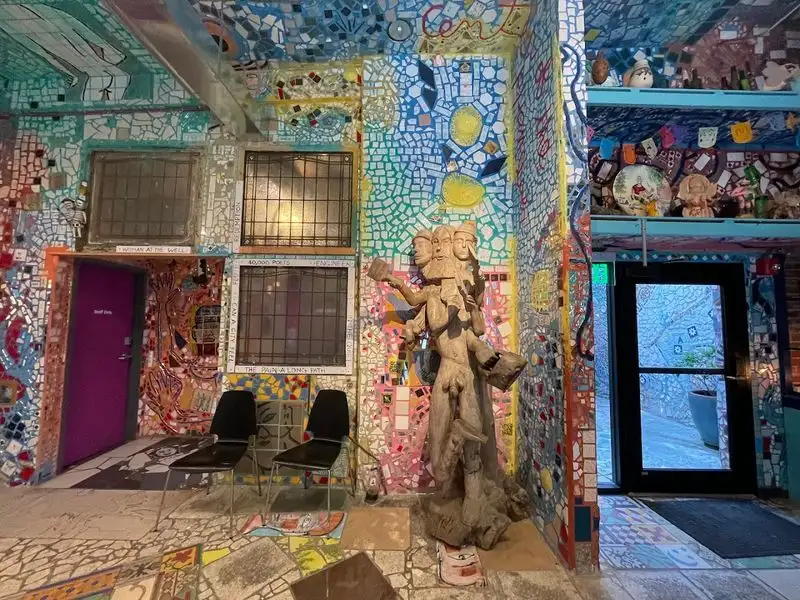
Step inside and the rooms wrap around you like fabric. The ceilings glitter with mirrored constellations, while the walls pulse in stripes of tile and hand-pressed clay.
Frames dissolve, corners soften, and suddenly the architecture behaves like sculpture.
Labels do not interrupt so much as whisper from the margins. You feel guided by texture, nudged by color, ushered by reflection.
Even the floor participates, keeping your feet in the conversation so your gaze never floats too far away.
It is installation without the hush. You are allowed to breathe, lean in, and trace patterns with your eyes until they warm to your attention.
The galleries keep offering new alignments, proof that looking is active work and your body is part of the exhibit.
A Sculptural Outdoor Garden
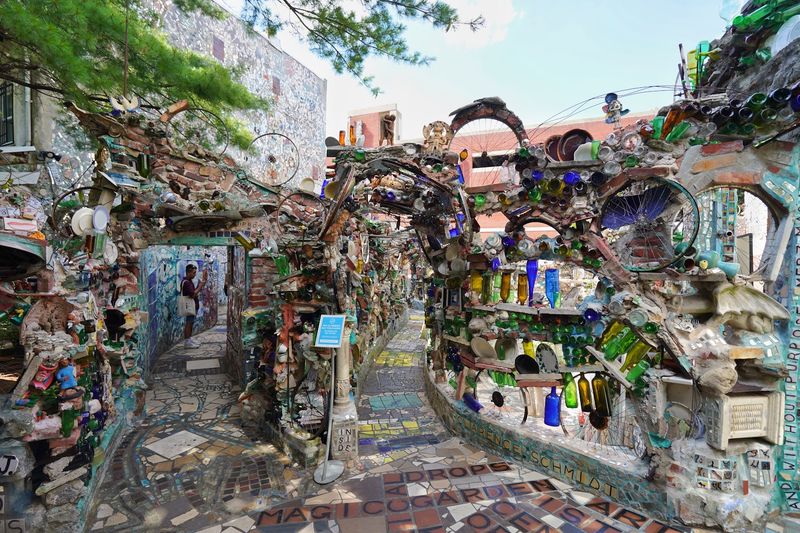
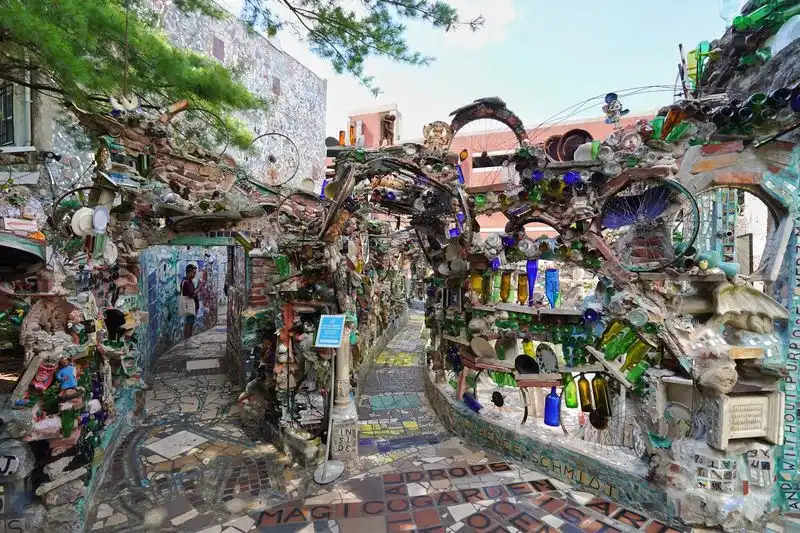
Outside, the garden builds itself upward, terrace by terrace, until the sky feels tiled too. Arches frame splashes of bottle glass, and tunnels braid the pathways with cool shade.
Every wall seems to breathe, studded with ceramics that catch sunlight like tiny bells.
Stand on a landing and the whole place tilts into a sculpture park. Curves and cuts align into viewpoints that feel designed yet accidental.
You watch visitors drift in loops, their silhouettes sketching soft punctuation across the mosaics.
Plants tuck themselves into corners, softening the mortar with green. Wind finds the wheel rims and turns them into thin music.
The garden does not end at the fence line, it spills into the neighborhood, and you can feel the city answering back.
A Living Piece of Philadelphia Folk Art
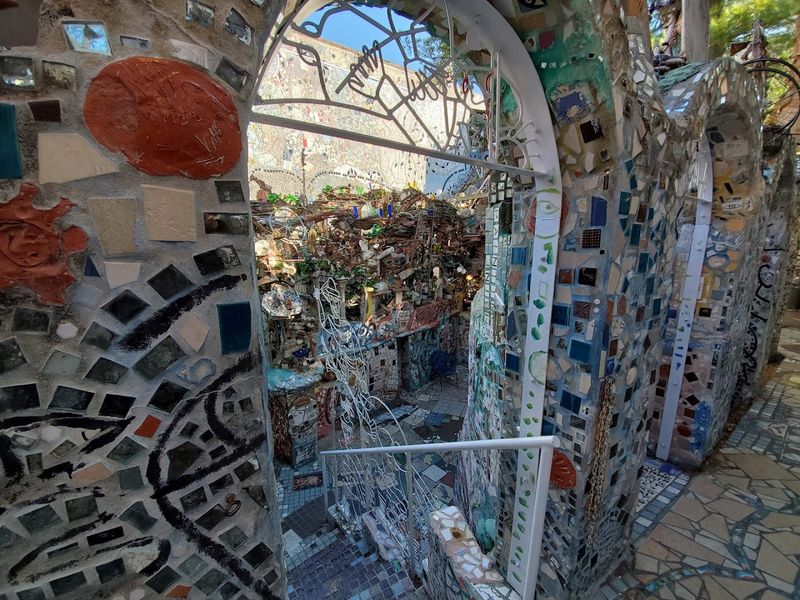
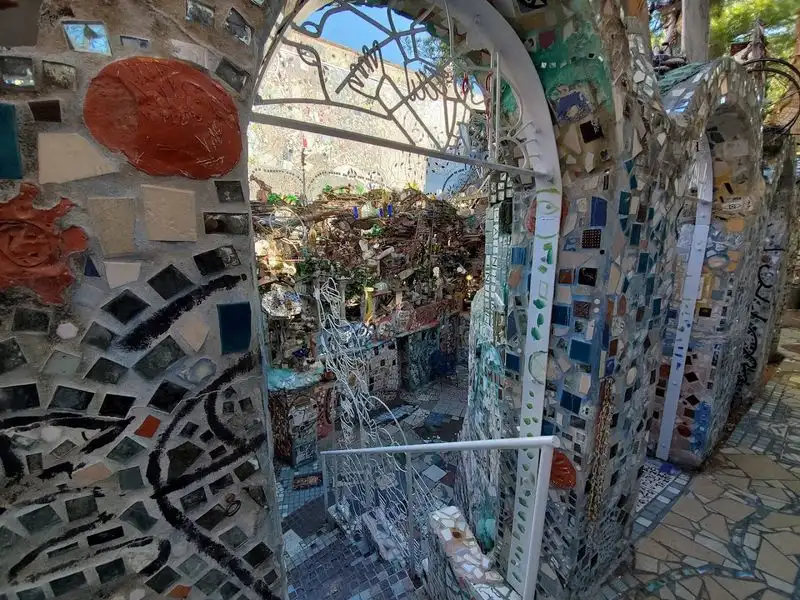
This place feels conversational, like a block party held in grout. Folk art energy moves through it, handmade and heart-forward, refusing the polished hush of white cubes.
The patterns echo neighborhood murals, telling stories you do not need a degree to read.
There is history in the seams, a locally grown tradition of color shouting joy onto brick. You recognize gestures from nearby walls, gestures that say the streets remember.
It is art that learned to share sidewalk space with coffee runs and bus stops.
Because it breathes with the city, it keeps changing in small ways. New tiles, new notes, new visitors folding their reflections into the mix.
You leave feeling claimed by the work, as if the folk art spirit stamped a little approval on your day.
Rooted in the Energy of South Street
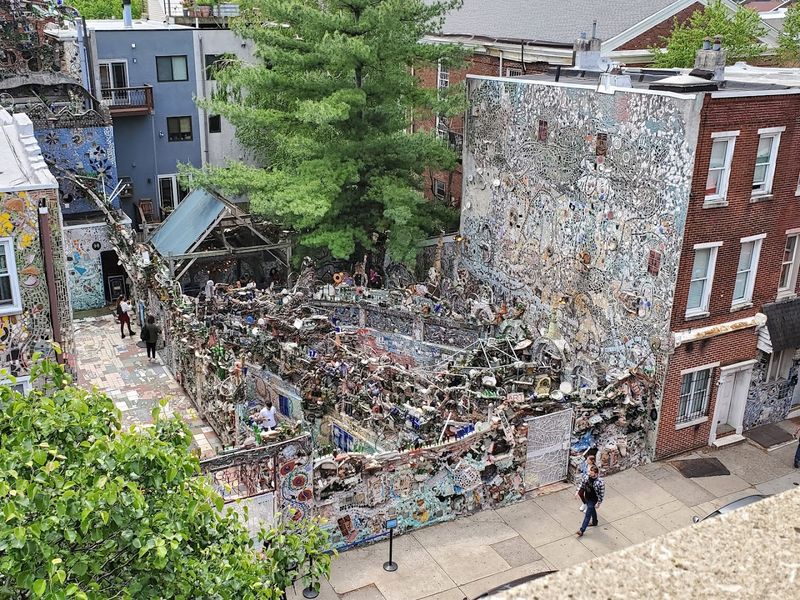
South Street crackles, and the Gardens tune themselves to its frequency. Shops spill color onto the sidewalk, music drifts from doorways, and the mosaic facade nods like a local.
You sense the artwork grew here the way ivy claims a wall.
Walk a block and you collect influences: vintage signs, skate wheels, tattoo flash, thrifted sequins. The galleries do not retreat from this noise, they remix it, catching fragments and setting them in dazzling mortar.
Street culture becomes pattern, pattern becomes place.
By the time you circle back, the boundary between inside and outside has thinned. The neighborhood feels curated, and the art feels neighborly.
You carry the cadence of South Street with you, a rhythm that keeps your steps lively long after you leave.
Layers of Symbolism and Personal Storytelling
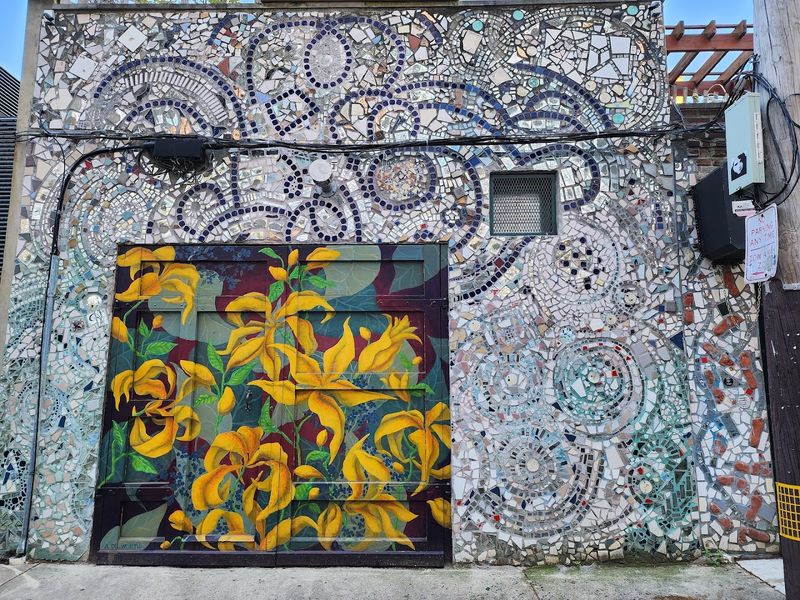
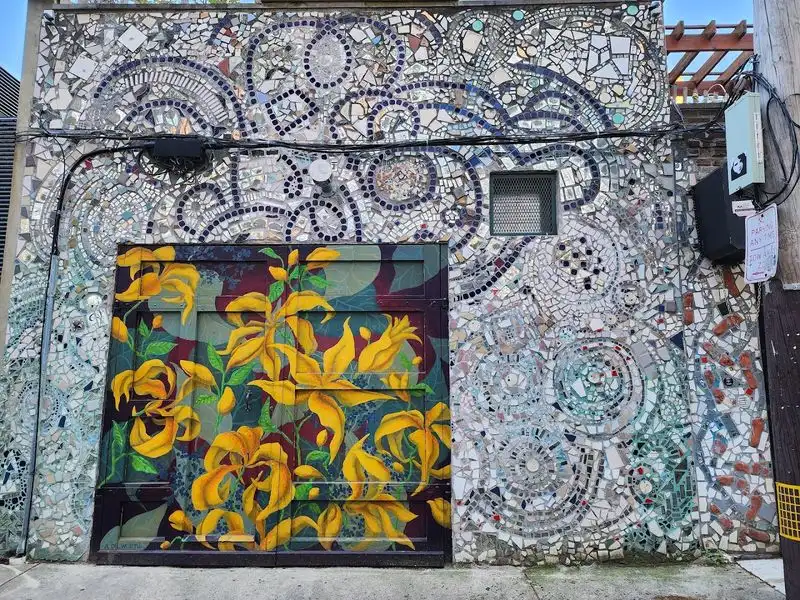
Symbols recur like dreams you almost remember. Suns beam over eyes, hearts nest beside serpents, and all of it is threaded with handwritten lines.
The repetition teaches you how to read, letter by letter, shape by shape, until pattern becomes voice.
Some references feel intimate, others wander across cultures and maps. Ceramics suggest travel, murals answer with Philadelphia grit.
It is confessional without confession, inviting you to map your own meanings onto the tile.
Look longer and connections surface, small bridges between colors and phrases. You start tracing stories across rooms, discovering how the artist tucks memory into corners.
The mosaics turn you into an active translator, and interpretation feels less like solving and more like listening.
Constant Visual Discovery
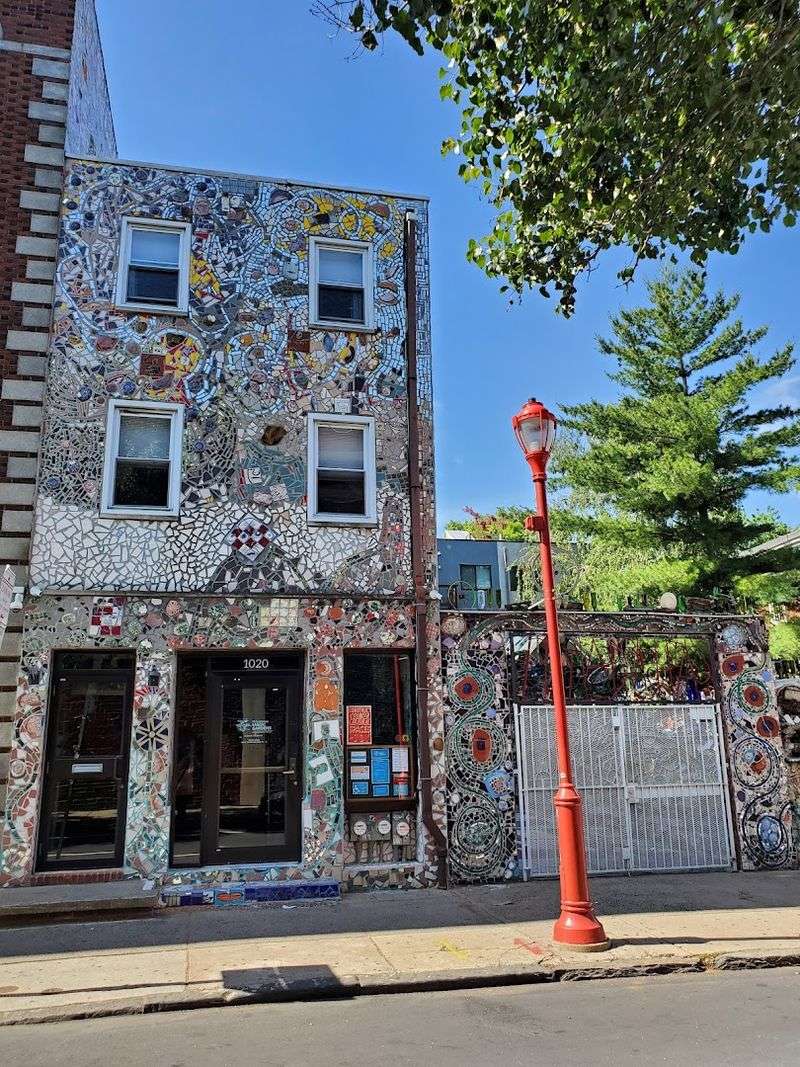
There is always one more thing to notice. A tiny figurine hides on a ledge, a scribbled date peeks from grout, a mirror clip doubles a color you almost missed.
The space rewards slowness, the way tide pools do if you crouch and wait.
Move three steps and a new constellation snaps into place. Tilt your head and letters turn into pathways.
You start playing a game with yourself, promising to leave after one last discovery, then breaking the promise with a smile.
Even photographs cannot pin it down, because reflections recompose the scene with every breath. The mosaics behave like weather, shifting under light and footsteps.
That sense of chase keeps you curious, and curiosity is the best souvenir you can bring home.
Essential Visitor Information
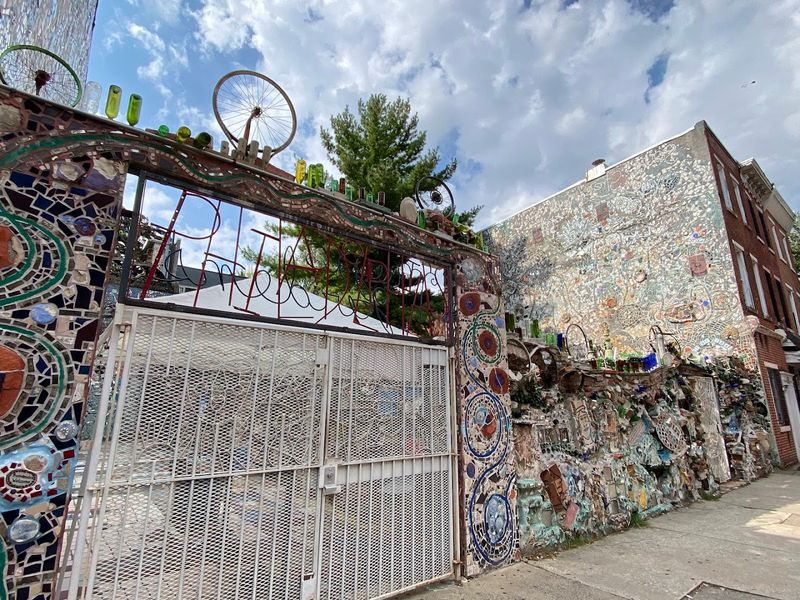
Philadelphia’s Magic Gardens is open year-round with guided and self-guided tours, and tickets are required for entry. Plan 60 to 90 minutes to explore both the indoor galleries and the outdoor mosaic gardens.
The space is fully accessible, with friendly staff to help you navigate.
Address: 1020 South St, Philadelphia, PA 19147. Phone: +1 215-733-0390.
Check the official calendar for special events, workshops, and rotating exhibitions that add fresh layers to the experience.
Weekends can be busy, so consider weekday mornings for a calmer visit. Wear comfortable shoes and bring a charged camera, because reflections love good light.
If you are traveling by transit, several bus routes serve South Street, and nearby parking lots make driving workable.