

Step into a time machine where chrome, celebrity, and American ingenuity shine under one roof.
The National Automobile Museum in Reno brings history to life with immersive streetscapes, rare racers, and star-studded rides that feel close enough to touch.
You will wander past more than 220 vehicles, including icons linked to Elvis, John Wayne, and James Dean.
Bring your curiosity and leave with stories you will tell for years.
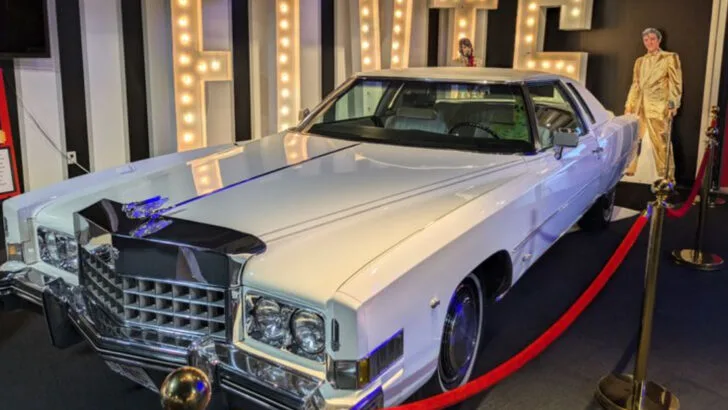
Elvis Presley’s 1973 Cadillac Eldorado
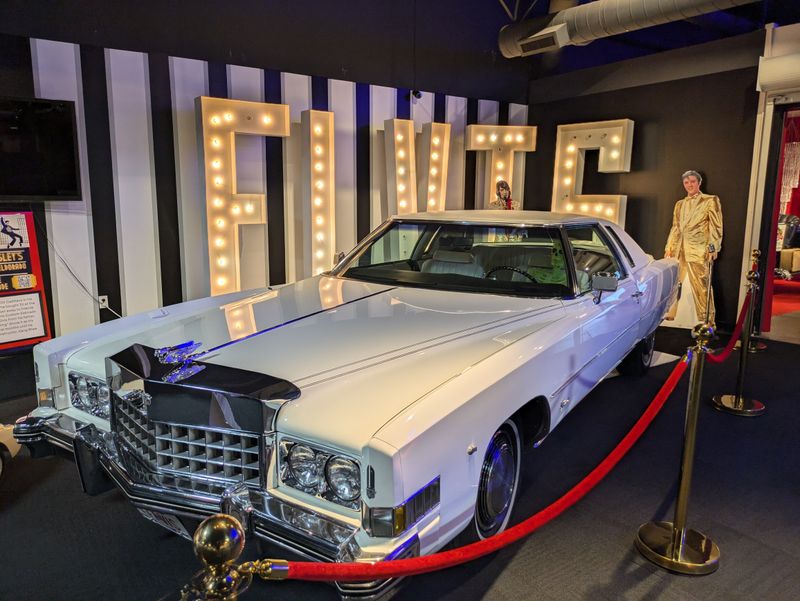
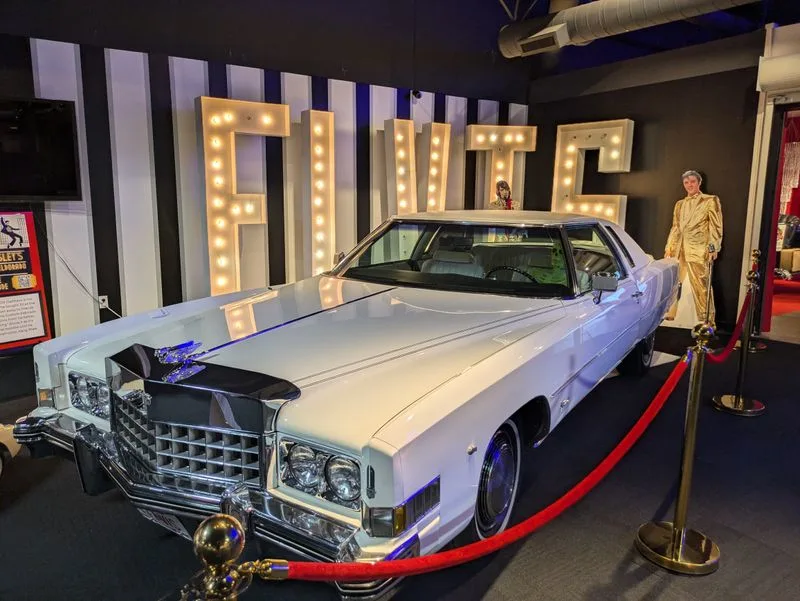
Elvis’s 1973 Cadillac Eldorado sits like a stage spotlight captured in chrome, and you can almost hear the applause. The Eldorado’s long hood and confident stance make it feel more like a lounge on wheels than a car, with details that echo the King’s flair for spectacle.
Stand close and you will notice how the paint holds the light, as if the finish is still soaking in the glow of Vegas marquees.
What makes this Eldorado irresistible is the way it bridges celebrity and craft. Cadillac’s personal luxury formula brings a hushed ride, power underfoot, and cabin comfort that invites slow cruising down a sunset boulevard.
You do not need to be an Elvis superfan to feel the charm, but knowing he favored Cadillacs adds an extra spark, a whisper of late nights and big stages.
Take your time walking around it. Peek at the grille and the crisp body lines that soften into curves at the rear, then imagine the soundtrack of a V8 rumble beneath the swirl of rhinestones.
The museum’s placards give context so you are not just staring at a star’s car, you are reading a chapter of American pop culture. You will leave with a mental snapshot that shimmers like a gold record.
John Wayne’s rugged Western ride
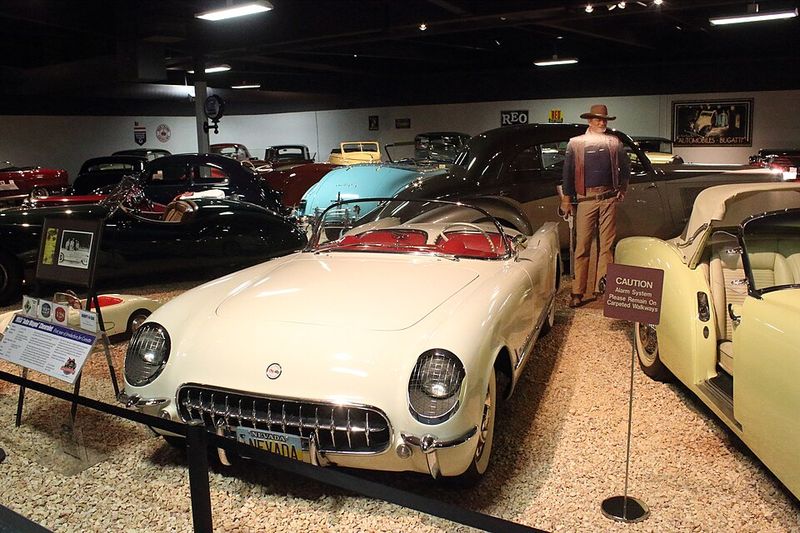
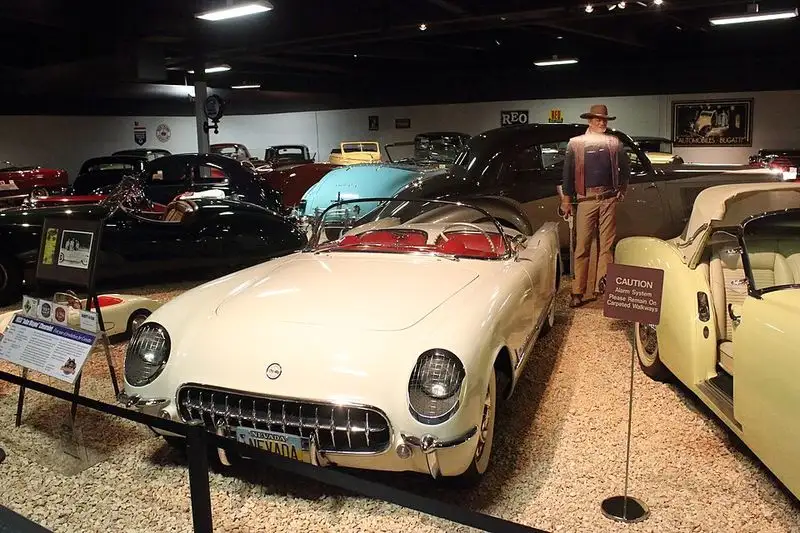
You do not expect subtlety from a John Wayne ride, and this one delivers solid, square-shouldered presence. It feels ready for a dusty back lot or a long haul across open country, where practicality anchors every mile.
The paint, trim, and upright posture read like a frontier uniform, honest and unpretentious.
What resonates is how the vehicle frames Wayne’s cinematic persona. You can picture gear tossed in the back, a hat on the dash, and a trail waiting beyond the horizon.
The cabin’s straightforward layout and sturdy materials speak to durability over dazzle, the kind of reliability that turns miles into memories. It is not fancy, and that restraint is exactly the point.
Move around the front and let the grille set the tone. The museum’s interpretive displays add context, linking Hollywood myth to mechanical fact so you leave with a clearer picture of the man behind the legend.
You will feel an urge to head for a two-lane highway, windows down, with the sound of spurs clinking somewhere in your imagination.
James Dean’s cinematic connection
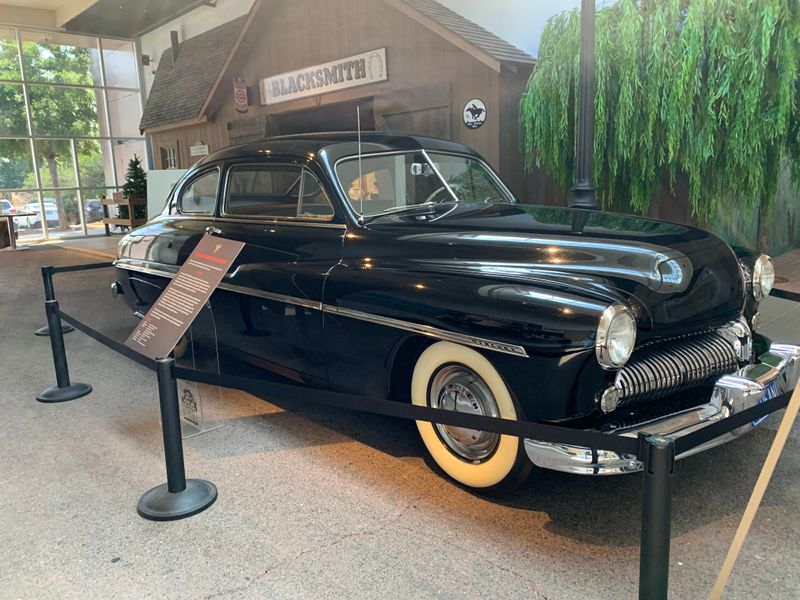
James Dean’s name instantly conjures speed, rebellion, and a dash of danger, and this display channels that mood with sleek metallic curves. You will notice the compact proportions, the way light skims across bare aluminum, and the purposeful stance that seems to hum even at rest.
It is a cinematic moment frozen in metal, evocative without being morbid.
The museum treats the story with care, balancing legend with context so you get more than headlines. Design notes highlight low weight, tight packaging, and the racer’s mindset that shaped these machines.
Stand close and you will feel why enthusiasts romanticize the era: minimalist cabins, simple dials, and a tactile connection between driver and road.
Give yourself a moment to imagine a twisty mountain road at dawn, cool air, engine note rising with each shift. The display turns fascination into reflection, inviting you to consider how culture and technology accelerate each other.
You will leave with a new appreciation for how a small, agile sports car can carry a giant story.
1907 Thomas Flyer – New York to Paris winner
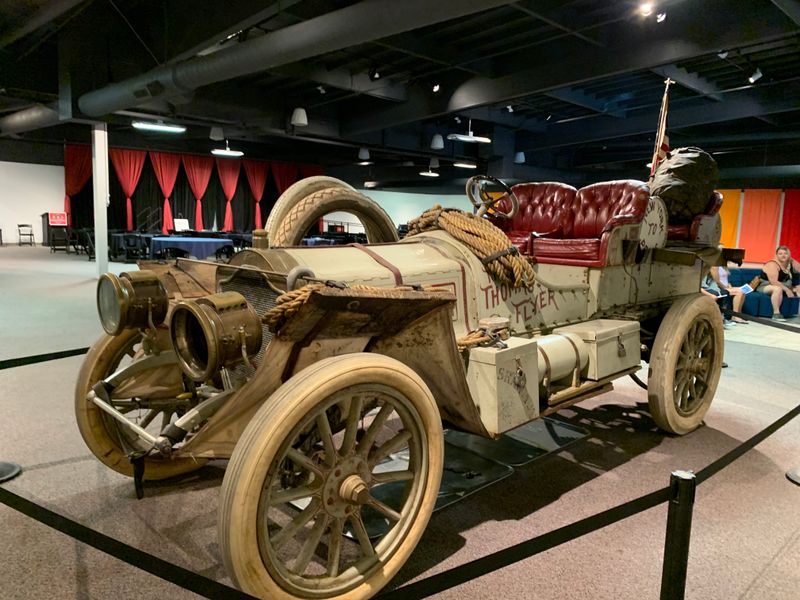
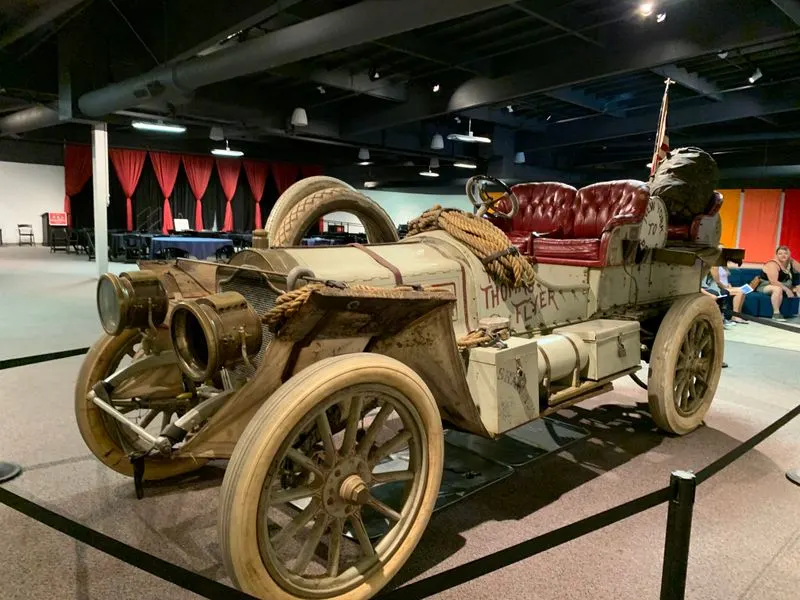
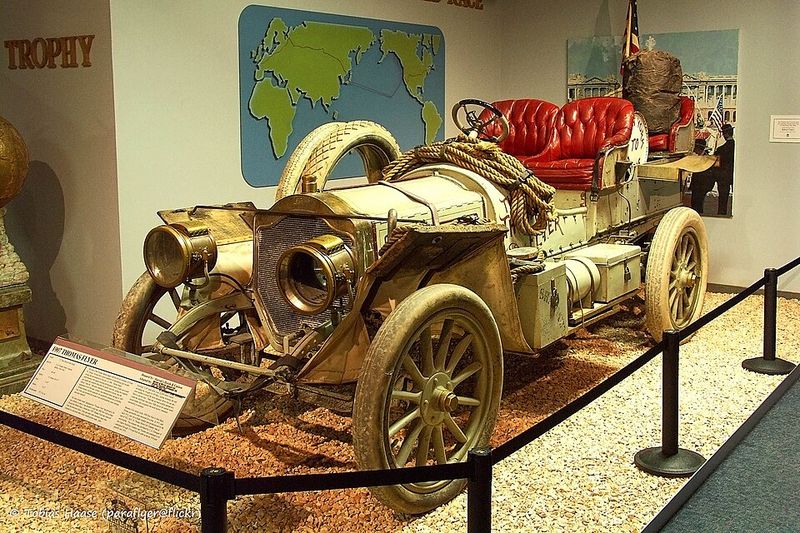
The 1907 Thomas Flyer is a hero from an age when roads were guesses and maps were hopeful. You will see straps, lamps, spares, and grit written across every bolt, as if the car still carries dust from the New York to Paris challenge.
It is handsome in a practical way, built to conquer distance rather than strike a pose.
Stand near the wheels and imagine winter ruts, makeshift bridges, and endless horizons. The Flyer embodies courage and engineering nerve, with a chassis that shrugs off punishment and an engine built to keep its promise.
Plaques detail the route and the drama, turning a trophy into an odyssey you can almost feel beneath your shoes.
What stays with you is the human element. Crews wrestled with weather, fuel, and navigation while the world watched, and this machine made the impossible tangible.
You will leave with a renewed respect for early motorists who did not just drive but explored, proving that four wheels could span continents.
The Phantom Corsair – 1938 futurist dream
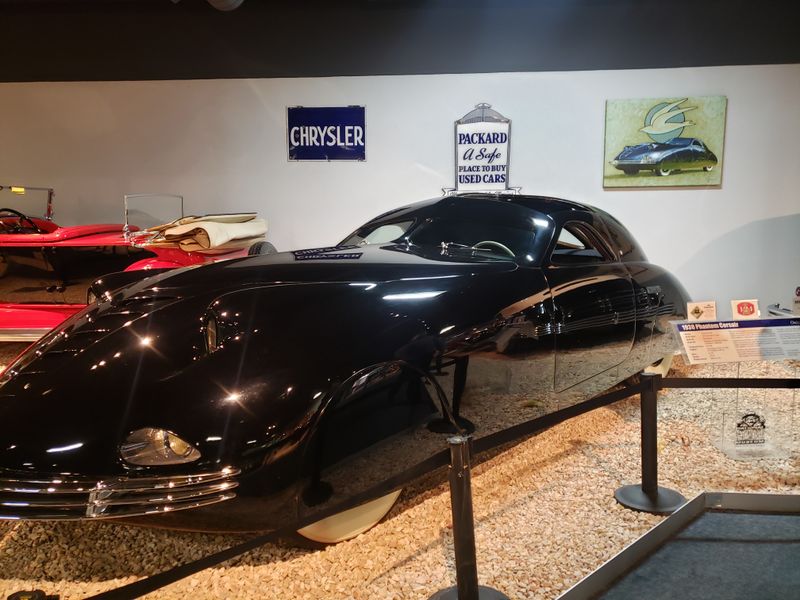
The Phantom Corsair looks like tomorrow slipped out of 1938 and never apologized. Its teardrop body, hidden fenders, and flush surfaces make everything else in the room feel conventional.
You will circle it slowly, realizing how radical it was, and still is, a manifesto of aerodynamics before wind tunnels ruled the world.
Inside, the details continue the theme: innovation woven into comfort, with instrumentation that feels theatrical yet purposeful. The car whispers that design can leap decades when imagination leads.
You do not need to be a designer to feel the shock of the new, only open to the thrill of ideas expressed in steel.
Read the exhibit notes and you will see how small production dreams collide with reality. Still, the Corsair’s legacy lives as inspiration, a reminder that concept cars are invitations more than promises.
You will leave energized, thinking about how bold lines and brave thinking can bend time.
DMC DeLorean – stainless steel time capsule
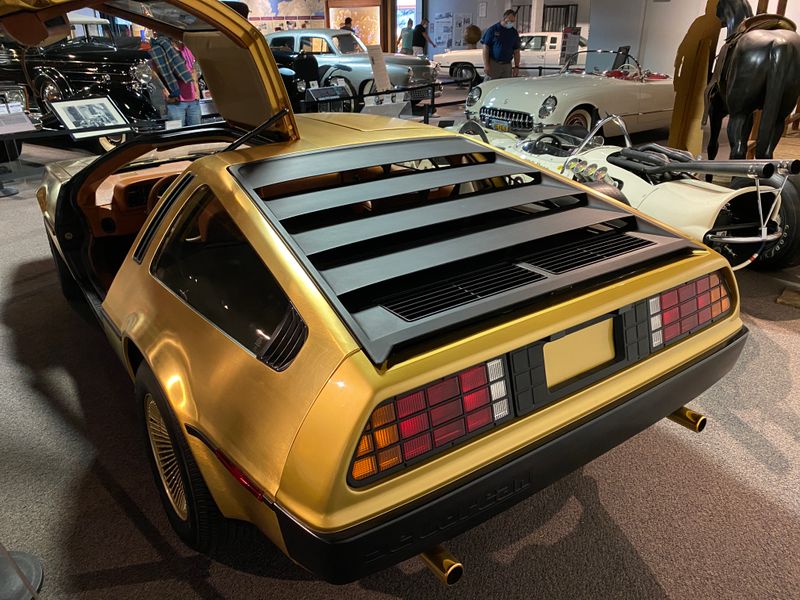
The DeLorean shines like a stainless steel promise, equal parts movie star and engineering experiment. Gullwing doors rise and suddenly the room feels like a set, and you are cast as the driver.
The brushed metal catches soft light and throws it back with a cool 80s confidence.
Beyond the pop culture aura, the car is a study in materials and ambition. You will notice the tidy proportions, the low cowl, and the way the design avoids ornament in favor of pure geometry.
Stand by the rear louvers and you can almost hear synth music and the hum of possibility.
The museum balances fun with facts, situating the DeLorean in a timeline of innovation and risk. You will appreciate how ideas sometimes outpace business realities, yet still shape the collective imagination.
Walk away smiling, a little nostalgic, and ready to rewatch your favorite time travel scenes.
Beatnik Bandit by Ed Big Daddy Roth
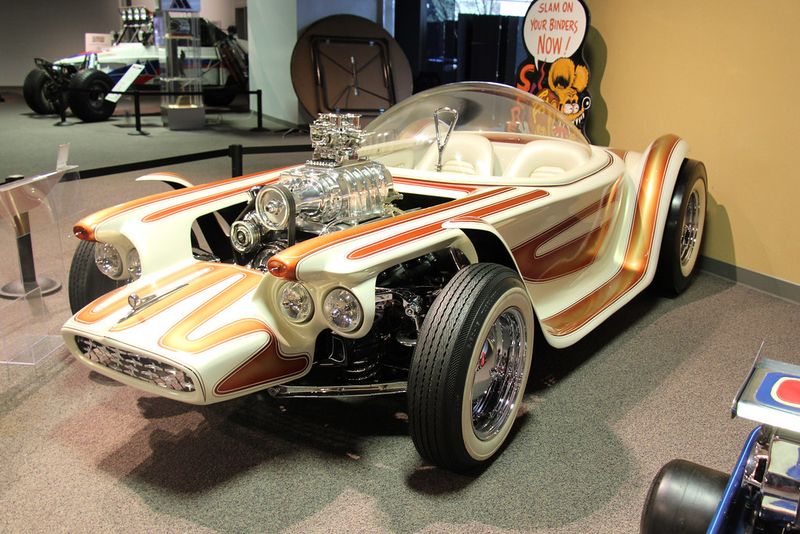
The Beatnik Bandit looks like a spaceship that decided hot rodding was cooler than orbit. That bubble canopy gleams, inviting you to imagine climbing in and twisting the joystick.
Chrome stacks and candy paint turn the gallery into a car show, and you will catch yourself grinning without trying.
Roth’s vision blends cartoon energy with real metal and fiberglass, a mashup of attitude and technique. You will see how low stance, outrageous curves, and show-car detailing transformed garage culture into pop art.
The placards make it approachable, explaining the methods without draining the magic.
Take your time with the angles and reflections. The Bandit is best absorbed slowly, letting color and chrome wash over you until the line between toy and tool blurs.
You will leave feeling lighter, reminded that cars can be joyful, rebellious sculpture as much as transportation.
The Jerrari – Jeep Wagoneer with Ferrari V12
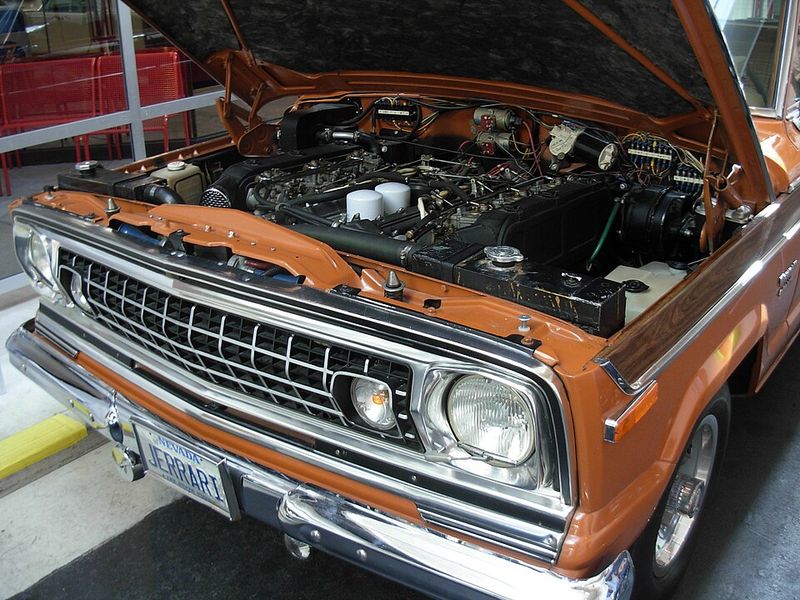
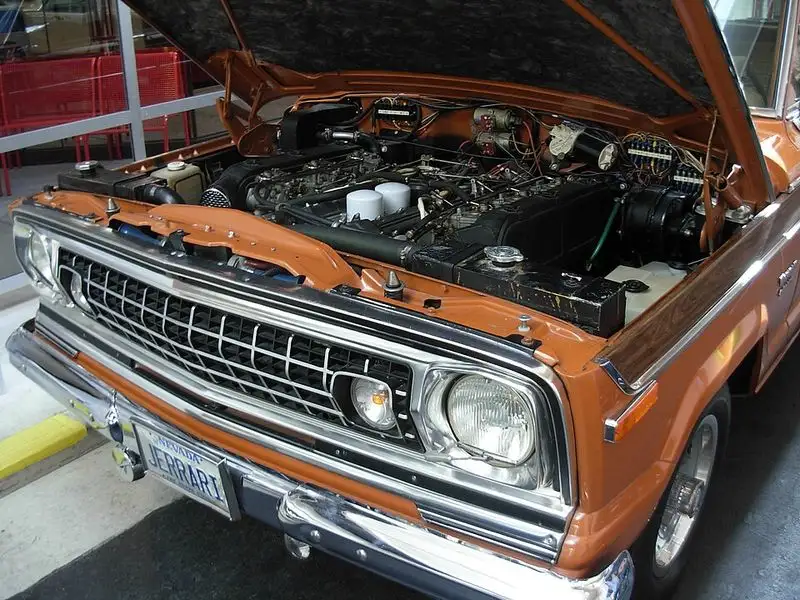
The Jerrari is part puzzle, part punchline, and entirely irresistible. Imagine a Jeep Wagoneer and a Ferrari V12 meeting in a garage and deciding to share a heartbeat.
You will laugh first, then lean closer, because the craftsmanship makes the joke land with surprising credibility.
Under the hood, red valve covers and tidy plumbing tell you the swap is serious. The cabin still feels like a road trip waiting to happen, while the drivetrain whispers about alpine passes and high revs.
It is a what-if turned what-is, and that confidence is contagious.
The museum leans into the story, showing how car culture thrives on curiosity. You will leave inspired to look at everyday machines with fresh eyes, asking what might happen if limits were nudged.
It is proof that playfulness and engineering can share the same driveway.
Early horseless carriages and the 1890s street scene
Step onto the recreated 1890s street and you will feel the hush before the modern world roared to life. Wooden wheels, brass lamps, and upright tillers sit against brick storefronts, and everything smells like history in your imagination.
These early machines look delicate, yet they carried bold ideas on their slim tires.
Move from carriage to carriage and you will notice how solutions vary wildly, from chain drives to belt systems and experimental controls. It is invention by trial and passion, with comfort taking a back seat to possibility.
Read the plaques and see how tinkerers became entrepreneurs, building the foundation for everything that followed.
The scene is theatrical in the best way, teaching through atmosphere. You will lower your voice without meaning to, as if interrupting a conversation from another century.
Leave that gallery with a new respect for the first travelers who traded reins for steering and never looked back.