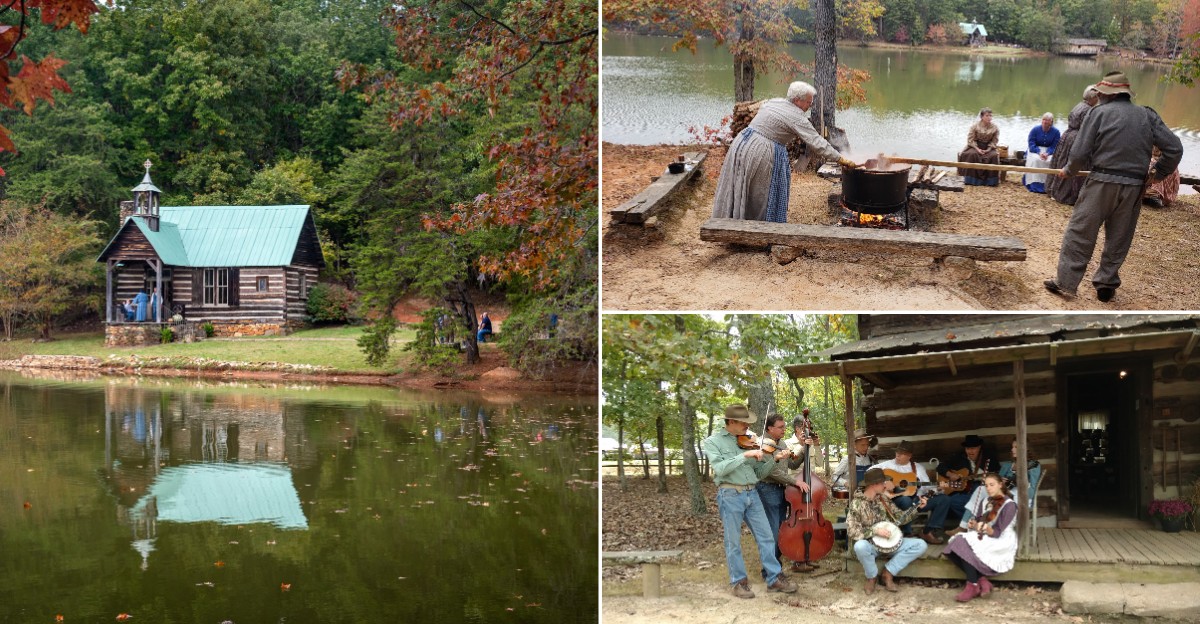
One hundred and three log buildings, some dating back to 1760, swing their doors open on exactly one day each year. Miss it, and you wait twelve more months.
Over 300 artisans in period clothing fill the place that day. Someone is stirring apple butter.
Someone else is hammering at a forge, while fiddles play from a nearby porch.
I love that nearly every building came from within about 22 miles of where it stands now. These cabins were neighbors long before they became a village.
One couple spent decades moving them, piece by piece, into a quiet North Carolina valley.
I can’t imagine the patience that took. A schoolhouse, a cotton gin, a doctor’s office, and 30 homes all share one property.
So how do you see everything in a single autumn day?
One Day, 103 Open Doors, Zero Excuses
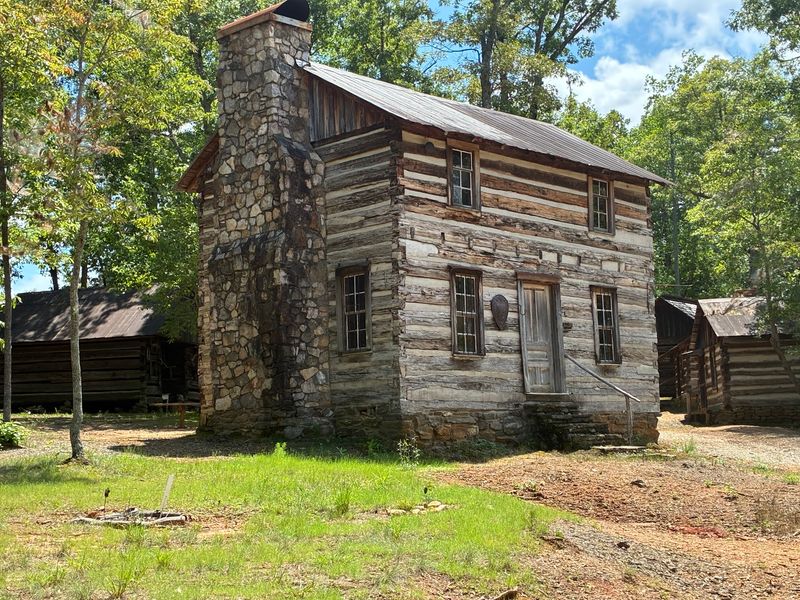
Mark your calendar in pen, not pencil. Hart Square Village opens all 103 of its historic log buildings during its annual Fall Heritage Festival, held on just one day each year.
The 41st festival takes place on October 24, 2026. That Saturday is your chance to step inside all 103 historic structures, including cabins, barns, and workshops, which are open to visitors during the festival.
On a regular visit, most interiors stay closed. Day-pass holders can explore the grounds, but only two cabins are open to them.
The festival flips that script completely.
That’s why this day feels like a treasure hunt with a deadline. With so much to see, grab a map, wear comfortable shoes, and plan a loose route before you arrive.
The property is big, so pacing matters more than speed. Pick the buildings you care about most and visit those first.
Then let curiosity take over for the rest of the day. Honestly, that’s half the fun of wandering a village this size.
More Than 300 Craftspeople Turn Back The Clock
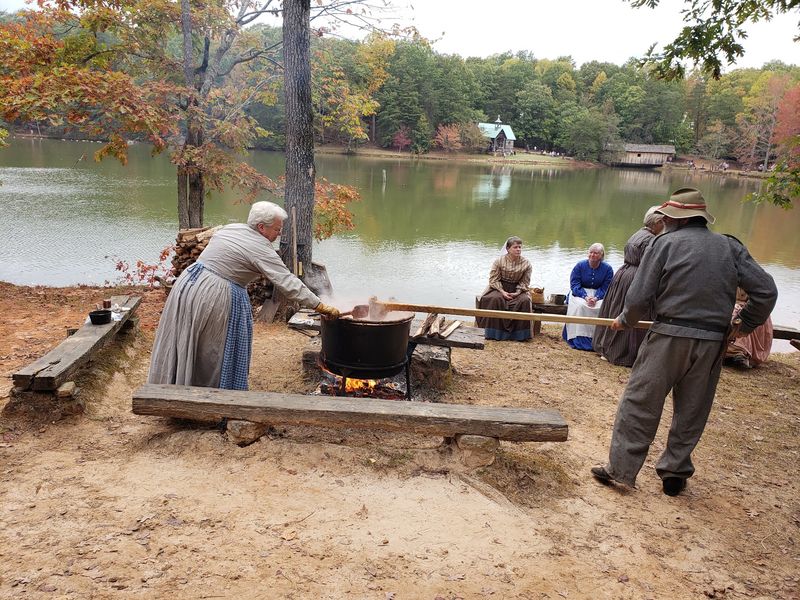
Sparks fly, looms clack, and somebody is always pressing fruit. More than 300 artisans and demonstrators fill the village during the festival, all dressed in period clothing.
The list of skills on display is impressive. You can watch blacksmithing, tinsmithing, weaving, broom making, and traditional pottery.
Some demonstrations show how big everyday jobs once worked. Flax making, cotton baling, and grist milling reveal how much effort went into basic supplies.
Kids especially tend to love the hands-on feel of it all. Grown-ups usually leave with new respect for the shirts on their backs.
Apple butter making deserves its own spot on your list. It’s the kind of old-fashioned task that connects history straight to the kitchen table.
Fiber crafts round out the lineup nicely. If you’ve ever wondered how wool became a sweater, this is your classroom.
Here’s a smart move for your visit. Ask questions whenever a demonstrator seems open to chatting.
These folks know their crafts deeply, and the details they share make each building feel lived in again. You’ll remember the stories longer than the photos.
Fiddles On The Porch Set The Whole Mood
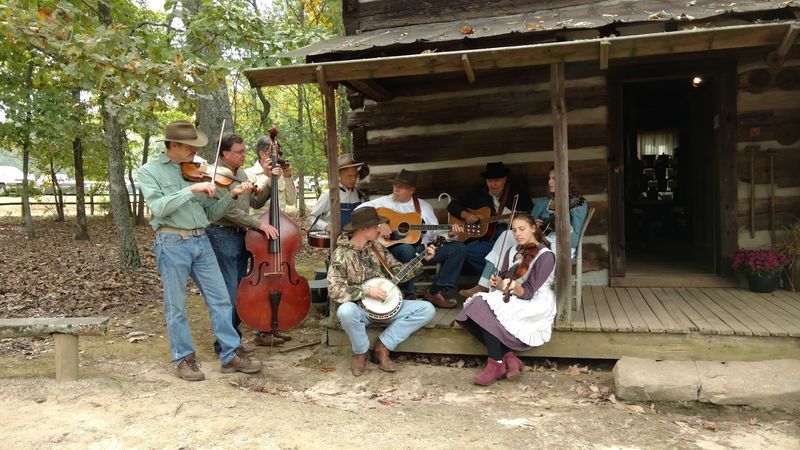
Live Appalachian music drifts across the grounds during the Fall Heritage Festival. It turns a history lesson into something that feels a lot like a party.
Music has always traveled well in the Carolina hills. Old tunes passed from player to player for generations, often with no sheet music at all.
Hearing that sound beside real 1800s log homes just fits. The cabins and the songs grew up in the same kind of place, so they belong together.
Plan to take a few music breaks between buildings. Your feet will thank you, and so will your mood.
The village also hosts community square dances during the year. That’s a fun way to experience the music side of mountain culture beyond festival day.
Square dancing doesn’t require fancy skills, either. A caller tells everyone what to do, and mistakes usually earn laughs instead of glares.
If you have kids who claim to hate dancing, give it a shot anyway. A good fiddle tune can change minds fast.
At the very least, you’ll head home humming something you didn’t know yesterday. That’s a pretty good souvenir.
A Whole Town’s Worth Of Buildings Waits Inside
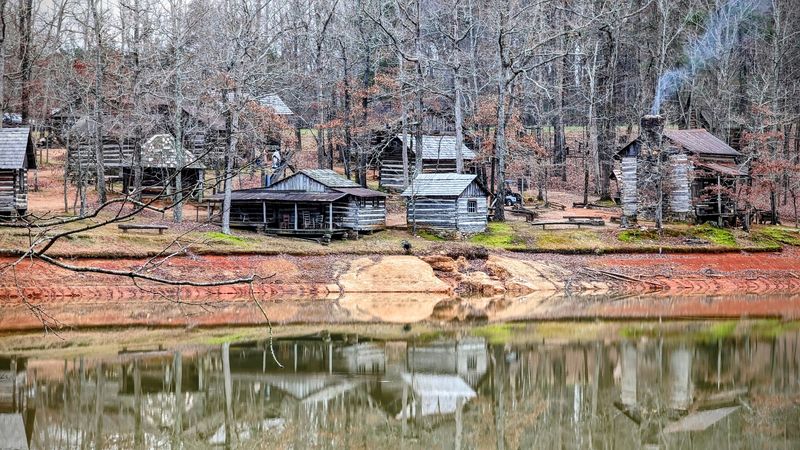
Thirty homes would be enough for most museums, but Hart Square Village has much more to explore. The collection also includes two churches, a chapel, a tavern, and a schoolhouse.
You’ll find trade shops, barns, and corn cribs, along with a pre-Civil War cotton gin, a print shop, and a doctor’s office. Together, these historic structures recreate the feel of a small town from long ago, showing how people learned, worshiped, worked, and stored food.
The buildings date from 1760 to 1893, spanning more than a century of rural life in this part of the country.
The village’s historic buildings feature artifacts collected by the founders over many years, adding depth to the exhibits and offering glimpses into everyday life.
Take your time exploring the smaller buildings, where details can be easy to miss. Tools, dishes, and furniture offer clues about how people lived and worked.
A doctor’s office from that era may even leave you grateful for modern medicine.
The schoolhouse might do the same for anyone who complains about homework. Perspective comes with the visit.
Fifty Years Of Moving Cabins, One Log At A Time
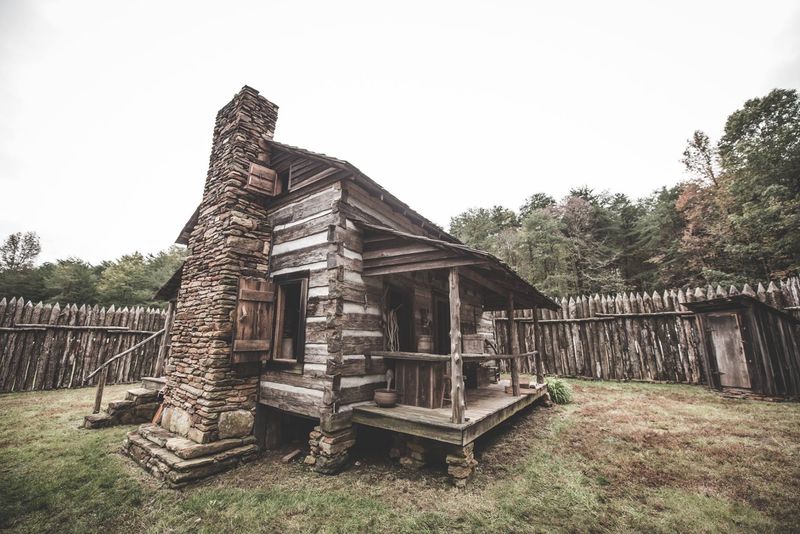
Most people collect stamps or coins. Dr. Bob Hart and his wife, Becky, collected entire log buildings.
Dr. Hart bought the 200-acre property in 1967 as a nature preserve. In 1973, the first structure arrived, a building called the Hunsucker Cabin.
From there, the collection grew for about 50 years. Most buildings came from within a 22-mile radius, so the village reflects the real history of its own neighborhood.
The collection was finally completed in 2019. Today, it ranks as the nation’s largest collection of historic log structures.
The Harts also planned ahead. The Hart Square Foundation formed in 2000 to build an endowment for preservation.
In 2017, the couple donated the village, the collection, and the land to that nonprofit foundation. That move protects the buildings for future generations.
Their granddaughter, Rebecca Anne Hart, now leads the foundation as executive director. Keeping it in the family adds a warm thread to the whole story.
Knowing all this changes how you see each cabin. Every log represents someone’s careful work, twice over.
You Can Wander Here On A Regular Tuesday, Too
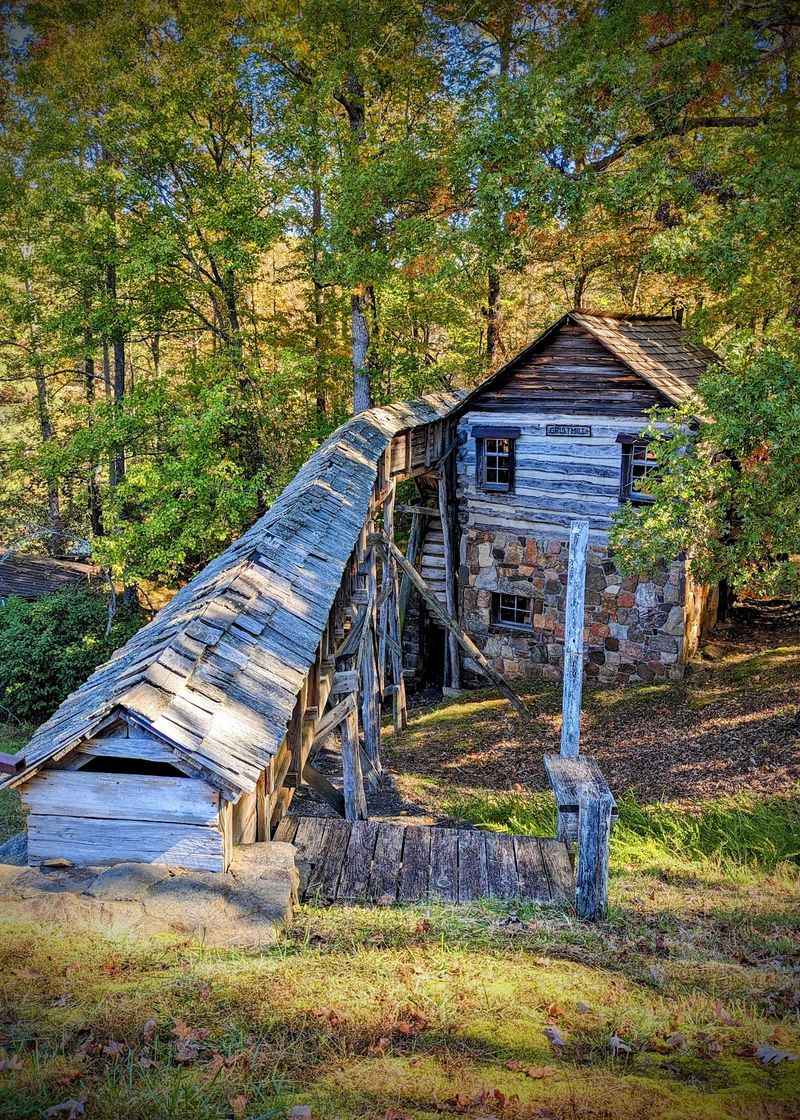
Festival day gets all the buzz, but the gates aren’t locked the rest of the year. Hart Square Village operates year-round as an open-air museum.
Regular hours run Tuesday through Saturday, from 10 AM to 4 PM. The village stays closed on Sundays and Mondays.
A day pass lets you explore the grounds and walking trails at your own pace. Cabins #102 and #103 open their interiors for day pass holders.
Quieter days suit people who prefer calm over crowds. You get time to study the craftsmanship of the log walls without rushing.
Public group tours and private tours offer another option. A guide can share stories and context you might miss on your own.
Private tours work well for clubs, school groups, or family outings. Booking ahead is the safest plan, since schedules can change.
A practical note helps on any visit. The grounds cover a lot of space, so bring water and sturdy shoes.
Consider a weekday trip as a preview for festival season. Then you’ll know your way around when all 103 doors open.
Leave With A New Skill Instead Of A Keychain
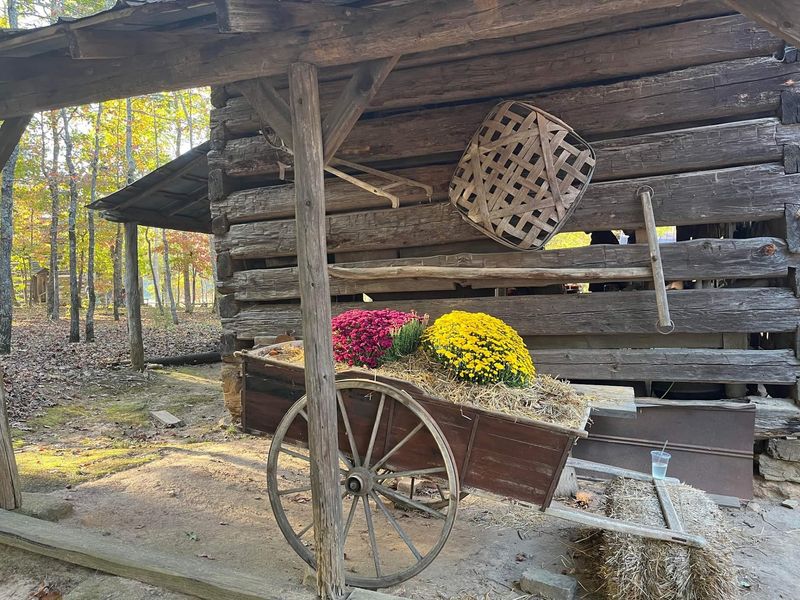
Ever wanted to make a basket from pine needles? Hart Square Village offers folkways classes that teach exactly that kind of old-time skill.
The class lineup covers a wide range of traditional arts. Options include bobbin lace making, natural dyeing, basket weaving, carving, gourd working, and leather working.
These classes take the festival idea one step further. Instead of watching an artisan, you become the one doing the work.
The Sigmon Family Education Center was completed in 2021. It gives the village a dedicated space for learning and programs.
Classes make a great fit for crafty adults and curious teens. They also work as unusual gifts for someone who already owns everything.
Natural dyeing stands out as a fun pick. Learning to color fabric with plants feels a little like kitchen science.
Don’t worry about being a beginner. Traditional crafts were once ordinary household skills, learned by regular folks.
Patience matters more than talent with most of these arts. Your first basket may wobble a bit, but you’ll be proud of it anyway.
Spring, Christmas, And More Keep The Calendar Busy
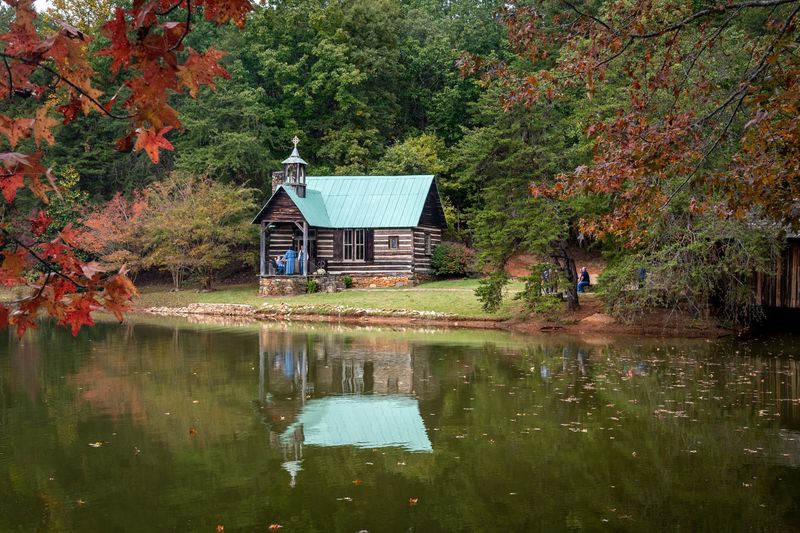
October may be the headliner, but it isn’t the only show in town. Hart Square Village hosts several special events throughout the year.
A Spring Heritage Festival brings heritage fun to warmer months. It’s a nice option if fall schedules always seem to fill up first.
Christmas in the Village adds a holiday spin to the historic setting. Log cabins and the winter season simply make a cozy pairing.
Cultural foodways events focus on traditional cooking and food customs. They offer a tasty angle on how families once fed themselves.
Community square dances also appear on the calendar. Those evenings bring neighbors together in a way that feels refreshingly old-school.
Event dates change from year to year, so check the official schedule before you plan. Tickets for popular events can go quickly.
Spreading visits across seasons pays off. The village looks and feels different in spring blooms than it does under holiday decorations.
You might start with one festival and end up a regular. North Carolina history has a funny way of growing on people.
Set Your GPS For A Valley Full Of History
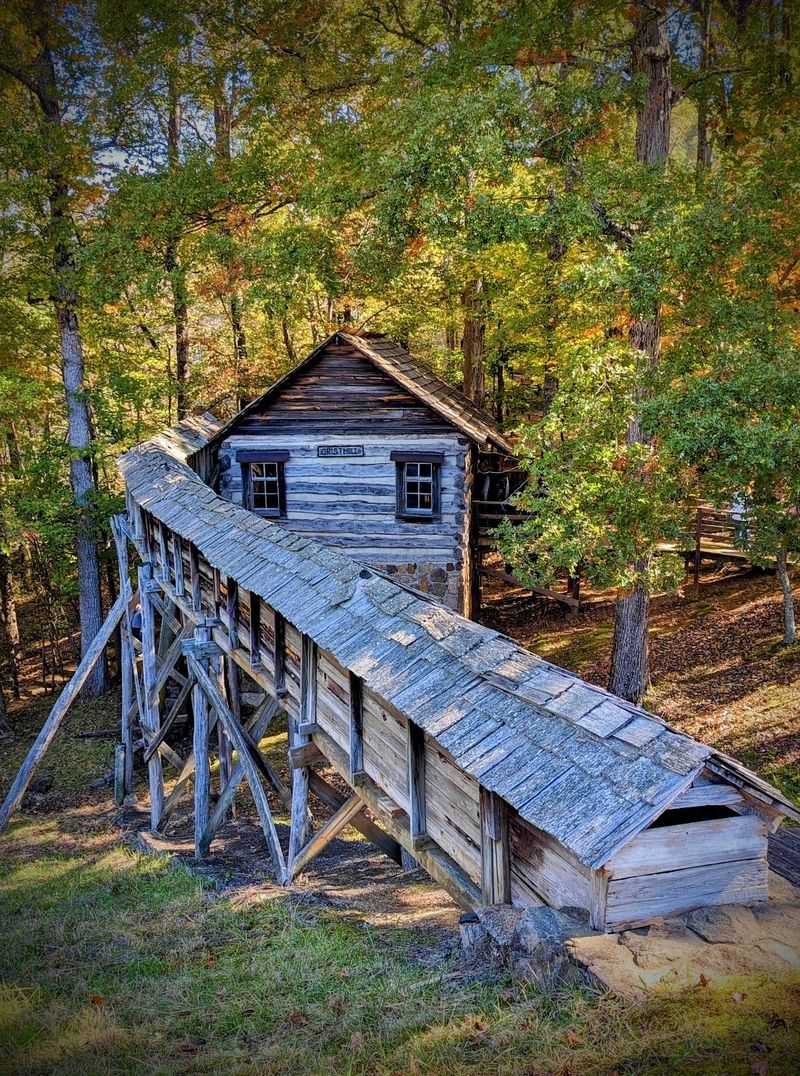
Getting there is half the charm. Hart Square Village sits at 5055 Hope Road, Vale, NC 28168, in a picturesque valley.
The property covers 200 acres in Catawba County, North Carolina. Lakes, woods, and natural areas surround the historic buildings.
Dr. Hart first bought this land as a nature preserve. That original purpose still shows in the peaceful setting around the cabins.
Walking trails connect much of the property. Expect plenty of strolling, so dress for the weather and the terrain.
Vale is in the western Piedmont, near the Hickory area. That makes it a reasonable day trip from many parts of the state.
Festival day calls for a little extra planning. Arrive early, pack snacks and water, and give yourself time to park and settle your route.
A camera is a smart idea, too. Log cabins beside a lake make the kind of photo people actually frame.
Once you’ve seen all 103 buildings, you’ll understand why folks return year after year. And you’ll already be counting down to next October.