Imagine stepping into a shopping district that feels like a living, breathing small town from the early 1900s — complete with brick buildings, glowing lamp posts, and fountain plazas where families gather.
That place is real, and it’s right in Columbus, Ohio.
Easton Town Center was carefully designed to look and feel like a classic American Main Street, not a typical mall.
From its historic-style architecture to its pedestrian-friendly streets, Easton is one of the most thoughtfully planned lifestyle destinations in the entire country.
A Master-Planned New American Town Concept
Most shopping centers are built around one big idea: get people inside and keep them spending. Easton Town Center flipped that script entirely when it opened in 1999.
Instead of an enclosed mall with fluorescent lighting and food courts, its developers imagined something far more ambitious — a self-contained urban neighborhood.
The concept was inspired by early-20th-century American towns, where shopping, dining, working, and socializing all happened within a few walkable blocks. Easton combines retail stores, restaurants, office buildings, hotels, and entertainment venues under one cohesive design umbrella.
Nothing feels accidental here.
What makes this approach so refreshing is how deliberately human it feels. Shoppers aren’t herded down a single corridor — they wander, explore, and discover.
The mixed-use layout means you might grab coffee next to someone heading to a nearby office, just like people did on real Main Streets a century ago. Easton proved that lifestyle retail centers could compete with traditional malls by offering something more valuable than convenience — a genuine sense of place.
Streets Designed Like a Historic Grid System
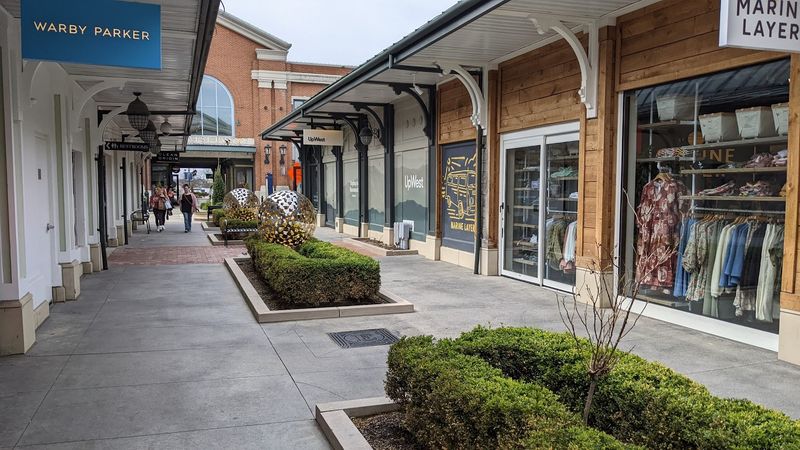
Walk through Easton and you’ll quickly notice something unusual for a modern retail complex — you can actually get a little lost. That’s completely intentional.
The streets are laid out in a grid-like pattern inspired by how real Midwestern towns were mapped out in the late 1800s and early 1900s.
Traditional malls funnel you in one direction. Easton’s interconnected streets branch off in multiple ways, creating corners, crossroads, and surprising little side paths.
A continuous loop road also guides the overall flow of traffic while keeping the pedestrian experience open and organic. The result feels less like a shopping center and more like a neighborhood you’re exploring for the first time.
Historic downtown districts didn’t start with a master blueprint — they grew block by block as communities expanded. Easton’s designers studied that pattern carefully and applied it to a brand-new development.
The narrow street widths, the way buildings face each other at natural angles, and the rhythm of storefronts all echo the spatial logic of towns that developed over generations rather than being constructed in a single construction phase.
Brick-and-Stone Facades Inspired by Early 1900s Architecture
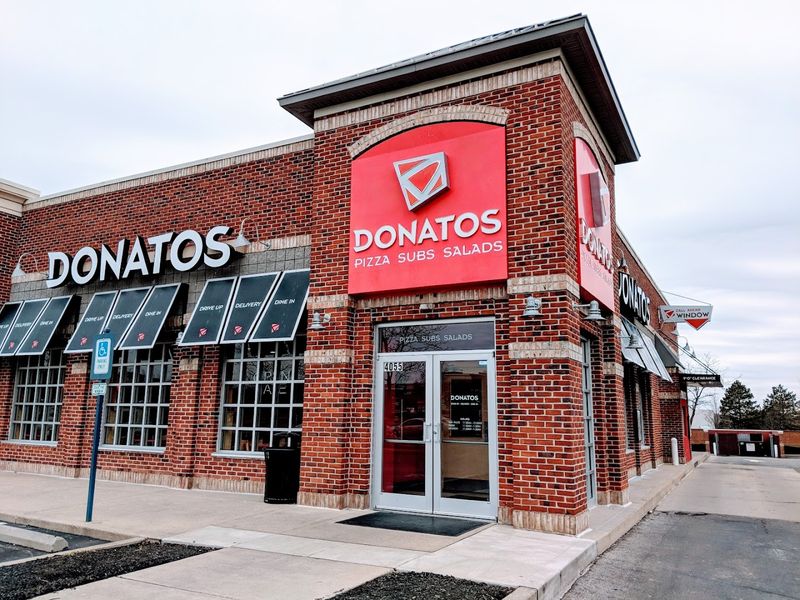
Red brick has a way of making everything feel more grounded and real. At Easton Town Center, nearly every building uses traditional materials — red brick, limestone, cast stone, and painted wood trim — to create a streetscape that looks like it was built across several decades rather than all at once.
That variety is the secret. On a real historic Main Street, the hardware store from 1902 might sit next to a bank built in 1918 and a diner added in 1935.
Each building reflects its own era’s style and budget. Easton replicates that visual layering by giving each structure a slightly different facade treatment, roofline, and color palette while keeping the overall material palette cohesive and warm.
Architects working on Easton referenced actual early-American commercial buildings when designing the storefronts. Details like arched window openings, decorative cornices, recessed entryways, and brick corbeling were all borrowed from real historical precedents.
For shoppers, this creates an almost subconscious sense of comfort and familiarity. The buildings feel earned and weathered even though they’re only a few decades old — and that’s a surprisingly difficult architectural trick to pull off successfully.
Human-Scale Building Heights and Storefronts
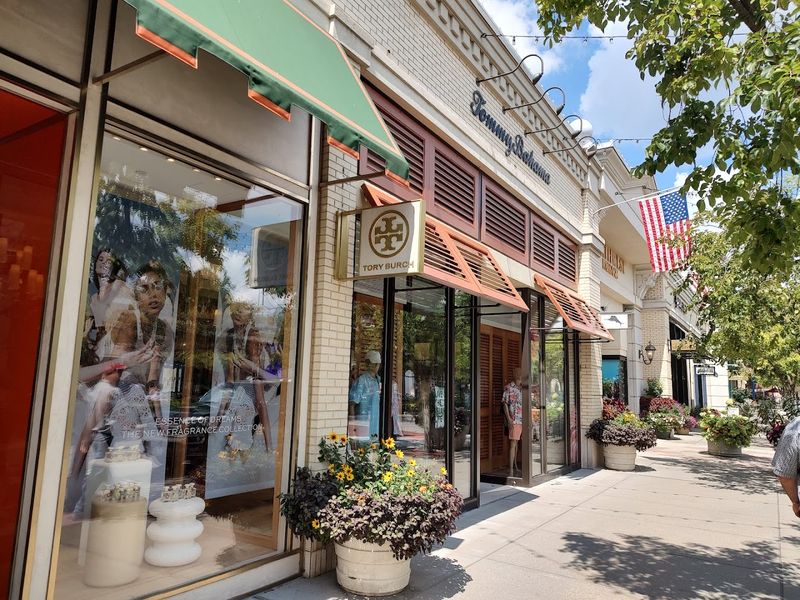
Ever walked past a massive glass skyscraper and felt oddly small and unwelcome? That’s the opposite of what Easton Town Center is going for.
Buildings here are mostly two or three stories tall, and that height limit is one of the most important design decisions the planners made.
When structures stay low and proportionate to the street width, something called human scale kicks in. People naturally feel more comfortable, more curious, and more willing to slow down and look around.
The storefront windows sit at eye level, the upper floors feel close enough to notice their architectural details, and the sky remains visible above the rooftops. That open-air quality is what separates Easton from any indoor mall experience.
Historic downtown commercial blocks across America were built at this same scale because early builders had practical limits — no steel-frame skyscrapers, no massive construction equipment. Those constraints accidentally created some of the most beloved urban environments in the country.
Easton borrowed that lesson on purpose. By capping building heights and controlling facade proportions, the designers ensured that the district would always feel like a neighborhood built for people on foot rather than a development built for cars or crowds.
Central Town Squares and Gathering Spaces
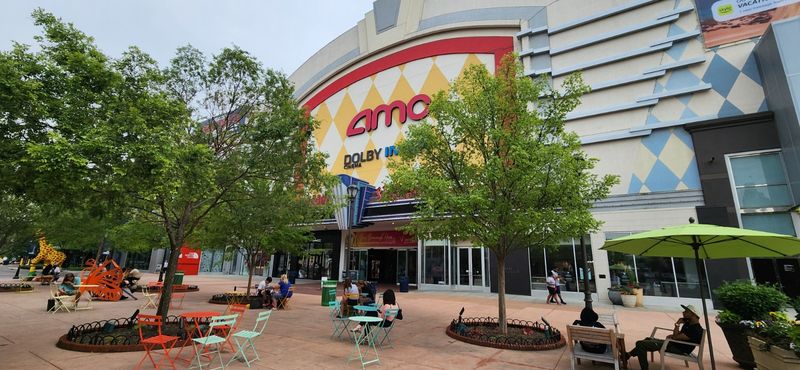
Every great American town had a square — that central open space where people came to celebrate, argue, shop, and simply exist together. Easton Town Center didn’t just build shops; it built places to belong.
Multiple public plazas are scattered throughout the district, each designed to function like a civic heart.
These plazas host an impressive calendar of events throughout the year. Summer concerts, holiday markets, outdoor movie screenings, food festivals, and seasonal decorating events draw thousands of Columbus residents who might not be shopping at all.
That programming transforms Easton from a retail destination into a genuine community gathering place — something most shopping centers never attempt.
The design of each plaza borrows directly from the courthouse square tradition of early American town planning. Open paving, central focal points, surrounding storefronts, and seating areas all come together to create spaces that invite lingering rather than rushing.
During the holiday season especially, Easton’s plazas become some of the most festive and photographed spots in all of central Ohio. Families return year after year not for the stores but for the feeling of togetherness that these thoughtfully designed outdoor rooms reliably deliver.
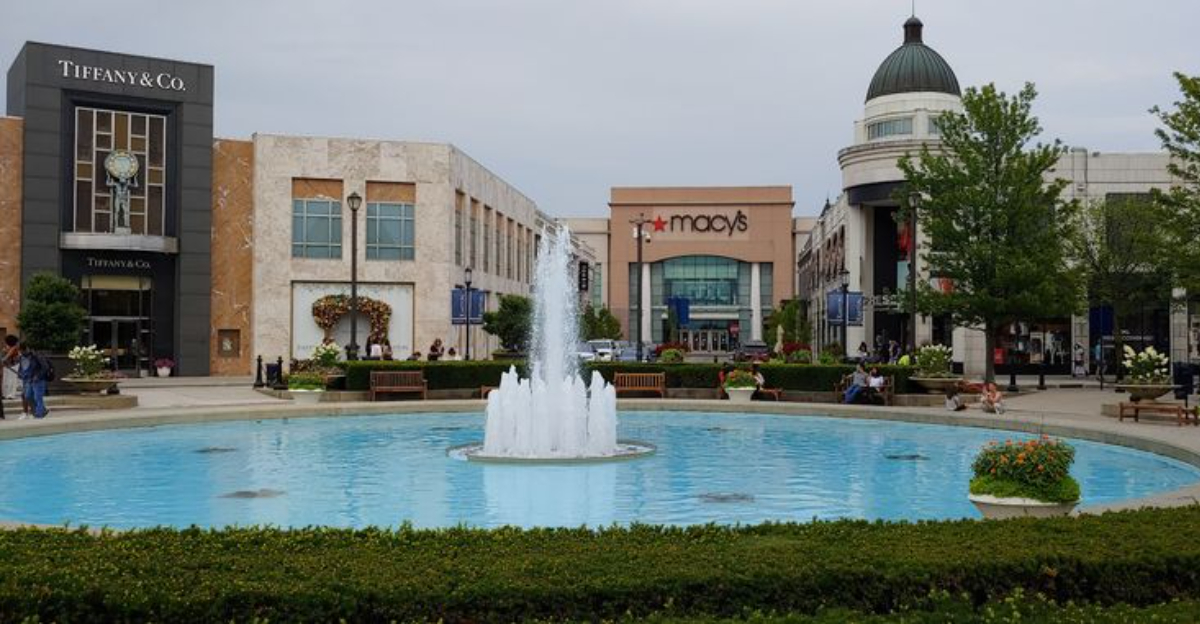
Fountains and Water Features as Civic Landmarks
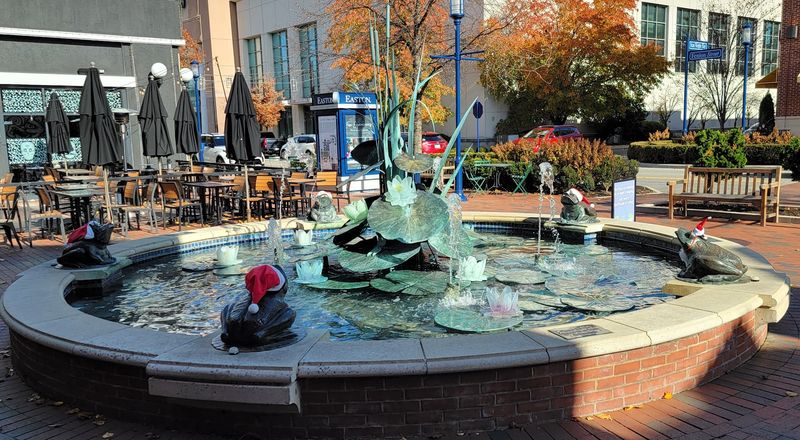
Few things anchor a public space quite like a fountain. There’s something almost magnetic about moving water — people naturally drift toward it, sit near it, and use it as a meeting point.
Easton Town Center understood this completely when it installed its signature fountain plaza at the heart of the district.
The central fountain serves as both a visual landmark and a social hub. First-time visitors use it as an orientation point.
Regular shoppers treat it as a natural meeting spot. Kids inevitably want to get closer to the water, which means parents slow down and linger — and lingering is exactly what makes a place feel alive rather than transactional.
Historically, town fountains were civic monuments celebrating community pride. Many American town squares featured ornamental fountains donated by local benefactors or installed as part of city beautification projects in the late 1800s.
Easton’s fountain echoes that tradition by functioning as more than decoration — it creates a reason to pause in the middle of a busy shopping day. The surrounding brick paving, planters, and seating complete the scene, turning a simple water feature into one of the most recognizable and beloved spots in all of Columbus retail culture.
Pedestrian-Focused Streets with Storefront Parking
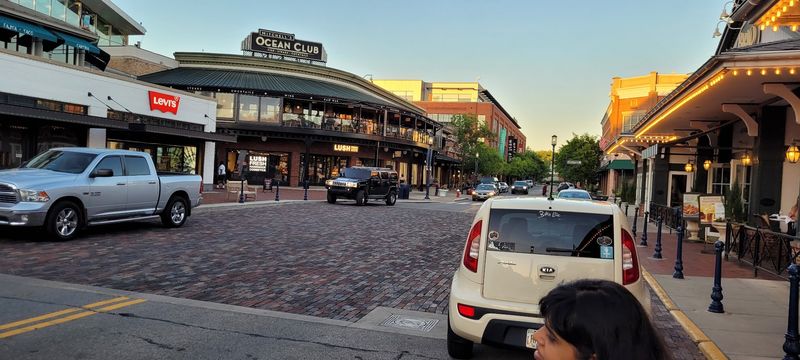
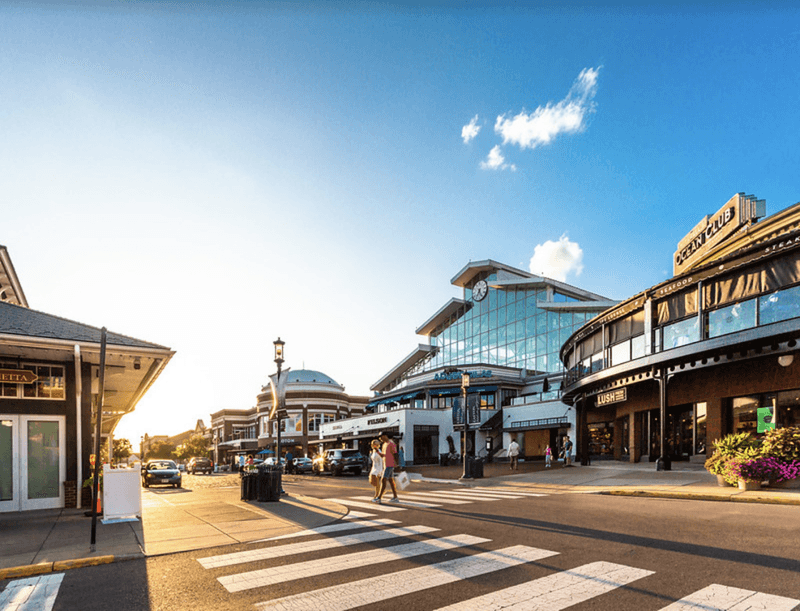
One of the most telling signs that a place was designed for people rather than cars is where the parking ends up. At Easton, instead of surrounding the entire district with massive asphalt lots, planners integrated street parking directly along the storefronts.
Structured garages handle overflow, but the street-level experience stays pedestrian-friendly throughout.
This arrangement mirrors exactly how early Main Streets worked. When cars first appeared in American towns during the 1910s and 1920s, they simply pulled up alongside the curb in front of whichever store the driver needed.
Pedestrians and vehicles shared the same civic space without either one completely dominating the other. That balance created an energetic, layered street life that felt both functional and social.
Modern suburban retail developments typically do the opposite — they push parking to the perimeter and force shoppers to walk across exposed asphalt before reaching any destination. Easton’s approach makes arriving feel like an event in itself.
You park, step onto a sidewalk, and you’re immediately in the middle of the action. Storefront windows, restaurant patios, and foot traffic surround you from the first step.
That immediate immersion is a small design detail that makes an enormous difference in how welcome and engaged visitors feel from the moment they arrive.
Decorative Streetscape Details for Historic Authenticity
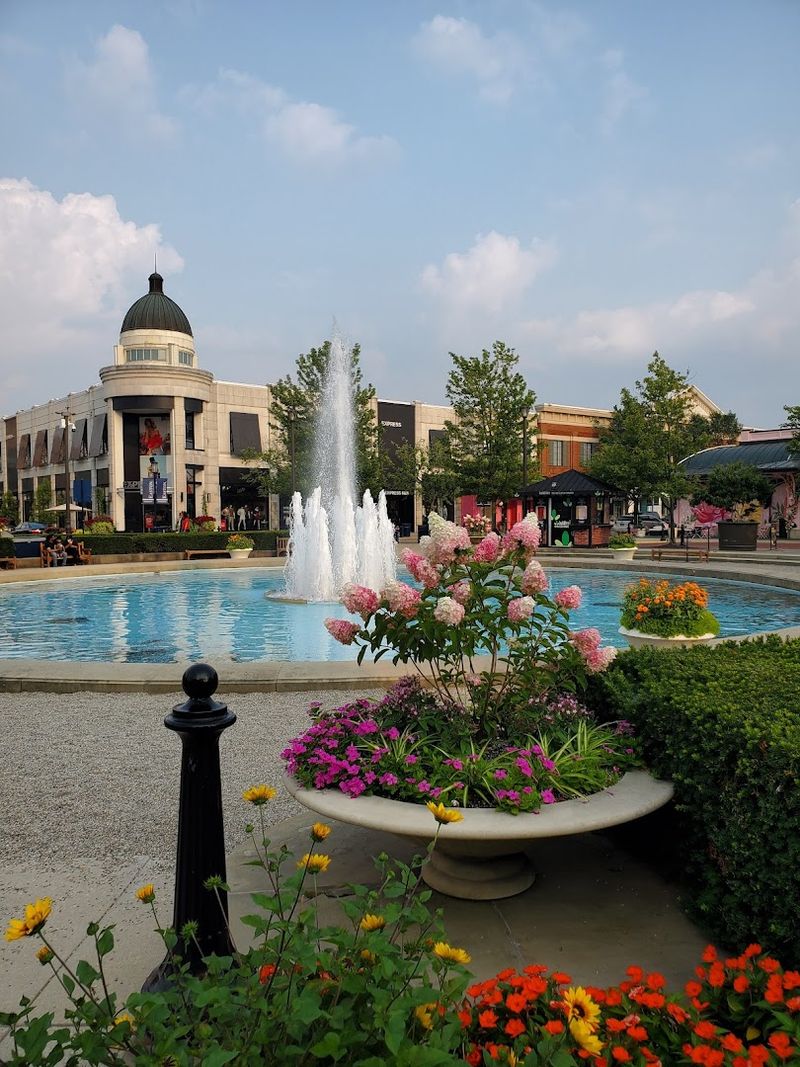
Sometimes the smallest details do the heaviest lifting. At Easton Town Center, it’s not just the big buildings that create the historic atmosphere — it’s everything in between.
Cast-iron lamp posts with globe-style fixtures line every sidewalk, throwing warm golden light across the brick pavement after dark and giving the district a genuinely old-fashioned glow.
Ornamental street signs, coordinated benches, decorative planters, and carefully selected tree species all reinforce the same design vocabulary. Nothing looks plasticky or generic.
Even the trash receptacles and bike racks were chosen to match the overall aesthetic — details that most shoppers never consciously notice but would immediately miss if they were replaced with standard municipal hardware.
Historic preservation districts across America have spent decades documenting and protecting these kinds of streetscape elements because they understand their cumulative power. A single cast-iron lamp post might seem trivial.
But line an entire block with them, add period-appropriate signage and mature street trees, and suddenly you’ve created an environment that feels like it has real history behind it. Easton achieves this effect through discipline and consistency.
Every design choice, no matter how small, reinforces the same story — that you’re walking through a town with decades of character, not a retail complex built last year.
The Evolved Over Time Architectural Illusion
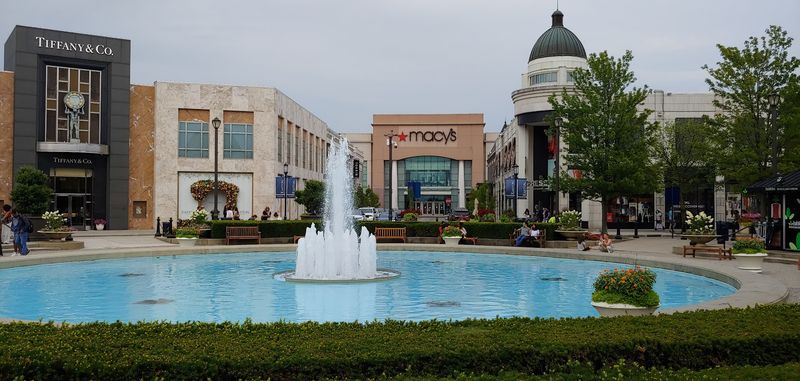
Here is a fun architectural puzzle: how do you make a brand-new development look like it grew naturally over a hundred years? Easton’s designers solved it by deliberately giving each building a different personality.
Stand on any block and you’ll see buildings with different rooflines, different window proportions, different brick colors, and different trim styles standing comfortably side by side.
Real American Main Streets developed exactly this way. A merchant would build a simple two-story storefront in 1892.
A bank would go up next door in 1906 with grander stone detailing. A movie theater might arrive in 1924 with Art Deco flourishes.
Each addition reflected the tastes and economic conditions of its moment in time. The resulting streetscape was beautifully inconsistent — unified by scale and materials but varied in everything else.
Easton’s architects studied these real historic streetscapes and then manufactured that same beautiful inconsistency from scratch. It required unusual restraint — resisting the urge to standardize everything and instead celebrating variation as a feature rather than a flaw.
The result is a streetscape that reads as genuinely layered and complex even to trained eyes. Visitors who have never thought about architecture still feel the difference intuitively, sensing a richness and depth that purely uniform developments simply cannot replicate.
A Modern Small Town America Social Hub
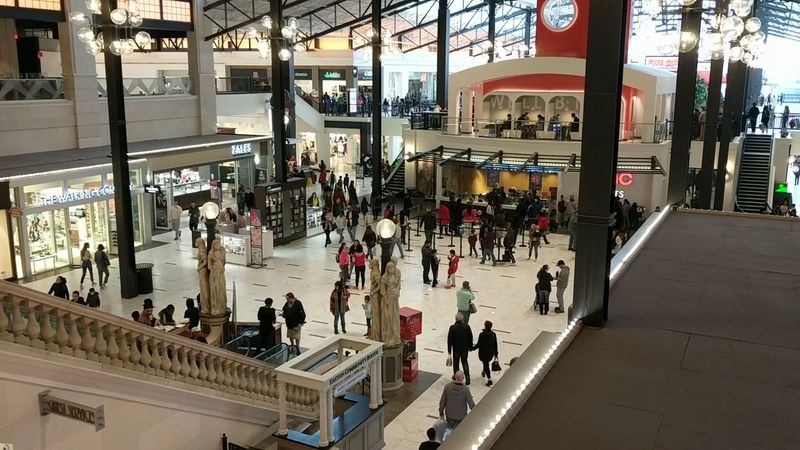
Address: 160 Easton Town Ctr, Columbus, OH 43219. That’s where you’ll find one of the most socially active outdoor destinations in central Ohio — a place that has genuinely taken on the role that old Main Streets once played as the beating heart of community life.
Beyond the stores and restaurants, Easton runs a packed calendar of public events year-round. There are summer concert series, food truck festivals, outdoor fitness classes, holiday light displays, trick-or-treat events, and New Year’s Eve celebrations that draw enormous crowds.
These aren’t afterthoughts — they’re core to Easton’s identity as a place where Columbus residents come to connect with each other, not just consume things.
Early American Main Streets were social infrastructure long before they were commercial infrastructure. The general store, the barbershop, the town hall, and the church steps were all places where community bonds formed and strengthened over time.
Shopping was almost secondary to belonging. Easton has quietly rebuilt that social function inside a modern mixed-use development, and Columbus has responded enthusiastically.
Generations of families now have Easton memories — first dates, holiday traditions, weekend routines — proving that when public space is designed with real care, people show up and make it their own.