

Tucked along historic Route 66 in Claremore, Oklahoma, the J.M. Davis Arms & Historical Museum is one of the most unique free attractions in the entire country.
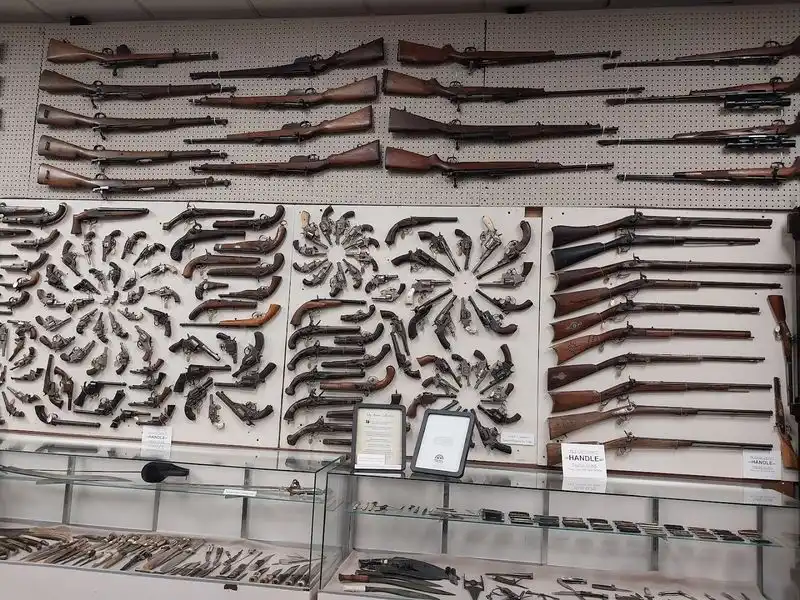
With over 12,000 firearms and thousands of other historical artifacts, this place tells the story of American history through the weapons that shaped it.
From outlaw pistols to a real Gatling gun, the collection is jaw-dropping for history lovers of all ages.
Best of all, admission is completely free — making it one of the best hidden gems in Oklahoma.
A Gun Collector’s Legacy
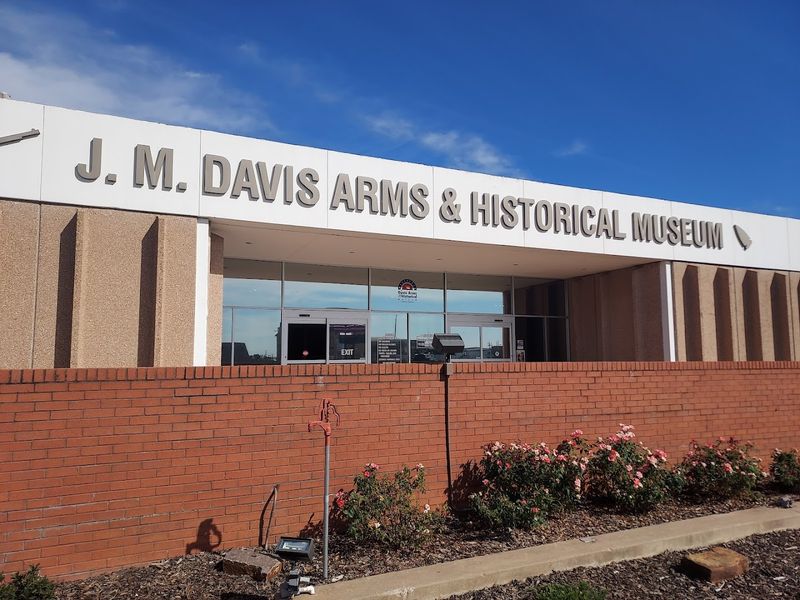
Imagine spending your entire life collecting something you love — and then turning that passion into a world-class museum that anyone can visit for free. That is exactly what happened in Claremore, Oklahoma, where the J.M.
Davis Arms & Historical Museum proudly stands as one of the largest privately held firearms collections on the planet.
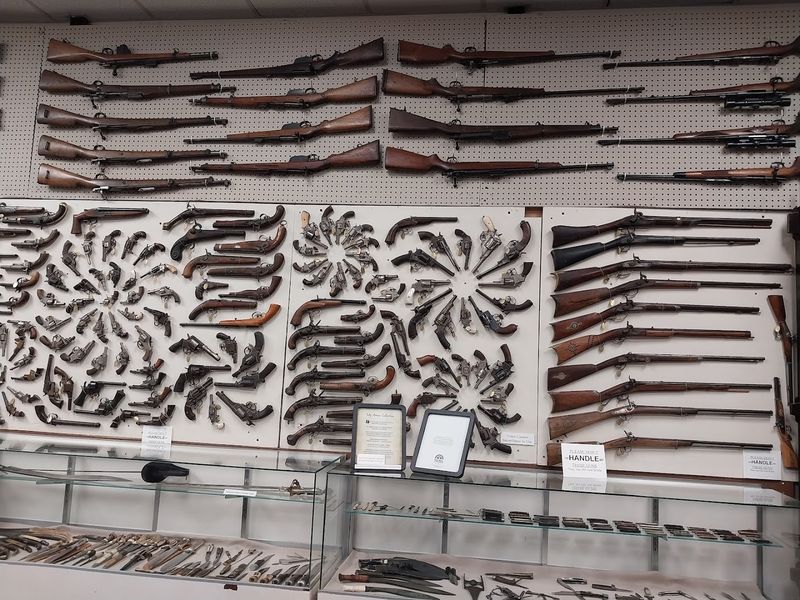
The museum houses over 12,000 guns, making it a staggering achievement for a single collector. Alongside the firearms, visitors will find thousands of additional historical artifacts that paint a vivid picture of American and world history.
Knives, swords, spurs, steins, and military memorabilia share space with the guns, creating a layered experience that goes far beyond a simple weapons display.
What makes this place truly special is its accessibility. There are no ticket prices, no membership fees — just open doors and open history.
Whether you are a firearms enthusiast, a history student, or simply a curious traveler passing through on Route 66, the museum welcomes everyone. Few places in the country offer this level of historical depth at absolutely zero cost, making it a genuinely rare and rewarding destination.
Who Was J.M. Davis?
At age seven, a young boy named J.M. Davis received his very first gun as a gift.
That simple moment sparked a lifelong obsession that would eventually produce one of the most remarkable private firearms collections in human history. James Monroe Davis was born in 1887 and grew up with a deep love for American frontier culture, history, and the craftsmanship of firearms.
Throughout his life, Davis worked as a banker and businessman in Claremore, but his true calling was always collecting. He traveled widely, attended auctions, and sought out rare pieces with a dedication that most collectors can only dream about.
Every gun he acquired had a story, and Davis made it his mission to preserve those stories for future generations.
By the time he passed away in 1973, his collection had grown to a size that demanded a permanent public home. Davis and his wife Lela donated the collection to the city of Claremore, ensuring it would remain free and accessible forever.
His legacy is not just in the guns themselves but in the generous spirit behind sharing them. Visiting the museum today feels like stepping inside the mind of a man who truly loved history.
The Core Collection: Firearms Through History
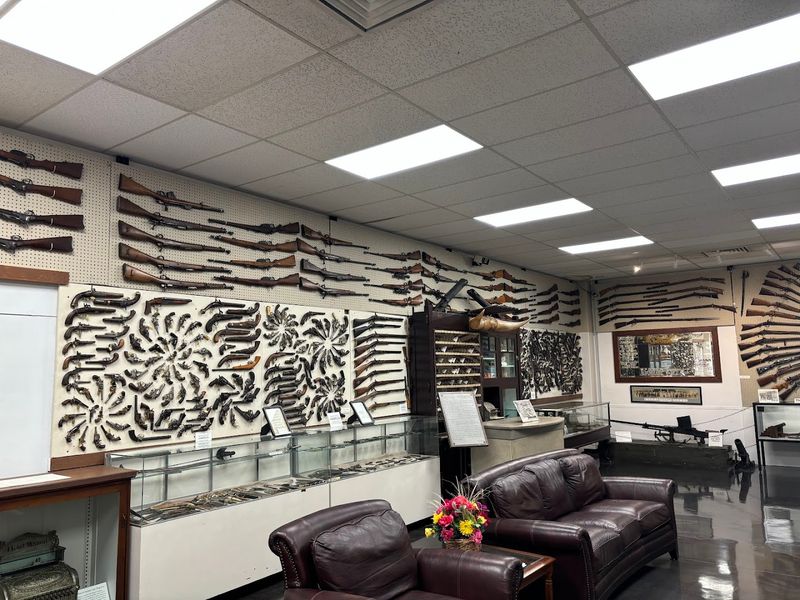
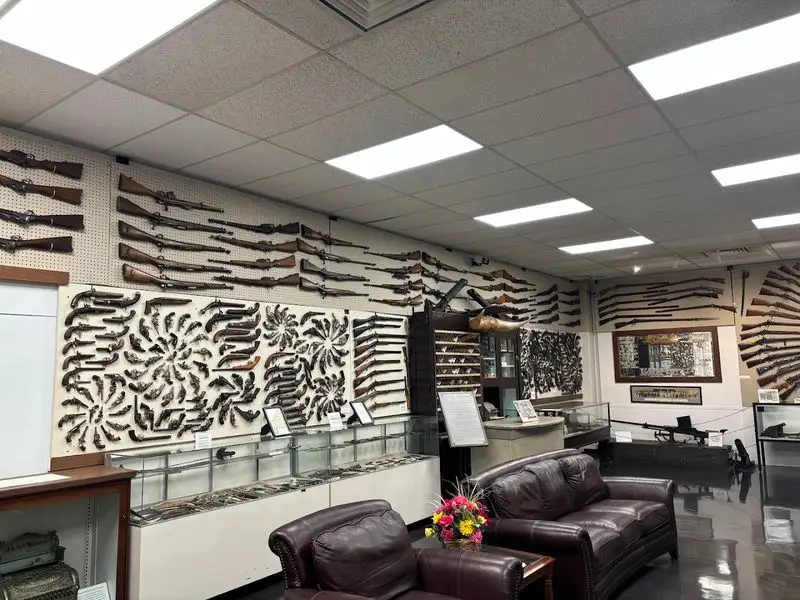
Few collections in the world manage to capture the full arc of firearm development the way the J.M. Davis Museum does.
Starting with early muzzleloaders and flintlock pistols from the 1600s and 1700s, the exhibits walk visitors through centuries of innovation in a way that feels both educational and exciting. Seeing how dramatically gun technology evolved over just a few hundred years is genuinely mind-blowing.
Moving through the collection, you encounter Civil War-era muskets and rifles that were carried by real soldiers on real battlefields. The weight of history is palpable when you stand in front of weapons that changed the outcome of American history.
Each piece is carefully labeled with context that helps visitors understand not just what the weapon is, but why it mattered.
The 20th-century section brings the story into more familiar territory, featuring military arms from both World Wars and beyond. Seeing the progression from a single-shot flintlock to a semi-automatic military rifle side by side makes the technological leap crystal clear.
For students, history buffs, or anyone curious about how weapons shaped civilization, this chronological journey through the core collection is an unforgettable educational experience that no textbook can fully replicate.
Outlaw Guns Gallery
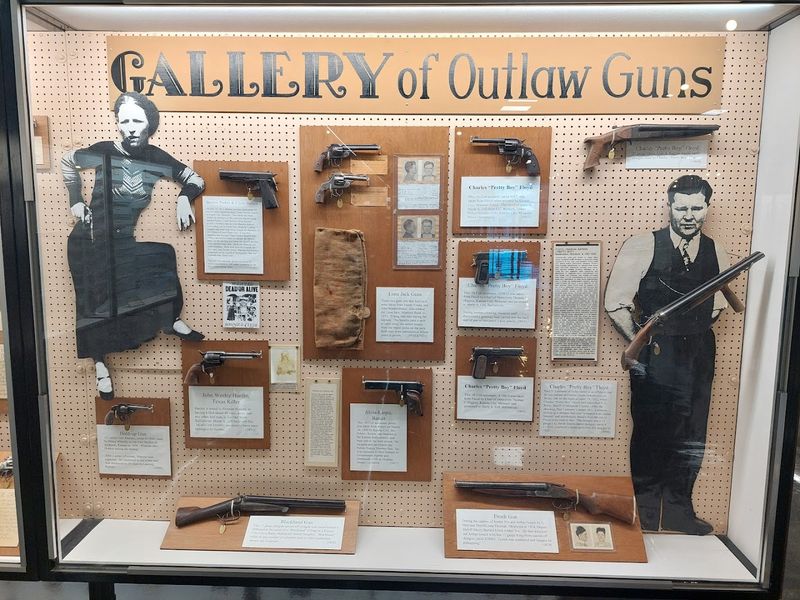
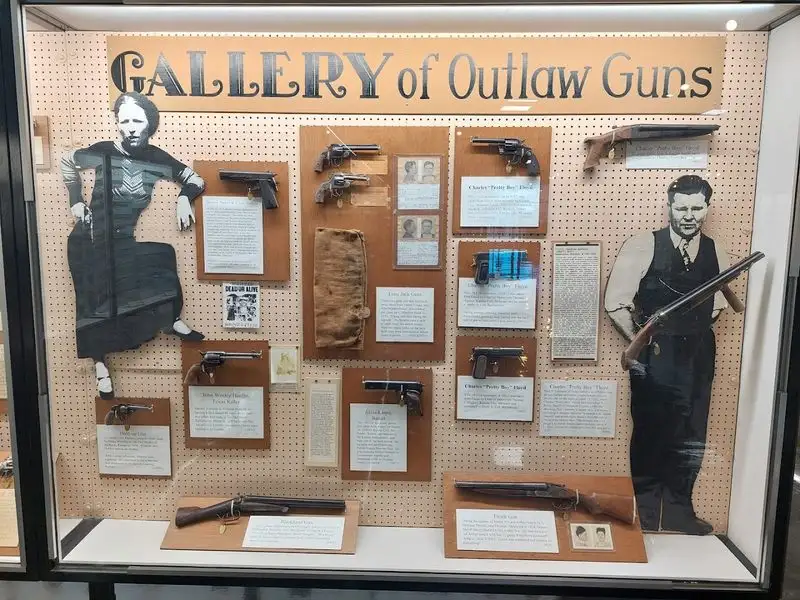
There is something undeniably thrilling about standing inches away from a weapon that once belonged to one of history’s most notorious criminals. The J.M.
Davis Museum’s outlaw gun collection delivers exactly that kind of spine-tingling experience, featuring firearms connected to legends of the Wild West and Depression-era crime.
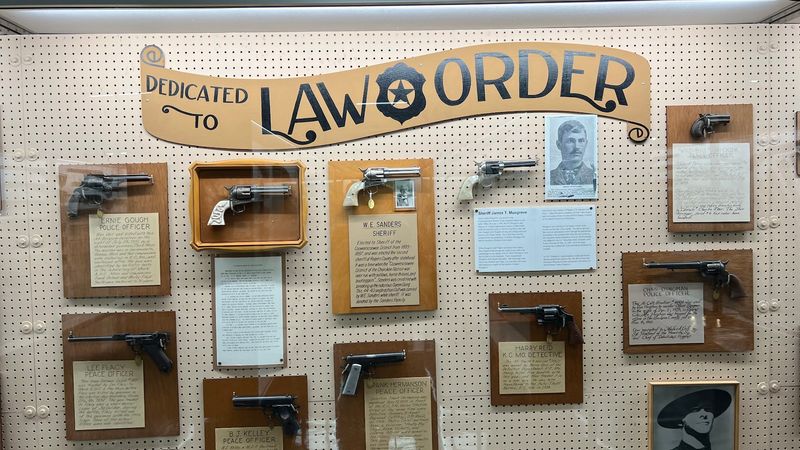
Jesse James, Bonnie and Clyde, Pretty Boy Floyd — these names conjure images of daring bank robberies, dusty roads, and a lawless era of American history. The museum holds guns attributed to these figures, displayed alongside photographs and historical notes that bring their stories to life.
It is a surprisingly emotional experience, mixing fascination with a real sense of the danger these people represented.
For visitors who grew up watching Westerns or reading about American outlaws, this gallery hits differently than any other exhibit. Kids are especially captivated, often asking questions that lead to rich conversations about law, justice, and history.
The collection does not glorify violence but instead uses these infamous weapons as entry points into deeper historical discussions. Few museums anywhere in the country can boast such a direct physical connection to the outlaws who defined an entire chapter of American mythology and folklore.
The Gatling Gun and Other Militaria
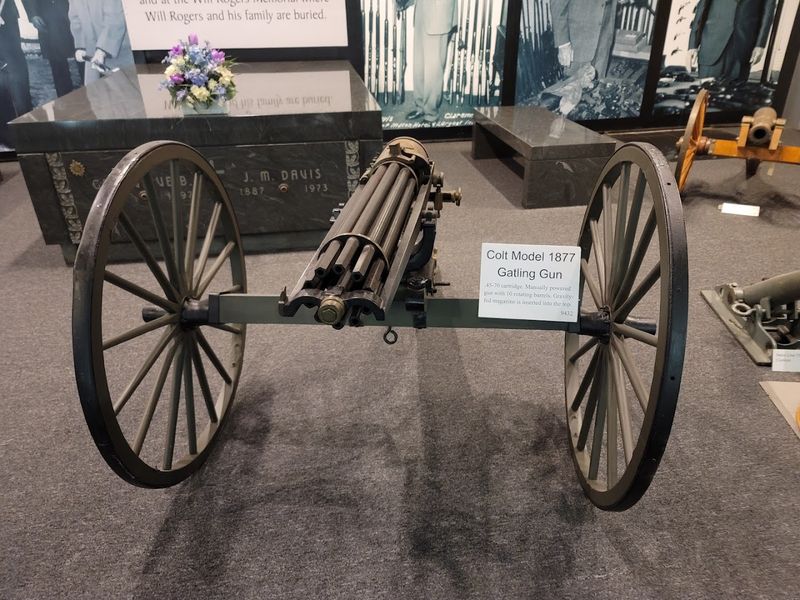
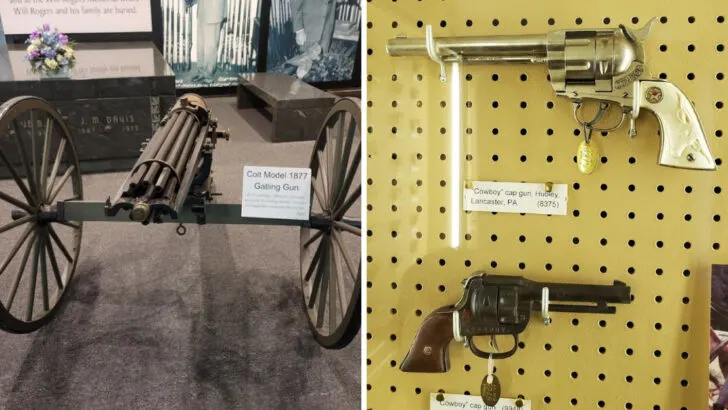
When Dr. Richard Gatling invented his rapid-fire gun in 1861, he believed it would actually reduce casualties in war by making armies smaller and battles shorter. History had other ideas, but the Gatling gun did change warfare forever — and you can see one up close at the J.M.
Davis Museum. It is one of those objects that stops you in your tracks the moment you spot it.
The Gatling gun on display is a remarkable piece of mechanical engineering. Its multiple rotating barrels, hand-cranked firing mechanism, and solid brass fittings make it look almost like a piece of industrial art.
Visitors of all ages are fascinated by how it works, and the museum’s explanatory materials do a great job of breaking down the mechanics in simple terms.
Beyond the Gatling gun, the militaria collection spans multiple conflicts and continents. Cannons, bayonets, military pistols, and long rifles from various wars round out a section that feels like a compressed military history lesson.
Each piece represents a different chapter in humanity’s long and complicated relationship with armed conflict. For anyone interested in military history, technology, or simply in seeing objects that genuinely changed the world, this section of the museum is an absolute must-see highlight.
Beyond Firearms: Eclectic Historical Artifacts
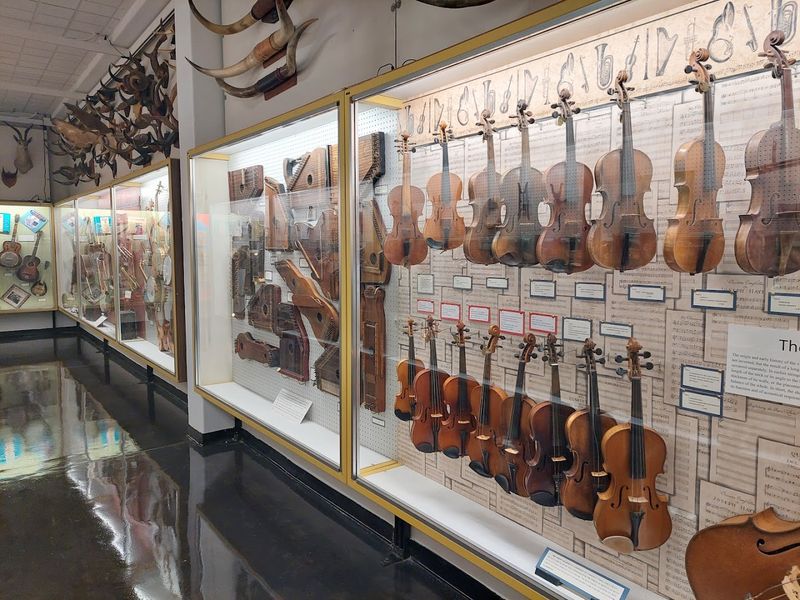
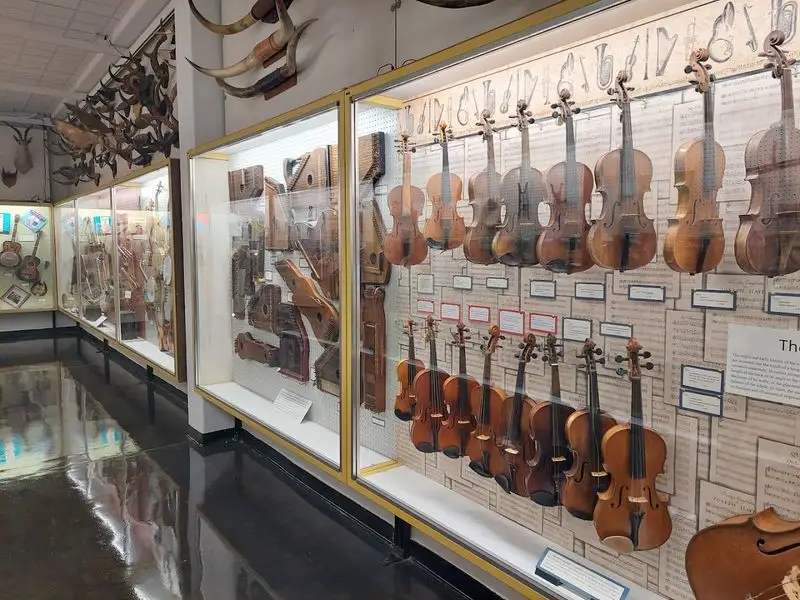
Guns may be the headliner, but the supporting cast at the J.M. Davis Museum is surprisingly rich and wonderfully strange.
Scattered throughout the building are thousands of artifacts that have nothing to do with firearms — and somehow, they make the whole experience even better. It is the kind of place where you turn a corner and suddenly find yourself staring at a collection of ornate German beer steins from the 1800s.
Native American artifacts hold a place of quiet dignity in the collection, offering a reminder of the cultures that shaped this land long before European settlers arrived. World War-era posters splash color and propaganda across the walls, while antique saddles and spurs speak to Oklahoma’s deep cowboy heritage.
Music boxes, coins, and decorative swords add layers of cultural texture that keep every visit feeling fresh and surprising.
These auxiliary collections do something important — they place the firearms within a broader human context. A gun hanging next to a Native American war shield or a WWI recruitment poster tells a much richer story than a gun alone ever could.
J.M. Davis clearly understood that history is not a single thread but a tapestry, and his eclectic collecting habits produced a museum that reflects that beautifully layered reality in every single room.
Educational and Research Resources
Not every visitor to the J.M. Davis Museum comes just to look at guns.
Researchers, historians, and serious firearms enthusiasts often make the trip specifically for access to the museum’s extensive reference library. Packed with rare books, catalogs, and documents related to firearms history, it is a resource that scholars genuinely value and that casual visitors may not even know exists.
The interpretive exhibits throughout the museum are thoughtfully designed to provide historical context for the objects on display. Rather than just showing you a weapon and naming it, the museum explains where it came from, who used it, and why it mattered.
This educational approach transforms what could be a simple display of metal and wood into a genuinely meaningful historical narrative.
Teachers, school groups, and homeschool families find the museum particularly valuable because it connects to so many parts of the standard history curriculum. The Civil War, the frontier era, World War history, Native American culture — all of these topics are woven into the collection in ways that make abstract history feel real and tangible.
Whether you are writing a research paper or simply satisfying your own curiosity, the educational depth available at this free Oklahoma museum is hard to match anywhere in the region.
Visitor Experience: What to Expect
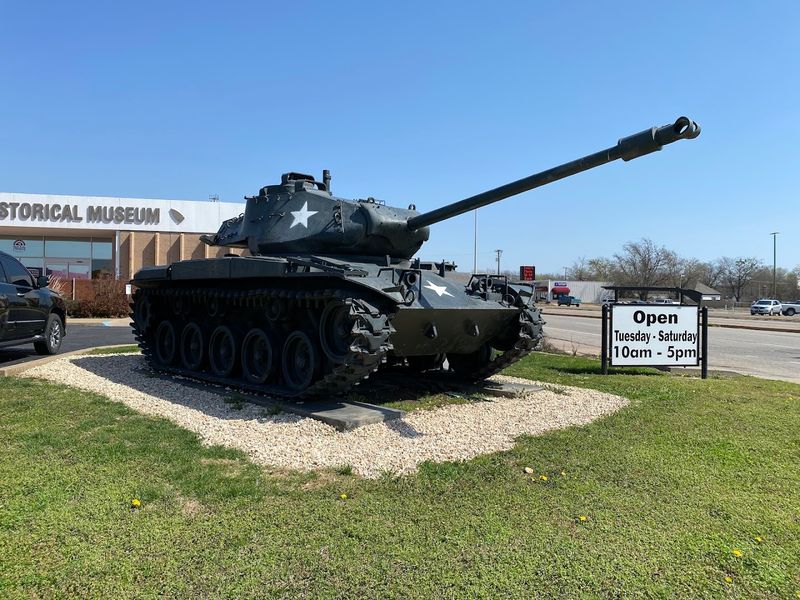
Walking into the J.M. Davis Museum for the first time, most visitors are immediately struck by the sheer scale of what they are seeing.
Display cases stretch in every direction, each one packed with carefully arranged firearms and artifacts. The layout is organized enough to feel navigable but expansive enough to make you realize you could spend hours here and still not see everything.
The museum does a solid job of making the experience accessible for all ages. Labels and descriptions are written clearly, avoiding overly technical jargon that might lose younger visitors or casual history fans.
Families with kids will find that children are naturally drawn to the more dramatic pieces — the Gatling gun, the outlaw weapons, and the oversized military hardware tend to generate the most wide-eyed reactions from younger guests.
Multimedia displays and photographs scattered throughout the exhibits help bring context to the objects, making the experience feel modern despite the age of many pieces. The space is also wheelchair accessible and relatively easy to navigate.
Plan to spend at least two to three hours to do the collection justice — though many visitors end up staying longer than expected. Comfortable shoes are recommended, as there is a lot of ground to cover inside this fascinating and surprisingly vast museum.
Route 66 Connection
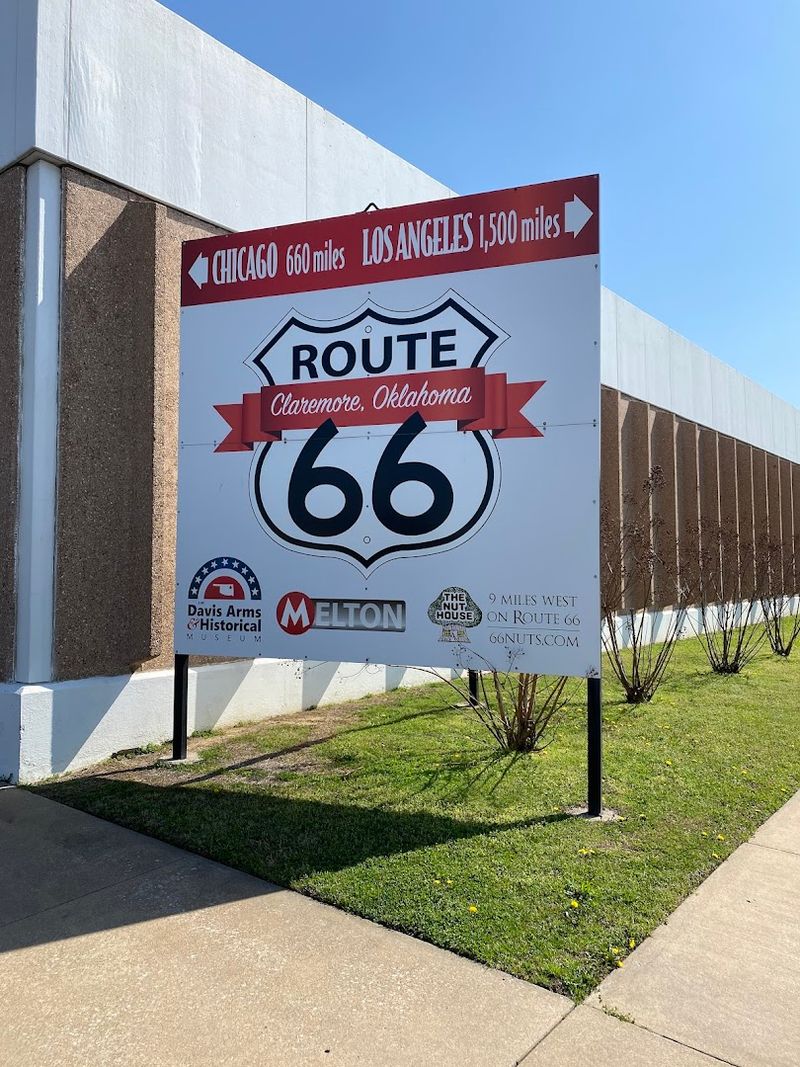
Route 66 is more than just a road — it is a symbol of American freedom, adventure, and the open highway. Running through the heart of Oklahoma, this legendary stretch of pavement has been drawing travelers since the 1920s, and Claremore has always been one of its most interesting stops.
The J.M. Davis Museum sits right along this historic corridor, making it a natural destination for road-trippers exploring the Mother Road.
For Route 66 enthusiasts, the museum adds genuine historical weight to what can sometimes feel like a nostalgia tour of diners and motels. Here, the history is serious, deep, and completely unexpected.
Pulling off the highway to spend an afternoon surrounded by 12,000 guns and priceless historical artifacts is the kind of spontaneous discovery that makes road trips memorable.
Oklahoma leans hard into its Route 66 identity, and the Davis Museum fits naturally into that tourism narrative even though its focus is purely historical rather than roadside kitsch. It represents the kind of authentic, locally rooted attraction that travelers are increasingly seeking out.
If you are planning a Route 66 road trip through Oklahoma, Claremore deserves a full stop — and the J.M. Davis Museum is the main reason why.
Mark it on your map before you leave home.
Essential Visitor Info
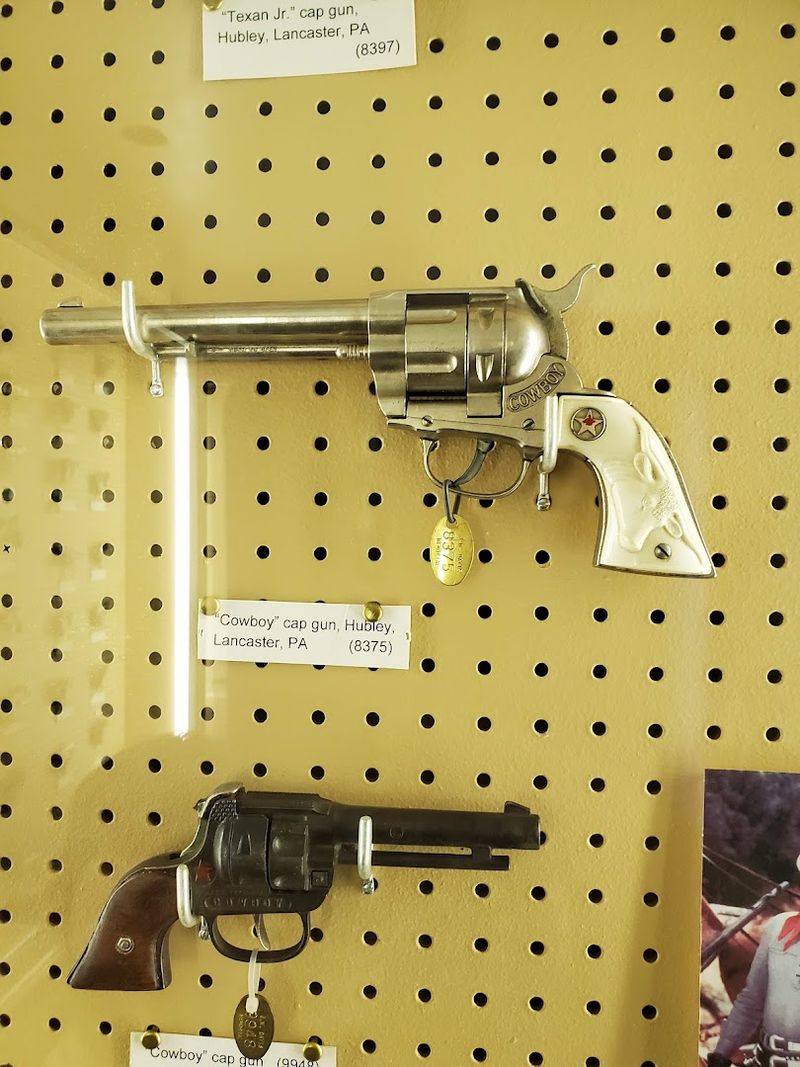
Planning a visit to the J.M. Davis Arms & Historical Museum is refreshingly straightforward, especially since admission is always free.
The museum is located at 330 N J M Davis Blvd, Claremore, OK 74017 — easy to find and well-marked along the Route 66 corridor. Donations are warmly accepted and help support ongoing preservation efforts, so consider leaving something behind if the experience moves you.
Hours are generally open daily, with weekend hours available throughout most of the year. Seasonal variations do occur, so checking the museum’s official website or calling ahead before your visit is always a smart move.
Group tours are available with advance notice, and guided experiences can add a lot of value for school trips, family reunions, or organized history groups looking for a structured walkthrough.
The museum also features a gift shop stocked with souvenirs, books, and firearms-related memorabilia that make for great keepsakes or gifts. Special displays and occasional reenactment events are held throughout the year, adding extra excitement for repeat visitors.
Whether you are rolling through Claremore on a whim or making a dedicated trip, the J.M. Davis Museum delivers an experience that is hard to forget — and even harder to believe is completely free.
It truly earns its reputation as one of Oklahoma’s finest hidden treasures.