Summer in Western New York is a season made for lingering over a good meal. Tree-lined streets are at their greenest, neighborhood taverns fill with familiar faces, and long evenings invite travelers to slow down and savor local traditions.
In West Seneca, Schwabl’s has been doing exactly that for generations. The historic tavern feels wonderfully rooted in the past, with warm wood interiors, friendly conversation, and recipes that have stood the test of time.
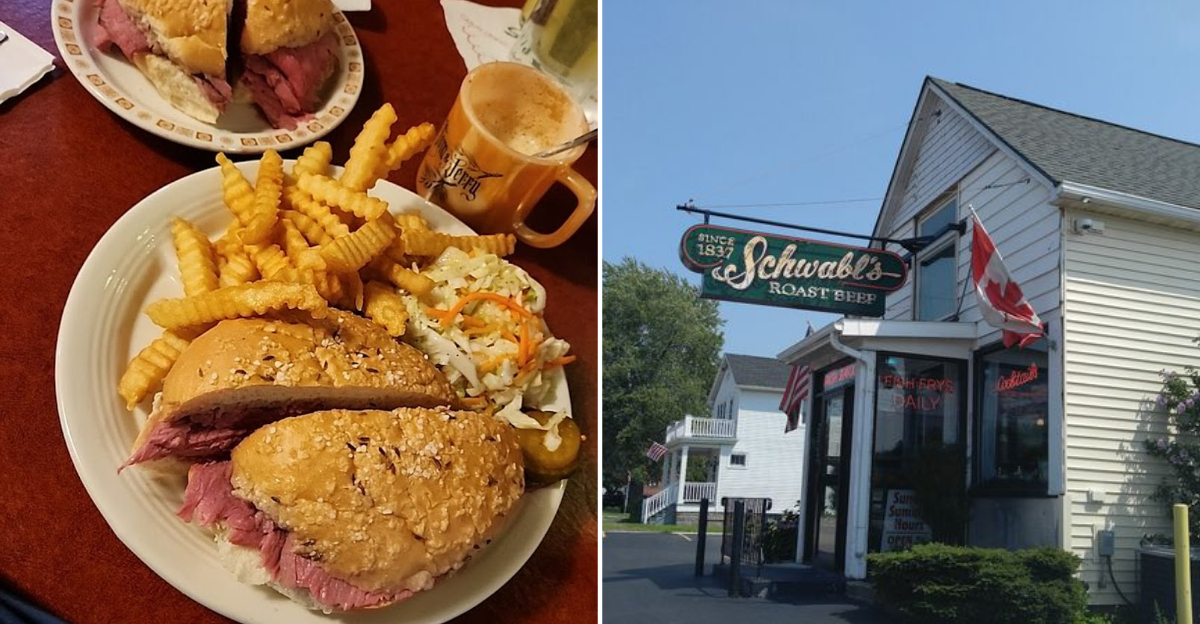
Its famous beef on weck arrives piled high with tender roast beef on a kummelweck roll, offering a taste of Buffalo’s culinary heritage in every bite.
There’s something comforting about a place that knows exactly what it is and has for nearly two centuries. Let’s take a closer look at the tavern and the legendary sandwich that keep people coming back year after year.
Stepping Into Living History Since 1837

Walking into a restaurant that predates the Civil War feels like entering a time capsule where history meets hospitality. The moment you cross the threshold at Schwabl’s, you’re transported to an era when dining meant something more than just grabbing a quick bite.
Dark wood paneling, intimate booths, and a well-worn bar create an atmosphere that feels like a scene straight out of a classic holiday movie.
Since opening its doors in 1837, this West Seneca establishment has maintained its commitment to old-fashioned service and quality. The small dining room intentionally keeps things cozy, encouraging conversation and connection rather than rushed meals.
Christmas decorations that linger into winter add extra charm to an already nostalgic setting.
Every corner tells a story of nearly 190 years in business. The layout remains deliberately unchanged, preserving the authentic tavern experience that great-grandparents would recognize.
White-smocked staff members move efficiently through the intimate space, carrying on traditions their predecessors established generations ago.
This commitment to preserving history while serving exceptional food creates something truly special. Modern restaurants can replicate recipes, but they can’t recreate nearly two centuries of accumulated character and community connection that makes every visit feel like coming home.
The Legendary Beef on Weck Experience
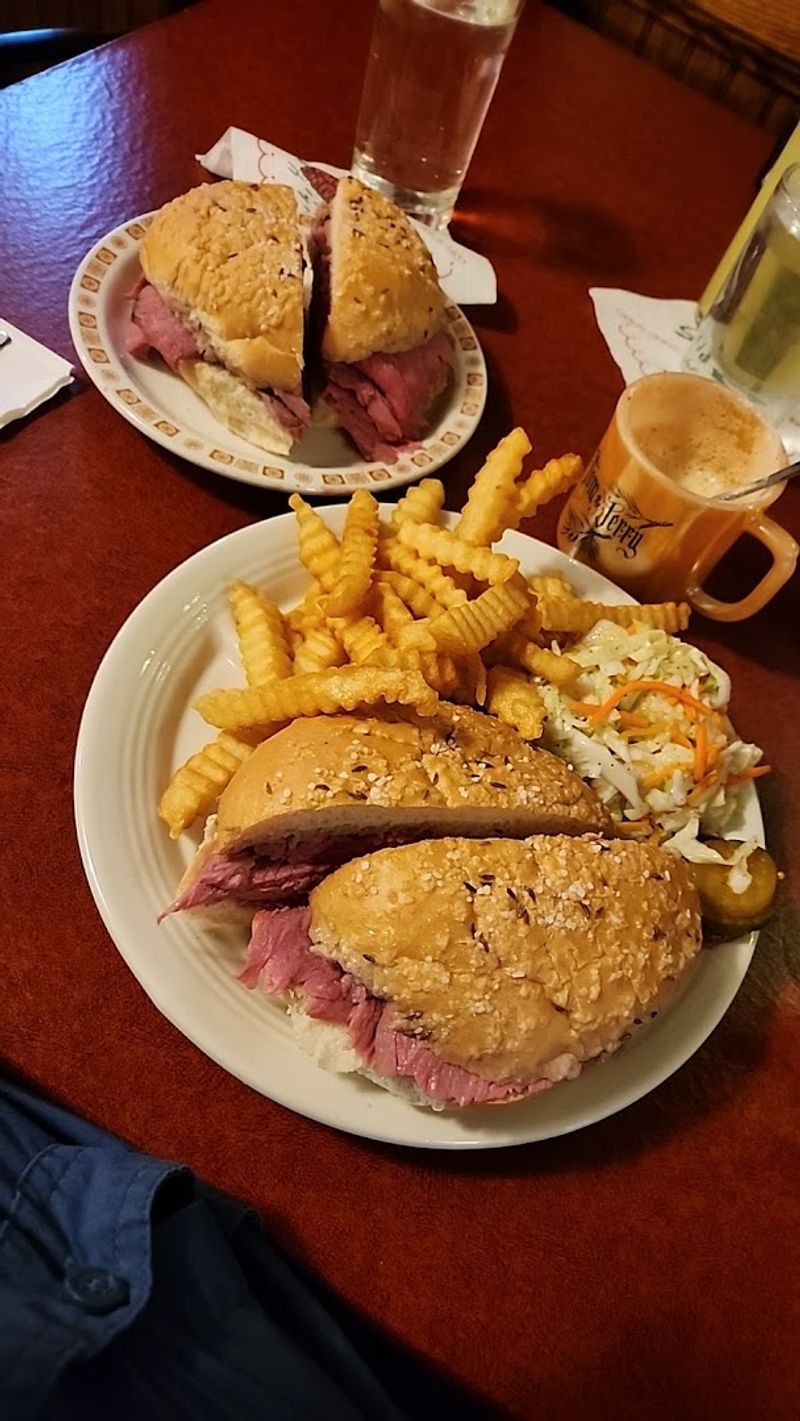
Few sandwiches inspire the kind of devotion that brings tears to visitors’ eyes, but this regional specialty has that power. Imagine tender, hand-carved roast beef piled generously onto a salt-crusted roll, served with sides that complement rather than compete.
What makes this version stand out from countless other beef on weck offerings across Western New York is the deliberate thickness of each slice.
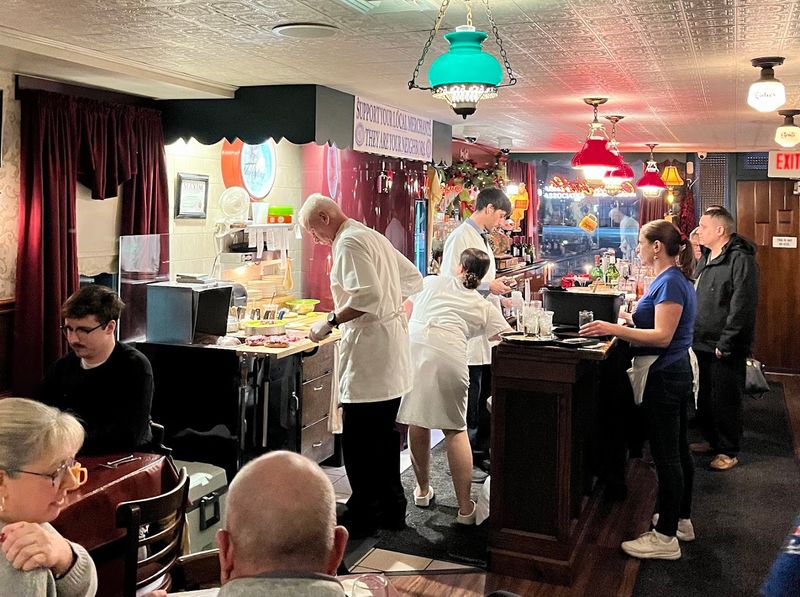
Rather than paper-thin shavings, Schwabl’s carves their beef slightly thicker, creating a more substantial bite that showcases the meat’s quality. You can order your preferred doneness—rare, medium rare, or medium—and watch as the owner himself sometimes mans the carving station by the bar.
The au jus arrives generous and savory, perfect for dipping or letting soak into the roll.
Fresh horseradish sits on every table in individual pots, allowing diners to customize their heat level. The shock of properly prepared horseradish, neither too mild nor overwhelming, adds the essential kick that completes the experience.
Traditional sides like warm German potato salad, crisp coleslaw without mayonnaise, pickled beets, and pickles round out the plate.
First-timers often become instant converts, planning return visits before finishing their sandwiches. The combination of quality ingredients, time-honored preparation methods, and generous portions creates something worth driving across town—or across state lines—to experience.
Hand-Carved Perfection at the Carving Station
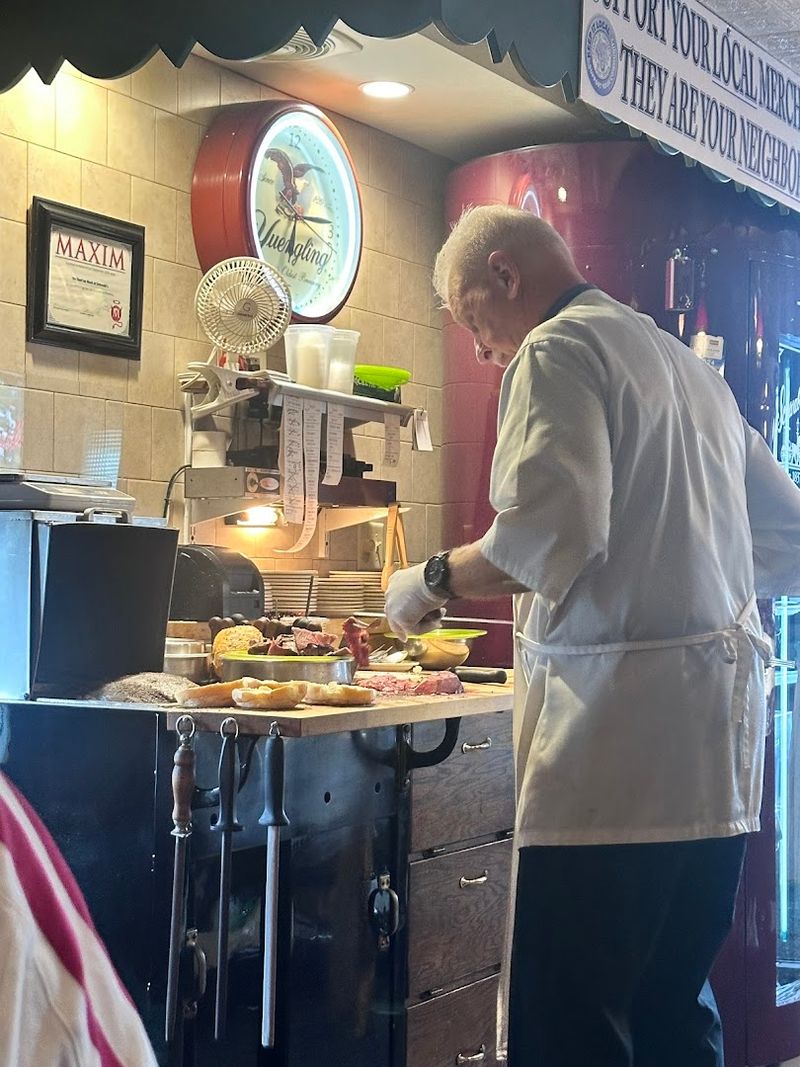
Precision matters when you’re serving the same dish for nearly two centuries. Behind the bar at Schwabl’s, you’ll often spot someone dressed in a crisp white chef’s smock, carefully carving roast beef with practiced skill.
This isn’t just theater—it’s a commitment to quality control that ensures every sandwich meets exacting standards established long before most modern restaurants even existed.
The owner frequently takes position at this station himself, demonstrating the hands-on approach that keeps family-run establishments thriving. Each slice receives individual attention, cut to the customer’s preferred thickness and doneness.
This level of personal involvement in daily operations shows dedication that corporate chain restaurants simply cannot replicate.
Watching the carving process becomes part of the dining experience. The methodical rhythm of knife against meat, the careful selection of each portion, and the attention paid to every order reinforces confidence in what you’re about to eat.
There’s something reassuring about seeing your food prepared right before your eyes by someone who genuinely cares about the result.
This dedication extends beyond just the main attraction. Every element receives similar scrutiny, from roll selection to side dish preparation.
When ownership personally oversees quality at this fundamental level, it sets the tone for the entire operation and explains why customers keep returning decade after decade.
Authentic Kummelweck Rolls Made Fresh Daily
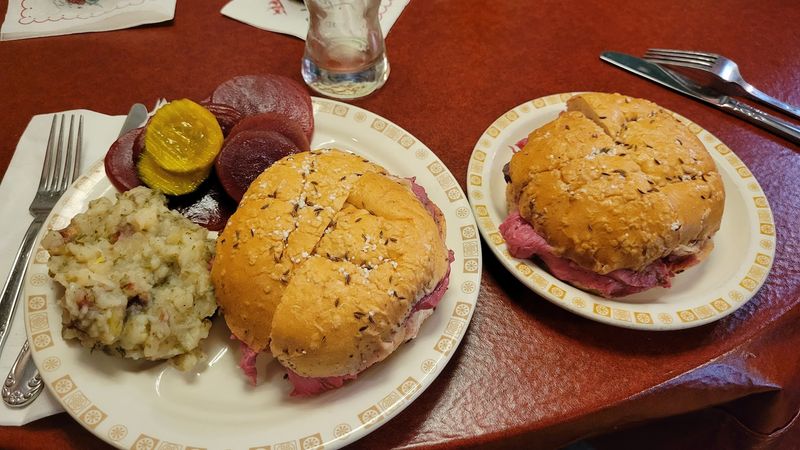
Not all rolls are created equal, especially when it comes to Buffalo’s signature sandwich bread. The kummelweck roll serves as the foundation for beef on weck, and getting it right makes all the difference between good and unforgettable.
According to servers at Schwabl’s, their salt-laced, caraway-studded rolls arrive fresh every single day, ensuring optimal texture and flavor.
These aren’t your standard hamburger buns masquerading as something special. True kummelweck rolls feature a crispy exterior covered in pretzel salt and caraway seeds, with a soft interior that can absorb au jus without completely falling apart.
The salt provides essential seasoning while the caraway adds a subtle earthy note that complements the beef perfectly.
Fresh rolls make an enormous difference in the final product. Stale or day-old bread simply cannot provide the same satisfying texture contrast—crunchy salt crystals giving way to pillowy softness that yields to your bite.
The roll’s ability to soak up just the right amount of jus without becoming a soggy mess requires that perfect fresh-baked structure.
Many visitors don’t realize how much the roll contributes to the overall experience until they try inferior versions elsewhere. The combination of quality beef and properly prepared kummelweck creates sandwich magic that keeps people talking—and returning—for generations.
It’s this attention to every component that builds legendary reputations.
The Famous Tom and Jerry Winter Cocktail
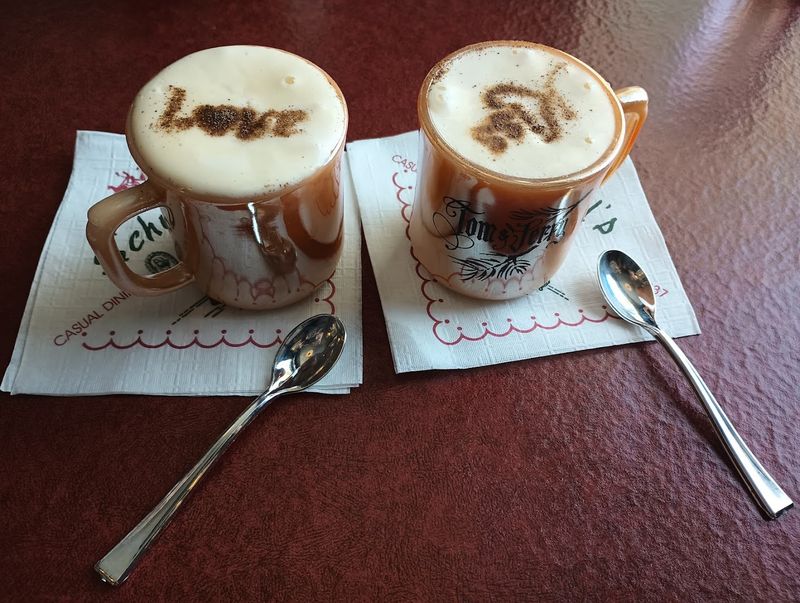
Winter in Buffalo calls for warming traditions, and few drinks embody this better than a properly made Tom and Jerry. This hot cocktail has been a Western New York cold-weather staple for over a century, and experiencing one at Schwabl’s offers a taste of regional history in liquid form.
Available from Columbus Day through St. Patrick’s Day, this seasonal specialty generates enough buzz that servers actively recommend it to newcomers.
The drink arrives steaming in a ceramic mug, topped with a foamy layer that hints at its egg-based construction. It’s warming, comforting, and surprisingly complex—not overly sweet like hot chocolate, but rather a sophisticated blend that pairs beautifully with hearty German-American fare.
First-time tasters often express amazement at how perfectly the drink complements their meal.
Some describe it as similar to eggnog but served hot, with warming spices and just enough alcohol to take the edge off a cold Buffalo winter. The temperature alone makes it special, but the flavor profile keeps people ordering seconds.
It’s become so popular that many customers specifically plan visits during the seasonal window when it’s available.
This cocktail represents the kind of regional specialty that gets passed down through families. Grandparents introduce grandchildren to the tradition, creating new memories around an old favorite.
For visitors discovering it for the first time, it becomes a must-have on every future winter trip.
German Potato Salad and Traditional Sides
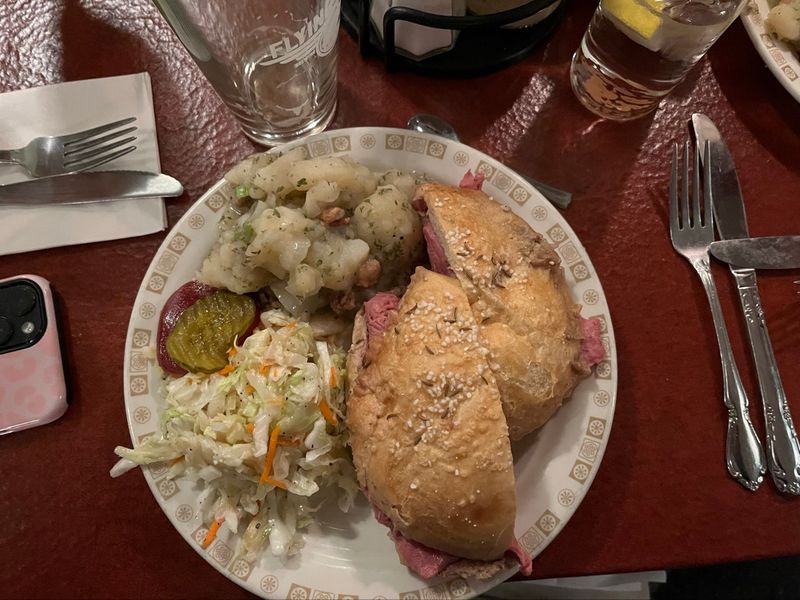
Side dishes often get overlooked in favor of star attractions, but at Schwabl’s, they deserve their own spotlight. The German potato salad arrives warm—as it absolutely should—with a tangy vinegar-based dressing that cuts through the richness of roast beef perfectly.
This isn’t the mayonnaise-heavy American version; it’s the authentic German preparation that has accompanied hearty meals for centuries.
Alongside the potato salad, you’ll find coleslaw made without a speck of mayonnaise, offering clean, crisp freshness that refreshes your palate between bites. Pickled beets add a sweet-tart element that might surprise newcomers but delights anyone familiar with traditional German-American cooking.
These accompaniments aren’t afterthoughts—they’re carefully chosen components that complete the meal.
Every side dish receives the same attention to quality and authenticity as the main attraction. The warm potato salad maintains its integrity without becoming mushy, while the coleslaw stays crisp and bright.
Even the simple pickle selection shows thought and care in sourcing quality products.
Together, these sides create a balanced plate that showcases German culinary traditions. They prove that supporting players can shine just as brightly as the star when prepared with skill and respect for tradition.
Many customers specifically request extra portions of the German potato salad, considering it worth the upcharge for another taste of childhood memories or newly discovered favorites.
Crispy Golden Potato Pancakes
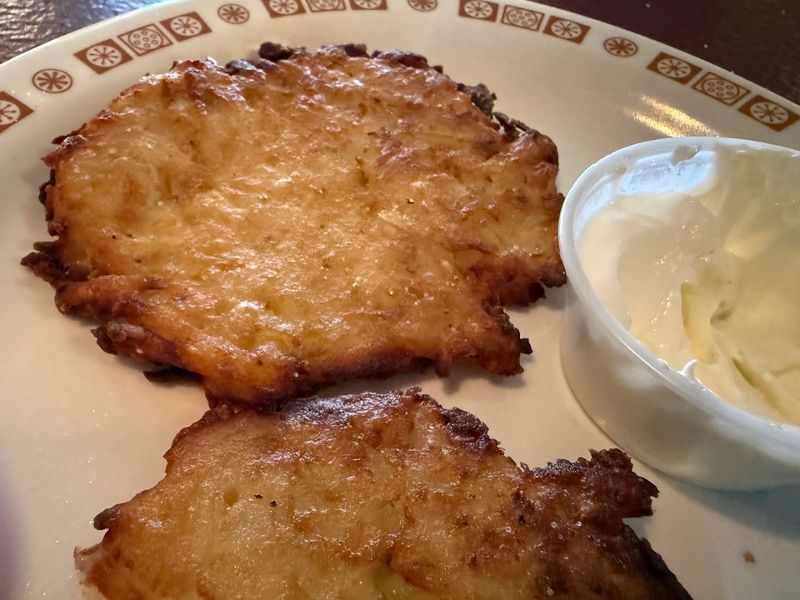
Golden, crispy, and disappearing from plates faster than servers can deliver them—potato pancakes at Schwabl’s have earned their own devoted following. When they appear as the daily special, regulars know to arrive early because these traditional German treats don’t last long.
Served with both sour cream and applesauce, they offer diners the classic choice between tangy and sweet accompaniments.
The exterior achieves that coveted crispy texture while the interior remains tender and flavorful. Getting this balance right requires skill and attention—too greasy and they’re unappetizing, not crispy enough and they’re disappointing.
Schwabl’s version hits the sweet spot that has potato pancake enthusiasts raving and planning return visits around their availability.
Some customers report being unable to photograph them because they vanish so quickly, eaten before anyone remembers to document the experience. This spontaneous consumption speaks volumes about their quality and appeal.
The combination of crispy edges, fluffy interior, and traditional toppings creates comfort food at its finest.
Whether enjoyed as an appetizer or alongside your main course, these pancakes showcase German cooking traditions at their best. They’re substantial enough to share but so good you might not want to.
For many diners, checking whether potato pancakes are available becomes the first question asked when calling ahead, with visit timing adjusted accordingly.
Fresh Horseradish That Packs Proper Punch
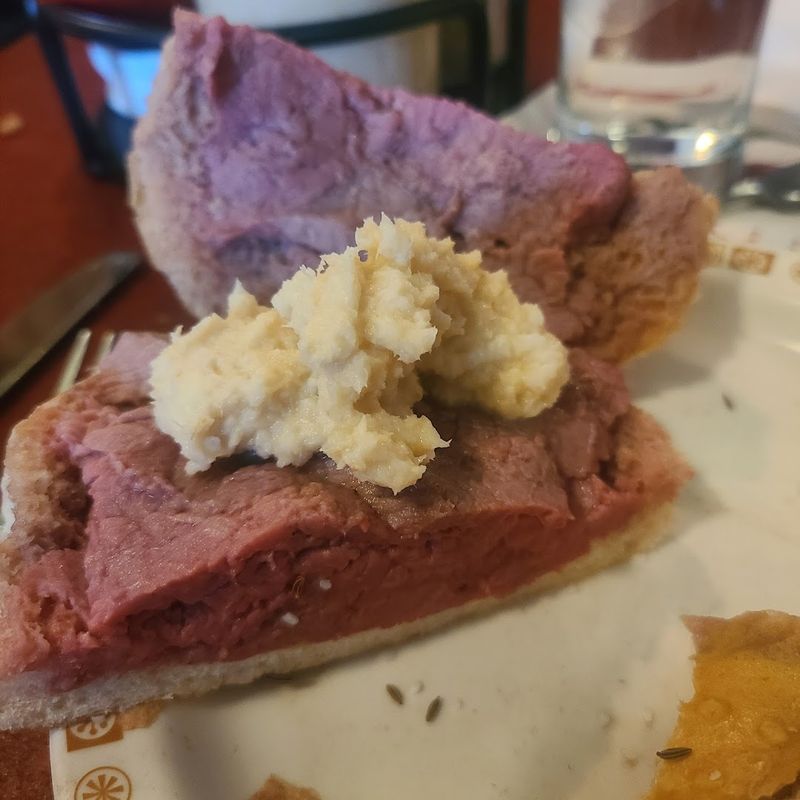
The right condiment can elevate a good sandwich to greatness, and nowhere is this truer than with horseradish. Individual pots of freshly prepared horseradish sit on every table at Schwabl’s, allowing diners to control their heat level while ensuring everyone gets the freshest possible product.
This isn’t the shelf-stable jarred variety that loses potency over time—it’s the real deal, prepared regularly to maintain maximum impact.
Fresh horseradish delivers that perfect shock to your senses without overwhelming the beef’s flavor. It’s thick, pungent, and exactly what beef on weck demands.
Some describe it as the best they’ve ever tasted, crediting its freshness for the superior quality. The individual serving method prevents contamination and ensures every diner experiences it at peak potency.
For those unfamiliar with proper horseradish preparation, the difference between fresh and old is dramatic. Fresh horseradish has a clean, sharp heat that dissipates quickly, enhancing rather than masking other flavors.
Old horseradish becomes bitter and loses its characteristic bite, leaving only unpleasant aftertaste.
This attention to condiment quality demonstrates the establishment’s overall philosophy—nothing is too small to matter. When even the accompaniments receive this level of care, it reinforces customer confidence in everything served.
Many first-time visitors specifically mention the horseradish in their reviews, surprised and delighted by such a simple yet impactful detail.
Multigenerational Family Dining Tradition
Restaurants become institutions not just through longevity, but by creating experiences families pass down through generations. At Schwabl’s, it’s common to encounter customers whose grandparents brought their parents here, who now bring their own children.
These multigenerational visits carry special meaning, connecting past and present through shared meals and memories.
Stories emerge of families who made weekly pilgrimages here decades ago, always ordering the same favorite dishes. Now their grandchildren sit in the same booths, perhaps ordering those same items, maintaining traditions that span half a century or more.
Some families make Schwabl’s their first stop when returning to Buffalo, even before heading home from the airport.
The restaurant’s consistency makes this possible. Grandparents can confidently bring grandchildren, knowing the experience will match their memories.
The food tastes the same, the atmosphere remains familiar, and the service maintains those old-fashioned standards that defined dining out in earlier eras.
These family traditions create emotional connections that transcend simple restaurant visits. They become part of family identity and shared history.
When great-grandparents once worked at the establishment, as mentioned in some customer stories, those connections deepen even further. This is how restaurants become more than businesses—they become community anchors and living links to the past that help families maintain their own unique traditions and stories.
Beyond Beef: Hungarian Goulash and German Classics
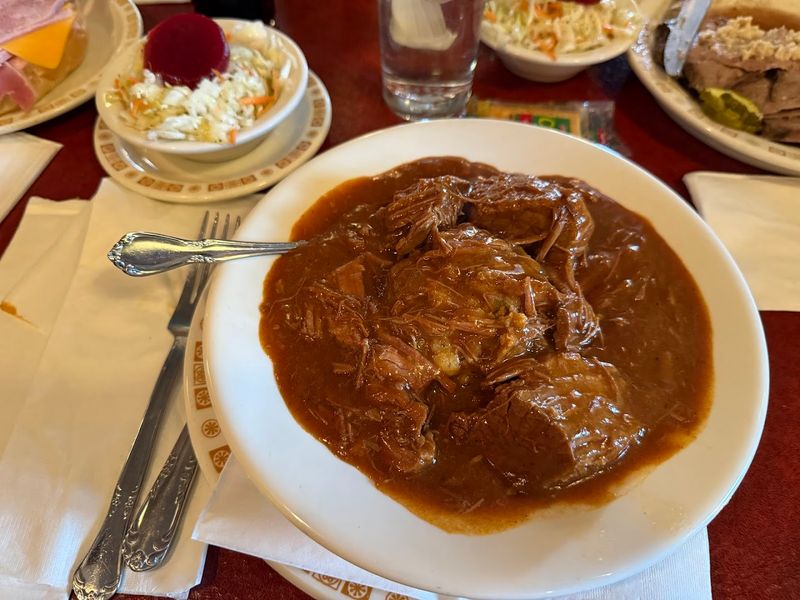
While beef on weck rightfully dominates the conversation, Schwabl’s full menu reveals the depth of their German-American culinary heritage. Hungarian goulash appears regularly, featuring the authentic paprika flavor that defines this classic comfort dish.
Turkey dinners earn raves for meat so tender it practically melts, piled high in portions generous enough to satisfy the heartiest appetites.
Friday fish fries showcase haddock that rivals versions found across the pond in England, according to well-traveled customers. Pretzel sticks with cheese dip disappear quickly from tables, the fluffy pretzels drawing comparisons to the best versions found in Germany itself.
Liver dumpling soup represents traditional German cooking that’s increasingly hard to find, delighting customers who remember it from their childhoods.
The chicken salad, kids’ tenders, and even the seafood medley of haddock, shrimp, and scallops all receive consistent praise. This variety ensures that even non-beef-eaters find something special.
The menu reflects generations of German-American cooking traditions, preserving recipes and techniques that might otherwise be lost to time.
This breadth of offerings shows that Schwabl’s is more than a one-dish wonder. While the beef on weck deservedly draws crowds, the entire menu demonstrates the same commitment to quality and authenticity.
Whether you’re craving schnitzel, sauerbraten, or something familiar like turkey dinner, the kitchen delivers with the same care that’s kept customers satisfied for nearly two centuries.