
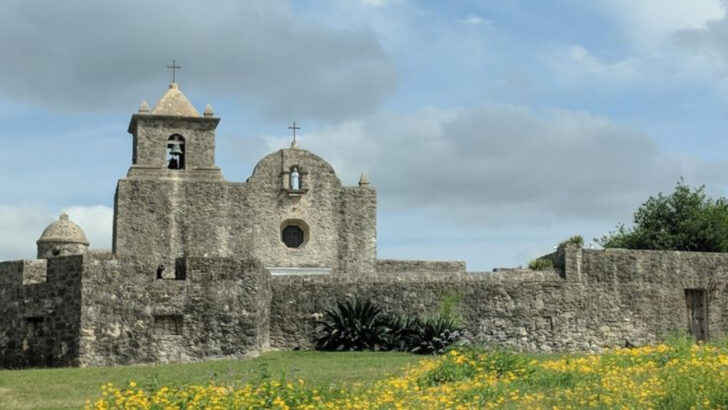
Tucked away in the small town of Goliad, Texas, Presidio la Bahía is one of the most historically rich sites in the entire state — yet most people have never heard of it.
Built in 1749, this Spanish colonial fortress predates the famous Alamo and witnessed wars, revolutions, and dramatic turning points that shaped the Texas we know today.
From Spanish soldiers to Texian rebels, the walls of La Bahía have seen it all.
If you think Texas history begins and ends at the Alamo, this place is about to change your mind.
A Fortress Older Than The Alamo
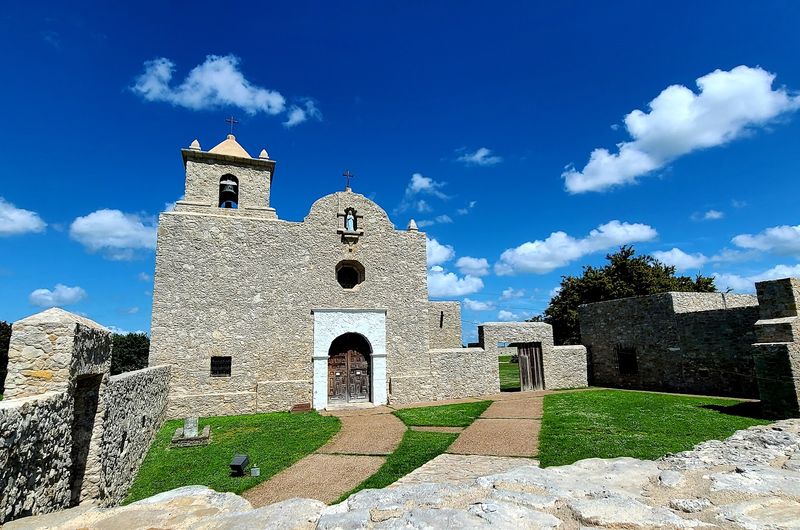
Most people picture the Alamo when they think of Texas history, but there is another fortress that quietly holds an even longer story. Presidio la Bahía, standing just outside Goliad, Texas, was established in 1749 — decades before the American Revolution and nearly a century before the Alamo became famous.
That is a remarkable head start in the story of a land that would eventually become Texas.
Built by Spanish colonial forces, the presidio was designed to project military power and protect Spanish settlements across the region. It was not just a fort — it was a symbol of Spain’s ambition to hold onto its vast North American territory.
Over the following century, the walls of La Bahía witnessed multiple governments rise and fall around them.
Unlike the Alamo, which was destroyed and later restored as a symbol, La Bahía has been continuously recognized as a historic treasure. Visitors today can walk up to walls that soldiers once patrolled in the 1700s, making the experience feel genuinely connected to the past.
Few places in the American Southwest carry that kind of unbroken historical weight.
Origins in the Spanish Colonial Frontier
Spain was playing a long game in the 1700s. Worried about French expansion from Louisiana and Indigenous resistance across Texas, Spanish authorities decided they needed a stronger military presence in the region.
Presidio la Bahía was founded in 1749 as part of that strategic push, planted firmly along the San Antonio River to anchor Spanish control of the southern Texas frontier.
The presidio did not appear out of nowhere. It was actually relocated from an earlier coastal position — first established near Matagorda Bay in 1722 — before finally settling at its current Goliad location.
Each move brought the fort closer to a spot where it could better protect mission settlements and trade routes. By 1749, the site was chosen for its access to water and its defensible terrain.
Life on the colonial frontier was tough. Soldiers stationed at La Bahía were far from Mexico City, often underpaid, and constantly on alert for threats.
Yet they built something lasting. The fort became a hub of activity, attracting settlers, missionaries, and traders who slowly turned the surrounding wilderness into a functioning community.
That community still exists today as the city of Goliad.
Strategic Role in Multiple Conflicts
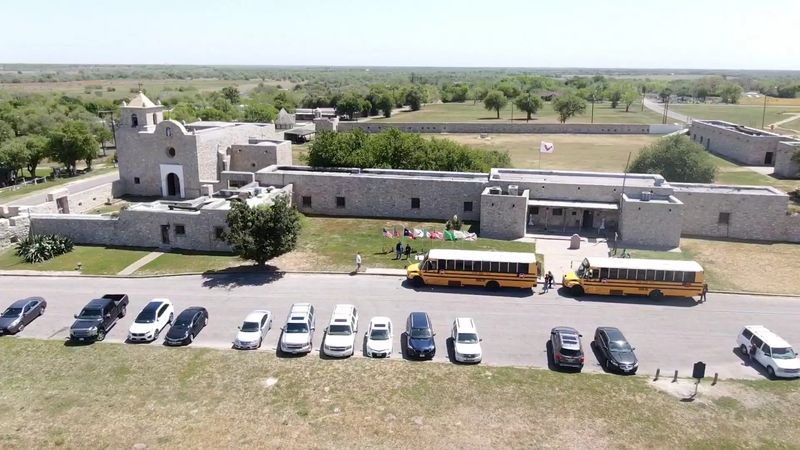
Few forts in North American history changed hands as many times as Presidio la Bahía. Over the course of roughly a century, the fortress was at the center of at least six different military conflicts involving Spanish colonizers, Mexican revolutionaries, filibustering expeditions, and eventually Texian rebels.
That is not a coincidence — it is a sign of just how strategically valuable the location was.
One of the earliest major confrontations came in 1812 during the Gutierrez-Magee Expedition, when a combined force of American and Mexican republican fighters captured the fort as part of a bold attempt to liberate Texas from Spain. The presidio then changed hands multiple times over the following two decades as Mexico fought for its own independence and various factions scrambled for control of Texas.
Each conflict left its mark on the fort’s walls and its story. Soldiers from completely different nations, speaking different languages and fighting for different causes, all passed through the same gates.
Visiting today, you can almost feel the tension layered into those limestone blocks. La Bahía is not just a historical curiosity — it is a physical record of how contested and complicated the birth of Texas truly was.
Birthplace of the Town of La Bahía (Now Goliad)
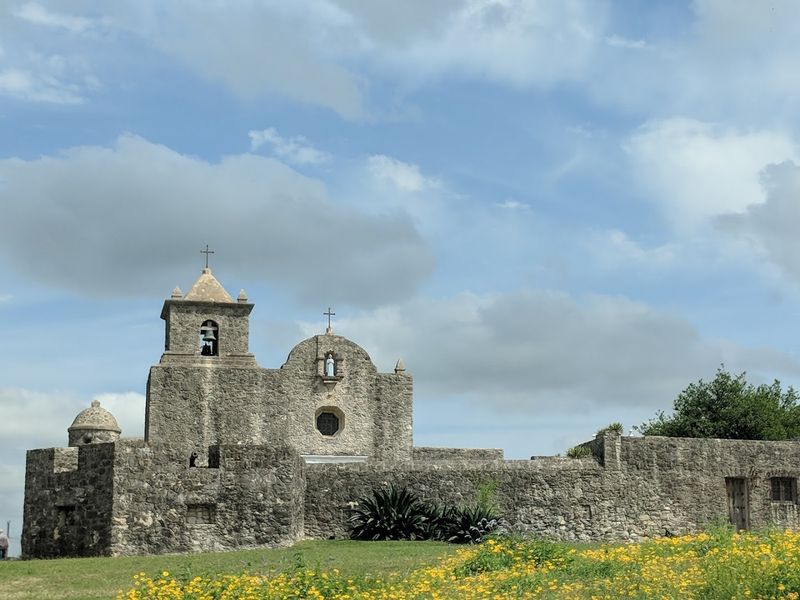
Forts rarely exist in isolation. Wherever soldiers go, civilians eventually follow — and that is exactly what happened at Presidio la Bahía.
As the fort grew in importance, a small civilian town began to form around its protective walls. That settlement was called La Bahía, and it became one of the earliest organized communities in what would eventually become the state of Texas.
The town offered something rare on the frontier: safety. Families, traders, and missionaries clustered near the presidio because the thick walls meant protection from raids and conflict.
Over time, La Bahía developed its own identity, with homes, a marketplace, and religious life centered on the nearby chapel. It was a real, breathing community — not just a military outpost.
After Mexican independence in 1821, the town was renamed Goliad — an anagram of Hidalgo, honoring the Mexican priest Miguel Hidalgo, who sparked Mexico’s independence movement. That name stuck, and today Goliad is a proud small city with deep roots stretching back nearly 300 years.
Walking its streets, you are literally walking through layers of history that most Texas tourists completely miss. The city itself is the living descendant of that original colonial settlement.
Our Lady of Loreto Chapel — A Living Link to the 1700s
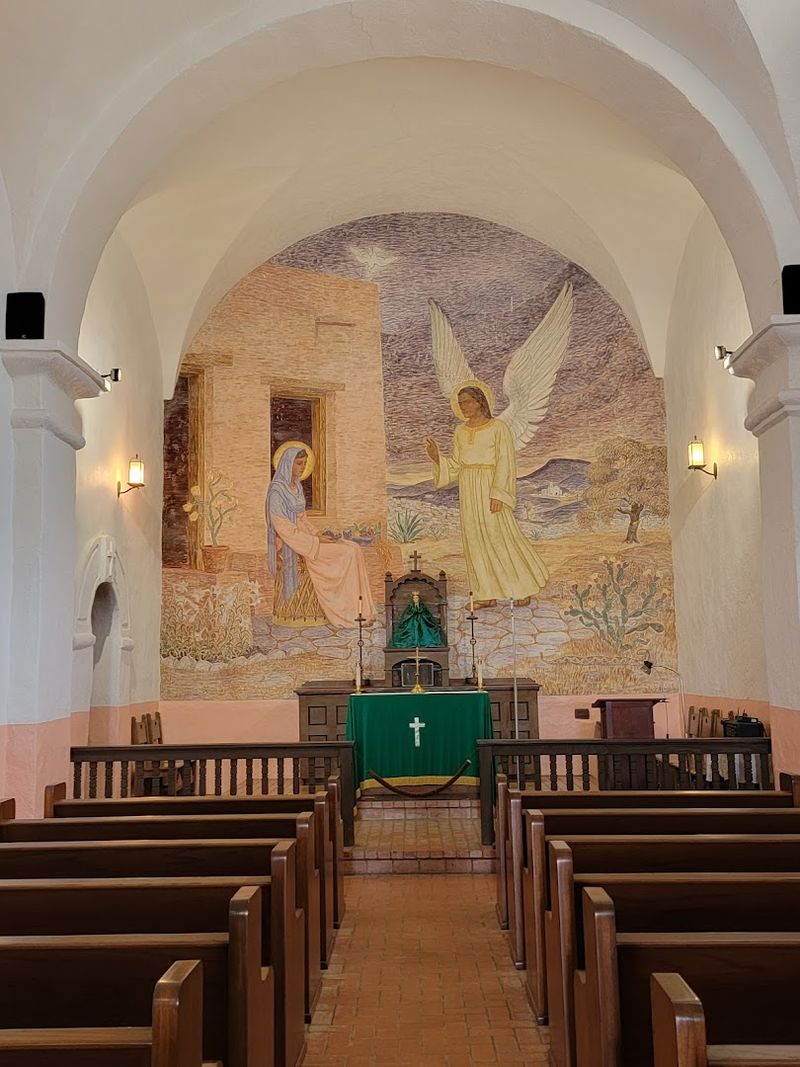
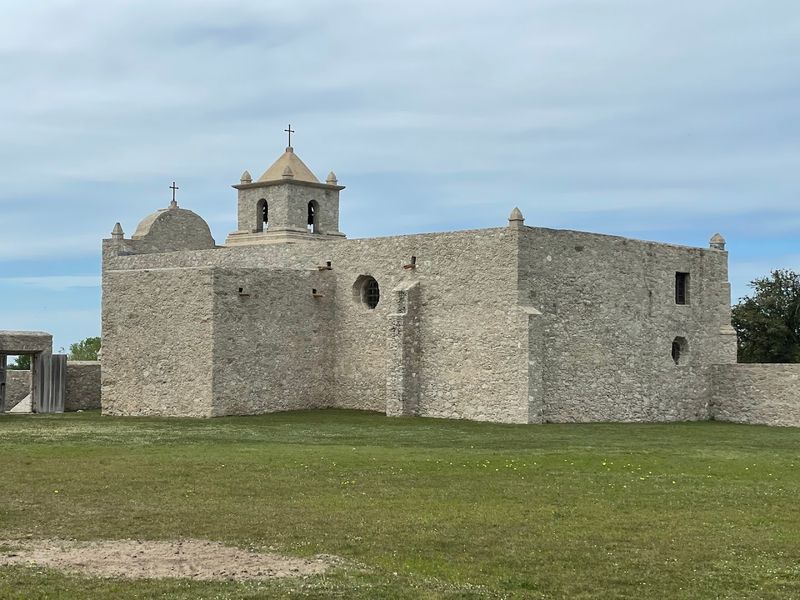
Standing inside the walls of Presidio la Bahía is a structure that might just take your breath away — not because of its size, but because of its age. The Our Lady of Loreto Chapel, completed in 1779, is one of the oldest church buildings still standing in the entire United States.
That is not a regional claim or a Texas-sized exaggeration. It is simply a remarkable historical fact.
The chapel was built by Spanish missionaries and soldiers who shaped every stone by hand. Services were held here during the height of Spanish colonial power, through the chaos of the Mexican War of Independence, and even during the Texas Revolution.
Texian soldiers imprisoned at the fort in 1836 may have prayed within these same walls before the tragic events of the Goliad Massacre unfolded.
Today, the chapel still functions as an active place of worship, hosting occasional Catholic Masses and special ceremonies. That continuity is extraordinary.
Most buildings from the 1700s are either ruins or museum pieces, but this chapel remains alive. Visitors are welcome to step inside, observe the simple but moving interior, and sit quietly with centuries of history pressing gently around them.
It is a genuinely moving experience that no photograph can fully capture.
The Texas Revolution and the Goliad Massacre
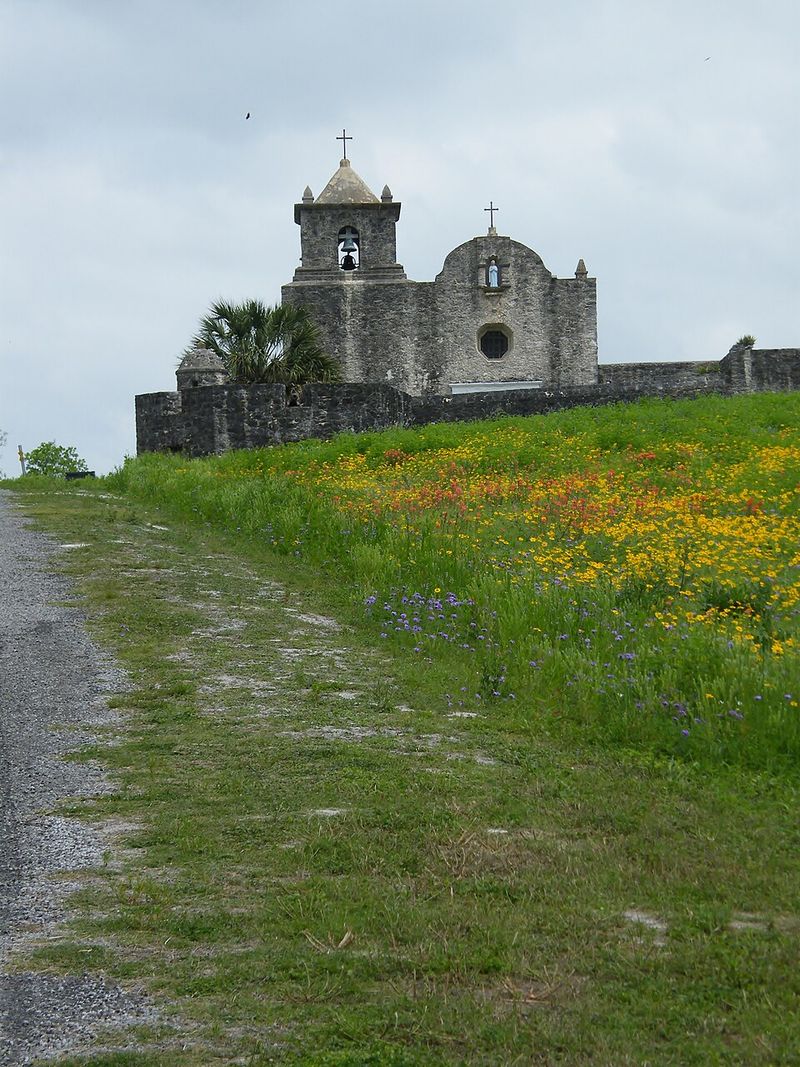
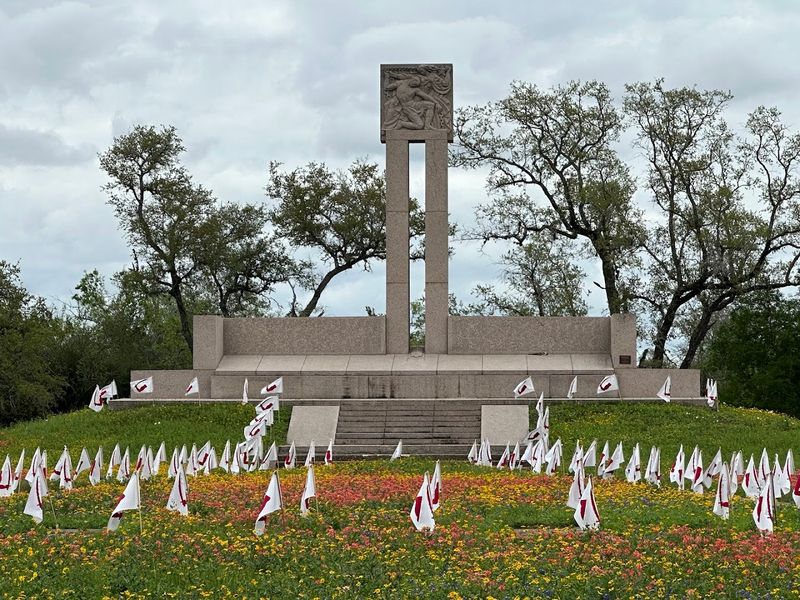
March 1836 stands as one of the darkest months in Texas history, and Presidio la Bahía was right at the center of it. Colonel James Fannin and approximately 400 Texian soldiers had been fighting for Texas independence when they were surrounded and defeated at the Battle of Coleto Creek.
Forced to surrender, they were marched back to the presidio and held as prisoners of war, crowded into the fort’s chapel and courtyard.
What followed shocked even the hardened soldiers of the era. On Palm Sunday, March 27, 1836, General Antonio López de Santa Anna ordered the execution of the Texian prisoners.
Around 342 men were marched out in three separate columns and shot. The event became known as the Goliad Massacre, and it sent a wave of horror across Texas and the United States.
Fannin himself was executed separately inside the fort’s courtyard. The scale of the killing was staggering — nearly three times the number of defenders who died at the Alamo.
Yet the Goliad Massacre receives far less attention in popular culture. Presidio la Bahía preserves the memory of those men with quiet dignity, including a memorial and interpretive displays that honor both the fallen Texians and the complexity of the conflict.
Catalyst for “Remember Goliad!”
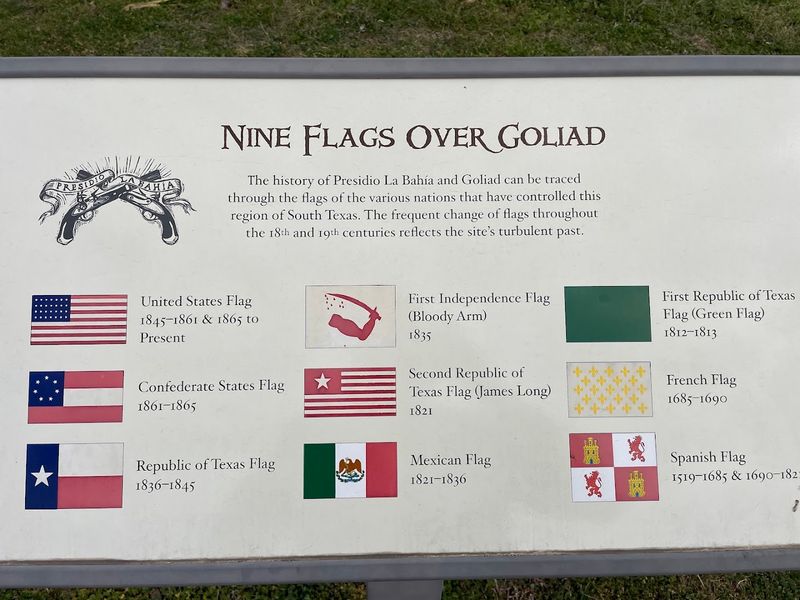
History loves a rallying cry. After the fall of the Alamo on March 6, 1836, Texians were already shaken — but the news of the Goliad Massacre three weeks later turned grief into fury.
Word spread quickly that hundreds of surrendered soldiers had been executed in cold blood, and the reaction across Texas and the United States was immediate and intense. People were outraged.
“Remember Goliad!” became a battle cry just as powerful as “Remember the Alamo!” — sometimes the two were shouted together by Texian forces rallying for combat. When Sam Houston led his army against Santa Anna at the Battle of San Jacinto on April 21, 1836, those words were fresh in every soldier’s mind.
The battle lasted just 18 minutes and ended with a decisive Texian victory, securing independence for the Republic of Texas.
Historians often argue that the emotional weight of the Goliad Massacre actually contributed more to Texian resolve than the Alamo did. The Alamo defenders chose their fate, but the Goliad prisoners had surrendered and were killed anyway.
That sense of betrayal was uniquely galvanizing. Yet somehow, over the generations, “Remember Goliad!” faded from popular memory while the Alamo’s story grew larger.
La Bahía quietly holds the truth.
Restoration and Preservation Efforts
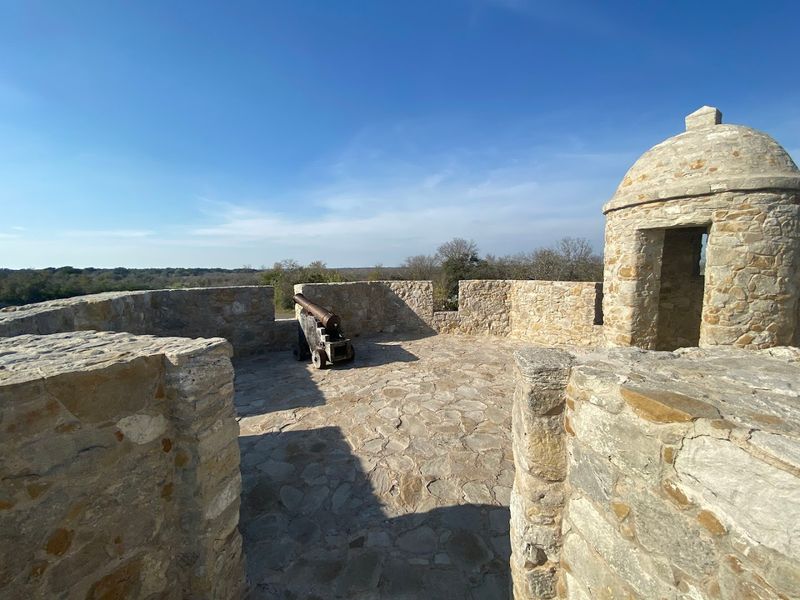
By the mid-20th century, Presidio la Bahía was in rough shape. Decades of neglect, weather damage, and general wear had taken a serious toll on the fortress that had survived wars and revolutions.
The stone walls were crumbling, the chapel was deteriorating, and much of the original structure was at risk of being lost forever. Something had to be done — and fortunately, someone stepped up.
Beginning in the early 1960s, a dedicated restoration effort was launched, led largely by Katia Crawford and the Katia and Blas Herrera Foundation, along with support from the Catholic Diocese of Victoria. What made this project exceptional was its commitment to archaeological accuracy.
Researchers studied historical records, excavated the site carefully, and rebuilt only what the evidence supported. The result was one of the most authentic restorations of a Spanish colonial presidio anywhere in North America.
The work took years and required enormous patience and funding. Craftspeople used traditional building techniques and materials wherever possible to maintain historical integrity.
Today, that dedication shows. Walking through the restored fort feels genuinely historic rather than theme-park artificial.
The restoration earned national recognition, and Presidio la Bahía was designated a National Historic Landmark in 1967 — a well-deserved honor for a site that came dangerously close to disappearing entirely.
Living History and Cultural Legacy
Presidio la Bahía is not the kind of museum where you walk past velvet ropes and stare at objects behind glass. The site actively works to bring history to life in ways that feel engaging and meaningful rather than dusty and distant.
Educational programs, guided tours, and seasonal living history events give visitors a chance to connect with the past on a personal level.
One of the most popular annual events is the Goliad Massacre and Living History Program, held each spring near the anniversary of the 1836 tragedy. Reenactors in period costumes portray soldiers, settlers, and historical figures, recreating scenes and explaining the events that unfolded within these very walls.
School groups frequently visit for curriculum-aligned programs that bring Texas history off the textbook page and into three dimensions.
The cultural legacy of La Bahía also extends into the local Goliad community, which takes enormous pride in its deep historical roots. Local families have connections to the site spanning generations, and the blending of Spanish, Mexican, and Texian heritage is visible throughout the town.
Artifacts recovered from on-site archaeological digs are displayed within the fort, giving visitors tangible links to the people who lived and fought here centuries ago. History feels personal here in the best possible way.
Essential Visitor Information — What You Need to Know Before You Go
Planning a trip to Presidio la Bahía is straightforward, and the experience is genuinely worth the drive. The site is located at 217 Loop 71, Goliad, TX 77963, and is typically open daily from 10 a.m. to 5 p.m., with the last admission around 4:30 p.m.
Hours can vary for holidays and special events, so checking the official website before you go is always a smart move.
Admission is very affordable — one of the best deals in Texas history tourism. Adult tickets are generally low-cost, with discounted rates for seniors and students, and children under 5 typically get in free.
Both guided and self-guided tour options are available, so you can explore at your own pace or get the full interpretive experience with a knowledgeable guide who can answer questions and share stories you would never find on a placard.
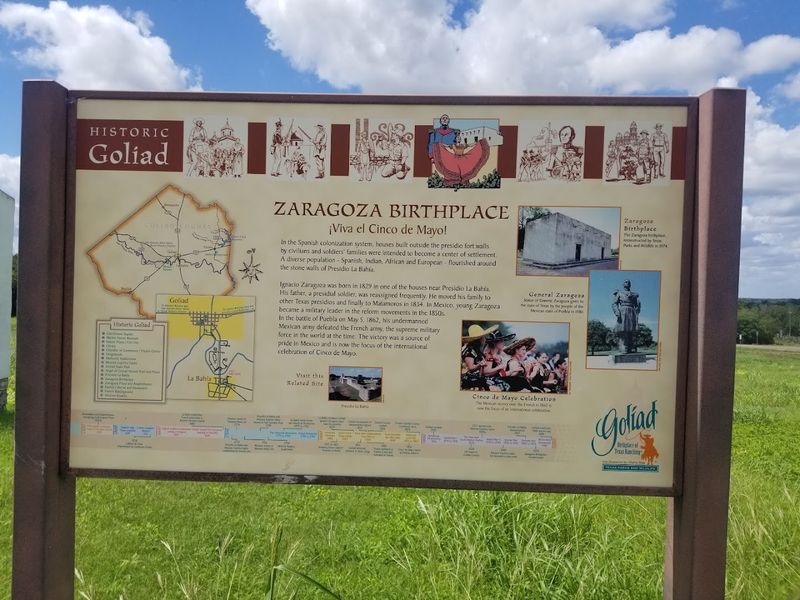
Make a full day of it by pairing your visit with nearby Goliad State Park, the birthplace of Mexican general Ignacio Zaragoza, and the Fannin Battleground State Historic Site just a short drive away. Together, these sites paint a remarkably complete picture of early Texas history.
Bring water, comfortable shoes, and a curiosity for stories that most history books shortchange. You will leave knowing Texas history in a whole new way.