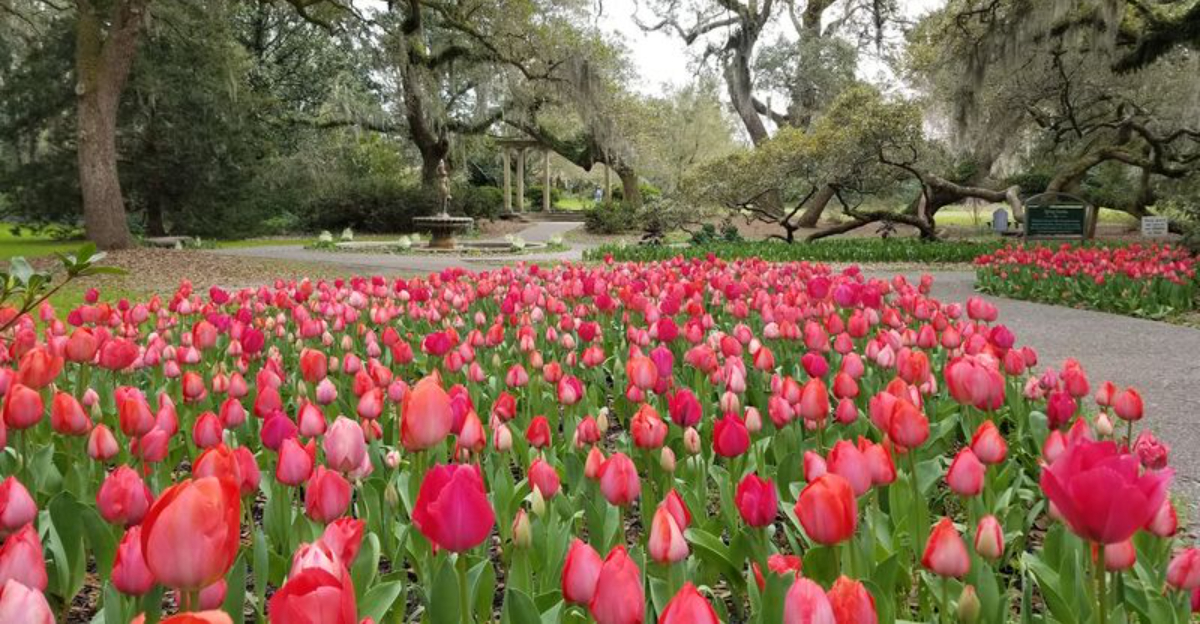
Tucked along the coast of Wilmington, North Carolina, Airlie Gardens is a stunning 67-acre public garden with a story that stretches back centuries.
At its heart stands the legendary Airlie Oak, a massive live oak estimated to be 465 to 500 years old, making it one of the oldest trees in the entire state.
From its roots as a lavish private estate to its life today as a peaceful public retreat, this garden offers something truly special for every visitor.
Whether you love history, nature, art, or just a quiet walk among beautiful scenery, Airlie Gardens is worth every step.
A Historic Coastal Estate Turned Public Garden
Back in 1886, the land that would become Airlie Gardens was the private playground of the wealthy Pembroke Jones family. During the Gilded Age, this kind of estate was the ultimate status symbol — sprawling grounds, manicured gardens, and enough space to host the most fashionable guests of the era.
For decades, the property remained in private hands, carefully tended and enjoyed by a select few. Then, in 1999, New Hanover County stepped in and purchased the estate, opening its gates to the public for the very first time.
That decision transformed a once-exclusive retreat into a community treasure that anyone could enjoy.
Today, the 67-acre garden welcomes thousands of visitors every year. Walking through its winding paths, it is easy to feel the weight of history beneath your feet.
Every corner of the property holds echoes of its glamorous past, blended beautifully with the natural beauty of the North Carolina coast. It is a rare place where old-money elegance meets everyday accessibility, and that combination makes it genuinely unforgettable.
The Legendary Airlie Oak at Its Heart
Some trees are just trees. The Airlie Oak is something else entirely.
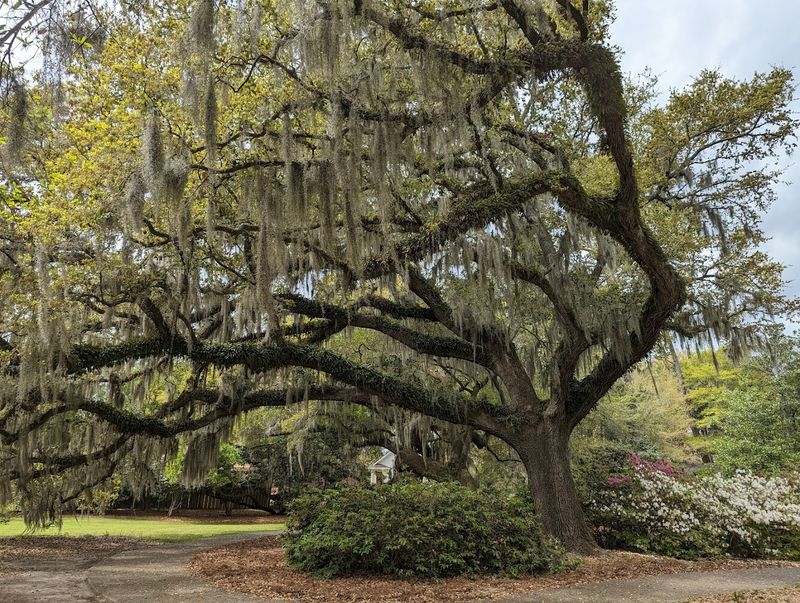
Estimated to be between 465 and 500 years old, this colossal southern live oak stands at the center of the gardens like a quiet king, its enormous branches stretching outward in every direction with an almost theatrical grace.
Measuring over 100 feet in canopy spread, the tree is one of the largest and oldest of its kind in North Carolina. Standing beneath it for the first time tends to stop people mid-sentence.
There is something about the sheer scale of it — the gnarled bark, the Spanish moss, the dappled light filtering through — that makes ordinary words feel too small.
Scientists and arborists have carefully monitored and maintained the tree over the years to ensure its survival. Special support cables help protect its heaviest branches from storm damage, and the surrounding soil is managed to keep its root system healthy.
The Airlie Oak is not just a landmark; it is a living monument to persistence, resilience, and the quiet power of nature doing its thing across the centuries.
A Living Witness to Centuries of History
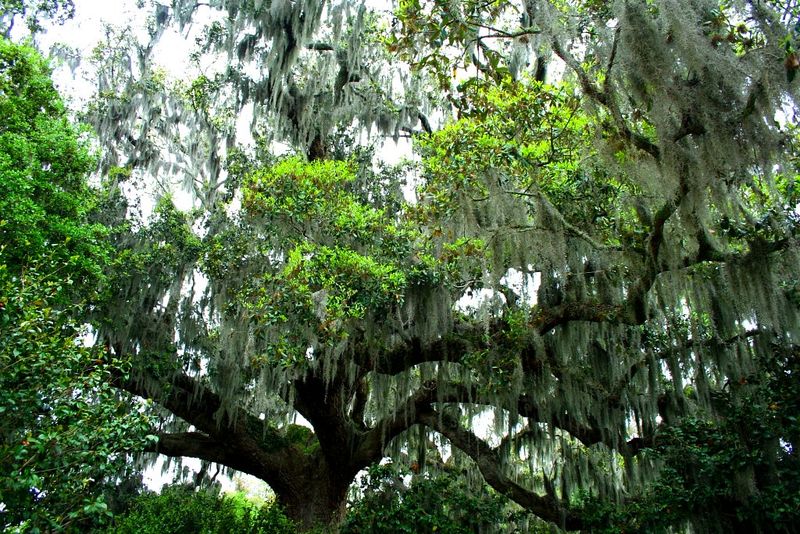
Picture this: the year is 1559. European explorers have barely set foot on the North Carolina coast, and somewhere in what will eventually become Wilmington, a tiny acorn quietly pushes a root into the soft coastal soil.
That acorn grew into the Airlie Oak, and it has been watching the world change ever since.
By the time the Revolutionary War erupted in the 1770s, the tree was already more than 200 years old. It stood through the Civil War, through Reconstruction, through two World Wars, and through every hurricane season the Atlantic could throw at the Carolina coast.
Not once did it fall.
That kind of longevity carries real emotional weight. When you press your hand against the bark of the Airlie Oak, you are touching something that was alive long before the United States existed as a country.
Local historians and naturalists often describe the tree as a living archive — a record of everything that has happened in this corner of the world, written not in ink but in rings of wood. Few experiences in the region compare to that feeling.
Classic Southern Garden Design
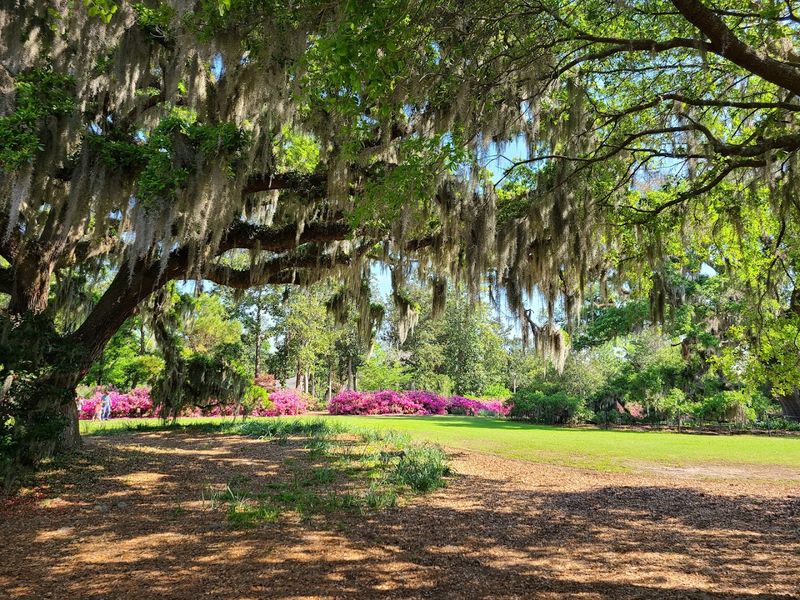
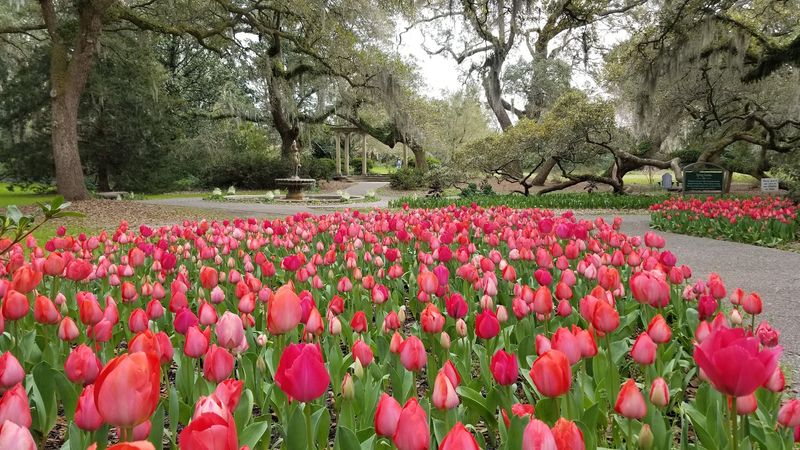
There is a particular kind of beauty that belongs specifically to the American South, and Airlie Gardens captures it almost perfectly. The landscape style here is naturalistic rather than rigid — think sweeping open lawns that flow into shaded woodland walks, with seasonal bursts of color appearing right when you least expect them.
The early 20th century plantings are still very much alive and thriving. Azaleas paint the hillsides in shades of pink, red, and white each spring.
Camellias offer their quiet elegance through winter and early spring. Magnolias fill the air with their unmistakable fragrance, and wisteria drapes itself over trellises and fences like something out of a painting.
What makes the design feel so special is how intentional yet effortless it looks. The garden never feels stiff or overly manicured.
Instead, it invites you to wander, to slow down, and to let the landscape unfold at its own pace. For anyone who appreciates thoughtful garden design, Airlie is a textbook example of how to honor both nature and human artistry at the same time.
It rewards visitors who take their time.
A Hub of Gilded Age Social Life
During the late 1800s and early 1900s, being invited to Airlie was basically the social event of the season. Pembroke Jones, the estate’s original owner, was known for throwing extravagant parties that attracted some of the wealthiest and most influential people in the country.
Think white tablecloths, string quartets, and guests arriving by private railcar.
The Airlie Oak played a starring role in many of these gatherings. Its massive canopy created a natural outdoor ballroom of sorts, offering cool shade and a dramatic backdrop that no amount of money could manufacture.
Guests would gather beneath its branches for dinners, dances, and conversations that probably shaped decisions far beyond the garden walls.
Looking at the peaceful grounds today, it takes a bit of imagination to picture all that glittering social activity. But the bones of that era are still visible in the layout of the paths, the placement of the trees, and the grand sense of scale that defines the property.
The Gilded Age left its fingerprints all over Airlie, and part of the garden’s charm is feeling that history hum quietly beneath the surface of every visit.
Unique Features and Artistic Spaces

Airlie Gardens is not just a place to admire plants — it is also an outdoor gallery of sorts, filled with artistic and architectural surprises that reward curious visitors. One of the most talked-about spots on the property is the Minnie Evans Bottle Chapel, a folk art installation that pays tribute to one of North Carolina’s most celebrated outsider artists.
Minnie Evans worked as a gatekeeper at Airlie Gardens for many years, and during that time she created vivid, dreamlike artwork inspired by her spiritual visions. The chapel built in her honor is decorated with colorful bottles and mosaic elements that catch the light in magical ways.
It feels intimate and otherworldly at the same time, like stumbling into someone’s deeply personal dream.
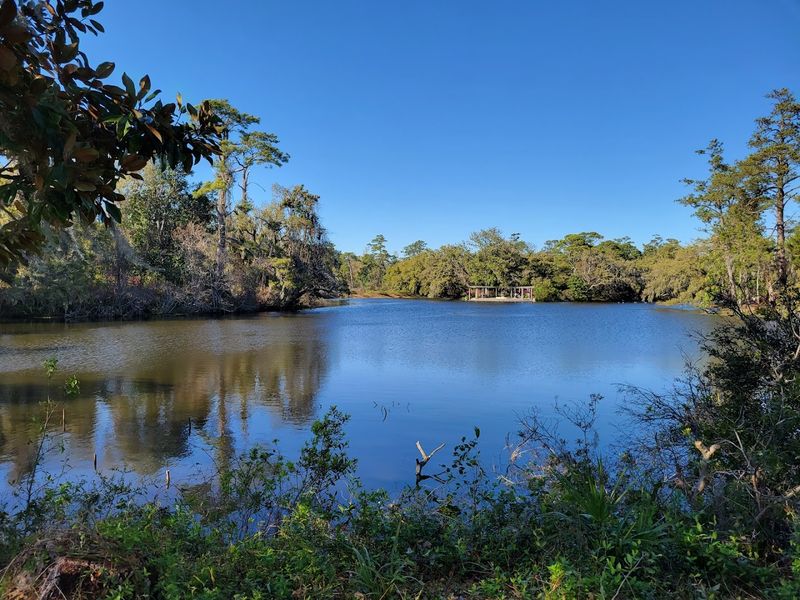
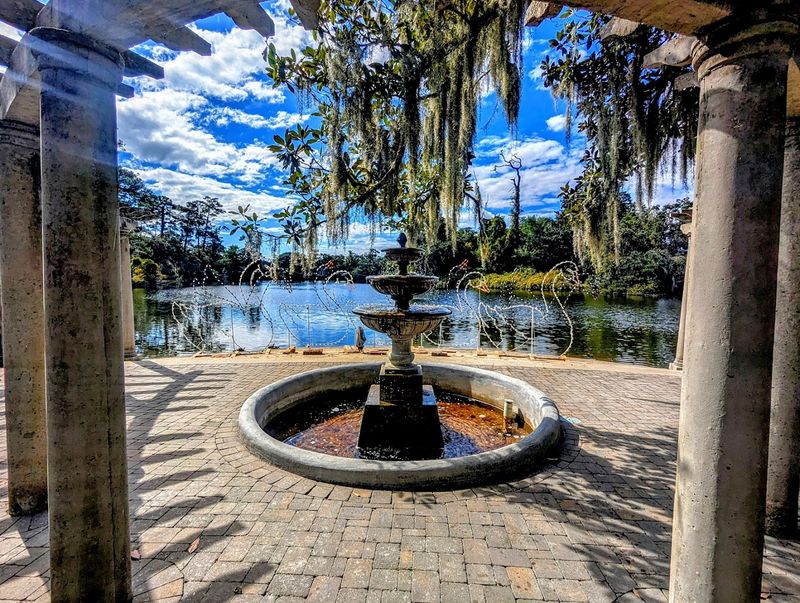
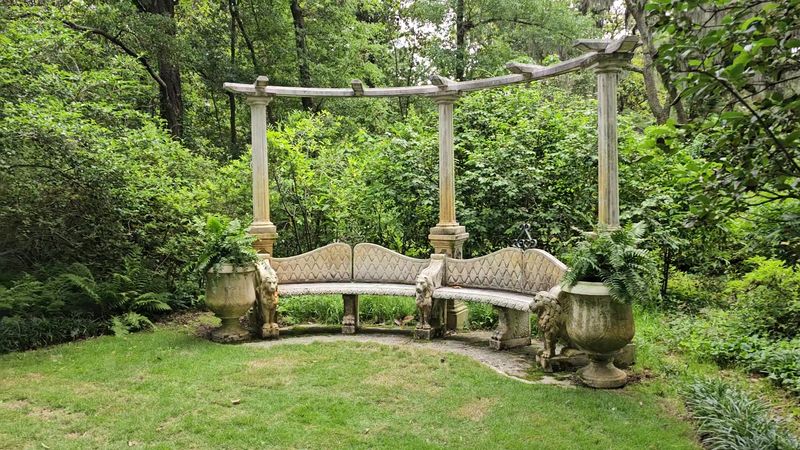
Beyond the chapel, the gardens also feature freshwater lakes that reflect the surrounding trees like living mirrors, scattered sculptures tucked along pathways, and seasonal art exhibits that change throughout the year. Each of these elements adds a layer of discovery to the experience.
You could visit Airlie multiple times and still find something new hiding just around a bend in the path. That sense of surprise is part of what makes this garden so endlessly interesting.
Rich Ecosystem and Wildlife Habitat
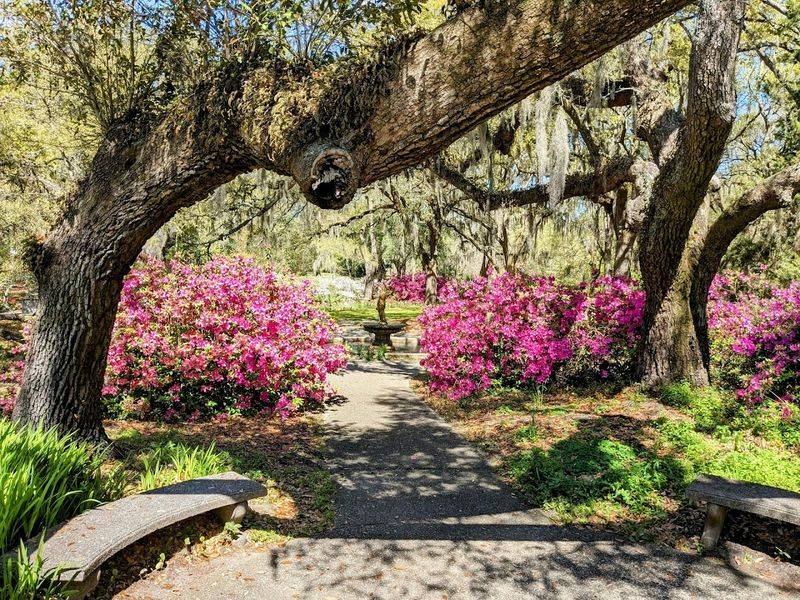
Walk quietly through Airlie Gardens on any given morning and you will quickly realize that humans are not the only ones who love this place. The garden’s mix of live oaks, freshwater lakes, native plantings, and coastal woodland creates a layered habitat that supports an impressive variety of wildlife throughout the year.
Birdwatchers especially love the gardens. Great blue herons stalk the lake edges with patient precision.
Warblers flit through the tree canopy during migration season. Osprey have been spotted circling overhead, and wood ducks occasionally paddle across the still water in pairs.
The Airlie Oak itself provides critical habitat — its massive limbs and deep bark crevices shelter cavity-nesting birds, insects, and small mammals.
Native pollinators thrive here too. The seasonal blooms attract butterflies, bees, and other insects that are essential to the health of the broader coastal ecosystem.
Garden staff work to maintain and expand native plantings specifically because of their ecological value. For visitors who care about conservation, Airlie Gardens offers a hopeful example of how a cultivated landscape can also function as a genuine refuge for biodiversity.
Nature and beauty, it turns out, make excellent neighbors.
Seasonal Highlights and Events
Timing your visit to Airlie Gardens can make a big difference in what you experience. Spring is arguably the most spectacular season, when thousands of azalea plants burst into bloom across the grounds in a riot of pink, red, lavender, and white.
This peak flowering period coincides with the North Carolina Azalea Festival, one of Wilmington’s most beloved annual events, and the gardens become a true showstopper during those weeks.
As the seasons shift, the garden transforms in quieter but equally lovely ways. Summer brings lush green canopies and the hum of insects.
Fall softens the light and cools the air, making long walks genuinely refreshing. Winter, surprisingly, has its own magic — camellias bloom in the cooler months, and the bare branches of the oaks reveal their architectural beauty in ways that leafy seasons conceal.
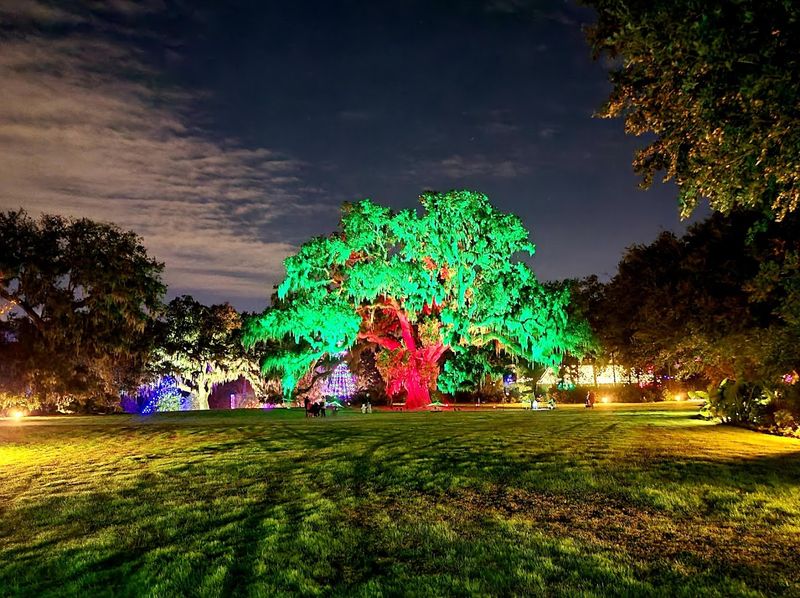
The holiday season brings another beloved tradition: Enchanted Airlie, a popular nighttime light display that wraps trees and pathways in thousands of glowing lights. Families line up for this event every year, and it has become one of the most anticipated evenings on Wilmington’s social calendar.
No matter when you visit, the garden always has something worth seeing.
Resilience Through Storms and Time
Living on the North Carolina coast means facing the full force of Atlantic hurricane season year after year, and Airlie Gardens has had its share of close calls. Major storms have toppled trees, flooded paths, and battered the landscape over the decades, leaving behind real damage that required serious restoration work each time.
Yet the Airlie Oak has survived every single one of them. That is not an accident.
Arborists have installed a careful system of support cables in the tree’s upper branches to reduce the risk of major limb failure during high winds. The soil around its root zone is regularly tested and treated to keep the tree as healthy as possible.
It is a level of care usually reserved for museum artifacts — which, in a way, is exactly what this tree is.
The gardens themselves have also shown remarkable resilience. After Hurricane Florence caused significant flooding and damage in 2018, staff and volunteers worked tirelessly to restore the grounds, replant lost specimens, and reopen to the public.
That dedication speaks to how deeply this place is woven into the identity of the Wilmington community. Some things are simply worth fighting to preserve, and Airlie Gardens is clearly one of them.
Visitor Information and Tips
Planning a trip to Airlie Gardens is pretty straightforward, and a little preparation goes a long way toward making the most of your visit. The gardens are located at 300 Airlie Rd, Wilmington, NC 28403, just a few minutes from the coast and easily accessible from downtown Wilmington.
Admission fees are reasonable, and the gardens are open year-round with seasonal hours that vary, so checking the official website before you go is always a smart move.
Wear comfortable walking shoes — the paths are scenic but cover real ground, and you will want to explore without worrying about your feet. Plan to spend at least two to three hours if you want to see the highlights, including the Airlie Oak, the Minnie Evans Bottle Chapel, and the lakeside areas.
Mornings on weekdays tend to be quieter and cooler, which makes for a much more peaceful experience than weekend afternoons.
Spring is the undisputed peak season, especially during the Azalea Festival, but every season brings its own rewards. Bring a camera, because the light filtering through the live oaks is genuinely photogenic at almost any time of day.
Dogs on leashes are welcome on the grounds, making it a great outing for the whole family, four-legged members included.