Three waterfalls, towering old-growth trees, and hardly any crowds—this peaceful Pennsylvania park feels like a secret waiting to be discovered.
Tucked into the rolling hills of Susquehanna County, Salt Springs State Park packs an unforgettable amount of beauty into one surprisingly easy visit.
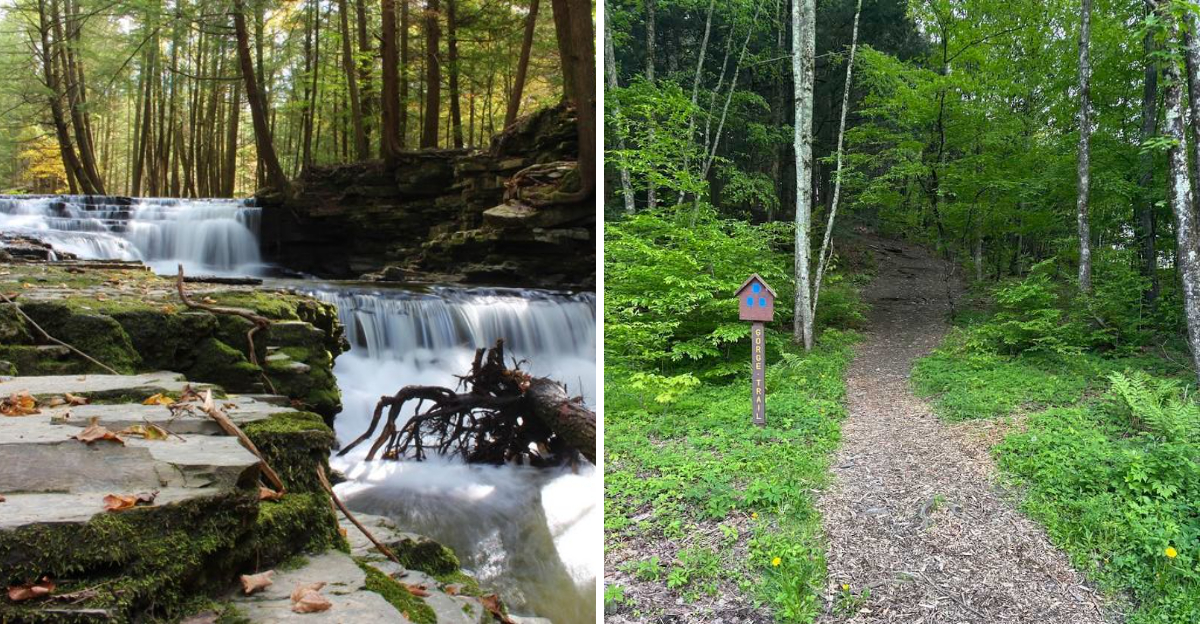
A short walk leads past rushing water, moss-covered rocks, and three charming waterfalls that tumble through a shady gorge. Every turn brings another photo-worthy view, while the cool forest makes even a warm summer afternoon feel refreshing.
The park is also home to centuries-old eastern hemlocks, a bubbling natural salt spring, and quiet trails where birdsong often replaces the sound of traffic. It feels wonderfully removed from busy tourist destinations without requiring a difficult hike to enjoy its biggest sights.
If you’re searching for a scenic road trip stop, a peaceful afternoon outdoors, or a place that feels wonderfully untouched, Salt Springs State Park checks every box.
One visit is all it takes to see why this hidden treasure leaves such a lasting impression.
A Hidden State Park Few Pennsylvania Travelers Know About
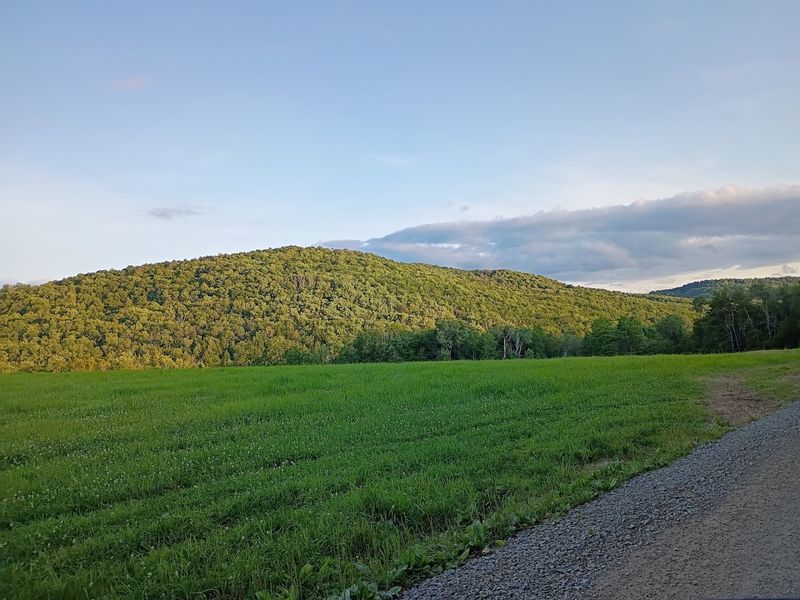
Most people have never heard of Salt Springs State Park, and that’s exactly what makes it special. Located about seven miles north of Montrose in Susquehanna County, this 405-acre natural area stays refreshingly quiet even during peak season.
Unlike crowded tourist spots, you’ll often have the trails and waterfalls practically to yourself.
The park’s reputation for peace and tranquility draws nature lovers who prefer solitude over selfie lines. Towering old-growth forests create a cathedral-like atmosphere that feels worlds away from everyday life.
The air smells of pine and fresh water, while bird songs replace traffic noise.
What really sets Salt Springs apart is the rare combination of three waterfalls accessible during one easy visit. Most parks make you choose between multiple locations or commit to exhausting hikes.
Here, everything you came to see awaits along a manageable path through stunning scenery. It’s the perfect destination for families, photographers, or anyone seeking authentic Pennsylvania wilderness without the hassle.
Three Waterfalls Along Fall Brook
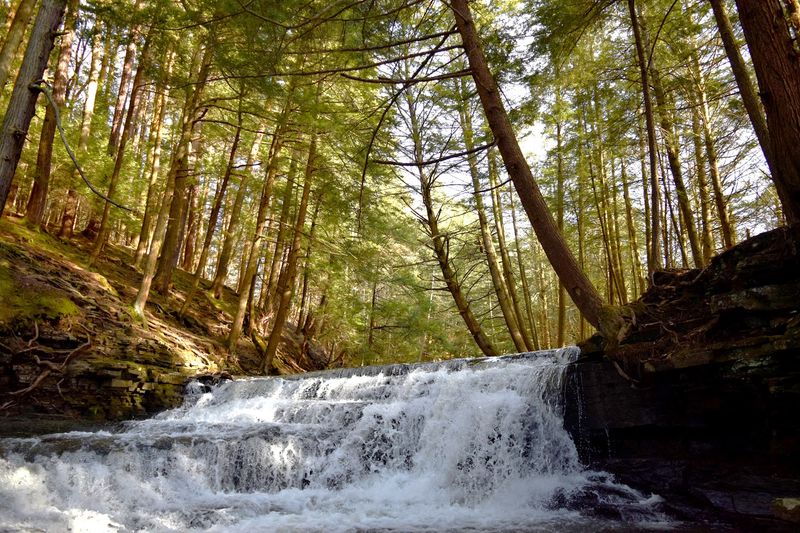
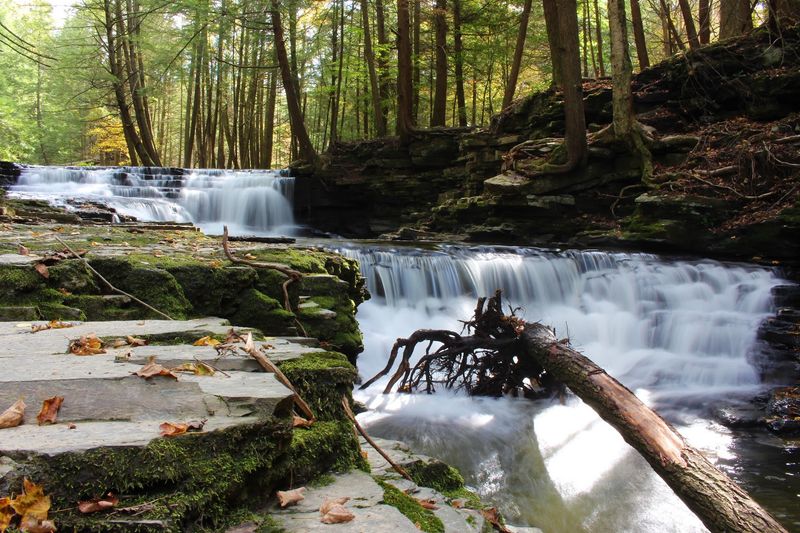
Fall Brook Gorge showcases the park’s crown jewel: three distinct waterfalls tumbling through ancient rock formations. Each waterfall stands roughly 10 feet tall, creating a spectacular stepped cascade that photographers dream about.
The water flows year-round, though spring brings the most dramatic displays after snowmelt.
Walking from one waterfall to the next feels like discovering secret treasures in the woods. The sound of rushing water grows louder as you approach each cascade, building anticipation.
Rocky ledges frame each waterfall differently, giving every view its own personality and charm.
What makes this sequence so rewarding is how close together everything sits. You don’t need to hike for miles or backtrack constantly to see all three.
The short walk between waterfalls means less time on your feet and more time enjoying the views. Families with younger children especially appreciate that everyone can experience all three falls without exhaustion or complaints.
This natural arrangement creates one of Pennsylvania’s most satisfying waterfall adventures in the smallest footprint.
Walk Through One of Pennsylvania’s Last Old-Growth Hemlock Forests
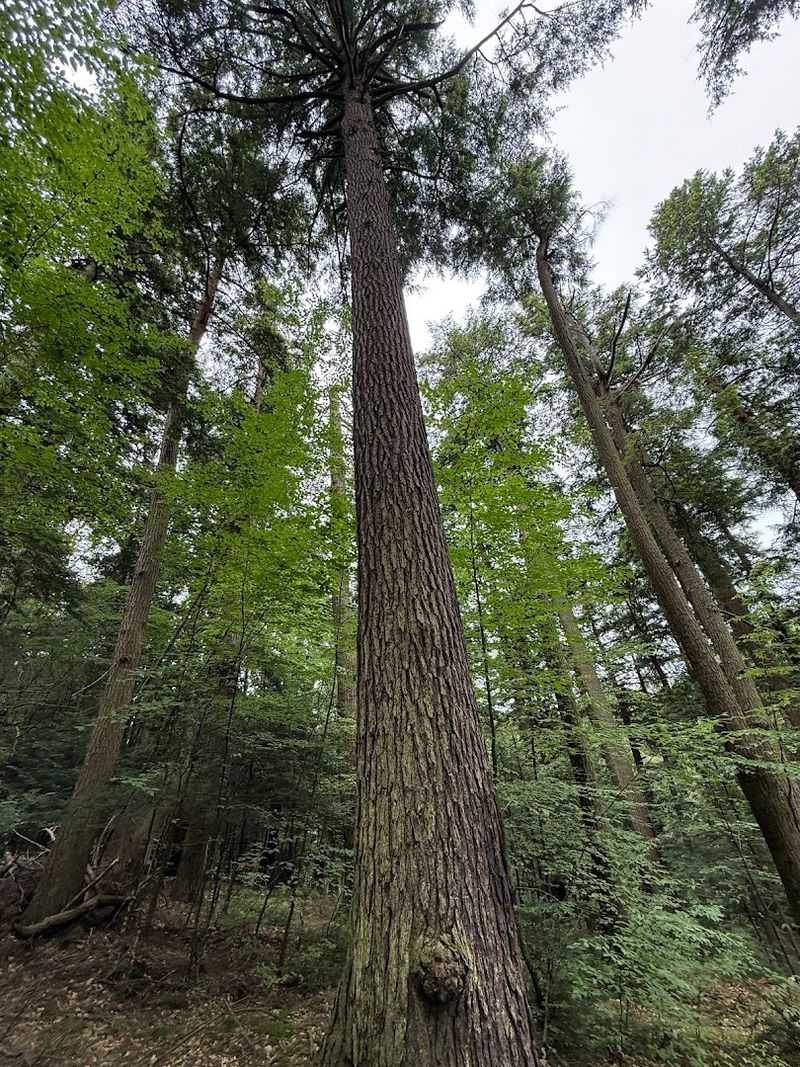
Step into a living time capsule where eastern hemlocks have stood watch for over three centuries. These massive trees tower overhead, their thick trunks and sprawling branches creating dense shade even on the brightest summer days.
Many specimens here survived because the steep gorge made logging equipment nearly impossible to operate.
The difference between old-growth and younger forests becomes obvious immediately. Mature hemlocks create a cool microclimate that feels 10 degrees cooler than surrounding areas.
The forest floor stays relatively clear, allowing you to see deep into the woods and appreciate the trees’ true scale.
Walking among 300-year-old giants connects you to Pennsylvania’s natural history in profound ways. These trees were saplings when Benjamin Franklin was still alive.
Their preservation offers modern visitors something increasingly rare: authentic wilderness that looks much like it did centuries ago. The protected status ensures future generations will experience the same awe-inspiring forest you’re enjoying today, making every visit feel meaningful and special.
The Easy Trails That Lead to the Best Views
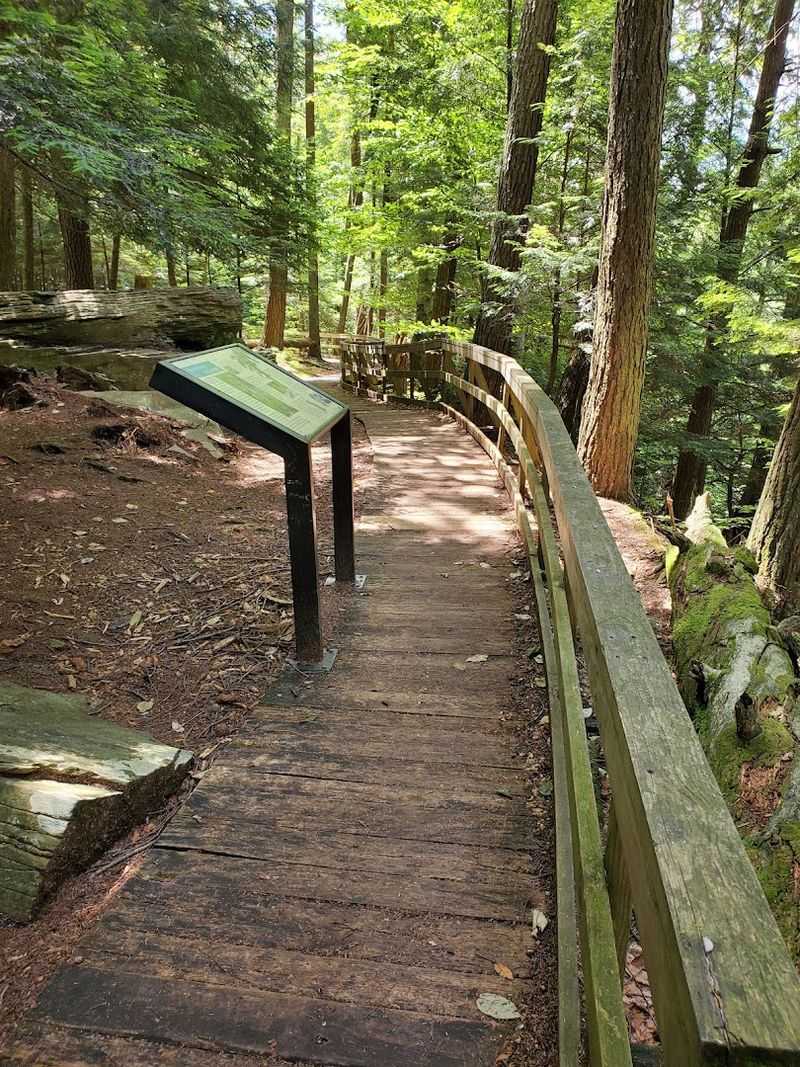
Nobody wants to miss the good stuff because trails feel too challenging. Salt Springs designed its paths with accessibility in mind, featuring the Hemlock Trail and Gorge Trail as main routes.
Boardwalk sections protect fragile areas while providing stable footing over potentially muddy spots.
The observation platform offers spectacular gorge views without requiring rock-climbing skills. Sturdy railings let you lean safely while photographing waterfalls and enjoying the scenery below.
Scenic overlooks appear at strategic intervals, rewarding walkers with fresh perspectives on the falls and forest.
Most visitors complete the highlight loop in about an hour of relaxed walking. The trails never demand serious elevation changes or tricky navigation.
This thoughtful design means grandparents, young children, and everyone in between can enjoy the park’s best features together.
You won’t need expensive gear or athletic abilities to experience everything Salt Springs offers. Comfortable walking shoes and reasonable fitness levels suffice for the main attractions.
The park proves that spectacular natural beauty doesn’t require grueling effort to appreciate fully.
Discover the Park’s Unusual Bubbling Salt Spring
Before waterfalls drew visitors, a curious natural phenomenon gave this place its name. The bubbling salt spring sits near the park entrance, where methane gas rising through underground deposits creates constant movement in the water.
Watching bubbles percolate to the surface feels almost magical, like nature performing a chemistry experiment.
During the mid-1800s, entrepreneurs saw potential profit in these mineral-rich waters. They attempted extracting both salt and oil from the spring through various mechanical operations.
Historical records show considerable investment went into equipment and infrastructure for commercial production.
Those ambitious extraction efforts ultimately failed, leaving behind only foundation remnants and fascinating stories. The spring proved more valuable as a natural curiosity than a commercial resource.
Modern visitors benefit from those past failures, enjoying the bubbling spring in its natural state without industrial intrusion.
Finding the spring takes just moments from the parking area, making it an easy addition to any visit. The unique geological process creating those bubbles continues exactly as it has for thousands of years.
A Park Filled With History
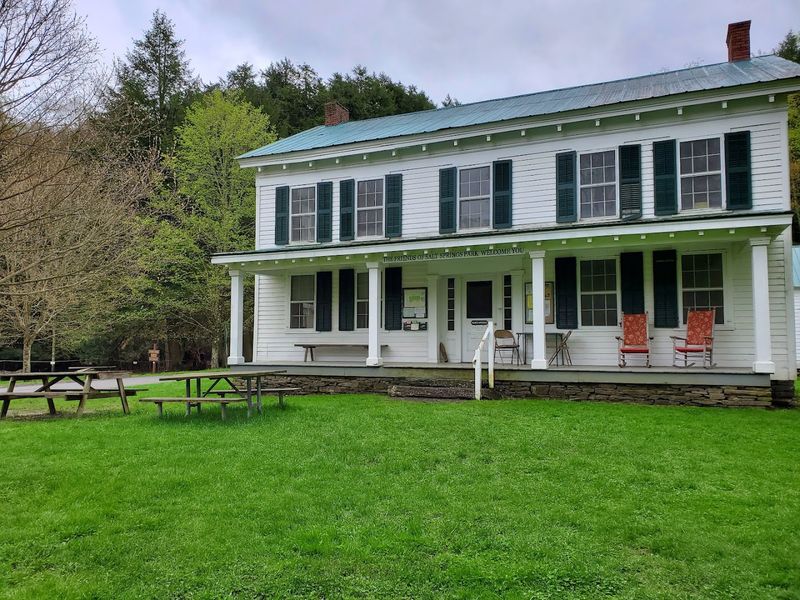
Long before Pennsylvania acquired this land, the Wheaton family recognized its potential as a destination. They built structures, maintained grounds, and welcomed visitors who traveled considerable distances to experience the waterfalls and spring.
Their preserved buildings still stand today, offering tangible connections to 19th-century life.
The most intriguing historical remnant sits near the first waterfall: ruins of an 1858 woolen mill. Entrepreneurs harnessed the waterfall’s power to run machinery for processing wool into fabric.
Stone foundations and scattered equipment pieces tell stories of ambitious industrial dreams meeting wilderness realities.
The mill’s location demonstrates how natural resources shaped Pennsylvania’s early economy. Waterpower meant everything before electricity, determining where businesses could operate successfully.
When the mill eventually closed, nature began reclaiming the site, creating the peaceful scene you see now.
Exploring these historical layers adds depth to beautiful scenery. You’re not just viewing pretty waterfalls; you’re standing where families lived, workers labored, and entrepreneurs gambled on wilderness opportunities.
History and nature intertwine here beautifully.
Wildlife, Wildflowers, and Quiet Nature Watching
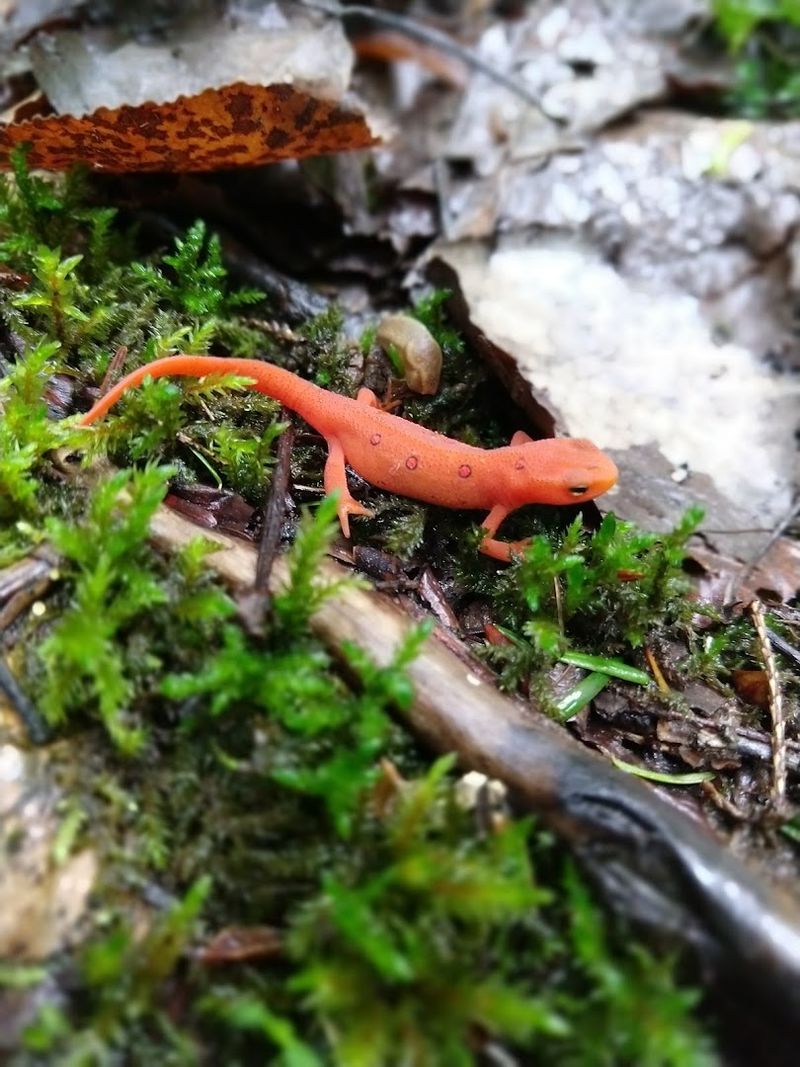
The gorge’s unique environment supports remarkable biodiversity that nature enthusiasts love discovering. Cool, moist conditions created by flowing water and dense tree canopy allow species that struggle elsewhere to thrive here.
Moss blankets rocks in emerald carpets, while ferns unfurl along the stream banks in prehistoric abundance.
Salamanders thrive in this habitat, hiding beneath logs and rocks near water sources. Patient observers spot colorful butterflies dancing through sunlit clearings during warmer months.
Birdwatchers bring binoculars hoping to identify species attracted to the forest’s mature ecosystem and water features.
The park’s quiet atmosphere makes wildlife observation actually productive rather than frustrating. Animals tolerate human presence better when crowds stay small and noise levels remain low.
Morning visits increase your chances of spotting shy creatures before daily activity intensifies.
Understanding the gorge’s microclimate helps explain why such diversity exists in relatively small spaces. Temperature, humidity, and light conditions differ dramatically from surrounding areas.
This creates ecological niches supporting plants and animals that need specific environments to survive and reproduce successfully.
Why Every Season Feels Different Here
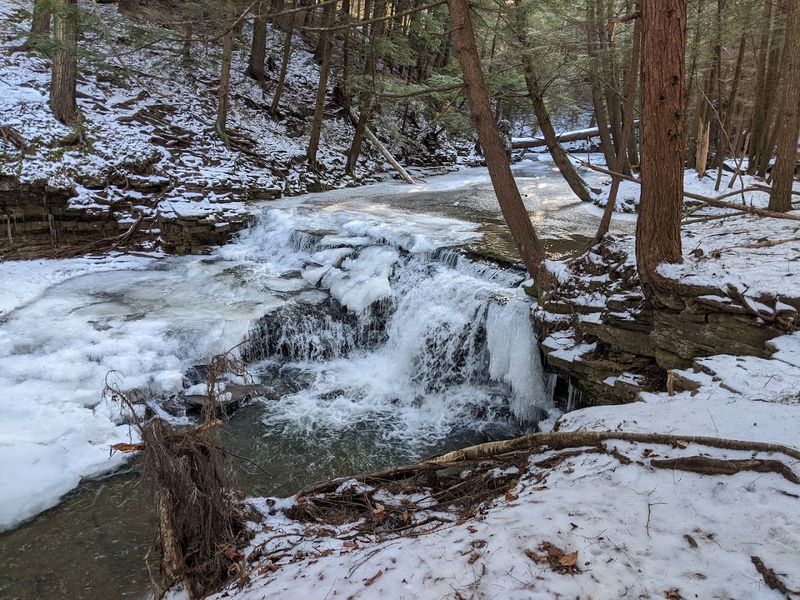
Spring transforms the park into a rushing water wonderland. Snowmelt swells Fall Brook to impressive volumes, making waterfalls roar with power and creating dramatic photo opportunities.
Wildflowers carpet the forest floor, and returning birds fill the air with territorial songs announcing their arrival.
Summer brings lush greenery and welcome relief from heat. The gorge’s natural air conditioning makes it a popular escape during hot spells.
Dense hemlock canopy blocks intense sunlight, creating comfortable conditions for hiking even on scorching days.
Autumn explodes with color as deciduous trees surrounding the hemlocks turn brilliant shades. The contrast between evergreen hemlocks and golden maples creates stunning visual combinations.
Cooler temperatures mean fewer insects and perfect hiking weather for covering more ground comfortably.
Winter wraps the park in quiet beauty, though trails become trickier with ice and snow. Frozen spray creates magical ice formations around waterfalls, while snow-covered hemlocks look like scenes from fairy tales.
Each season offers distinct experiences worth planning separate visits to fully appreciate nature’s changing moods throughout the year.
More Than a Day Trip
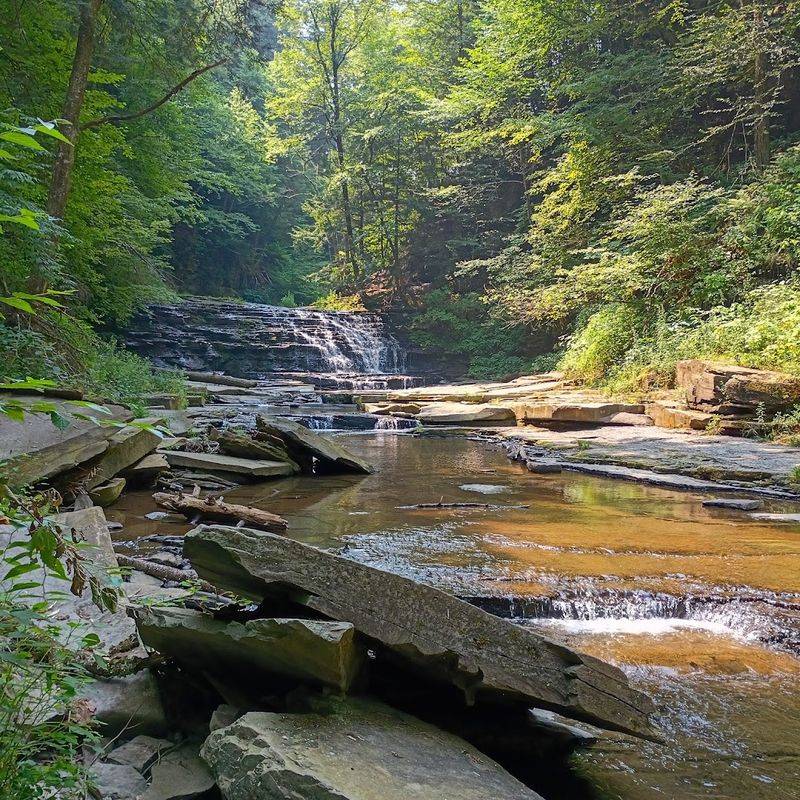
While many visitors complete satisfying half-day trips, the park accommodates longer stays through various options. Primitive camping lets adventurous souls sleep under the stars surrounded by ancient forest sounds.
Designated camping areas provide necessary facilities while maintaining the wilderness atmosphere that makes Salt Springs special.
The Friends of Salt Springs Park organization operates charming camping cottages for those wanting overnight stays with more comfort. These rustic structures provide shelter without sacrificing the immersive nature experience.
Waking up to bird songs and waterfall sounds creates memories that quick visits can’t match.
Photography enthusiasts particularly appreciate extended stays, capturing different lighting conditions throughout the day. Dawn and dusk offer magical golden hours when angled sunlight transforms ordinary scenes into extraordinary images.
Picnic facilities encourage leisurely lunches surrounded by natural beauty rather than rushing through your visit.
Birdwatchers benefit from spending multiple hours observing changing activity patterns. The nearby town of Montrose provides additional dining and lodging options, while the broader Endless Mountains region offers numerous attractions worth exploring during multi-day adventures in northeastern Pennsylvania’s beautiful countryside.
What to Know Before You Go
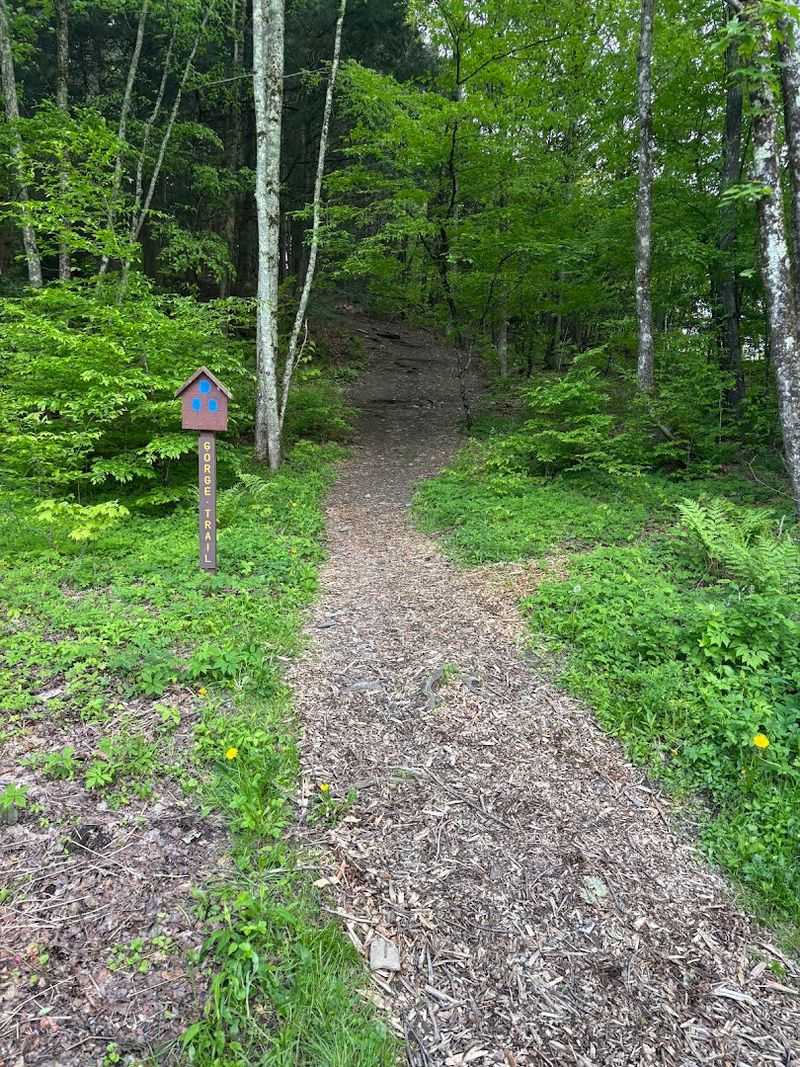
Planning ahead ensures your visit goes smoothly and safely. Visit during spring or after heavy rains when waterfalls flow at peak volumes, creating the most impressive displays.
Wear sturdy shoes with good tread because trails get wet and rocky, especially near the falls where spray creates slippery conditions.
Always respect barriers near gorge overlooks, as edges can be unstable and falls could prove fatal. Bring water since no facilities exist along trails, and pack insect repellent during warmer months when mosquitoes and ticks become active.
Cell service remains limited or nonexistent throughout much of the park, so download maps beforehand.
Parking near the picnic area provides easy access to main attractions. Restrooms operate seasonally, so plan accordingly during off-season visits.
Budget 2-3 hours for comfortably exploring waterfalls and trails without feeling rushed through the highlights.
Weekday visits offer the quietest experiences with minimal crowds. Consider combining your waterfall adventure with exploring Montrose’s charming downtown or discovering other Endless Mountains attractions.
This transforms a single park visit into a memorable northeastern Pennsylvania getaway worth every minute.