
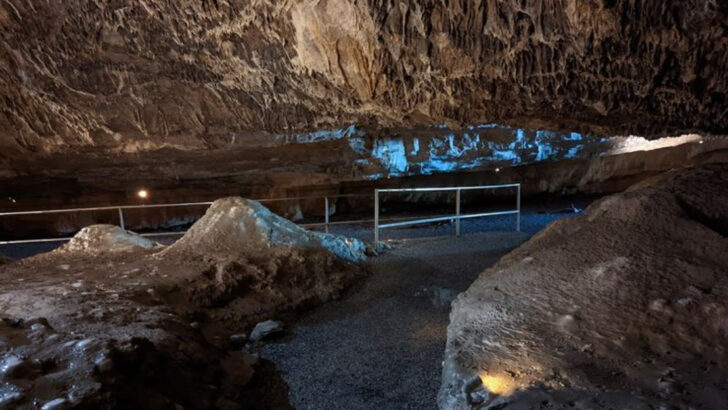
Hidden beneath the rolling hills of central Pennsylvania, Indian Echo Caverns in Hummelstown holds secrets that took hundreds of millions of years to form.
This remarkable underground world stretches through ancient limestone, offering visitors a rare glimpse into geological history, fascinating legends, and a living ecosystem thriving in total darkness.
From a hermit who called the cave home to a mysterious buried treasure, the stories layered within these walls are just as captivating as the stunning rock formations themselves.
Whether you are a curious explorer, a history lover, or a family looking for an unforgettable adventure, Indian Echo Caverns delivers something truly special.
A Natural Wonder Carved from Ancient Limestone
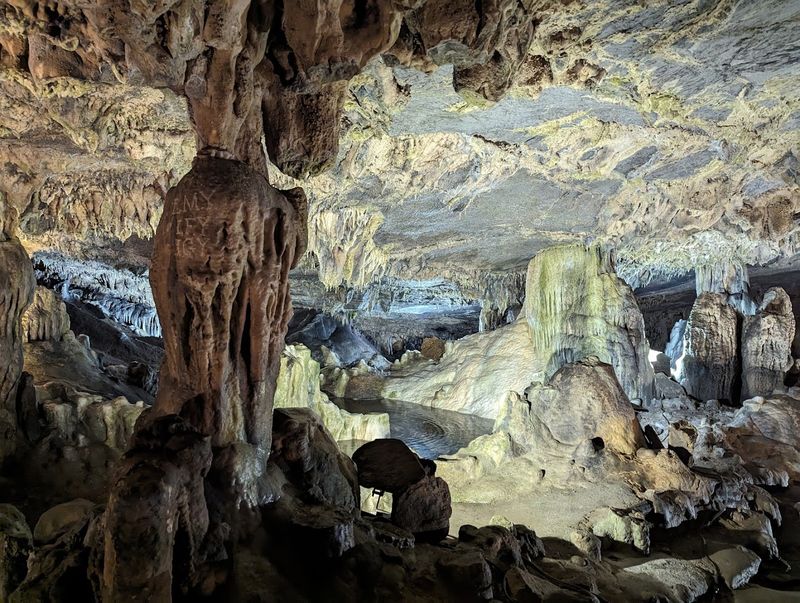
Few places on Earth let you stand inside rock that is older than the dinosaurs. Indian Echo Caverns were formed as water slowly dissolved layers of Beekmantown limestone estimated to be more than 440 million years old, carving out chambers and passageways one molecule at a time.
The process began long before any creature walked the surface above.
Groundwater seeped through tiny natural cracks in the limestone, gradually widening them over millions of years into the dramatic corridors visitors walk through today. The chemistry behind this is surprisingly simple — slightly acidic rainwater dissolves calcite in the rock, eating away at it grain by grain until hollow spaces appear.
Over vast stretches of time, small fissures became grand rooms.
What makes this geological story so gripping is its sheer patience. No explosion, no earthquake — just water doing quiet, persistent work across an almost unimaginable timeline.
The sculpted rock walls, shadowy corridors, and natural rooms hidden beneath the Pennsylvania countryside are living proof that some of the planet’s most dramatic landscapes are built slowly, invisibly, and underground.
Nestled Along the Winding Swatara Creek
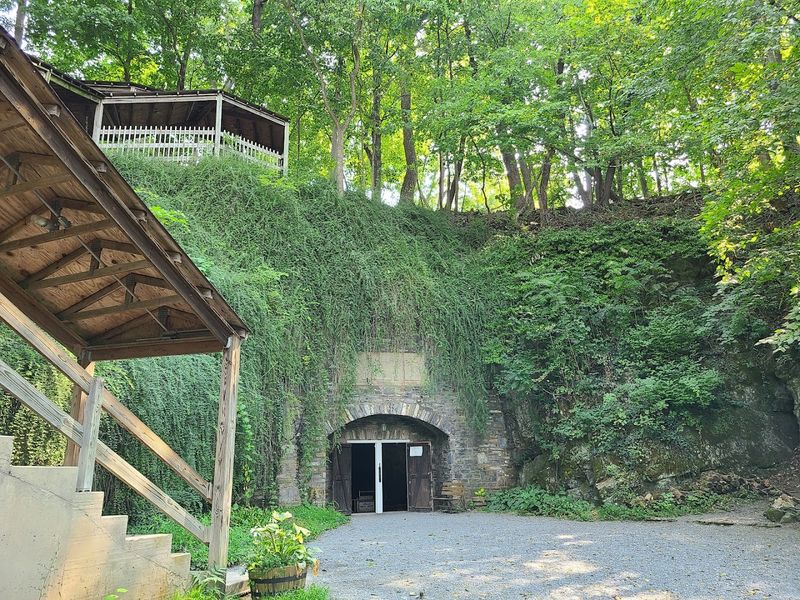
Geography played a starring role in shaping Indian Echo Caverns, and the creek running nearby deserves much of the credit. The caverns sit at the base of a steep bluff along Swatara Creek, just outside Hummelstown and a short drive from Hershey.
This quiet valley setting gives the site a peaceful, almost secretive atmosphere before visitors even step underground.
The relationship between the creek and the cave is more than scenic — it is geological. Groundwater filtering down through the hillside above, combined with centuries of erosion from the creek cutting through the valley, helped shape the underground passages from the outside in.
The waterway essentially acted as a natural drain, pulling water through the rock and accelerating the cave’s formation.
Arriving at the cavern entrance, you descend into this wooded valley and approach a rock face that looks almost ordinary from the outside. But stepping through that entrance is like crossing into another world entirely.
The contrast between the sunlit creek below and the cool, shadowy chambers waiting inside makes the experience feel both grounding and genuinely surprising — a reminder that remarkable things often hide in plain sight.
The Legendary Indian Ballroom Chamber
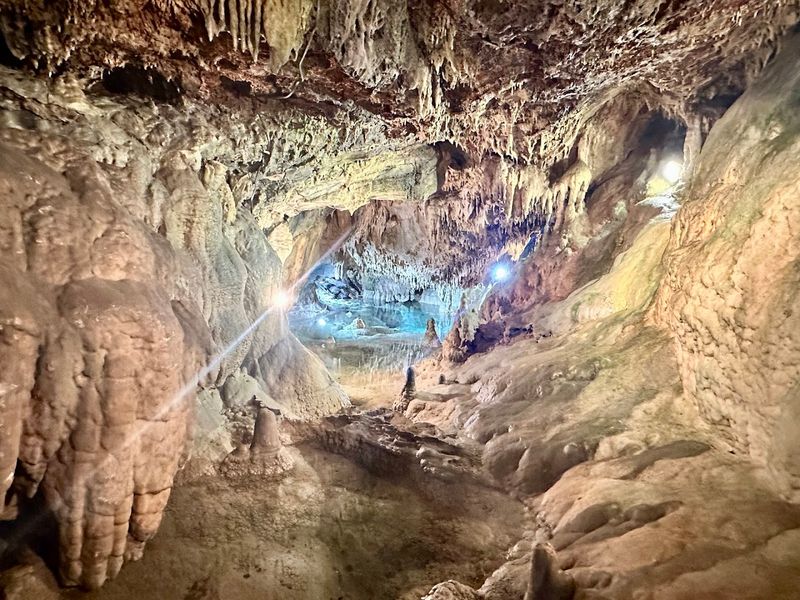
Imagine stepping into a room so large that your voice bounces off the walls before you even finish a sentence. That is the experience waiting inside the Indian Ballroom, one of the most impressive natural chambers found anywhere in Pennsylvania.
Two major underground passages intersect at right angles here, creating a broad open space that immediately shows visitors the true scale of the cavern system.
The name gives the space a certain grandeur, and it earns it. Standing at the crossroads of those two ancient corridors, you can almost feel the weight of time pressing down from the limestone ceiling above.
The room’s size makes it easy to imagine how flowing water once moved freely through these passages, carving wide arcs into the rock over countless centuries.
Guided tours typically highlight the Indian Ballroom as one of the most memorable stops along the route. It offers a chance to pause, look around, and really absorb how something so vast could exist entirely underground without anyone on the surface ever suspecting it was there.
For many visitors, especially younger ones seeing a cave for the first time, this chamber is the moment the whole experience clicks into something unforgettable.
Deep Historical Roots Beneath the Surface
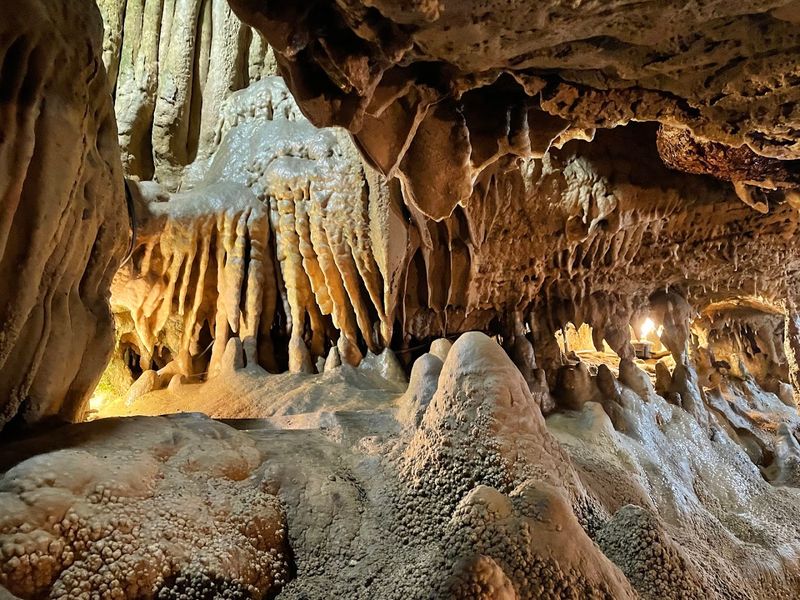
Long before tour groups walked its lit pathways, Indian Echo Caverns served as a practical resource for the people who lived in this region centuries ago. Archaeological evidence and historical accounts suggest that Susquehannock people used the cave’s natural openings for shelter and storage, taking advantage of the stable temperatures and protected environment the underground provided.
The cave’s walls still carry marks from early European settlers who explored the chambers and left their names carved into the stone. These inscriptions, some dating back hundreds of years, are a reminder that curiosity about underground spaces is deeply human.
People have always been drawn to what lies beneath the surface, whether for practical survival or sheer wonder.
Walking through the caverns today, you are essentially retracing footsteps that stretch back across multiple centuries and cultures. That layered history — Indigenous use, colonial exploration, and eventual public tourism — gives the site a richness that goes well beyond its geology.
The cave is not just a product of natural forces; it is also a quiet archive of human experience, preserved in stone and shadow in a way that no museum exhibit could fully replicate.
Home of the Pennsylvania Hermit
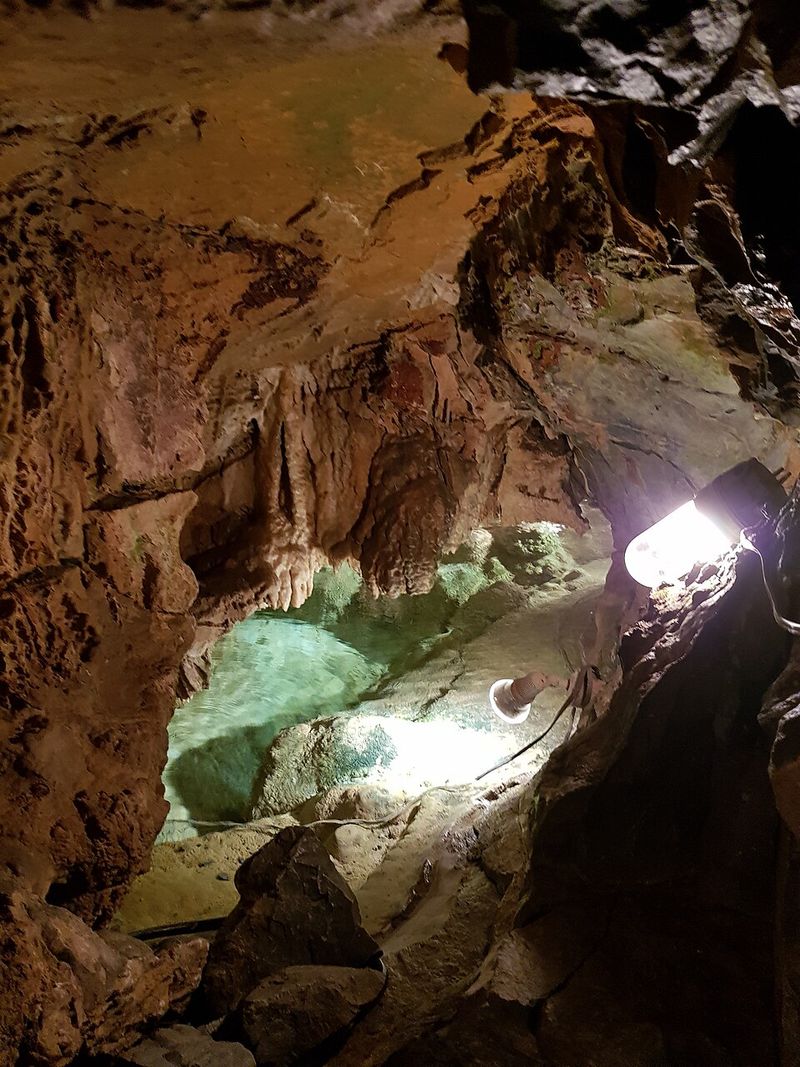
Of all the characters connected to Indian Echo Caverns, none is more fascinating than William “Amos” Wilson — a man history remembers simply as the Pennsylvania Hermit. Starting in 1802, Wilson retreated into the cave following a devastating personal tragedy, choosing isolation underground over life in the world above.
He would remain there for nearly two decades.
Wilson was not simply hiding. During his years inside the cavern, he wrote philosophical reflections and meditations, turning the cold stone walls of the cave into a kind of private monastery.
He survived largely on food brought by sympathetic locals from nearby communities, and his unusual lifestyle became something of a regional legend during his lifetime.
He lived in the cave until 1821, when he finally emerged — frail, aged, but still thoughtful. His story raises questions that still feel relevant today: How much solitude can a person endure?
What drives someone to completely withdraw from society? Wilson’s nearly two-decade underground residence transformed the caverns from a geological curiosity into a place with genuine human drama at its core, adding an emotional layer to every tour that no amount of impressive rock formations could match on their own.
Open to the Public Since 1929
By the time Indian Echo Caverns officially opened to the public in 1929, locals had been exploring its chambers informally for generations. But that year marked a turning point — developers recognized the cave’s commercial potential and began the work of making it accessible and safe for paying visitors.
Early improvements included electric lighting, wooden railings, and cleared walkways through the underground passages.
Opening a cave to tourism in the late 1920s was no small undertaking. Workers had to carefully install infrastructure without damaging the formations that made the cave worth visiting in the first place.
That balance between accessibility and preservation has remained a guiding principle for the site ever since, shaping how tours are designed and how visitors are guided through the chambers.
Over the following decades, Indian Echo Caverns grew into a popular regional attraction, drawing families from across Pennsylvania and beyond. Its location near Hershey made it a natural add-on for visitors already exploring the area.
Today, nearly a century after those first official tours, the caverns continue welcoming guests with the same sense of wonder that drew curious explorers here long before any ticket booth existed — proof that some attractions age remarkably well.
A Living Cave Still Actively Growing
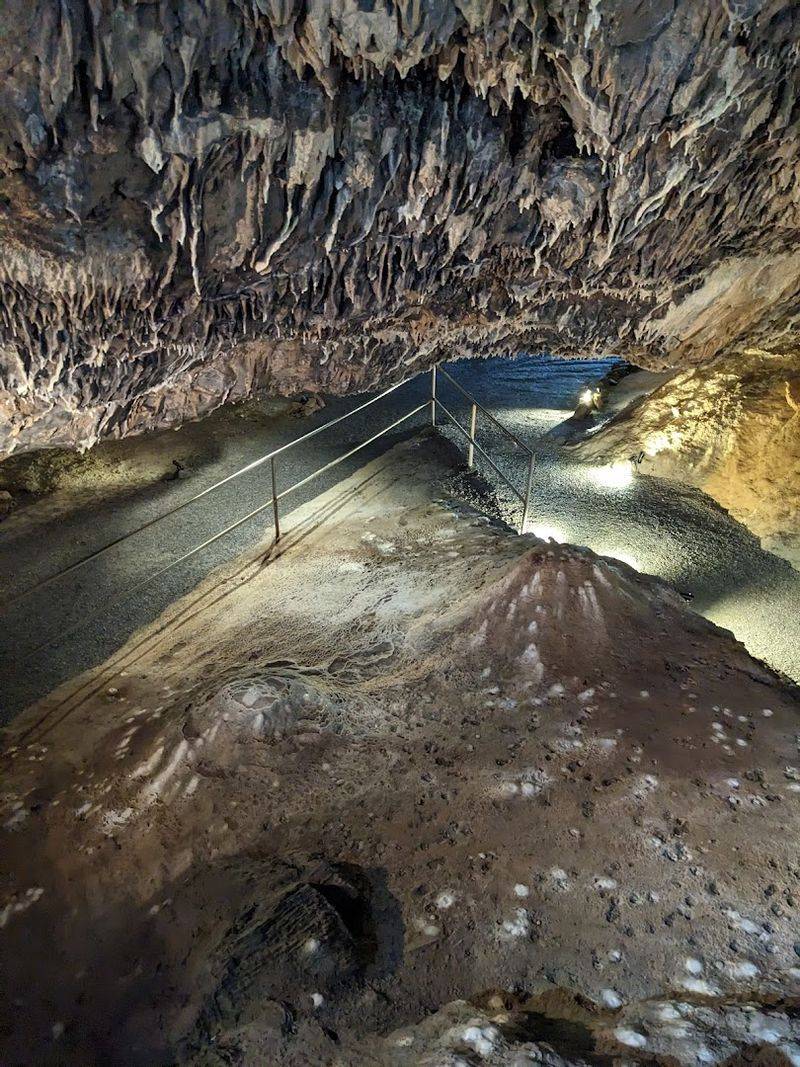
Here is something that surprises most first-time cave visitors: the formations you see are not finished. Indian Echo Caverns is classified as a living cave, which means geological change is still happening right now, just at a pace so slow that no single person will ever witness it in real time.
Mineral-rich water continues dripping through the limestone above, depositing thin layers of calcite with every drop.
Over thousands of years, those microscopic deposits build into the features that make caves visually spectacular — flowstone sheets that coat entire walls, mineral curtains that hang like frozen drapes, and delicate formations that took longer to grow than human civilization has existed. The patience required by this process is almost impossible to comprehend.
Touching formations is strictly off-limits during tours, and now you know why. The natural oils from human skin can disrupt the delicate mineral chemistry and permanently stain or damage formations that took millennia to develop.
Protecting what visitors come to admire is not just good manners — it is a genuine act of preservation for something irreplaceable. Knowing the cave is still actively evolving makes standing inside it feel less like visiting a museum and more like catching nature mid-sentence.
Wildlife and the Underground Ecosystem
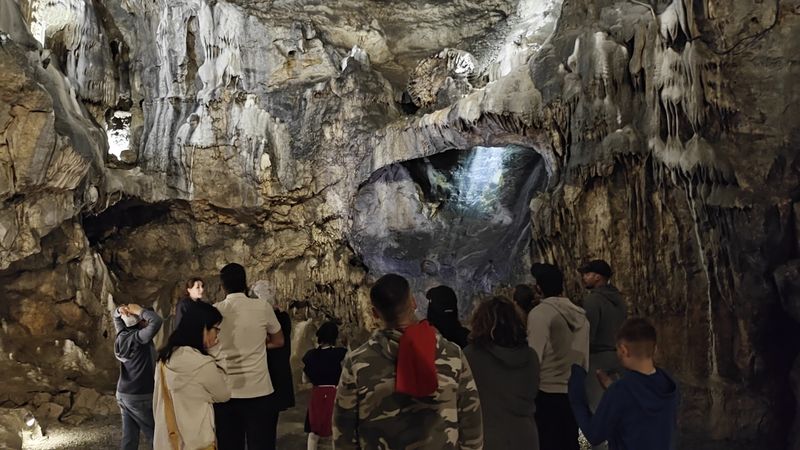
The darkness inside Indian Echo Caverns is not empty. A surprisingly active ecosystem thrives in these underground chambers, built around animals and organisms that have adapted over thousands of years to life without sunlight.
Bats are among the most well-known cave residents, using the cool, sheltered spaces for roosting and hibernation during colder months.
Raccoons occasionally venture into the cave’s entrance areas, taking advantage of the protected shelter the rock provides. But the most remarkable inhabitants are the ones you are least likely to notice — specialized insects, cave-adapted invertebrates, and microorganisms that spend their entire lives in permanent darkness.
These creatures have evolved unique traits, including reduced or absent eyes and heightened sensitivity to vibration and chemical signals in the water.
The cave ecosystem is delicate and surprisingly interconnected. Bat droppings, called guano, serve as a primary food source for many cave-dwelling insects and fungi, which in turn support other organisms further up the underground food chain.
Disrupting any part of this system — through pollution, excessive human traffic, or disturbance of bat populations — can have ripple effects throughout the entire underground environment. It is a reminder that even the darkest corners of the natural world are anything but lifeless.
Planning Your Visit to Indian Echo Caverns
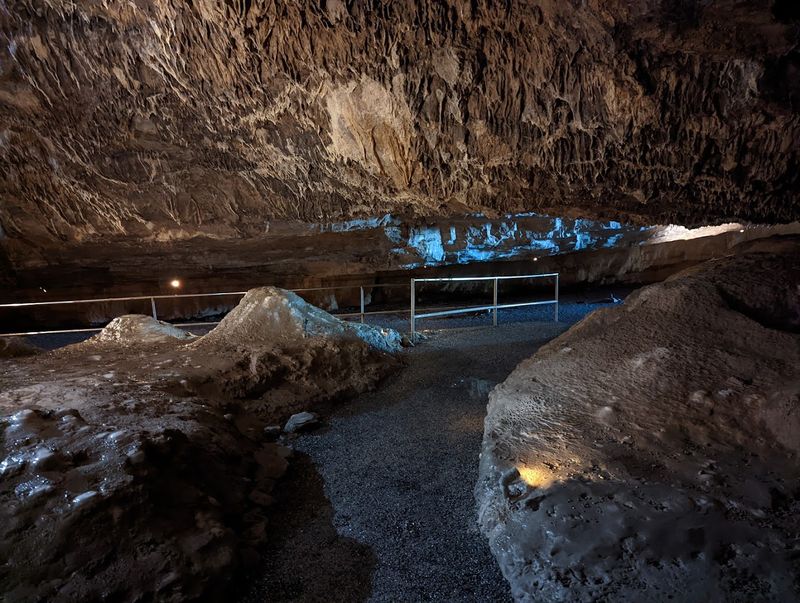
Getting to Indian Echo Caverns is straightforward — the caverns are located at 368 Middletown Road in Hummelstown, Pennsylvania, just a short drive from both Hershey and Harrisburg. That central location makes it an easy addition to a broader regional itinerary, whether you are spending a weekend in the area or passing through on a longer road trip through central Pennsylvania.
Tours are guided, which means a knowledgeable guide leads small groups along lit walkways through the underground chambers, pointing out formations and sharing the cave’s geological and historical highlights along the way. One practical tip worth remembering: pack a light jacket, even in July.
The cave maintains a steady temperature of around 52 degrees Fahrenheit year-round, which feels refreshingly cool in summer but surprisingly chilly if you are dressed for outdoor heat.
Beyond the cave itself, the surrounding Echo Dell recreational area offers mini golf and gem mining activities, making the site genuinely family-friendly for groups with younger children who might want more than just the underground tour. Hours vary by season, and the caverns are typically closed on major holidays, so checking the official website before visiting saves any unnecessary surprises.
All things considered, it is one of central Pennsylvania’s most rewarding and accessible natural attractions.