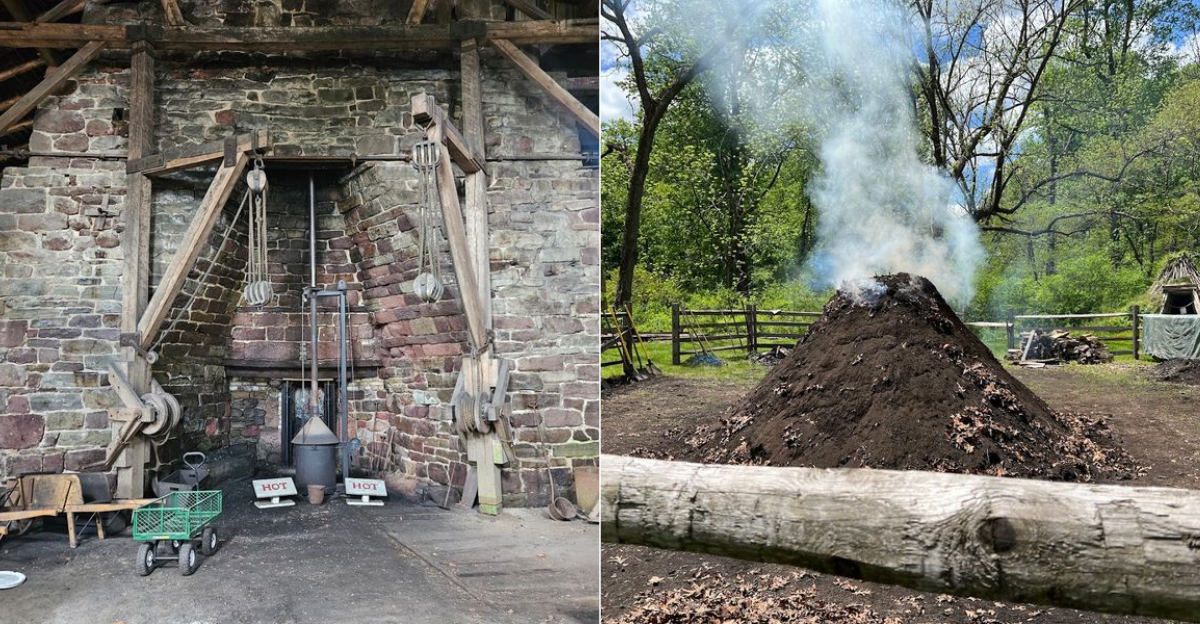
The towering stone furnace is the first clue that this quiet corner of Pennsylvania once helped shape a growing nation, long before factories and smokestacks transformed American industry.
At Hopewell Furnace National Historic Site in Elverson, visitors can step into a remarkably preserved 18th- and 19th-century ironmaking village where powerful waterwheels, charcoal-fuelled furnaces, and skilled craftsmanship supported everyday life and the country’s early industrial ambitions. Walking the grounds reveals stone buildings, workers’ homes, barns, and gardens that recreate the rhythm of a self-sustaining community surrounded by rolling woodland.
Every path offers a closer look at the people behind the iron—families, blacksmiths, farmers, and furnace workers whose labour produced everything from household cookware to munitions during a pivotal chapter of American history. The setting feels less like a museum and more like a village waiting to come alive again.
Follow the footsteps of those early residents to uncover the stories, landscapes, and enduring legacy that still define this remarkable Pennsylvania landmark.
The Thundering Heart of Industry
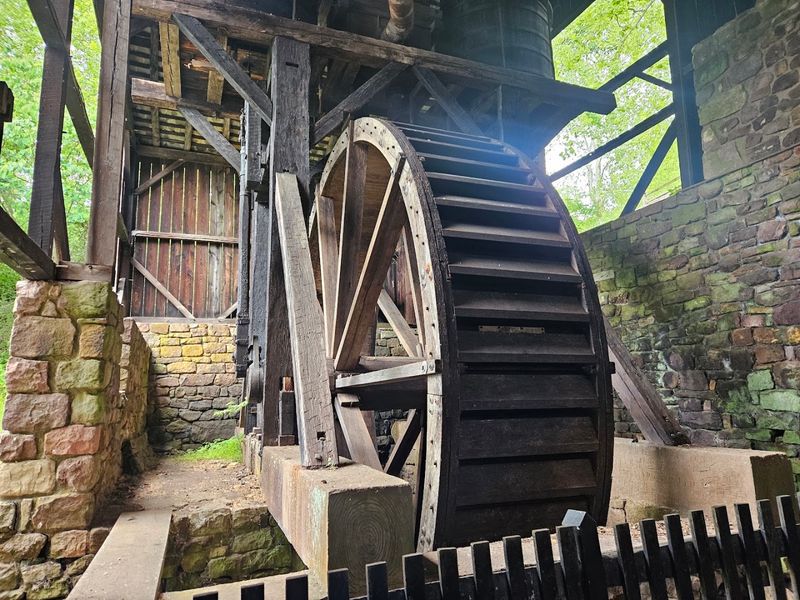
Water crashes over wooden paddles with a rhythm that hasn’t changed in 250 years. The sheer size stops first-time visitors in their tracks—this isn’t some decorative prop, but a genuine 22-foot diameter beast that once powered everything.
Inside Hopewell Furnace’s Cast House, you can watch this engineering marvel turn while imagining the deafening roar when bellows forced air into white-hot iron. The wheel drove massive leather bellows that could blast 5,000 cubic feet of air per minute into the furnace.
Rangers love explaining how this simple technology created temperatures hot enough to melt rock.
The dark interior makes the wheel’s movement almost hypnotic. Sunlight streams through windows, catching spray from the waterwheel as it churns through its endless cycle.
Visitors often spend twenty minutes here, mesmerized by the intersection of nature’s power and human ingenuity.
Pictures absolutely don’t capture the scale or sound. You need to stand beneath those dripping paddles to truly appreciate what powered America’s early iron industry.
Where Wealth Met Wilderness
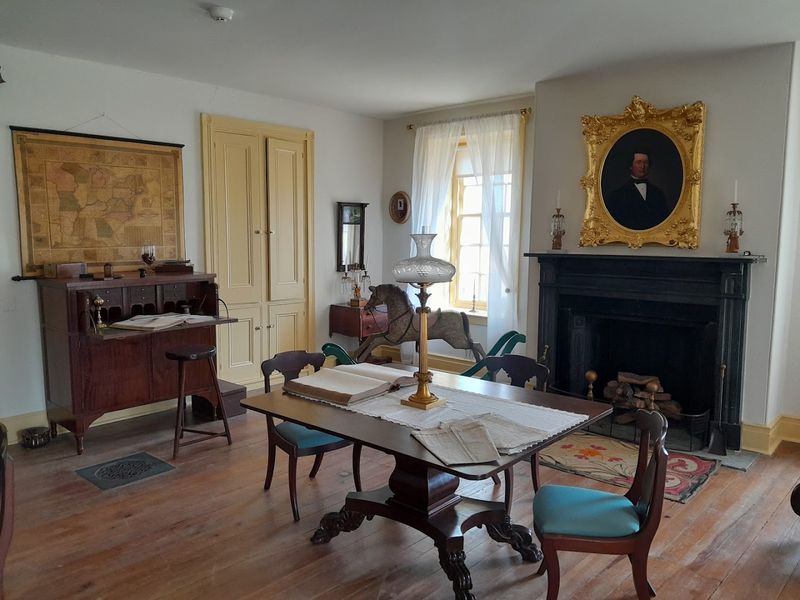
Stepping through the mansion’s doorway feels like interrupting someone’s 1840s afternoon tea. Toys still rest on windowsills, a piano waits for fingers that vanished generations ago, and dining chairs sit arranged as though guests might arrive any moment.
The Ironmaster’s home at Hopewell Furnace contrasts sharply with workers’ cottages down the hill. Polished furniture, delicate china, and carpeted floors remind visitors that iron made fortunes for some while others labored in soot-covered aprons.
Air conditioning keeps the first floor comfortable while preserving antiques behind protective railings.
Period reenactors sometimes chat with visitors on the front porch, discussing everything from fashion to furnace finances. They answer questions about how the ironmaster’s family balanced wealth with frontier isolation.
Every room tells stories about class divisions in early American industry.
The staircase beckons upward, though only the ground floor opens for self-guided tours. Still, what you can see paints a vivid picture of privilege in an otherwise hardscrabble ironmaking community.
Two Weeks of Controlled Fire
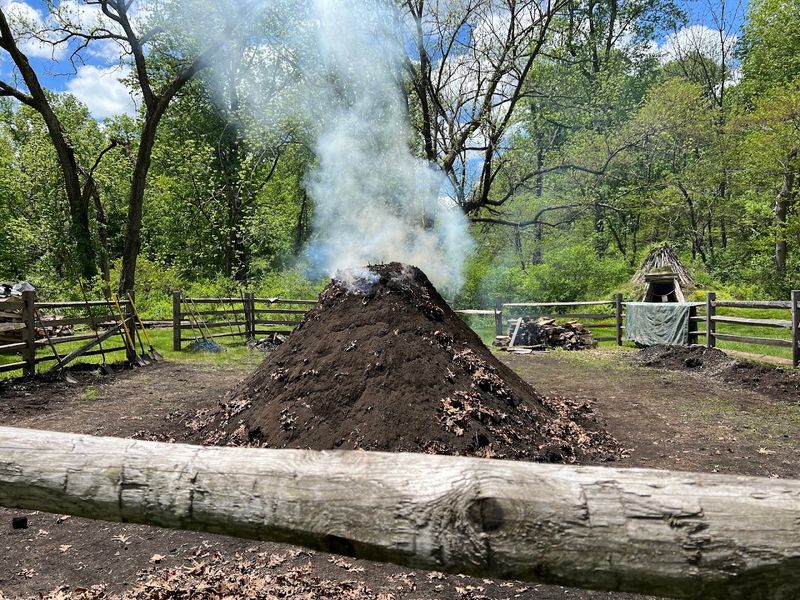
Smoke curls from a carefully tended earthen mound where wood slowly transforms into the charcoal that once fueled America’s iron dreams. Rangers tend these smoking piles for fourteen days straight, monitoring temperatures and adjusting airflow with techniques passed down through centuries.
Watching charcoal-making demonstrations at Hopewell Furnace connects you to the backbone of historical iron production. One furnace consumed acres of forest annually, requiring specialized workers called colliers who lived in crude huts beside their smoldering creations.
The process demanded constant vigilance—too much oxygen created ash, too little left unburned wood.
Passionate staff explain every detail, from stacking cordwood to sealing the mound with earth and leaves. They’ll describe how colliers read smoke color to judge internal temperatures, a skill that took years to master.
The acrid smell alone transports you backward in time.
Special events let visitors help stack wood or learn why this specific type of charcoal burned hotter than any alternative. It’s living history that makes textbook descriptions suddenly make sense.
Stone Giant of the Iron Age
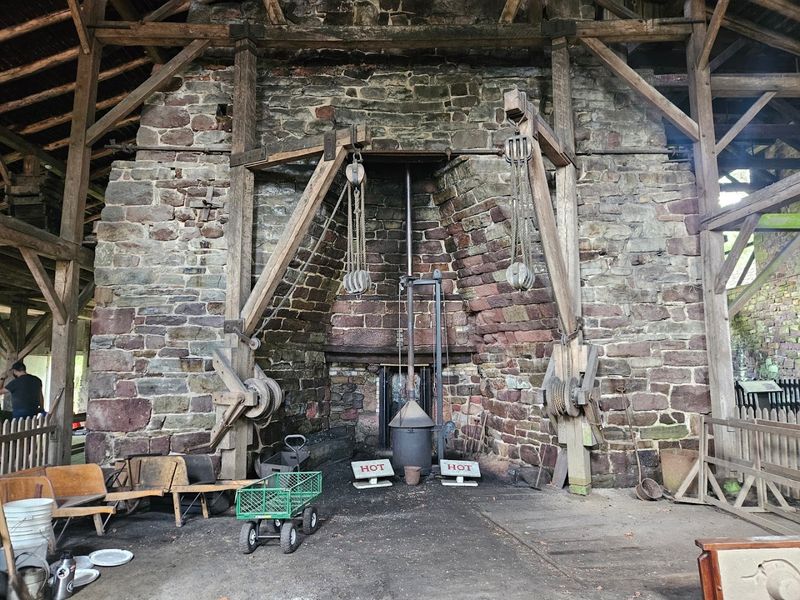
Towering overhead like something ancient civilizations might have built, the furnace dominates the landscape with raw industrial power frozen in stone. Walking around this massive structure feels like exploring a maze designed by blacksmith giants.
Hopewell’s anthracite furnace operated from 1771 to 1883, producing everything from Revolutionary War cannons to cast-iron stoves that warmed American homes. The structure’s thick stone walls still radiate history, even though the last fires died out over 140 years ago.
You can circle the entire furnace, peeking into charging areas where workers once dumped alternating layers of iron ore, limestone, and charcoal.
Interpretive signs explain the chemical magic that happened inside these stone walls. Temperatures exceeding 3,000 degrees turned rock into liquid metal that poured out like glowing honey.
Workers risked their lives here daily, breathing toxic fumes and dodging molten splashes.
The furnace’s size surprises everyone. Until you stand beside it, you can’t quite grasp the scale of early American industry’s ambitions.
A Village Frozen in Time
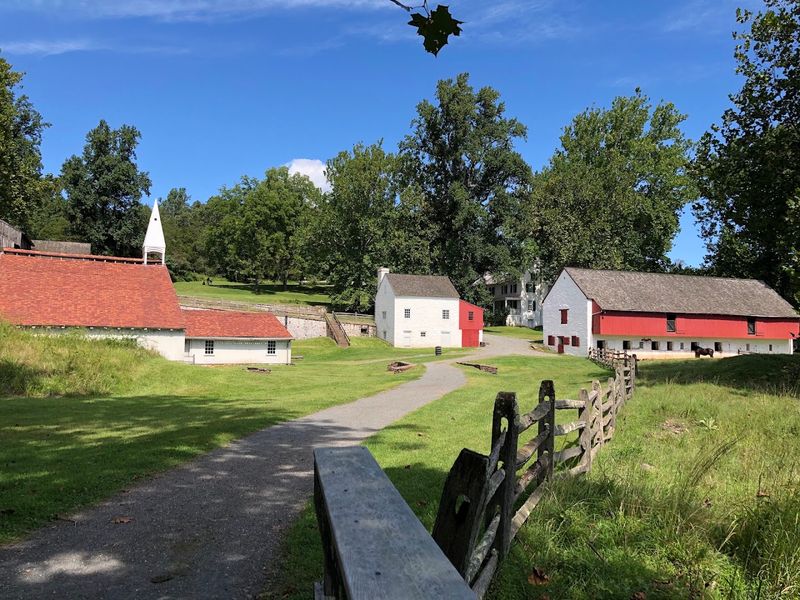
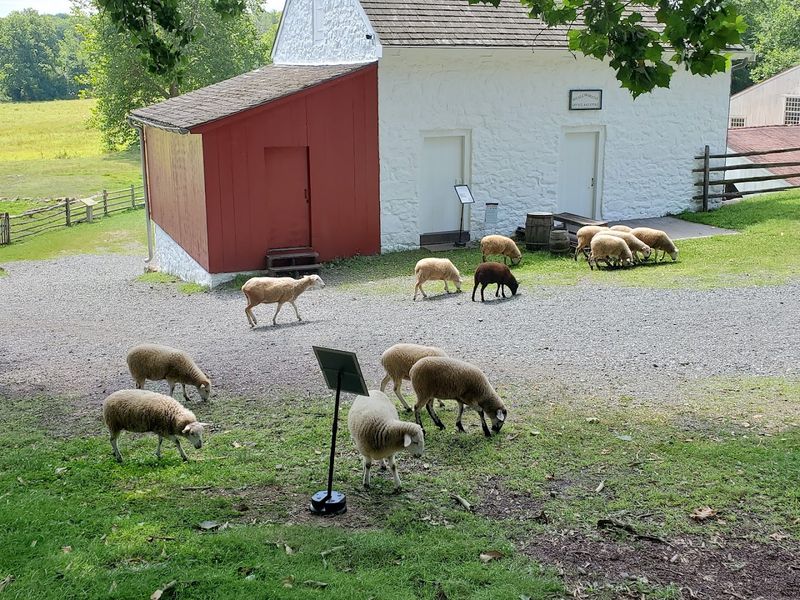
Laundry still hangs from lines behind workers’ cottages, as though families just stepped out for afternoon chores. Chickens peck near the barn, sheep graze in pastures, and the company store’s shelves display goods that would’ve been luxuries in this remote industrial outpost.
Walking through Hopewell’s preserved village reveals how an entire self-sufficient community functioned around a single industrial purpose. Unlike sanitized museum displays, this village maintains its working-class authenticity.
You’ll see cramped living quarters where large families squeezed into two-room cottages, contrast them with the ironmaster’s spacious mansion, and understand class divisions that shaped early America.
Informative kiosks explain each building’s role in the iron-making ecosystem. The Buckley and Brooke Office & Store showcases what workers could purchase with company scrip.
Period architecture ranges from rough worker housing to elegant administrative buildings.
Visitors frequently spend two hours wandering these grounds, discovering new details with each building. The village layout makes industrial history feel personal rather than abstract, connecting you to real people who lived remarkably different lives.
Badges, Bark Rangers, and Family Fun
Your six-year-old clutches a pencil, intensely focused on answering questions about blast furnaces and colonial life. Meanwhile, your golden retriever sports a bright bandana identifying her as an official BARK Ranger, tail wagging with obvious pride.
Hopewell Furnace’s Junior Ranger program transforms education into adventure for all ages. Despite being “for kids,” plenty of adults sheepishly admit they grabbed activity books too—learning about pig iron and water-powered bellows proves surprisingly engaging regardless of age.
Complete the activities, discuss your answers with rangers, and earn an official badge to commemorate your achievement.
The dog-friendly BARK Ranger program adds another dimension to family visits. Your furry companions can earn their own credentials while exploring pet-friendly trails surrounding the historic site.
Rangers genuinely enjoy administering both programs, sharing contagious enthusiasm for this place’s history.
Free admission makes these programs even sweeter. You’re not just entertaining kids—you’re creating memories while teaching them about America’s industrial heritage, all without spending a dime beyond travel costs.
The Perfect Introduction to Yesterday
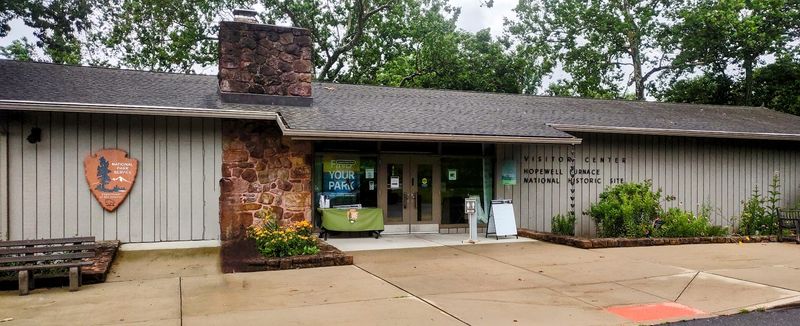
Settling into theater seats before exploring outside proves absolutely essential. This fifteen-minute orientation film transforms what could be random building-wandering into a cohesive narrative about industry, immigration, and American ambition.
Hopewell’s visitor center deserves attention before you rush toward the village. The film contextualizes everything you’re about to see, explaining how this operation functioned as a complete ecosystem.
Touch tables let tactile learners handle replica tools and materials. Museum exhibits showcase actual products manufactured here, from decorative stove plates to utilitarian cookware.
Rangers at the information desk answer questions with genuine knowledge and passion. They’ll point you toward the day’s special programming, suggest hiking trails matching your fitness level, and share insider tips about the best photo opportunities.
The gift shop stocks quality books about iron-making history alongside typical tourist items.
Don’t forget the National Park Passport cancellation stamps located behind the information desk. Collectors treasure these official markings, and Hopewell offers several unique designs you won’t find anywhere else in the system.
When History Comes Alive
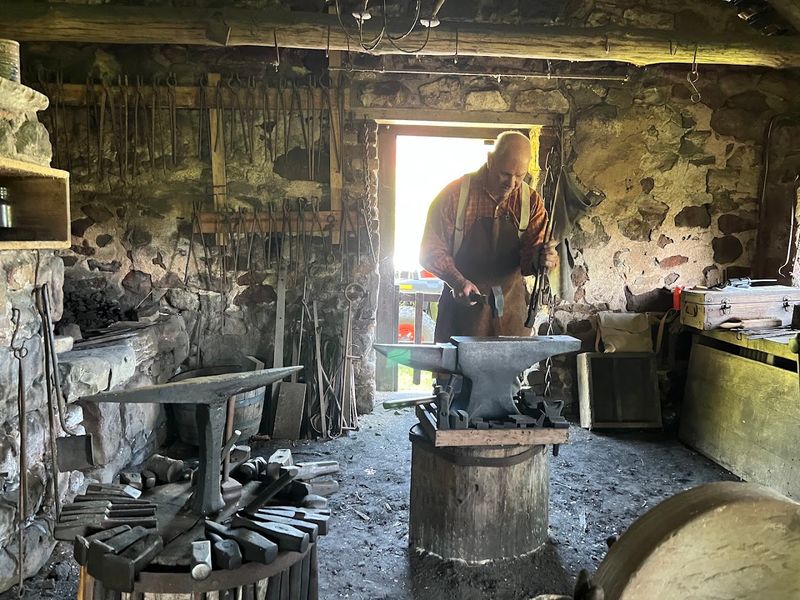
A woman in homespun fabric kneads dough exactly as furnace workers’ wives did in 1835, chatting casually about flour prices and gossip from Philadelphia. Nearby, a man demonstrates blacksmithing techniques while explaining why certain iron compositions suited different products.
Living history programs at Hopewell Furnace occur year-round, even during winter months when most historic sites close. Costumed interpreters don’t just wear period clothing—they embody historical roles, discussing contemporary events, explaining daily routines, and answering questions from their characters’ perspectives.
Weekend demonstrations might include 1800s baking, casting techniques, or agricultural tasks essential to supporting the iron-making operation.
These programs work because reenactors clearly love what they do. Their enthusiasm transforms dry historical facts into engaging stories about real people facing universal challenges.
You’ll learn about furnace finances, worker grievances, technological innovations, and social hierarchies that defined this community.
Special events calendar varies seasonally. Check the website before visiting to catch demonstrations that particularly interest you, though spontaneous interactions with knowledgeable interpreters happen almost every open day.
Beyond the Furnace
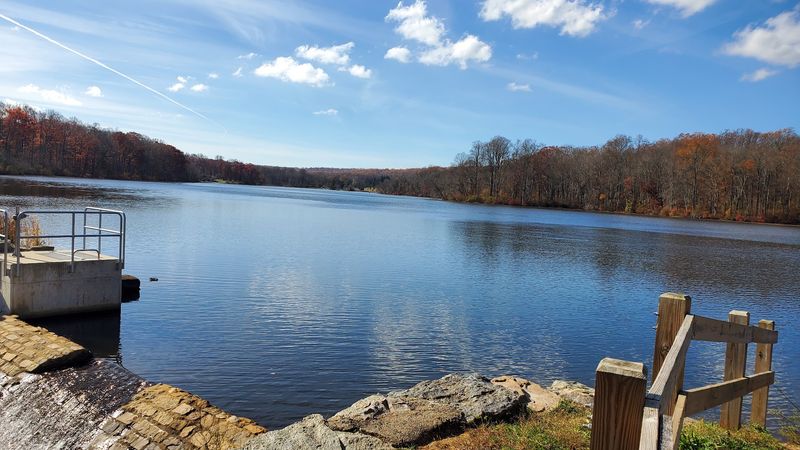
Following woodland paths where charcoal-laden wagons once rumbled, you spot a flash of blue—an indigo bunting, one of dozens of bird species thriving in these protected forests. The only industrial sounds here are distant echoes from history.
French Creek Preserve surrounds Hopewell Furnace National Historic Site, offering miles of trails through remarkably biodiverse habitat. While some paths remain temporarily closed due to fallen trees, numerous routes stay open for exploration.
Birders bring binoculars hoping to spot uncommon species, while botanists appreciate native plant communities that survived industrial-era deforestation.
The pollinator garden near the visitor center, lovingly maintained by Master Gardeners, explodes with color during growing seasons. Interpretive signs explain which native plants supported furnace-era agriculture versus modern conservation efforts.
Even casual nature lovers appreciate how wildlife reclaimed what industry once consumed.
Trail difficulty varies from easy strolls to moderate hikes with elevation changes. Dogs enthusiastically welcome these paths, making Hopewell perfect for visitors who want history and nature in a single destination.
Bring water, wear appropriate footwear, and prepare for peaceful solitude just minutes from the historic village.