

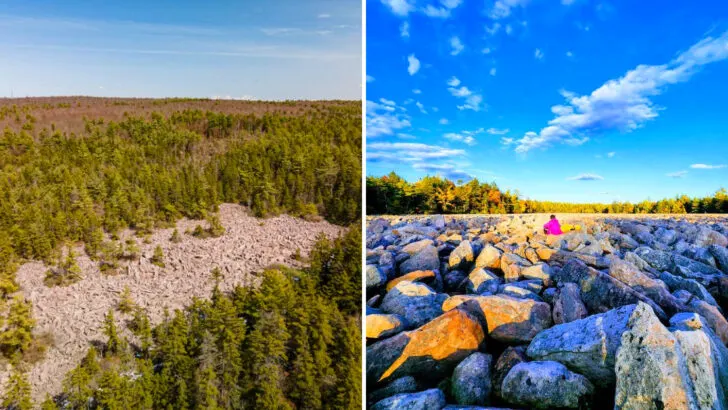
Step into a place that feels untouched by life itself. Hickory Run Boulder Field in Pennsylvania stretches for miles, a sprawling sea of gray boulders where plants won’t take root and animals steer clear.
It’s eerie, otherworldly, and utterly captivating. Every step echoes on stone, every glance reveals another jagged monolith.
The boulders, some the size of small houses, were dumped here by glaciers thousands of years ago, forming a chaotic maze that seems to defy time. The air carries a stillness that makes you hyper-aware of each creak and crunch underfoot.
Hiking here is more than exercise—it’s an adventure into a prehistoric puzzle. You weave between rocks, scramble over cliffs, and wonder how nature can create something so harsh yet so hypnotic.
Hickory Run doesn’t just challenge your legs—it challenges your imagination. Here, the absence of life tells a story as bold as any forest or meadow, and every boulder feels like a monument to the past.
What Exactly Is Hickory Run Boulder Field
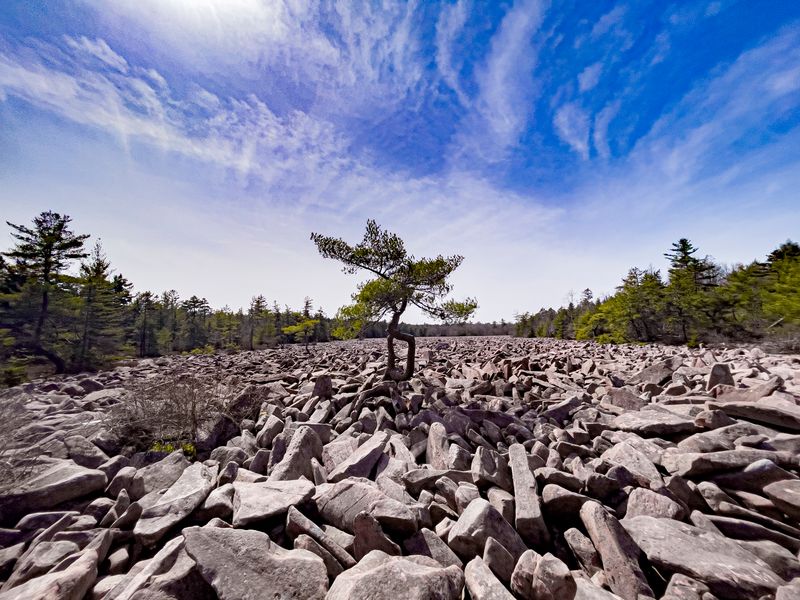
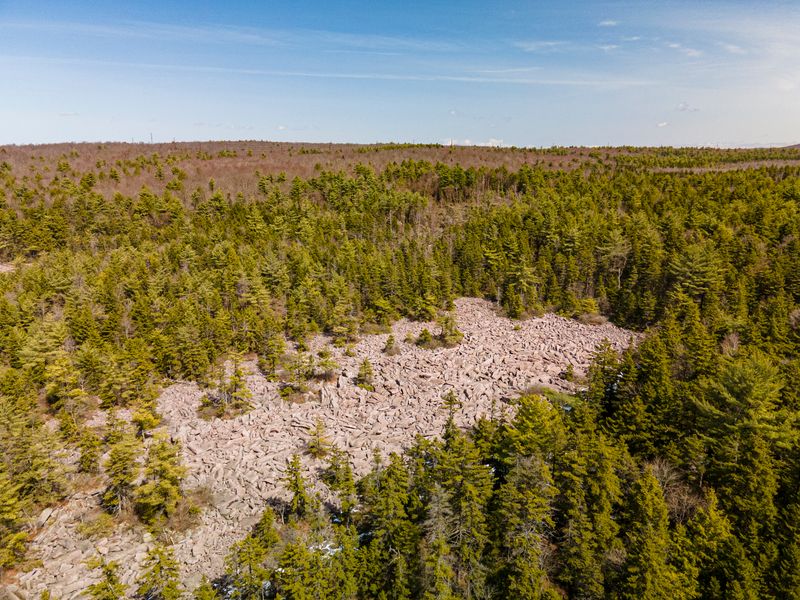
Hickory Run Boulder Field is a 16 acre carpet of sandstone boulders, some the size of ottomans, others like compact cars. The rock layer runs up to 12 feet deep, with stones jumbled edge to edge and no soil in between.
Looking across it feels like staring at a frozen river of stone, bordered by a dense ring of trees. Everything about this place challenges expectations.
Nothing grows on the boulders because fine sediment cannot accumulate, moisture drains fast, and temperatures swing wildly. Animals skirt the edges where cover and food exist, leaving the center eerily quiet and still.
The field sits within Hickory Run State Park near Lake Harmony, with coordinates 41.0506478, -75.6456351. It became a National Natural Landmark in 1967 for being a pristine, textbook example of periglacial geology.
Standing at the edge, you will hear the soft clack of stones as people step, the only sound over a broad hush. It is perfect for photos, sky watching, and feeling small in the best way.
Plan a short stop or linger longer, but give yourself a moment to simply look and breathe.
How The Boulder Field Formed During The Ice Age
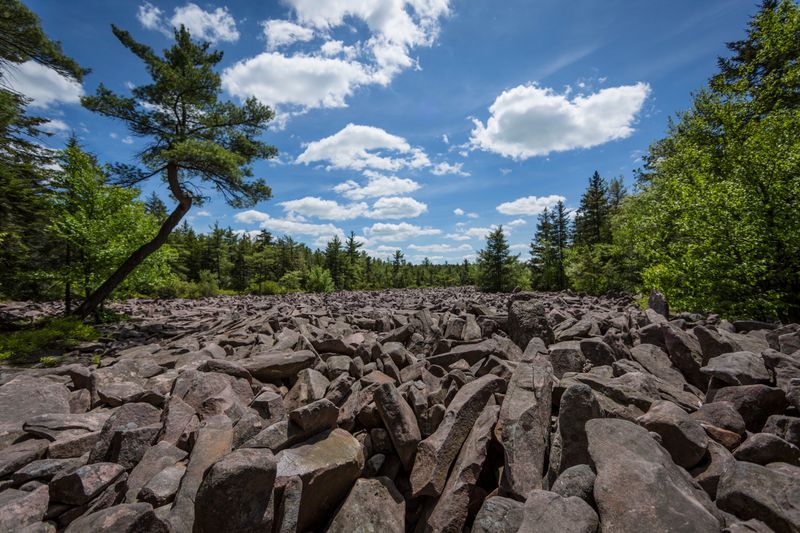
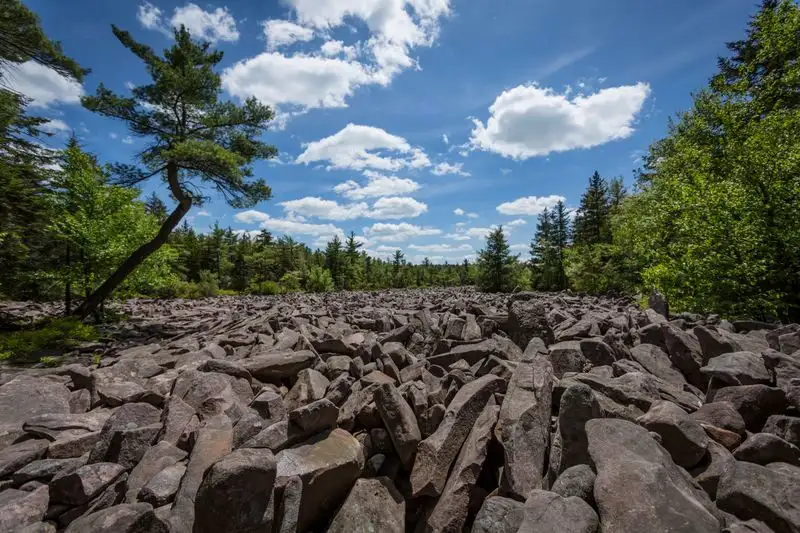
During the last Ice Age, glaciers never fully covered this exact spot, but the climate was cold enough to fracture rock. Freeze thaw cycles split sandstone on nearby ridges into blocks, a process called frost wedging.
Over thousands of seasons, gravity and meltwater nudged those blocks downslope. Periglacial action sorted and jostled the stones, scraping off edges and packing the field.
Seasonal freezing lifted and settled boulders like a slow motion shuffle. As finer sediment washed away or filtered downward, only the durable pieces remained stacked and stable in a deep layer.
The result is a sprawling, level sheet of rock with almost no soil. That absence of soil is why the field looks so austere, with life clinging to the forest fringe.
Scientists prize the site because it shows these processes almost exactly as they were left. When you stand there, imagine ice grinding on mountaintops and meltwater rushing across a colder Pennsylvania.
Every clink underfoot is a reminder of time doing patient work. The field is not just a pile of rocks, but a preserved story about climate, erosion, and endurance.
Why Nothing Grows And Wildlife Avoids The Center
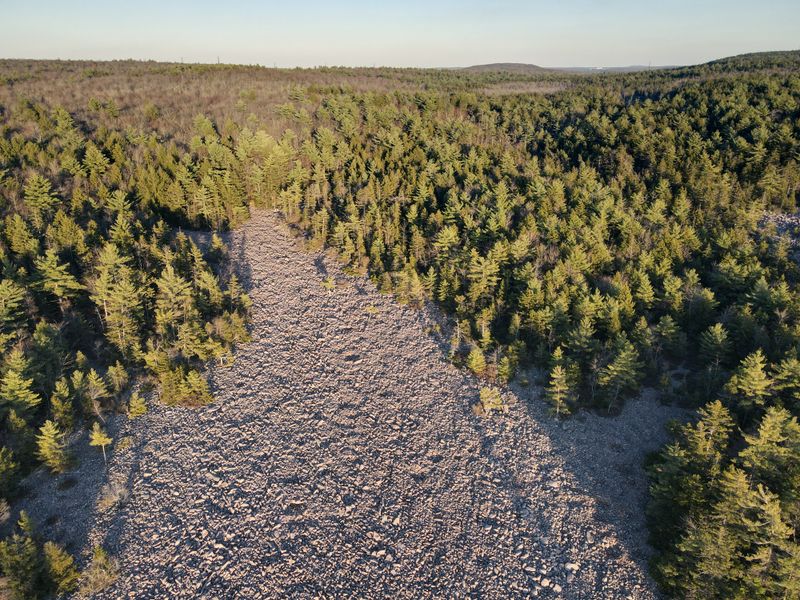
The boulder surface sheds soil like rain off metal. Wind and water whisk away fine material that roots need to take hold.
Sunlight bakes the exposed rock by day, and temperatures plunge at night, stressing any seed that dares to sprout. Moisture drains quickly into the gaps, leaving seedlings dry on top and starved below.
In winter, freeze thaw pries and shuffles stones, crushing fragile starts. Without leaf litter or organic matter, there is no pantry of nutrients, just raw stone and air.
Animals prefer edges where cover, forage, and stable footing are available. The middle offers none of that, plus a real ankle risk.
You might spot spiders or insects tucked in crevices, but larger wildlife mostly skirts the rim. Occasional lichen dabs the rocks like pale paint, slow growing and sparse.
That is about as close to a garden as you will find here. The starkness is the point, a natural lab showing how geology can overpower biology, creating a rare, quiet vacancy.
Getting There: Road Access And Parking Tips
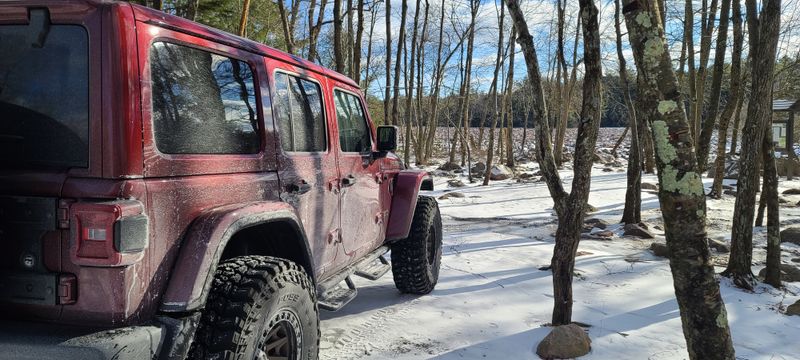
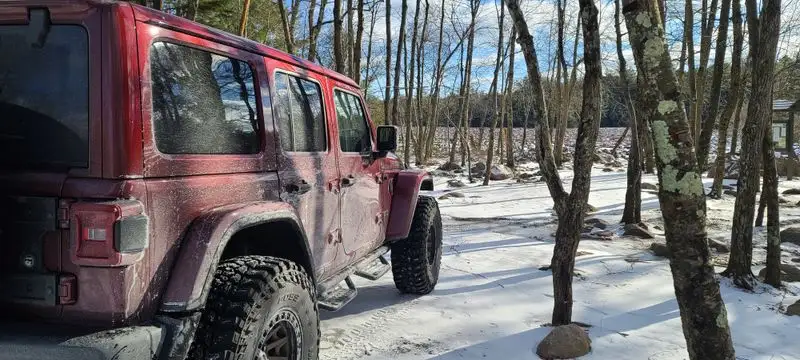
You can reach the field via a 3 to 4 mile dirt road that is well graded and passable by most vehicles. It is a one way loop for much of the route, so take it slow and enjoy the forest.
Expect some bumps and potholes, especially after storms. Navigation can be quirky, so set your map to walking directions if you hit a detour, and keep an eye out for signs.
When you see the highway overpass and a do not enter notice tied to a temporary reroute, continue straight per park guidance. The parking lot sits just beyond, with restrooms nearby in season.
Arrive early morning or late afternoon to avoid crowds and snag a closer spot. In winter, the drive can feel remote but is often plowed.
Cell service is spotty, so download maps before you go. There is no entrance fee for the park or field.
Bring water, and do not block the loop road. A little patience on the approach is rewarded the moment the trees open and that stone ocean appears.
Best Times To Visit For Light, Weather, And Crowds
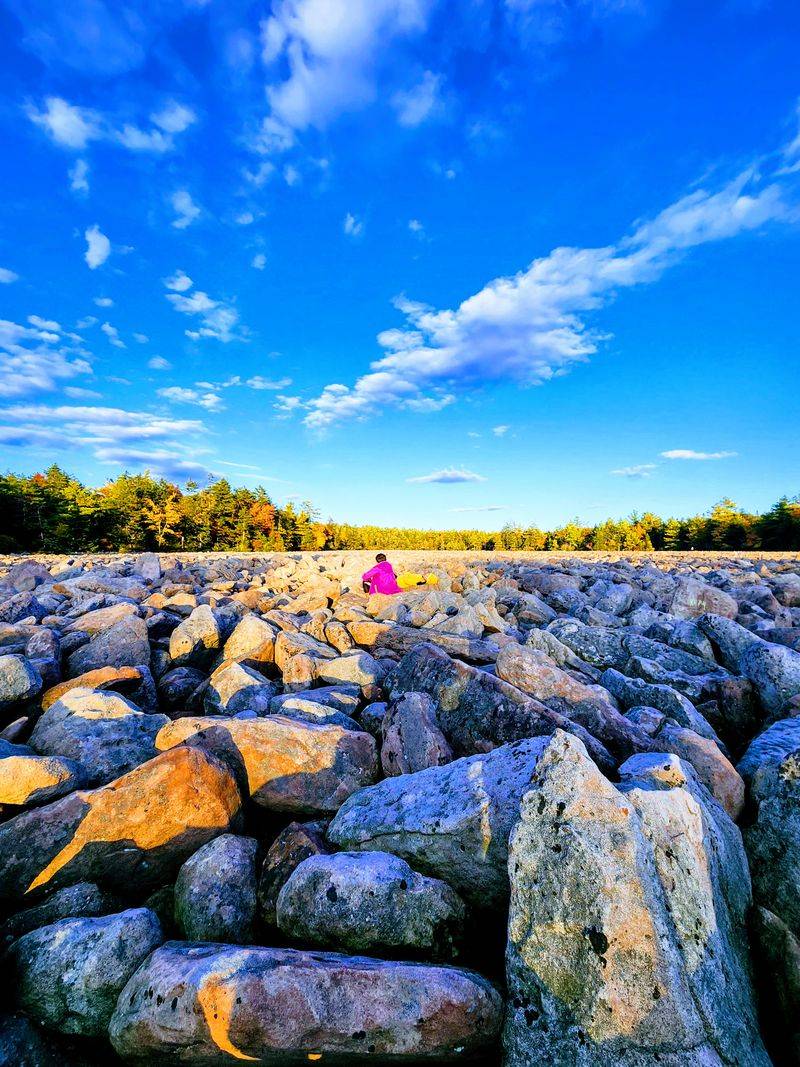
Sunrise and golden hour give the stones depth, with shadows carving texture across the field. Midday light flattens details and can glare off pale rock, especially in summer.
If photos matter to you, aim early or late. Spring and fall bring comfortable temperatures and fewer biting insects.
Summer is fine if you plan around heat and bring extra water. Winter transforms the scene into a quiet, snow dappled mosaic, stunning and slick.
Crowds tend to swell from late morning to mid afternoon, especially on weekends. Reviews suggest arriving before 10 am or after 4 pm for breathing room.
Weekdays are calmer, and the parking turnover is quick. Weather shifts fast in the Poconos, so pack layers and a rain shell.
After rain, the stones get slick, and gaps can hide puddles or ice in cold snaps. Clear skies, light wind, and angled sunlight make the field feel almost cinematic.
Safety And Footing: Protect Your Ankles
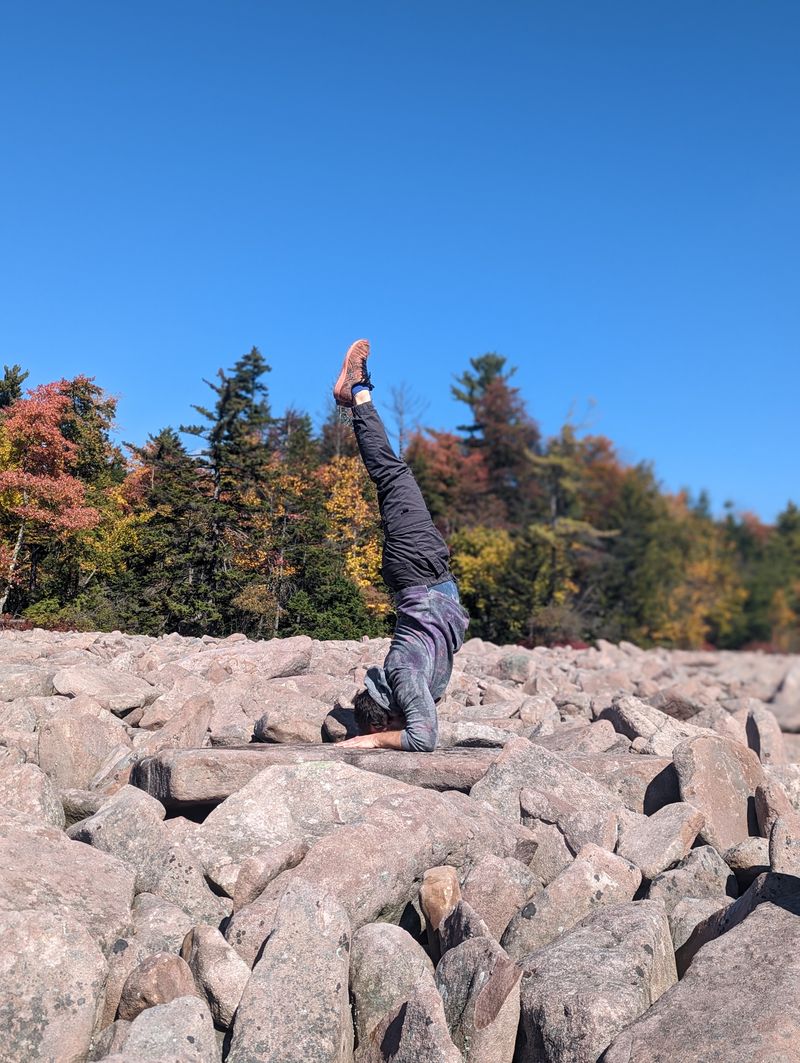
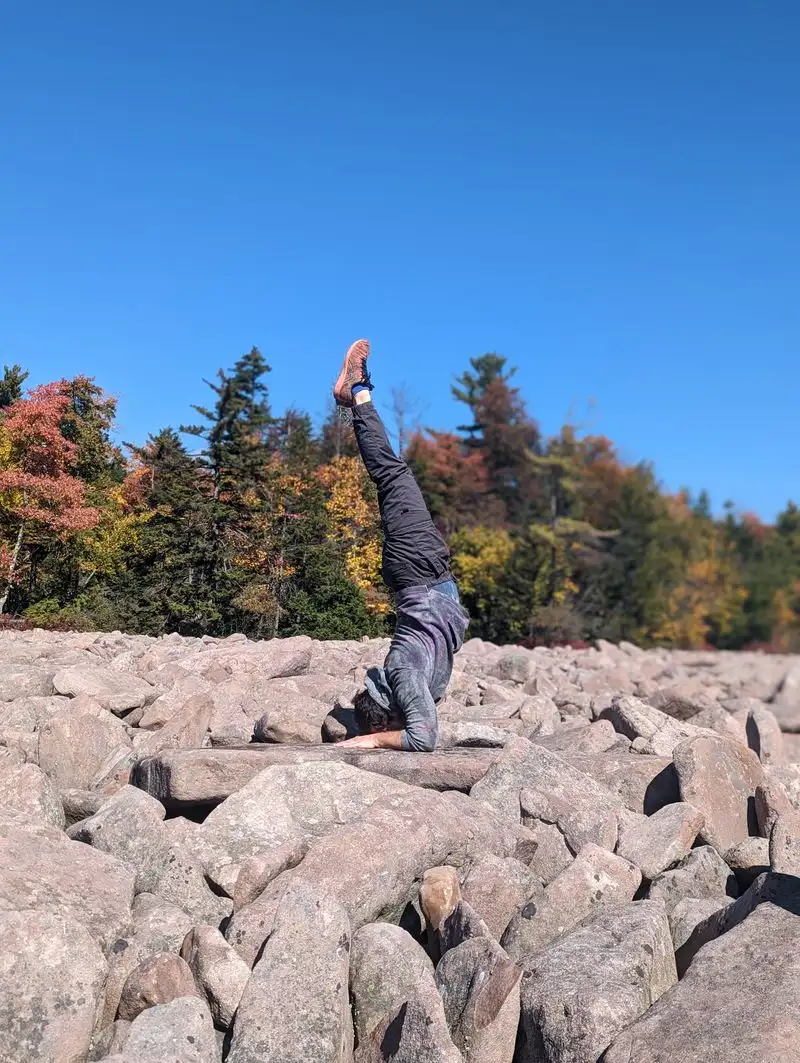
The boulders are uneven, some slightly loose, and gaps can be deeper than they look. Your balance works hard here, so short steps and three point contact help.
Wear sturdy hiking shoes with good grip, not sandals. Watch where you place your foot and test stones before shifting weight.
Keep your hands free rather than juggling coffee or phones. Children love the challenge but may need guidance and a slower pace.
After rain or in winter, surfaces can be slick. Trekking poles add stability if you are uneasy.
If anyone in your group has ankle or balance issues, enjoy the edges and the view without committing to a full crossing. There is no shade in the center, so sun protection and water matter, even on cool days.
Let your ankles lead the decision about how far to go. You will still feel the magic from the rim without risking a sprain.
Photography Tips And Compositions
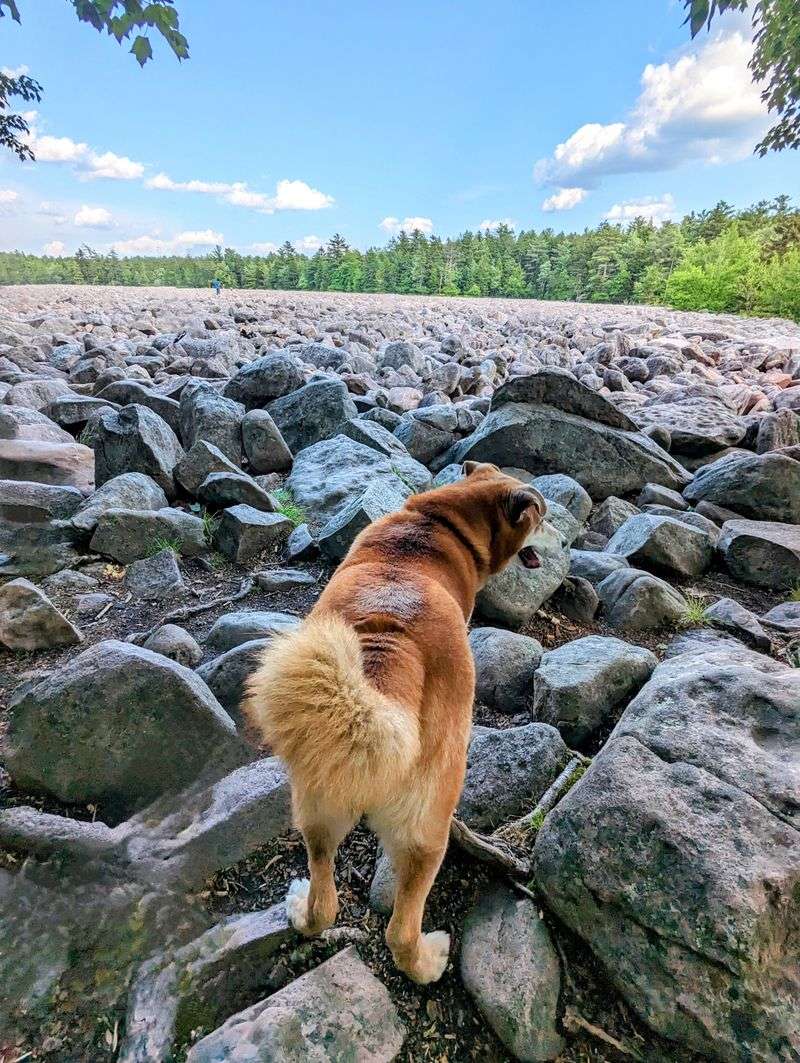
Use the treeline as a horizon anchor and let rows of boulders form leading lines. A wide lens exaggerates scale, while a short tele compresses the field into patterns.
Golden hour light adds texture, and a polarizer tames glare on pale rock. Try a low angle close to the stones for immersive foreground detail.
Step back for symmetry from the viewing edge, leaving negative space in the sky. Panoramas work well because the scene is broad and uncluttered.
If crowds are present, embrace them as scale figures or aim for minimalist frames without feet in view. Overcast days soften contrast, revealing subtle colors in lichen and sandstone.
In winter, expose carefully for snow highlights. Protect your gear by keeping straps tidy and hands free while moving.
Compositions across the field can tempt you to roam, but scout slowly and pick safe stances. The best photo often happens once you stop and listen to the quiet.
Hiking Options: Boulder Field Trail And Alternatives
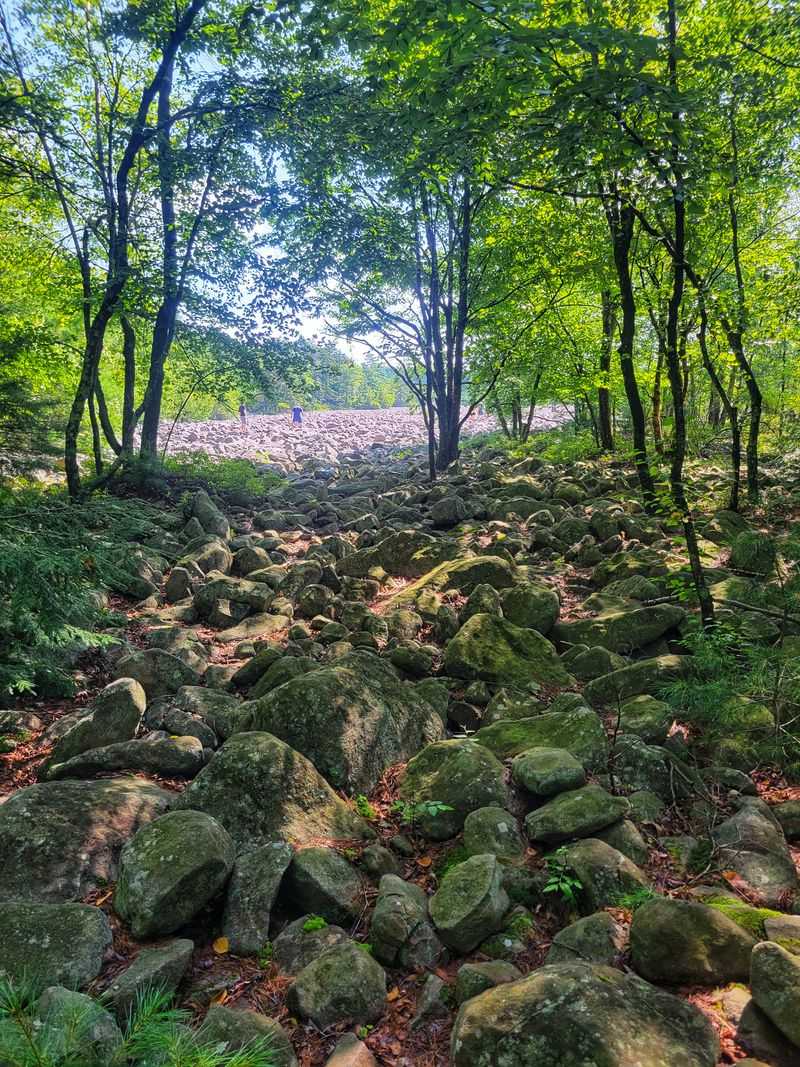
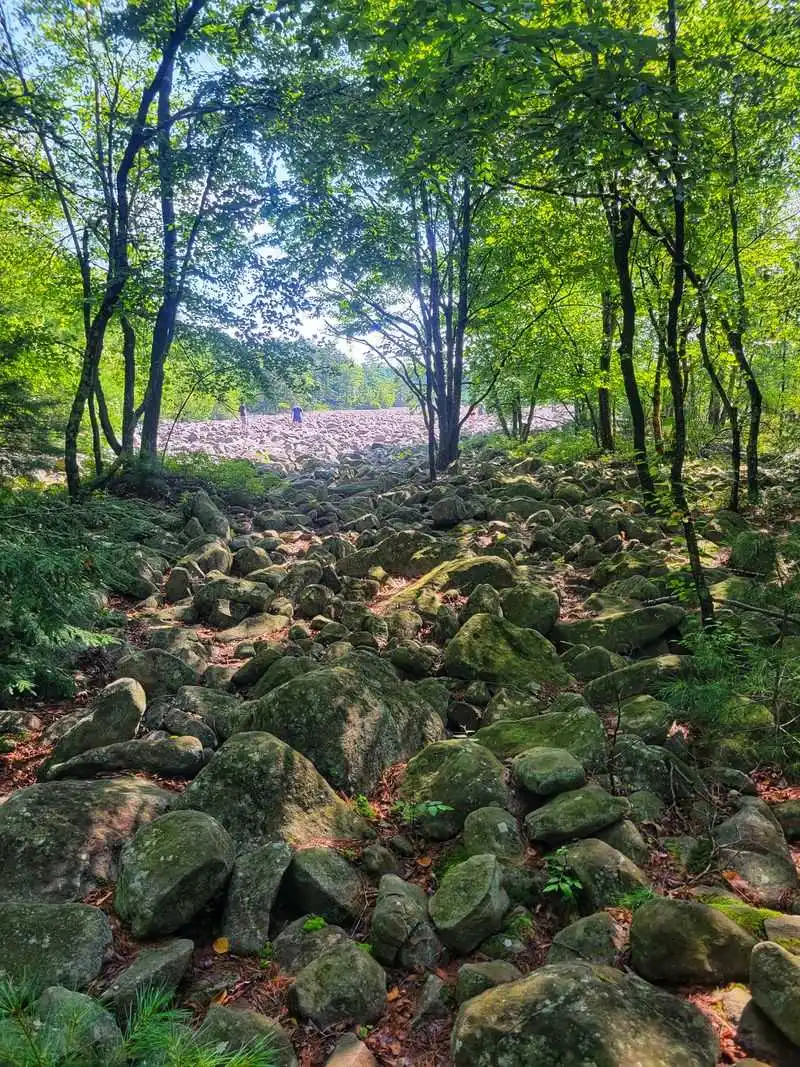
You can drive to the field, but hiking in adds a sense of arrival. The Boulder Field Trail is an out and back route through mixed forest with ferns and occasional narrow sections.
Expect roots, mud after rain, and moments where footing invites careful steps. It is moderate overall, not technical, yet long enough to feel earned.
Bring bug spray, watch for mushrooms you should not touch, and stay alert for black bears. When you break out of the trees into the rock sea, the reveal is jaw dropping.
Elsewhere in the park, Hawk Falls offers a classic waterfall stop, though wading is prohibited. The Shades of Death Trail is rocky and atmospheric, with a short climb to a labeled gorgeous overlook via the Fireline trail.
Those side trips pair well with a Boulder Field visit. Plan your time so you are not racing daylight on the return.
This is not a loop, so you will retrace your steps. Save a snack for the boulder edge and savor the view before heading back.
Visitor Essentials: Hours, Facilities, And Contact Info
The boulder field sits within Hickory Run State Park near Lake Harmony, Pennsylvania. The park is generally open sunrise to sunset, with seasonal variations for facilities.
Restrooms are available near the back parking lot during peak season. For official updates, call +1 888 727 2757 or visit the state park website.
You can find maps, alerts, and trail statuses, especially helpful after storms. Cell coverage can be unreliable, so download info before you drive.
There is no entrance fee for the field. Bring water, snacks, sun protection, and sturdy shoes.
In winter, check road conditions and carry traction devices if snow or ice is possible. Addressing your navigation, the coordinates 41.0506478, -75.6456351 will place you close.
Parking fills quickly on weekends, so plan off peak times. A quick stop can be thirty minutes, but many visitors linger longer, captivated by the stillness.
Seasonal Experiences: Winter Calm To Summer Heat
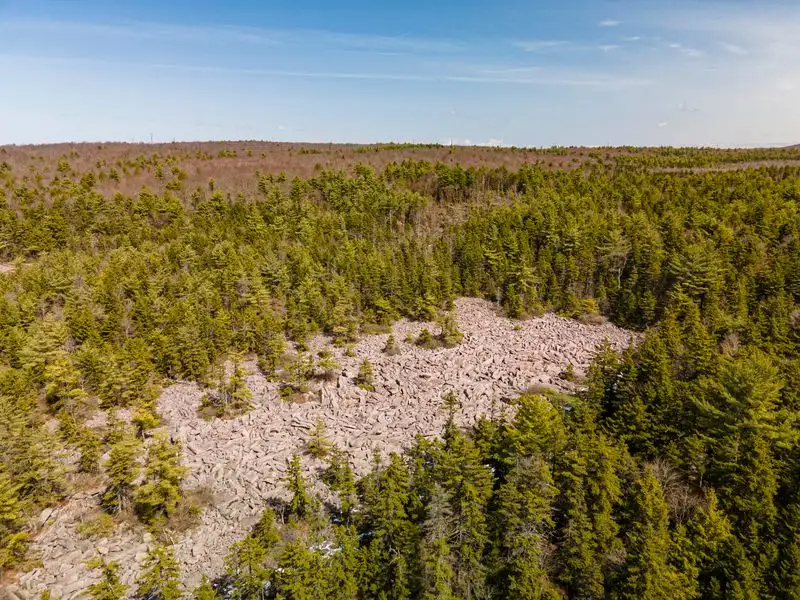
In spring, cool air and soft light make the rocks glow, while nearby ferns unfurl along the approach trails. Summer brings heat and bright glare, so plan early visits and shade breaks.
Afternoon thunderstorms can roll through quickly. Autumn is a spectacle, with the forest edge bursting into reds and golds.
The stones become a neutral canvas for color. Crowds love fall weekends, so weekday mornings feel gentler.
Winter hushes everything. Snow dusts the boulders and smooths their edges, creating a monochrome mosaic.
Footing can be slick, but the quiet is nearly meditative. Whichever season you choose, the core experience holds steady: big sky, broad rocks, and a sense of geologic time.
Dress for conditions, carry layers, and watch daylight. The field is reliable and different every visit, which is the best kind of paradox.
Making The Most Of A Short Stop
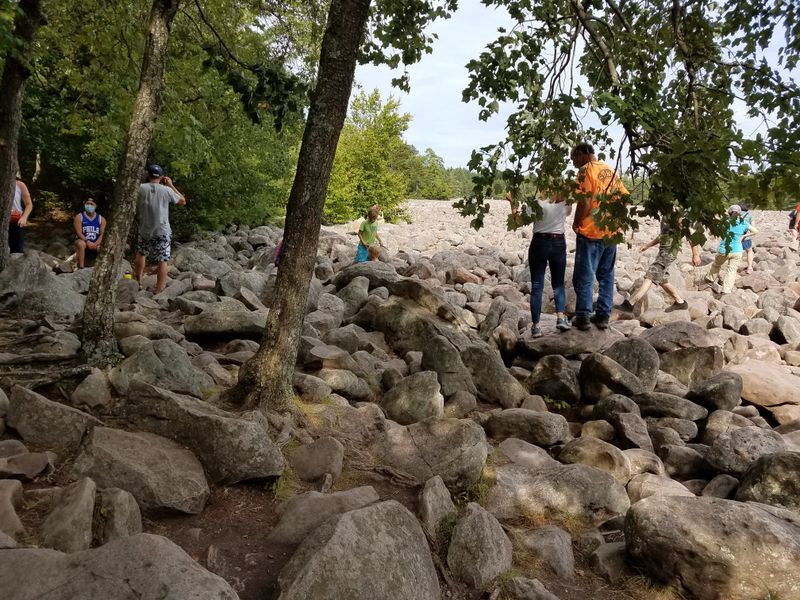
If you have only thirty minutes, you can still feel what makes this place special. Park, walk to the edge, and take a slow minute to absorb the sound and scale.
Step a few stones in if your footwear allows. Pick one composition for a quick photo, using a person for scale if you have a companion.
Scan the horizon for that lone tree out in the field and the rim of forest. Then look down and notice texture variations, lichen freckles, and angles.
Read the informational sign and orient yourself to the park map for future visits. Note the dirt road approach and time your exit before crowds surge.
Restrooms may be seasonal, so plan ahead. Even a brief visit can reset your head.
The stillness is real and immediate. You may leave wishing you had more time, which is a good reason to come back.