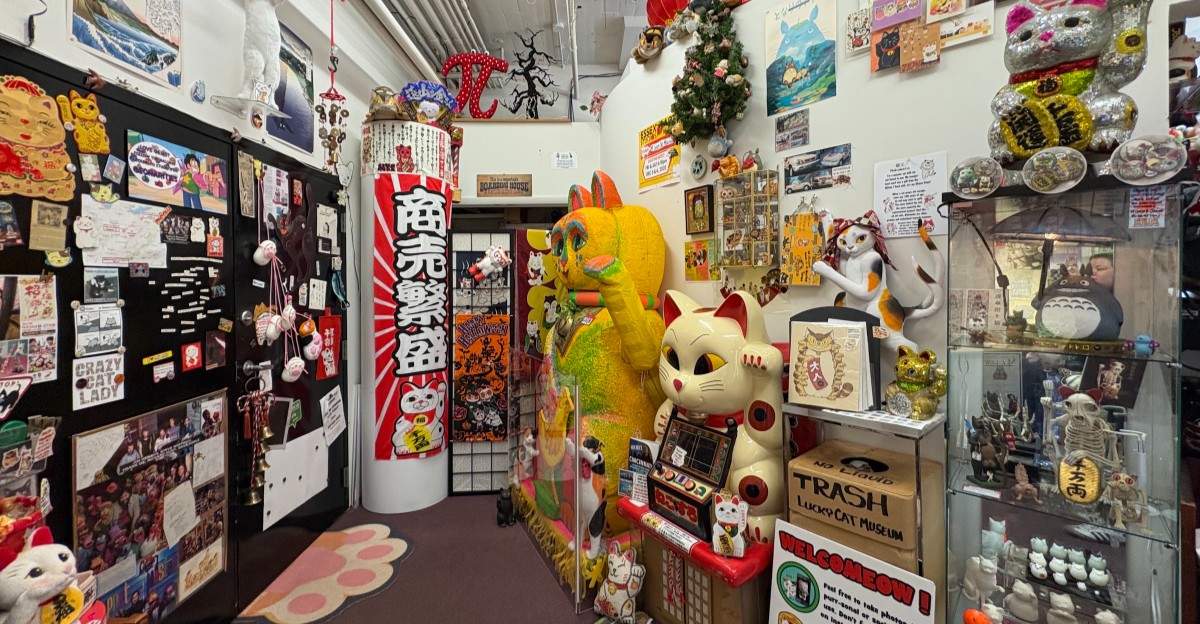
One lucky cat here is about the size of a grain of rice. Another one stands roughly six feet tall.
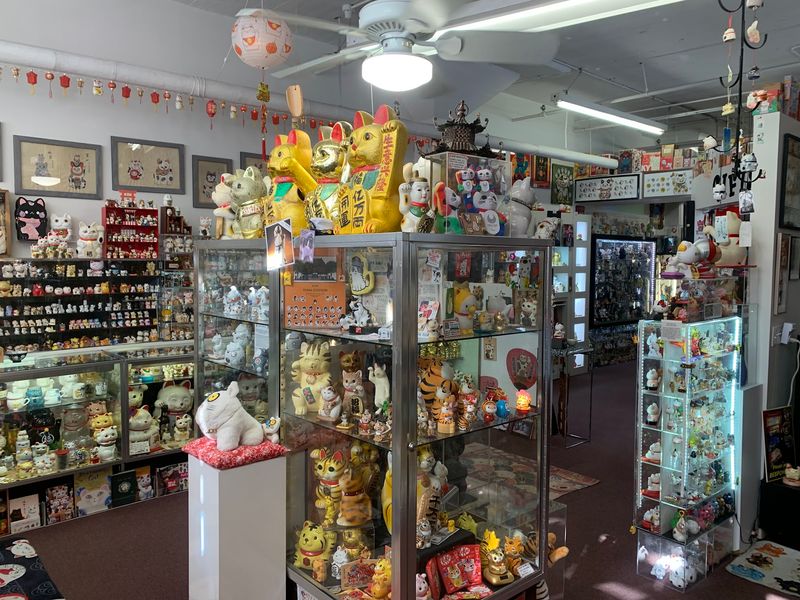
Somehow, they share a room with more than 2,000 waving relatives.
I love that this whole collection began with a single gift from a sister. Then came a Goodwill find, and then a very early way to bid on Japanese auctions.
You can probably guess where that led.
The cats wave from shelves packed floor to ceiling. Some are piggy banks.
Some are nail clippers. A few are slot machines you can actually play.
I can’t imagine a stranger or sweeter way to spend 45 minutes in Ohio. Admission costs nothing, but you do need an appointment.
So how many waving paws can one person count before losing track?
More Than 2,000 Beckoning Cats Are Waiting To Say Hello
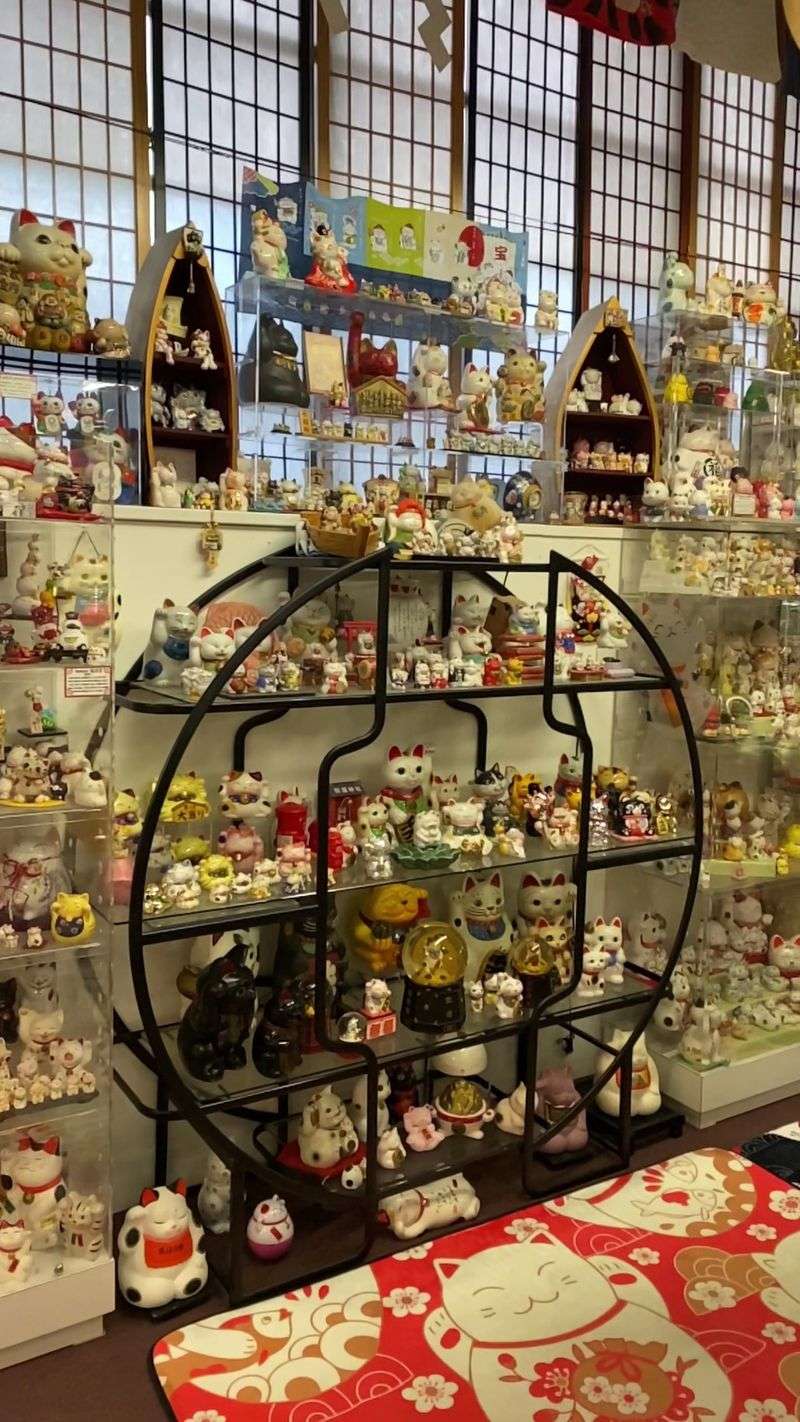
Over 2,000 maneki-neko fill the Lucky Cat Museum in Cincinnati. That number keeps climbing, so any count you hear is probably already out of date.
Maneki-neko means beckoning cat in Japanese. Each figure lifts a paw in a little come-here wave that looks like a friendly hello.
The collection belongs to Micha Robertson, who shares the project with her husband, Jaime. It’s known as the only museum of its kind in America showing such a huge public display of these cats.
That fact alone makes the trip feel special. You aren’t scrolling past a few photos online.
You’re standing in a room where thousands of tiny paws seem to wave at once.
The space is packed from floor to ceiling. Every shelf seems to hide another surprise, so slowing down really pays off.
Try picking one shelf and studying it closely before moving on. You’ll spot odd colors, funny faces, and clever designs that are easy to miss at a quick glance.
Bring patience and curious eyes. With this many cats, the fun is in the details, and the details never seem to run out.
Book Ahead, Because These Cats Keep Short Hours
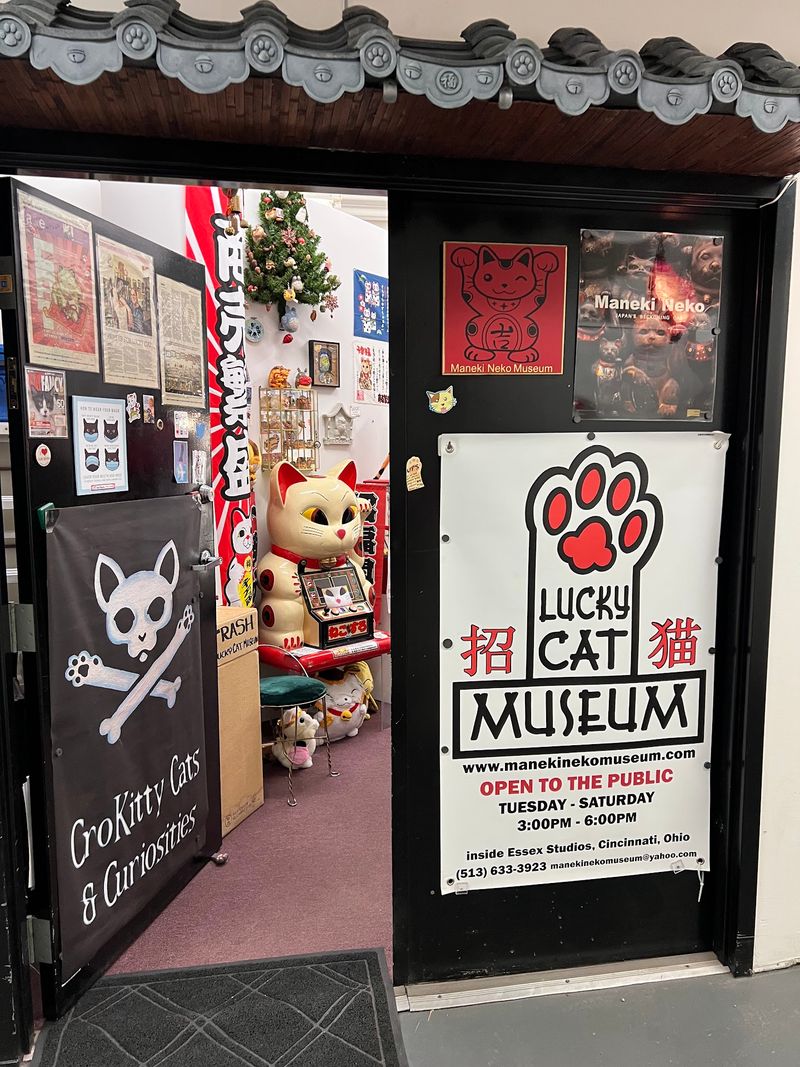
No walk-ins here, friends. Every visit to the Lucky Cat Museum happens by appointment only.
Slots generally run Wednesday through Saturday, from 3 to 6 p.m. Each one lasts 45 minutes and starts on the hour.
Groups max out at six guests per slot. Very small children don’t need their own reservation, which is handy for families with toddlers.
The small group size works in your favor. You get room to wander, look closely, and ask questions without bumping elbows with strangers.
Plan to arrive on time. The museum sits inside a larger building full of artist studios, so you can’t just stroll in whenever you like.
Here’s the best part for your wallet. Admission is free, though donations are welcome and appreciated.
Tucking a little cash in your pocket is a kind move. It helps keep this labor of love running for the next round of curious cat fans.
Since slots are limited, book early if you have a specific day in mind. Weekend trips to Cincinnati fill up fast, and so do those six spots.
A Raised Paw Means More Than You Might Guess
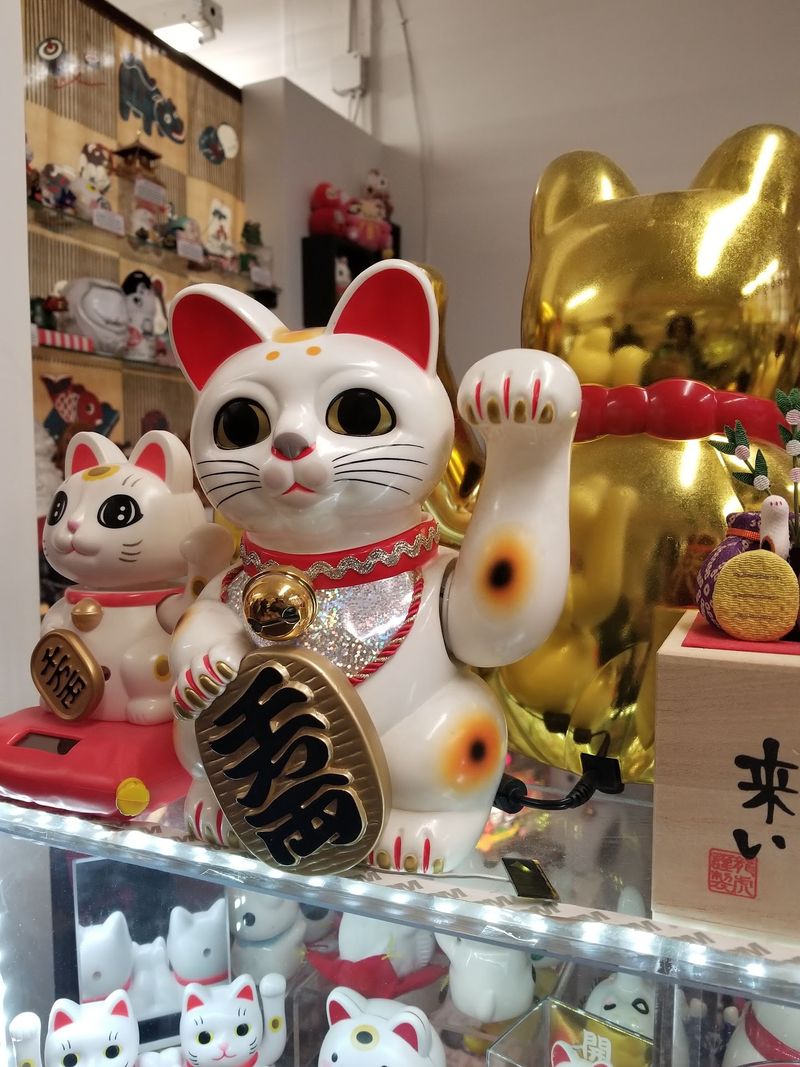
Right paw or left paw? That tiny choice changes the whole message of a lucky cat.
A raised right paw is said to call in money and good fortune. A raised left paw beckons customers and people.
Some cats hold a coin to show wealth. Others have extra-long arms, which supposedly help them wave in even more visitors.
A few figures grip a small marble or gem. That little ball is believed to attract money, or to stand for wisdom and future knowledge.
These symbols have been popular in Japan since the Edo Period, which ran from 1603 to 1868. Some of the earliest recorded examples date to 1852.
Once you know the code, the museum becomes a fun puzzle. You’ll start checking every paw and every prop like a detective.
Kids especially enjoy this game. Ask them to find a left-paw cat, then a coin holder, then one with a gem.
It turns a quiet look around into a lively scavenger hunt. You’ll leave knowing exactly what to look for the next time a lucky cat waves at you in a store window.
Some Of These Lucky Cats Clip Nails And Pay Out Coins
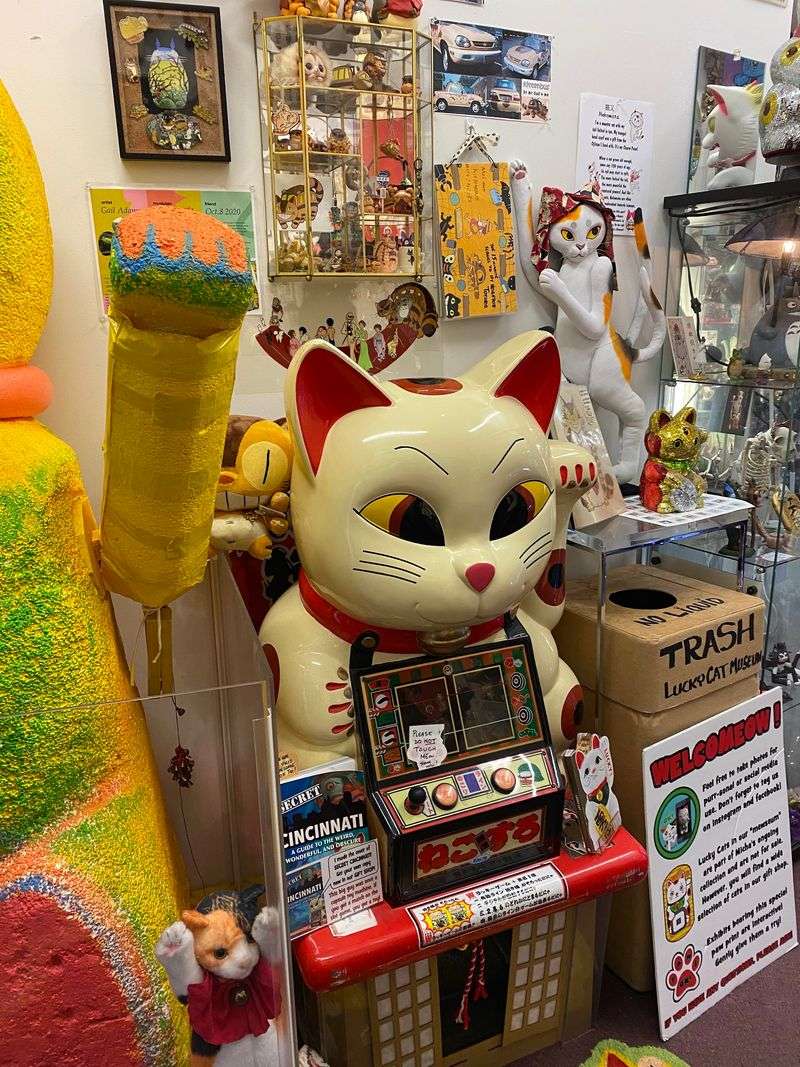
Nail clippers shaped like lucky cats exist. So do lucky cat piggy banks and lucky cat slot machines.
The collection stretches far past classic ceramic figures. You’ll see plastic, wood, stone, and metal versions, plus plush cats and toy cats.
Modern artists have decorated some of them too. That mix makes the room feel part folk art and part pop-culture treasure chest.
The slot machines are a highlight because guests can actually play them. It’s free fun, and nobody walks away broke.
Interactive pieces like these keep younger visitors busy. Hands-on items help kids connect with the collection instead of just staring politely.
Grown-ups love them just as much, honestly. There’s something funny about pulling a lever while a crowd of ceramic cats waves at you.
Take a moment to notice how creative people get with one simple shape. A waving cat becomes a gadget, a bank, a toy, or a sculpture.
That variety is what makes the visit feel so strange in the best way. Every corner asks the same silly question: what else could a lucky cat possibly be?
Bring Your Sharpest Eyes For The Tiniest Cat Of All
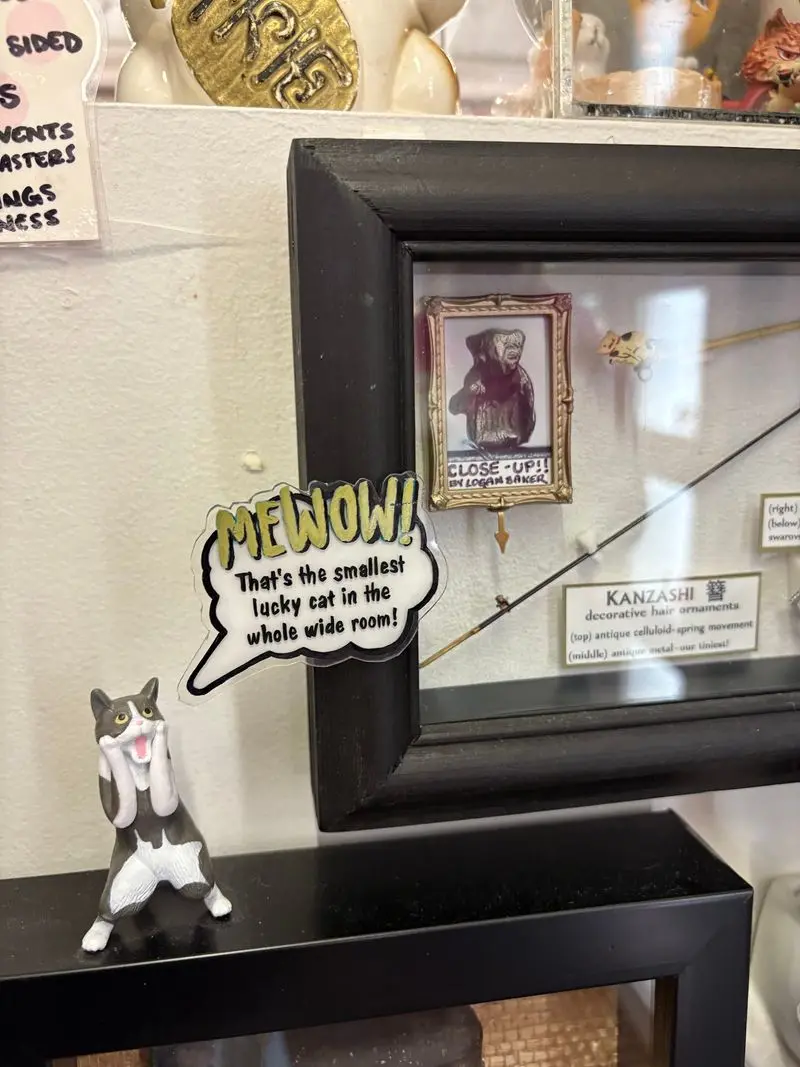
A lucky cat no bigger than a grain of rice lives in this museum. Good luck spotting it without a little help.
On the other end of the scale, some figures reach about six feet tall. That’s taller than plenty of the adults visiting them.
Size is just one surprise. One of the oldest pieces is a repurposed zushi from the 1800s, a small Japanese cabinet once used for shrines.
Another favorite is a miniature toy shop. It was bought by Cincinnatians who visited Japan in 1929, which gives it a fun local twist.
Picture that trip nearly a century ago. Someone carried this tiny shop home to Ohio, and now it sits among thousands of waving cats.
These special pieces reward curious visitors. Ask about the stories behind them, because the history adds a lot of color.
The micro cat is a great challenge for kids. Have them guess where it might be before you find it together.
Big, tiny, old, or new, each piece shows how far one symbol can travel. Time, size, and distance can’t stop a good lucky cat.
Your Guide Collects Cats And Drives A Catbus
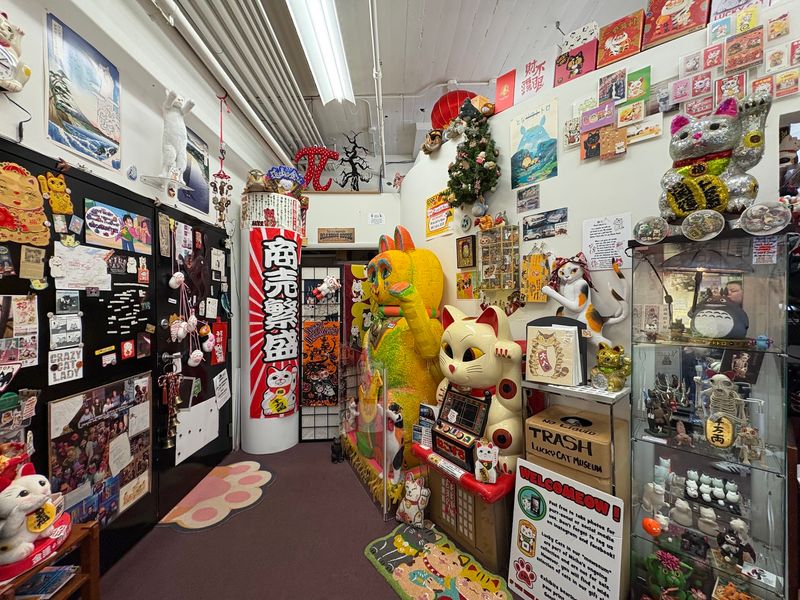
Micha Robertson moved from Oklahoma to Cincinnati in 2001 and couldn’t find lucky cats anywhere. So she started building her own supply.
Her first one came from her sister. Another turned up at a Goodwill store.
Things grew quickly after she became a beta tester for Rinkya. It was one of the first U.S. companies to help people bid on Yahoo Japan Auctions.
You can guess the rest. A few cats became hundreds, and hundreds became thousands.
Visitors are often greeted by Micha herself. She gives a short introduction, then lets guests explore on their own.
She tends to check in along the way to answer questions. That balance feels relaxed, like touring a friend’s wildly impressive hobby room.
Her love of cats goes beyond figurines. She shares her home with six real cats.
Her personal car is painted to look like the Catbus from My Neighbor Totoro. If that detail doesn’t tell you everything about her passion, nothing will.
Ask her about the legend behind the beckoning cat. Hearing it from someone this devoted makes the story stick long after you leave.
A Lightning Bolt Legend Starts The Whole Story
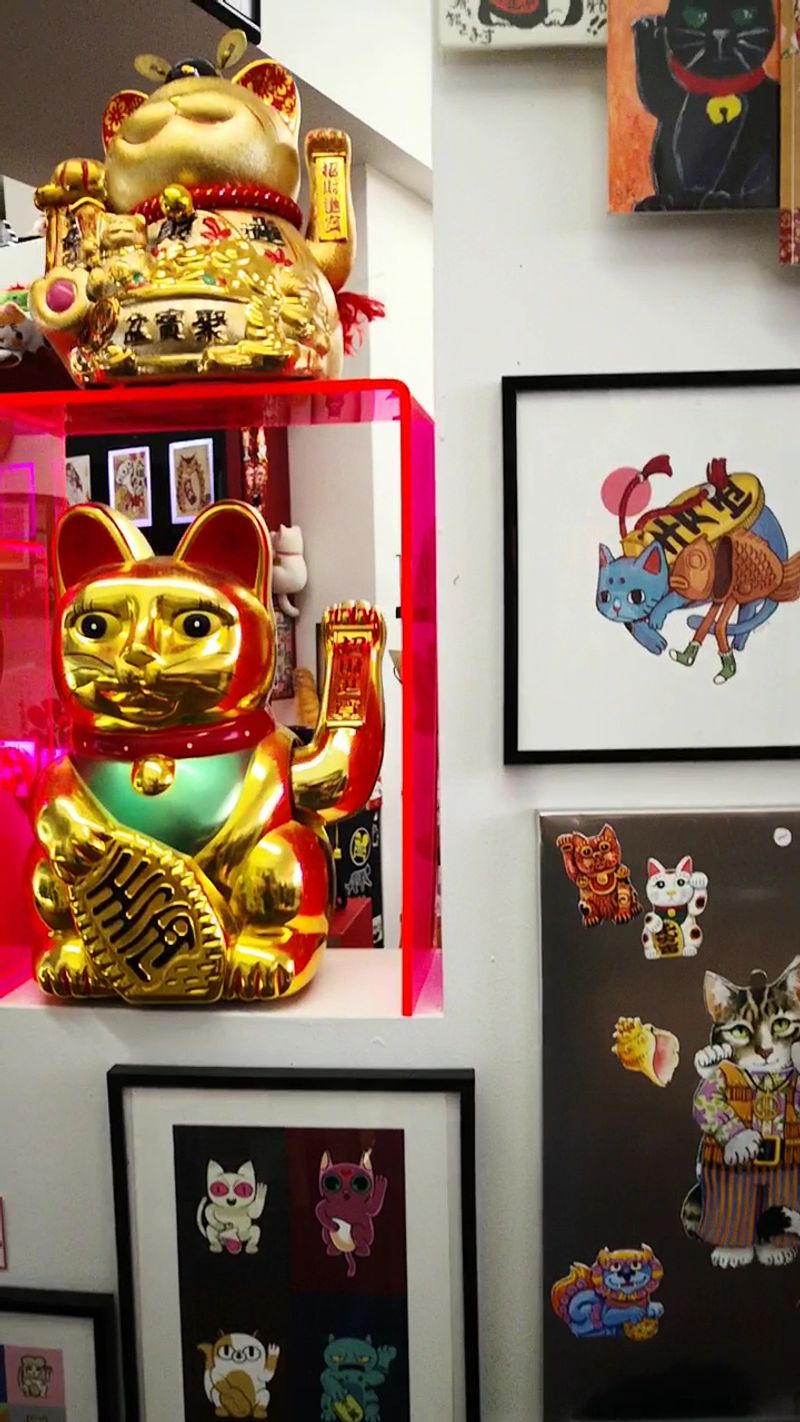
According to legend, a cat once saved a nobleman from a lightning strike. That tale ties the lucky cat to Tokyo’s Gotokuji Temple.
The story goes that the cat waved the man over to the temple. He moved just in time to stay safe from the storm.
Today, the Gotokuji Temple gardens hold hundreds of white cat figures. It’s a famous spot for lucky cat fans around the world.
Micha often shares this legend with guests at the Lucky Cat Museum. It gives the colorful shelves a deeper meaning.
Knowing the backstory changes how the collection looks. Those waving paws suddenly feel like little thank-you notes to a clever cat.
The legend also explains why the figures feel friendly instead of fancy. They’re meant to invite good things in, not just sit and look pretty.
It’s a nice bit of Japanese culture to carry home. You might never see a lucky cat at a restaurant the same way again.
Ask questions if you want more history. Plenty of stories hide behind these figures, and the museum is a great place to learn them.
The Building Once Made Famous Green Jackets
Clocks came first. The building that holds Essex Studios began as the Herschede Clock factory in the 1920s.
In the 1950s, Hamilton Tailoring Company moved in. It made the famous green jackets for golf’s Masters Tournament.
As the American textile industry faded, the old factory changed again. In the 1990s it became artist studios.
That’s where the Lucky Cat Museum lives today, at 2511 Essex Place #150, Cincinnati, OH 45206. It sits in the Walnut Hills neighborhood.
The museum first opened to the public in 2012. A friend suggested sharing a studio space at Essex, and the cats moved in.
In 2016, the collection moved to its current first-floor space. The new room added carpet and air-conditioning, which every cat fan in an Ohio summer will appreciate.
The building houses many artists, so doors stay locked. Your appointment matters, and showing up on time makes life easier for everyone.
Spend a minute admiring the setting before heading inside. Clocks, golf jackets, art, and lucky cats make one of Cincinnati’s oddest building resumes.
Save A Few Minutes For The Little Gift Shop
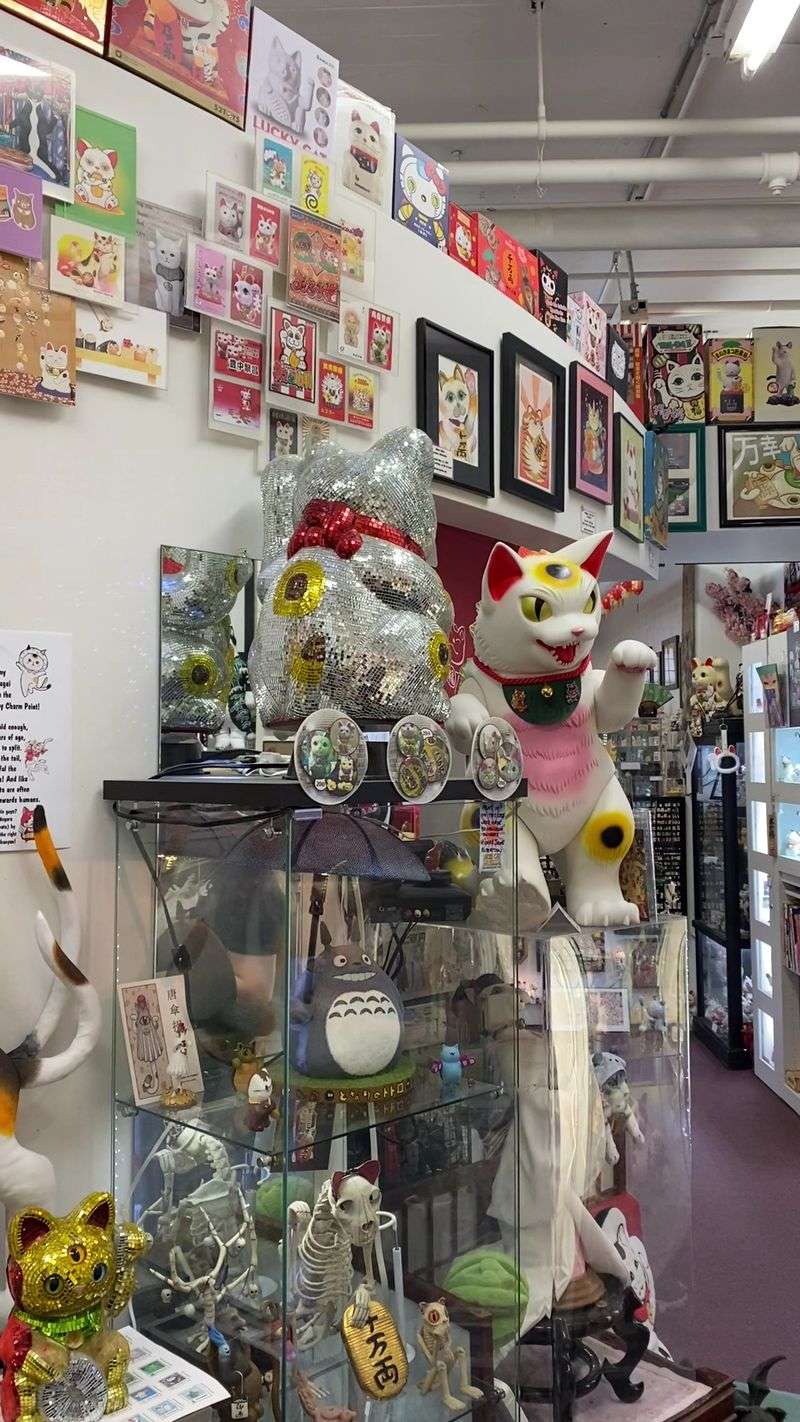
Leaving empty-handed is tough here. A small gift shop sits right inside the Lucky Cat Museum.
Most of the collection isn’t for sale, of course. The shop is where you can bring a little luck home.
Items have included mini cats, logo magnets, and T-shirts. You might also find quirkier pieces, like a mechanical coin bank with a sneaky cat paw.
The shop is tiny, so only a few people fit at once. Take turns and give everyone room to browse.
A lucky cat makes a fun gift for a friend opening a business. Remember the code: right paw for money, left paw for customers.
Buying something also helps support the museum. Since admission is free, souvenirs and donations go a long way.
The museum appears in the book Secret Cincinnati, so you’re in good company. Curious travelers keep finding their way to this odd little spot.
Wrap up your Ohio afternoon with a waving cat on your shelf. Every time it lifts that paw, you’ll remember the strangest, cutest 45 minutes of your trip.