
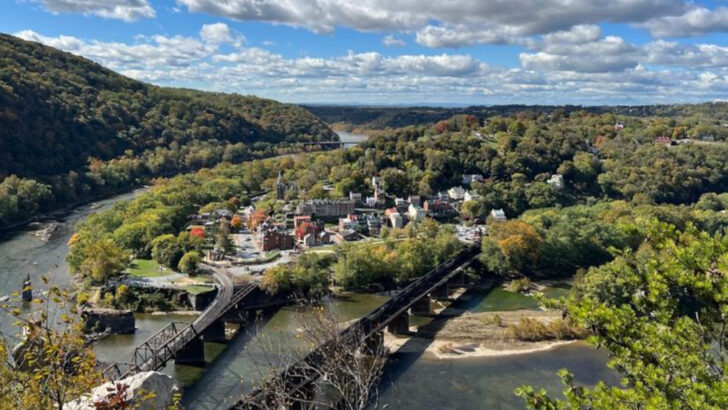
Some places feel like secrets kept by the landscape itself, and Harpers Ferry is one of them. Where the Potomac and Shenandoah meet, the town seems tucked into the cliffs like a postcard you somehow stepped into.
History echoes on every corner, yet the trails and river views keep the experience grounded and fresh. If you are craving a walkable getaway with depth, this pocket-sized town rewards every curious turn.
The Point Overlook
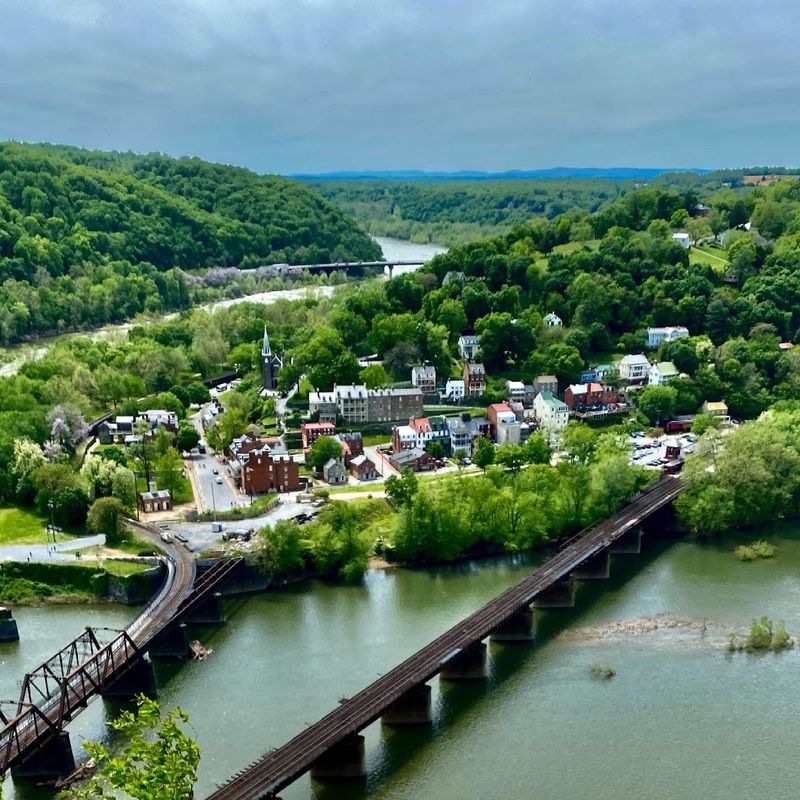
Stand at the tip of town and you feel the terrain pulling you in two directions at once. Rivers braid together below your feet while trains whisper across the bridges, and the hills of Maryland and Virginia frame the scene.
It is the kind of view that resets your inner compass quickly.
Timing matters here, and sunrise is generous. Soft light paints the church steeples, wakes the cliffs, and gives you space before day trippers arrive.
Pack a thermos, find the stone wall, and watch fog lift off the Potomac like stage curtains.
Photographers get a natural tripod with the low wall and wide angles across both waterways. If crowds gather, step a few yards toward the river path for quieter composition lines.
Safety note: the rail tracks are active, so keep distance, mind posted signs, and stay on marked surfaces for the best mix of beauty and calm.
Harpers Ferry National Historical Park
History feels walkable here, stitched into storefronts, workshops, and narrow alleys that still carry 19th-century proportions. You can drift from canal stories to Civil War tactics across just a few blocks.
Each exhibit rewards patience, and the context panels answer questions you did not realize you had.
Start at the visitor center to catch the shuttle and grab maps that link buildings to timelines. Docents are generous with specifics, pointing out armory remnants and lesser-known turning points.
Short films help anchor the big arcs so the street-level details click.
Plan pockets of time between exhibits to sit on a stoop and absorb the setting. You will notice how geography shaped the narrative: rivers, rails, and ridgelines forced decisions.
Comfortable shoes, a refillable bottle, and a flexible schedule make the difference between checking boxes and actually understanding why this place mattered.
John Brown’s Fort
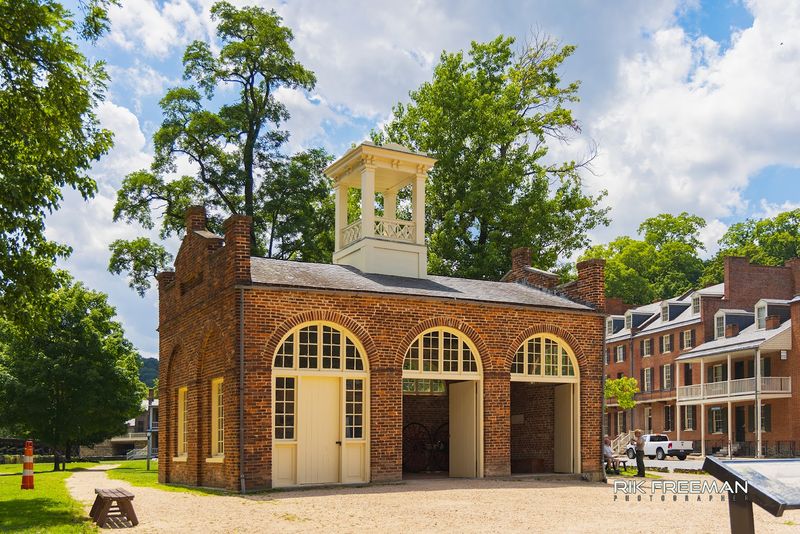
So much weight sits inside a compact brick structure that looks almost ordinary at first glance. Step closer and the raid turns from textbook summary into a room-sized conversation.
The interpretive panels do heavy lifting without theatrics, letting the floor plan and barred windows contribute their own testimony.
Give yourself time to read slowly, then step back outside and consider the building’s travels and returns. That movement alone says plenty about memory and meaning in America.
You will likely overhear visitors debating outcomes and intentions, which adds texture without needing a lecture.
If you prefer quiet reflection, aim for earlier hours or a weekday. For context, a loop past former armory grounds helps link tactics to terrain.
Keep questions handy for rangers, who handle nuance well and can point you to additional sources that go beyond simple heroes and villains.
Lower Town Historic District
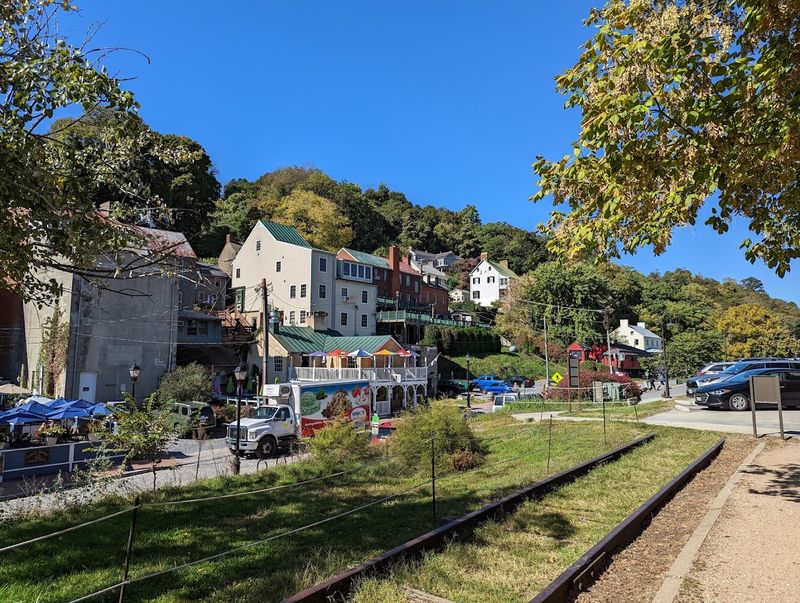
Brick by brick, this riverside grid draws you down to doorways that never feel staged. Shops sell books and trail snacks in the same breath, while upstairs windows watch like quiet neighbors.
Street musicians sometimes set a tempo that makes you slow your walk without noticing.
Start with a gentle lap around the blocks to read plaques and pick snacking priorities. The ice cream window can become a checkpoint before climbing to the churches above.
Benches are placed with purpose, catching breezes that slide between river corridors.
If crowds thicken, shift to side alleys for calmer angles and candid photos. Respect private porches, and use shop lines as a chance to ask staff for local tidbits.
Evening light flattens glare on the brick, so late-day browsing doubles as the best time for people-watching and patient window shopping.
Appalachian Trail Conservancy & Visitor Center
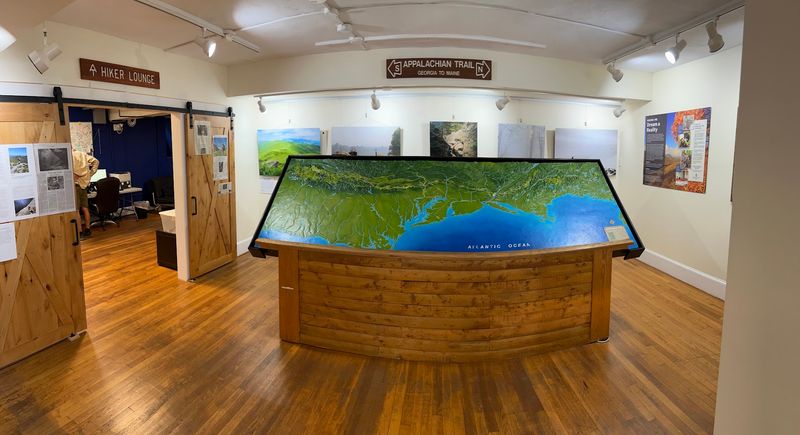
Hikers call this the psychological halfway point, and the energy inside proves it. Maps cover the walls, trail names crowd the registers, and staff greet you like you belong.
Even if you are not thru-hiking, you feel part of a longer story when the bell rings for arriving walkers.
Ask about day hikes that sample the trail without big commitments. Staff will align your time window with elevation, shade, and viewpoints so you leave satisfied.
The photo registry is worth a peek, a living yearbook that keeps the Appalachian dream grounded in real faces.
Grab water, check weather, and confirm shuttle timing if you are linking segments. The short walk from Lower Town warms up legs before you hit steeper grades.
A quick gear check here beats fumbling on the ridge, and the advice board often lists fresh intel on closures and detours.
Maryland Heights Trail
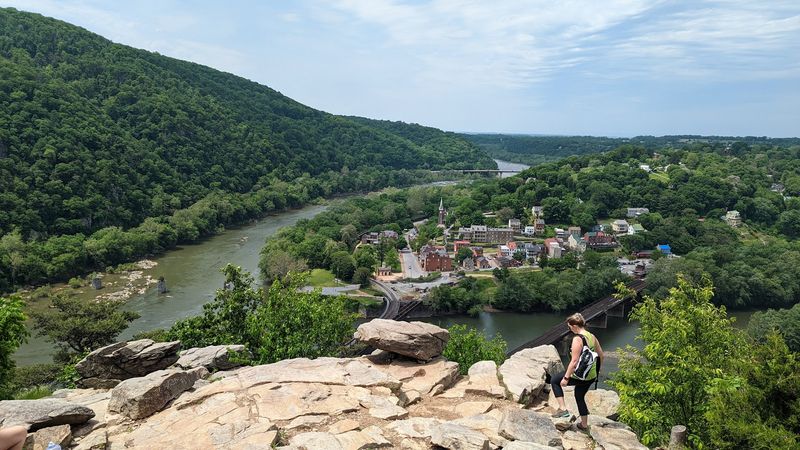
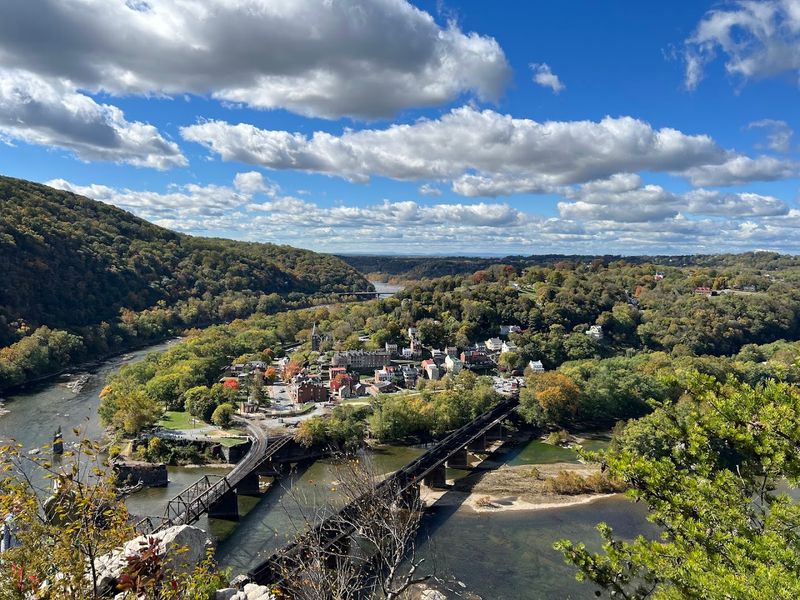
From town level, the cliffs across the river look daunting, but the trail is manageable with steady pacing. Switchbacks ease the climb, and interpretive stops give your lungs a reason to rest.
By the overlook, rooftops shrink and the bridges become clean geometry over glassy water.
Start early to claim cooler air and open space at the viewpoint. Grip matters on the rock slab, so sneakers with tread are your friend.
Pack light layers since wind can cut through even on mild days above the rivers.
Parking and access shift based on season, so confirm current guidance at the park site or visitor center. Pack out everything, and keep conversations soft so the first-look moments land for everyone.
If time is tight, the lower viewpoint still rewards with angles that capture the full layout of Harpers Ferry without committing to the final push.
Jefferson Rock
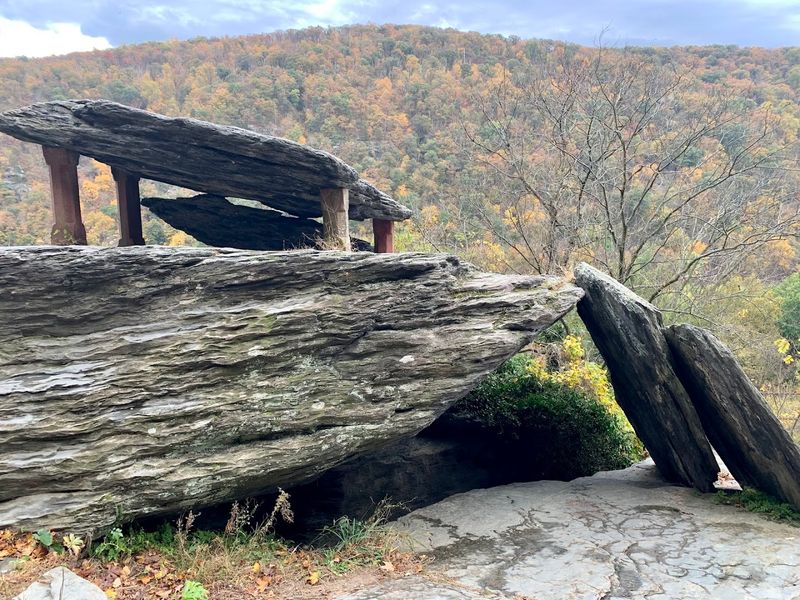
Words from a former president ride every guidebook, but the real power is how the ledge frames sky, river, and steeple. The approach winds past stone steps and quiet yards, giving your calves a small workout before the view.
Railings set boundaries that photographers can use as compositional anchors.
Go during off-peak hours to avoid clusters on the platform. The breeze here feels different, lifted by the grade and channeled by the gap.
With a little patience, you can catch uninterrupted minutes that feel generously oversized for the footprint.
Grip is key on damp mornings, so treat the stone with respect and step mindfully. Quick detours to nearby church grounds round out the stop and add shade during warmer months.
Bring a short lens for context and a longer one for stitching details across the river valley.
St. Peter’s Roman Catholic Church
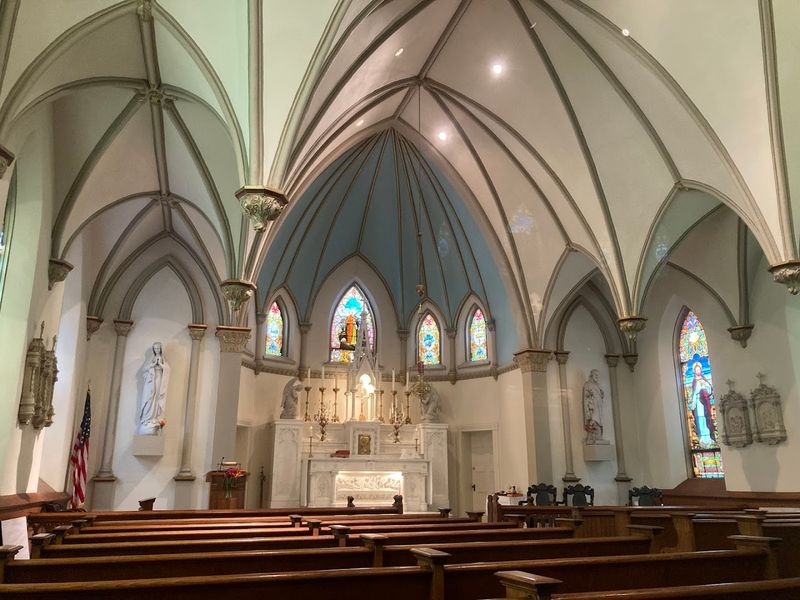
From below, the steeple serves as a compass needle guiding your climb. Up close, the stonework carries stories of endurance through upheaval and repair.
The porch view earns a pause, aligning rooftops, river, and rails into one layered panorama.
Quiet manners matter here, even during busy hours. Step aside for services, and keep conversations soft so the sanctuary retains calm.
If you like architectural details, note how the buttresses frame doorways that echo the surrounding cliffs.
Early evening light warms the facade and softens bright reflections from the river. Photographers should work from the side path for angles that keep power lines out.
Combine this stop with Jefferson Rock, using the church grounds as a rest point before continuing along the hillside.
Bolivar Heights Battlefield
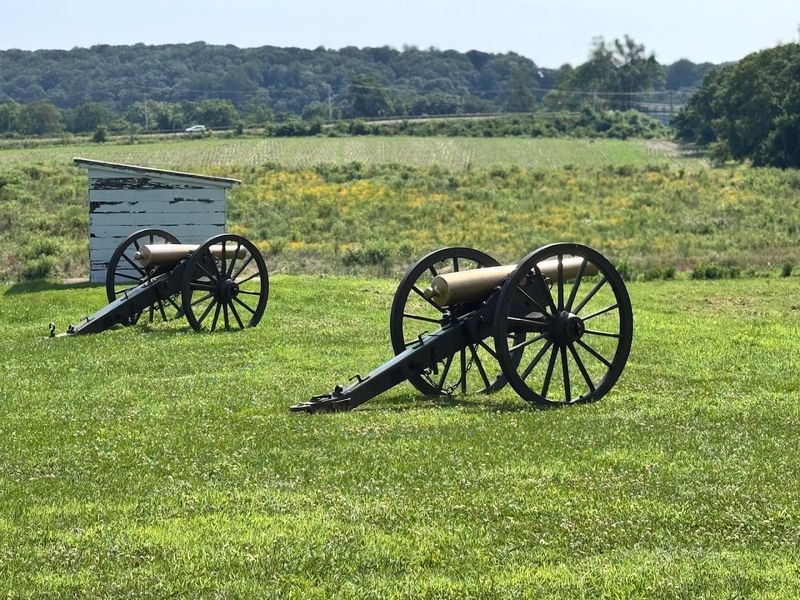
Open fields make strategy easier to picture than any diagram can. From this ridge, the town becomes a chessboard with rivers for borders.
Wind pushes through grass, and the quiet allows you to concentrate on movement lines and timing.
Follow the markers in sequence to connect troop positions with terrain. Short trails loop you through key vantage points without heavy elevation.
A picnic here feels appropriate, respectful, and surprisingly restful given the weight of the subject.
Late afternoon brings long shadows that carve the ridges with definition. Bring binoculars if you like to study distant bridges and bluffs.
With a little attention, you will leave understanding not only what unfolded, but why commanders gambled so much on ground that looks pastoral today.
Harpers Ferry Train Station
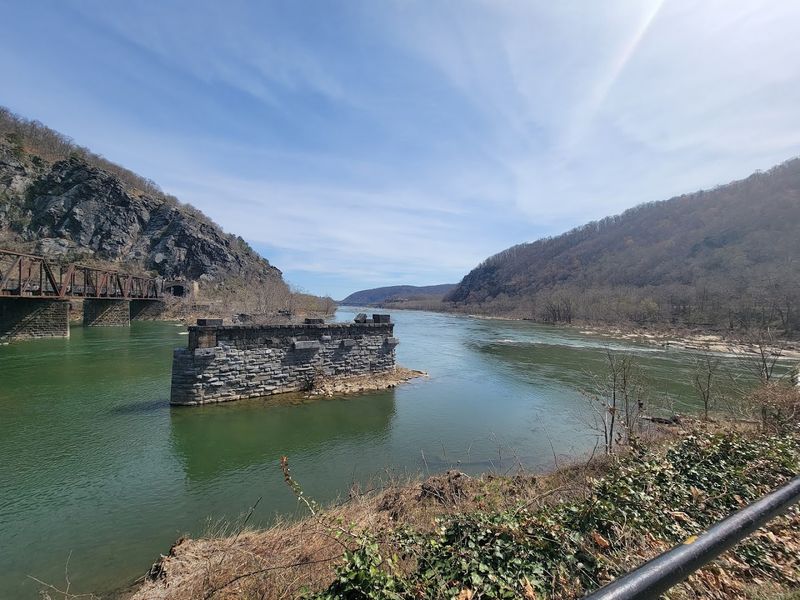
Tracks slice through the town’s story, and the station still works as a living threshold. You can feel departures and arrivals layer over centuries of movement.
Even a quick pause under the canopy captures the rhythm of a place defined by connections.
Check schedules for Amtrak and MARC if you like rail day trips. The platform gives shelter on rainy mornings, adding shine to bricks and steel in photos.
Conduct yourself carefully around active rails, minding announcements and posted limits.
For a small ritual, grab a coffee and let one full train come and go before moving on. That cycle sets an easy tempo for the rest of your visit.
The station pairs nicely with a walk across the footbridge to the canal towpath, keeping momentum without losing the town’s center.
Storer College and Camp Hill
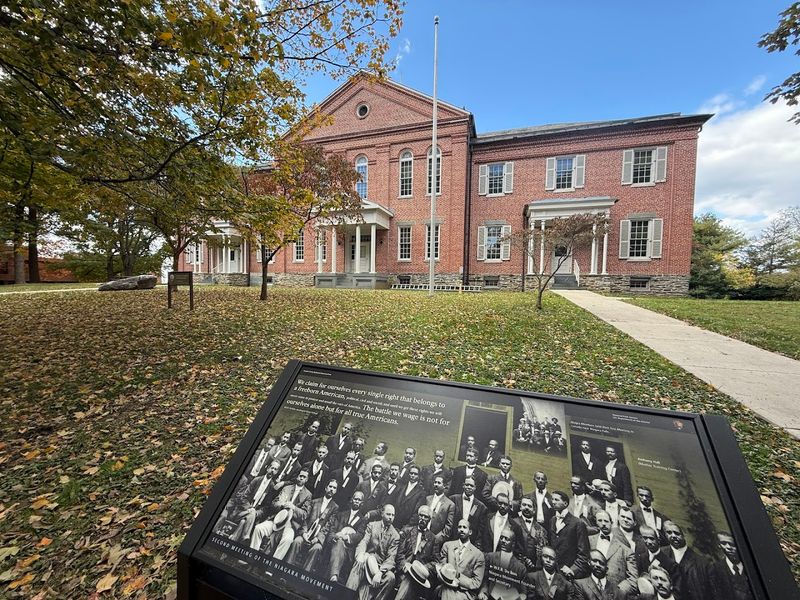
Education changed trajectories here, and the campus lawns still hold that charge. Buildings sit with quiet confidence among old trees, telling a postwar story that deserves unhurried steps.
Plaques and photos sketch out lives that started small and reached well beyond these hills.
Walk a loose loop across Camp Hill to connect academic halls with sweeping views. Benches encourage reading, journaling, or simply letting the timeline settle.
The space rewards introverts, offering context without crowds or tight corridors.
If the day runs hot, this higher ground offers consistent breezes. Pair the visit with nearby church stops to keep gradients reasonable.
You will leave with names to look up later, a sign that the place did more than pass information along.