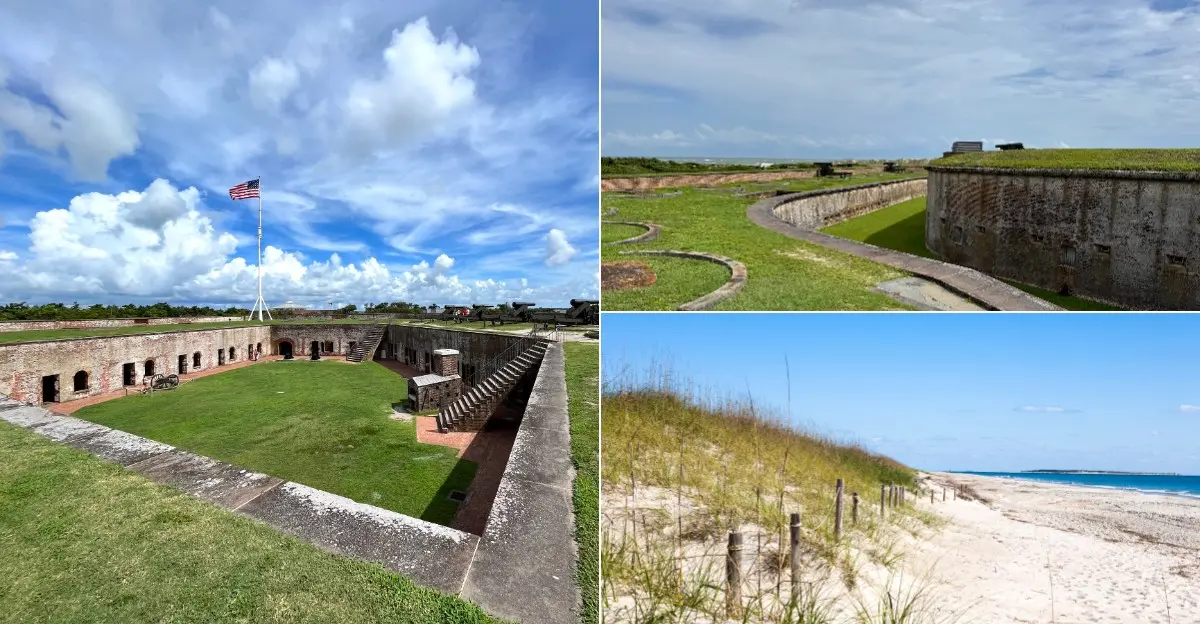
At the far end of a slender barrier island, ocean breezes sweep across a fortress that has stood guard for nearly two centuries.
Fort Macon State Park sits on the eastern tip of Bogue Banks near Atlantic Beach, North Carolina.
Its brick fort was completed in the 1830s and saw action during the Civil War.
Visitors can wander through its vaulted rooms, climb onto the walls, and look out over Beaufort Inlet and the Atlantic Ocean.
Short nature trails wind through maritime forest where you might spot seabirds and other coastal wildlife.
Pack a picnic and plenty of sunscreen, because this small park offers a surprisingly big day out.
A Small Coastal Corner With a Wide Horizon
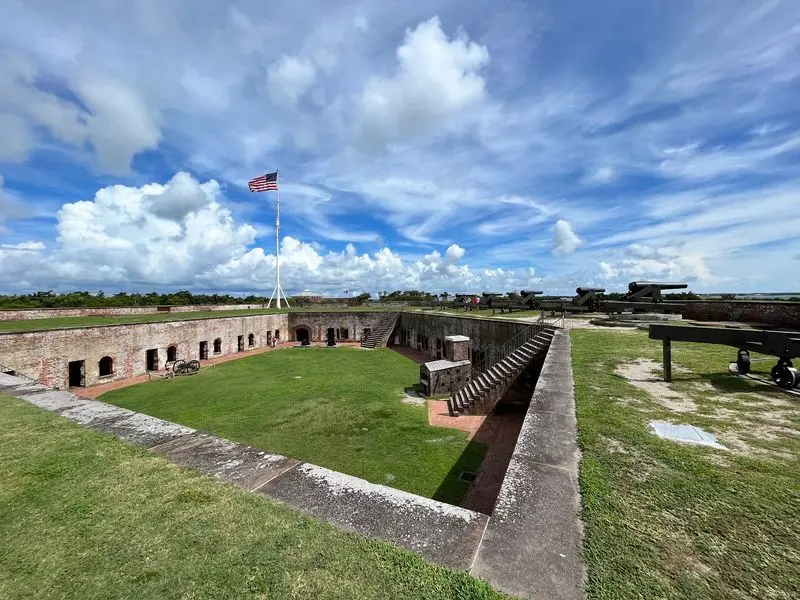
Salt air and a wide blue horizon make the approach feel bigger than the map suggests. Fort Macon State Park sits at 2303 E Fort Macon Rd, Atlantic Beach, NC 28512, United States. Its setting at the eastern end of Bogue Banks brings ocean scenery and military history together.
The park occupies a coastal corner, but the views reach far beyond its boundaries. Open water, sandy shoreline, and low dunes create a sense of space that surprises many first visitors. You do not need a long hike to begin enjoying that scenery.
Start by checking the park map so you understand the separate beach and fort areas. Pick your first stop based on the weather, your energy, and whether anyone in your group needs an easier route. A visit can be a short scenic break or a full day with several different activities.
Bring drinking water, sun protection, and shoes suited to both sand and paved paths. Coastal wind can make the air feel cooler than expected, especially outside summer. Before leaving home, check the official park website for current hours and closures, since the fort, visitor center, and outdoor areas may follow different schedules throughout the year, especially during holidays or periods of severe coastal weather.
Ocean Views That Reward a Slower Pace
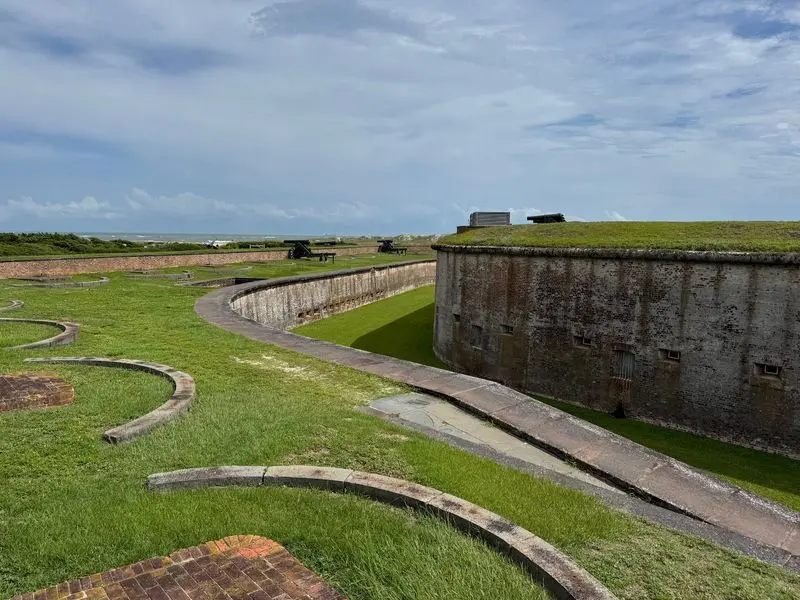
The best view might be the one that makes you put your phone away. From permitted elevated areas around the fort, the shoreline opens into a broad sweep of sand and water. Watching the horizon gives you a better sense of why this coastal position mattered.
Military planners needed clear views of approaching vessels, and visitors now enjoy that same open setting for a very different reason. The contrast between sturdy brick walls and the moving sea makes the scene especially memorable. Take time to notice both rather than rushing through for a single photograph.
Morning light can soften the landscape, while brighter midday conditions bring out the colors of the water. Wind, clouds, and tides change the scene, so no particular shade of blue is guaranteed. A simple camera or phone is enough to capture the relationship between the fort and coast.
Use marked routes and respect barriers around elevated sections. Some surfaces and stairs can be uneven, so keep children close and choose secure footing over a better camera angle. If steps are not comfortable for your group, ask staff about suitable viewpoints and enjoy the horizon from accessible ground level areas instead, without feeling that you must climb to appreciate the coastal scenery.
Sandy Shoreline Without a Packed Schedule
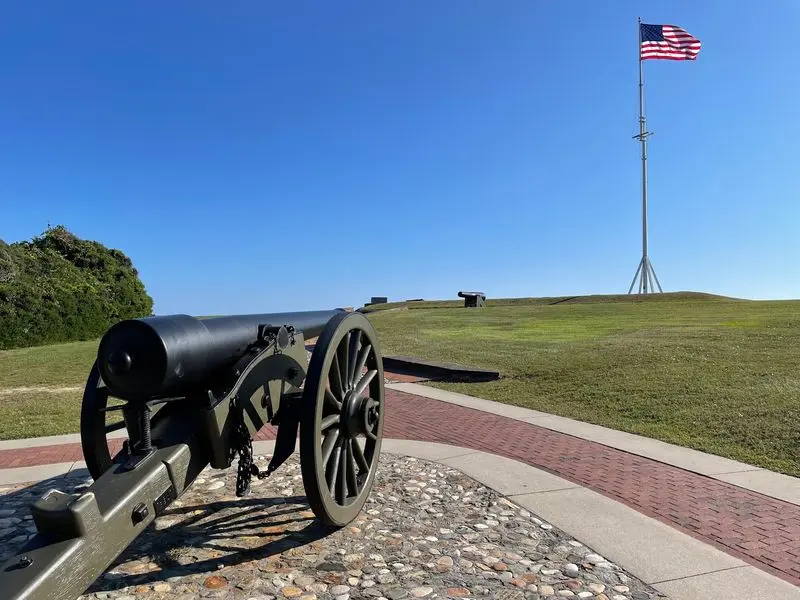
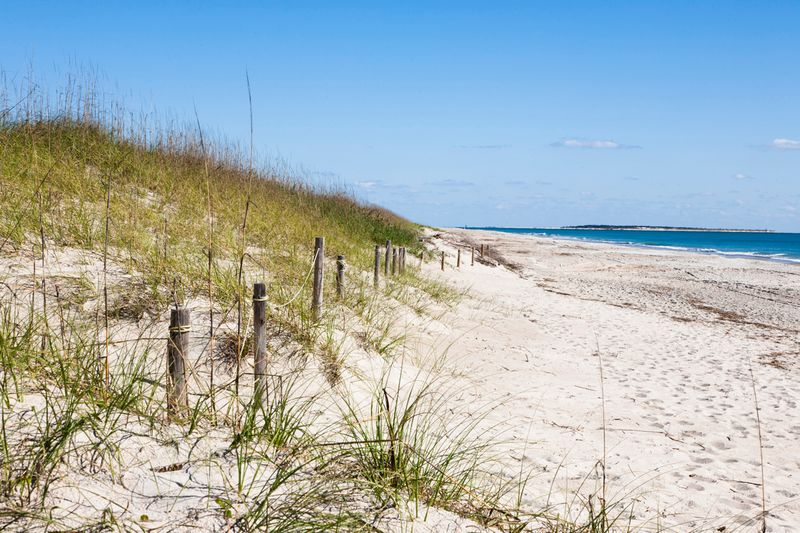
A beach towel can be the only plan you need for part of the day. The park includes about 1.5 miles of ocean beach, giving visitors room to enjoy the shoreline alongside their history stop. Sand, surf, and open sky offer a welcome change after exploring enclosed rooms.
Choose the designated swimming beach rather than assuming every stretch of water is suitable for a dip. Conditions near the inlet can be dangerous, and strong currents deserve respect even when the surface looks calm. Read posted warnings and follow staff instructions before entering the ocean.
Lifeguard coverage is seasonal and should never be assumed. Check current conditions, keep children within close reach, and avoid swimming alone. If the surf looks rough, a walk above the wash of the waves can still be a satisfying beach outing.
Pack sunscreen, plenty of water, and a bag for carrying your trash back out. Stay off the dunes, where plants help hold sand in place and protect the coast. For a relaxed visit, bring only what you can comfortably carry, use designated access routes, and leave enough time to rinse sandy feet before returning to your car or heading toward the fort for another round of exploring with your whole group.
Brick Walls With Stories Behind Every Door
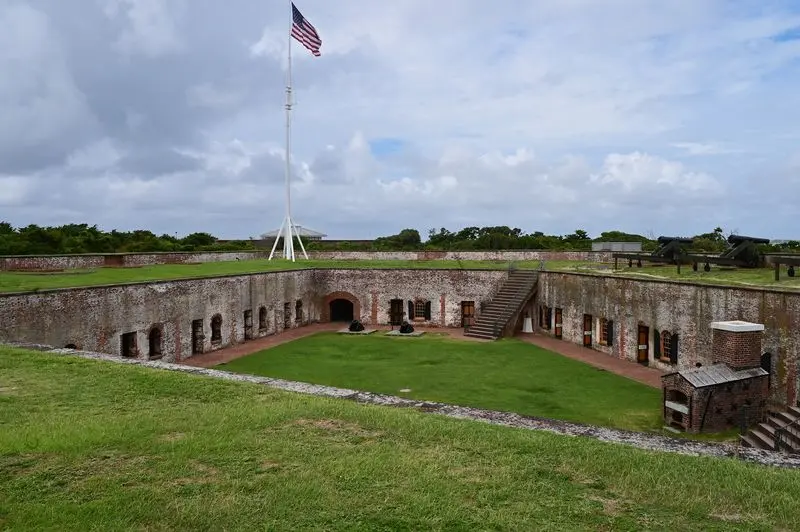
Cool brick rooms offer a sharp change from the bright beach outside. Inside the restored fort, arched spaces and thick walls help visitors picture a time when defending the coast shaped daily life. The building itself is part of the story, not just a container for exhibits.
Completed in 1834, the fort later became a Civil War battleground. Union forces captured it in 1862 after a bombardment showed how newer weapons could challenge older brick defenses. That history adds meaning to the walls, passages, and coastal views you see today.
Several rooms contain exhibits about military life and the fort’s changing roles. Look for details that make history feel human, such as clothing, living spaces, and the work needed to keep a garrison running. Children may connect more easily with those everyday details than with a long list of dates.
Allow enough time to explore without treating every doorway as a quick photo stop. Visitors who enjoy history can easily spend a substantial part of their outing here. Wear comfortable walking shoes, watch for uneven surfaces, and ask staff which rooms are open during your visit, since access and programs can change and some parts of a historic building may present challenges for visitors with limited mobility.
A Visitor Center That Makes the Past Click
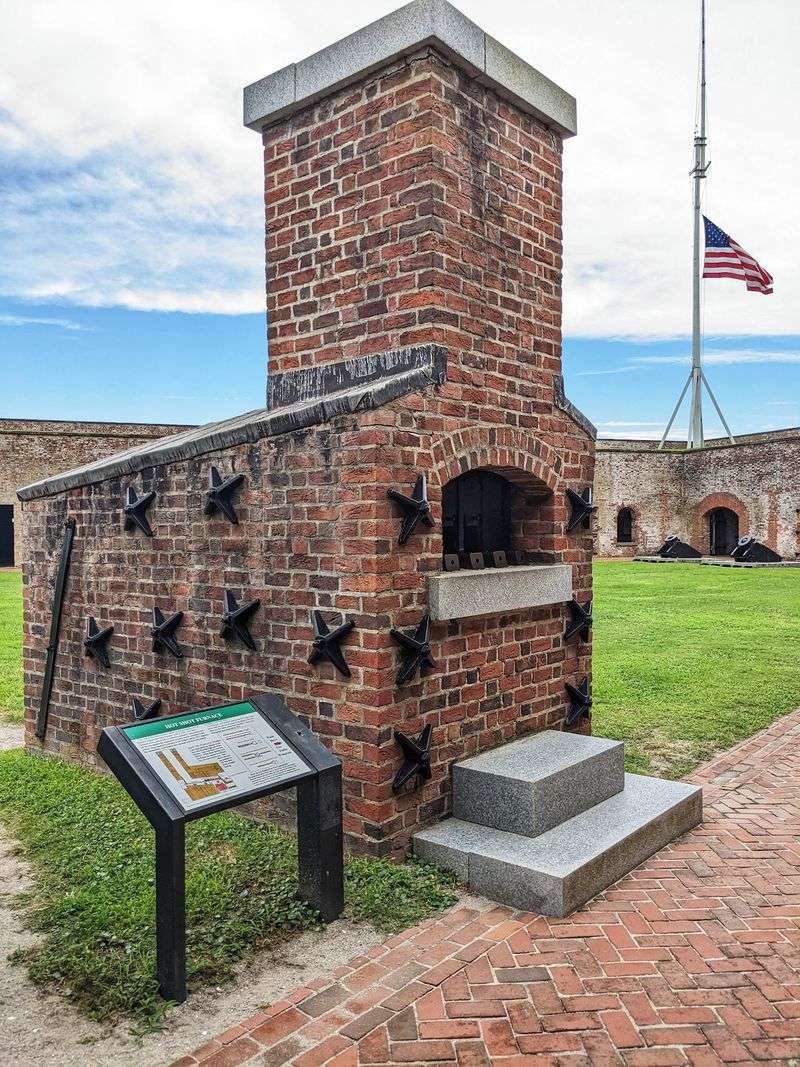
A little background can turn an old wall into something much more interesting. The visitor center provides a useful starting point before you explore the fort on your own. Its exhibits and introductory film help explain what happened here and why the site remains worth protecting.
Rather than trying to memorize every date, focus on a few simple questions. Who lived inside the fort, what were they protecting, and how did their work change over time? Those ideas give children and adults something to look for as they move through the grounds.
Staff and volunteers can also help you choose a route that fits your available time. Ask about guided tours, current exhibits, and any areas that are temporarily closed. A short conversation may reveal a detail you would otherwise walk straight past.
On hot or unsettled days, beginning indoors can make the outing feel less rushed. Still, check the visitor center’s own hours instead of assuming it stays open as long as the outdoor park. If your group has different interests, agree on one exhibit to explore together, then leave room for individual browsing before heading outside to connect the museum’s stories with the actual brickwork, coastal setting, and rooms that bring those stories into sharper focus.
Wooded Trails Beyond the Beach Blanket
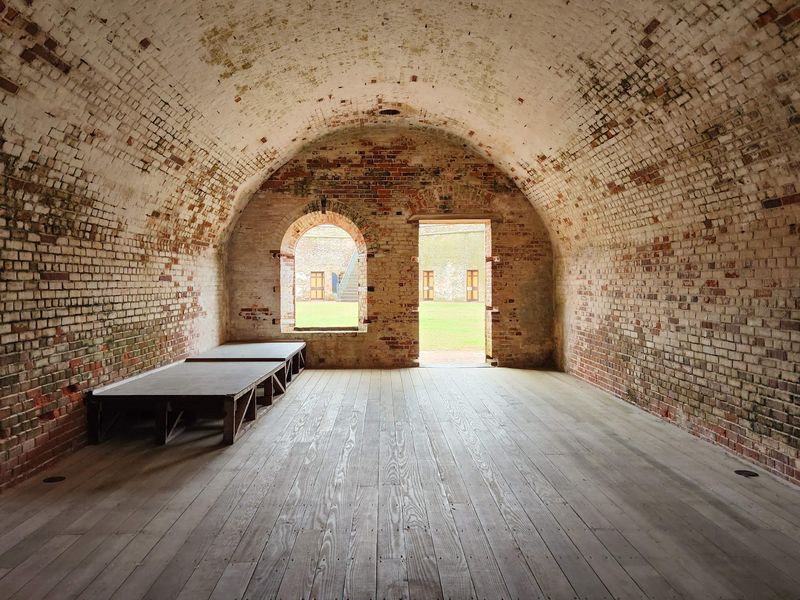
Trade the sound of crashing waves for rustling leaves, and the park shows another side. The Elliott Coues Nature Trail travels through coastal habitats, including maritime forest and dune areas. Its roughly 3.2-mile route offers more variety than a simple walk beside the surf.
Some stretches feel sheltered, while others expose walkers to sun and wind. That changing mix is part of the appeal, but it also makes preparation worthwhile. Carry water and wear shoes that feel secure on sandy or uneven ground.
Check the trail map before starting, especially if you are visiting with young children or have limited time. You do not need to complete the whole route to enjoy a closer look at the landscape. Ask staff about shorter options and current trail conditions rather than guessing at an unfamiliar junction.
Walk quietly enough to notice birds, shifting light, and the difference between open dunes and shaded trees. Stay on the marked path to protect plants and avoid damaging fragile habitat. During warm weather, plan your walk for a cooler part of the day, bring insect protection if needed, and save energy for the return, because a route that feels easy at the start can feel quite different after hours in the coastal sun.
Cannon Programs With a Memorable Boom

History becomes much harder to ignore when a cannon speaks. Scheduled firing demonstrations can add a dramatic moment to a visit, showing how historic artillery operated under careful modern supervision. The sound is powerful, even if you have watched similar demonstrations elsewhere.
Do not plan around a firing without checking the official events calendar first. Programs happen on selected dates, and weather or other conditions may affect them. Guided tours and other ranger activities also vary, so confirm what is offered during your visit.
If a demonstration is scheduled, arrive early enough to learn where spectators should stand. Follow every safety instruction and remain behind the designated boundaries. Bring hearing protection, especially for children and anyone sensitive to sudden loud noise.
The explanation before or after a firing can be as valuable as the boom itself. Listen for how crews worked together, what each person did, and why the fort’s weapons mattered to coastal defense. If no cannon program is available, your trip can still include a rewarding history lesson through exhibits, staff conversations, and a self guided walk, so treat the demonstration as a welcome bonus rather than the only reason to come and enjoy everything else the park has to offer during your planned day outdoors.
Simple Planning for a Fuller Day Outside
Free admission leaves more room in the budget for a relaxed coastal day. General park entry and exploring the fort do not require an admission ticket. That makes it easy to combine several activities without feeling pressured to squeeze value from an expensive purchase.
Build your outing around one main goal, then add extras if time allows. History lovers might begin with the visitor center and fort, while walkers may prefer a trail before the afternoon warms up. Beach time can fit between those stops rather than becoming another task to finish.
Restrooms and designated beach access help with practical needs, but accessibility varies across the grounds. Boardwalks can make reaching the beach easier without providing a firm route all the way to the water. Call ahead if you need specific mobility support or details about accessible facilities.
Keep pets within current park rules, and remember that pets are not allowed inside the fort. Check seasonal hours, weather forecasts, and posted restrictions before setting out. Most of all, leave some unplanned time for watching the water, because the park’s biggest reward is not completing every stop but enjoying the unusual mix of shoreline, living habitat, and history gathered together in one manageable place during a single memorable visit.