
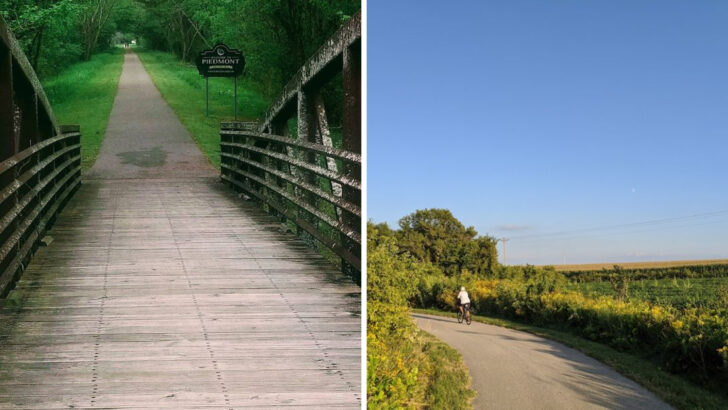
Sometimes all it takes is a great trail to make a regular Tuesday feel like an adventure.
Across the United States, there are bike paths that wind through forests, follow rivers, pass through history, and reward every pedal stroke with something worth seeing.
Whether you’re a casual weekend rider or someone who logs serious miles, there’s a trail out there with your name on it.
Here are 16 remarkable U.S. bike trails that can genuinely make your week a whole lot better.
Katy Trail — Missouri
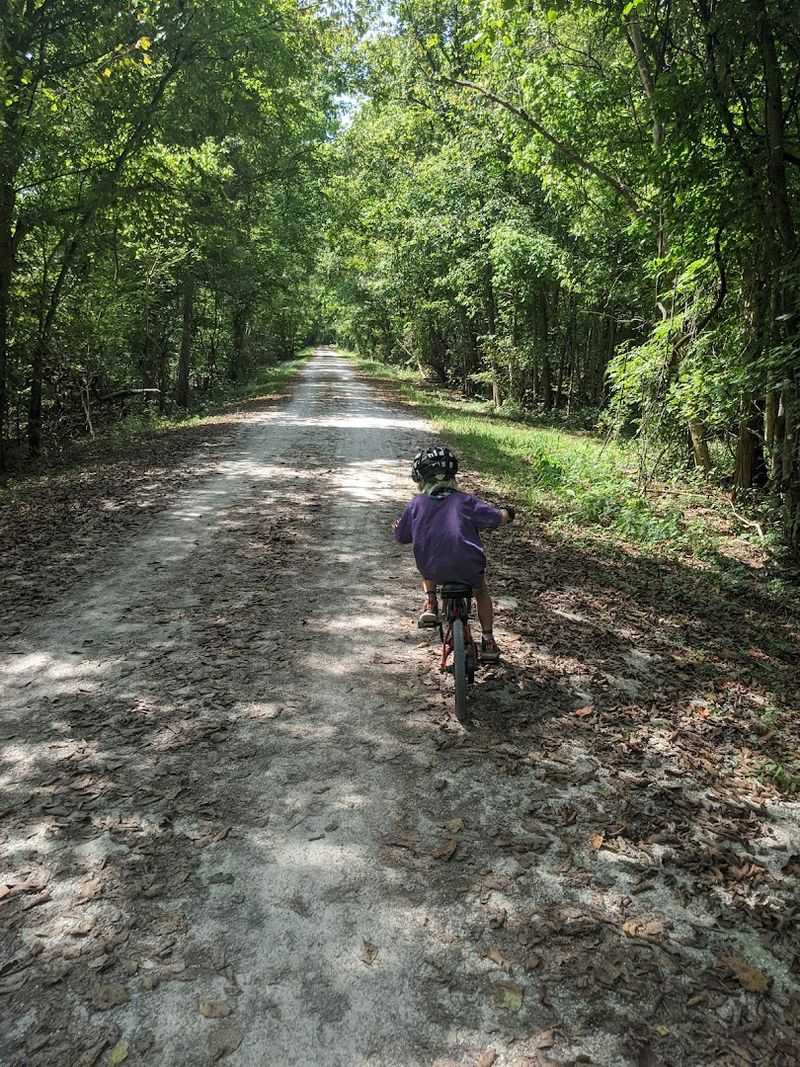
Picture yourself rolling through golden vineyards with the Missouri River glittering just beyond the tree line — that’s the everyday magic of the Katy Trail. Stretching over 240 miles across Missouri, it’s the longest rail trail in the entire country, built on a former railroad corridor that once connected dozens of small towns.
The surface is crushed limestone, which feels firm underfoot and handles well on hybrid or touring bikes. Riders pass through charming communities like Rocheport and Hermann, where local wineries and cafes make for perfect pit stops.
The trail hugs dramatic river bluffs for long stretches, giving you jaw-dropping views without any serious climbing.
Because the grade stays mostly flat, even beginners can tackle big mileage days without feeling destroyed by the end. Wildlife is everywhere — herons, deer, and wild turkeys are common sightings.
Spring and fall bring the most spectacular scenery, though summer rides have their own sweaty, cheerful charm. If you’ve ever wanted to feel like you’re crossing an entire state under your own power, the Katy Trail makes that dream completely achievable and seriously unforgettable.
Great Allegheny Passage — Pennsylvania to Maryland
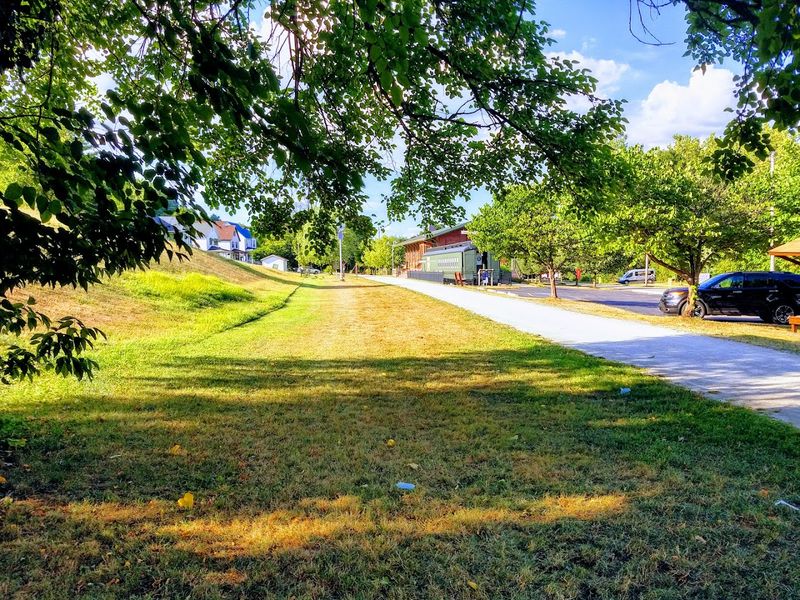
There’s something almost cinematic about pedaling through a century-old railroad tunnel with cool air rushing past your face and a circle of daylight growing at the far end. The Great Allegheny Passage delivers exactly that kind of moment, and it does so repeatedly across its 150-mile stretch from Pittsburgh, Pennsylvania, to Cumberland, Maryland.
Built along former railroad corridors, the trail is mostly flat and well-maintained, making it accessible to riders of all fitness levels. The surface is packed limestone, and the route passes through thick forests, over historic trestles, and alongside creeks that babble cheerfully the whole way.
Towns along the route, including Ohiopyle and Connellsville, offer food, lodging, and plenty of local character.
Many riders choose to connect this trail with the C&O Canal Towpath, which extends the journey all the way to Washington, D.C. — a bucket-list adventure for long-distance cyclists. Even if you only ride a section, the experience sticks with you.
The trail has a quiet, unhurried atmosphere that makes it easy to slow down, breathe deeply, and actually notice the world around you. Few trails in the country match this one for sheer historical richness.
Virginia Creeper Trail — Virginia
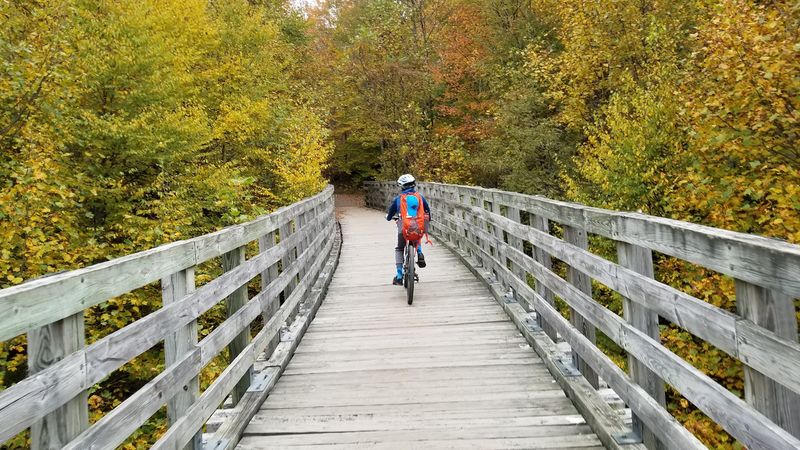
Ask almost any cyclist in the mid-Atlantic region about a trail that delivers pure joy, and the Virginia Creeper Trail will come up within the first few seconds. Named after the old steam locomotives that crept up its steep mountain grades, this 34-mile trail runs from Whitetop Mountain down to the town of Damascus — and yes, it’s mostly downhill.
Shuttle services at the top drop you and your bike at the highest point, and from there it’s a glorious, winding descent through some of Virginia’s most beautiful scenery. You’ll cross over 47 wooden trestle bridges, each one framing a different view of rushing mountain streams and dense forest canopy.
The trail is open to hikers and equestrians too, so the pace stays relaxed and friendly.
Damascus itself is a beloved stop on the Appalachian Trail, so the town has a fantastic outdoorsy energy with great food and gear shops. The lower section of the trail near Abingdon is flatter and perfect for families with younger kids.
Fall foliage turns this trail into something almost unreal — oranges, reds, and yellows reflecting off the creek water below every bridge. Honestly, few rides anywhere feel this rewarding from start to finish.
Minuteman Bikeway — Massachusetts
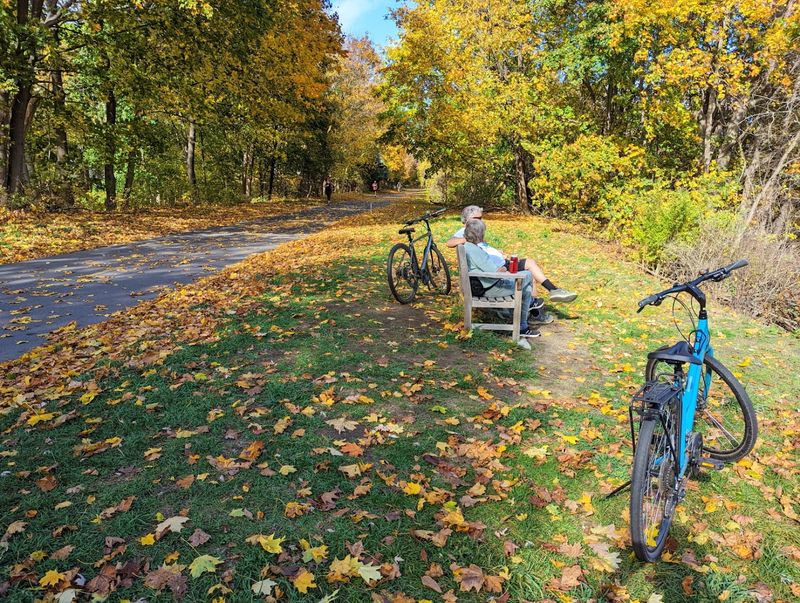
Not every great bike trail needs to be in the wilderness. The Minuteman Bikeway proves that a well-designed suburban path can be just as satisfying — and a whole lot more historically fascinating — than many backcountry routes.
Starting near Alewife Station in Cambridge and stretching about 11 miles to Bedford, this smooth, paved trail passes directly through the towns where American history first ignited.
Riders cruise past Lexington Battle Green, where the first shots of the Revolutionary War were fired on April 19, 1775. Historical markers, museums, and monuments pop up regularly along the route, turning every ride into a casual history lesson.
The trail is well-shaded by mature trees, which makes summer rides genuinely comfortable even on warm afternoons.
Because it connects directly to the MBTA subway system, many Boston-area commuters use the Minuteman as their daily route to work — a fact that keeps the path lively and well-maintained year-round. Families love it for weekend outings since the terrain is flat, safe, and easy to navigate.
Coffee shops and restaurants in Lexington and Arlington sit just steps from the trail. For a ride that’s equal parts exercise, culture, and community, the Minuteman Bikeway is hard to beat anywhere in New England.
Burke-Gilman Trail — Washington
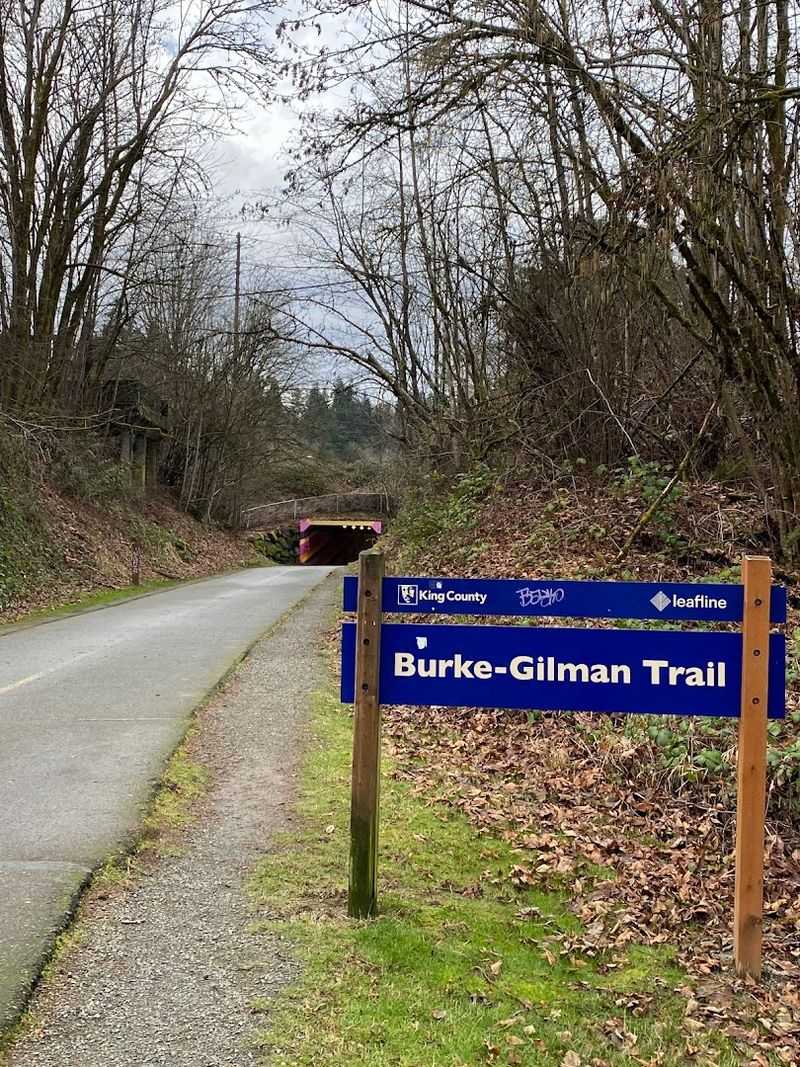
Seattle has a well-earned reputation as a cycling city, and the Burke-Gilman Trail is a big reason why. Stretching roughly 27 miles from Ballard through the University District and on toward Kenmore, this beloved urban trail manages to feel like a nature escape even as it weaves through one of the country’s most vibrant cities.
Along the way, riders enjoy waterfront views of Lake Union and Lake Washington, pass through leafy residential neighborhoods, and roll alongside the University of Washington campus — a stretch that buzzes with students, dogs, and street food vendors. The pavement is smooth and well-marked, making navigation easy even for first-time visitors.
One of the trail’s best qualities is how naturally it incorporates coffee culture. Seattle-style espresso stops are never more than a mile or two away, and many cyclists treat the Burke-Gilman as their personal morning commute complete with a mandatory latte somewhere in the middle.
The trail also connects to the Sammamish River Trail, extending the total ride significantly for those who want more miles. Rain gear is advised since the Pacific Northwest doesn’t always cooperate, but even a drizzly Burke-Gilman ride has a cozy, atmospheric quality that somehow makes the whole experience feel more authentically Seattle.
Silver Comet Trail — Georgia
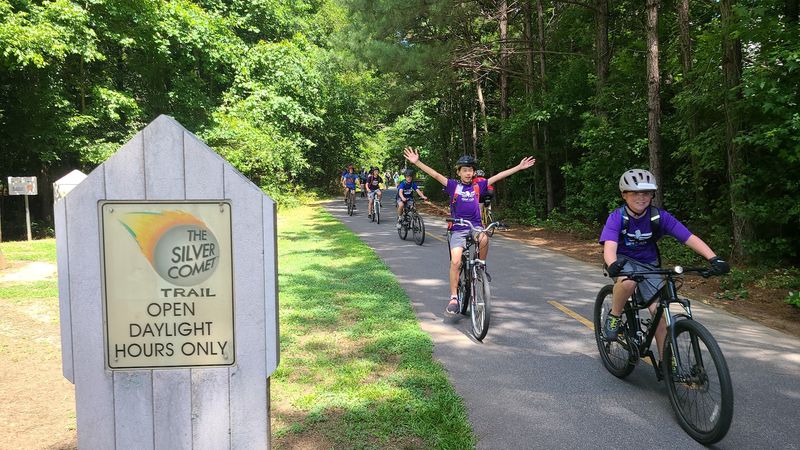
Sixty miles of smooth pavement, virtually no car traffic, and a canopy of trees that keeps things cool even in the Georgia heat — the Silver Comet Trail is Atlanta’s best-kept secret for cyclists who need a proper escape without driving hours out of town. The trail begins in Smyrna and heads west toward the Alabama state line, following the old Seaboard Air Line Railway corridor.
Grades are gentle throughout, which makes this trail accessible to riders of all ages and abilities. Families, fitness cyclists, and weekend warriors all share the path in a friendly, unhurried way that feels refreshing compared to the intensity of city roads.
Rest areas, water fountains, and parking lots appear at regular intervals, making logistics easy to manage.
The scenery shifts gradually from suburban greenways to quiet, wooded countryside as you head west, giving the ride a satisfying sense of progression. Local towns along the route have embraced the trail economy, and small shops and eateries near trailheads are worth exploring.
At the state line, the Silver Comet connects seamlessly with Alabama’s Chief Ladiga Trail, opening up the possibility of a truly epic multi-day adventure across two states. For a trail this accessible, the payoff is remarkable.
Chief Ladiga Trail — Alabama
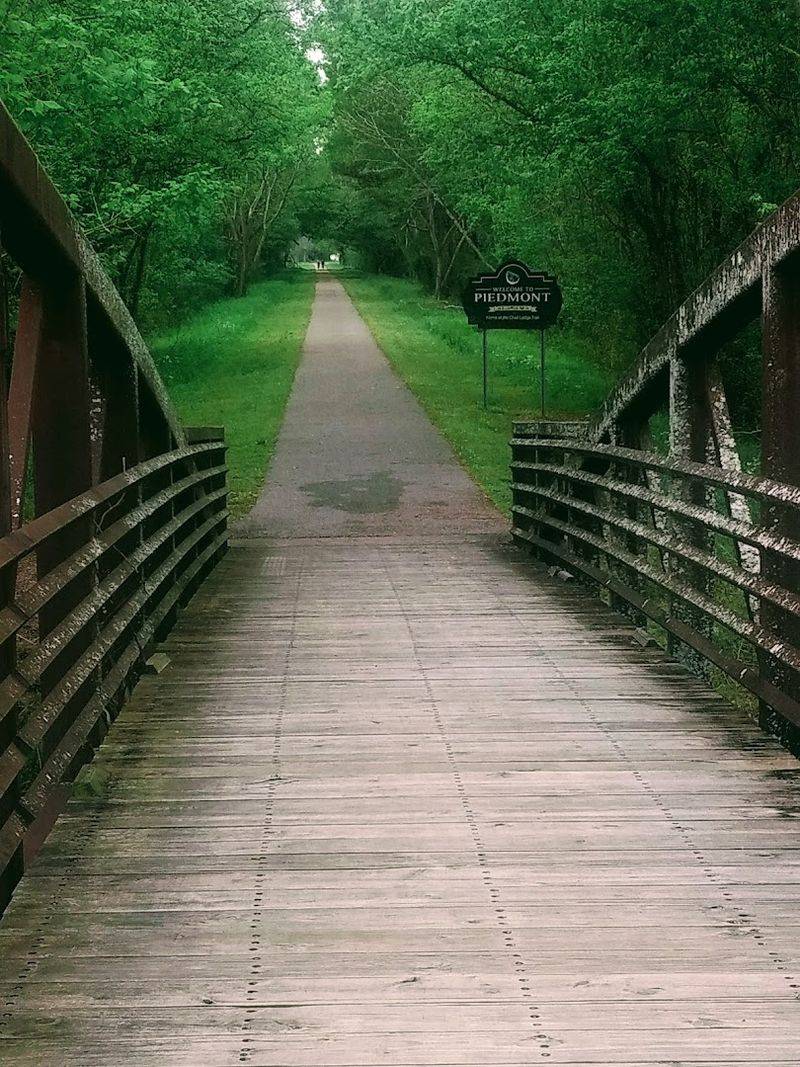
Where the Silver Comet Trail ends at the Georgia-Alabama border, the Chief Ladiga Trail picks up without missing a beat. Together they form one of the longest paved rail trails in the southeastern United States, but the Chief Ladiga has its own distinct personality — quieter, more rural, and wonderfully unhurried.
The trail runs about 33 miles from Cleburne County to Anniston, cutting through a stretch of Alabama that most visitors never get to see.
Farmland, pastures, and small woodlands line most of the route, giving riders a genuine sense of the rural South. The pace here feels different from busier urban trails — slower, more contemplative, and surprisingly restorative.
You might spend a full hour without seeing another soul, which sounds lonely but actually feels like a gift.
The trail surface is smooth asphalt throughout, and the grades stay flat enough that even casual riders can cover the full distance without much strain. Anniston, at the eastern end, offers museums, restaurants, and a charming downtown worth exploring after your ride.
The combination of this trail with the Silver Comet creates a two-state cycling experience that few people outside the region know about, which somehow makes completing it feel even more satisfying. Alabama surprises you here in the best possible way.
Elroy-Sparta State Trail — Wisconsin
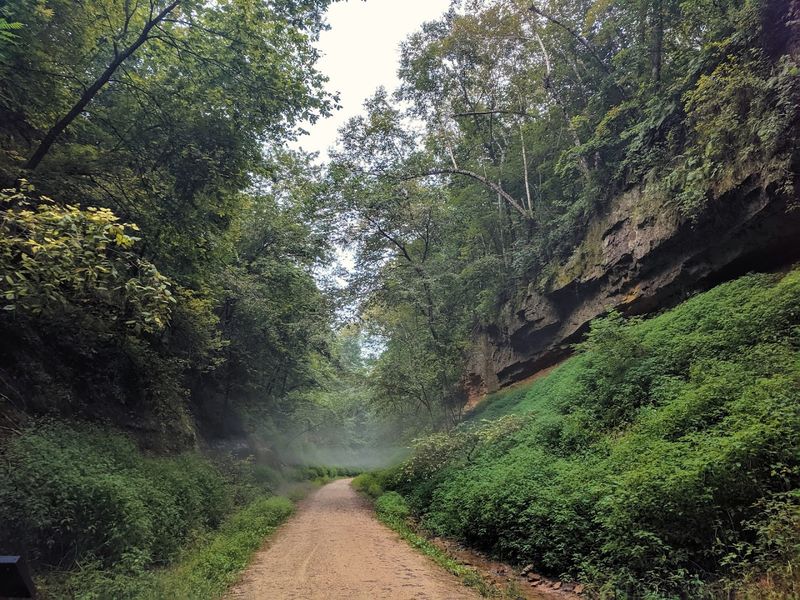
Back in 1965, Wisconsin converted an old railroad line into what became one of the first rail trails in the entire United States — and the Elroy-Sparta State Trail has been delighting cyclists ever since. The trail stretches about 32 miles through the rolling Driftless Area of western Wisconsin, but its defining feature is something you won’t find on almost any other trail in the country: three hand-dug railroad tunnels.
Each tunnel is long enough that you need a flashlight or bike light to navigate safely through the cool, dripping darkness. The longest runs nearly 1,900 feet, and the temperature inside drops noticeably even on the hottest summer days.
Emerging from the far end into bright Wisconsin sunshine feels like a minor triumph every single time.
The surrounding countryside is gorgeous — gentle hills, dairy farms, wildflower meadows, and small towns that feel frozen in a friendlier era. Communities like Elroy, Norwalk, and Sparta have built their local economies around trail visitors, so you’ll find bike rentals, hostels, and hearty Midwestern food close at hand.
Fall is particularly spectacular when the hillsides turn gold and rust. If you’ve never ridden through a mountain tunnel on a bicycle, put this trail at the very top of your list.
Mickelson Trail — South Dakota
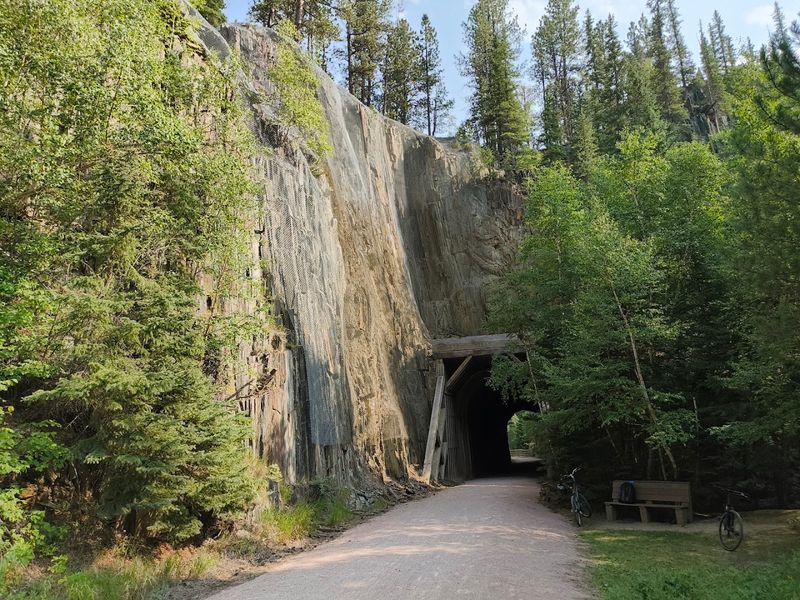
The Black Hills of South Dakota have a rugged, mythic quality that makes everything feel slightly larger than life — and the Mickelson Trail leans into that atmosphere completely. Stretching over 109 miles from Deadwood to Edgemont, this converted railroad corridor passes through some of the most dramatic scenery in the Great Plains region, including granite peaks, pine forests, and the remnants of old gold-mining towns.
The trail features over 100 converted railroad bridges and four hard-rock tunnels, each one a reminder of the incredible engineering effort that once moved freight through these mountains. Wildlife sightings are genuinely frequent here — pronghorn, wild turkeys, and even the occasional mountain goat have been reported along the route.
The elevation changes are real but manageable, with the highest point sitting around 6,000 feet above sea level.
Deadwood, the trail’s northern terminus, is a living history museum with a Wild West personality that pairs surprisingly well with a post-ride meal and cold drink. The trail is well-maintained and clearly marked, making it navigable for riders with moderate fitness levels.
Camping options along the route make multi-day trips straightforward and genuinely rewarding. Riding the Mickelson feels less like exercise and more like exploring a part of America that most people only ever see from a car window.
Swamp Rabbit Trail — South Carolina
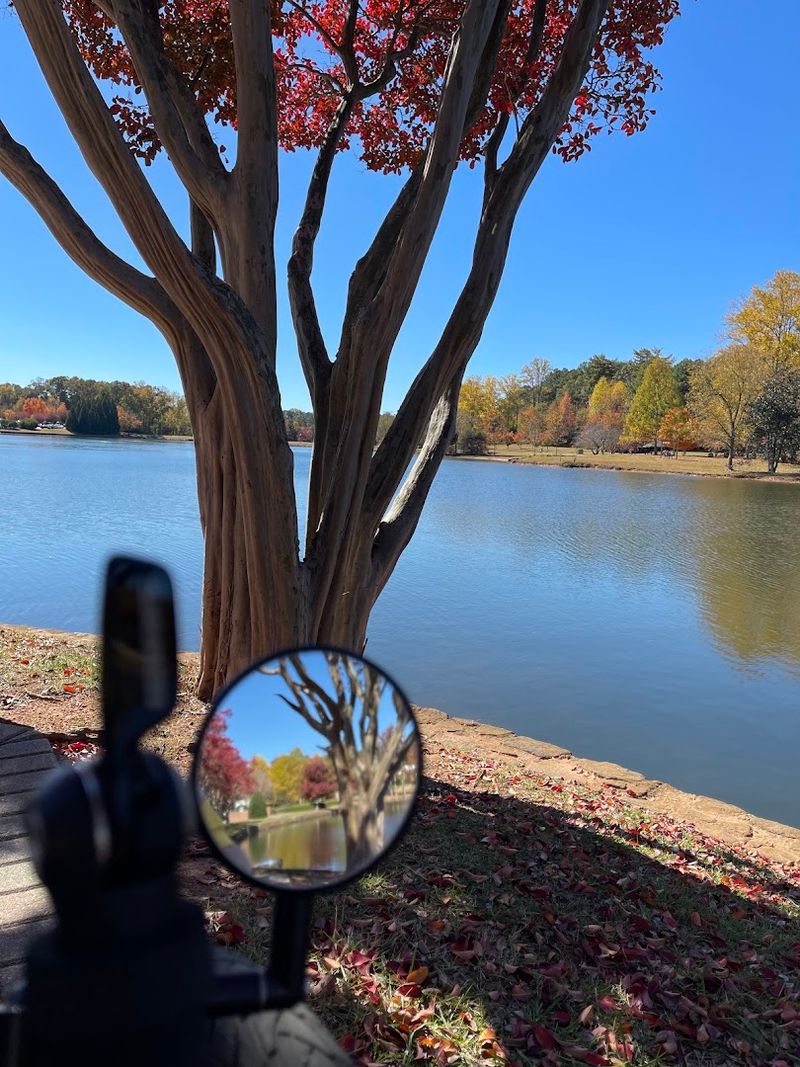
Named after a local railroad line that once hauled passengers and goods through the Upstate region, the Swamp Rabbit Trail has become the social heart of Greenville, South Carolina. This 22-mile greenway connects Greenville’s vibrant downtown with the small community of Travelers Rest, and just about every section of it is alive with energy, color, and community spirit.
The path runs alongside the Reedy River for much of its length, passing through parks, beneath tree canopies, and past outdoor murals painted by local artists. Coffee shops, breweries, and farm-to-table restaurants have popped up right along the trail’s edge, making it easy to turn a simple bike ride into a full afternoon of eating and exploring.
Weekends bring out families, dog walkers, joggers, and serious cyclists all sharing the space with a cheerful ease that’s genuinely infectious.
The Swamp Rabbit also connects to the Prisma Health Swamp Rabbit Trail extension, which continues pushing the total accessible mileage even further. Greenville itself has been recognized repeatedly as one of the most livable cities in the South, and the trail plays a huge role in that reputation.
For a short trail, it punches well above its weight in personality, community investment, and pure riding enjoyment. First-timers often come back the very next weekend.
Arkansas River Trail — Arkansas
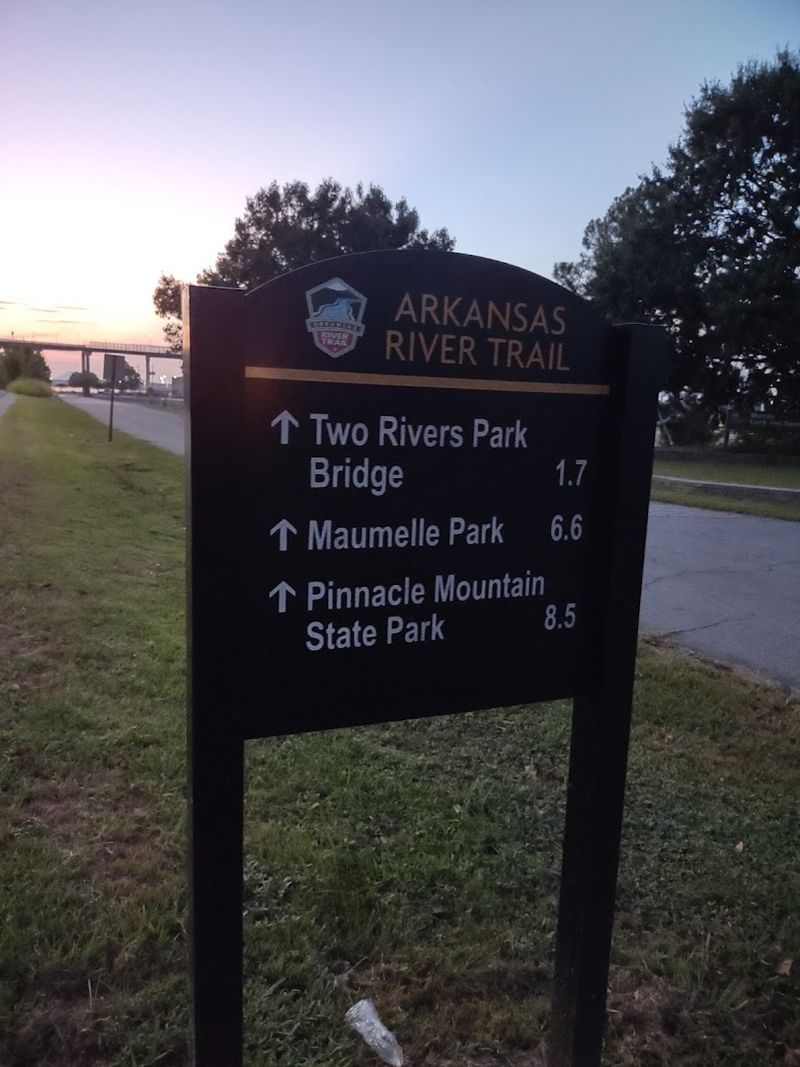
Urban trail networks sometimes get dismissed as lesser alternatives to backcountry routes, but the Arkansas River Trail in Little Rock makes a strong case for city riding. This 15-mile loop circles the Arkansas River, connecting Little Rock and North Little Rock via two pedestrian bridges that offer genuinely spectacular views of the skyline and the wide, muddy river below.
The trail passes through a surprising variety of environments — manicured riverfront parks, wooded natural areas, and lively stretches near restaurants and entertainment districts. Public art installations appear regularly along the route, giving cyclists something interesting to look at beyond the scenery.
Benches, water stations, and restroom facilities are well-distributed, making the trail comfortable for long rides or casual loops.
One of the most popular features is the Two Rivers Park section, where the Arkansas and Little Maumelle Rivers meet — a peaceful, wildlife-rich area that feels completely removed from city life despite being minutes from downtown. Herons, turtles, and waterfowl are common companions on this stretch.
The trail is flat enough for all skill levels and lit well enough for evening rides, which is a genuine luxury in warmer months. Little Rock’s trail system continues expanding, and the Arkansas River Trail sits at its vibrant, well-loved center.
Trail of the Coeur d’Alenes — Idaho
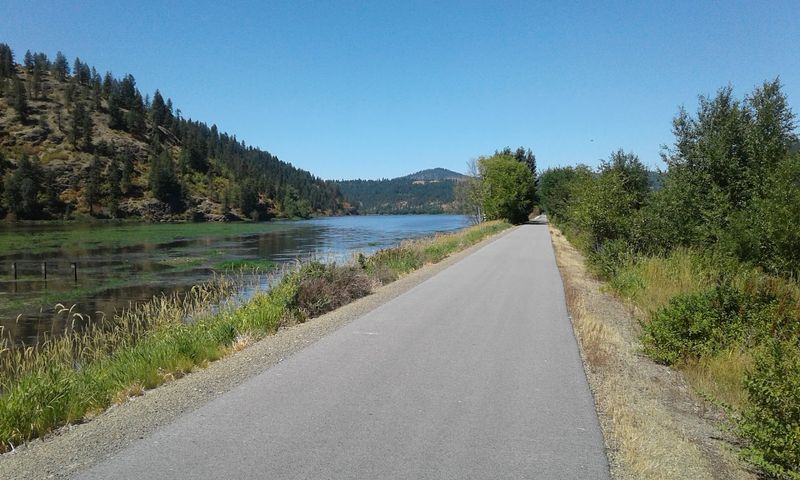
Few paved trails anywhere in the country can match the raw scenic power of the Trail of the Coeur d’Alenes. Stretching 73 miles through the Silver Valley and lake country of northern Idaho, this trail winds past the shimmering surface of Coeur d’Alene Lake, through protected wetlands, and beneath the dramatic ridgelines of the Bitterroot Mountains.
The views are the kind that make you stop pedaling just to stare.
The trail was built on a former Union Pacific Railroad corridor and is maintained to an exceptionally high standard — smooth asphalt, clear signage, and well-spaced amenities throughout. The western end near Mullan sits at higher elevation and offers a gently downhill gradient toward the lake, which makes westbound rides feel almost effortless.
Wildlife thrives in the wetland sections, where osprey, moose, and waterfowl are regularly spotted from the trail.
The town of Coeur d’Alene at the eastern end is a beautiful resort community with excellent restaurants and lakeside parks that reward a full day’s ride beautifully. The trail’s history is also worth noting — the surrounding valley was once heavily mined for silver, and interpretive signs along the route tell that complicated story honestly.
For pure visual impact combined with excellent trail infrastructure, this Idaho gem stands in a class of its own.
Withlacoochee State Trail — Florida
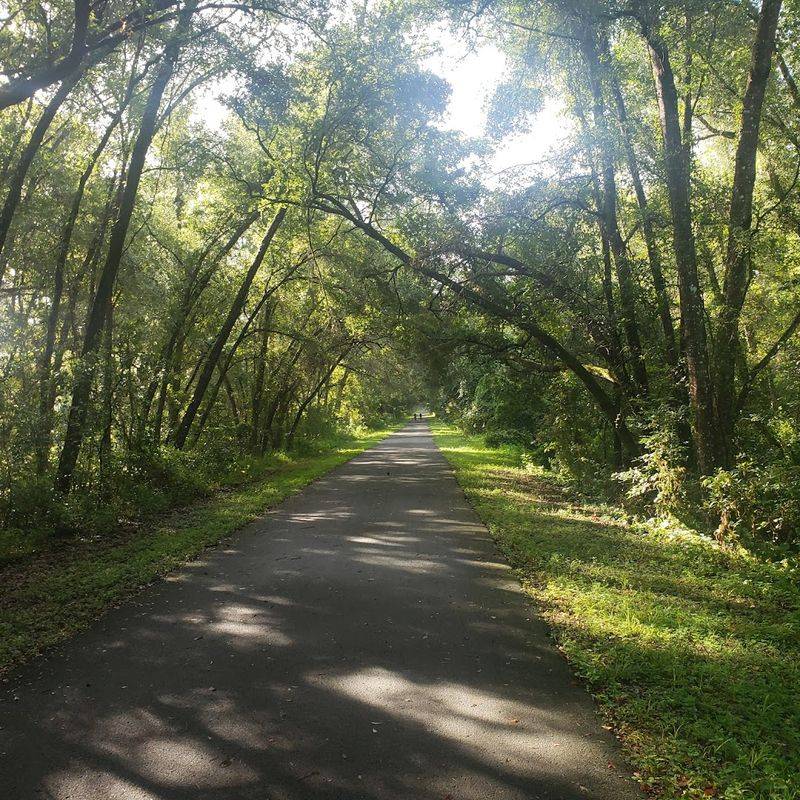
Florida doesn’t always get credit as a cycling destination, but the Withlacoochee State Trail makes a compelling argument for reconsideration. At nearly 46 miles long, it’s one of the longest paved rail trails in the entire state, running through Citrus County from Citrus Springs south to Trilby.
The landscape here is distinctly Floridian — longleaf pine forests, palmettos, scrubland, and the occasional glimpse of wildlife that reminds you this is still wild country.
The trail follows the old Atlantic Coast Line Railroad corridor, and the flat terrain makes it genuinely welcoming for beginners, older riders, and families with young children. Distances between rest areas are manageable, and the small towns along the route — including Inverness and Floral City — have embraced trail culture warmly with bike shops, cafes, and friendly locals who actually wave at passing cyclists.
Morning rides are especially magical here because the low Florida light filters through the pine canopy in golden shafts that feel almost theatrical. Gopher tortoises, sandhill cranes, and white-tailed deer are common trailside sightings.
Summer heat can be intense, so early starts and plenty of water are essential. Winter months bring cooler temperatures and thinner crowds, making November through March the sweet spot for experiencing this underrated Florida gem at its absolute best.
Cape Cod Rail Trail — Massachusetts
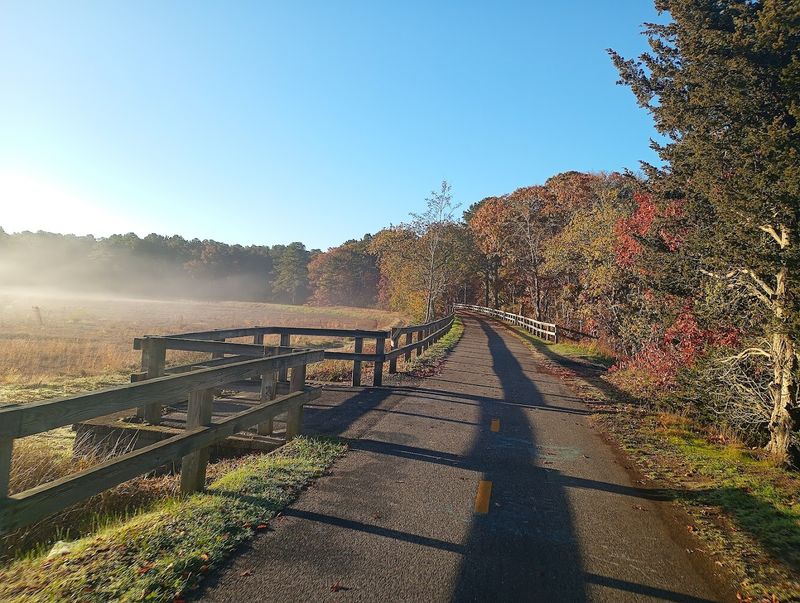
There are bike trails, and then there’s the Cape Cod Rail Trail — a ride so thoroughly New England that you half expect to smell lobster rolls and hear foghorns the entire way. Running about 25 miles from Dennis to Wellfleet, this paved trail cuts through the heart of Cape Cod, passing cranberry bogs, kettle ponds, salt marshes, and the kind of charming seaside villages that make you want to sell your house and move there immediately.
The trail is busiest in July and August when summer tourists descend on the Cape, but the crowds actually add to the festive atmosphere rather than detracting from it. Ice cream stands, seafood shacks, and farm stands appear at regular intervals, making this one of the most delicious bike rides in the country.
Nickerson State Park sits right along the route and offers camping, swimming, and picnic areas for riders who want to extend their adventure.
Shoulder seasons — particularly late September and October — offer a quieter, more contemplative version of the same ride, with cooler air and the bogs turning spectacular shades of red during cranberry harvest season. The terrain is flat to gently rolling, making it accessible to nearly everyone.
Whether you’re eight years old or eighty, the Cape Cod Rail Trail delivers a quintessentially American coastal experience that never gets old.
Root River State Trail — Minnesota
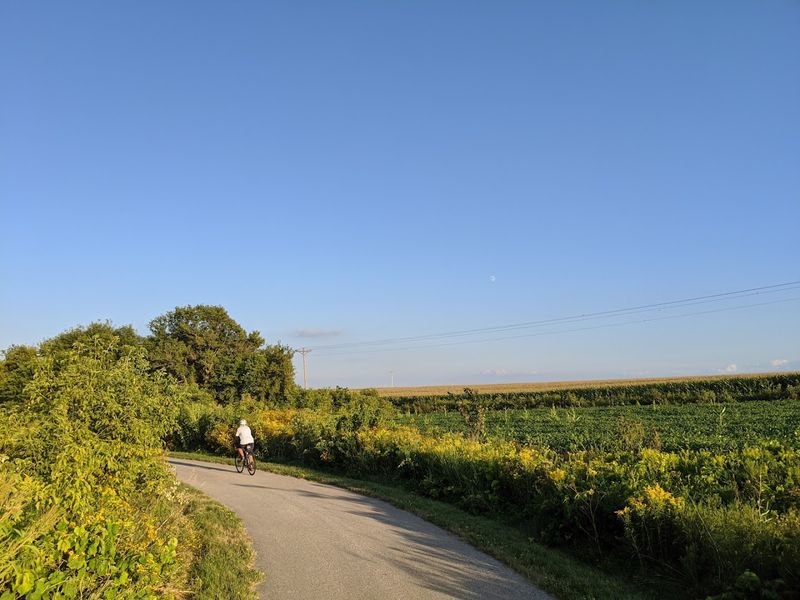
Southeastern Minnesota’s Driftless Area is one of the Midwest’s best-kept geographical secrets — a region of steep bluffs, cold-water trout streams, and wooded valleys that somehow escaped the flattening effects of the last Ice Age. The Root River State Trail runs right through the heart of it, offering about 42 miles of paved riding through scenery that most people associate with Vermont rather than Minnesota.
The trail winds through towns like Lanesboro, Preston, and Harmony — small communities with a genuine fondness for cyclists that shows up in the form of excellent restaurants, cozy bed-and-breakfasts, and well-stocked bike shops. Lanesboro in particular has built an entire identity around trail tourism and is widely considered one of the most bike-friendly small towns in the entire country.
Limestone bluffs rise dramatically above the river valley throughout much of the route, and the Root River itself is a constant, calming presence alongside the path. Wildflowers bloom extravagantly in late spring, and fall colors arrive in force by early October, transforming the bluffs into a patchwork of amber and crimson.
The grades are gentle enough for casual riders but varied enough to keep experienced cyclists engaged. Pack an appetite, because the food scene in these small river towns punches far above what you’d expect from their modest size.
Boise River Greenbelt — Idaho
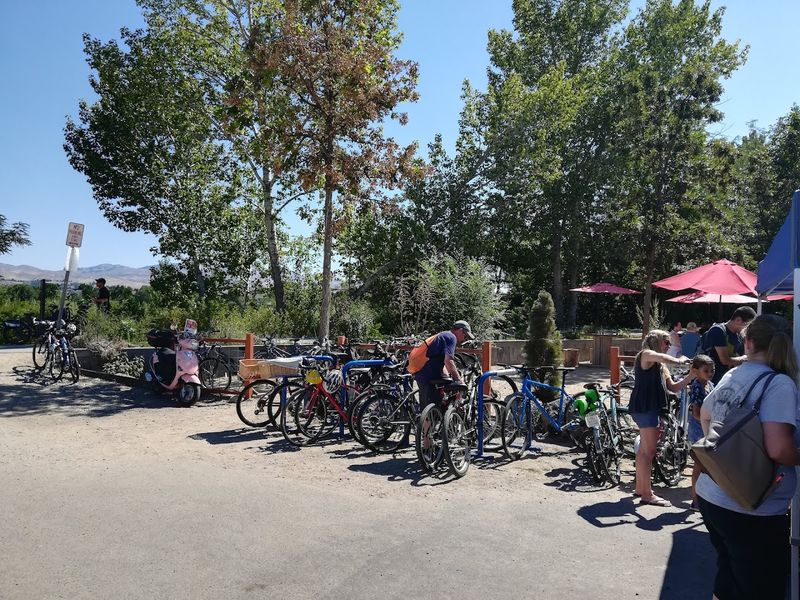
Boise has quietly become one of the most outdoor-friendly cities in the American West, and the Boise River Greenbelt is exhibit A in that case. This beloved 25-mile path follows the Boise River from Eagle in the west through downtown and east toward Lucky Peak Reservoir, threading together parks, wildlife areas, and urban neighborhoods in a way that feels seamless and genuinely thoughtful.
Giant cottonwood trees line much of the route, creating a shady corridor that stays cool even during hot Idaho summers. The river itself is clean, clear, and full of trout, and on warm days you’ll see kayakers, fly fishers, and swimmers sharing the waterway alongside cyclists on the path above.
Ducks, herons, and river otters are regular trailside companions in the more natural stretches.
Downtown Boise sits right along the Greenbelt, making it easy to roll off the trail and into the city’s excellent restaurant and craft beer scene without breaking much of a sweat. Julia Davis Park and Ann Morrison Park both sit directly on the route and offer green space, picnic areas, and easy restroom access.
The path is well-lit, clearly marked, and popular enough that you’ll rarely feel isolated even on weekday mornings. For a city trail that genuinely competes with destination rides, the Boise River Greenbelt earns every bit of its devoted local following.