

Arkansas is full of surprises you never saw coming.
Drive down a quiet back road, and suddenly you’re face-to-face with giant metal sculptures, mysterious ghost lights, or a quirky cafe frozen in time. These are the roadside treasures that make you stop, stare, and wonder how you’ve lived without seeing them.
Some are strange. Some are charming.
Some are just plain impossible to forget. From spinning barns to sparkling diamond fields, each stop tells a story you can’t read in any guidebook.
If you’ve got a taste for the weird, the wonderful, and the wildly unexpected, Arkansas delivers in spades. Pack your camera, roll down the windows, and prepare for a road trip where every mile hides a new surprise.
This is Arkansas at its quirkiest—and it’s waiting for you.
Crater of Diamonds State Park
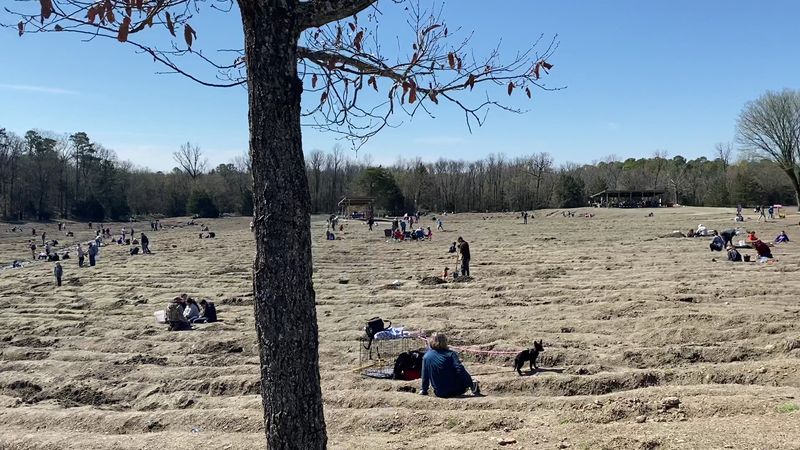
Somewhere in the rolling hills of Murfreesboro, Arkansas, lies the only place on Earth where ordinary people can dig for real diamonds and legally keep every single one they find. Crater of Diamonds State Park sits atop an ancient volcanic crater, making it one of the most geologically remarkable spots in the entire country.
It’s not just a tourist attraction — it’s a working gemstone field with a real chance of striking it rich.
The search area covers 37 acres of plowed volcanic soil, and park rangers regularly till the ground to bring new gems closer to the surface. Over 35,000 diamonds have been found here since the park opened, including the famous 40.23-carat Uncle Sam diamond.
Visitors of all ages show up with buckets and shovels, ready to try their luck.
You don’t need any special equipment or experience to get started. The park rents tools on-site and offers free diamond identification services.
Even if you don’t find a diamond, you might walk away with amethyst, jasper, or quartz. A small museum on the grounds explains the volcanic history behind this extraordinary place, making it both educational and thrilling for families.
Quigley’s Castle
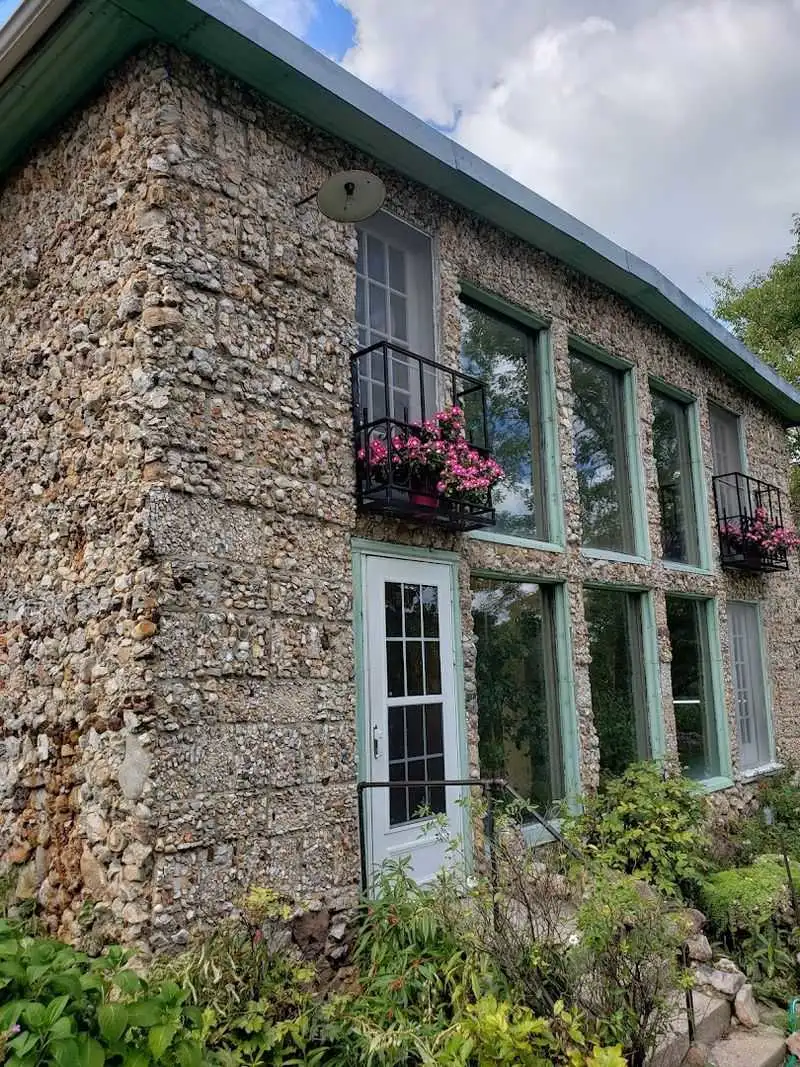
Back in 1943, a woman named Elise Quigley told her husband she wanted a new house. When he refused, she simply tore down the walls of the old one herself and started building something entirely her own.
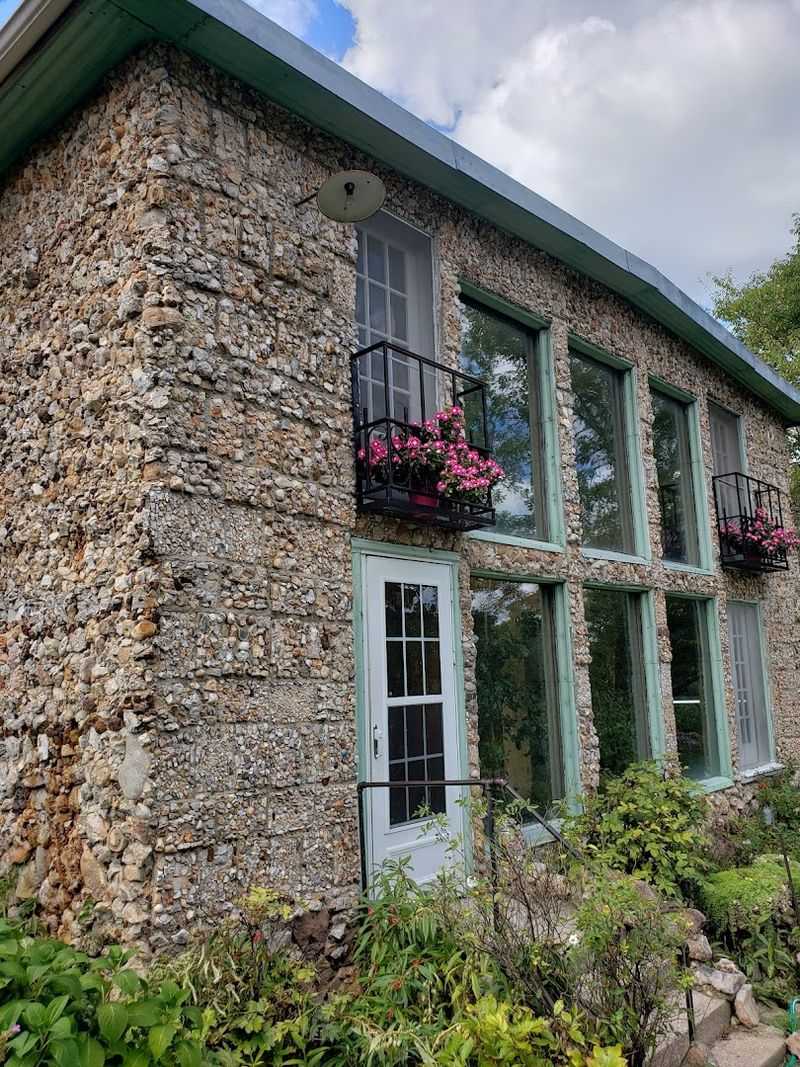
What emerged over the following decades was Quigley’s Castle — a one-of-a-kind home covered in rocks, crystals, shells, and folk art that has no equal anywhere in Arkansas.
Located just outside Eureka Springs, the property looks like something straight out of a fairy tale. The exterior walls are studded with thousands of stones Elise collected over her lifetime.
Inside, the rooms are filled with butterflies she raised herself, along with collections of unusual plants that grew right through the floor she intentionally left open to the earth.
Quigley’s Castle is listed on the National Register of Historic Places and has been called one of the most unusual homes in the entire United States. The garden surrounding the house is equally enchanting, filled with rare flowers, native plants, and hand-built stone arrangements.
Tours are available seasonally, giving visitors a personal look at Elise’s incredible creativity. It’s a stop that sticks with you long after you’ve driven away.
Natural Bridge of Arkansas
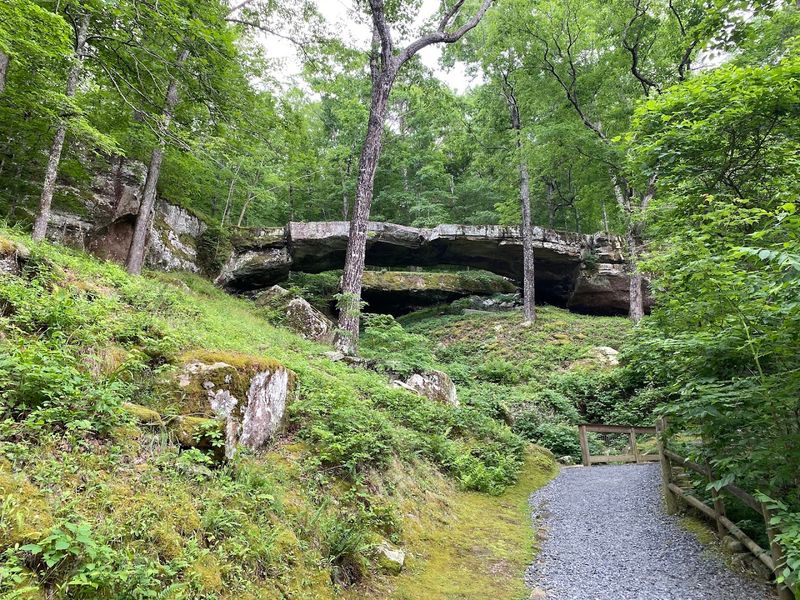
Long before highways and GPS, early pioneers traveling through central Arkansas used a massive sandstone arch as a natural landmark to guide their journeys. The Natural Bridge of Arkansas, located near Clinton, is one of the oldest and most impressive geological formations in the state.
Stretching roughly 100 feet across, this ancient arch was carved by thousands of years of wind and water erosion.
Getting to it requires only a short, easy walk from the roadside parking area, making it accessible for almost everyone. The trail winds through a shaded forest before opening up to a dramatic view of the arch rising from the earth like something out of a storybook.
A small museum near the entrance shares the history of the site and its importance to both Native Americans and early settlers.
What makes this spot feel so purely Arkansas is its low-key, unassuming nature. There are no massive crowds or overpriced gift shops — just a stunning piece of natural history sitting quietly in the Ozark hills.
Admission is affordable, and the experience is genuinely memorable. If you’re driving through Van Buren County, skipping this stop would be a real missed opportunity for any curious traveler.
Gurdon Light
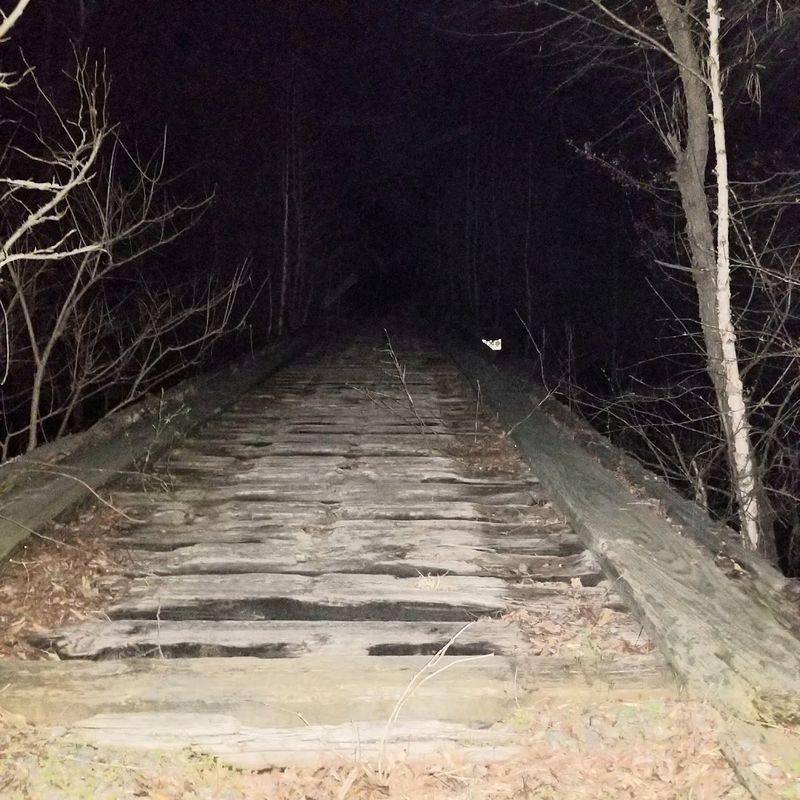
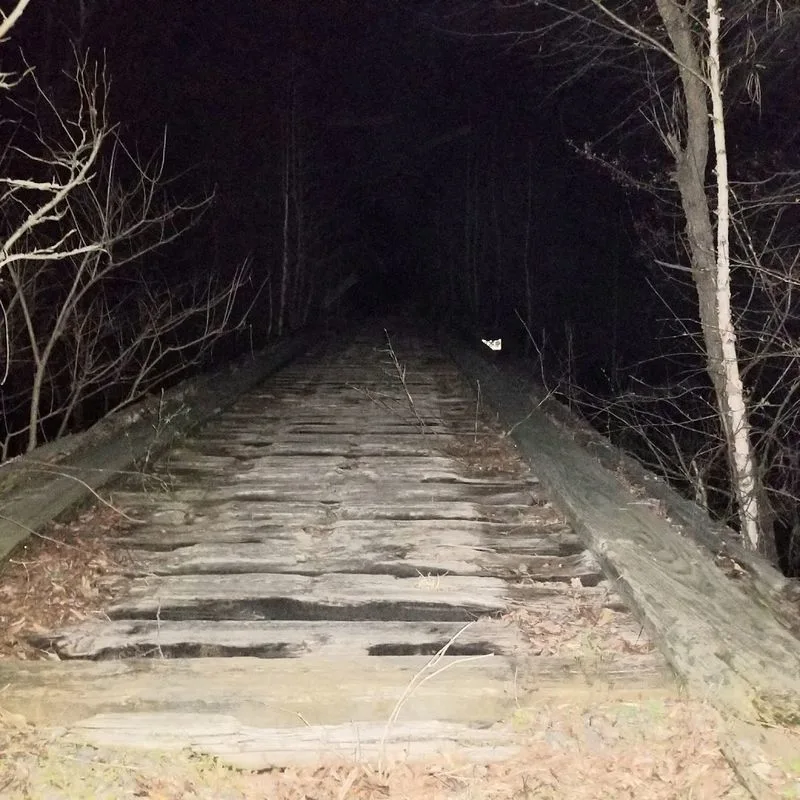
Few things in Arkansas spark the imagination quite like the Gurdon Light. For generations, locals and curious visitors have trekked into the dark woods near old railroad tracks outside Gurdon to catch a glimpse of an unexplained glowing orb that floats silently through the trees.
No one has ever fully explained it, and that’s exactly what makes it so magnetic.
The legend behind the light is both eerie and tragic. According to local folklore, the glow belongs to the ghost of a railroad worker who was killed on the tracks and now wanders the area with his lantern, searching for something he lost.
Whether you believe the ghost story or not, the light itself is very real — even scientists who have studied it can’t agree on a definitive explanation.
Some researchers suggest the glow is caused by bioluminescence or geological stress in the rocks below, while others point to atmospheric conditions. Whatever the cause, experiencing it firsthand on a dark Arkansas night is genuinely unsettling in the best possible way.
The site has no formal entrance or fee — you simply park along the road and walk the tracks. Bring a flashlight, good company, and maybe a little courage.
Sugar Creek Vista Overlook
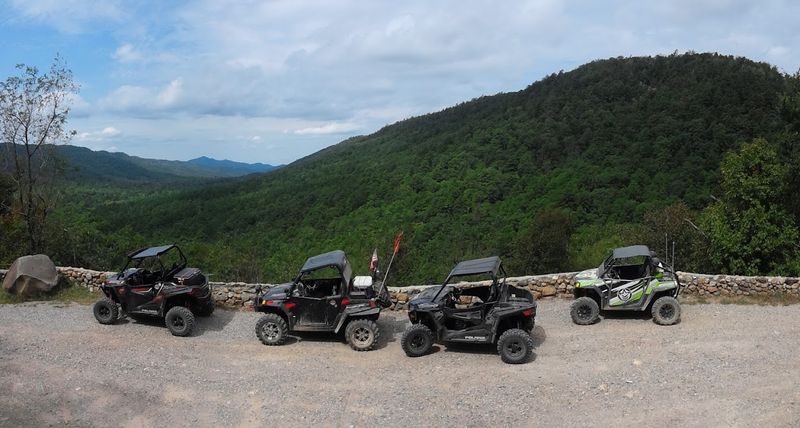
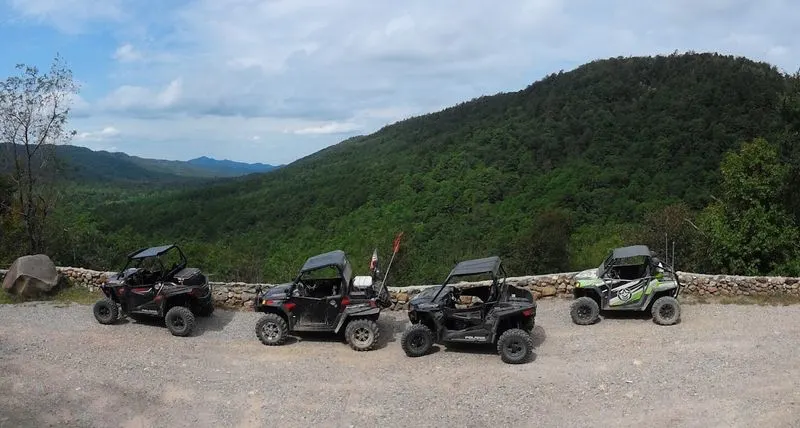
Perched high above the Ouachita National Forest, the Sugar Creek Vista Overlook offers one of the most breathtaking roadside views in all of Arkansas. Built by the Civilian Conservation Corps during the 1930s, this stone overlook is a beautiful piece of New Deal-era craftsmanship that has stood strong for nearly a century.
Pulling off the road here feels like stepping back into a quieter, simpler America.
The CCC workers who built this structure were young men hired during the Great Depression to improve public lands across the country. They hauled stone, mixed mortar, and shaped this overlook by hand — and the quality of their work still shows today.
The stonework blends naturally into the surrounding forest, almost as if the landscape built it itself.
On a clear day, the view from Sugar Creek Vista stretches across miles of unbroken green forest canopy. In the fall, the hillsides turn brilliant shades of orange, red, and gold, making this one of the most popular leaf-peeping stops in the Ouachita region.
There’s no admission fee and no crowds — just open sky, mountain air, and a view that reminds you why Arkansas earned its nickname as the Natural State.
Big Raven Statue
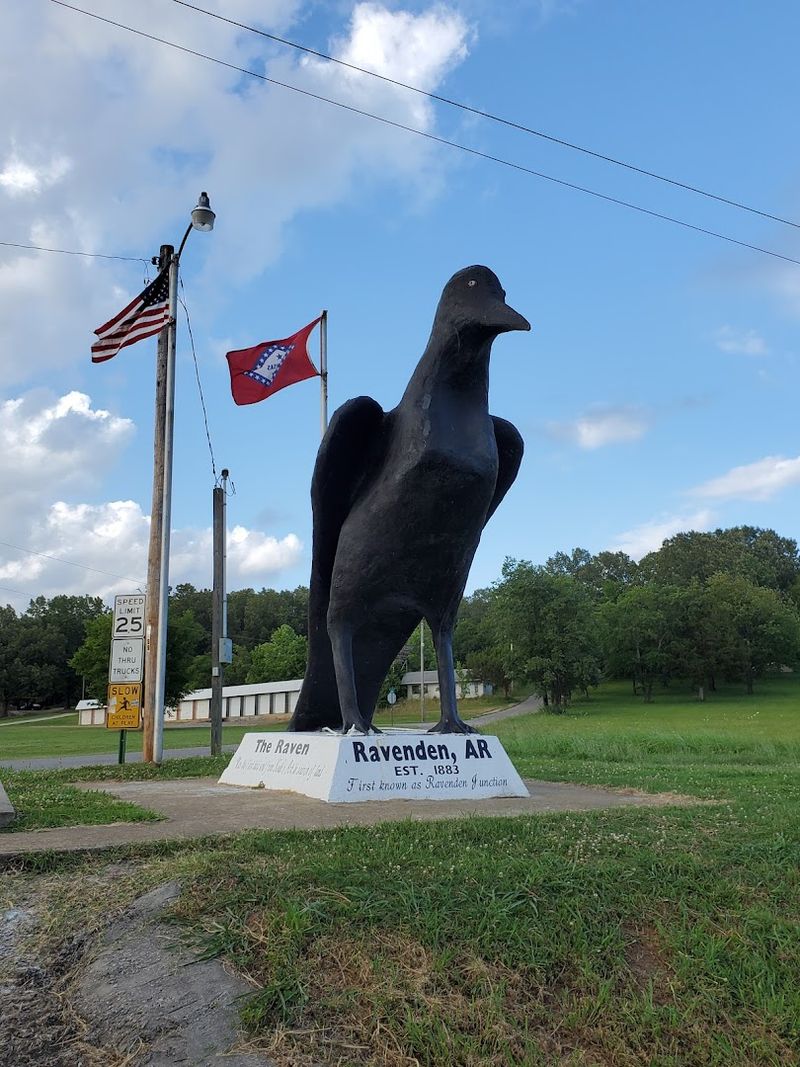
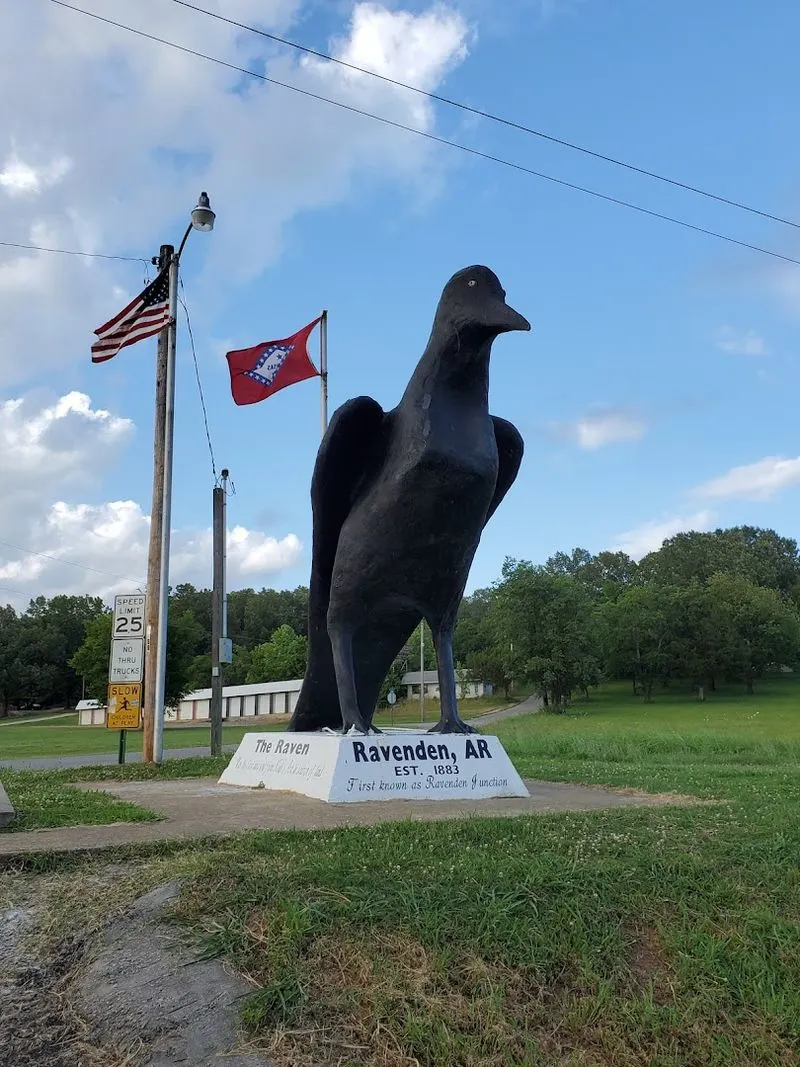
The small town of Ravenden, Arkansas, decided long ago that if your town is named after a bird, you might as well celebrate that bird in the biggest way possible. The result is a 12-foot-tall raven statue that greets visitors right in town, bold and black and impossible to miss.
It’s the kind of roadside art that makes you smile the moment you see it.
Ravens have a rich place in folklore and mythology across many cultures. They’re often seen as symbols of intelligence, mystery, and transformation — qualities that make this statue feel surprisingly meaningful for a small-town landmark.
The sculpture captures the raven’s sharp features and powerful stance with impressive detail, making it worth a close-up look rather than just a drive-by glance.
Ravenden is a tiny community in Lawrence County, and the statue has become its most recognizable symbol. Local pride runs deep here, and the raven represents not just the town’s name but its identity.
Roadside statues like this one are scattered across Arkansas, each one telling a story about the community that built it. This particular bird has become a beloved photo stop for travelers heading through the northeast corner of the state, proving that great things really do come in unexpected places.
Mr. Peanut Statue
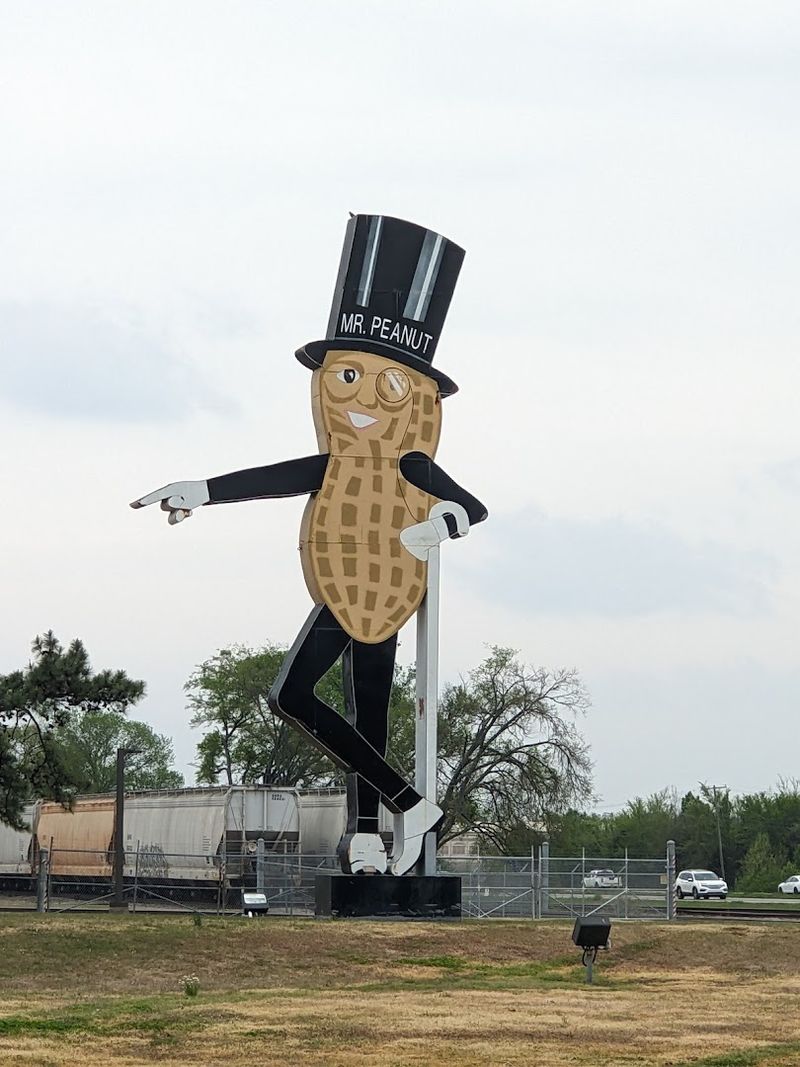
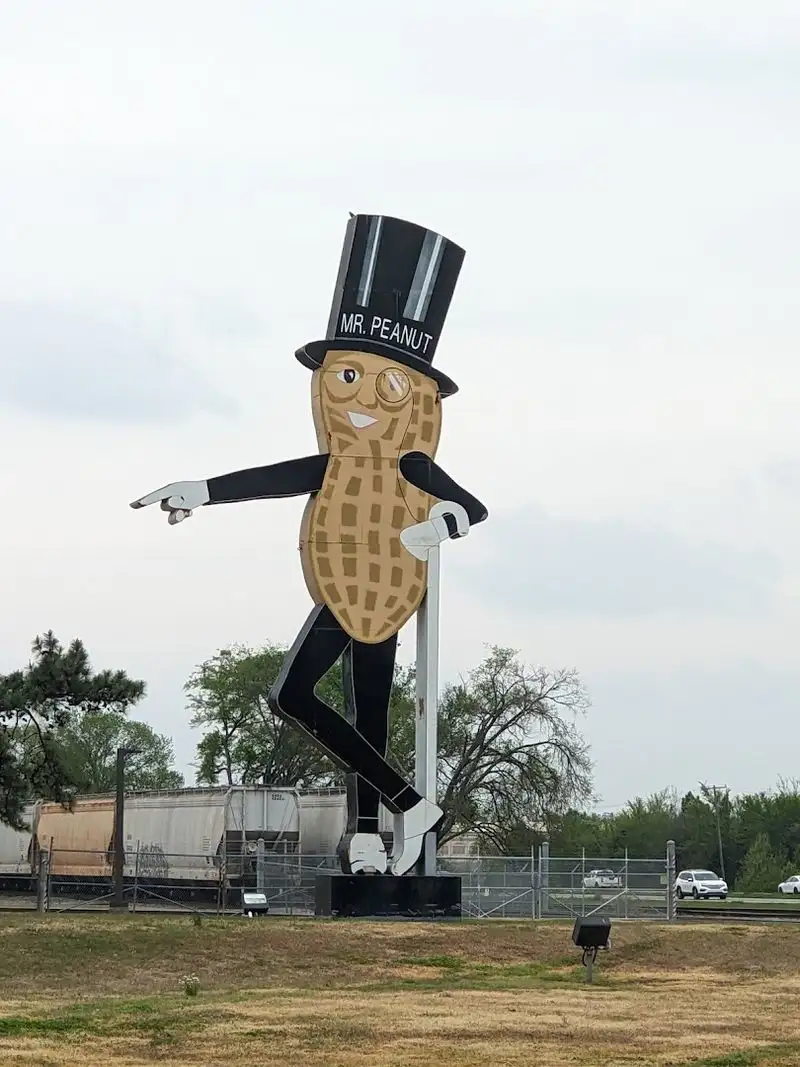
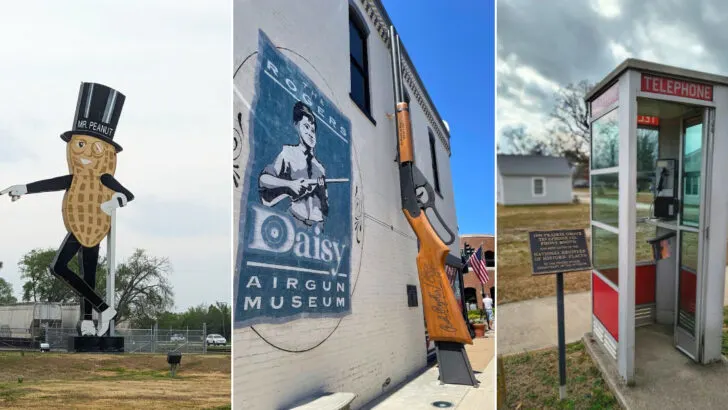
Standing 30 feet tall in Fort Smith, the Mr. Peanut statue is exactly the kind of gloriously over-the-top roadside landmark that makes a road trip worth taking. Dressed in his trademark top hat, monocle, and cane, this giant Planters mascot looms outside the historic peanut processing plant where he’s stood for decades, cheerfully watching the world go by.
Mr. Peanut has been the Planters brand mascot since 1916, making him one of the oldest and most recognizable advertising characters in American history. The Fort Smith statue was installed to celebrate the local plant’s connection to the beloved brand, and it quickly became one of the city’s most photographed spots.
There’s something undeniably charming about a giant anthropomorphic peanut standing on a street corner like he owns the place.
Fort Smith has a surprisingly rich history as a frontier town and federal court city, but the Mr. Peanut statue holds its own among the more serious historical landmarks. It represents the playful, self-aware side of American roadside culture — the kind of thing that reminds you travel is supposed to be fun.
Pull over, pose for a photo with the big guy, and appreciate the fact that only in Arkansas would a 30-foot peanut feel completely at home.
World’s Largest Daisy BB Gun
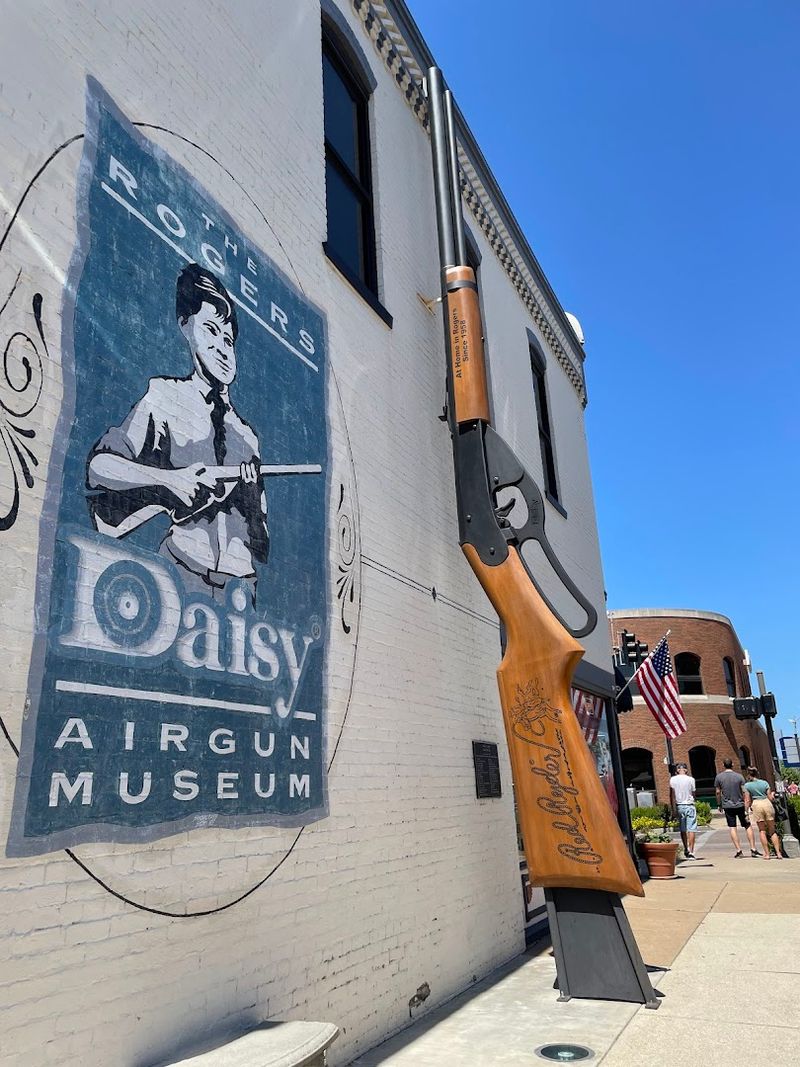
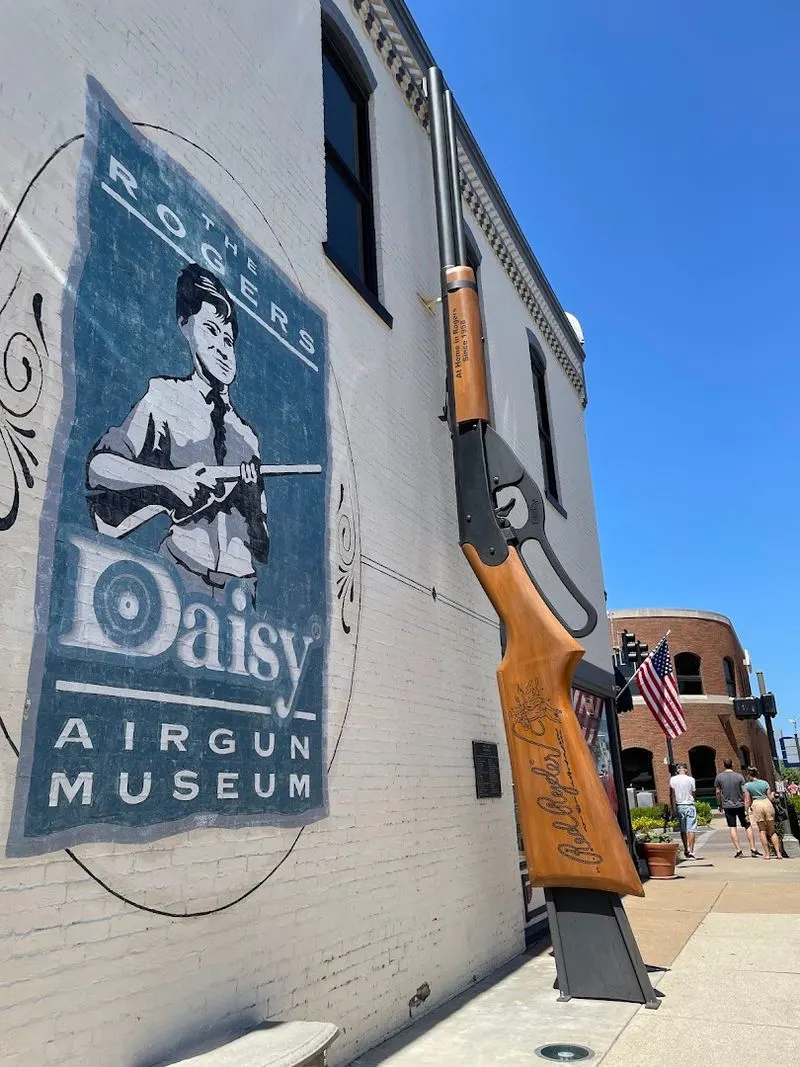
Rogers, Arkansas, is the proud home of the Daisy Airgun Museum — and standing outside it is a replica BB gun so large it practically dares you to drive past without stopping. The World’s Largest Daisy BB Gun is a celebration of one of the most iconic American toys ever manufactured, and it sits in the town where Daisy’s legacy was born and grew into a national phenomenon.
Daisy Manufacturing Company has been making BB guns since 1888, and for much of the twentieth century, a Daisy Red Ryder was the gift every kid dreamed of finding under the Christmas tree. The brand’s deep roots in Rogers make this museum and its oversized roadside attraction especially meaningful for anyone who grew up with one of these classic airguns.
Nostalgia hits hard the moment you see the giant replica.
Inside the museum, visitors can explore the full history of Daisy’s products, from early models to limited editions, along with exhibits on the culture and craftsmanship behind American airgun manufacturing. The museum is small but surprisingly detailed, and admission is very affordable.
Whether you’re a gun collector, a history buff, or just someone who remembers pumping a BB gun as a kid, this stop in Rogers delivers a warm and genuinely fun slice of Americana.
Giant Budweiser Beer Can Silo
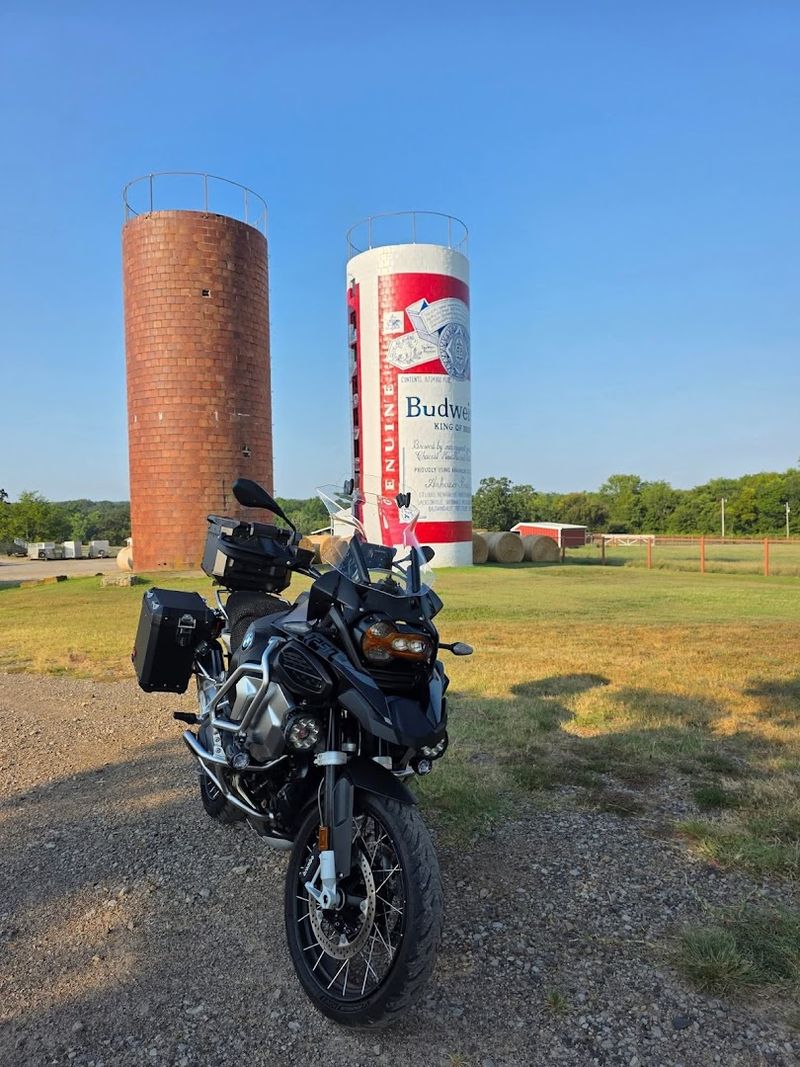
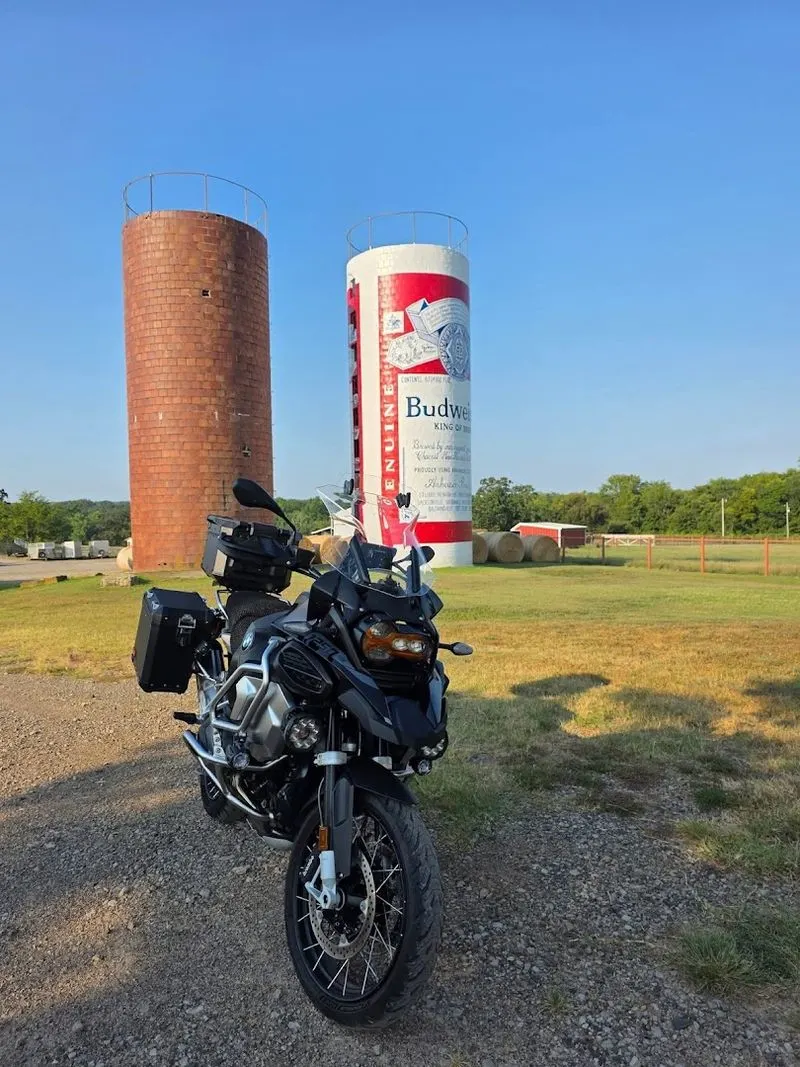
Driving through Lavaca, Arkansas, you might do a double-take when a massive structure painted to look exactly like a Budweiser beer can appears on the horizon. This isn’t a brewery or a bar — it’s a grain silo that someone decided to transform into one of the most delightfully unexpected pieces of roadside art in the entire state.
And honestly, the commitment to the bit is impressive.
The silo’s red, white, and gold Budweiser color scheme is faithfully reproduced at enormous scale, complete with the familiar logo and label design that beer fans will recognize instantly. It’s visible from the highway, which means plenty of unsuspecting drivers have done a startled double-take before bursting out laughing.
That moment of surprise and delight is exactly what great roadside art is supposed to deliver.
Lavaca is a small community in Sebastian County, and this painted silo has put it on the map for road trip enthusiasts and quirky attraction hunters across the country. It costs nothing to stop and admire, and the photo opportunities are fantastic.
The giant beer can silo is a perfect example of the creativity and humor that shows up in small-town Arkansas when someone decides to do something completely unexpected with an ordinary structure. Long may it stand.
World’s Largest Christmas Pickle
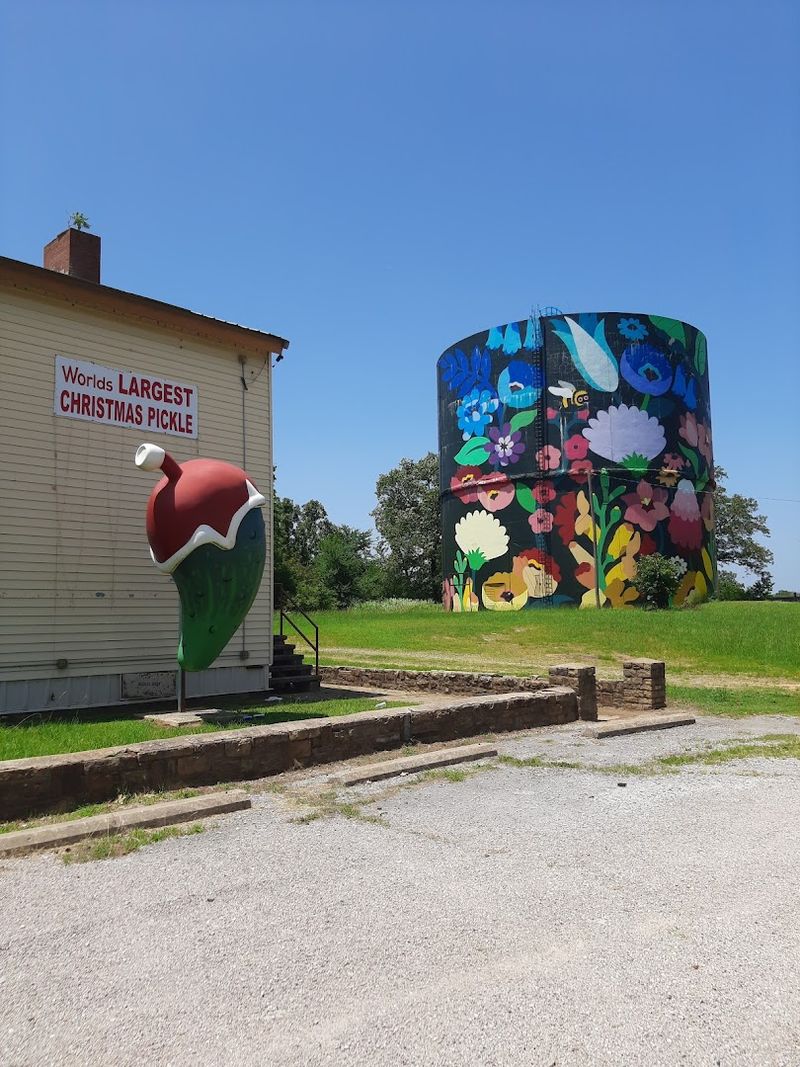
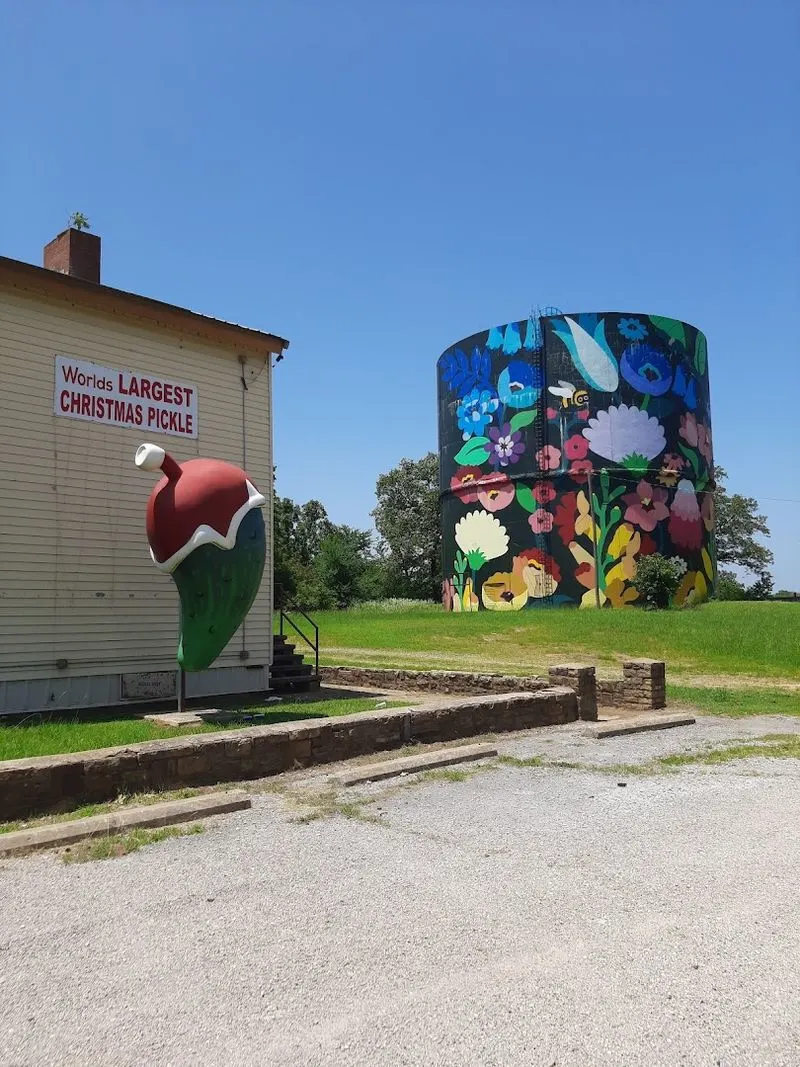
Fort Smith, Arkansas, is home to many historic landmarks — but none quite as wonderfully strange as a 14-foot Christmas pickle wearing a Santa hat. The World’s Largest Christmas Pickle stands as a proud monument to one of the most obscure holiday traditions in American culture, and it has become one of the most photographed oddities in the entire state.
The Christmas pickle tradition supposedly originated in Germany, where a glass pickle ornament would be hidden deep in the branches of the Christmas tree on Christmas Eve. The first child to find it on Christmas morning would receive an extra gift or good luck for the coming year.
Whether the tradition is truly German or purely American in origin is still debated by historians, but either way, Fort Smith has claimed it with gusto.
The statue stands year-round, Santa hat and all, welcoming visitors who come specifically to see it and confusing those who stumble upon it by accident. Both reactions are equally valid and equally entertaining.
Fort Smith has leaned into its pickle fame with good humor, and the statue has inspired local merchandise, social media posts, and countless road trip bucket lists. It’s absurd, it’s cheerful, and it’s completely, wonderfully Arkansas in spirit.
Prairie Grove Airlight Phone Booth
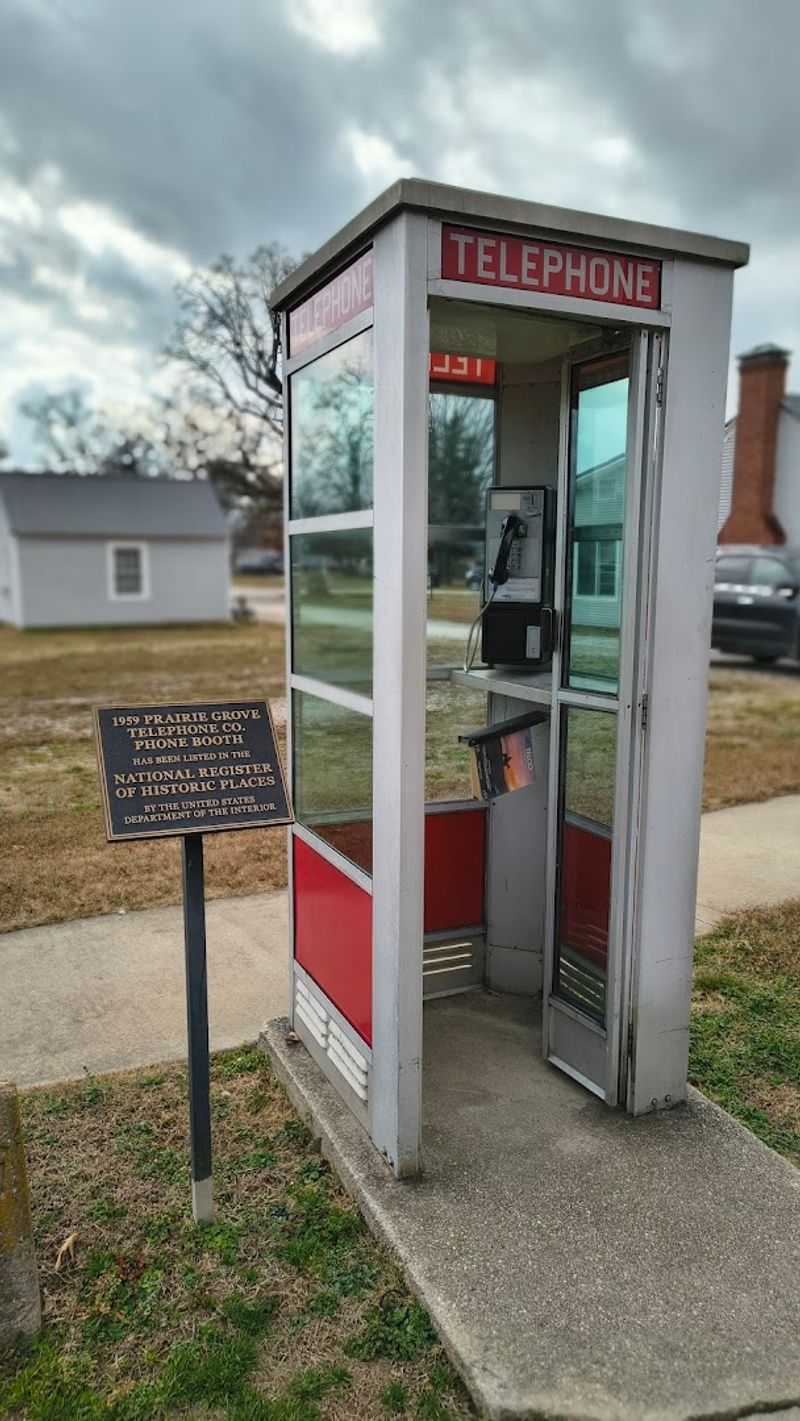
In Prairie Grove, Arkansas, a phone booth from the 1960s has earned a spot on the National Register of Historic Places — and if that doesn’t tell you something wonderful about the way Arkansans preserve their past, nothing will. The Airlight Phone Booth is a beautifully intact example of mid-century roadside infrastructure that most of the country has long since demolished and forgotten.
The Airlight booth design was manufactured by the Bell System and was a common sight along American roadsides from the late 1950s through the 1970s. Its sleek, modernist aluminum frame and folding door were considered cutting-edge design at the time.
Today, surviving examples are extremely rare, which is exactly why the Prairie Grove booth has been recognized as historically significant.
Standing next to this phone booth is a quietly moving experience, especially for anyone old enough to remember when payphones were a lifeline. It represents an entire era of American communication history — a time before cell phones, when a dime and a phone booth could connect you to anyone in the world.
Prairie Grove has preserved this small piece of that history with care and pride. It’s the kind of roadside find that stops you in your tracks and makes you think about how much the world has changed.
Tiny Town Model Village
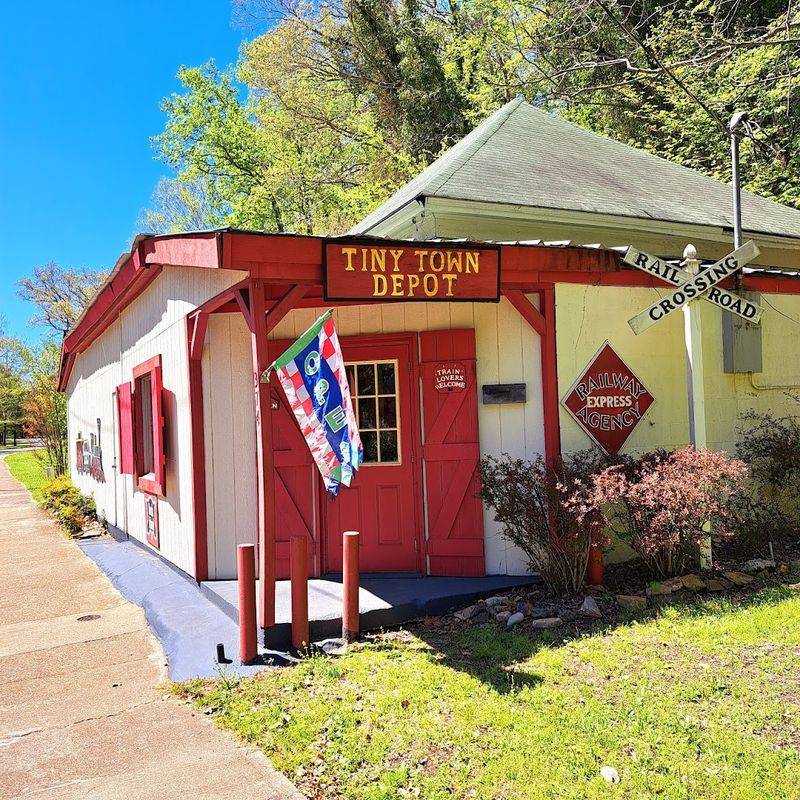
Hot Springs, Arkansas, is famous for its thermal baths and horse racing history, but tucked along Whittington Avenue is a hidden gem that delights visitors of all ages: Tiny Town, a meticulously crafted miniature village complete with a working model railroad. It’s the kind of place that makes adults feel like kids again and kids feel like giants stomping through a city.
The village features dozens of hand-built miniature structures, tiny trees, miniature figures, and a sprawling model train layout that winds through the entire display. Every detail has been carefully considered, from the tiny street lamps to the miniature storefronts with hand-painted signs.
The level of craftsmanship on display is genuinely impressive, and spending time studying the details is a reward in itself.
Tiny Town has been charming Hot Springs visitors for decades and remains one of the city’s most beloved off-the-beaten-path attractions. It’s especially magical for families with young children, who tend to press their noses against the glass with wide eyes and enormous smiles.
The attraction is affordable and doesn’t take long to visit, making it an easy addition to any Hot Springs itinerary. Sometimes the smallest places leave the biggest impressions, and Tiny Town is living proof of that truth.
Pivot Rock and Natural Bridge
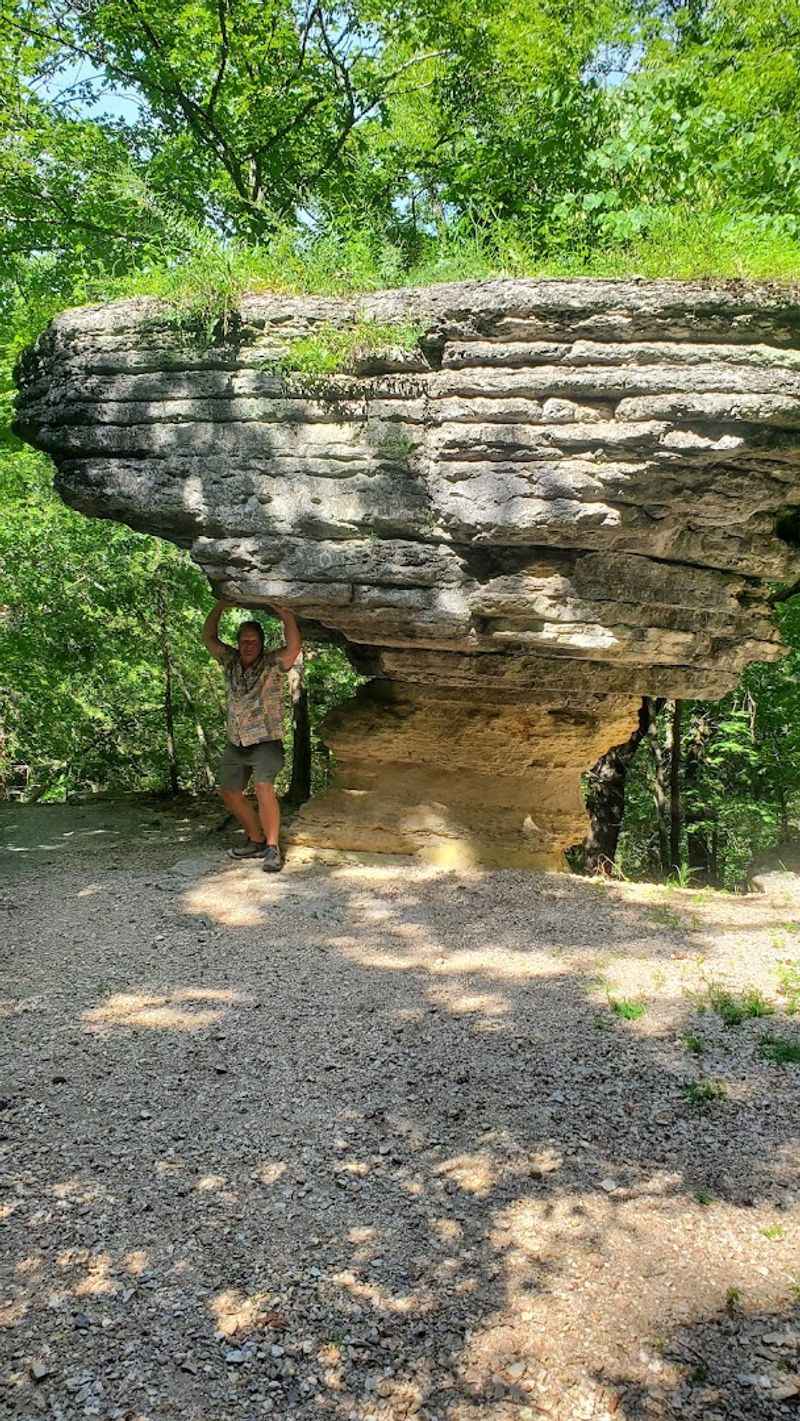
Tucked into the wooded hills just outside Eureka Springs, Pivot Rock is one of those geological oddities that makes you stop your car and do a double take. A massive boulder sits perfectly balanced on a tiny rock pedestal, looking like it could topple any second, yet it has stood that way for thousands of years.
Nature apparently has a flair for the dramatic.
The same property features a small natural bridge and other quirky rock formations. It’s a privately owned attraction that has welcomed curious visitors for generations.
Honestly, few places in Arkansas pack this much wonder into such a small patch of land.
Blanchard Springs Caverns
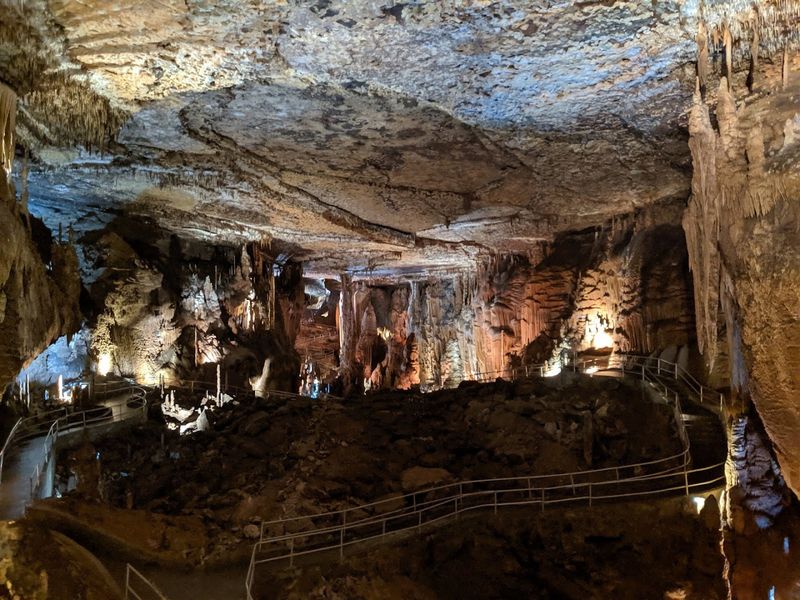
Hidden beneath the Ozark National Forest near Mountain View, Blanchard Springs Caverns is the kind of underground world that genuinely stops you in your tracks. Discovered by the public in the 1960s, this living cave system is still actively growing, meaning new formations are forming right now as water drips through the limestone.
That fact alone makes it feel alive in a way most caves simply do not.
Guided tours take visitors through enormous chambers filled with stunning stalactites and stalagmites. The temperature inside stays a cool 58 degrees year-round, making it a refreshing summer detour.
Few roadside stops in Arkansas reward curiosity quite this dramatically.