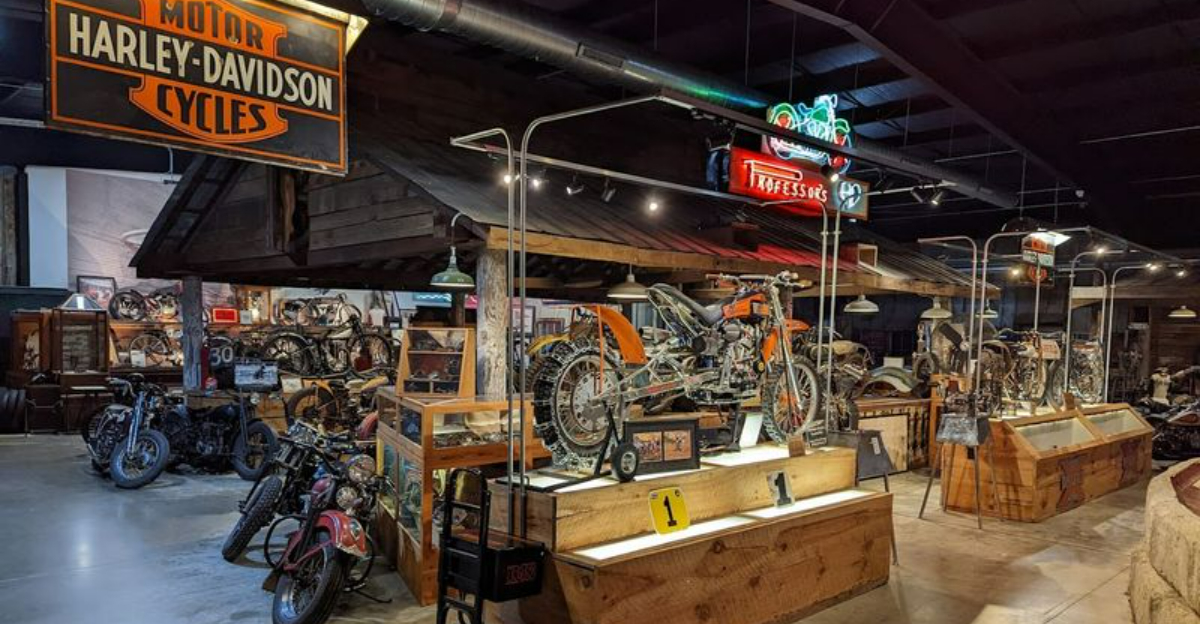
Some museums ask you to look quietly, but Wheels Through Time asks you to listen, smell, and feel the past rumble awake. Tucked into Maggie Valley, this North Carolina mountain stop turns American motorcycle history into something alive instead of frozen behind glass.
You can walk in expecting old bikes and leave remembering a horn blast, a loping engine idle, or a story from a staff member who clearly loves every bolt in the building. If vintage iron, Appalachian road culture, and unexpected mechanical drama appeal to you, this place earns its reputation fast.
The Museum That Runs, Literally
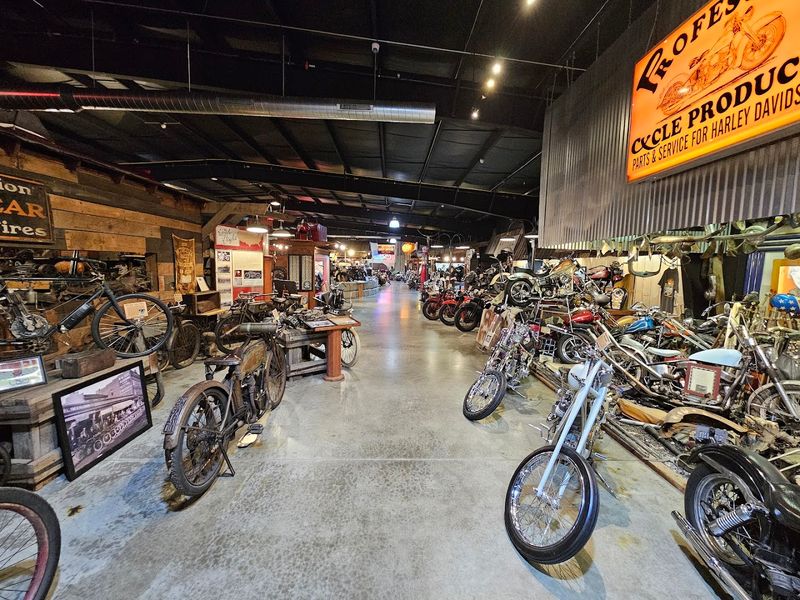
Wheels Through Time does not feel like a quiet storage room for polished relics. The whole point is that the machines are kept alive, and that changes how you experience every aisle.
You are not just looking at American transportation history, you are standing beside engines that can still wake up.
The museum is famous as The Museum That Runs, and that nickname fits without sounding forced. Staff regularly start motorcycles and old engines for visitors, so the soundtrack might shift from conversation to a coughing vintage single or a deep V-twin idle.
That smell of fuel, oil, and warm metal gives the building a working-garage energy.
What I find most memorable is how this running philosophy makes each object feel less distant. A century-old motorcycle becomes less like an antique and more like a stubborn survivor.
You leave understanding that preservation here means motion, noise, heat, patience, and skill.
A Mountain Parking Lot That Becomes Part Of The Exhibit
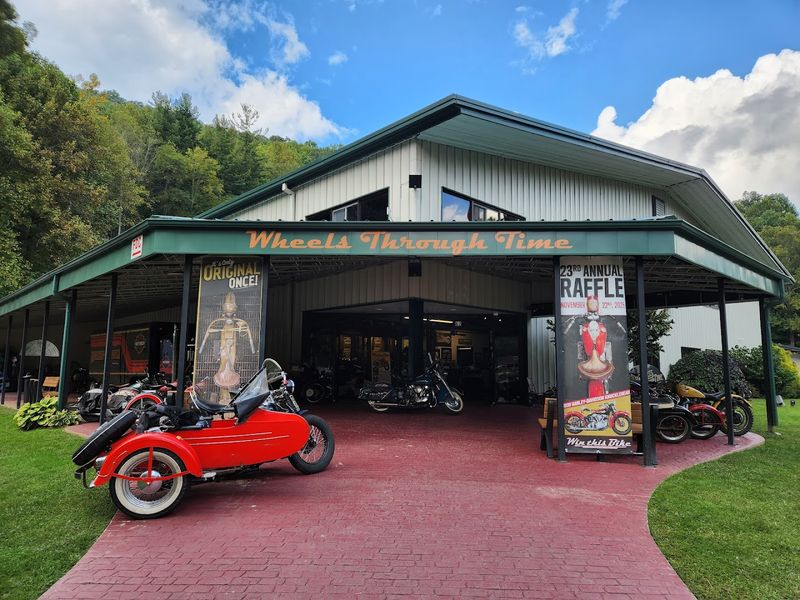
The setting matters almost as much as the collection. Wheels Through Time sits in Maggie Valley, surrounded by the Blue Ridge Mountains and close to routes that riders talk about with real affection.
Before you even step inside, the parking lot can feel like a changing outdoor gallery.
On busy days, visitors roll in from the Blue Ridge Parkway, Cherokee, or longer mountain loops, and their bikes add another layer to the experience. You might see touring machines, cruisers, sport bikes, and the occasional vintage ride resting near the entrance.
That mix makes the museum feel connected to living road culture, not separated from it.
There is something satisfying about seeing modern riders arrive to study the machines that shaped their world. The mountain roads outside are not just scenery, they are part of the reason the museum belongs here.
Maggie Valley gives the collection a natural home.
Dale Walksler’s Obsession Still Shapes The Room
Wheels Through Time feels personal because it began as a personal mission. Dale Walksler, a mechanic, historian, and lifelong collector, spent decades chasing rare American motorcycles from barns, estates, garages, and private collections.
His taste and persistence still shape the way the museum feels today.
Rather than a sterile checklist of famous models, the collection has the mood of a lifetime hunt. Some machines are rough-edged, some are gleaming, and many carry stories that seem too unlikely to be invented.
Since Dale’s passing in 2021, his son Matthew and the museum team have continued that energy with care.
You can sense the difference between an institution built by committee and one built by fascination. The labels, conversations, and demonstrations often point back to individual discoveries and mechanical puzzles.
That human thread makes the rare bikes feel approachable, even when they are historically priceless.
American Iron Across More Than A Century
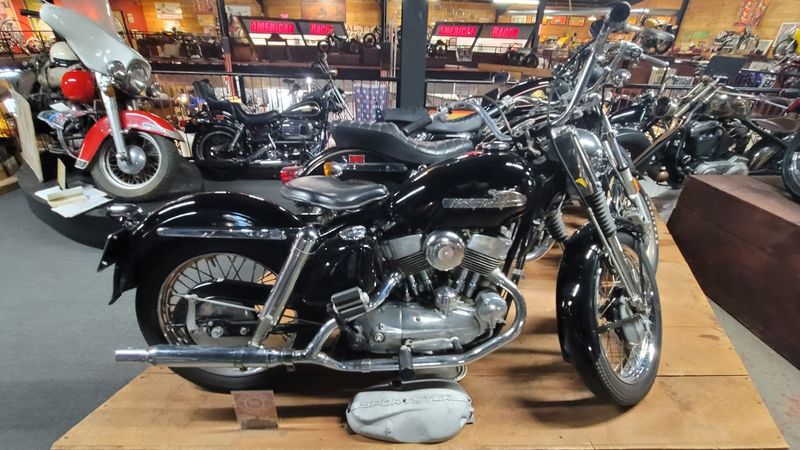
The motorcycle collection is the headline attraction, and it is huge enough to reward slow wandering. More than 300 rare machines fill the 38,000-square-foot museum, with a strong focus on American brands.
Harley-Davidson, Indian, Henderson, Excelsior, Crocker, and lesser-known names all help tell the story.
What makes the display powerful is the visible evolution from motorized bicycles to confident heavyweight motorcycles. Early belt-driven machines look delicate and experimental, almost like someone attached ambition to a bicycle frame.
Nearby, later V-twins show how quickly American design became bolder, heavier, faster, and more expressive.
You do not need to be a mechanical expert to enjoy that timeline. The shapes explain themselves when you compare skinny tires, exposed controls, tank graphics, saddles, and engines across decades.
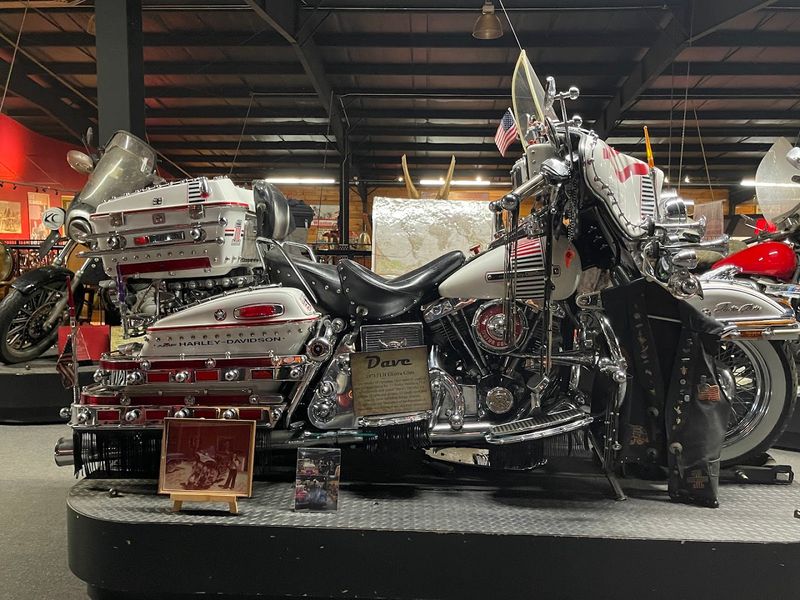
By the time you reach the chrome-rich mid-century machines, you can feel how motorcycles became identity as much as transportation.
The Traub And Other Machines That Feel Almost Mythical
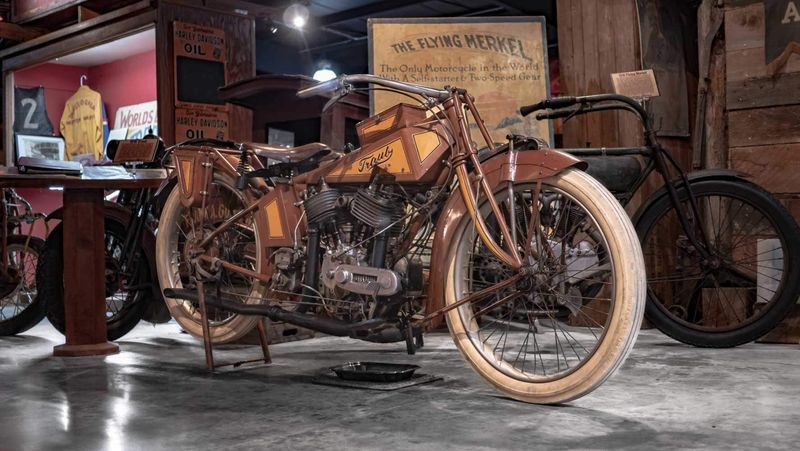
Every good museum has a few objects people whisper about, and Wheels Through Time has several. The 1916 Traub motorcycle is one of the most famous, partly because of its strange discovery story and partly because it seems to exist outside normal production history.
It is often described as one of the rarest motorcycles in the world.
The Traub was reportedly found sealed behind a Chicago wall, which gives it the quality of a mechanical ghost story. Standing near it, you are not simply asking what it is, but why it existed and how it disappeared for so long.
That mystery fits perfectly in a building full of unlikely survivors.
Other one-of-a-kind and extremely rare machines add to that atmosphere. Some were rescued from rough conditions, then carefully repaired without erasing their history.
These bikes remind you that transportation history is not always tidy, documented, or easy to explain.
Board Track Racers With No Time For Fear
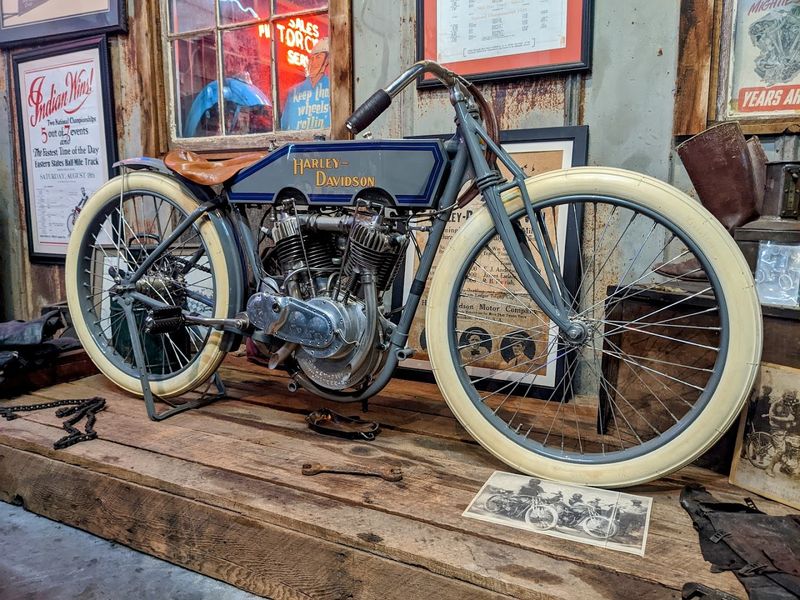
The board track racers are some of the most startling machines in the building. Built for wooden oval tracks in the early twentieth century, they look stripped, narrow, and brutally purposeful.
The most shocking detail is that some were designed without brakes.
That single fact changes how you read the whole display. These were not comfort machines or scenic weekend cruisers, they were weapons for riders willing to gamble with splinters, speed, and thin tires.
When you see their sparse frames and low bars, the danger becomes almost physical.
I like how these racers interrupt any romantic idea that old motorcycling was gentle. They represent a time when innovation, entertainment, and risk were tangled together in public spectacle.
At Wheels Through Time, they are not presented as curiosities alone, but as evidence of a wild racing culture that helped push motorcycle design forward.
Cars, Gas Pumps, Signs, And Roadside Texture
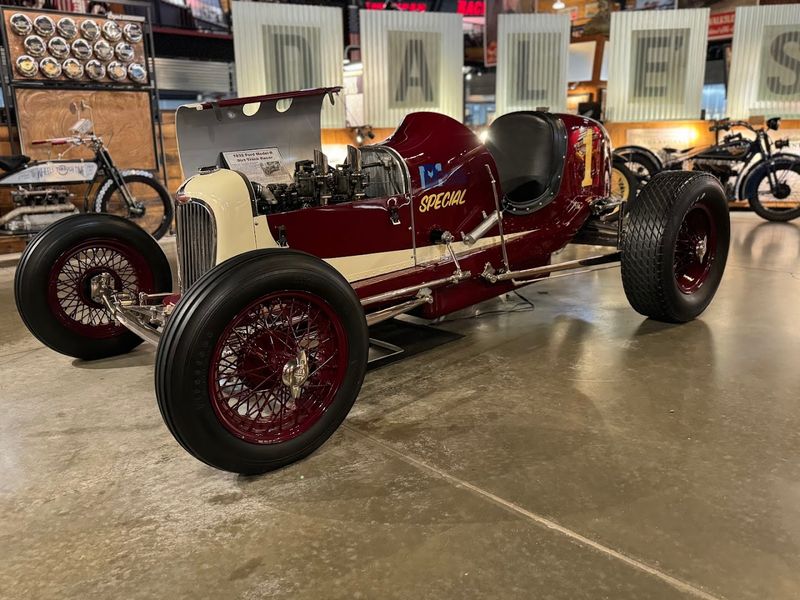
Although motorcycles dominate the museum, the surrounding road Americana gives the place its texture. Vintage automobiles, antique gas pumps, old signs, photographs, horns, tools, and memorabilia fill the spaces between the bikes.
That clutter is not random, it helps recreate the world these machines came from.
A hand-operated gas pump standing near an early vehicle can explain travel better than a paragraph ever could. It suggests slower roads, smaller towns, uncertain distances, and the ritual of stopping for fuel before highways made movement feel effortless.
Nearby signs and shop objects make the exhibits feel rooted in everyday life.
This wider transportation context is one reason families and casual visitors stay longer than expected. Even if you do not know engine sizes or model years, you recognize the language of roadside America.
Wheels Through Time becomes less like a motorcycle-only stop and more like a mountain time capsule.
Military Motorcycles With A Different Kind Of Purpose
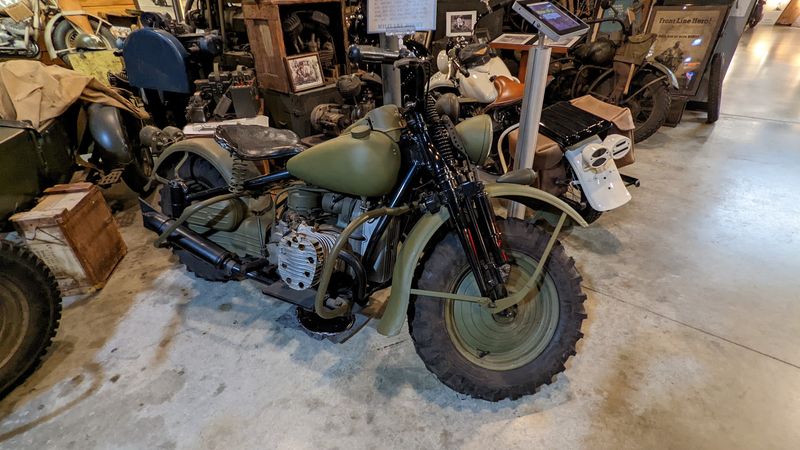
The military section shows motorcycles stripped of glamour and built for duty. Restored Army-issued Harley-Davidsons and Indians sit alongside photographs, uniforms, and supporting artifacts from World War I and World War II.
The effect is serious without becoming distant or overly formal.
These machines reveal how quickly motorcycle design can change when the mission changes. Civilian bikes nearby may show chrome, style, and personal expression, while wartime models emphasize utility, durability, and field repair.
The contrast helps you understand that manufacturers responded directly to national need.
What makes the display resonate is the mix of machine and context. A military motorcycle is interesting mechanically, but it becomes more meaningful when you imagine dispatch riders, rough roads, cold mornings, and pressure that had nothing to do with leisure.
Wheels Through Time lets that practical courage come through without turning the bikes into abstract symbols.
The Moment An Old Engine Changes The Whole Room
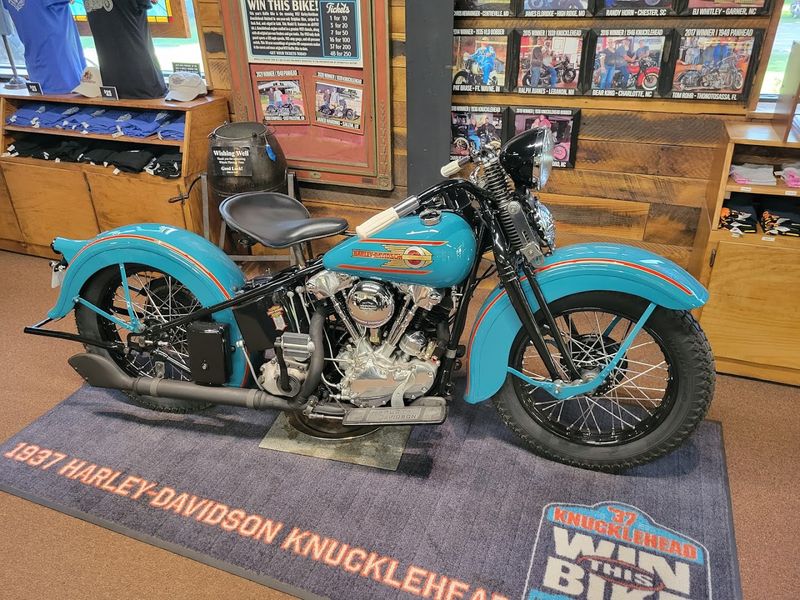
The live engine demonstrations are the part people keep talking about afterward. A staff member may kick an old motorcycle to life, and suddenly the museum stops feeling like a place of still objects.
Conversations pause because the sound takes over your chest.
Early singles and V-twins do not idle like modern engines. They lope, stumble, bark, and settle into rhythms that feel handmade, as if each explosion has its own personality.
Recordings cannot fully capture the vibration, the fuel smell, or the surprise of hearing a machine that old still answer.
You may want to cover your ears if a horn or engine fires close by, and that is part of the fun. The demonstrations make history slightly unpredictable.
Instead of reading that a motorcycle once ran, you watch it prove the point in front of you.
The Restoration Shop As A Mechanical Theater
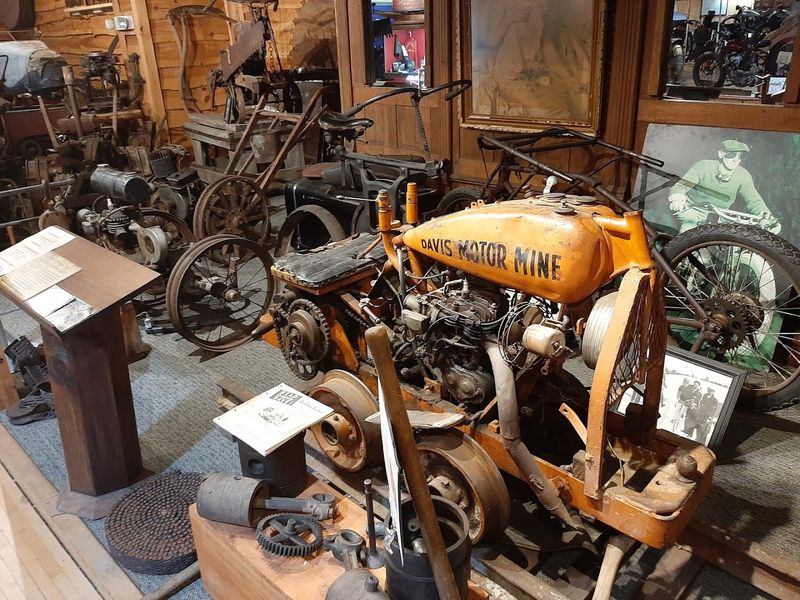
The restoration work at Wheels Through Time is not hidden like backstage machinery. Parts, tools, frames, engines, and work-in-progress projects help give the museum a working-shop atmosphere.
You can see that keeping old machines alive is not a one-time achievement.
A partially disassembled engine can be as interesting as a finished motorcycle if you stop long enough. It shows the small decisions, scarce parts, patient cleaning, and mechanical judgment required before anything can run again.
The shop area makes preservation feel active, messy, and deeply skilled.
This is where the museum’s running philosophy becomes believable. If the bikes are expected to start, someone has to maintain fuel systems, magnetos, cables, bearings, and countless tiny details.
Seeing that labor in plain view gives you more respect for every polished machine on the floor.
A Place For Riders, Families, Tinkerers, And The Merely Curious
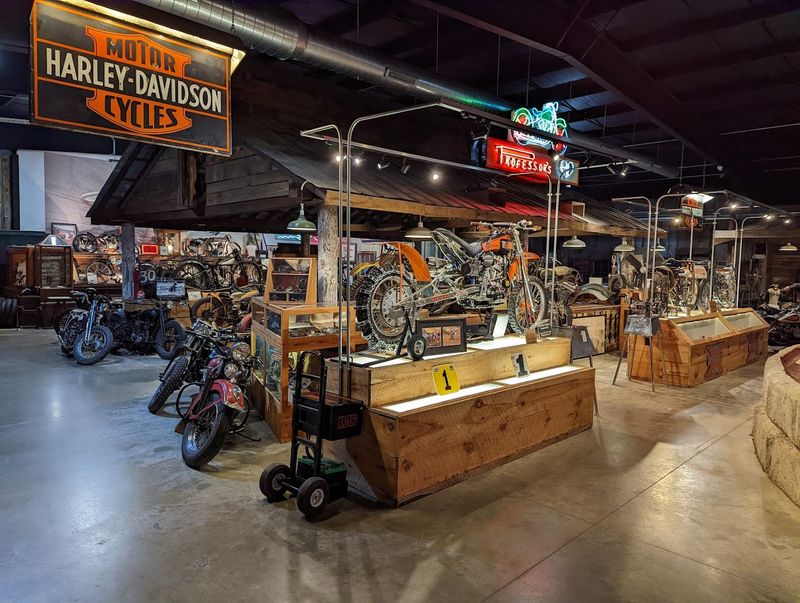
One of the pleasant surprises is how broad the audience feels. Serious collectors study details, riders compare eras, kids react to size and sound, and travelers wander in because Maggie Valley put the museum in their path.
Somehow, the same rooms work for all of them.
That happens because the objects operate on several levels at once. A motorcycle can be engineering, art, family memory, racing history, military tool, or simply a loud and beautiful thing.
Friendly staff and informal conversations make it easier to ask questions without feeling out of place.
Fall can bring extra energy because mountain riding traffic swells around western North Carolina. Visitors may arrive fresh from twisting roads, still carrying that road buzz into the museum.
If you are not already a motorcycle person, this is the kind of place that might quietly convert you.
Planning A Visit Without Rushing The Good Stuff
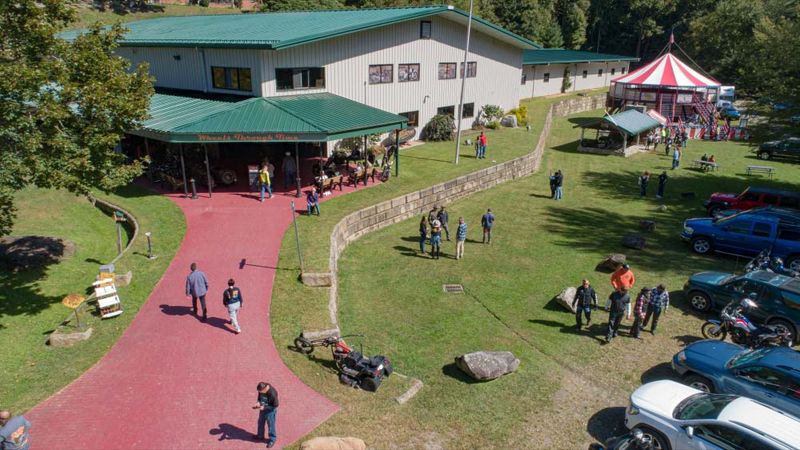
Wheels Through Time is located at 62 Vintage Lane in Maggie Valley, North Carolina, and it deserves more than a quick glance. Current listed hours commonly run 10 a.m. to 5 p.m.
Thursday through Monday, with Tuesday and Wednesday closed, but you should check the museum website before going. Seasonal schedules can matter.
Most visitors should plan for at least two to three hours inside. Enthusiasts can easily spend longer, especially if staff start engines, share stories, or point out details you would have missed alone.
Admission has traditionally been reasonable, with adult tickets often around the mid-teen range.
The gift shop is worth leaving time for because it reflects the museum’s specific personality. You will find shirts, books, and motorcycle-history items rather than purely generic souvenirs.
Since Maggie Valley is small, planning food before or after your visit makes the day smoother.