One road in this state packs 75 scenic overlooks into just 105 miles. That works out to a fresh pull-off roughly every mile and a half, which sounds like a friendly dare to anyone holding a phone camera.
Late November adds a twist. The big leaf-peeping crowds have usually thinned out by then, and some lingering fall color can still hang on along the ridges.
I love that Virginia lets you turn a holiday drive into the best part of the whole weekend. One route follows a river through a mountain gap, another winds past some of the most beautiful landscapes in the Blue Ridge, and a third links three of the oldest chapters in American history.
These roads also offer something Thanksgiving weekend travelers could use a little more of: breathing room. Instead of rushing between family gatherings, crowded shopping centers, and holiday dinners, you can slow down, take a few scenic detours, and enjoy the changing landscape.
Some routes are made for an entire afternoon, while others fit neatly into a shorter holiday outing. You’ll find mountain overlooks, quiet riverbanks, historic landmarks, and plenty of opportunities to stretch your legs.
So maybe the fastest way to Grandma’s house isn’t the point this year at all. I’m starting to think the long way deserves its own seat at the table, right next to the pumpkin pie.
1. Skyline Drive
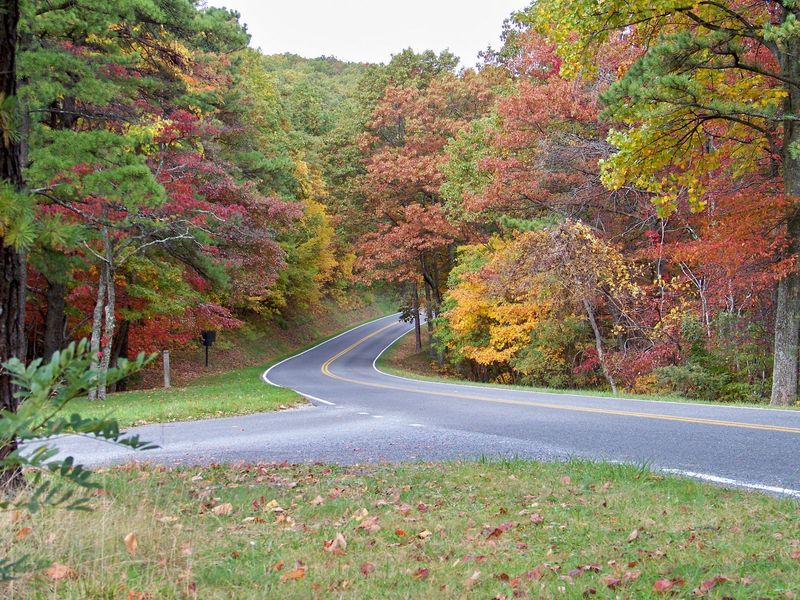
Seventy-five overlooks on one road means you’ll be hitting the brakes a lot, and nobody will blame you. Skyline Drive runs 105 miles along the crest of the Blue Ridge, right through Shenandoah National Park.
The road stretches between Front Royal in the north and Waynesboro in the south. Mileposts line the shoulder, so finding your next stop is easy math.
You can follow the numbered markers to plan a handful of favorite viewpoints or simply see where the scenery takes you.
Slow down and soak it in, because the speed limit is 35 miles per hour. That pace fits the views, and it gives you time to actually look around.
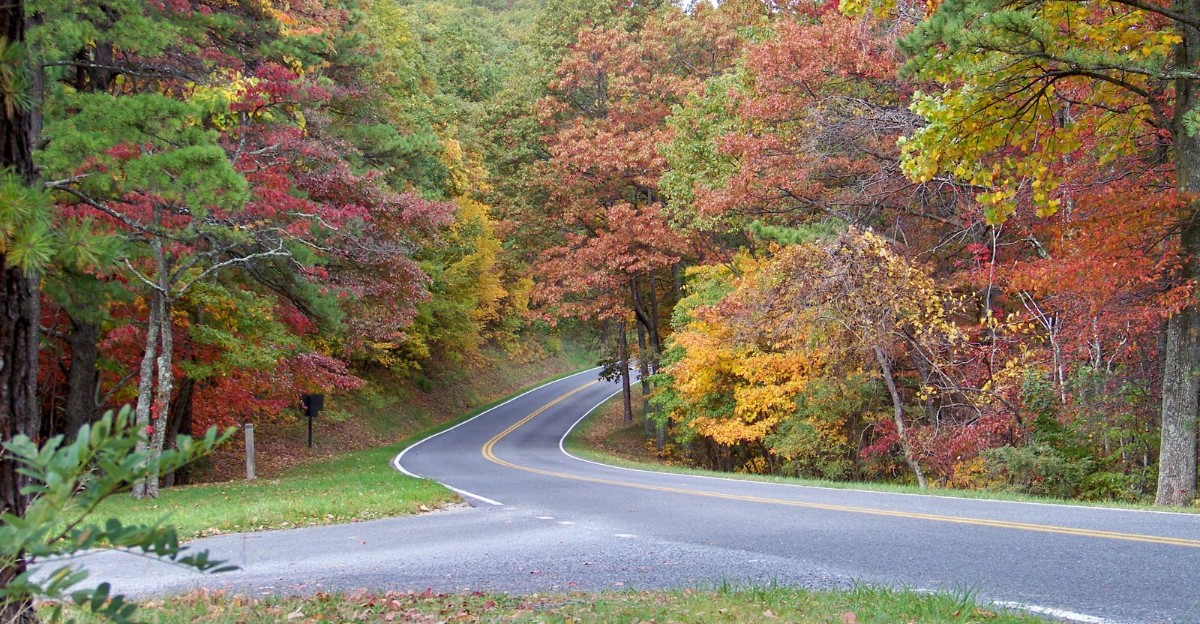
The road twists through forests, climbs along mountain ridges, and opens onto sweeping views of the Shenandoah Valley and surrounding peaks.
Late November brings a different kind of beauty than the famous October foliage season. Many trees have already dropped their leaves, revealing mountain contours that can be harder to appreciate when everything is covered in green.
Some oaks and other late-changing trees may still offer patches of russet, bronze, and gold, depending on the weather.
Clear days can deliver especially impressive views. Without the thick summer foliage, distant ridges become more visible, and the low autumn sun adds a warm glow to the landscape.
On chilly mornings, you might even catch a little mist hanging over the valleys.
Big Meadows Lodge sits near Mile 51 and serves a Thanksgiving buffet on the holiday. The spread includes carved turkey, honey-glazed ham, pumpkin pie, and pecan bread pudding, with three ticketed seatings.
That makes this drive particularly appealing if you’d like to trade a crowded kitchen for a holiday meal surrounded by mountain scenery.
The lodge’s original section dates to 1939, built with stone from Massanutten Mountain and chestnut paneling. Its rustic architecture fits naturally into the surrounding landscape, making it a memorable stop even before dinner arrives.
It closes for the season soon after Thanksgiving, so plan ahead and confirm holiday dining arrangements before setting out.
If you’re not attending the buffet, Big Meadows is still a useful landmark for organizing your drive. The surrounding area offers opportunities to pause, take photographs, and appreciate the open mountain landscape.
Just remember that late November temperatures can be considerably colder at higher elevations than in nearby towns.
Franklin D. Roosevelt dedicated Shenandoah National Park in 1936.
Nearly a century later, the drive still feels like a gift to anyone with a full tank.
Keep in mind that the park charges an entrance fee, and weather can close sections of the drive. Snow, ice, fog, and strong winds can make mountain travel unpredictable this time of year.
Check conditions before you go, then pack layers for chilly overlooks.
My advice is to avoid trying to visit every overlook in one afternoon. Pick a few that appeal to you, leave enough time for photographs, and remember that the drive itself is the attraction.
You’ll enjoy the experience much more without watching the clock every few minutes.
2. Blue Ridge Parkway, Fancy Gap, VA
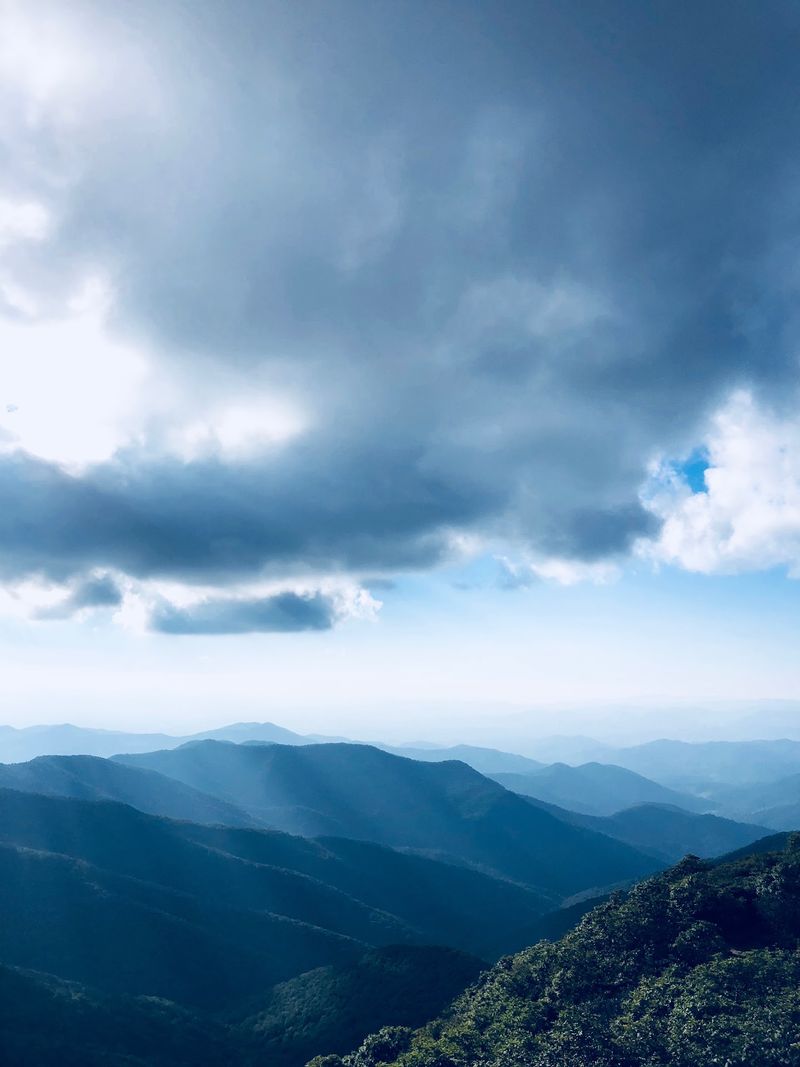
How about a road with no stoplights, no billboards, and no admission fee? The Blue Ridge Parkway winds 469 miles through the mountains, and the Fancy Gap area puts you right in its Virginia stretch.
The parkway picks up where Skyline Drive ends near Waynesboro. From there it rolls south toward Great Smoky Mountains National Park in North Carolina.
Although the entire route is far too ambitious for a casual Thanksgiving afternoon, the Fancy Gap section makes an excellent starting point for a shorter mountain adventure.
Fancy Gap sits close to the North Carolina line in Carroll County. The station on Ranger Road makes a handy reference point for planning your day.
The surrounding countryside has a distinctly rural feel, with mountain views, wooded slopes, and scattered communities along the way.
Overlooks pop up often, giving you plenty of excuses to stop and stretch. Wide views of rolling ridges are the main event here.
On a clear day, the layered mountains seem to stretch toward the horizon, creating the kind of scenery that makes you forget you were supposed to be somewhere else.
The parkway also offers a welcome change of pace from busy interstate travel. There are no commercial billboards competing for your attention, and the carefully designed road encourages drivers to enjoy the landscape rather than rush through it.
Gentle curves, wooded sections, and open viewpoints make the journey feel like a continuous sightseeing experience.
Late November has its own appeal along this stretch. The colorful foliage may be past its peak, but the bare branches reveal more of the terrain.
You can see farther through the trees, while the remaining evergreen growth keeps the mountain landscape from looking completely bare.
The changing weather can make each section look different, too. A sunny afternoon brings crisp views of distant ridges, while low clouds can create a moody atmosphere around the higher elevations.
If you enjoy landscape photography, this is a good time to experiment with the softer light and dramatic skies.
The parkway is open around the clock, but winter weather can close parts of it. Check road status before leaving, especially if an early cold snap rolls in.
Conditions can change quickly at higher elevations, and a road that looks perfectly manageable in town may be icy farther up the mountain.
Saturdays and Sunday afternoons tend to bring the most traffic. A quieter morning, like the Friday after Thanksgiving, could be your sweet spot for calm curves.
Getting an early start also gives you more daylight for stops and photographs.
There’s no restaurant at the Fancy Gap station, so pack leftover turkey sandwiches. Honestly, cold stuffing tastes better with a mountain view anyway.
A thermos of coffee or hot chocolate would make the outing even better, particularly if you plan to spend time at the overlooks.
You can also turn the drive into a flexible half-day excursion. Rather than setting a strict destination, choose a stretch of the parkway, stop whenever a viewpoint catches your attention, and leave enough time to return before dark.
One important detail: the Blue Ridge Parkway does not operate like an ordinary highway. Services are limited, and some facilities close seasonally.
Fill your tank before heading out, bring snacks, and don’t assume that every visitor facility or restroom will be open during Thanksgiving weekend.
If your holiday plans call for a little fresh air without a complicated itinerary, Fancy Gap offers a lovely excuse to take the scenic route.
3. Colonial Parkway
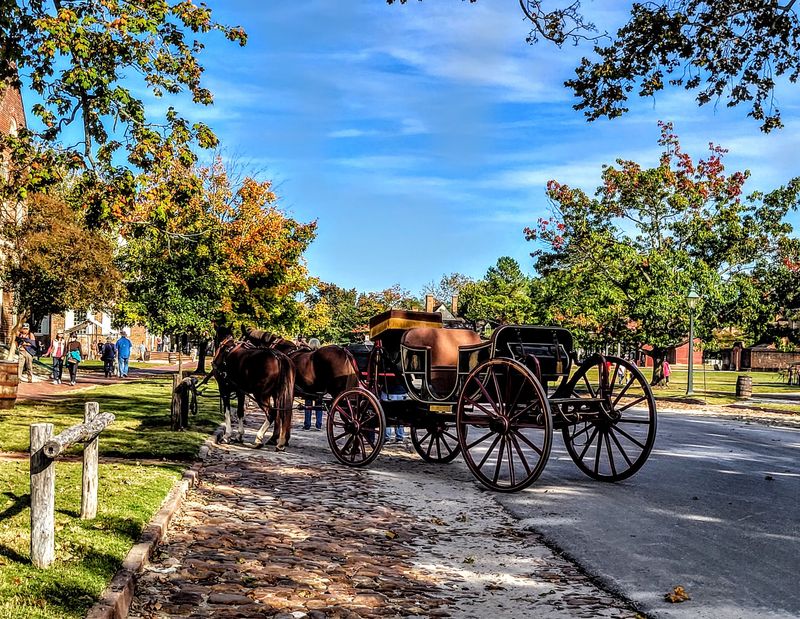
History buffs, this one’s basically a 23-mile time machine with a steering wheel. The Colonial Parkway links Jamestown, Williamsburg, and Yorktown, the three corners of Virginia’s Historic Triangle.
Jamestown was the first permanent English settlement in North America, founded in 1607. Yorktown is where British forces surrendered in 1781, a turning point of the Revolutionary War.
Between those two historic bookends lies Williamsburg, where the restored colonial capital brings another important period of American history to life.
The parkway makes it easy to connect all three destinations without spending the day on busy commercial roads. Instead, you’ll travel through a protected corridor of woodland, water views, and carefully preserved historic scenery.
Between Jamestown and Yorktown, the road curves through thick woods and along the York and James Rivers. Quaint brick-faced bridges and tree-lined bends give it an old-time feel.
The scenery changes gradually, with glimpses of the water appearing between the trees and quiet stretches that make you forget how close you are to modern development.
The pavement itself is part of the charm. It uses an exposed aggregate surface with a soft tan color that blends into the scenery.
Even the road’s design feels intentional, helping the parkway fit into its historic surroundings rather than dominate them.
Commercial trucks aren’t allowed, which keeps things calm. The speed limit is low, so relax and let the river views do the talking.
This isn’t a route for impatient drivers looking to shave a few minutes off their journey. Its greatest reward comes from taking your time.
Thanksgiving weekend makes a smart time to go. Colonial Williamsburg sits right in the middle, so you can mix a scenic cruise with a stroll through history.
The historic area offers a chance to explore restored buildings, traditional architecture, and exhibits that bring the colonial period into focus.
Jamestown also deserves a place on your itinerary. You can explore the story of the 1607 settlement and learn more about the people who lived there, including the Indigenous communities whose history long predates the arrival of English colonists.
The area’s historical significance makes it an especially worthwhile stop for families traveling with curious children.
At the Yorktown end, the American Revolution comes into focus. The surrender here in 1781 effectively ended major fighting in the Revolutionary War and helped secure American independence.
Seeing the landscape where those events unfolded adds another dimension to the history you might remember from school.
You don’t need to visit every attraction to enjoy the parkway. Even a simple drive between the three communities offers a satisfying look at the region’s past.
If you have limited time, choose one historic stop and allow the rest of the journey to unfold at a relaxed pace.
Pull-offs along the water are great for a quick break. Bring a jacket, since breezes off the rivers can feel brisk in late November.
The shorter daylight hours also mean you should leave enough time to enjoy the route before sunset.
I’d recommend making this a leisurely outing rather than squeezing all three historic destinations into a rushed afternoon. Pick the attraction that interests you most, then use the parkway to connect it with another stop.
You can always save the remaining sites for another visit.
There’s something especially fitting about spending Thanksgiving weekend on a road that connects so many important chapters of American history. While everyone else is focused on holiday shopping, you’ll have a chance to explore the places where the country’s story took shape.
4. Goshen Pass
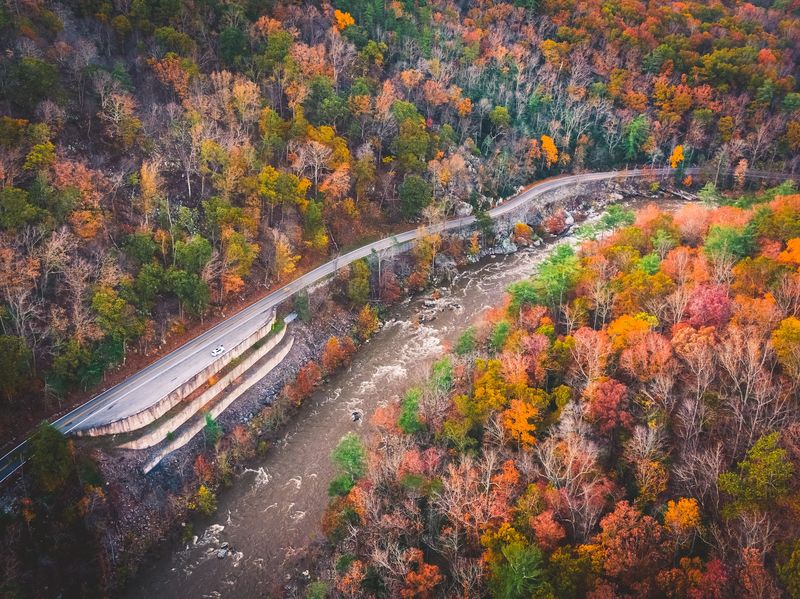
Goshen Pass
A river carved this road’s best scenery long before anyone paved it. Goshen Pass follows Route 39 as the Maury River cuts a rocky gorge through the mountains.
The pass stretches roughly three miles between Goshen and Rockbridge Baths in Rockbridge County. It’s short, but you’ll probably want to drive it twice.
This is one of those places where the distance on the map tells you very little about how much there is to appreciate along the way.
Viewpoints along the route let you pull over and watch the water tumble over boulders. Steep, wooded slopes rise on both sides, framing the river like a picture.
The narrow gorge creates a dramatic contrast between the rushing water and the surrounding mountains, making even a short drive feel like a proper escape.
Unlike the long mountain routes elsewhere in Virginia, Goshen Pass doesn’t require an entire day. You can enjoy the main stretch in a relatively short time, then combine it with other attractions in Rockbridge County.
That flexibility makes it a particularly appealing choice for Thanksgiving weekend travelers who have family obligations or a packed holiday schedule.
The landscape changes with the seasons, and late November brings a quieter atmosphere. Much of the foliage may have fallen, but that opens up views of the rocky slopes and river that can be partially hidden during the warmer months.
Remaining autumn leaves add occasional splashes of color, while the cooler air gives the gorge a crisp, peaceful feel.
Did you know the river carries a famous name? It honors Matthew Fontaine Maury, a noted oceanographer who loved this spot, and a memorial to him stands in the pass.
Maury asked to be carried through Goshen Pass when the rhododendrons bloomed. His wish was granted in 1873, and an anchor marks the memorial today.
It’s an unusual piece of local history that gives the scenic drive an extra layer of interest.
The area’s natural setting also makes it appealing to visitors who would rather spend time outdoors than in crowded holiday attractions. You can watch the river, listen to the water moving around the rocks, and enjoy the scenery without committing to a lengthy hike.
If you decide to leave the car, be mindful of the conditions. River rocks can be slippery, particularly after rain or when temperatures drop.
Stick to safe, established access points, avoid getting too close to fast-moving water, and dress for the colder temperatures.
Natural Bridge State Park sits within an easy drive, if you’d like to stack another wonder onto the day. Its 215-foot limestone arch is worth the detour.
The enormous natural formation has long attracted visitors, and the surrounding park offers another opportunity to appreciate Virginia’s remarkable geology.
You could easily make Goshen Pass part of a longer Rockbridge County outing. Start with the gorge, enjoy a scenic lunch nearby, and then continue toward Natural Bridge if daylight and road conditions allow.
Alternatively, keep things simple and make the river the main attraction.
The curves are tight, so take your time and use the pull-offs. This is a road for clearing your head, not for setting records.
Watch for other vehicles, cyclists, and pedestrians, particularly around stopping areas where visitors may be getting out to admire the water.
One more thing worth remembering: the pass is a natural area, not a fully developed tourist attraction with extensive services. Bring water and snacks, check the weather, and don’t expect every roadside stopping area to offer facilities.
A little preparation goes a long way toward making this short drive enjoyable.
Thanksgiving weekend is a wonderful excuse to discover places like Goshen Pass. You don’t need a complicated itinerary, expensive tickets, or a full day away from the family.
Sometimes all you need is a winding road, a beautiful river, and a little extra time to enjoy the journey.