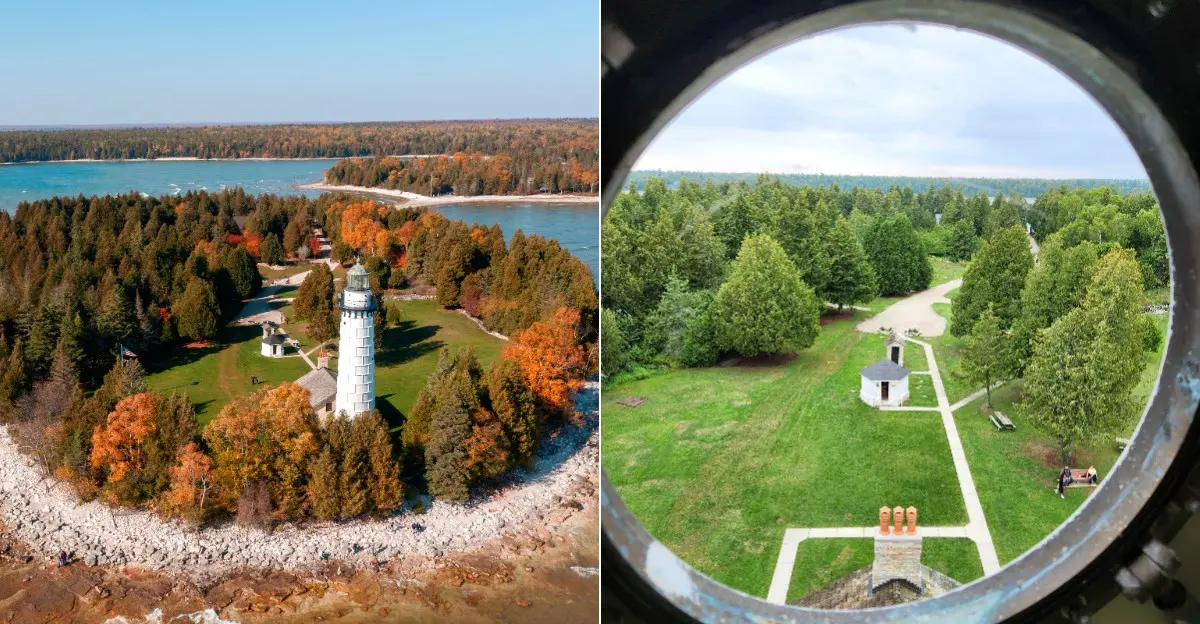
Reaching this lighthouse is half the adventure, with a short walk across a rocky causeway as Lake Michigan laps at both sides.
Cana Island Lighthouse stands just outside Baileys Harbor in Wisconsin’s beautiful Door County.
Its tall white tower has watched over this rugged stretch of shoreline since the late 1860s.
Right beside it, the keeper’s house brings to life what daily life was like for the families who tended the light.
Kids love spotting boats on the horizon and exploring the island’s rocky edges.
Pack a camera and a light jacket, because the breeze off the lake can feel surprisingly cool even in summer.
A Home Built Around an Important Job
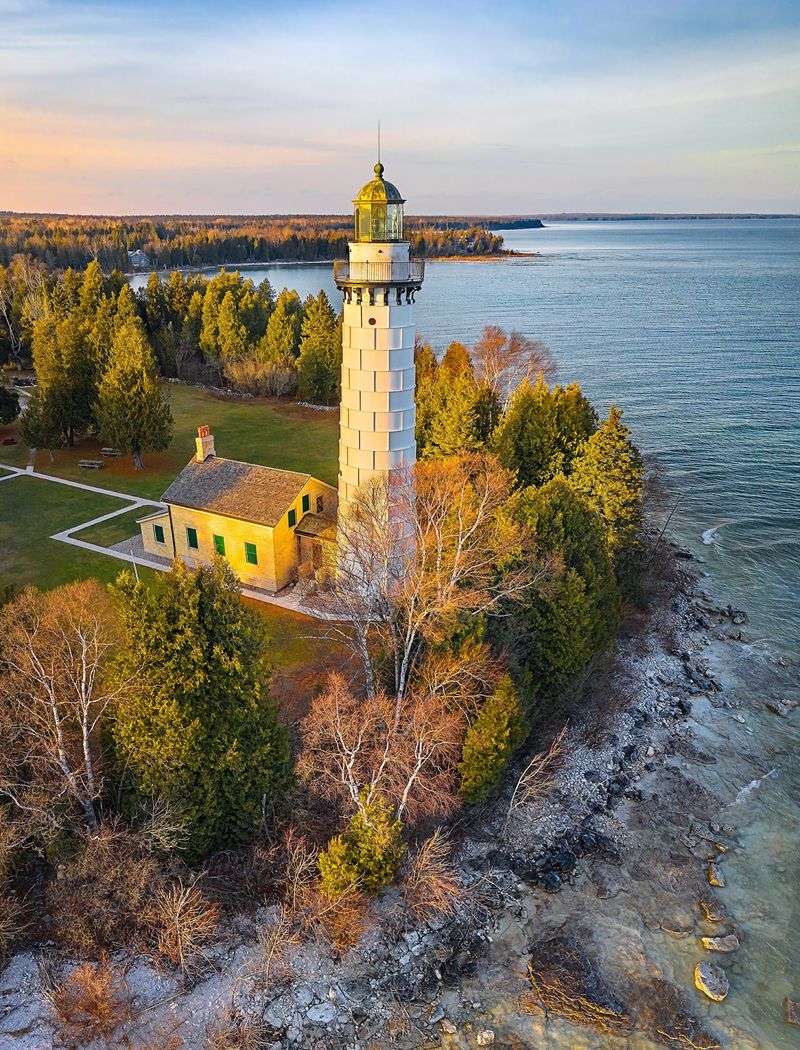
Long before visitors came to admire the view, someone had work to do here every day. Cana Island Lighthouse began guiding ships along this part of the Lake Michigan coast in 1869. The keeper’s quarters were a home tied closely to that job, not a vacation cabin.
Think about how different evenings felt without a phone full of weather reports. A keeper needed to pay attention to the light, the lake, and the needs of the household. The preserved quarters give visitors a place to imagine that routine in human terms.
As you move through the house, look for details that make it feel like a home rather than just an exhibit. Consider where a family might have gathered, rested, or prepared for another day. Reading the displays can help separate real history from the stories you make up in your head.
Kids can try a simple challenge: name three everyday tasks that would have been harder on an island. Adults may notice how little space there was between work and family life. The house makes the lighthouse story more personal because the people who maintained the light lived beside it. A visit is short, but that idea can stay with you long afterward.
Getting There Is Part of the Adventure

Before you see the rooms or climb the tower, the lake gets your attention. Cana Island sits just off the mainland, with a rocky causeway leading toward the lighthouse grounds. Depending on water levels and conditions, visitors may walk across or use a tractor-drawn wagon.
The crossing is memorable, but it deserves care rather than a race to the other side. Wear sturdy shoes if you plan to walk, since rocks can be uneven and wet. Keep children close, and follow staff directions about the safest way across that day.
A wagon ride can be fun for families and helpful when the crossing is covered by water. Do not assume the same option will be available every time you visit. Lake levels, waves, weather, and museum operations can affect access.
The site is at 8800 E Cana Island Rd, Baileys Harbor, WI 54202. Before driving there, check the museum’s current visitor information so you know where to park and how the crossing works. Give yourself extra time instead of squeezing the stop between other plans. Once you are on the island, the trip across helps explain why living beside this light was unlike living in an ordinary house.
The Tower Rewards a Careful Climb
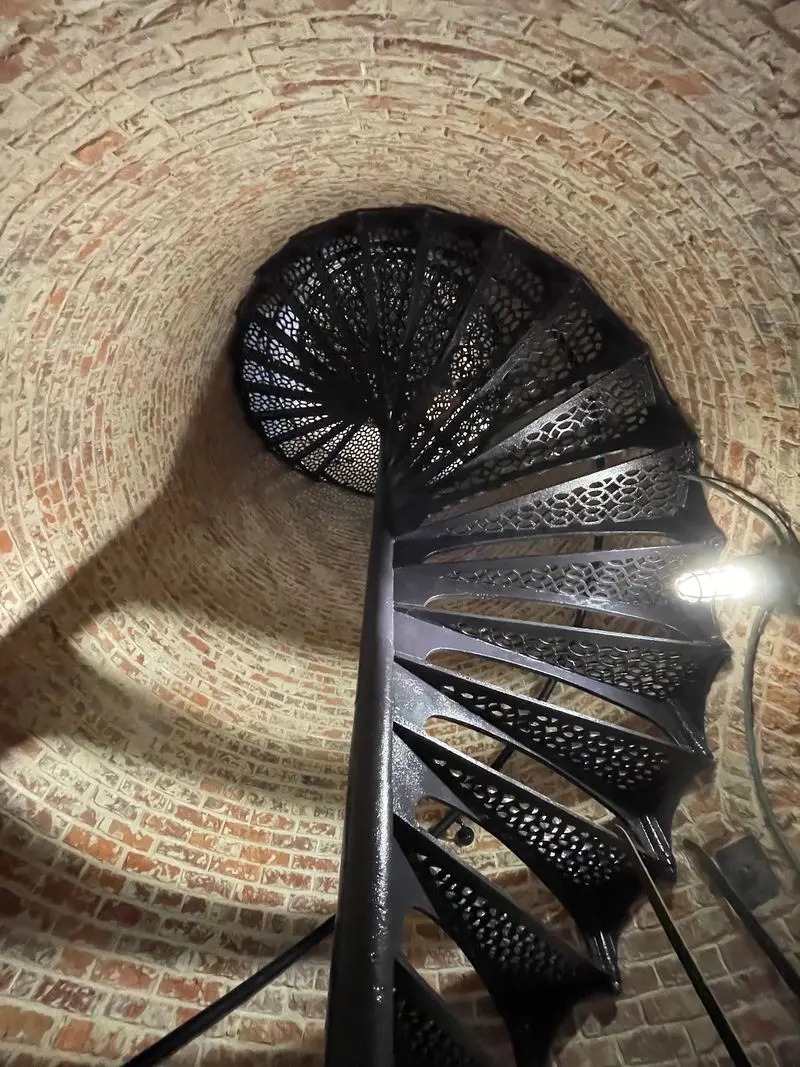
A spiral staircase can make even a short climb feel like an expedition. At Cana Island Lighthouse, visitors who climb the tower are rewarded with wide views over Lake Michigan. Reviews commonly describe about 97 steps, so be ready to take your time.
The stairs may feel steep or uncomfortable if you dislike heights or have trouble with narrow spaces. Use the handrail, keep a comfortable distance from the person ahead, and follow posted rules. If climbing is not right for you, there is still plenty to see from the ground.
From above, notice how much open water surrounds the island. That view helps explain why a dependable light mattered to ships moving along a rocky shore. It also shows how exposed the keeper’s home could feel during windy weather.
Check whether the tower is open before promising children a climb. Access may depend on staffing, weather, maintenance, or seasonal hours. A camera is useful, but secure loose items and pay attention to your footing before taking pictures. Coming back down slowly is just as important as getting to the top. Whether you climb every step or admire the tower outside, it gives the house beside it a clear purpose.
Listen for the Story Behind the Light
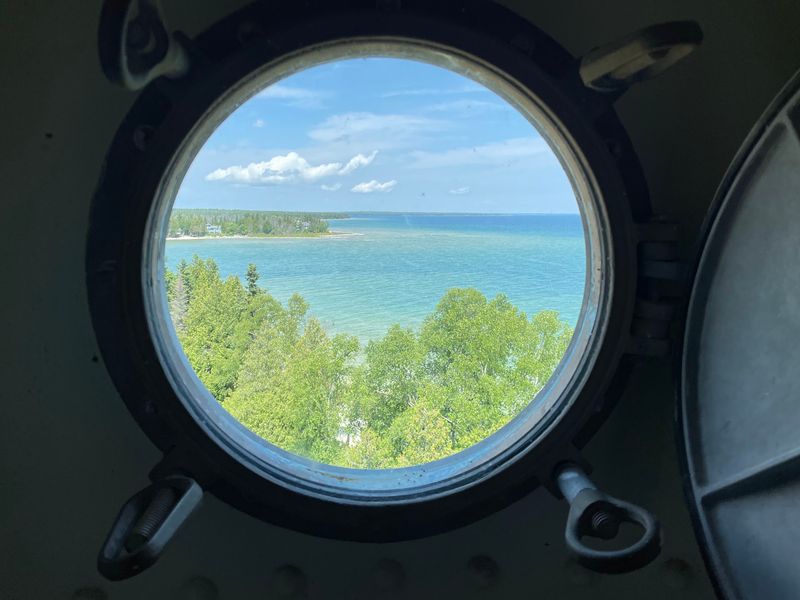
From a distance, a lighthouse looks simple: a tall tower with a bright light. Up close, its job becomes a story about ships, weather, and people watching the coast. Cana Island Lighthouse offers a chance to learn why sailors needed help near this rocky stretch of Lake Michigan.
Start with the exhibits instead of treating them as something to pass on your way upstairs. They can add meaning to the tower, the keeper’s quarters, and the view outside. If staff are available, ask what duties kept the light working during its earlier years.
Children might enjoy looking for one object that helped sailors and another that helped the keeper. Then ask how those two jobs were connected. It is a small activity that can turn unfamiliar history into a story they remember.
Keep in mind that a preserved site can show several periods of its past at once. Displays are a better guide to specific dates and equipment than guesses based on a room’s appearance. Take a photo of an information panel if you want to read it again later, where photography is allowed. The more you learn, the less the building feels like a picture and the more it feels like a workplace.
Leave Time for the Lake Michigan Shore
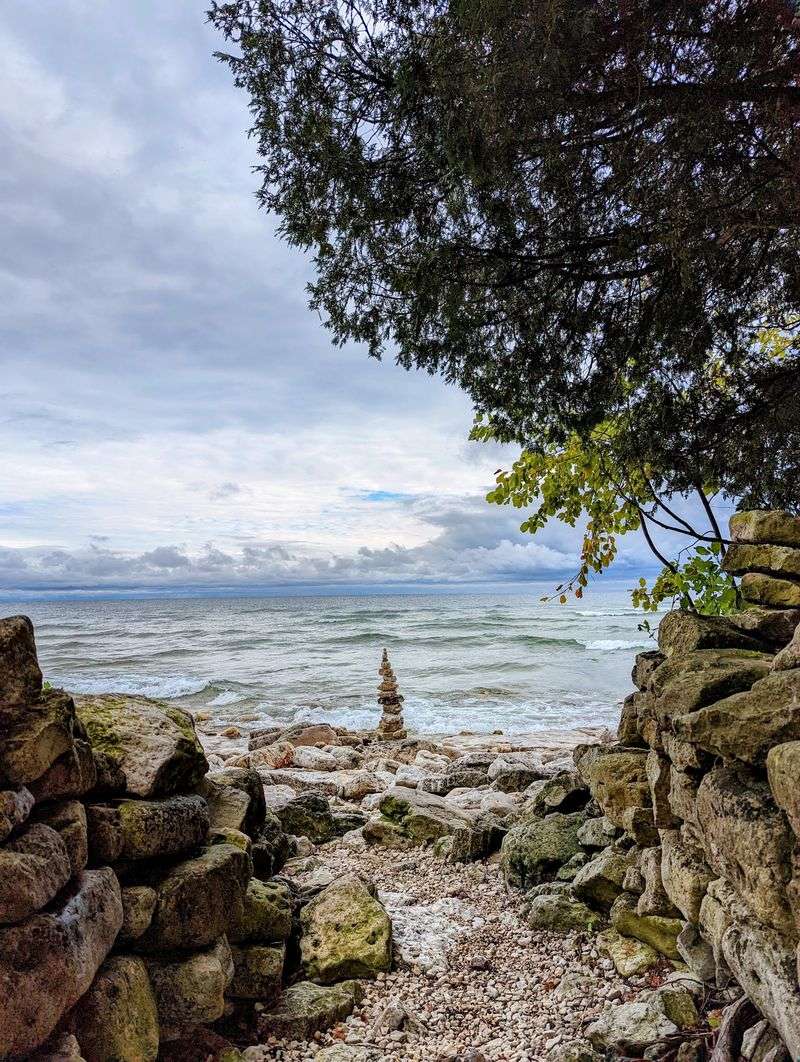
Some of the best moments happen after you step away from the buildings. The grounds around Cana Island Lighthouse let visitors see the Lake Michigan shore that shaped life at the station. Depending on the day, the water may look calm, choppy, bright blue, or gray.
Walk slowly and watch where you put your feet near the rocks. Even a gentle wave can leave a surface slippery. Keep children within sight, and treat the shore as a place to observe rather than a promised swimming beach.
Look back toward the keeper’s house from different points along the grounds. Its setting makes more sense when you can see the water, the tower, and the space between them. Imagine hearing waves outside while still having household jobs to finish indoors.
Wind can feel cooler here than it does by your parked car, so a light layer is useful. In warmer weather, insect repellent may make a slow walk more pleasant. Stay on areas open to visitors and leave stones and other natural features where you find them. You do not need an overnight booking to feel the setting’s pull. A few quiet minutes by the water can show why this small island stays in people’s memories.
Plan Around a Seasonal Museum
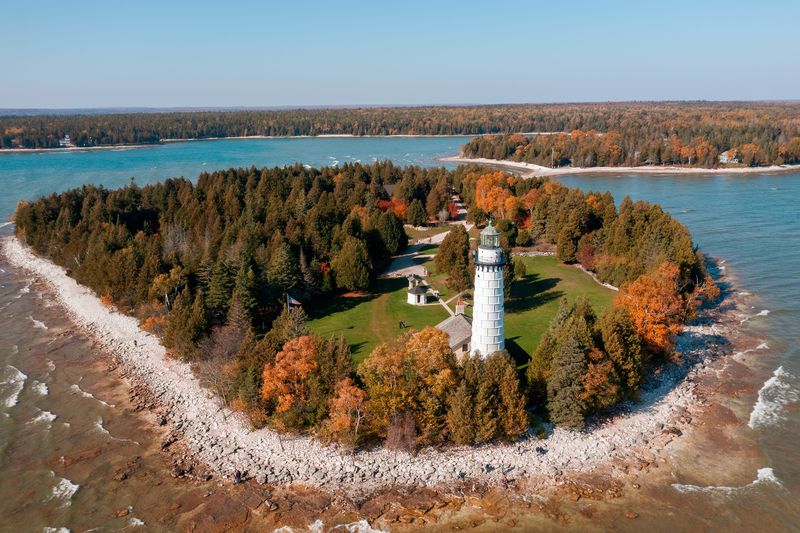
A lighthouse visit works best when you do a little homework first. Cana Island Lighthouse and its keeper’s quarters are open to the public seasonally, not as an always-open house. The posted hours in the supplied visitor information are 10 a.m. to 5 p.m. on open days, but schedules can change.
Before leaving, check the official museum website for current dates, hours, ticket prices, and tower access. Look for any notice about the causeway or wagon, too. A quick check can save a long drive if weather or site conditions affect a visit.
Try to arrive well before closing rather than planning to walk in at the last minute. You will want time for the crossing, the house, the tower if it is open, and a walk outside. Some activities or ticket sales may stop earlier than the posted closing time.
Bring water, comfortable shoes, and a layer for lake wind. Pack insect repellent if biting flies are a concern, and ask ahead about accessibility if stairs or uneven ground may be difficult. For current answers, the museum lists 920-743-5958 as its phone number. Good planning keeps the visit relaxed and lets the history, not the clock, hold your attention.
Take Home the Keeper’s Point of View
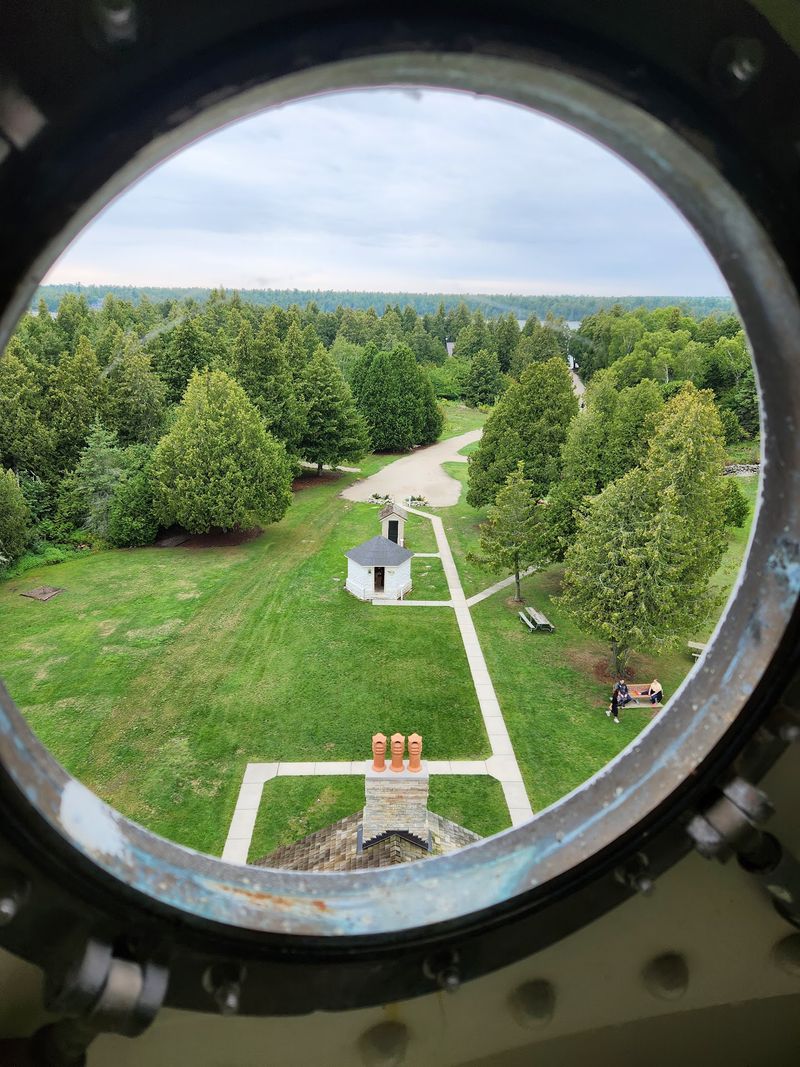
On your way out, give the keeper’s house one last look. It is easy to remember the tall tower first, but the home beside it tells the quieter half of the story. Someone had to live near the light and make ordinary days work in an unusual place.
Try telling a friend one thing you learned about that life instead of only showing a tower photo. Maybe it was the island crossing, the close link between home and work, or the view of the water. A small detail often says more than a long list of facts.
If you travel with children, ask what they would miss most if they lived here in the past. Their answers can lead to a lively talk about family, chores, and changing technology. It also helps them see the keeper as a person rather than a character in a storybook.
Remember the key planning fact: the preserved quarters welcome daytime visitors, but they are not advertised as lodging. Book somewhere else for the night, then enjoy this place for what it truly offers. Walking through a real keeper’s home and seeing the shore it faces can be special without sleeping inside it.