
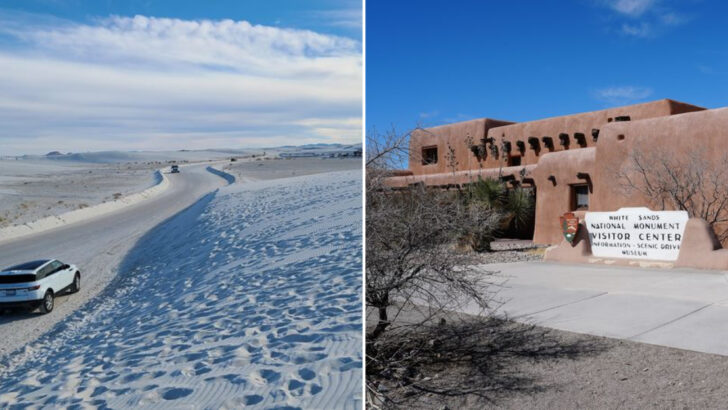
Step into a world that feels like another planet. White Sands National Park isn’t just a place—you can walk for miles across endless waves of snow-white gypsum sand that sparkle under the New Mexico sun.
Every step crunches like walking on sugar, while dunes rise and fall like frozen waves in a bright, surreal desert ocean. The sky stretches wide and impossibly blue, making the white sand glow almost blindingly in the midday light.
Whether you’re racing down a dune, photographing the endless horizon, or watching the sunset turn the sand peach and gold, White Sands will leave you feeling like you’ve wandered into a dream—and one you’ll never want to leave.
The Gypsum Dunes: Nature’s Rarest Sand
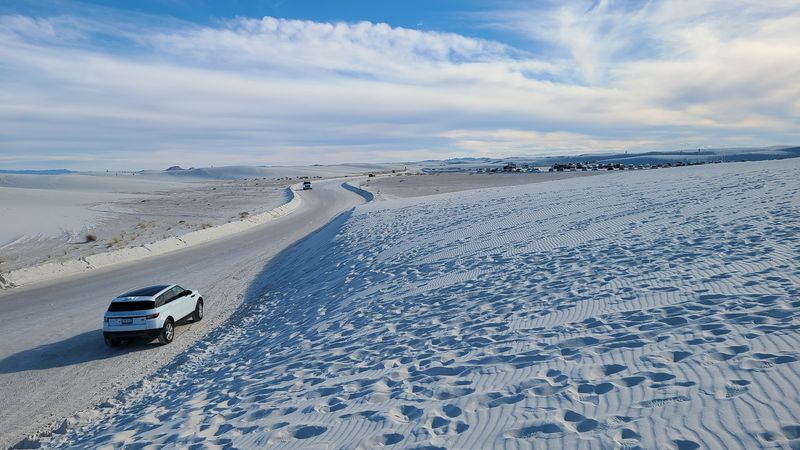
Most beaches are made of quartz sand, but White Sands plays by completely different rules. The dunes here are made of gypsum — the same soft mineral found in drywall and chalk — making them one of the rarest natural formations on Earth.
What makes this even more remarkable is that gypsum usually dissolves in water, so finding it in dune form is extraordinarily unusual.
The gypsum originated from ancient sea deposits in the surrounding mountains. Over thousands of years, rain and wind carried it down into the Tularosa Basin, where the water evaporated and left gypsum crystals behind.
Strong desert winds then broke those crystals into fine grains and shaped them into the rolling white dunes visitors see today.
These dunes are relatively young in geological terms — only about 4,000 to 7,000 years old. Unlike regular desert sand, gypsum stays noticeably cool even under intense summer sun, so walking barefoot is surprisingly comfortable.
The sand also feels slightly moist underfoot because groundwater sits just beneath the surface, which is exactly why the dunes do not simply blow away. Standing among them feels genuinely surreal.
Sand Sledding Down the Dunes
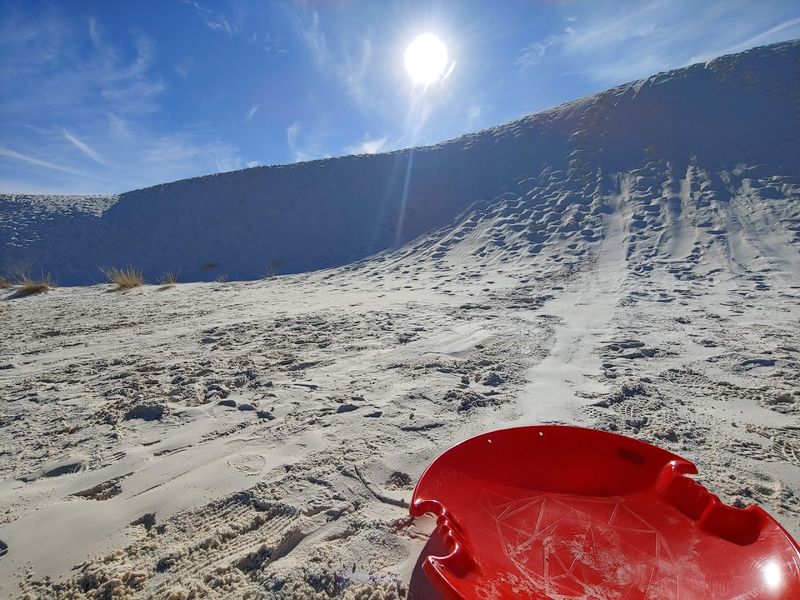
Forget snowy hillsides — sledding at White Sands is a whole different kind of thrill. Visitors can rent disc sleds from the visitor center gift shop for around $25, and the staff even sells special wax to coat the bottom so sleds glide faster down the dune faces.
First-timers are often surprised at just how fast they pick up speed on the steep slopes.
The key to a great run is finding a dune with a sharp drop and a smooth, packed surface near the top. Re-waxing after every few runs makes a big difference in speed.
Kids absolutely love it, and honestly, most adults end up laughing just as hard. If only two people are visiting, sharing one sled and taking turns is a smart, budget-friendly move.
The best sledding spots are found deeper into the park, roughly past the five-mile mark along Dunes Drive, where the dunes grow taller and steeper. Wear clothes you do not mind getting dusty, because gypsum clings to fabric easily.
Bring a change of shoes too, since the fine powder sneaks into everything. This activity alone is worth the trip, and the smiles it creates are absolutely priceless.
Dunes Drive: An Eight-Mile Journey Into Another World
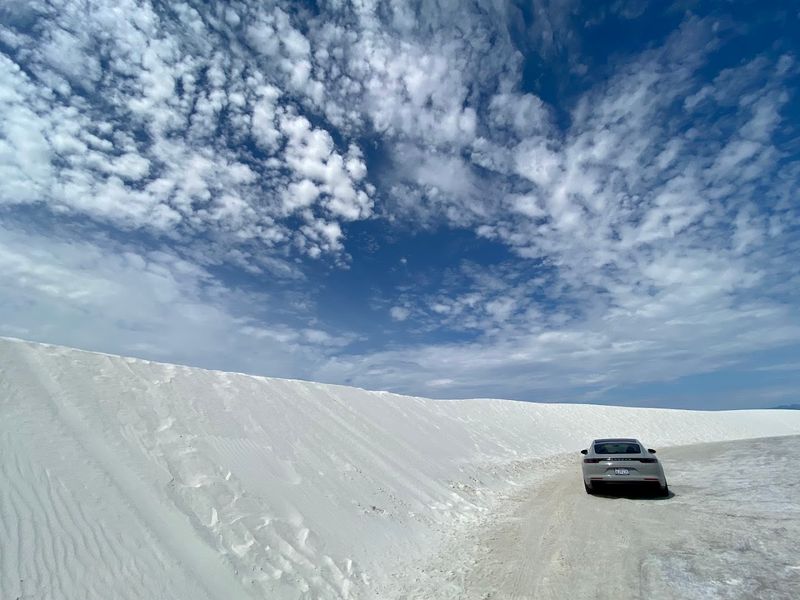
Dunes Drive is the main road through White Sands National Park, stretching about eight miles into the heart of the dune field and ending in a large loop. The first three miles or so might feel a little ordinary — low scrubby plants, flat terrain, modest dunes.
But patience pays off in a big way as the landscape transforms dramatically around mile four or five.
By the time you reach the deeper sections of the drive, the dunes tower overhead and the white sand stretches endlessly in every direction. Around mile five, the paved road gives way to packed gypsum sand, which is firm enough for regular cars but can get tricky when winds kick up loose material.
Several pullouts along the route offer picnic tables and restroom facilities, making it easy to stop, explore, and soak everything in.
Driving the full loop typically takes about an hour if you stop frequently, but plan for longer if you want to hike or sled. Early morning and late afternoon offer the most dramatic lighting for photos.
One visitor described the deep dune sections as feeling like being near the ocean — except with no water in sight, just endless waves of brilliant white. It is a drive worth savoring slowly.
Sunset at White Sands: Colors You Will Never Forget

Sunsets at White Sands are the kind that make you stop mid-sentence and just stare. As the sun drops toward the San Andres Mountains, the white dunes transform into a canvas of peach, lavender, gold, and deep rose.
The colors shift minute by minute, and no two evenings ever look exactly the same. Photographers from around the world specifically plan visits around this golden hour.
The park offers a ranger-led sunset hike on select evenings, though spots fill up fast. Even without a guided tour, simply climbing a tall dune near the end of Dunes Drive and sitting quietly as the light changes is a deeply moving experience.
The combination of the cool gypsum sand, the fading warmth of the desert air, and the silent landscape creates something almost meditative.
One important detail: the park closes shortly after dark, so plan your timing carefully. Gates typically close around sunset, and rangers will remind visitors to head back as closing time approaches.
Arriving by mid-afternoon gives you plenty of time to explore before settling into a good spot for the show. Staying through the final minutes of sunset is absolutely worth any extra hustle on the way back to the car.
Alkali Flat Trail: A Hike Through the Surreal Interior

The Alkali Flat Trail is not for the faint-hearted, but the reward is absolutely staggering. This five-mile round-trip loop leads hikers deep into the most remote section of the dune field, where the landscape becomes so uniformly white and featureless that visitors can genuinely lose their sense of direction.
Trail markers are placed throughout, but paying close attention to both the current marker and the next visible one ahead is essential for staying on course.
The trail crosses the ancient lakebed of Lake Otero, which dried up thousands of years ago and left behind the gypsum deposits that eventually became today’s dunes. Walking this path feels like stepping through deep geological time.
The silence out here is profound — no traffic sounds, no city noise, just wind and the soft crunch of gypsum underfoot.
Preparation is absolutely critical before attempting this trail. Carry far more water than you think you will need, because dehydration can sneak up quickly in the desert environment even when temperatures feel manageable.
Wear sunscreen, a hat, and sunglasses, since the white sand reflects sunlight intensely from below as well as above. Starting early in the morning is the smartest approach, both for cooler temperatures and for catching the most dramatic light on the dunes.
Dune Life Nature Trail: Perfect for Families and Beginners

Not every great experience at White Sands requires miles of hiking. The Dune Life Nature Trail is a one-mile loop that introduces visitors to the surprisingly rich ecosystem hiding within these seemingly barren dunes.
Interpretive signs along the path explain how plants, insects, lizards, and other creatures have adapted to survive in this extreme white sand environment.
Kids especially enjoy spotting animal tracks pressed into the soft gypsum between the trail markers. Several species of small mammals, birds, and reptiles call this dune field home, and their tiny footprints tell fascinating stories about nighttime activity most visitors never see.
Spotting five or more different animal track types in a single walk is entirely possible if you look carefully.
The trail is dog-friendly as long as pets stay on a leash, which makes it a popular choice for visitors traveling with their four-legged companions. Strollers are manageable along most of the route, though soft sand sections can require extra effort.
The entire loop takes roughly 30 to 45 minutes at a relaxed pace, making it an excellent first stop before exploring deeper into the park. Rangers often recommend this trail as the best introduction to understanding everything that makes White Sands genuinely extraordinary beyond just its striking appearance.
The Visitor Center: Your Essential First Stop

Pulling into the White Sands visitor center before anything else is genuinely the smartest move any visitor can make. The staff here are exceptionally knowledgeable and enthusiastic about sharing everything from trail conditions to wildlife sightings.
Ask questions freely — rangers and volunteers consistently earn high praise from visitors for their helpfulness and depth of knowledge.
Inside, a series of well-designed exhibits and dioramas trace the park’s history from ancient inland sea to present-day dune field. The 15-minute film shown regularly is informative, engaging, and highly recommended even for visitors who think they know the basics.
Gift shop shelves hold a solid selection of souvenirs, books, and park memorabilia, and the sled rental counter is right there for anyone planning to hit the dunes.
Checking the park’s official website or calling ahead before your visit is genuinely important, since operating hours vary depending on weather conditions, missile range testing schedules at nearby White Sands Missile Range, and seasonal changes. The park does not operate around the clock and closes before dark each evening.
Filling water bottles at the visitor center is also essential, since there are no water services once you head deeper into the park. Starting here sets the tone for a smooth, rewarding day.
Wildlife and Plants Thriving Against All Odds
At first glance, the dunes look completely lifeless — just waves of white stretching in every direction. Look closer, though, and a surprisingly resilient community of plants and animals reveals itself.
Several species found at White Sands exist nowhere else on Earth, having evolved specifically to survive in this extreme gypsum environment. The bleached earless lizard, for example, has developed pale coloring that blends almost perfectly with the white sand, making it nearly invisible to predators.
Certain plants manage to anchor themselves in the shifting dunes by growing extremely long roots that tap into moisture far below the surface. As dunes migrate and bury vegetation, some plants race upward fast enough to keep their tops above the sand, creating distinctive pedestals of soil around their stems.
These biological adaptations are quiet but extraordinary examples of survival under pressure.
Visitors lucky enough to explore at dawn or dusk might spot coyotes, kit foxes, or even the occasional oryx — an African antelope species that was introduced to the region decades ago and now roams freely across the area. Bird enthusiasts will find several interesting species as well.
Keeping eyes open for animal tracks in the soft gypsum between trail markers is one of the most rewarding and underappreciated activities the park quietly offers every single day.
Practical Tips for Planning Your White Sands Visit

A little planning goes a long way at White Sands. The park sits about 15 miles southwest of Alamogordo and roughly 52 miles northeast of Las Cruces, making it an easy day trip from either city.
Stopping for gas before heading out is strongly recommended, since there are no fuel stations along the approach road or inside the park itself. Arriving early on weekdays tends to mean smaller crowds and cooler morning temperatures.
Water is the single most important thing to bring, and most experienced visitors recommend carrying more than you think you will need. The white sand reflects sunlight from below as well as above, meaning sun exposure feels more intense than expected.
Sunscreen, a wide-brimmed hat, and UV-blocking sunglasses are not optional extras here — they are genuine necessities regardless of the season or how mild the weather seems when you arrive.
Entry fees apply, and the park does not accept walk-in camping inside the dune field, though primitive backcountry campsites are available by permit on certain trails. Nearby public camping options exist just a few miles away.
Trailers and RVs can navigate the park roads without major difficulty, though parking space is limited in some areas. Checking the NPS website at nps.gov/whsa before your trip ensures you have the most current hours, fees, and any temporary closures sorted before you go.