

Hidden in the mountains above Los Angeles, the Shadowland Foundation in Lake Hughes, California offers something you rarely get to experience anywhere else — a real, up-close encounter with living wolf packs.
This nonprofit sanctuary was built on a simple but powerful idea: that people who meet wolves face to face will stop fearing them and start protecting them.
Whether you want to watch wolves play, learn how they communicate, or howl alongside a real pack, Shadowland delivers an adventure that stays with you long after you leave.
If you’ve ever felt a pull toward wild animals and wide-open spaces, this place was made for you.
A Remote Sanctuary in the Mountains Above Los Angeles

Somewhere between the roar of Los Angeles and the silence of the Mojave, a winding road leads to one of Southern California’s best-kept secrets. The Shadowland Foundation sits on a rustic ranch near Lake Hughes in northern LA County, tucked into a landscape of pine trees, chaparral, and rolling hills that feels nothing like the city below.
The moment you step out of your car, the air smells different — cleaner, quieter, and alive.
Getting there is part of the experience. The drive up Pine Canyon Road takes you through high-desert terrain that feels increasingly remote with every mile.
By the time you arrive, the noise of everyday life has already started to fade.
That seclusion is intentional. The founders chose this location because it mirrors the kind of wild, open environment wolves naturally thrive in.
Visitors often say the setting alone puts them in a different headspace — more present, more curious, more open to what they are about to experience. It is not just a backdrop; it is a signal that you have entered wolf country.
Come ready to slow down and pay attention, because this place rewards those who do.
A Mission Dedicated to Wolves and Conservation

Paul and Colette Pondella did not stumble into wolf conservation by accident. They built the Shadowland Foundation around a deeply held belief that wolves have been misunderstood for centuries, and that the only way to change minds is to let people meet these animals in person.
Their mission is bold, clear, and surprisingly personal — they want every visitor to leave as a wolf advocate.
Wolves have been hunted, feared, and pushed to the edges of their natural range for generations. Stories, myths, and fairy tales painted them as dangerous villains, and that reputation has had real consequences for wolf populations across North America.
Shadowland pushes back against all of that with education, transparency, and genuine connection.
The sanctuary does not just display wolves behind glass or chain-link fences. It brings people into relationship with them through guided experiences that are both informative and emotionally resonant.
Every program is designed to replace fear with understanding and to show how wolves are not enemies of the land but essential partners in keeping ecosystems healthy. That kind of mission-driven work is rare, and it shows in every aspect of how Shadowland operates each day.
Meet the Wolf Pack Up Close
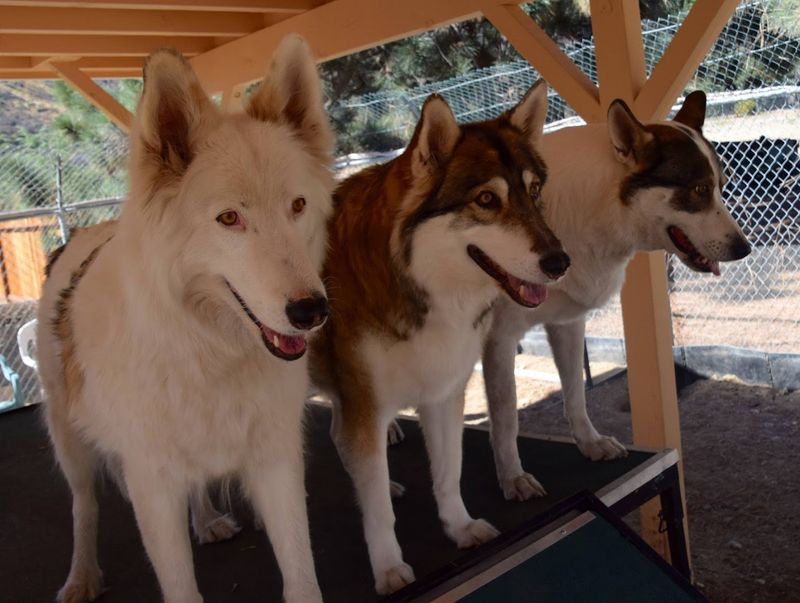
Forget everything you think you know about zoos. At Shadowland, there are no sterile enclosures or impersonal viewing platforms.
Guided visits bring small groups of guests into direct proximity with the resident wolf ambassadors, and the difference in energy is immediate and undeniable. You are not watching wolves from a safe distance — you are sharing space with them.
Each wolf at the sanctuary has its own name, history, and personality. Some are bold and outgoing, practically demanding your attention.
Others are more reserved, observing visitors from a careful distance before deciding whether to approach. Watching those individual quirks play out in real time teaches you more about wolf social life than any documentary ever could.
Guides walk visitors through the behavioral cues happening right in front of them — who is dominant today, which wolf is feeling playful, and why that one keeps circling near the fence line. The experience is educational in the best possible way: you learn without feeling like you are sitting in a classroom.
Most visitors leave saying they never realized how expressive and emotionally complex wolves truly are until they stood just a few feet away from one.
Learn the Language of Wolves

Wolves talk constantly — just not with words. Every flick of an ear, shift in posture, and low rumble carries meaning within the pack.
One of the most surprising parts of a Shadowland visit is realizing how much communication is happening right in front of you once a knowledgeable guide helps you tune in to what you are seeing.
Pack hierarchy plays out in subtle but fascinating ways. A submissive wolf might lower its body and tuck its tail, while a confident one stands tall with ears forward and tail held high.
Scent marking, eye contact, and even the way two wolves greet each other in the morning all carry social information that keeps the group running smoothly.
Understanding this language changes how you see wolves entirely. They are not random or unpredictable — they are highly organized, emotionally intelligent animals with strong bonds and clear rules.
Guides at Shadowland break all of this down in a way that is easy to follow and genuinely fascinating, no matter your age or background. Many visitors say this part of the tour is what sticks with them the longest, because it shifts their entire mental model of what a wolf actually is.
Join the Legendary Howl Session

There is a moment during many Shadowland visits that people talk about for years afterward. The guide signals the group to quiet down, tilts their head back, and lets out a long, rising howl.
Then the wolves answer. That sound — layered, haunting, and completely wild — rolls across the hillside and settles somewhere deep inside your chest.
The group howling session is one of the most requested and most talked-about parts of the Shadowland experience. Visitors of all ages are invited to join in, and most people who felt self-conscious at first end up howling louder than anyone else once the wolves start responding.
Something primal wakes up when you hear that chorus echo back at you from across the enclosure.
Did you know that wolves use howling not just to communicate location but also to reinforce pack bonds and signal emotion? A howl can express excitement, loneliness, or a call to gather.
When visitors participate, the wolves often treat it as a genuine social exchange, responding with enthusiasm and curiosity. It is not a performance — it is a conversation.
And for most people, it is the single moment that transforms the visit from interesting to unforgettable.
Walk Among the Wolves’ Territory
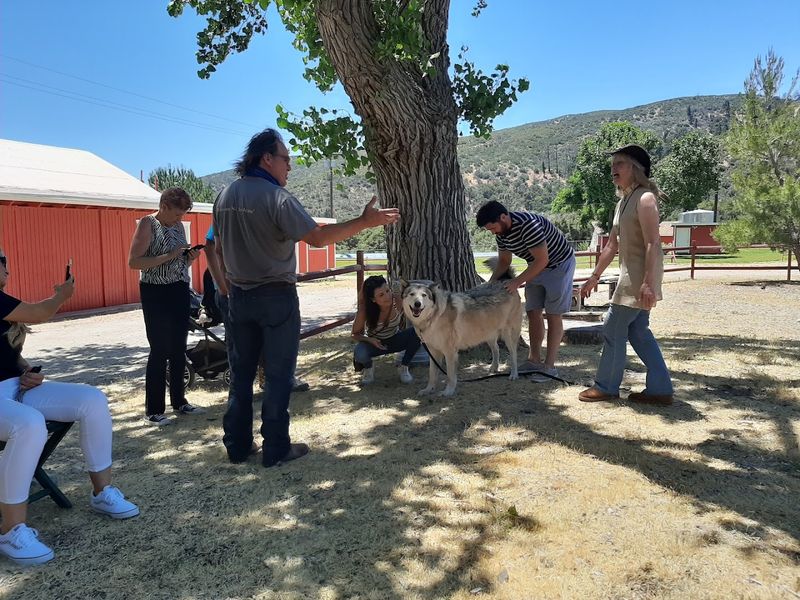
Moving through the property while the pack roams nearby is an experience that is hard to put into words. You are not stationary, watching animals pace back and forth — you are in motion, sharing the same ground, navigating the same landscape.
The wolves go about their business, and you go about yours, and somewhere in the overlap of those two worlds, something extraordinary happens.
Guides lead small groups around the property, narrating what the wolves are doing and why. One might be play-wrestling with a packmate near the tree line.
Another might be digging at something interesting near the fence. A third might trot past the group with barely a glance, fully confident and completely at ease.
Each moment is unrehearsed and real.
Walking the territory also gives visitors a sense of how much space wolves naturally need and crave. Wide-open terrain, varied terrain, and room to roam are not luxuries for these animals — they are necessities.
Seeing the sanctuary’s layout firsthand builds a powerful appreciation for why wild wolf habitat preservation matters so much. By the time the walk ends, most visitors feel less like tourists and more like temporary guests in someone else’s home, which is exactly the point.
Educational Programs for All Ages
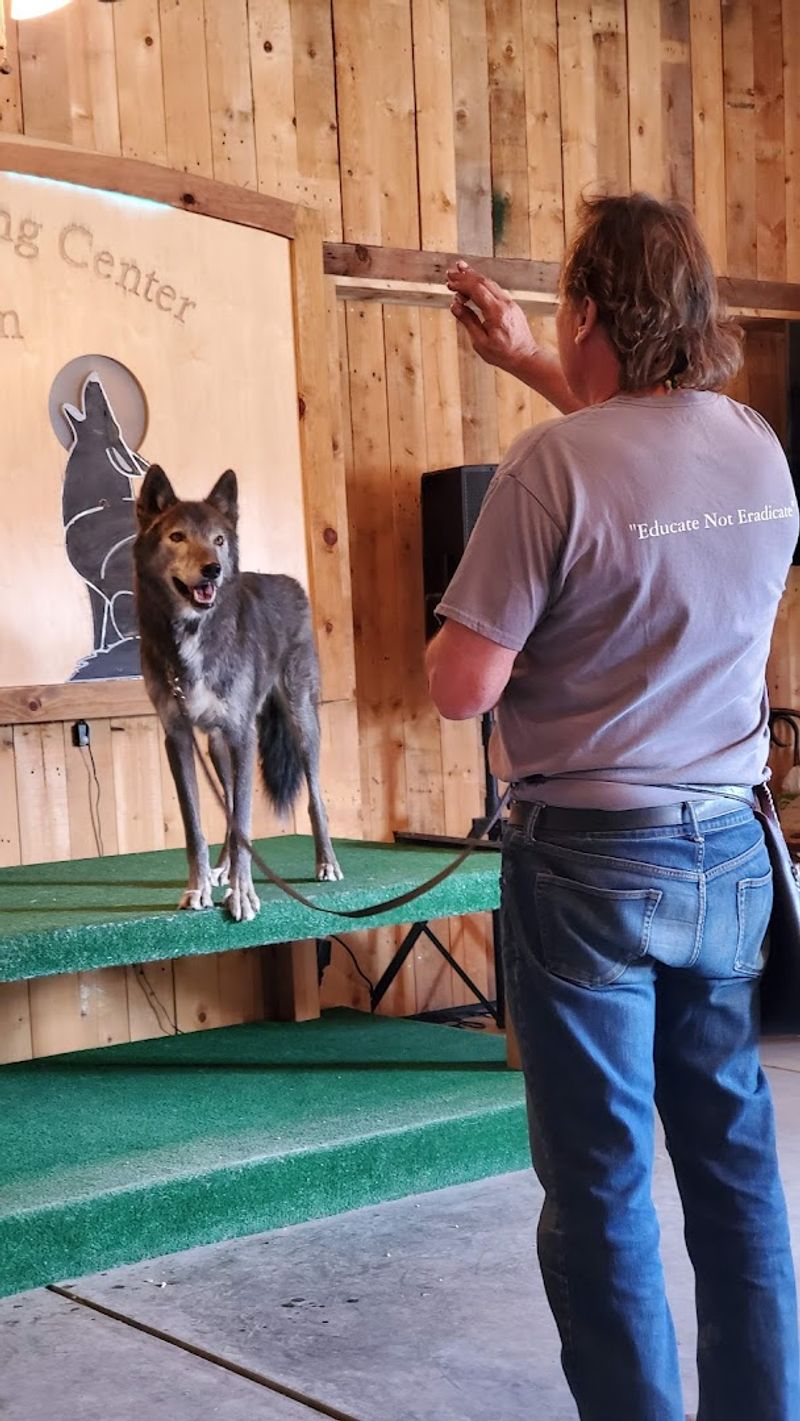
School groups, families, curious adults, and wildlife enthusiasts all find something valuable in Shadowland’s educational programming. The sanctuary offers structured workshops and visits designed to connect people of all backgrounds with the science and story behind wolf conservation.
Learning here does not feel like homework — it feels like discovery.
Wolves are what ecologists call a keystone species, meaning their presence or absence has a ripple effect on everything else in an ecosystem. When wolves were reintroduced to Yellowstone National Park in the 1990s, river banks stabilized, elk populations balanced out, and songbird numbers increased — all because one predator returned to its natural role.
Shadowland uses stories like this to show why protecting wolves matters far beyond the wolves themselves.
Programs are tailored to different age groups, so a visit with elementary school students looks and feels different from a workshop designed for adults or conservation-minded teenagers. Guides adjust their language, their examples, and their interactive elements to match the audience.
Teachers who bring classes often say the visit sparks interest in biology and environmental science in students who had never shown much curiosity before. That kind of impact is exactly what the Pondella family had in mind when they built this place.
Special Events and Unique Experiences

Beyond the standard guided tours, Shadowland hosts a rotating calendar of special events that bring a completely different energy to the property. Seasonal gatherings, wellness retreats, storytelling nights, and themed wolf encounters give repeat visitors a reason to keep coming back and give first-timers an extra layer of magic to look forward to.
Some events lean into the spiritual and reflective side of spending time with wild animals. Meditation sessions near the wolf enclosures, moonlit howl gatherings, and nature-based storytelling circles have all been part of Shadowland’s event lineup over the years.
These experiences attract people who are drawn not just to wildlife education but to the deeper emotional and psychological impact of connecting with animals in their natural element.
Seasonal events tied to the solstices, harvest season, or local wildlife cycles add a rhythmic, almost ceremonial quality to the calendar. Guests who attend these gatherings often describe them as transformative — not in an overly dramatic way, but in the quiet sense of leaving with a clearer head and a stronger connection to the natural world.
Checking the Shadowland website or social media pages before your visit is the best way to find out what special programming might be available during your trip.
A Rare Chance to Connect With Wildlife

Most people spend their entire lives without ever truly locking eyes with a wild predator. At Shadowland, that moment happens regularly — and when it does, it tends to rearrange something inside the person experiencing it.
A wolf’s gaze is direct, intelligent, and utterly unhurried. It does not look through you; it looks at you, and the difference is enormous.
Visitors often describe feeling unexpectedly emotional during their time at the sanctuary. Something about standing near an animal that has been feared and hunted for so long, and finding it to be curious and calm rather than threatening, triggers a kind of internal recalibration.
The stories we carry about wolves — from childhood books, movies, and cultural myths — dissolve quickly in the presence of the real thing.
That emotional shift is not a side effect of the Shadowland experience; it is the whole point. When people feel a genuine bond with wildlife, they become more likely to advocate for it, donate to protect it, and talk about it with the people in their lives.
One afternoon with a wolf pack can create a conservation advocate who would never have identified that way before. That kind of lasting change is what makes sanctuaries like this one so irreplaceable.
Essential Visitor Information for Planning Your Trip
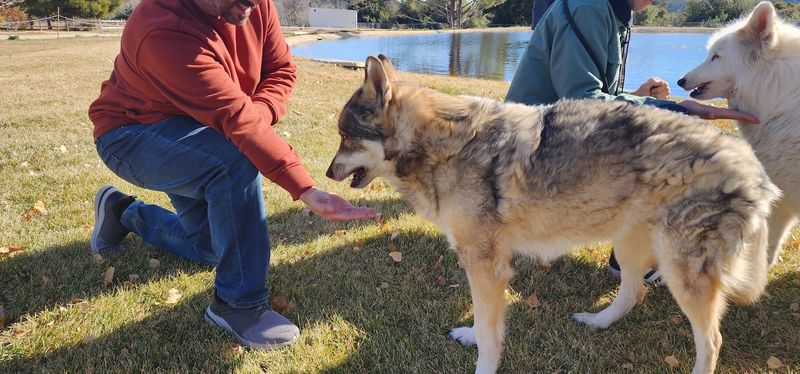
Planning your Shadowland visit requires a little extra preparation compared to a typical attraction, but that effort is absolutely worth it. The sanctuary is located at 18832 Pine Canyon Road in Lake Hughes, California — a scenic but winding drive that takes about 90 minutes from central Los Angeles depending on traffic.
GPS works well for the route, but allow extra time so you are not rushing.
Tours typically run on weekends by appointment only, and reservations are required because group sizes are kept intentionally small. Admission runs roughly $25 to $50 per person depending on the program, structured as a donation to support the sanctuary’s ongoing work.
Most visits last around two hours, giving guests plenty of time to absorb everything without feeling rushed.
A few practical tips before you go: wear closed-toe shoes because the terrain is uneven and the property is a working ranch. Leave pets at home, as the presence of other animals can stress the wolves and disrupt the experience for everyone.
Book your spot as early as possible — tours fill up quickly, especially on weekends and during special events. Bringing water and dressing in layers is smart since mountain temperatures can shift throughout the day.
Check the official Shadowland Foundation website for current scheduling and availability before making the drive.