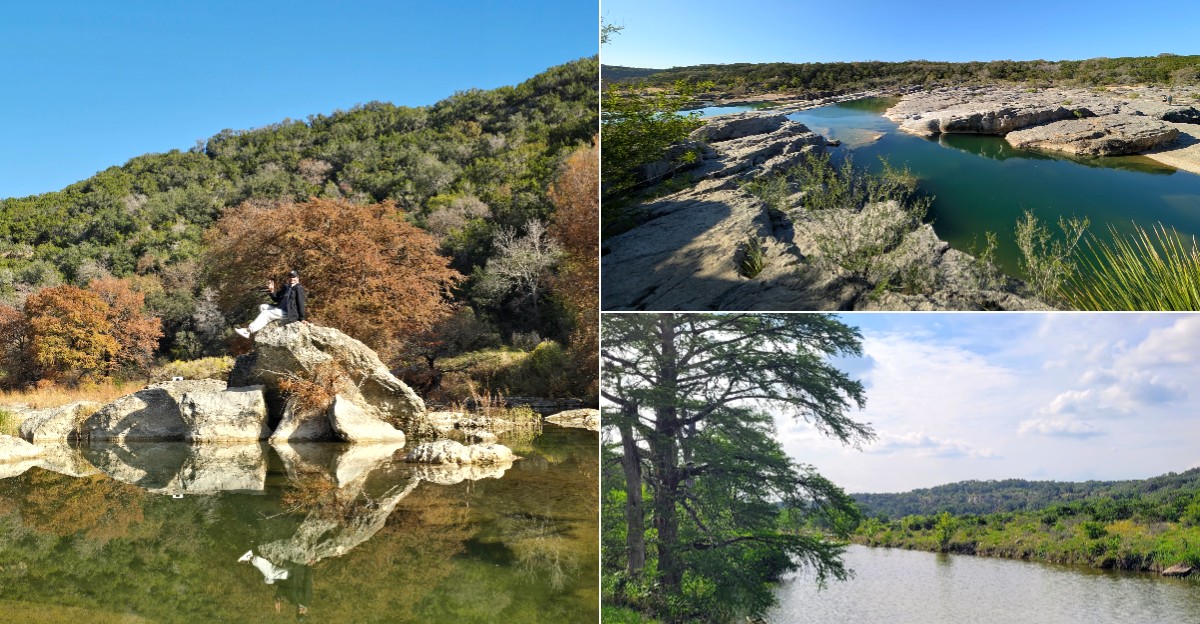
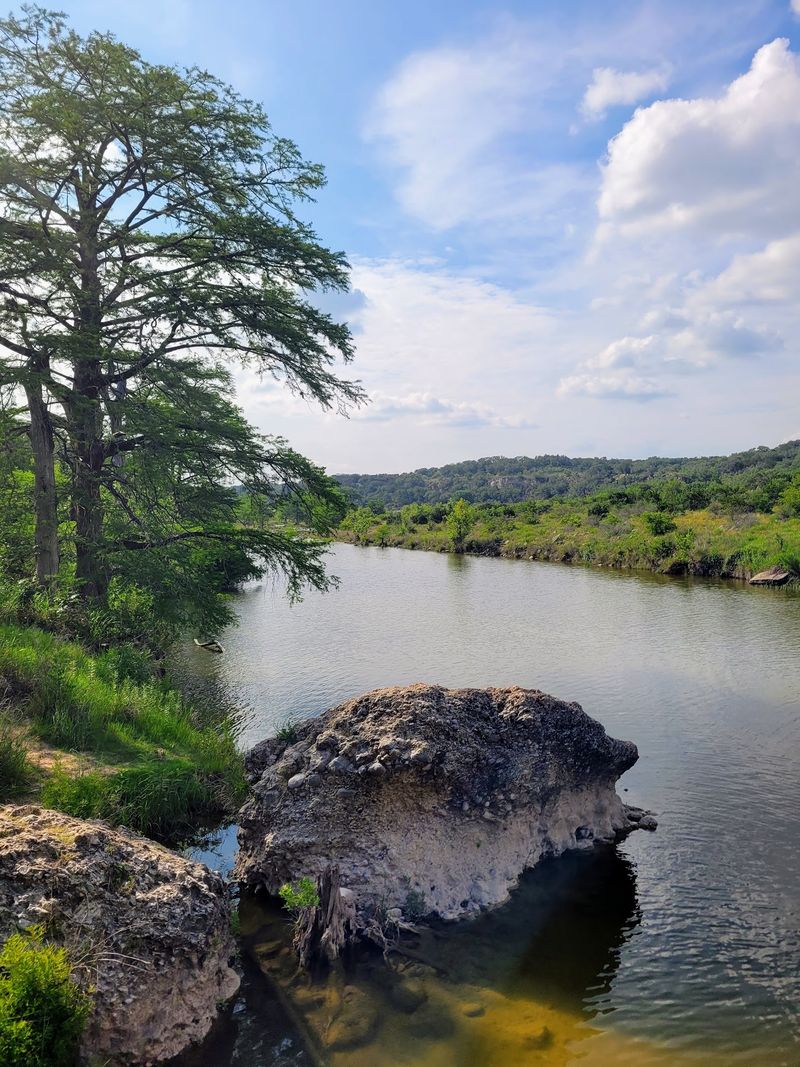
Wide shelves of tilted gray stone, swirling water, and twisted cypress roots create a landscape that feels almost otherworldly.
Pedernales Falls State Park sits in the Texas Hill Country near Johnson City, about an hour west of Austin.
Here, the Pedernales River tumbles over ancient limestone ledges, carving pools and channels across the riverbed.
Families can scramble over the rocks at the falls overlook, then cool off in the designated swimming area downstream.
Hiking and biking trails wind through cedar and oak woodlands, with plenty of wildlife and birds along the way.
Pack sturdy shoes, water, and a picnic, and get ready to explore one of the most striking landscapes in Central Texas.
A Rocky Landscape That Looks Out of This World
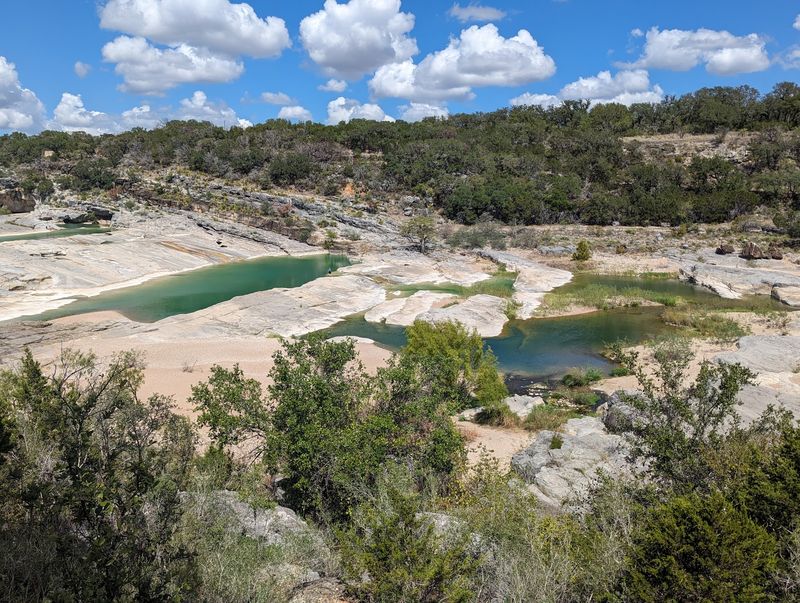
Pale stone stretches across the riverbed like a landing site from a space movie. Instead of one towering waterfall, you see broad limestone shelves, uneven steps, and channels shaped by moving water. The open view makes even a short visit feel like an expedition.
You will find this landscape at Pedernales Falls State Park, 2585 Park Rd 6026, Johnson City, TX 78636, United States. Start at the falls viewing area to understand the layout before heading toward any accessible rock surfaces. Follow posted signs, since access can change with river conditions.
From above, the stone looks almost smooth, but closer inspection reveals ridges, pockets, and sudden changes in height. Pick a short route rather than aiming for the farthest visible shelf. A slow approach leaves more time to notice patterns and keeps the return trip manageable.
Children may enjoy imagining a moon mission, while adults can appreciate the quiet scale of the riverbed. Keep everyone together and avoid climbing into holes or narrow gaps. The best first impression comes from looking carefully, walking cautiously, and letting the unusual scenery speak for itself without needing a long hike or a risky scramble to make the visit feel special and memorable for everyone in your group that day.
Ancient Stone With a Story Under Your Shoes
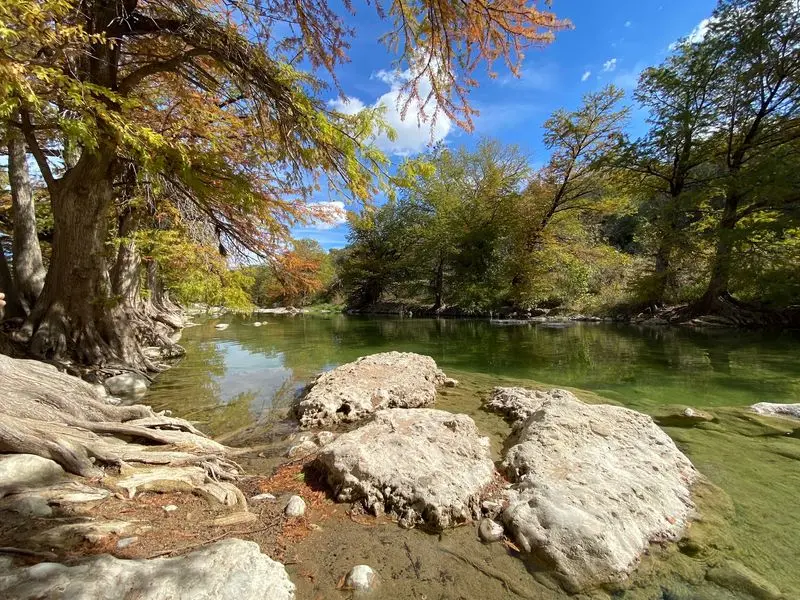
Long before hiking boots reached these rocks, the material that formed them gathered in an ancient sea. Limestone often begins with layers of sediment, including material from marine life. That background adds a surprising twist to a landscape that now looks dry and rugged.
The river has gradually worn paths through the stone, revealing layers and shaping channels. Look for lines along exposed edges and shallow hollows on broad surfaces. You do not need to identify every feature to enjoy seeing how different textures fit together.
Make a simple observation game out of the walk: find a smooth patch, a rough patch, and a visible layer. Compare them without breaking pieces loose or removing rocks. Leaving natural objects where they belong protects the scene for the next visitor.
Some shapes may resemble bowls, stairways, or tiny canyons, but their appearance does not make them safe climbing spots. View deeper openings from a stable position and keep hands away from hidden spaces. For questions about the geology, ask park staff or check available interpretive information rather than guessing from appearance alone. Knowing that water and time created the scene makes each careful step feel less like crossing bare ground and more like reading a very old story written in stone.
Careful Footsteps Make the Best Adventure
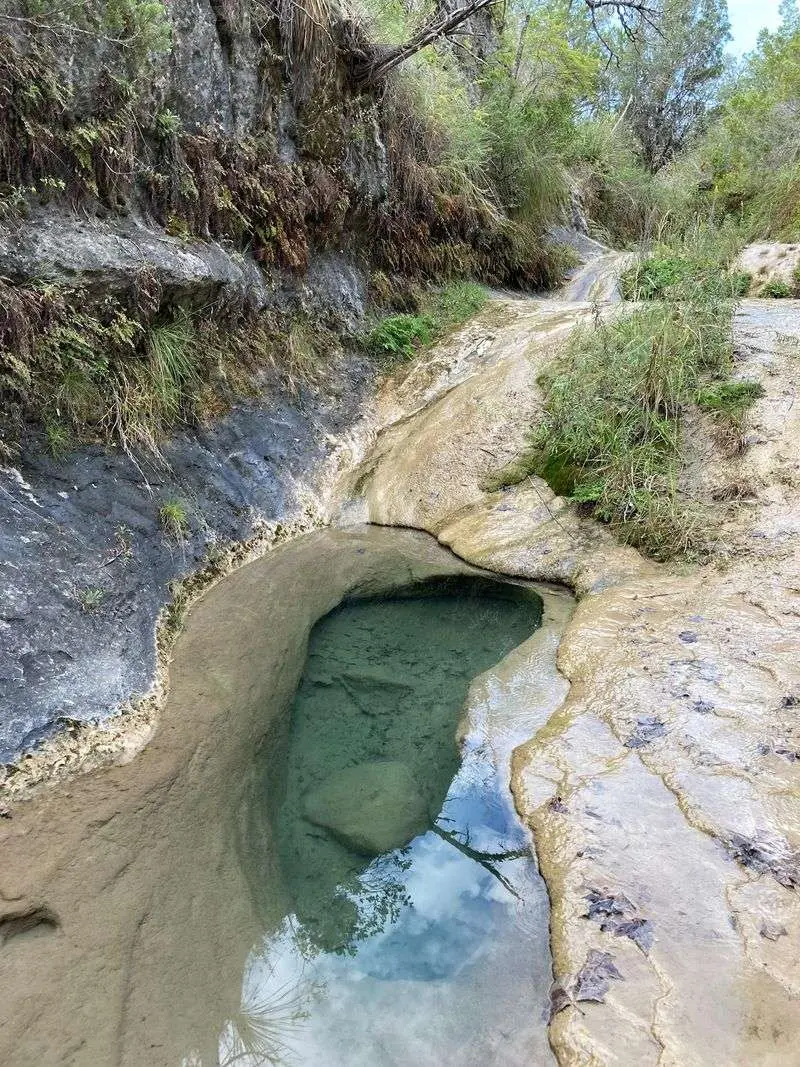
Your shoes matter more here than your speed. A rock shelf that looks simple from the overlook can become a puzzle of tilted surfaces, shallow gaps, and awkward steps once you reach it. Treat the walk as careful exploring, not a race across the riverbed.
Wear sturdy footwear with dependable grip, and avoid loose sandals that can slide or catch. Wet limestone may be slippery, while dry stone can still have loose grit on top. Test each step before shifting your full weight onto a new surface.
Keep your hands free when possible by carrying water and other supplies in a small backpack. Stop walking before taking a picture or studying the view. Looking through a phone while moving makes it easier to miss an edge or uneven patch.
Choose a route that matches the least confident person in your group, especially when children are along. There is no prize for reaching a distant slab, and turning around early is a smart choice. If a step requires a jump, an uncertain climb, or crossing water, look for a safer option instead. A satisfying outing can be surprisingly short when everyone stays comfortable, notices the details, and returns with energy left for the uphill walk back to the parking area.
Changing Water Gives the Falls a Different Face
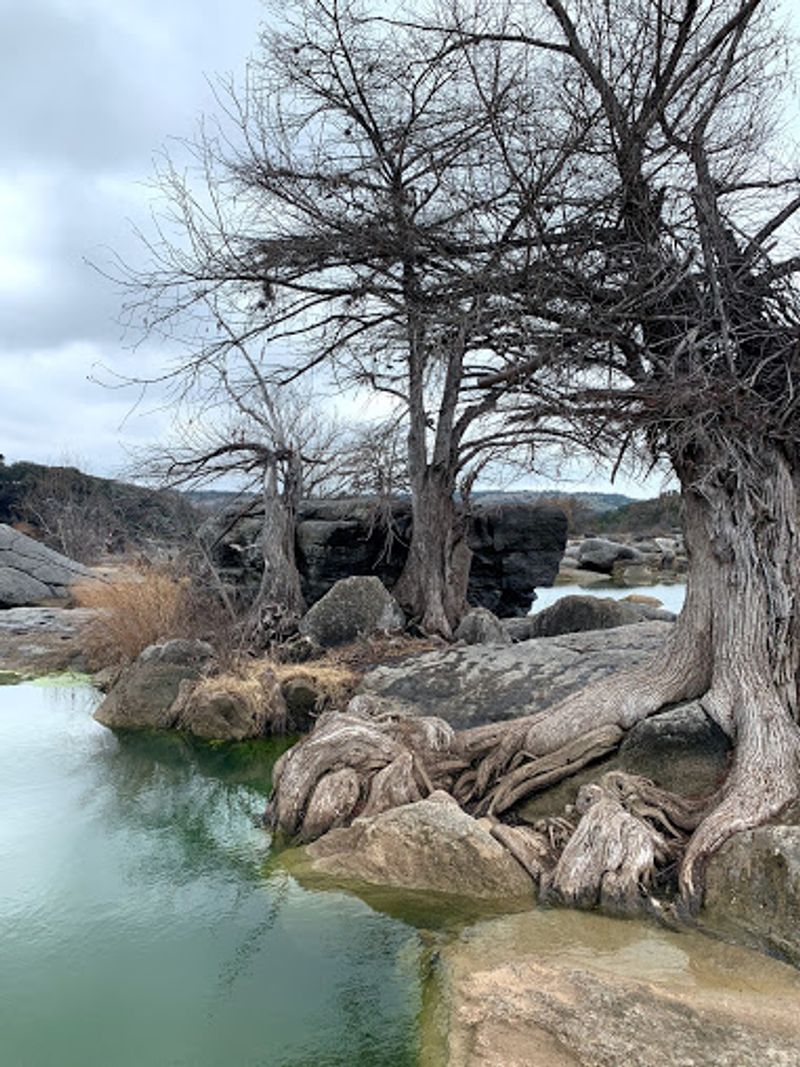
A quiet river can change the entire mood of the landscape. During lower water, more limestone may be exposed, making the channels and shelves easier to see. After rain, flowing water can cover those same features and make familiar views look completely different.
Do not assume that conditions in a photo will match your visit. Check current park alerts and weather forecasts before leaving, then ask staff about access when you arrive. Closures and warning signs matter more than any plan you made at home.
Flash flooding is a serious danger, and rain upstream can affect the river even when the sky above you looks clear. Watch for rising water, stronger flow, or a sudden change in water color. If conditions change, leave the river area promptly and move to higher ground.
Swimming, wading, and tubing are prohibited in the falls area. A separate designated swimming area exists elsewhere in the park, subject to conditions and posted rules. Keep your limestone outing focused on permitted exploration, and never enter a channel just because someone else does. The river is part of what makes the scenery remarkable, but respecting its power is what allows a memorable visit to stay a safe one for your entire group from arrival through departure.
The Overlook Helps You See the Bigger Picture
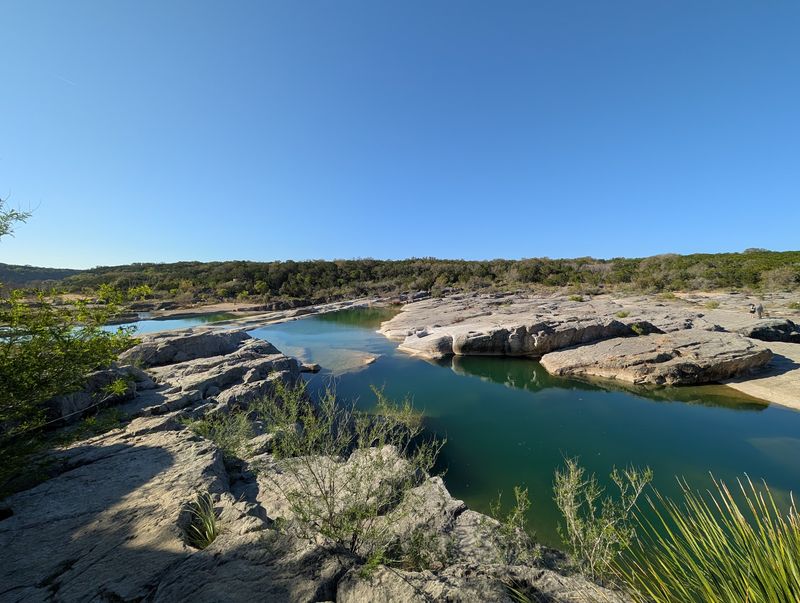
Sometimes the most useful first step is standing still. The falls overlook gives you a wider sense of the rock shelves, flowing channels, and wooded edges before you focus on details below. From this higher perspective, the riverbed becomes a pattern rather than a collection of obstacles.
Spend a few minutes identifying where the water runs and how the exposed stone changes height. Notice which areas seem reachable without crossing water, but rely on signs and staff guidance for actual access. A distant view cannot reveal every slippery patch or drop.
The overlook also offers a rewarding option for visitors who prefer not to scramble across uneven rock. Do not assume the route meets every accessibility need; check with the park about surfaces, slopes, and current conditions. Planning around comfort makes the outing more enjoyable for everyone.
For a simple photo, include both the pale riverbed and the surrounding trees to show the contrast. Keep your feet planted while framing the shot, and leave room for other visitors to enjoy the view. Before moving on, choose one feature to look for more closely, such as a curved channel or a stack of stone layers. That small goal turns the next part of your walk into a focused discovery instead of hurried wandering.
Light and Shadow Turn Rocks Into Natural Art
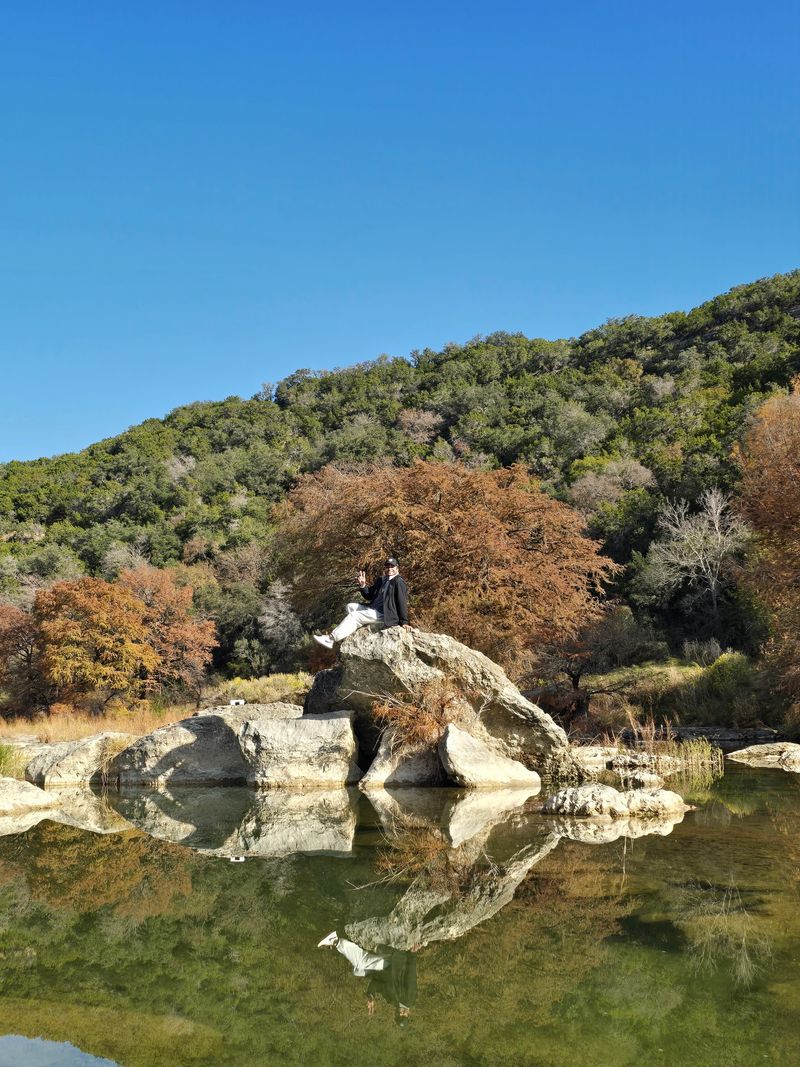
A plain gray slab can suddenly look dramatic when sunlight reaches it at an angle. Shadows settle into cracks, rounded hollows gain depth, and narrow ribbons of water catch the sky. You can enjoy these changes without walking farther or searching for a secret spot.
Earlier or later daylight often brings softer contrast than the bright middle of the day. However, choose your visit around posted access hours, weather, and your ability to return safely. A beautiful photograph is never a reason to stay somewhere after conditions become unsafe.
Try taking one wide image of the shelves and one closer image of a stone pattern. Including a familiar object, such as a hiking shoe on dry ground, can help show scale. Avoid placing people near ledges or water just to make a picture more exciting.
Bright limestone can reflect strong sunlight, so a hat and sunglasses help even when the air feels comfortable. Put the camera away occasionally and study the scene with your own eyes. You might notice ripples, tiny shadows, or color changes that disappear in a quick snapshot. The unusual beauty comes from ordinary materials arranged by nature, which means patience often produces a better memory than chasing the most dramatic angle across difficult or uncertain terrain.
Quiet Moments Reveal Life Around the Stone
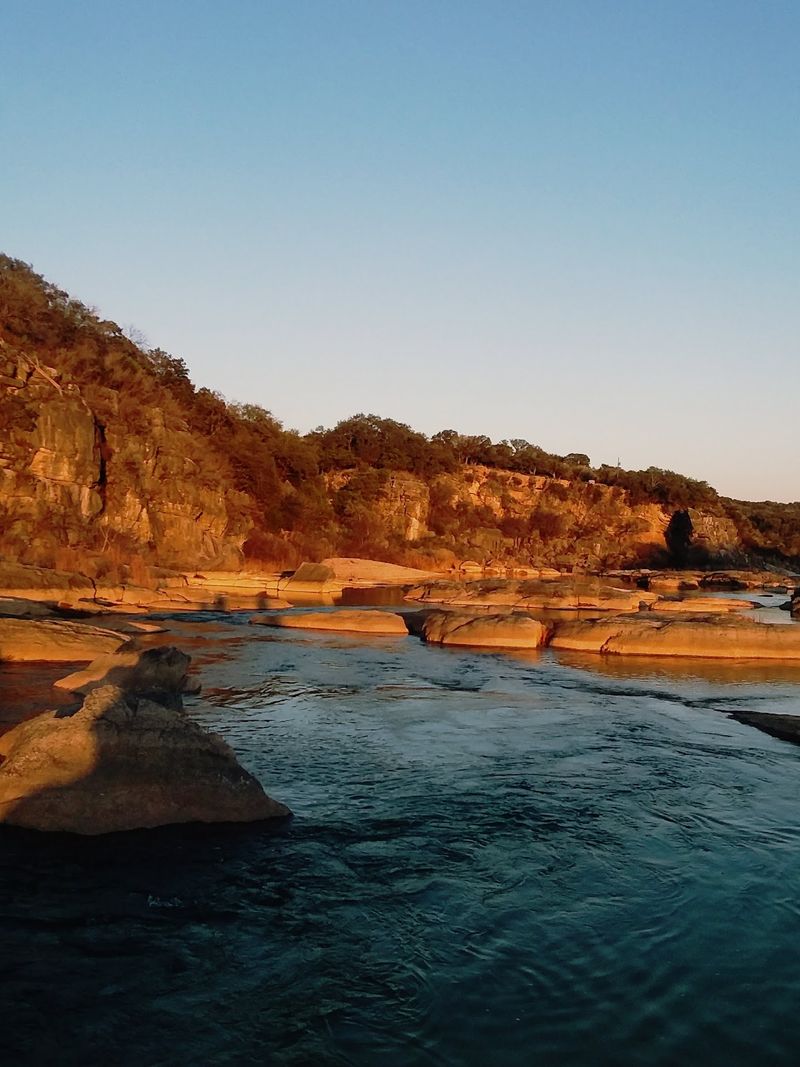
The rocky view may look empty at first, but the edges tell another story. Trees, birds, and small signs of animal life remind you that this strange landscape is part of a living river system. Pause long enough, and the background becomes just as interesting as the stone.
Listen for bird calls from the wooded banks rather than expecting wildlife to appear on demand. Watch from a comfortable distance, and use binoculars if you bring them. Feeding animals or approaching them closely can change their behavior and create problems for future visitors.
The park also has bird blinds that offer another way to observe wildlife during your visit. Ask staff how to reach them and whether any access updates apply. Pairing a short limestone walk with quiet bird watching adds variety without requiring an ambitious hike.
Leave plants, feathers, and other natural finds in place, and pack out every wrapper or bottle. If you bring a dog, follow leash rules and keep it away from wildlife and uncertain footing. A calm pause can be the part children remember most, especially when they spot movement everyone else missed. The contrast between bare rock and active woodland makes the scene feel richer, proving that an otherworldly view can still be full of familiar life.
A Little Planning Leaves More Room for Wonder
The easiest adventure begins before you leave home. Reserve a day pass when available, especially for weekends and busy seasons, because entry can reach capacity. Check the official park website for current fees, hours, alerts, and any changes that could affect your plans.
Pack drinking water, sun protection, snacks, and footwear suited to uneven rock. Exposed limestone offers little shade, and warm weather can make a short outing feel much harder than expected. Carry what you need rather than assuming supplies will be close to the falls.
Download or pick up a park map, and identify the parking area, restrooms, and route back before exploring. Allow extra time for slopes and careful steps instead of judging the walk only by distance. If anyone feels tired or overheated, shorten the outing and head toward shade.
Camping can extend your visit, but campsites require their own planning and reservations. Check burn restrictions before expecting to build a fire, and follow all posted campsite rules. Whether you stay overnight or come for a few hours, leave space in the schedule for simply looking around. The reward is not how much ground you cover, but the chance to experience an unusual landscape calmly, safely, and with enough attention to remember its smallest details after returning home.