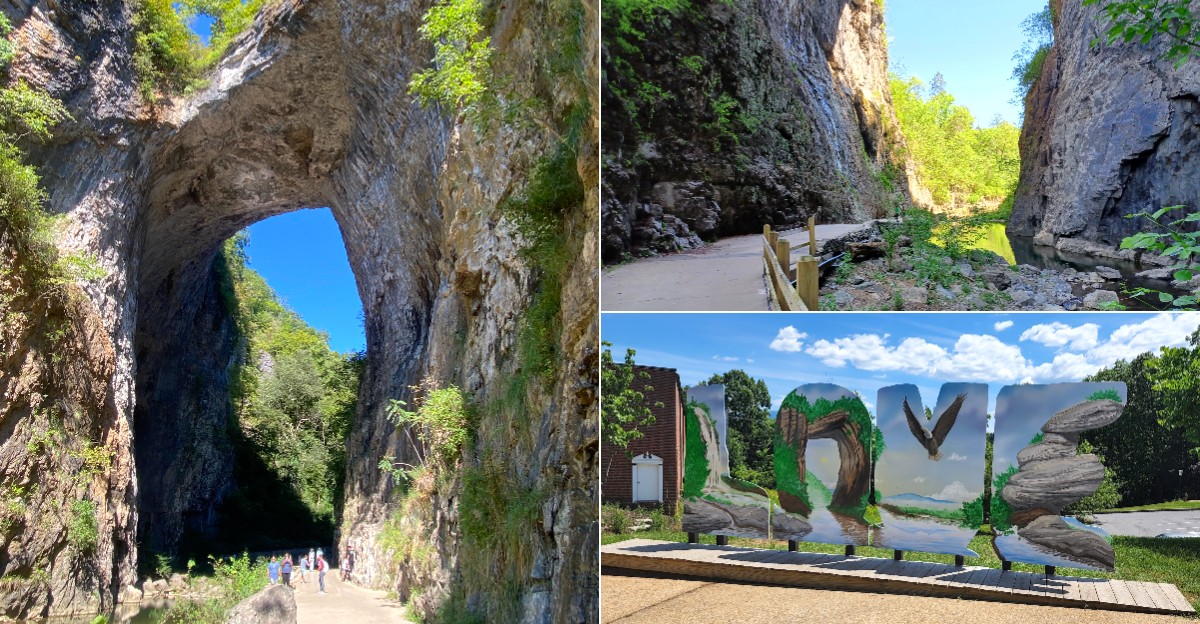
Towering limestone walls rise high above a rushing creek, framing a view that has stopped travelers in their tracks for centuries.
Natural Bridge State Park in Rockbridge County, Virginia, is home to a massive stone arch that stands about 215 feet tall.
Thomas Jefferson once owned the land, and local legend says a young George Washington surveyed the area.
Today, the Cedar Creek Trail leads right beneath the arch and continues on to a pretty waterfall called Lace Falls.
Remarkably, a highway runs across the top of the bridge, so many drivers pass over it without ever realizing.
Wear sturdy shoes, bring a camera, and plan to look up often, because this natural wonder is even bigger in person.
The First Look Up
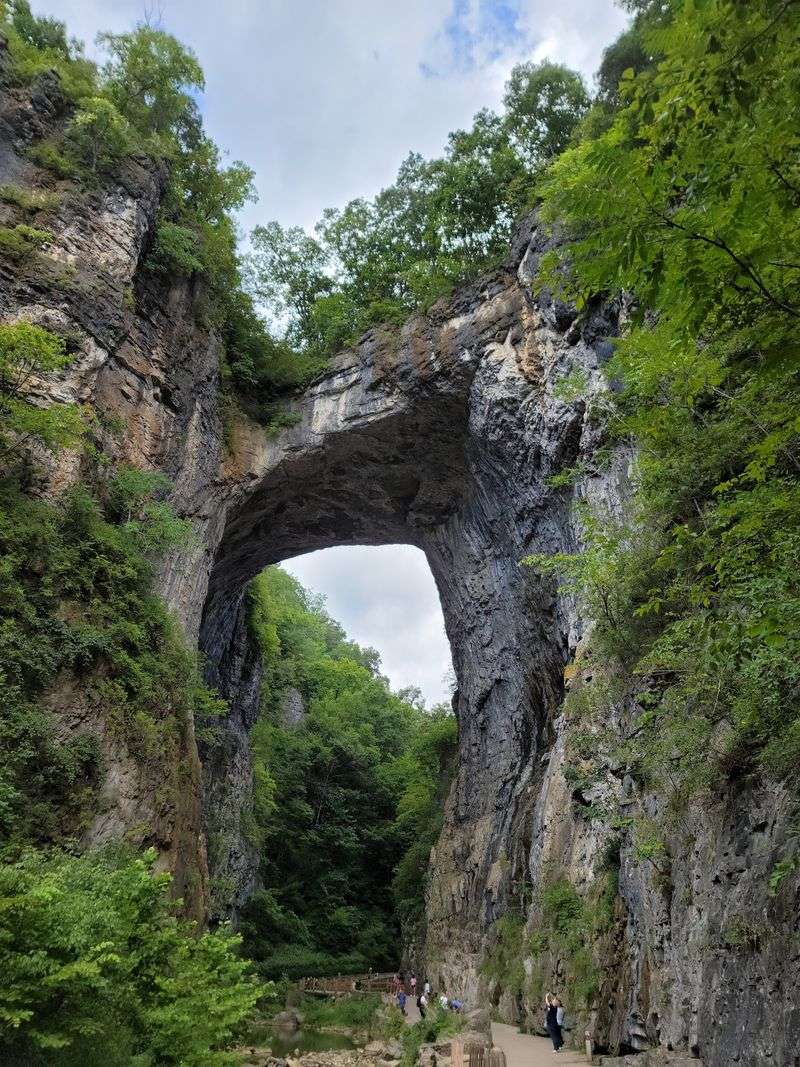
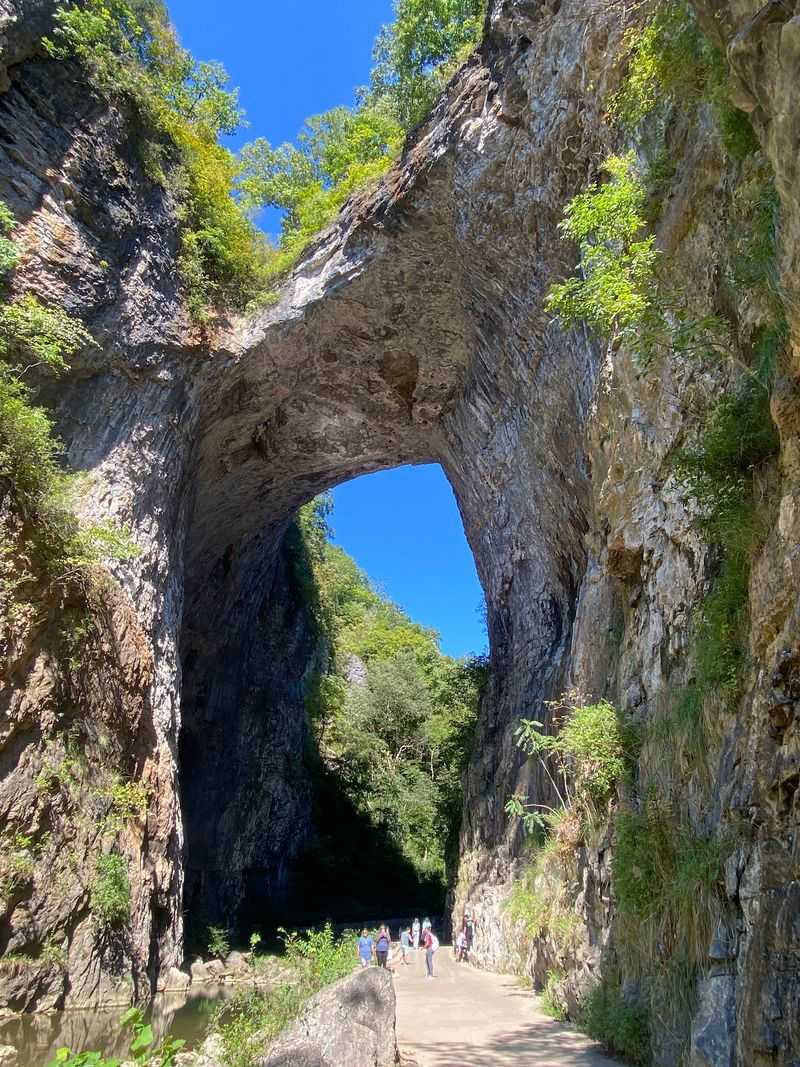
A wall of stone rises so high that it can make people stop in the middle of a conversation. That first view is the heart of a visit to Natural Bridge State Park, 6477 S Lee Hwy, Natural Bridge, VA 24578. The limestone arch stands about 215 feet tall, while Cedar Creek flows through the gorge below it.
Despite the idea of walking across the bridge, the visitor trail takes you beneath the arch, not over its top. A road crosses above, but the best way to appreciate the formation is to look up from the path. Pause where you can see both the creek and the full curve of the stone.
For a photo that shows its size, include a person in the frame rather than aiming only at the rock. Early or late daylight can bring out the shapes in the limestone, though the gorge may remain shaded. Give other walkers room while you take pictures, and stay on the marked trail.
Pictures rarely prepare visitors for the height of the arch. Standing beneath it turns an interesting rock formation into something you can feel around you. Take your time here instead of treating it as a quick stop on the way to the falls.
Steps Before the Surprise
The biggest climb of the visit may come after you have already seen the main attraction. From the visitor center, stairs lead down toward the gorge, and visitors must climb them again on the way out. Many visitors report roughly 137 steps, so do not judge the walk only by its short distance to the arch.
Wear shoes with good grip, especially if the steps or path are damp. Take the descent slowly and use the handrail when you need it. A steady pace makes the return easier than rushing downhill and feeling tired later.
If stairs are difficult for someone in your group, ask staff at the visitor center about current access options before buying tickets or starting down. Do not assume that an option described in an older review will always be available. The staff can also help you understand which parts of the trail fit your needs.
Plan a few extra minutes for breaks, even if you only intend to see the bridge. There is no prize for finishing fast. A comfortable visit leaves enough energy to enjoy the stone arch, the creek, and the walk back up.
A Creekside Walk Beyond the Arch
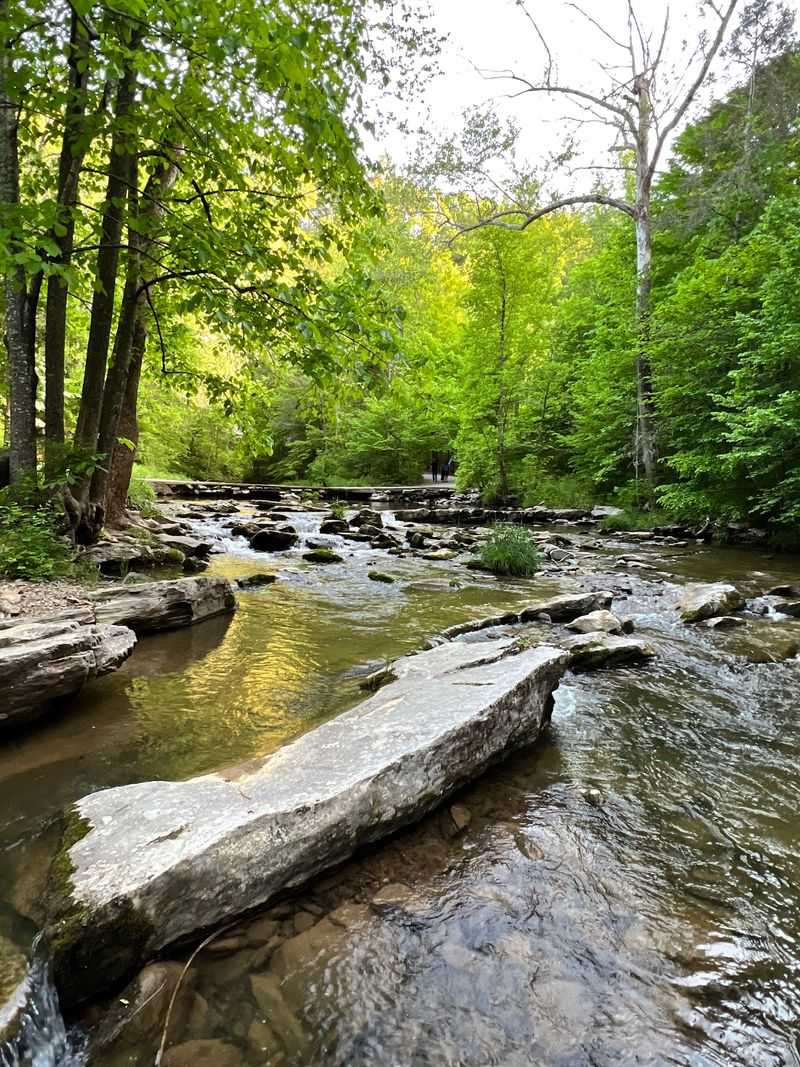
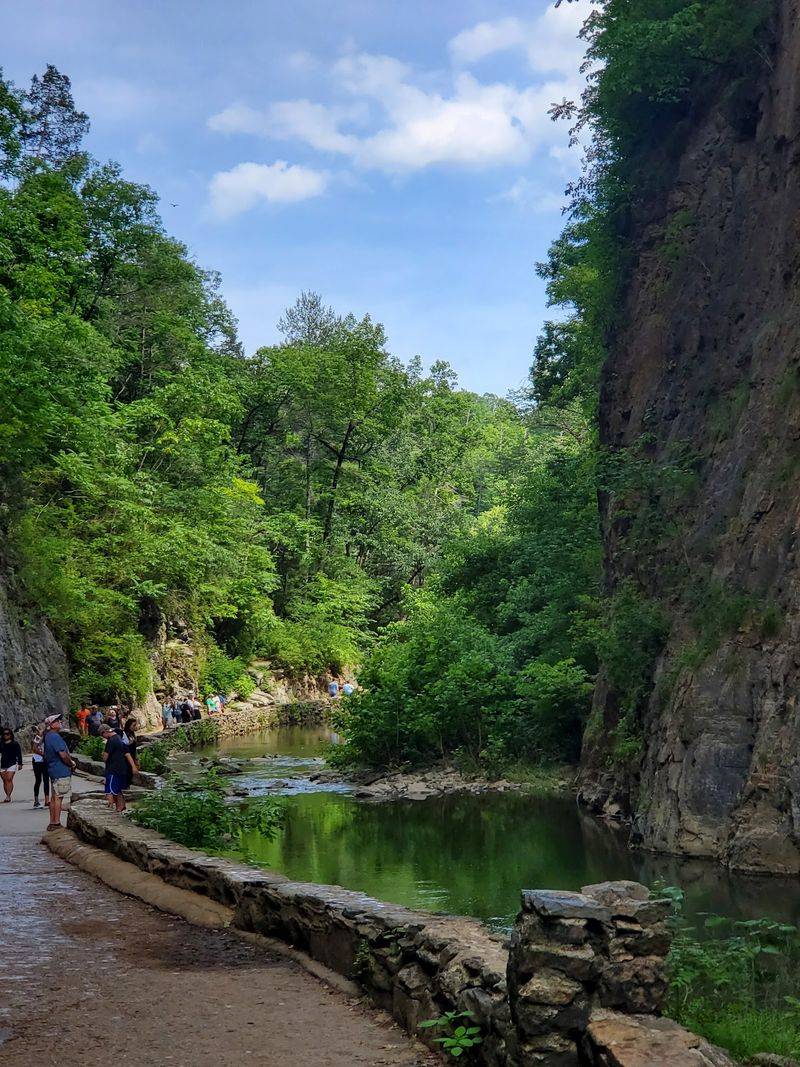
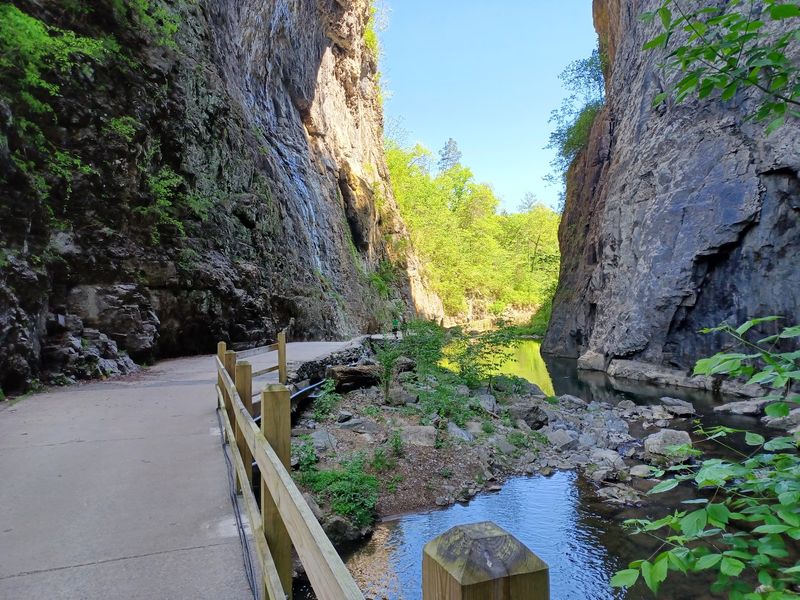
Once the great arch is behind you, the walk becomes quieter but not less rewarding. Cedar Creek Trail follows the water through a narrow, leafy setting, giving visitors a closer look at the gorge. The path is generally easy to follow, although its surface and slope can change along the way.
Listen for the creek as you pass trees and rocky walls. Small pauses can reveal details that are easy to miss, such as water moving around stones or sunlight reaching the trail. Keep younger walkers close, particularly near the creek and any uneven ground.
You can turn around whenever your group has had enough, so reaching the end is not required for a good trip. Bring water if you plan to walk farther than the bridge, and check trail conditions before heading out. After rain, choose your steps with care and leave rocks and plants where you find them.
For many families, the easiest plan is to walk at the pace of the slowest person. That approach leaves time to notice the setting instead of watching the clock. The trail adds a calm second chapter to the dramatic first sight of the arch.
The Rock’s Long Story
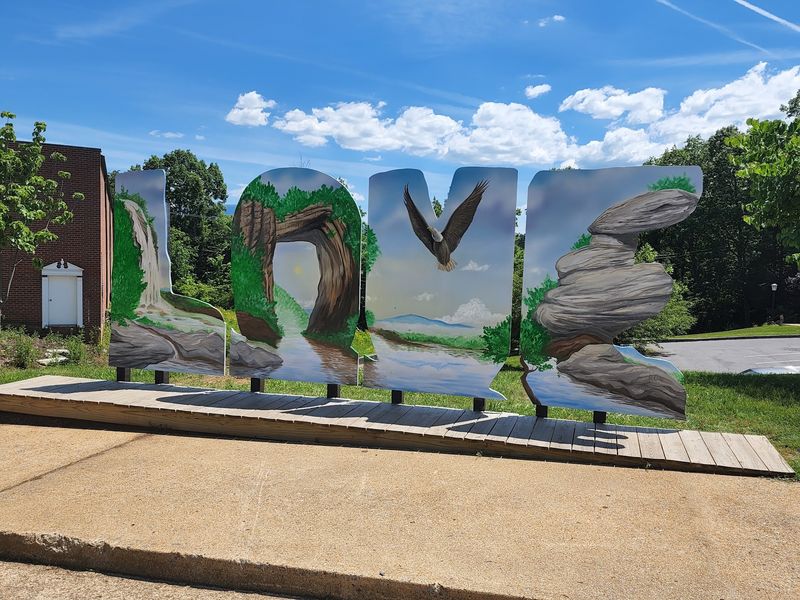
That giant curve was shaped by nature long before anyone built roads or marked trails nearby. Natural Bridge is made of limestone, a rock that water can slowly wear away. Over a very long time, water helped form the gorge and left the striking bridge above the creek.
You do not need to be a scientist to spot clues in the landscape. Look at the rock walls, the flowing water, and the space beneath the arch. Together, they show how a place can change little by little while still appearing solid and still today.
Keep the lesson simple for children by asking what water might do to stone after thousands of rainy days. Then let them point out cracks, layers, or shapes they notice from the trail. Touching or collecting rock is not needed to learn from it.
The bridge is a good reminder that some wonders are not made in a single moment. Its size may grab your attention first, but its slow story can stay with you longer. Looking closely turns a scenic stop into a chance to think about how the ground beneath our feet changes.
A History Lesson Along the Trail
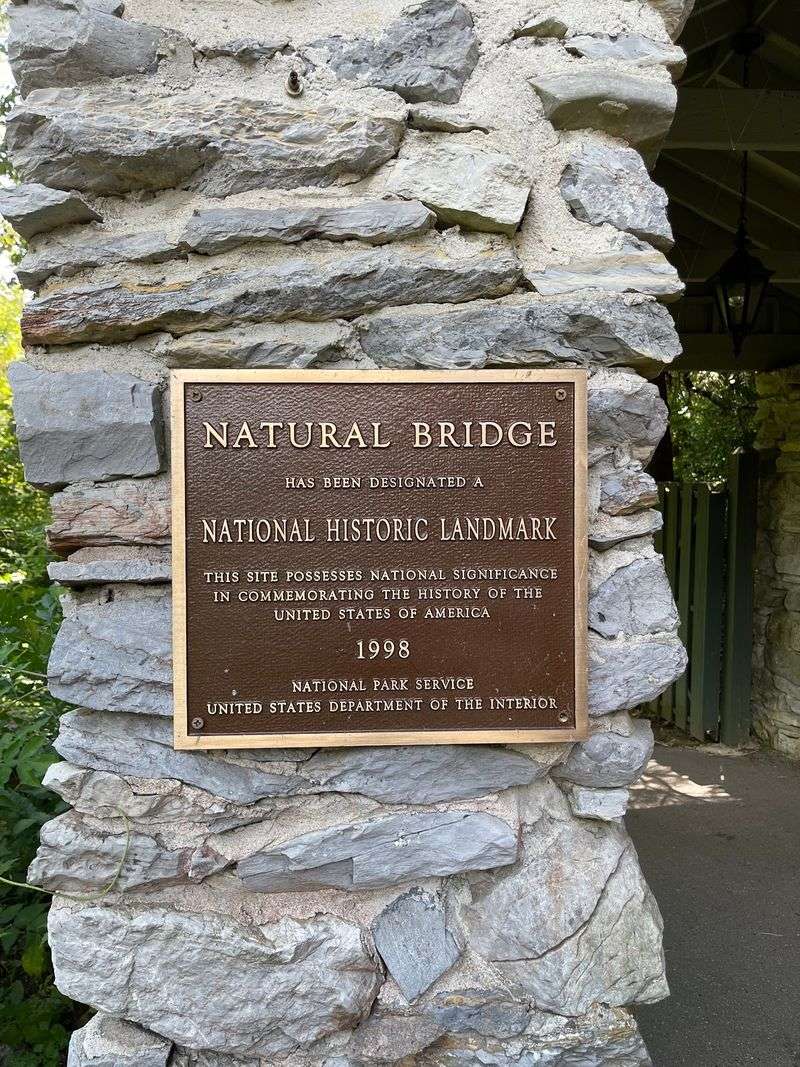
Stone is not the only story waiting beside the creek. People have known and visited the bridge for generations, and the site has a place in American history. Thomas Jefferson purchased the bridge and surrounding land in 1774, long before it became a state park.
At the visitor center and along the route, take time to read any current displays or signs. They can give meaning to what might otherwise seem like a quick photo stop. If you are visiting with children, invite each person to share one fact they learned before leaving.
Remember that the area’s history reaches beyond famous names. The landscape mattered to people before Jefferson owned it, and its story continued after his time. Approach signs and exhibits with curiosity rather than expecting one short account to tell everything.
A good way to pace the visit is to read a little, walk a little, then look at the bridge again. The view may feel different once you know that visitors admired it centuries ago. History adds another layer to the experience without asking you to spend the whole day indoors.
A Cool Stop at Saltpeter Cave
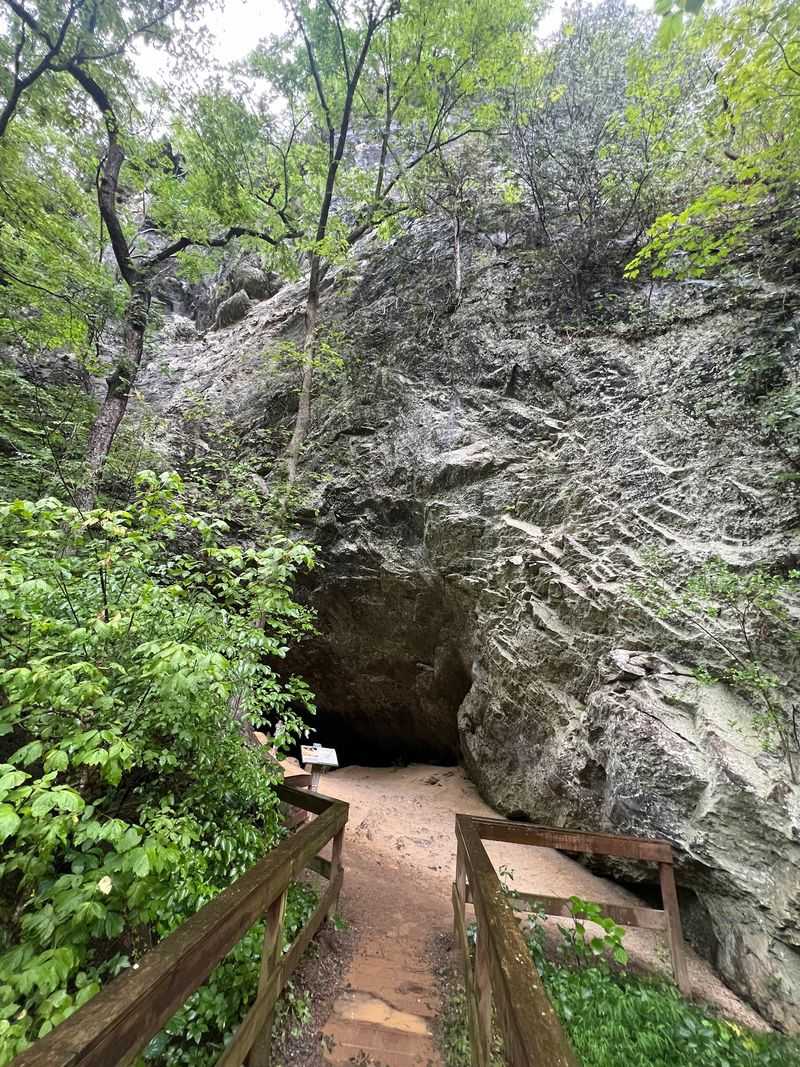
A darker opening along the trail offers a change from the wide view beneath the bridge. Saltpeter Cave sits farther along Cedar Creek Trail and gives walkers another reason to continue past the arch. Its name recalls saltpeter, a material once used in making gunpowder.
Pause at the designated viewing area and follow posted rules rather than trying to explore beyond public access. The cave may feel cooler than the open trail, but it is still part of a protected landscape. A flashlight is not an invitation to enter places that are closed to visitors.
For children, the stop can open an interesting question: Why would people seek useful materials in a cave? Keep the answer brief, then let them notice the difference between the rock opening and the sunny path. That small shift in setting helps the walk feel like a series of discoveries.
Watch your footing as you approach, particularly when the ground is wet. Leave the walls untouched and give others space to see the opening. Although the cave is smaller than the bridge, it adds a memorable bit of human history to the same creekside route.
Lace Falls at the Far End
Keep following the creek and you can reach a waterfall that feels like a quiet finish to the trail. Lace Falls is smaller than some visitors expect, so think of it as one part of the walk rather than the main event. The trees, creek, and changing views make the trip there worthwhile for walkers who have the time.
Check the trail distance at the visitor center before starting, since signs and current conditions are better guides than an old online review. Remember that you will walk back the same way and climb the stairs near the end. Save enough water and energy for both parts of the outing.
Waterfall flow can vary with recent weather, and rain may leave slippery spots along the route. Stay behind barriers and avoid stepping into the creek for a closer picture. A safe viewing spot still gives you a chance to listen to the falling water.
If your group is tired, turning back early is a smart choice, not a missed goal. The bridge remains the star of the visit. Reaching the falls simply gives you more time in the shaded gorge and a different scene to remember.
Make the Visit Your Own
A little planning can make the difference between a rushed stop and a relaxed visit. Start at the visitor center to learn the current admission cost, hours, trail status, and any access arrangements. There are restrooms and displays there, so it is a useful first stop before heading toward the stairs.
Allow time to stand beneath the bridge without a schedule pushing you onward. Add more time if you hope to follow the creek to the cave and falls. A water bottle, comfortable shoes, and clothing suited to the weather will serve you better than a packed day bag.
Families can set one simple goal for the walk, such as spotting three different rock shapes or listening for the creek. Photographers may prefer extra time under the arch, while history fans can linger over the displays. There is no single right way to enjoy the park.
Before setting out, check the park’s official website or call staff for the latest details rather than relying on prices mentioned in reviews. Conditions and services can change. With a flexible plan, you can focus on the moment that matters most: looking up at an enormous natural bridge from the trail below.