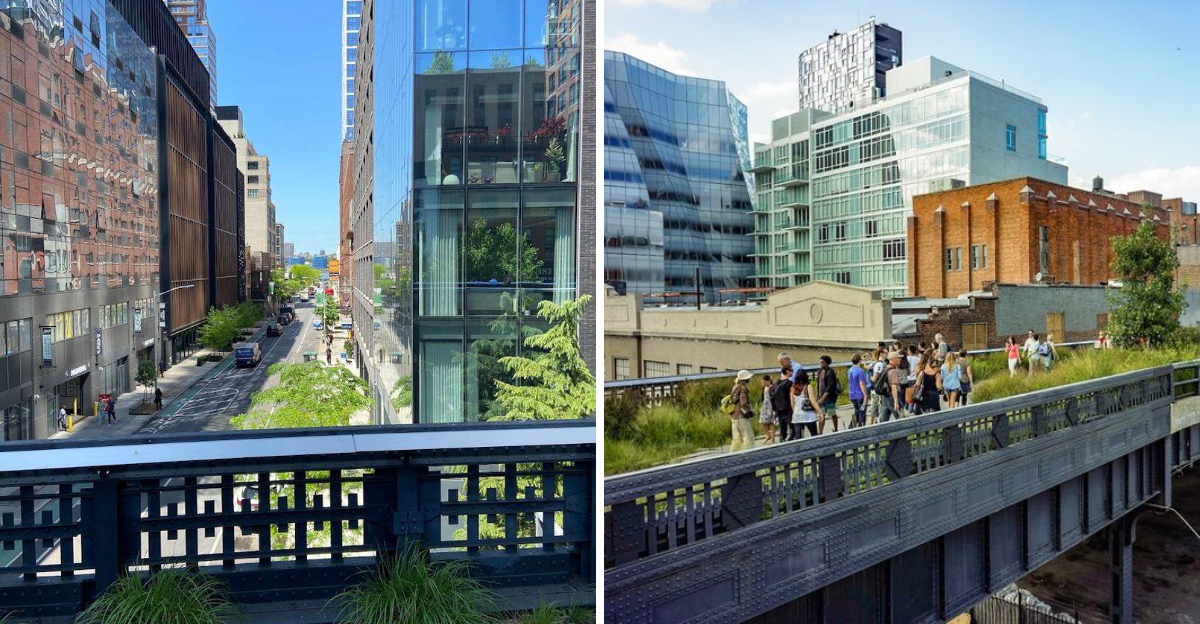
Forget everything you think you know about city parks—this one puts Manhattan beneath your feet.
The High Line takes visitors on a walk above the streets, following a former freight railroad that now winds through gardens, art, architecture, and some of the most unforgettable views in New York City.
At roughly 30 feet above the sidewalks, the elevated path offers a completely different way to experience Manhattan. One moment, you’re surrounded by grasses and flowers.
The next, skyscrapers rise around you, traffic rushes below, and the city feels like a living show.
This isn’t just a stroll through a park. It’s a walk through New York’s past, present, and future, all packed into one remarkable elevated route.
Here are the sights that make the High Line unlike anywhere else in the city.
A Railroad Reborn as a Park in the Sky
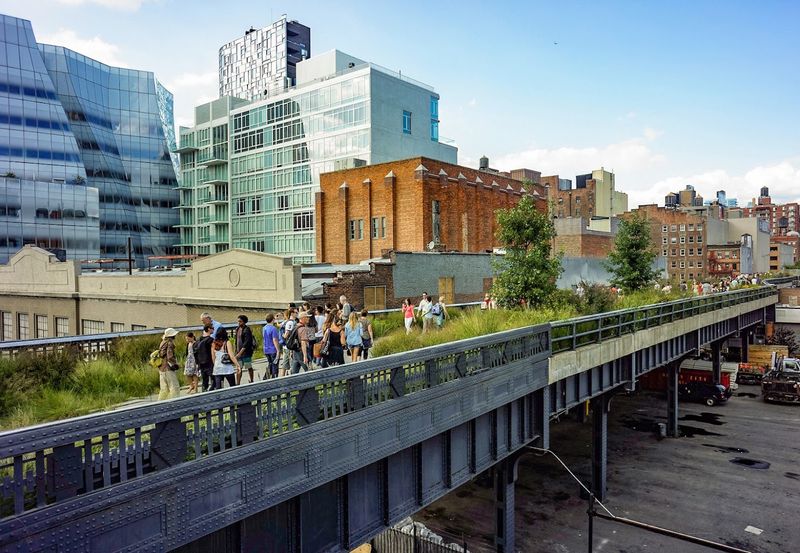
Back in the 1930s, freight trains rumbled along elevated tracks through Manhattan’s West Side, delivering meat, dairy products, and manufactured goods to warehouses and factories below. Decades later, after the trains stopped running in 1980, the abandoned structure stood empty and overgrown.
Most people assumed it would eventually be torn down.
But neighborhood residents and community activists saw something different when they looked at those rusty old rails. They imagined a green space floating above the city streets.
After years of planning, fundraising, and construction, the first section opened in 2009.
Today, the High Line proves that old industrial structures can become something beautiful and useful again. Walking along the same path where freight cars once rolled feels like stepping into a whole different version of New York.
The steel beams and original railway features remind visitors of the park’s industrial past, while carefully designed gardens and modern amenities make it a comfortable place to spend an afternoon exploring a truly one-of-a-kind urban transformation.
The Experience of Walking Above Manhattan
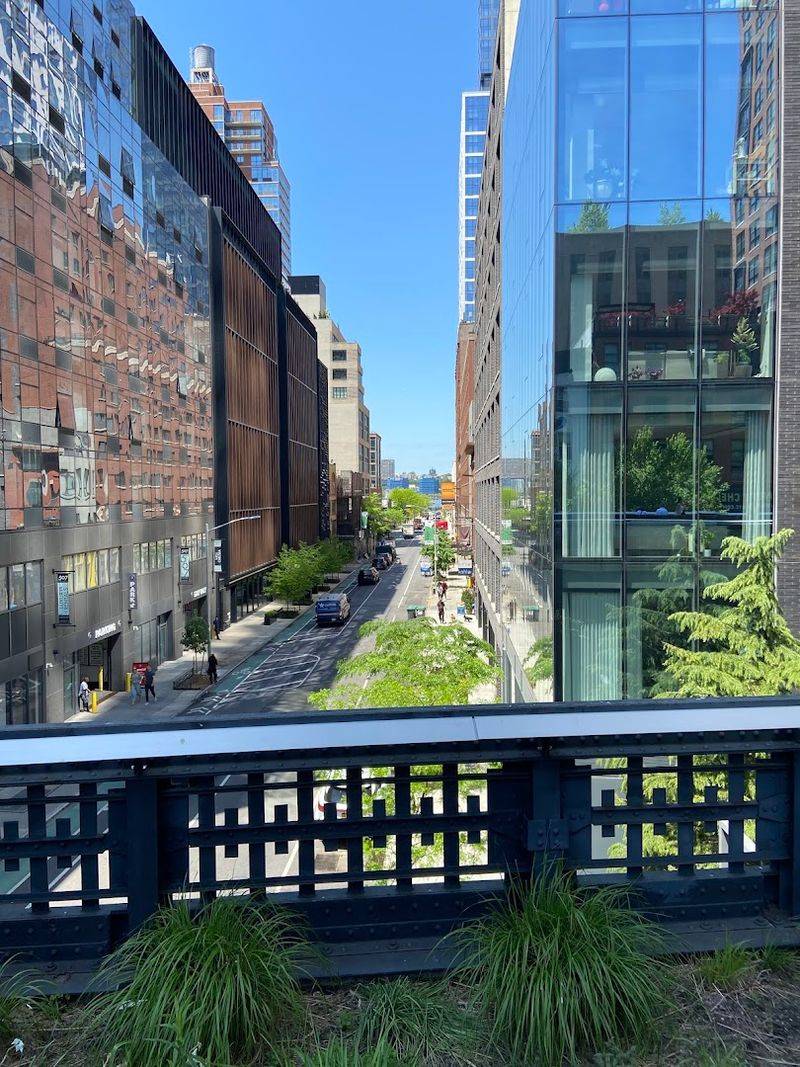
Your feet crunch along the gravel path as city sounds drift up from the street below. Yellow taxis honk and delivery trucks rumble past, but you’re separated from all that hustle by 30 feet of open air.
From up here, the busy sidewalks look like scenes in a movie playing out beneath you.
This elevated perspective changes everything about how you experience the neighborhood. You’re close enough to see into second and third-story windows, spot rooftop gardens you’d never notice from ground level, and watch the geometric patterns of Manhattan’s street grid stretch into the distance.
The pace feels naturally slower up here, even though the city rushes along just below.
Walking the High Line means seeing familiar Manhattan from an entirely fresh angle. Buildings you might pass without a second glance suddenly reveal interesting architectural details.
The whole experience creates this wonderful sense of being both in the middle of the city and somehow floating peacefully above it all at the same time.
Gardens Designed to Feel Wild and Natural
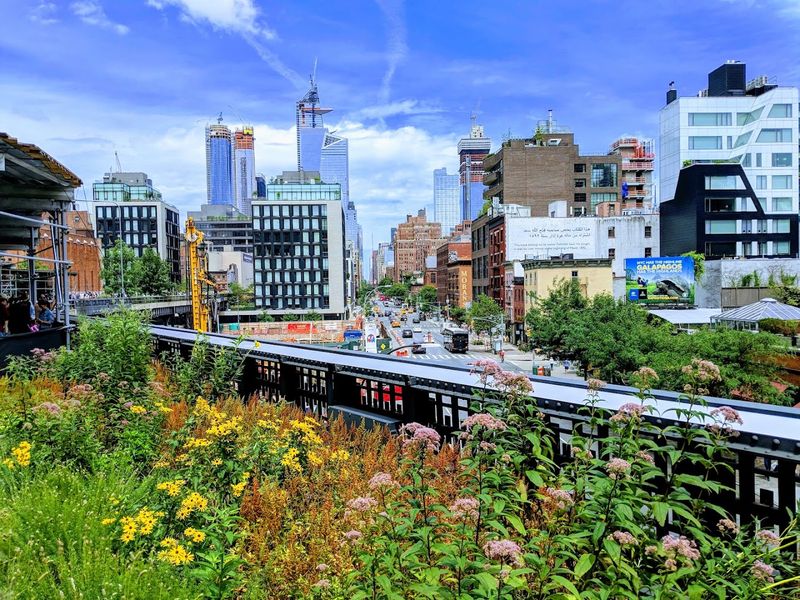
Purple coneflowers sway in the breeze next to ornamental grasses that seem to shimmer in the sunlight. Birch trees provide shady spots, while lavender and other flowering plants fill the air with unexpected fragrances.
The gardens here don’t look manicured or formal like traditional city landscaping.
Designers studied the wild plants that had taken root naturally on the abandoned tracks during the decades when trains no longer ran. That self-seeded vegetation inspired the planting plan you see today.
Hundreds of species create a landscape that changes with every season, from spring blooms to summer greenery to autumn colors and winter textures.
These carefully planned gardens manage to feel spontaneous and slightly untamed, which makes walking the High Line different from strolling through a typical urban park. Native grasses mix with perennials and shrubs to attract butterflies, birds, and beneficial insects.
The lush plantings soften all the surrounding concrete and steel, creating green pockets that make you forget you’re on an old railway structure floating above one of the world’s busiest cities.
The High Line’s Remarkable Mix of Old and New Architecture
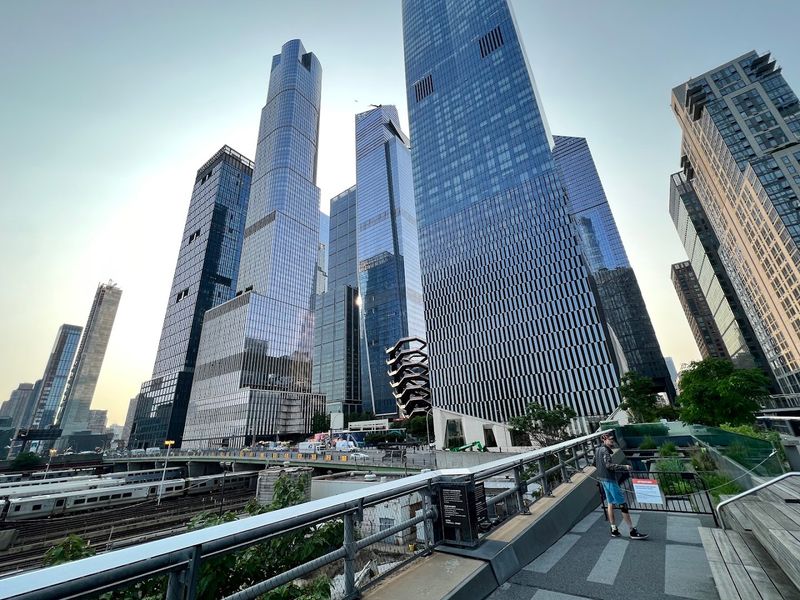
Look left and you’ll see a weathered brick warehouse from the early 1900s, its painted advertisements still faintly visible on the facade. Turn right and a gleaming glass tower reflects clouds and sky, its modern design completely different from its century-old neighbor.
The High Line sits right at the meeting point of Manhattan’s architectural past and present.
This constantly shifting view makes the walk feel like a journey through different eras of New York history. Historic Chelsea buildings with ornate details and fire escapes stand next to bold contemporary structures designed by world-famous architects.
You can spot the evolution of the neighborhood block by block as you move along the elevated path.
The park itself adds another layer to this architectural conversation. Original railway elements like steel beams and concrete support structures remain visible, reminding you of the industrial bones underneath the modern park design.
Watching how old manufacturing buildings, newer residential towers, and cutting-edge architecture all exist together gives you a real understanding of how New York constantly reinvents itself while preserving pieces of its past.
Public Art Around Nearly Every Turn
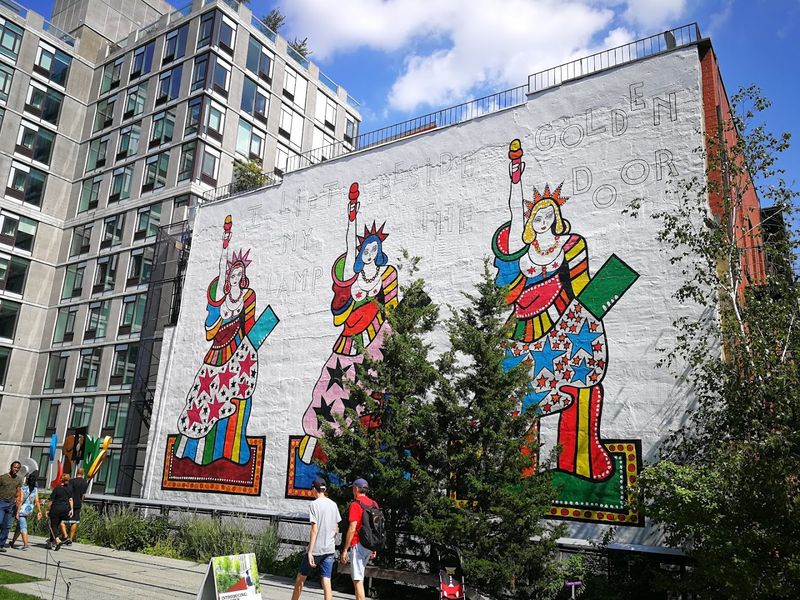
A massive sculpture catches your eye as you round a corner, its bold colors contrasting with the surrounding greenery. A few hundred feet later, you encounter a video installation or an unexpected performance piece.
The High Line functions as much more than just a walking path and garden.
Artists create works specifically for this space, taking advantage of the unique elevated setting and the relationship between the park, the city, and the people moving through both. Rotating exhibitions mean the art changes throughout the year, so repeat visitors always discover something new.
You might see contemporary sculptures, billboards reimagined as art projects, or installations woven directly into the landscape.
This commitment to creative programming makes every walk feel like visiting an outdoor gallery that happens to have amazing views and beautiful plants too. The art isn’t confined to special designated areas but appears naturally along your route, surprising you when you least expect it.
Young people especially appreciate how the High Line makes contemporary art accessible and free, removing barriers that sometimes make museums feel intimidating or exclusive to certain visitors.
The Chelsea Section Offers Some of the Most Memorable Views
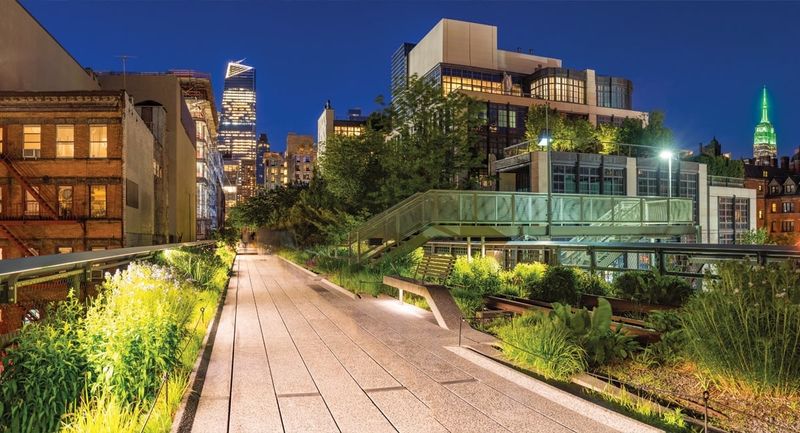
Chelsea’s stretch of the High Line delivers some of the most photographed moments of the entire walk. From here, you can see toward the Hudson River, watch the gallery district buzz with activity below, and take in the neighborhood’s distinctive mix of converted warehouses and residential buildings.
This section feels like the heart of the High Line experience.
The surrounding Chelsea neighborhood adds to the appeal. World-class art galleries line the streets below, making it easy to combine your High Line visit with gallery hopping.
The architecture in this area showcases particularly interesting contrasts, from industrial loft buildings to sleek modern developments.
What makes this section so popular is how it connects the park to Manhattan’s broader cultural landscape. You’re not just walking through an isolated green space but moving through an area packed with creative energy and urban vitality.
Chelsea Market sits nearby for food and shopping, while the Whitney Museum offers more art just a short walk away.
The views from this elevated vantage point let you appreciate how everything fits together in this constantly evolving neighborhood.
The Famous Seating Areas Make the City Feel Like a Moving Show
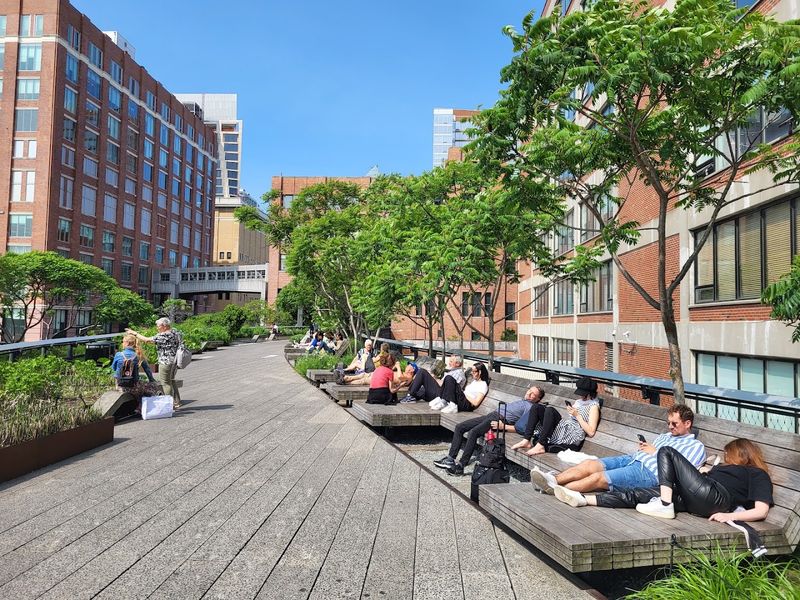
Wooden benches angled toward the street below invite you to stop and simply watch New York happen. Some seating areas are built right into the original railway structure, while others sit among the gardens like outdoor theater seats aimed at the surrounding cityscape.
Grab a spot and the whole city becomes your entertainment.
These carefully placed rest areas weren’t afterthoughts but essential parts of the park’s design. Stadium-style seating faces busy intersections where you can observe traffic patterns, pedestrians rushing to appointments, and the constant motion that defines Manhattan.
Other seats tuck into quieter garden sections, offering more contemplative views of architecture and sky.
The genius of these seating arrangements is how they transform passive sitting into active people-watching and city-observing. You’re not just resting your feet but participating in the High Line experience by slowing down and really looking at your surroundings.
Families spread out on the wide steps, friends chat while watching the sunset, and solo visitors lose themselves in the passing scene below, all finding their own perfect viewing spot along this elevated stage.
The Southern End Connects Art, Food, and Neighborhood Energy
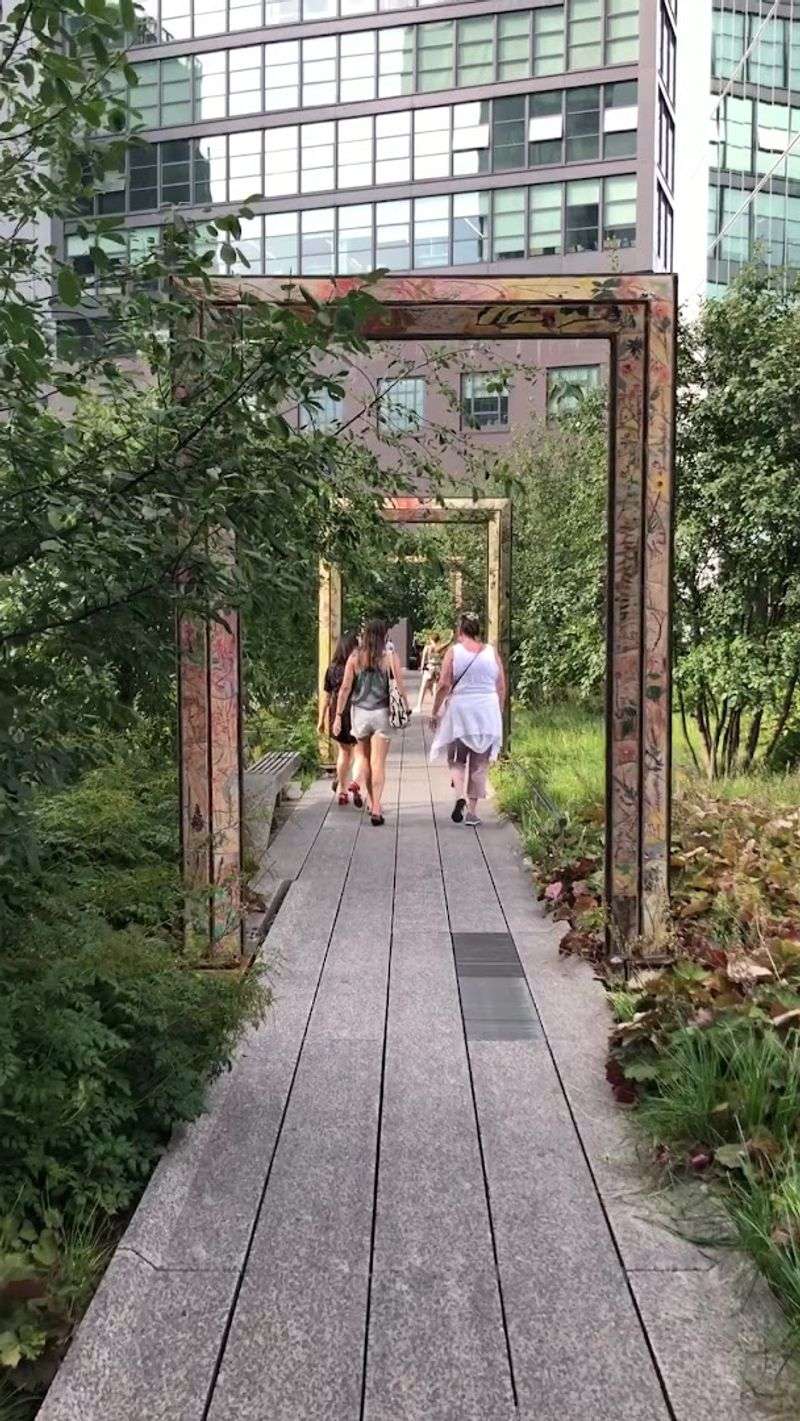
Entering at Gansevoort Street drops you into one of Manhattan’s most dynamic neighborhoods. The Meatpacking District pulses with restaurants, boutiques, galleries, and historic cobblestone streets that tell stories of the area’s industrial past.
Starting your High Line adventure here means you’re immediately surrounded by energy and possibilities.
This southern access point puts major attractions within easy walking distance. The Whitney Museum of American Art sits right at the park’s entrance, offering world-class contemporary art collections.
Chelsea Market’s food hall and shops are just steps away, perfect for grabbing snacks before or after your walk. Little Island, the newer park built on piers in the Hudson River, is also nearby.
The neighborhood’s transformation mirrors the High Line’s own story of reinvention. Former meat-packing warehouses now house trendy restaurants and fashion showrooms.
Cobblestone streets that once saw delivery trucks now welcome pedestrians exploring the latest shops and cafes.
Beginning your High Line visit from this southern end makes the park feel like part of a bigger urban adventure rather than a separate destination floating above everything else.
The Northern Stretch Leads Toward Hudson Yards and Manhattan’s New Skyline
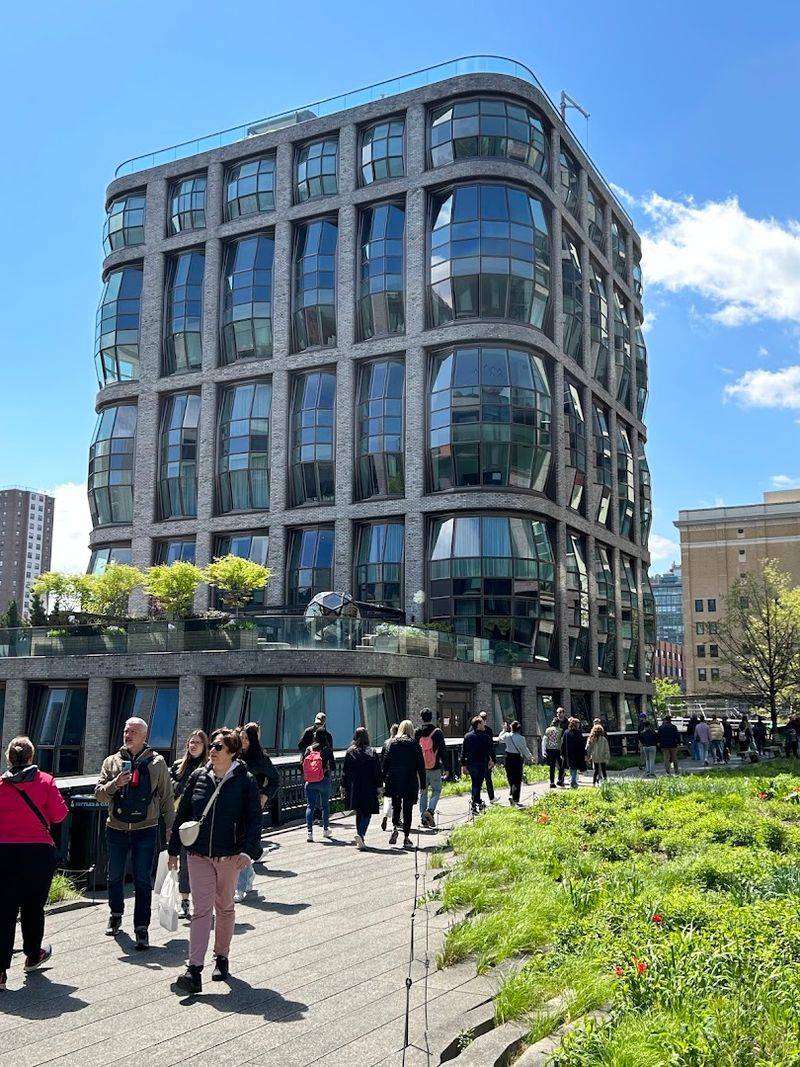
As you walk north, the cityscape shifts dramatically around you. The newest sections of the High Line lead toward Hudson Yards, where some of Manhattan’s most recently constructed skyscrapers reshape the skyline.
This area shows just how much the West Side has changed in recent years.
The contrast between the historic railway structure beneath your feet and the ultra-modern towers rising nearby creates a striking visual timeline of New York’s development. Hudson Yards represents massive investment and contemporary architecture, while the High Line preserves an earlier era’s infrastructure.
Walking between these two realities gives you a unique perspective on urban evolution.
These northern stretches feel slightly different from the more established southern sections. The views emphasize height and scale, with residential and commercial towers creating dramatic backdrops for your photos.
The Vessel sculpture and the Hudson Yards shopping complex add more destinations to your itinerary.
Some visitors actually prefer starting in the north and walking south, experiencing the park in reverse and ending in the livelier Meatpacking District atmosphere rather than beginning there.
Visitor Info and Tips
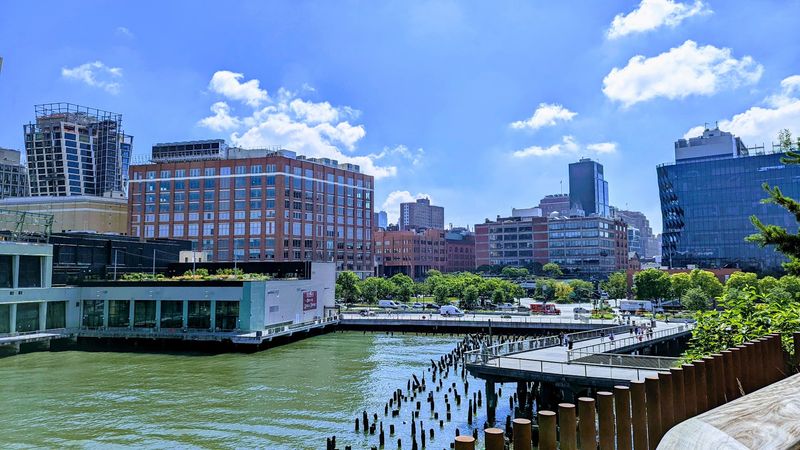
The High Line stretches from Gansevoort Street in the Meatpacking District all the way to West 34th Street, covering about 1.5 miles of elevated walking. Multiple access points with stairs and elevators make it easy to join or leave the park at different spots along the route.
The entire park is wheelchair accessible, with elevators at major entry points.
Comfortable walking shoes make a huge difference since you’ll be on your feet exploring the whole path. Plan extra time for stopping, taking photos, reading information plaques, and simply enjoying the views.
Early morning or late afternoon visits often feel less crowded than midday, especially during peak tourist seasons or nice weekends.
Best of all, admission is completely free. Before you go, check the official High Line website for current access information, special events, or any temporary closures.
Consider combining your visit with nearby attractions like Chelsea Market for food, the Whitney Museum for art, Little Island for another unique park experience, or Hudson Yards for shopping and dining.
Bringing water and snacks is smart since you’ll probably spend more time exploring than you initially planned.