A glacier-covered volcano near Seattle makes its own weather, and some days it wears a lens-shaped cloud like a giant hat.
I love that a mountain can be that dramatic.
That same state also has a rainforest that soaks up well over 100 inches of rain a year. It has a ferry system that works like a floating bus line too.
Washington packs glaciers, tide pools, apple country, and city landmarks into one road trip.
I can’t imagine a better place for a traveler who gets bored easily.
So which stops actually earn a spot on your list? I picked the ones that make me want to pack a bag right now, and a few of them might surprise you.
Mount Rainier National Park
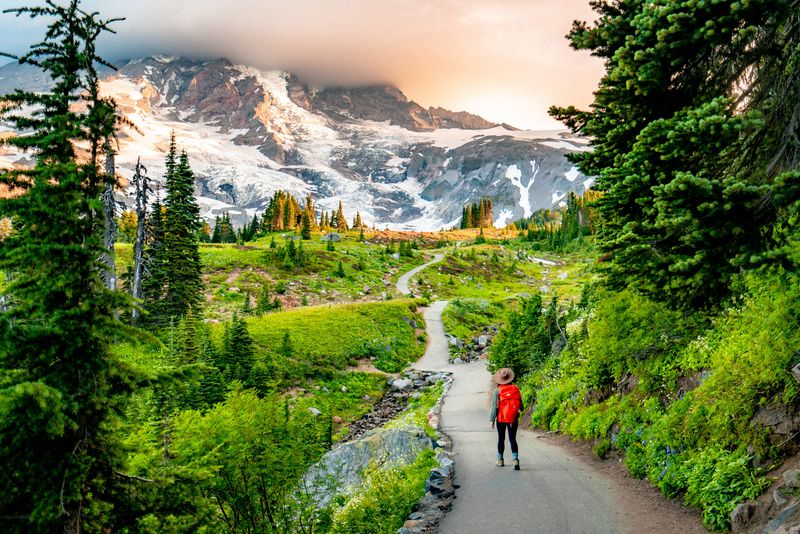
Mount Rainier is an active volcano, and it carries more glacial ice than any other peak in the lower 48 states. That’s a big flex for one mountain.
The park became a national park in 1899. It was the fifth national park in the country, so it has had plenty of practice impressing visitors.
Head to the Paradise area if you want the classic view. In summer, its meadows can fill with wildflowers, and the Skyline Trail loops above them.
Prefer a quieter angle? Sunrise is the highest point you can reach by car in the park, and it opens later in the season.
Weather here changes fast, so pack layers even on a sunny day. Check road status before you go, since some roads close for winter.
The Henry M. Jackson Memorial Visitor Center at Paradise has exhibits and ranger info.
It’s a smart first stop before you pick a trail.
Mount Rainier National Park does not require timed entry reservations in 2026. However, popular areas can get crowded, so arriving early and checking current park alerts is still a smart idea.
Address: Nisqually Entrance, 39000 State Route 706 E, Ashford, WA 98304
Space Needle
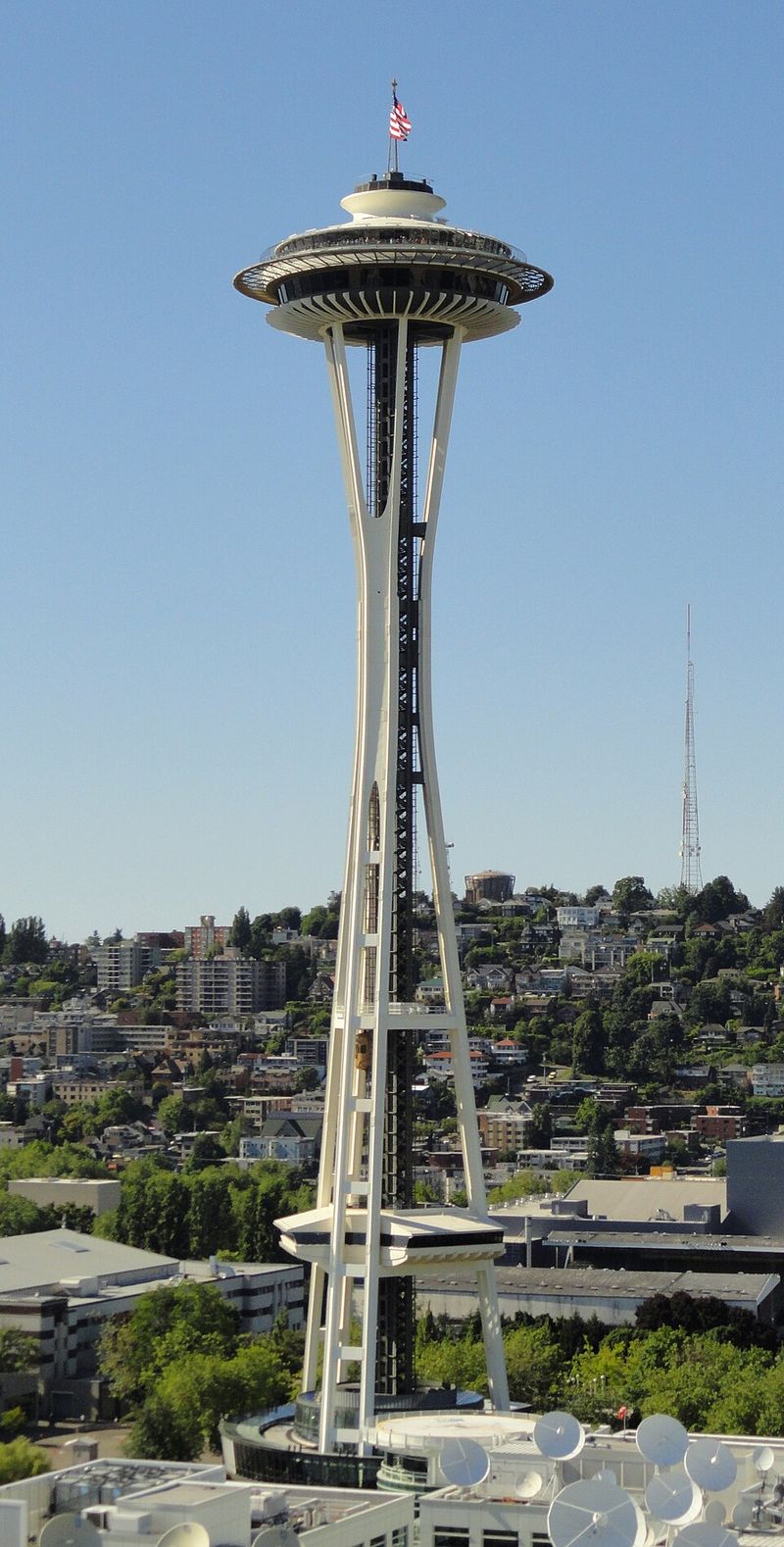
Built for the 1962 World’s Fair, the Space Needle still looks like it landed from the future. Seattle never really got over that look, and honestly, why should it?
The tower stands 605 feet tall. Elevators zip you up to the observation levels in about 41 seconds, which is quicker than most coffee lines downtown.
Up top, glass panels give you open views of Elliott Bay, the city, and mountains on clear days. Lean back on the glass benches if your nerves allow it.
One level down, The Loupe has the world’s first rotating glass floor. You can look straight down at the structure below your feet.
Timing matters more than you might think. Visit near sunset and you get daylight views and city lights in one ticket.
The Needle sits in Seattle Center, so you can easily pair it with nearby attractions. Plan for a full afternoon in the area and you won’t feel rushed.
Tip: clear days give the best mountain views, so peek at the forecast first.
Address: 400 Broad Street, Seattle, WA 98109
Pike Place Market
Flying fish might be the most famous workout in Seattle. At Pike Place Fish Market, workers toss whole fish across the counter, and crowds love the show.
Pike Place Market opened in 1907, and it’s one of the oldest continuously operating public farmers markets in the country. That’s a long run for any shopping trip.
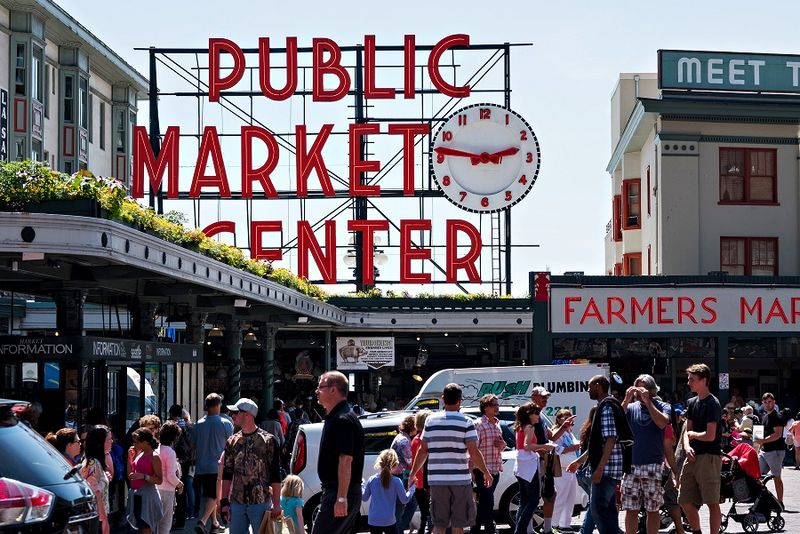
The red Public Market sign and clock are classic photo spots. Rachel the bronze piggy bank waits nearby, collecting coins for market community services.
Want to wander? Head through the lower levels for small shops, books, and odd collectibles.
Up top, flower stalls and produce stands keep things colorful.
Just around the corner sits the Gum Wall in Post Alley. It’s sticky, strange, and somehow one of the city’s most photographed walls.
Go early in the day if you want more elbow room. Many shops open in the morning, and the market gets busier as the day moves on.
Bring a little patience and a big appetite. Snacking your way through is half the fun.
Address: 85 Pike Street, Seattle, WA 98101
Olympic National Park
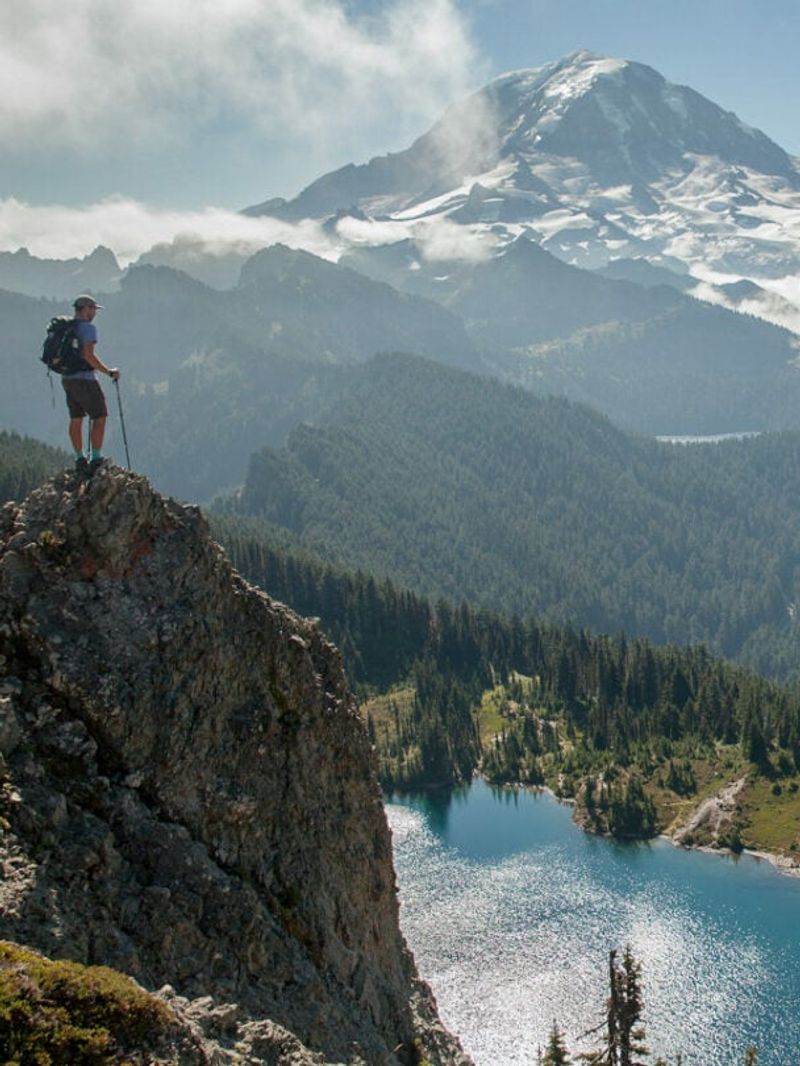
Few parks let you swap mountains, rainforest, and ocean beaches in one trip. Olympic National Park pulls it off with almost a million acres to explore.
Start with the Hoh Rain Forest if you love green. The Hall of Mosses trail is short, and moss hangs from trees like shaggy curtains.
Hurricane Ridge offers big mountain views when its road is open. Check the park’s updates first, since access there has changed in recent years.
Then there’s the coast. Rialto Beach and Ruby Beach show off sea stacks, driftwood, and rocky shoreline that look straight out of a movie set.
The park is huge, and no single road crosses its center. Plan your route around U.S.
Highway 101, which loops around much of it.
Give yourself at least two or three days if you can. Rushing here feels like skimming a great book.
Pack rain gear, even in summer. The west side earns its soggy reputation honestly.
Address: Olympic National Park Visitor Center, 3002 Mount Angeles Road, Port Angeles, WA 98362
Chihuly Garden and Glass
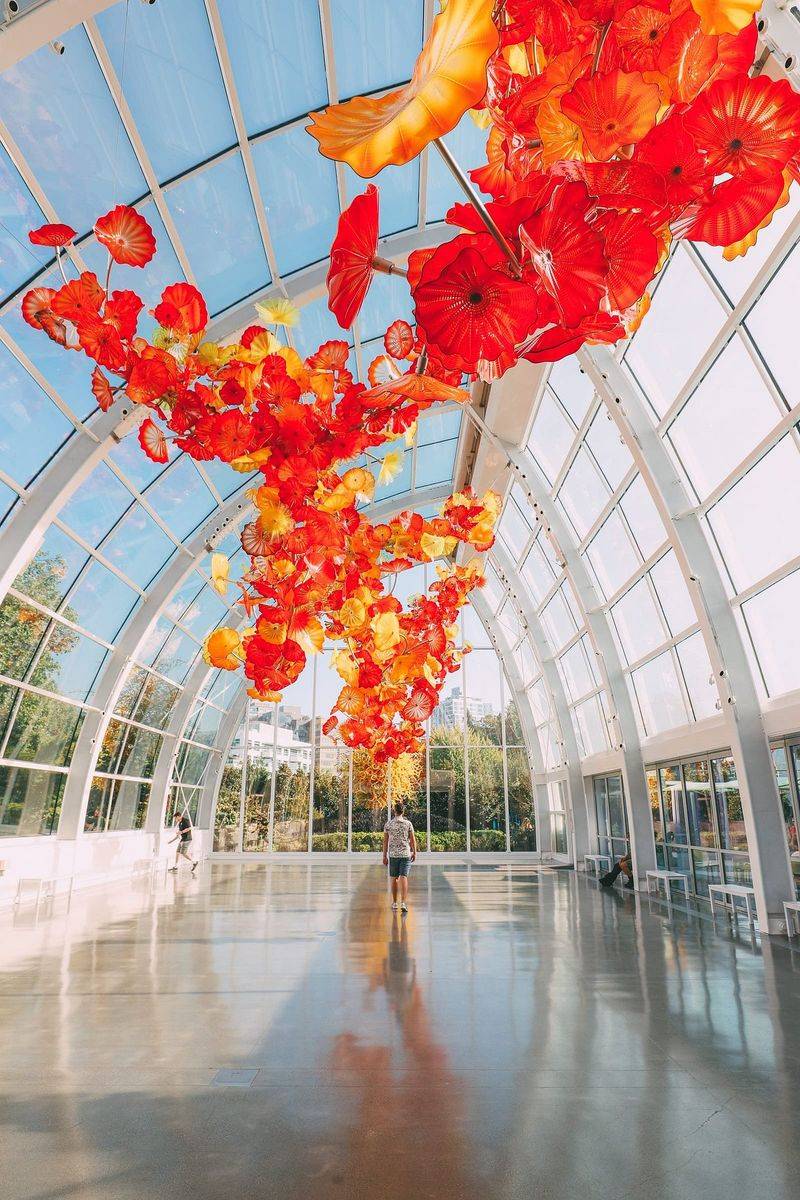
Glass that looks like it’s growing? Dale Chihuly, a Tacoma-born artist, made that idea famous, and this Seattle museum puts his work front and center.
Chihuly Garden and Glass opened in 2012 at Seattle Center. It includes indoor galleries, a big Glasshouse, and an outdoor garden.
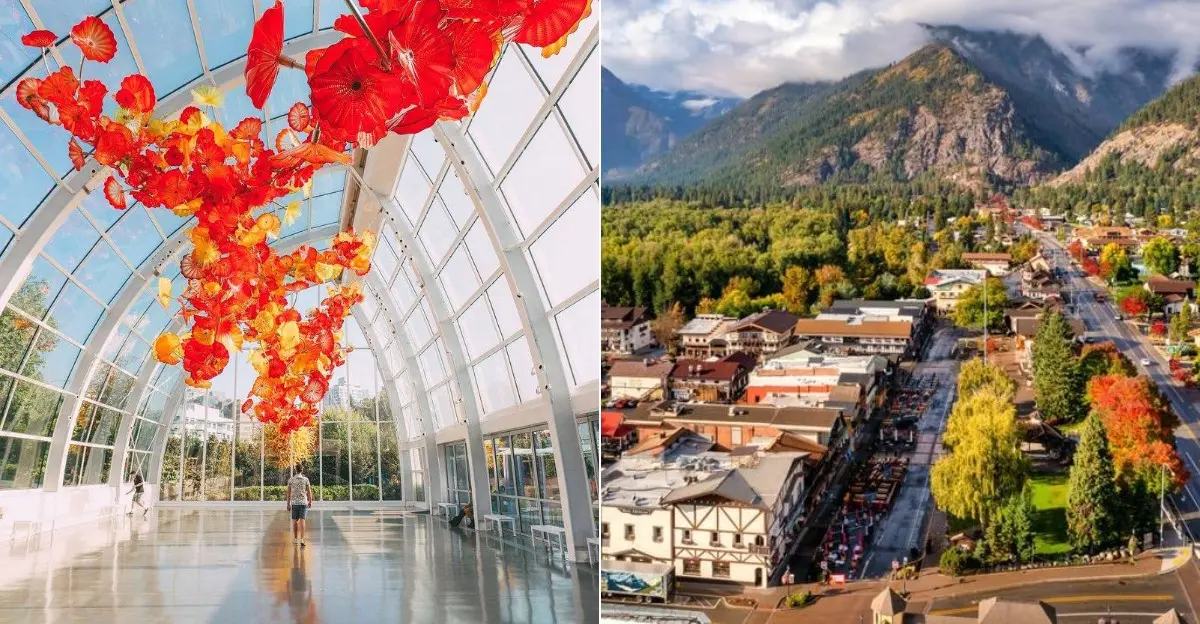
The Glasshouse holds a huge suspended sculpture in reds, oranges, and yellows. With the Space Needle right outside, it’s a photo combo that’s hard to beat.
Out in the garden, glass pieces mix with real plants. Spotting what’s alive and what’s art becomes a fun little game.
Inside the galleries, rooms show different series of Chihuly’s work. Bright lights and dark walls make the colors pop like fireworks.
Planning tip: you can buy combo tickets with the Space Needle next door. That saves time and keeps your day tidy.
Visiting around dusk adds a fresh twist. The glass looks different as the light fades, so it’s like seeing two shows.
Address: 305 Harrison Street, Seattle, WA 98109
Mount St. Helens National Volcanic Monument
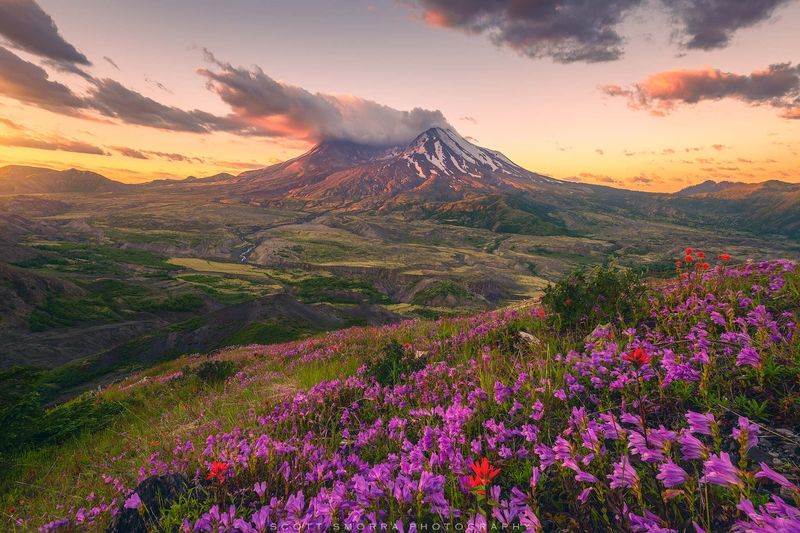
On May 18, 1980, Mount St. Helens blew its top in the deadliest and most destructive volcanic eruption in U.S. history. The mountain lost about 1,300 feet of height that day.
Today, you can see the crater and the blast zone up close. It’s like a giant science lesson with a view.
Washington set aside this area as a national volcanic monument in 1982. Scientists still study how plants and animals return after such a huge event.
Johnston Ridge Observatory remains closed following a 2023 landslide that damaged the access road. Repairs are expected to continue into 2027, so visitors should explore other accessible viewpoints and check official road updates before traveling.
On the south side, Ape Cave offers a fascinating lava tube adventure during its operating season, generally from late spring through fall. Timed reservations are required, and visitors should bring two reliable light sources and warm clothing.
The Mount St. Helens Science and Learning Center at Coldwater and other visitor sites offer more info. Kids and adults both tend to leave knowing way more about volcanoes.
It’s humbling stuff. You’ll see how fast nature can change a place.
Address: Mount St. Helens Visitor Center, 3029 Spirit Lake Highway, Castle Rock, WA 98611
Leavenworth
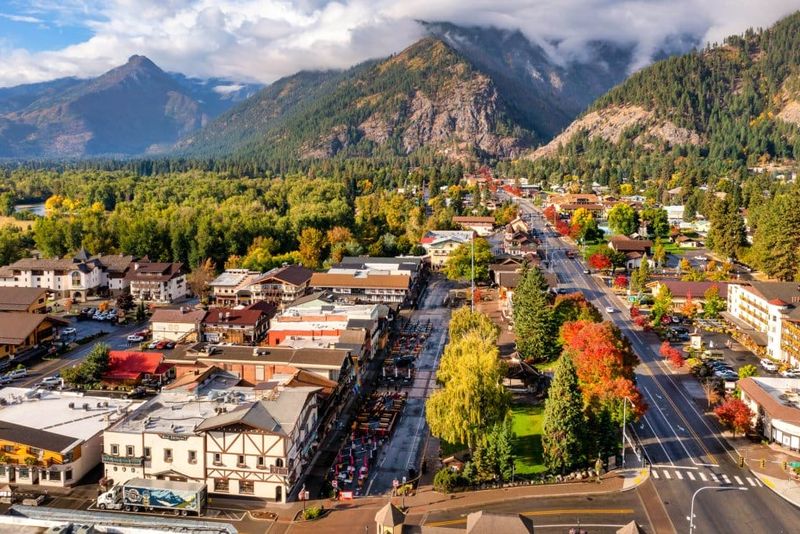
A logging town turned into a Bavarian village? Leavenworth did exactly that in the 1960s to help save its struggling economy.
Today, the buildings wear Alpine-style trim, painted designs, and flower boxes. The Cascade Mountains in the background make the look even more convincing.
Front Street is the heart of town. Stroll past shops, bakeries, and the town gazebo, where events often pop up.
Craving a nutcracker? The Leavenworth Nutcracker Museum holds thousands of them.
It’s quirky, detailed, and way more fun than it sounds.
Outdoor fans get plenty here too. The Wenatchee River runs nearby, and Waterfront Park offers easy walking paths along the water.
The Village of Lights transforms Leavenworth into a glowing winter wonderland, with more than half a million lights shining from November 26, 2026, through February 28, 2027. Holiday weekends can be busy, so booking accommodations early is a smart move.
Fall is another popular time to visit. Changing leaves on the hills make the drive over Stevens Pass extra pretty.
Wear comfy shoes and skip the rush. Leavenworth rewards slow wandering.
Address: Leavenworth Chamber of Commerce, 940 US Highway 2, Leavenworth, WA 98826
San Juan Islands
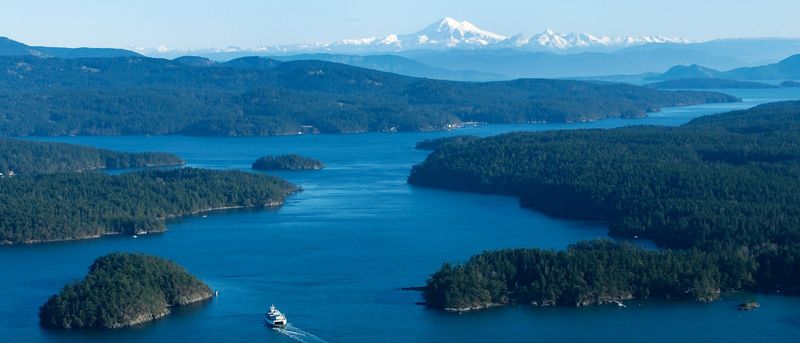
Orcas get top billing in the San Juan Islands. Lime Kiln Point State Park on San Juan Island is often called one of the best spots to watch whales from land.
Getting here is part of the adventure. Washington State Ferries run from Anacortes to several islands, and the ride weaves past forested shorelines.
Friday Harbor is the main town on San Juan Island. It has shops, restaurants, and The Whale Museum, which teaches about local orcas.
Over on Orcas Island, Moran State Park has Mount Constitution. A stone tower at the summit offers sweeping views of the islands.
History buffs can visit San Juan Island National Historical Park. It tells the story of the Pig War, a border dispute sparked by a pig in 1859.
Plan ahead in summer. Ferry reservations can fill up, and the islands get busy.
Bring binoculars and a jacket. Even sunny boat rides can feel breezy on the water.
Address: Washington State Ferries Anacortes Terminal, 2100 Ferry Terminal Road, Anacortes, WA 98221
Palouse Falls State Park
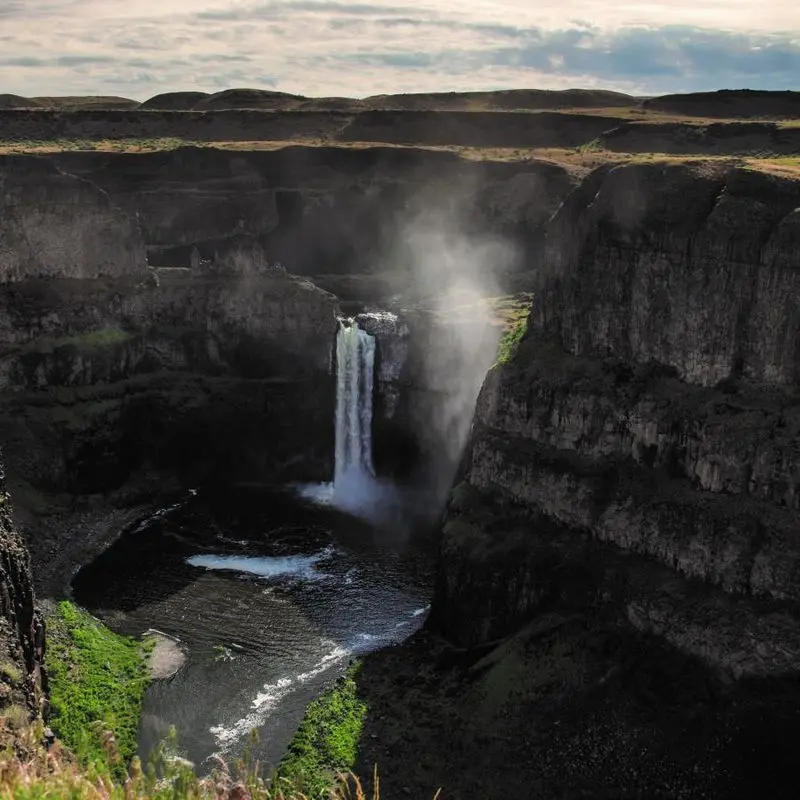
Eastern Washington has a waterfall that looks like it belongs in a fantasy movie. Palouse Falls drops about 200 feet into a deep basalt canyon.
In 2014, it was named Washington’s official state waterfall. Students at a local school pushed for that honor, which is a pretty great civics win.
The canyon was carved by the Ice Age floods thousands of years ago. Those giant floods shaped much of the scrubland around here.
Main viewpoints sit near the parking area, so you don’t need a long hike. Stay behind barriers, since cliff edges here are steep and dangerous.
Spring often brings stronger water flow. Late afternoon light can make the canyon walls glow gold.
The park is remote, so fill your gas tank and pack snacks. Services are limited once you leave the bigger towns.
A Discover Pass is needed for vehicle access to Washington state parks. Grab one before you go and save yourself a headache.
Winter weather can affect access to this remote park, so check road conditions and seasonal notices before making the drive.
Address: Palouse Falls Road, LaCrosse, WA 99143