Iowa isn’t exactly famous for dramatic geology, which makes this next spot such a surprise.
Tucked into the state’s northwest corner, a preserve holds rock formations older than almost anything else in the region.
The pink-hued bedrock here tells a story that stretches back over a billion years.
Beyond the geology, the preserve carries a history that’s as sobering as the landscape is beautiful.
It’s a quiet place, the kind that rewards visitors willing to slow down and read the historical markers.
This unassuming preserve turns out to be one of the most unexpectedly fascinating stops in the entire state.
Pink Sioux Quartzite Under Your Feet
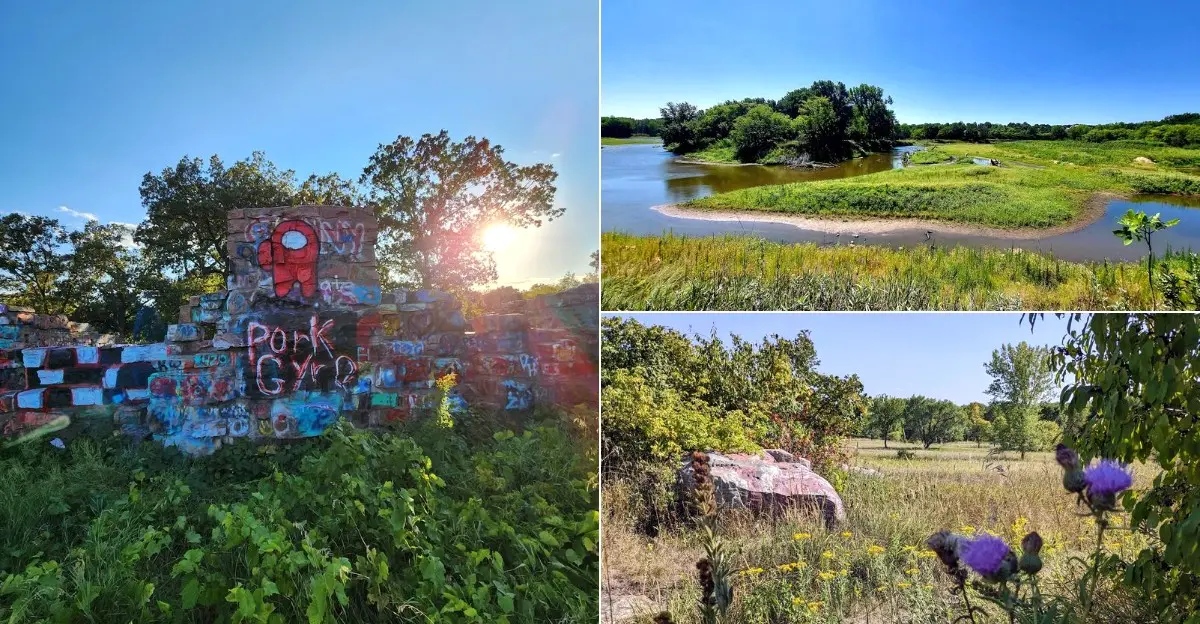
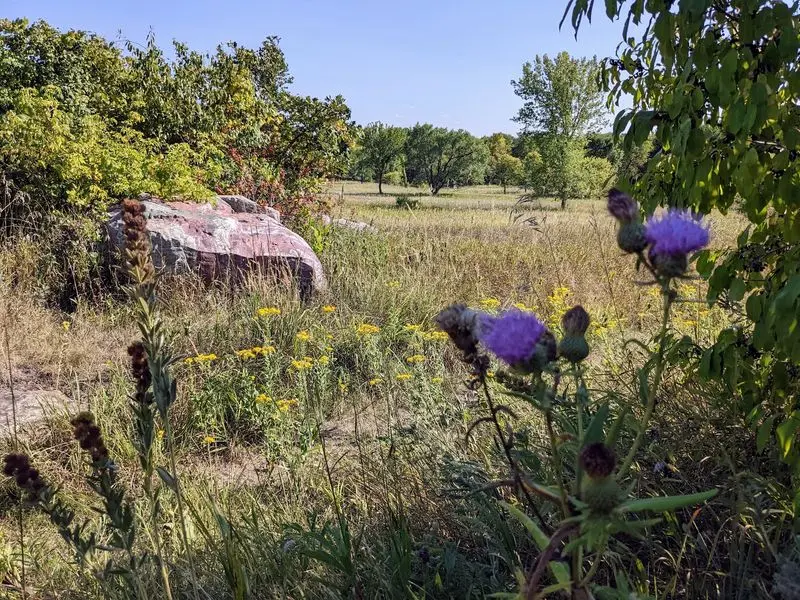
The first surprise is the color under the grass. Soft pink and reddish stone peeks through the ground, looking almost out of place in Iowa prairie country. That stone is Sioux quartzite, a very hard rock formed from ancient sand long before humans walked here.
At Gitchie Manitou State Preserve, located at 52141 Adams Ave, Larchwood, IA 51241, these exposed rocks are among the oldest visible bedrock features in the state. Geologists connect this quartzite to formations that stretch across parts of Iowa, South Dakota, and Minnesota. When sunlight hits the stone, the color can shift from dusty rose to deeper red.
Visitors should stay on existing paths and avoid climbing loose or fragile spots. The bedrock may look tough, but the plants and soil around it can be easily damaged. Bring a camera, watch your step, and take time to notice how the prairie seems to grow right around the stone like a living frame.
A Prairie That Feels Wild And Unpolished
Wide grassland gives the preserve a loose, untamed feeling. You may hear insects before you see the trail clearly, especially in warm months when grasshoppers jump from the path. The prairie is part of the charm, but it also asks visitors to slow down.
Trails here can feel more like old service roads or narrow footpaths than polished park routes. Some reviewers mention overgrown sections, so long pants are a smart choice in late summer. Ticks, burs, and uneven ground can show up where the grass gets thick.
Early summer can be especially rewarding because the prairie feels more alive with birds, flowers, and movement. On sunny days, shade can be limited, so a hat, water, and sunscreen help a lot. Rather than expecting a manicured city park, come ready for a wilder walk where the quiet views and open sky are the main reward.
Ruins With A Complicated Look
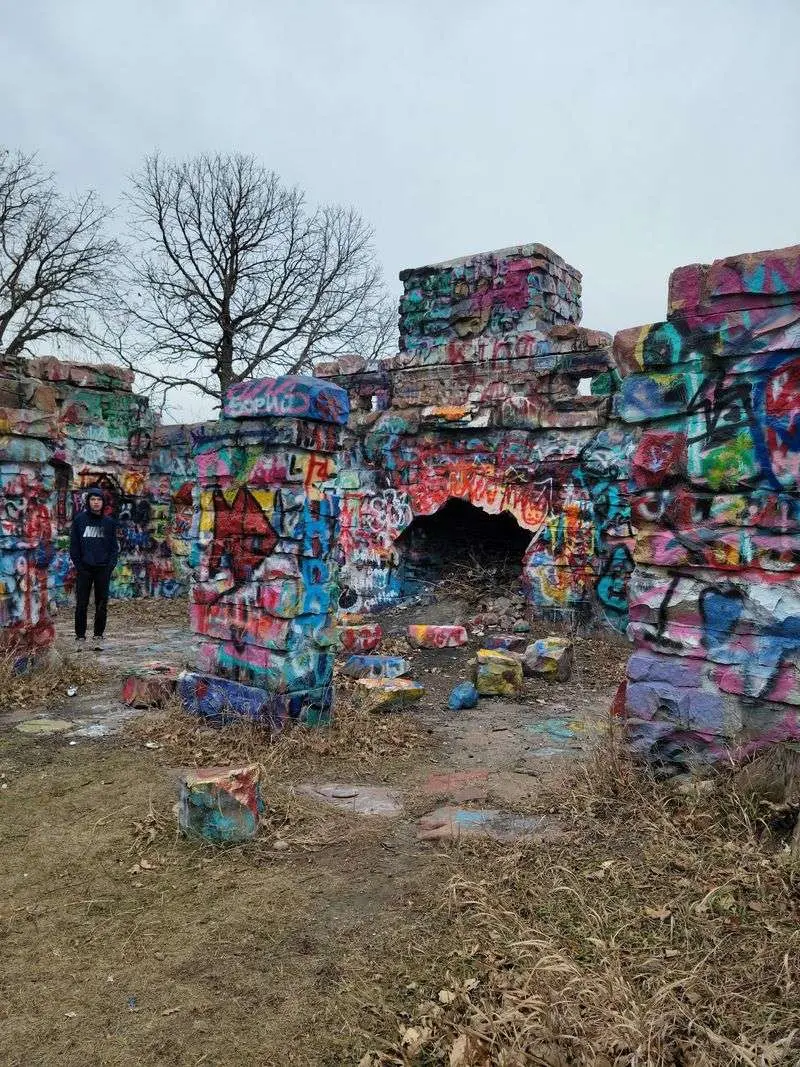
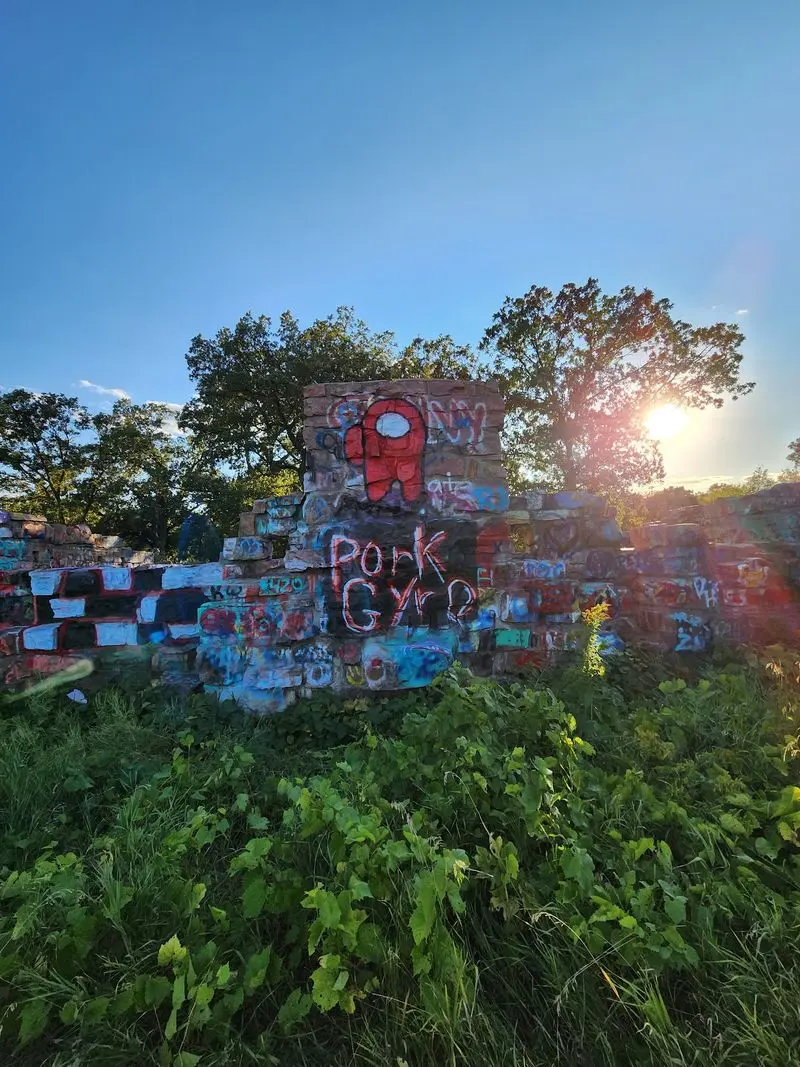
A strange flash of color appears where you might expect plain old walls. The ruins at the preserve have become one of its most talked-about sights because graffiti covers much of the remaining structure. Some visitors find the paint upsetting, while others admit it gives the place a surreal look.
The building remnants are tied to local history and draw many hikers who want to see what people mention in reviews. They are not polished museum pieces, so the setting can feel rough, quiet, and a little uneasy. Paint cans and litter have been reported, which is a reminder to leave the area better than you found it.
If you visit the ruins, look without adding your own mark. Historic places lose part of their story when new damage keeps piling up. Photos are fine, but respect matters more, especially in a preserve where nature and memory share the same space.
A Heavy Chapter In Local History
Silence feels different when a place carries a painful story. Many people come here because they have heard about the tragic crimes connected to the area in the 1970s. That history gives the preserve a serious mood, even on a bright day.
The story involved young people who were attacked by men pretending to be law officers, and it remains a deeply sad part of regional memory. Because real people suffered here, it is best to speak about the past with care. Ghost stories and spooky comments may catch attention, but respect should come first.
Before visiting, reading a trusted local history source can help you understand why the site feels meaningful to many Midwestern visitors. Parents may want to decide how much to share with children before the hike. The preserve can still be beautiful and peaceful, but knowing the history changes how you see the paths, ruins, and quiet spaces.
Easy Walking, But Not A Perfectly Marked Trail
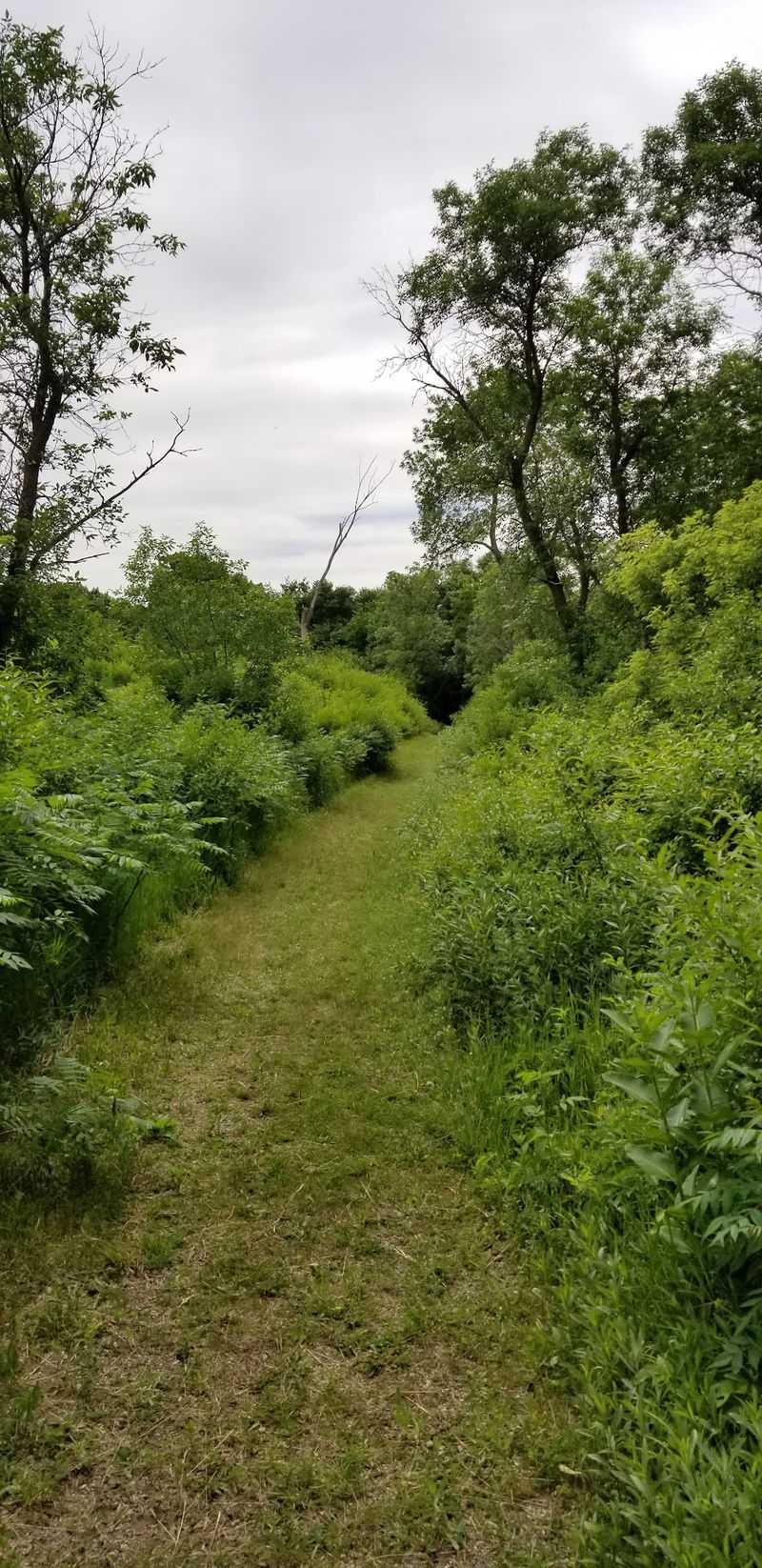
The walk can feel simple, but it is not the kind of trail with signs at every turn. Several visitors describe the main route as easy, mostly flat, and more like a dirt road than a steep hiking trail. That makes it friendly for many families, casual walkers, and patient dogs.
Finding the right start may take a little attention because GPS directions can be slightly confusing. Some visitors say they parked in a very small gravel area with only a few spaces. Others suggest driving a little beyond the map point to find the better trail access.
Use a downloaded map if your phone signal is weak, and do not count on clear markers for every side path. Side trails can lead to interesting views, but they can also become overgrown. Wear sturdy shoes, keep pets leashed, and give yourself extra time so the walk feels like an outing instead of a guessing game.
River Views Beyond The Grass
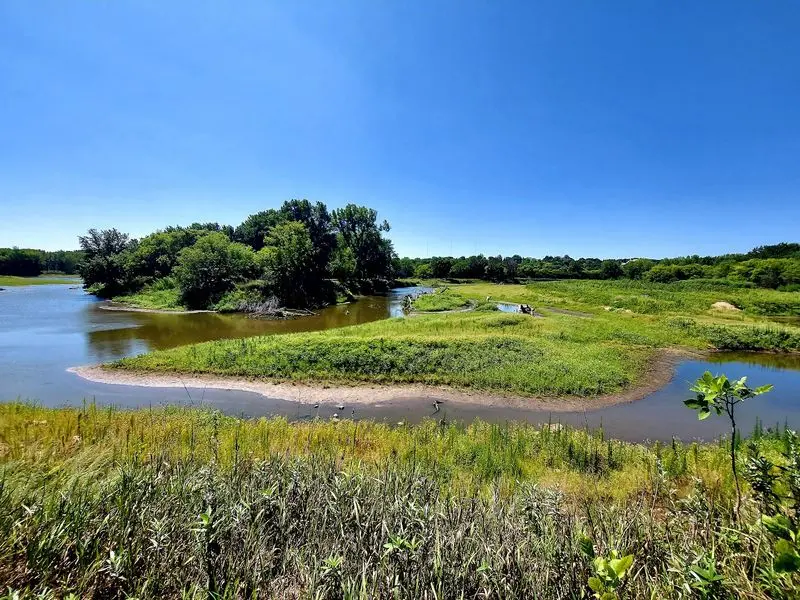
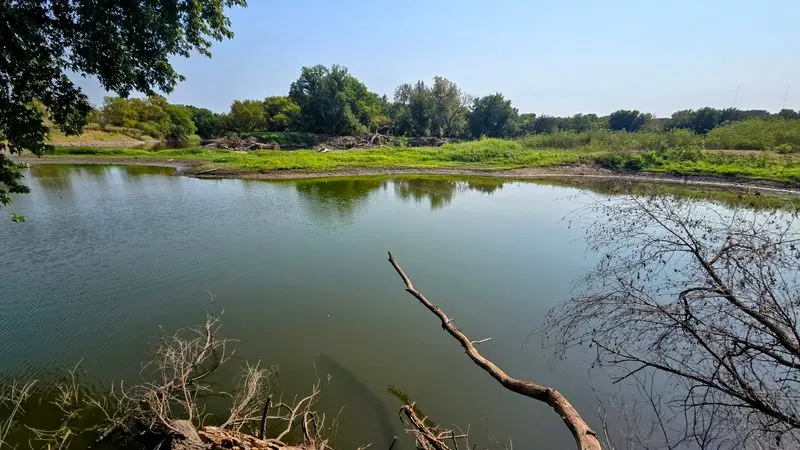
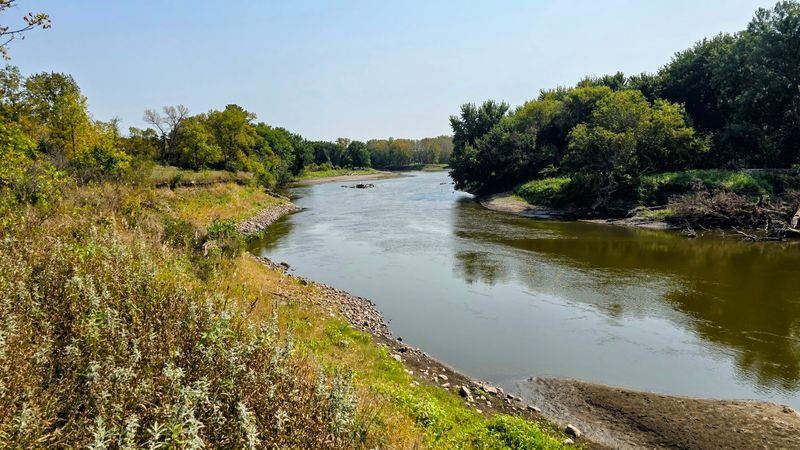
After the open prairie, water adds a softer note to the visit. Parts of the preserve include views toward a river or creek area, and those glimpses make the hike feel more varied. Children may enjoy spotting rocks, plants, and small places where water shapes the land.
The river is not the only reason to come, but it helps balance the wide grassland and the darker mood near the ruins. Trees appear in some areas, giving the route a different sound and feel. Birds may be easier to notice near the edges where prairie, woods, and water meet.
Use caution near banks, wet ground, and loose stones. Even calm water can hide slippery spots, especially after rain. Bring binoculars if you like birdwatching, since visitors have reported seeing memorable wildlife, including a bald eagle overhead, and those quick moments often become the best part of the day.
A Small Preserve With Big Borderland Character
A tiny sign can make a hike feel like a small adventure. Visitors mention a state line sign posted along a fence, easy to miss if you are not watching closely. That detail fits the preserve, which sits in a corner of Iowa shaped by nearby state borders and regional history.
The landscape does not feel like central Iowa farmland or a typical roadside park. Pink quartzite, prairie, river edges, and old ruins give it a mixed personality. You can feel how geology, culture, and local stories all meet in one compact area.
Keep your eyes open for small features instead of rushing straight to the most famous spots. A fence marker, a bird call, a change in rock color, or a bend in the path can add meaning to the walk. This is the kind of preserve where little details reward people who move slowly and stay curious.
Planning A Respectful Visit
A good visit starts before you step onto the path. The preserve is open daily from early morning until 10:30 PM, but daylight is best for first-time visitors. The small parking setup, limited signs, and natural trails make planning more helpful than usual.
Bring water, bug spray, sun protection, and shoes that can handle dirt, grass, and uneven ground. Late summer may bring ticks and burs, while spring and early summer can offer greener prairie and more wildlife activity. If you bring a dog, keep it friendly, controlled, and on a leash where needed.
Most of all, treat the preserve like a shared outdoor classroom. Do not add graffiti, leave trash, remove rocks, or trample prairie plants for a shortcut. Gitchie Manitou is memorable because its ancient bedrock, natural beauty, and hard history are still there together, and careful visitors help keep that story intact.