Forget everything you think you know about New York road trips. The state’s biggest surprises aren’t hiding in big cities.
They’re waiting beside quiet highways, country roads, and scenic byways where giant landmarks, oddball attractions, and jaw-dropping sights appear when you least expect them.
One minute you’re cruising through rolling hills. The next you’re standing beside a duck-shaped building, wandering beneath the earth in a massive cave, or staring at a waterfall with a flame burning behind it.
Summer makes every stop feel even more unforgettable.
These roadside gems add plenty of fun without demanding a full-day commitment. They’re perfect for stretching your legs, snapping memorable photos, and discovering stories that most travelers drive right past.
Pack some snacks, roll down the windows, and leave room for a few spontaneous detours.
These 12 New York roadside attractions prove that the best part of the trip isn’t always the destination—it’s the surprising stops you find along the way.
The Big Duck – Flanders
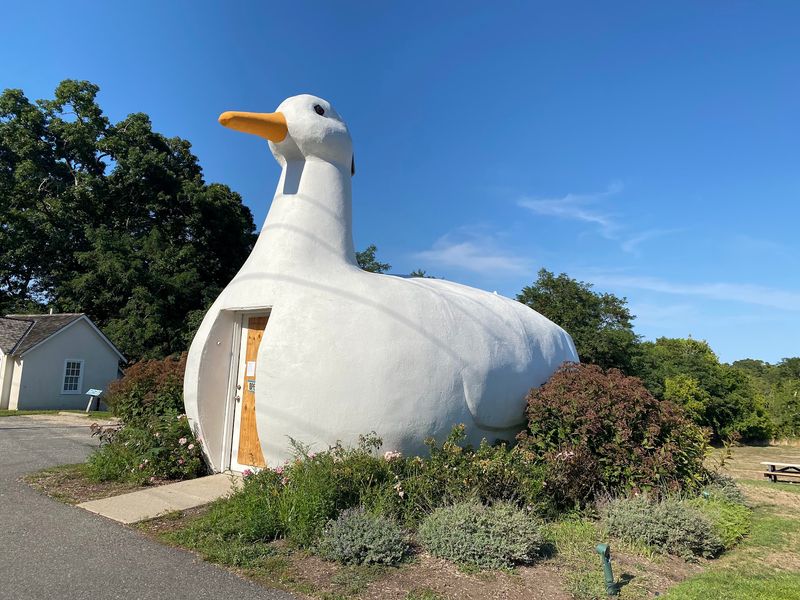
Picture a 20-foot-tall duck sitting right beside the road, and you’ve got Long Island’s most beloved architectural oddity. Built in 1931 by a duck farmer named Martin Maurer, this massive white duck was originally used to sell, well, ducks and duck eggs to passing motorists.
The building itself is shaped exactly like a duck, complete with tail feathers and a bright orange bill.
Today, The Big Duck serves as a visitor center and gift shop operated by Suffolk County. It’s become such an iconic piece of American roadside culture that architects now call any building shaped like the product it sells a “duck.” The term appears in architectural textbooks worldwide, all thanks to this quirky Long Island landmark.
Visitors love stopping here for photos, especially during summer when the surrounding area bursts with activity. The attraction is free to visit and perfectly positioned for a quick break during beach-bound road trips.
Kids especially enjoy standing next to this giant waterfowl, making it an easy and entertaining family photo opportunity that requires just minutes of your travel time.
World’s Largest Garden Gnome (Gnome Chomsky) – Kerhonkson
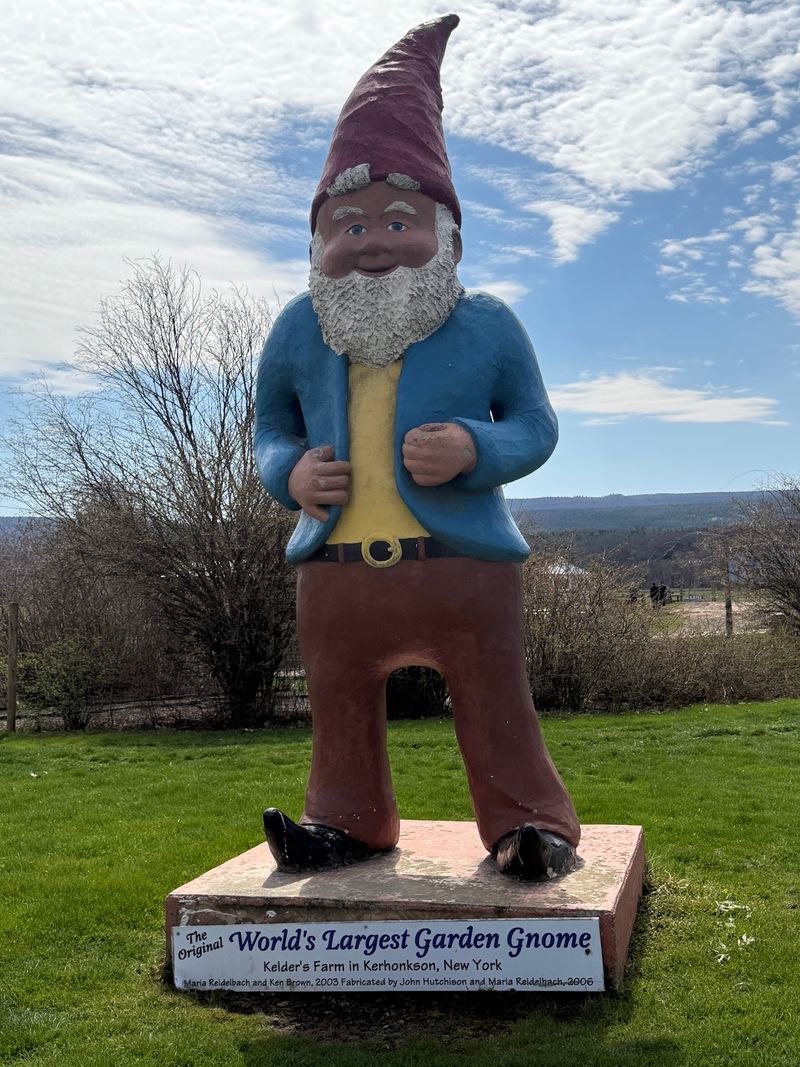
Standing guard at over 13 feet tall and weighing nearly a ton, Gnome Chomsky has become the Hudson Valley’s favorite photo subject. Created by artist Reene Kelly, this massive lawn ornament sports a brilliant red cap, flowing white beard, and a cheerful expression that immediately brings smiles to travelers.
His clever name pays homage to famous linguist Noam Chomsky while embracing the playful spirit of garden gnome culture.
Located at Kelder’s Farm in Kerhonkson, this towering gnome welcomes visitors year-round but truly shines during summer months. Families flock here not just for the gnome selfies but also to enjoy the farm’s seasonal activities, including sunflower fields and a country store filled with local products.
The combination makes this stop more than just a quirky photo opportunity.
What makes Gnome Chomsky particularly special is how he represents the Hudson Valley’s embrace of whimsy and creativity. Local residents have adopted him as an unofficial mascot, and travelers consider him a must-see landmark when exploring the region.
He’s proof that roadside attractions don’t need to be ancient or expensive to capture hearts and imaginations.
Howe Caverns – Howes Cave
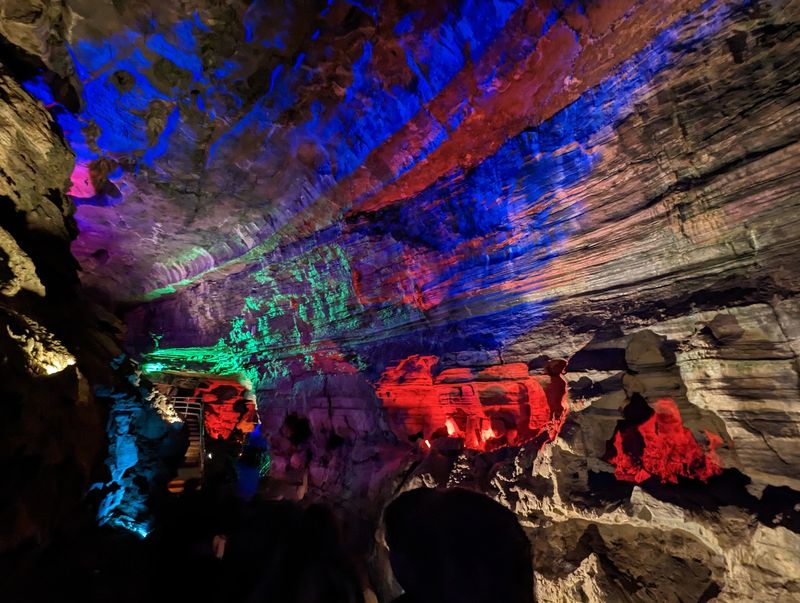
Deep beneath upstate New York lies a wonderland of limestone passages, underground waterfalls, and ancient rock formations that have been millions of years in the making. Howe Caverns offers visitors a chance to escape summer’s heat by descending 156 feet into a naturally air-conditioned underground realm.
The temperature stays at a comfortable 52 degrees year-round, making it a perfect refuge during those sweltering July and August days.
The guided tour takes you through enormous chambers decorated with stalactites and stalagmites. But the real highlight comes when you board a small boat for an unforgettable ride across the underground Lake of Venus.
Gliding silently through the shadowy waters while surrounded by ancient stone creates an almost otherworldly experience that visitors remember for years.
First discovered by farmer Lester Howe in 1842, these caverns have welcomed curious explorers for over 180 years. Modern improvements like walkways and lighting have made the caves accessible while preserving their natural beauty.
Educational programs explain the geological forces that carved these passages, making this attraction both entertaining and informative for all ages.
Kaatskill Kaleidoscope – Mount Tremper
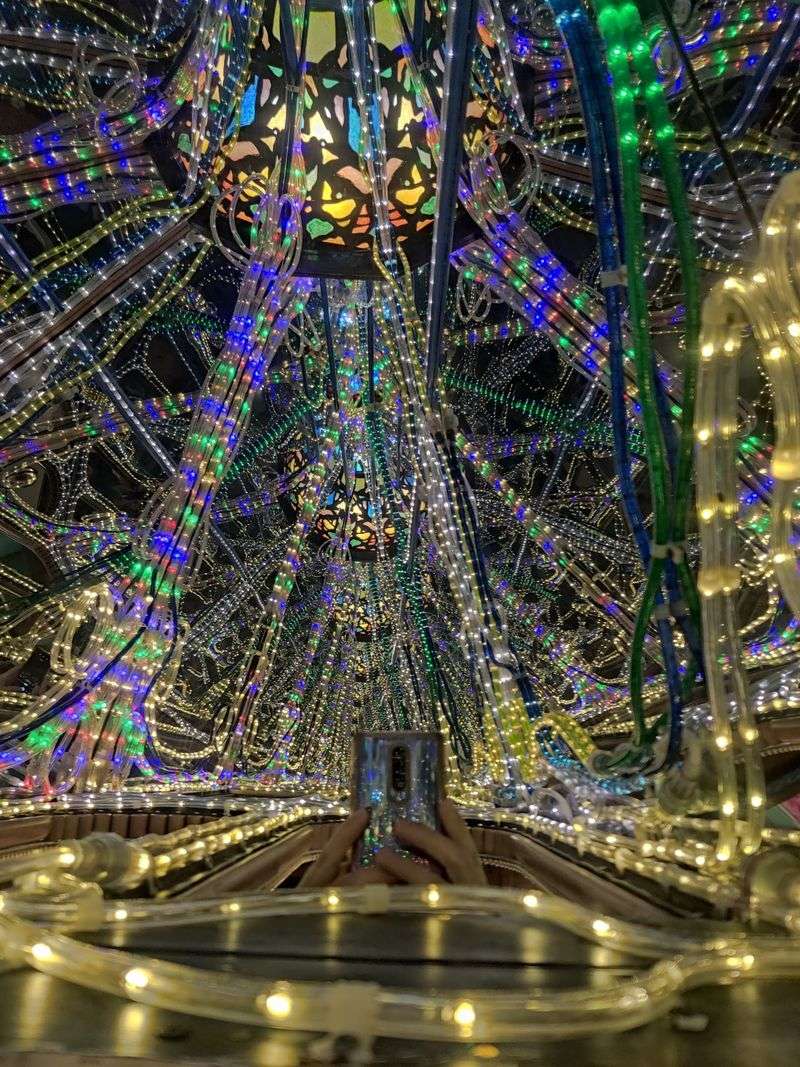
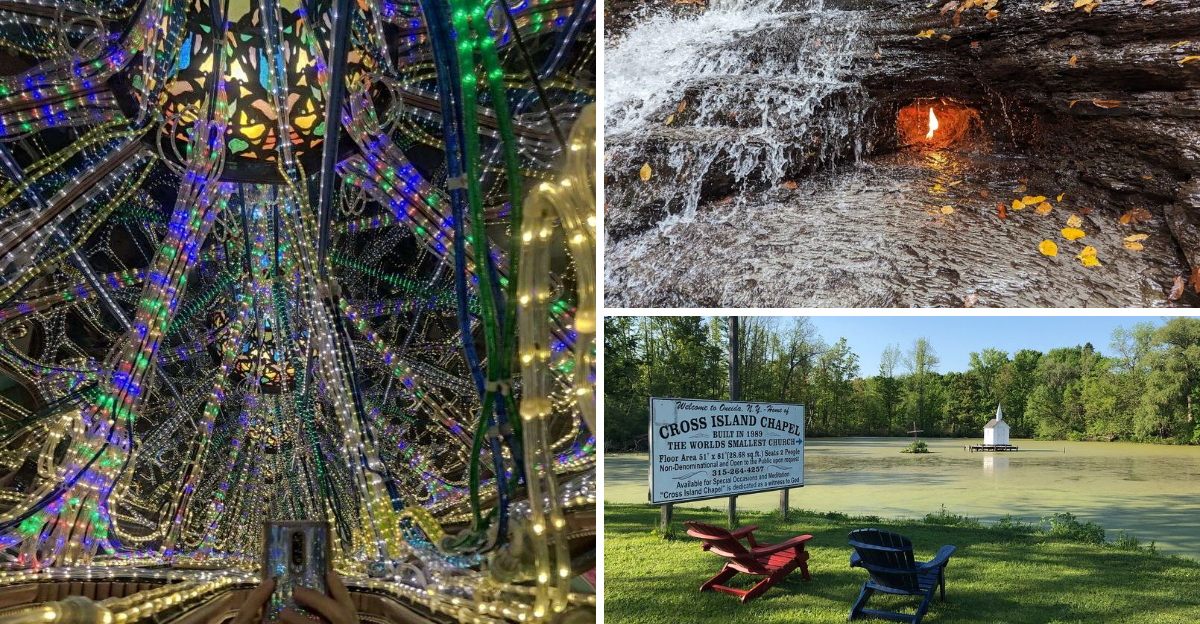
Inside an old grain silo in the Catskill Mountains, something magical happens every few minutes. The Kaatskill Kaleidoscope transforms this 60-foot structure into one of the world’s largest kaleidoscopes, treating visitors to a mesmerizing show of colors, patterns, and music.
You lie back on special viewing platforms while mirrors and lights create an immersive visual experience overhead.
Each show lasts about ten minutes and features different themes throughout the year. Accompanied by carefully chosen music, the kaleidoscope displays create hypnotic patterns that swirl and shift in perfect synchronization.
Summer visitors especially appreciate the cool, darkened interior after hiking or exploring the surrounding Catskills region.
Artist Charles Karadimos designed this unique attraction, which opened in 1996 and quickly became a beloved Catskills destination. The building also houses Emerson Resort’s Country Store, filled with regional crafts and gifts.
Kids find the kaleidoscope absolutely enchanting, while adults appreciate both the artistry and the clever repurposing of historic agricultural architecture. The combination of nostalgia, creativity, and pure visual wonder makes this stop completely unlike any other roadside attraction you’ll encounter in New York.
National Bottle Museum – Ballston Spa
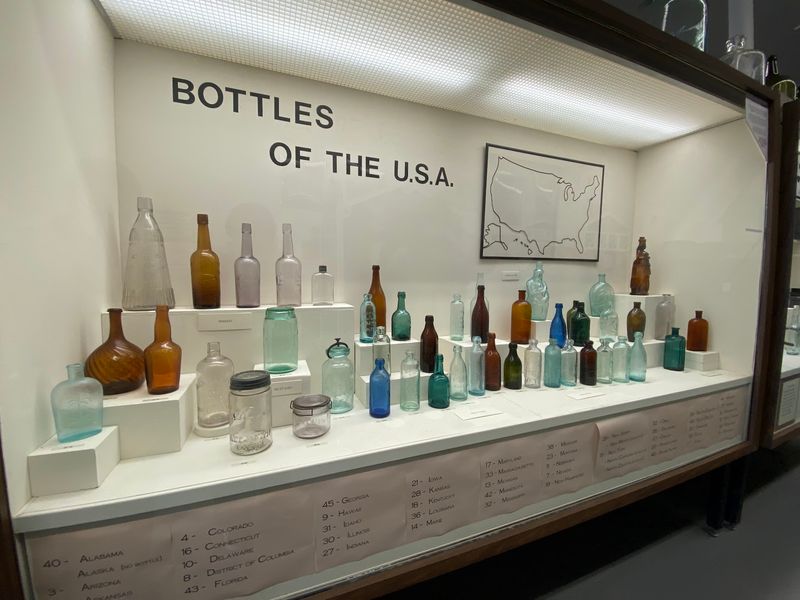
Glass bottles might seem like everyday objects, but at this specialized museum in Ballston Spa, they become windows into American history and craftsmanship. The National Bottle Museum houses thousands of antique bottles, each telling stories about medicine, commerce, and daily life from centuries past.
Colorful medicine bottles, ornate perfume containers, and historic soda bottles fill the display cases with surprising beauty.
What makes this museum genuinely fascinating is how it connects bottles to bigger historical narratives. You’ll discover how bottle shapes revealed product contents before labeling laws existed, or how embossed lettering helped customers identify trusted brands.
The museum also showcases the incredible skill of glassblowers who created these vessels before modern manufacturing techniques.
Summer visitors enjoy the museum’s comfortable, climate-controlled environment and friendly staff who share their expertise enthusiastically. Special exhibits rotate regularly, highlighting different aspects of bottle-making history.
The admission price is remarkably affordable, making this an excellent educational stop for families.
Located in charming Ballston Spa, the museum sits near other historic sites and local restaurants. It’s the perfect quirky detour that adds unexpected depth to your New York road trip while celebrating an everyday object most people never consider twice.
Erie Canal Lock 18 & Five Combines Sculpture – Cohoes
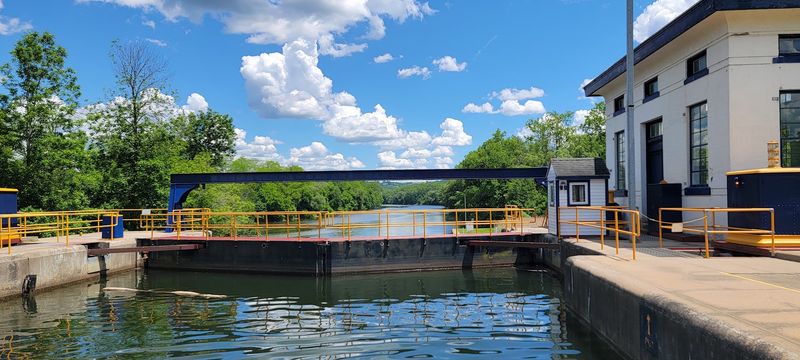
Where industrial history meets modern art, you’ll find one of New York’s most unusual public installations. At Erie Canal Lock 18 in Cohoes, visitors can explore a functioning historic lock while admiring a massive sculpture built entirely from five retired combine harvesters.
Artist Fay Sciarra created this towering piece, which stands as a tribute to agricultural heritage and creative recycling.
The combines, stacked and welded into an impressive structure, create an unexpected contrast against the 19th-century canal lock. During summer months, watching boats navigate the lock system while this rusty-red sculpture looms nearby creates a surreal blend of past and present.
The free attraction draws photographers, history enthusiasts, and curious travelers who appreciate how it celebrates working-class heritage.
Information panels explain both the canal’s crucial role in New York’s development and the sculpture’s creation story. The Erie Canal itself transformed American commerce by connecting the Great Lakes to the Atlantic Ocean, making this location historically significant beyond its artistic merits.
Pack a picnic and enjoy the waterside setting, where you can watch modern boats use the same lock technology that revolutionized transportation nearly two centuries ago. It’s educational, photogenic, and completely free to visit.
Eternal Flame Falls – Orchard Park
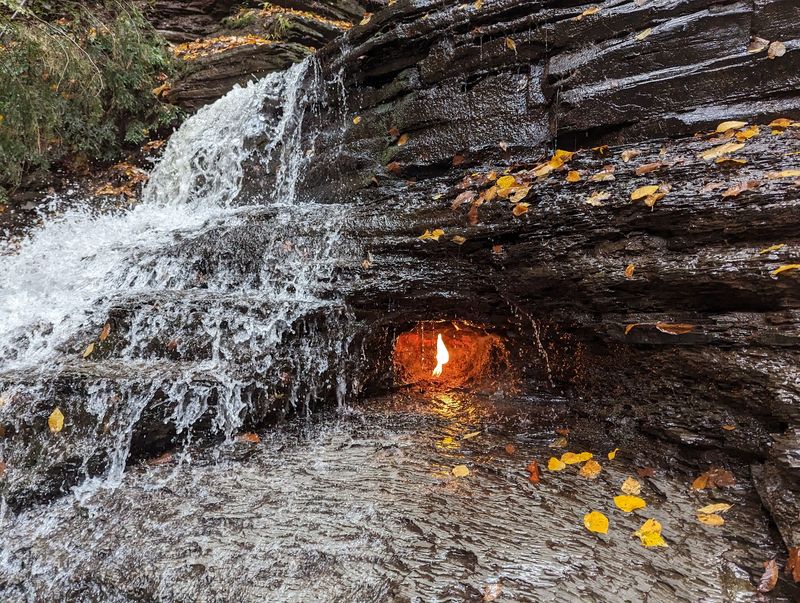
Behind a delicate waterfall in Chestnut Ridge Park burns a flame that shouldn’t exist, yet has flickered for thousands of years. Natural gas seeping from shale deposits ignites into a small but steady fire visible behind the cascading water.
Scientists continue studying this geological curiosity, which represents one of Earth’s rare eternal flames fueled entirely by nature.
Reaching the falls requires a moderate 30-minute hike through beautiful forest trails. The path can be muddy and rocky, so wear appropriate footwear and expect to get a little dirty.
Summer visitors should bring water and insect repellent, as the wooded area can be buggy during warmer months.
When you arrive at the grotto, you’ll need to look carefully to spot the flame, which measures only a few inches tall. Sometimes it goes out and needs relighting by visitors using a lighter, though park rangers discourage this practice.
The combination of fire and water in this intimate setting creates an almost mystical atmosphere.
Photography enthusiasts find the contrast between elements endlessly fascinating. The falls are most impressive after rainfall when water flow increases.
Best of all, this remarkable natural wonder requires no admission fee, just a willingness to hike and a sense of adventure.
Painted Pig Rock – Speculator
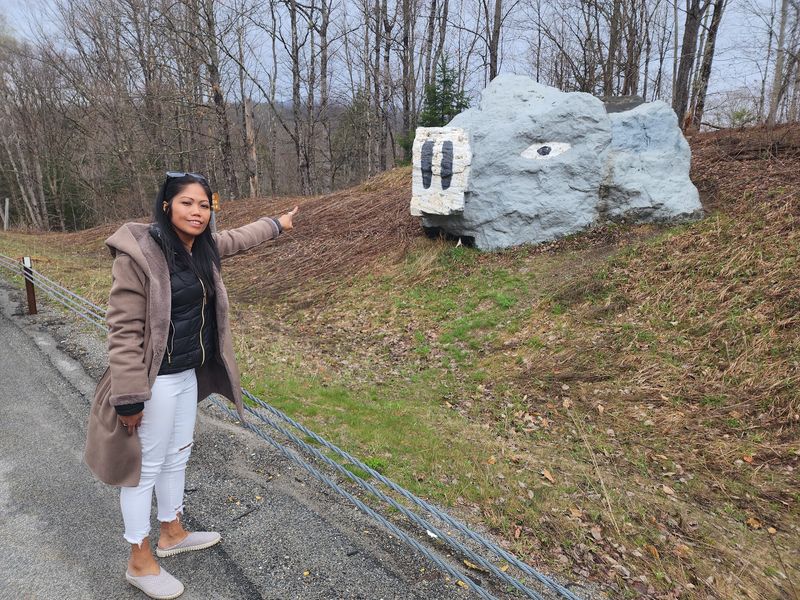
Sometimes the simplest ideas become the most enduring traditions. Along Route 30 in Speculator sits a large boulder that local residents have painted to resemble a cheerful pink pig since the 1950s.
Nobody remembers exactly who started this whimsical practice, but generations of Adirondack locals have maintained the pig’s fresh coat through decades of harsh weather.
The painted pig has survived countless winters, tourist seasons, and even occasional pranks. Community members take pride in keeping their beloved porcine boulder looking its best.
Fresh paint gets applied when needed, ensuring the pig continues greeting travelers with its simple charm.
What makes this attraction special isn’t its grandeur but its authenticity. It represents pure Adirondack character: unpretentious, slightly silly, and utterly genuine.
Travelers stop for quick photos, often laughing at the absurdity of photographing a painted rock. Yet those same visitors remember the pig long after fancier attractions fade from memory.
Located in beautiful Adirondack Park territory, the pig offers a perfect excuse to stretch your legs while driving through mountain scenery. There’s no gift shop, no admission fee, and no organized tour.
Just a pig-painted boulder that somehow captures the playful spirit of small-town New York perfectly.
Nipper the Dog Statue – Albany
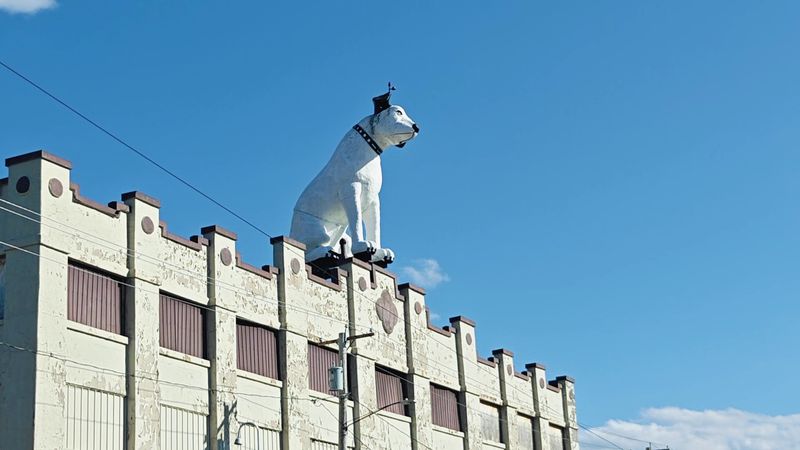
Towering 28 feet above Albany’s skyline sits one of America’s most recognizable advertising mascots. Nipper, the white terrier famously pictured listening to “His Master’s Voice” on old RCA phonographs, watches over the city from his perch atop a former warehouse.
Built in 1958 from fiberglass and steel, this enormous canine has become an unexpected Albany icon visible from Interstate 787.
The statue weighs four tons and survived several threats of removal over the years. Local residents fought to preserve Nipper, recognizing his importance to the city’s identity and history.
Their efforts paid off when he received official landmark status, ensuring this good boy will keep watch for generations to come.
Originally installed when the building housed an RCA distributor, Nipper now represents Albany’s industrial heritage and America’s golden age of advertising. His cocked head and attentive pose perfectly capture the loyalty and curiosity that made him such an effective corporate symbol.
Summer visitors can spot Nipper from various vantage points around downtown Albany. He’s particularly photogenic during golden hour when the setting sun illuminates his white coat.
While you can’t climb up for a close-up, viewing this massive monument from street level still impresses with its sheer scale and nostalgic appeal.
World’s Largest Pancake Griddle – Penn Yan
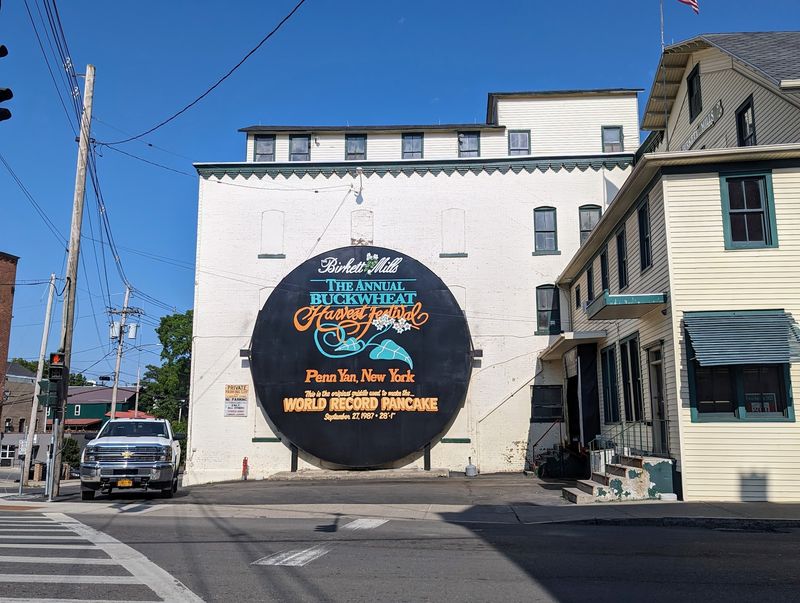
Outside The Birkett Mills in Penn Yan sits a griddle so massive it earned a Guinness World Record. Measuring over 27 feet in diameter, this enormous cooking surface was custom-built for the annual Buckwheat Harvest Festival, where it produces a single giant pancake for thousands of hungry festival-goers.
The spectacle of watching volunteers pour batter and flip this colossal flapjack has become legendary in the Finger Lakes region.
The griddle represents Penn Yan’s proud buckwheat heritage. Birkett Mills has been milling buckwheat flour since the 1790s, making it one of America’s oldest continuously operating mills.
Their buckwheat pancake mix is sold nationwide, but nothing compares to experiencing the festival where this monster griddle sees action.
Even when not in use, the griddle makes for excellent roadside photos. Its industrial size and purpose seem almost comically oversized compared to regular kitchen equipment.
Information signs explain the griddle’s specifications and festival history, giving context to this unusual agricultural monument.
Penn Yan itself offers charming small-town atmosphere and sits near beautiful Keuka Lake. The combination of natural beauty, agricultural history, and quirky world records makes this Finger Lakes community worth exploring beyond just the famous griddle.
Summer visitors will find wineries, farm stands, and scenic lake views throughout the area.
The Tepee – Cherry Valley
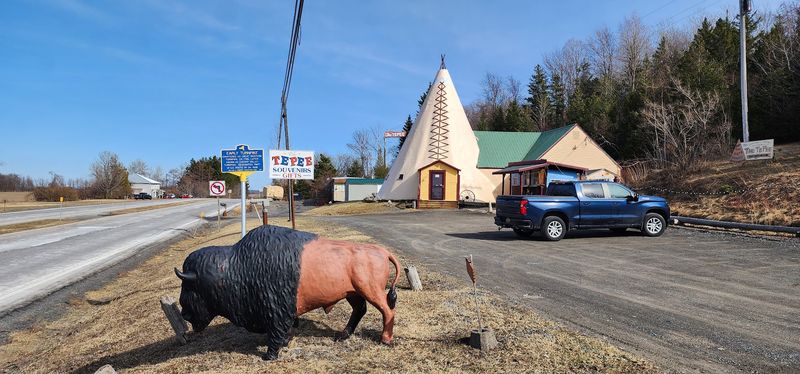
Rising dramatically beside historic Route 20, this towering steel tepee has welcomed road-trippers since the mid-20th century. Its distinctive shape makes it impossible to miss and has turned The Tepee into one of Upstate New York’s most photographed roadside structures.
The building combines nostalgic Americana architecture with genuine regional hospitality, creating a classic road trip experience that feels increasingly rare.
Inside, you’ll find a gift shop packed with regional souvenirs, Native American crafts, and kitschy road trip memorabilia. The selection ranges from practical items like local maple syrup and cheese to purely decorative treasures you never knew you needed.
Staff members are friendly and knowledgeable about the area, often providing helpful suggestions for other nearby attractions.
The Tepee represents an era when highway travel meant discovering unique local businesses rather than identical chain stores. Its survival and continued operation speak to community support and the enduring appeal of authentic roadside attractions.
Travelers appreciate finding places with genuine character and history.
Cherry Valley itself is a charming historic village worth exploring. After visiting The Tepee, consider walking through town to see beautiful 19th-century architecture.
The combination of quirky roadside stop and small-town charm makes this detour rewarding for anyone seeking the real New York beyond tourist hotspots.
Cross Island Chapel – Oneida
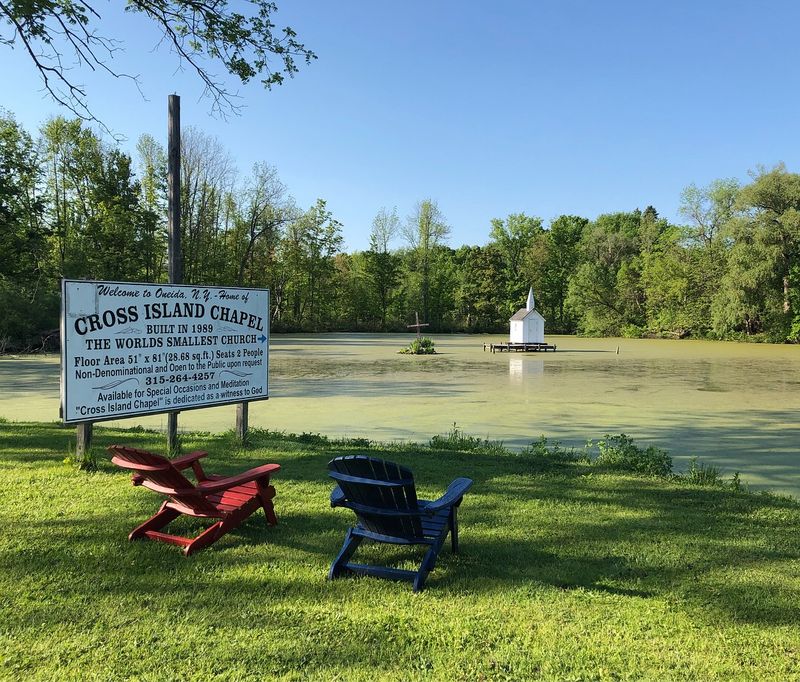
Floating on a small platform in a tranquil pond sits the world’s smallest church. Cross Island Chapel measures just enough space to hold a bride, groom, officiant, and two witnesses, earning its place in record books and countless wedding albums.
Built in 1989, this charming white chapel has become one of Central New York’s most beloved and photographed landmarks despite its miniature size.
The chapel sits just off Route 46 near Oneida, easily visible from the roadside. Its picturesque setting on the water creates stunning reflections during calm weather, making it particularly popular with photographers during sunrise and sunset.
While you cannot walk out to the chapel without special arrangements, the roadside view provides perfect photo opportunities.
Couples seeking truly unique wedding venues can reserve the chapel for intimate ceremonies. The tight quarters mean celebrations stay extremely small and personal.
Many visitors simply enjoy stopping to admire the chapel’s peaceful beauty and quirky claim to fame without any wedding plans whatsoever.
The surrounding area offers additional attractions and dining options, making this an easy addition to any Central New York road trip. Free to view and photograph, the chapel represents the kind of delightful surprise that makes roadside exploring so rewarding.
Its combination of romance, whimsy, and record-breaking status creates unforgettable memories for travelers of all ages.