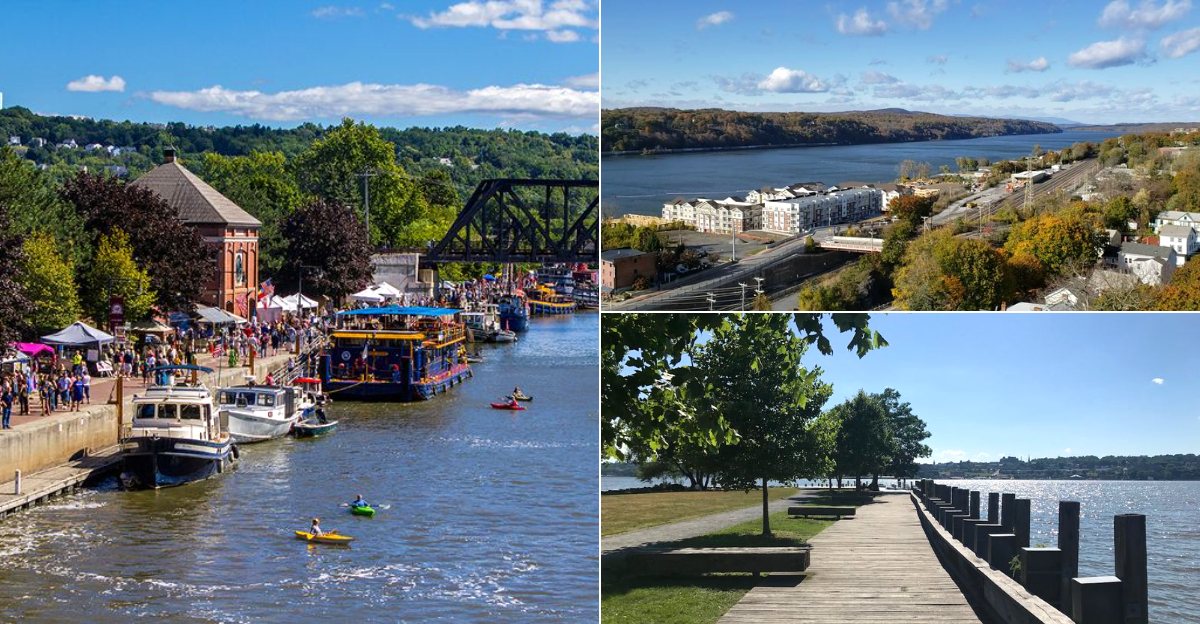
New York’s rivers have always been at the center of the state’s story, shaping its economy, its geography, and the character of every city that grew up along their banks.
Today, those same waterfronts have been reimagined as places for walking, sitting, cycling, and simply watching the water go by.
From the iconic sweep of the Hudson through Manhattan to the quieter historic riverfronts of Troy and Plattsburgh, each of these walks has its own atmosphere.
Some feel urban and lively, with food vendors and kayak launches and skyline views; others are calmer, the kind of place where you can hear birdsong and watch herons standing in the shallows.
The Hudson Valley alone offers one of the great scenic corridors in the northeastern United States, and stringing together several of these riverwalks into a road trip is a genuinely rewarding way to spend a few days.
1. Hudson River Greenway Waterfront Esplanade, New York City, New York County
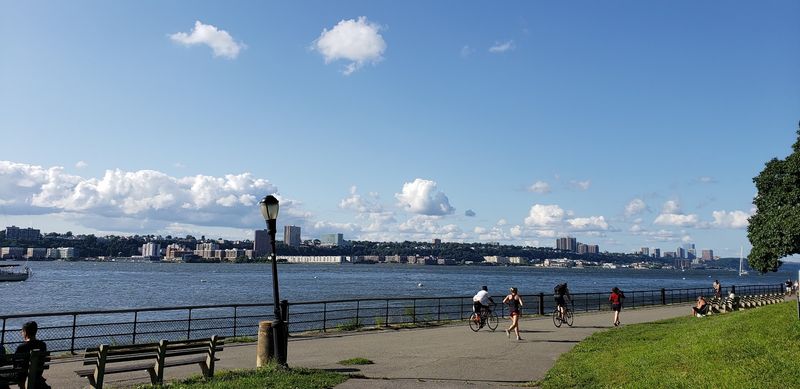
Just when the city noise starts to soften, the west side opens into a long ribbon of water, wind, and motion.
You can hear bike tires, gulls, ferry horns, and snippets of conversation all layered over the steady push of the Hudson.
That changing soundtrack is what makes the Hudson River Greenway Waterfront Esplanade feel less like a path and more like a moving front-row seat.
What surprised us most was how often the view completely reset itself from one stretch to the next.
Near Chelsea, artful piers, sports fields, and dramatic seating areas made the river feel designed for lingering, not just passing through.
Farther north, softer landscaping and quieter outlooks created moments where Manhattan suddenly felt almost reflective.
We never expected to find so many distinct moods on one continuous waterfront.
At one pier, a dance class was underway beside sunset watchers, while another held anglers focused on the tide like it was its own private theater.
That overlap of recreation and solitude felt uniquely New York.
Come for skyline views, but stay alert for the smaller details.
The real revelation here is how expertly this esplanade lets a dense city breathe without ever losing its pulse.
2. Brooklyn Bridge Park Promenade, Brooklyn, Kings County
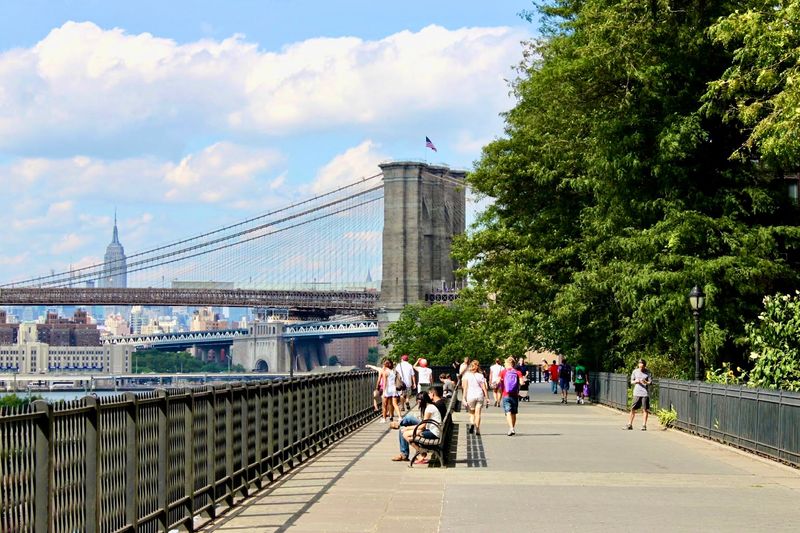
Before the skyline fully reveals itself, there is a feeling of suspense here – brick, breeze, water, then suddenly an enormous sweep of harbor light.
Along the Brooklyn Bridge Park Promenade, every few steps seem staged for a different version of New York.
You are never just looking outward; you are constantly turning to catch bridges, old warehouses, lawns, and ferries shifting the scene.
The thing we had never seen before was how gracefully industrial history and polished public space could share the same edge.
Granite remnants, repurposed structures, and tough maritime textures sit beside immaculate gardens and playful gathering spaces without feeling forced.
That balance gives the promenade an energy that is both deeply local and unusually cinematic.
One minute, kids are racing near the lawns, and the next, photographers are waiting for the exact second lower Manhattan glows pink.
We loved how the park keeps opening into little surprises, including intimate seating nooks and perspectives where the Brooklyn Bridge feels almost theatrical.
Even longtime New Yorkers seemed to pause here longer than usual.
It feels like a lesson in how waterfronts can honor working history, invite everyday joy, and still deliver one unforgettable skyline after another.
3. Troy Riverwalk, Troy, Rensselaer County
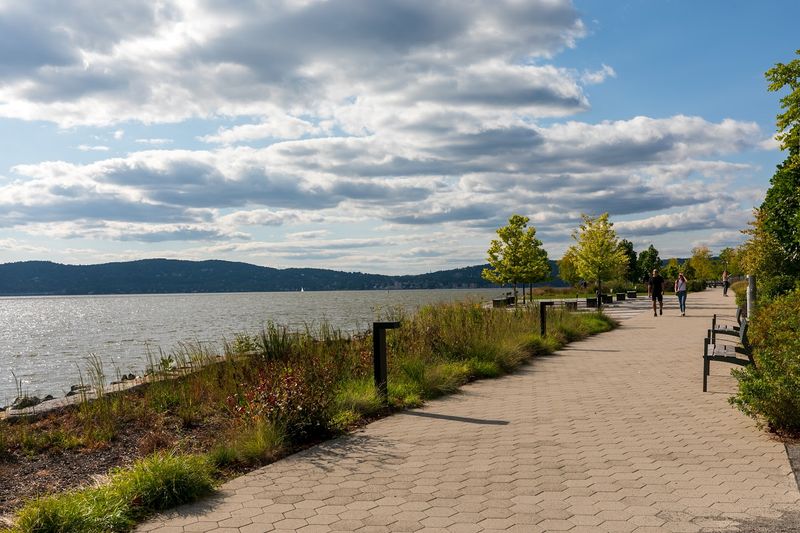
There is a certain rough-edged charm here that announces itself before the best views even appear.
In Troy, the riverwalk feels connected to the city’s brick, iron, and mercantile past, yet the Hudson gives it room to exhale.
That blend creates a walk with more character than polish, which ended up being exactly the appeal.
What we had never seen before was a waterfront that seemed to mirror Troy’s architectural personality so closely.
Instead of feeling detached from downtown, the Troy Riverwalk acts like an extension of the city’s historic texture, only with open sky and moving water added.
It feels civic, practical, and unexpectedly atmospheric at the same time.
The river itself stays central, but little moments stole the show for us.
A quiet bench facing broad currents, an angled view toward bridges, and the way evening light softened the industrial edges made the place feel intimate.
Nothing here seemed overly curated, which made the experience feel more honest.
This is the kind of waterfront that rewards curiosity over checklist tourism.
Troy’s riverwalk offers a surprisingly memorable encounter with both the Hudson and the city beside it.
4. Newburgh Waterfront Promenade, Newburgh, Orange County
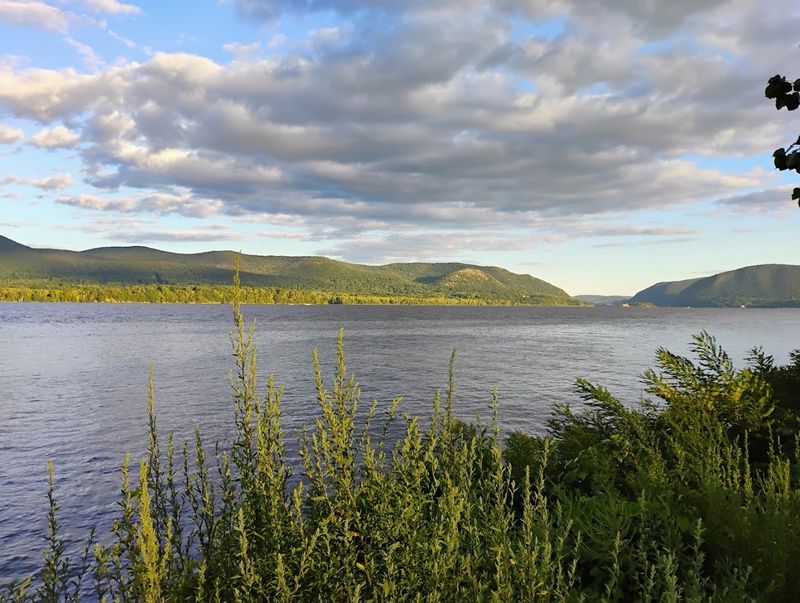
Before we even settled into the pace of the walk, the river was already doing most of the talking.
Wide, bright, and backed by layered highlands, the Hudson at Newburgh feels expansive in a way that instantly changes your breathing.
That scale gives the Newburgh Waterfront Promenade a dramatic opening impression that is hard to shake.
The thing we had never seen before was how this waterfront balanced working-marina energy with a genuinely scenic promenade atmosphere.
Boats, docks, restaurants, and open river views all share the same edge, creating a place that feels both social and deeply tied to the landscape.
You sense movement everywhere, but not chaos.
We loved how often the eye wandered from the water to the hills and back again.
On some stretches, the scene feels almost coastal, then a turn reminds you that this is unmistakably the Hudson Valley, with a wider historical resonance under the beauty.
Even casual walkers seemed to slow down here.
If you visit at changing light, the whole promenade gains another layer.
What surprised us most was not just the scenery, but the feeling that Newburgh’s waterfront is still actively redefining itself while remaining grounded in the river that gave it significance.
5. Beacon Riverfront, Beacon, Dutchess County
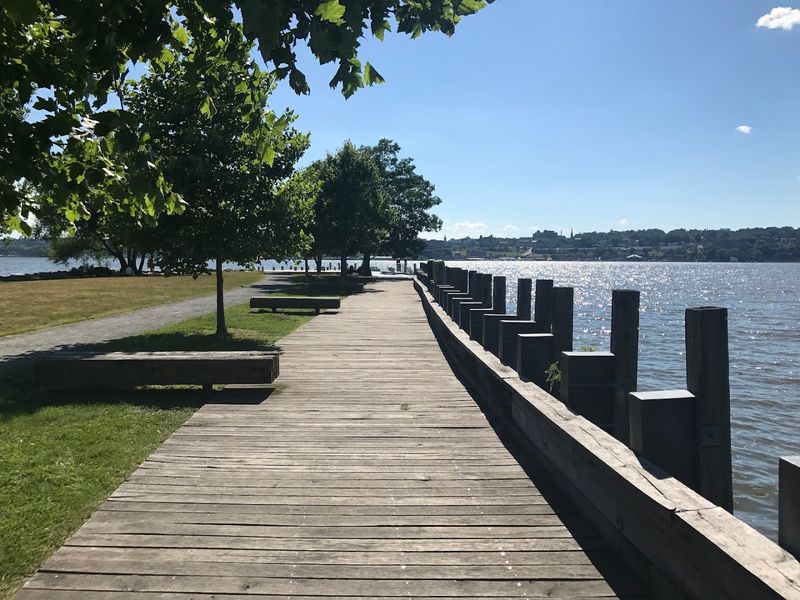
At first, it feels almost understated – a river, a breeze, a modest path, and then a view that quietly expands beyond expectation.
Beacon’s riverfront does not overwhelm you with spectacle right away.
Instead, it lets the Hudson and the surrounding mountains build the moment slowly.
What caught us off guard was the sense of transition layered into the landscape.
The Beacon Riverfront sits near rail lines, historic industry, and a city now known for art and weekend wanderers, so the setting carries movement in more ways than one.
That makes even a short walk feel tied to bigger stories about travel, change, and reinvention.
The most unusual thing we noticed was how often people simply stopped and looked, without needing an event or attraction to justify it.
The river seemed to create its own pause button, especially where open lawns and viewpoints invite you to settle in and watch light shift across the water.
It felt contemplative without becoming sleepy.
This is not the flashiest waterfront in New York, and that is exactly why it stays with you.
Beacon’s surprise is its restraint – a place where scenery, history, and atmosphere meet in a way that feels quietly complete.
6. Peekskill Riverfront Green, Peekskill, Westchester County
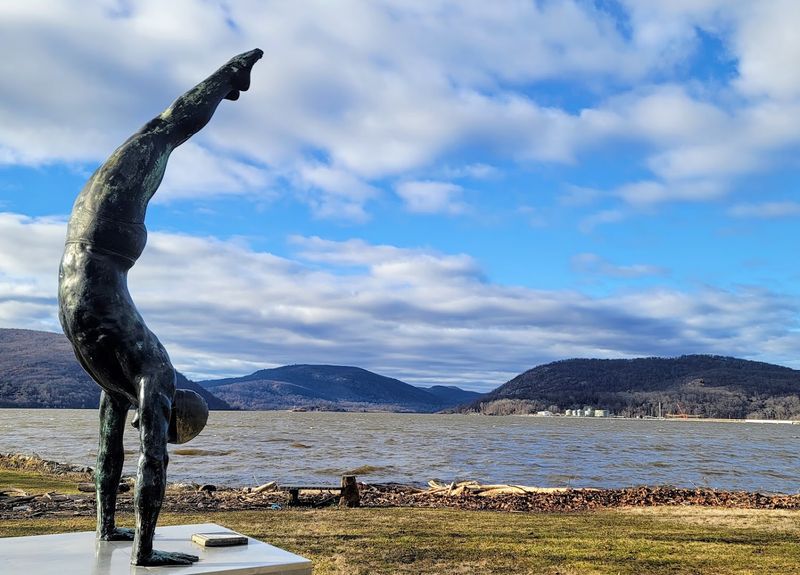
Wind off the Hudson reaches you early here, carrying a freshness that makes the open lawn feel even bigger.
Peekskill Riverfront Green unfolds with a roomy, welcoming layout that encourages wandering instead of directing it too tightly.
That freedom gives the waterfront a surprisingly generous sense of space.
The thing we had never seen before was how effectively the park combines event-ready openness with intimate river appreciation.
It can host community activity, yet still offers calm edges where you can focus on the water, nearby hills, and the quiet choreography of trains and boats.
That dual personality makes it more distinctive than a typical greenway.
We were especially drawn to the way art, landscaping, and broad Hudson views seem to support rather than compete with one another.
Nothing felt overly ornamental, but the details kept the setting from becoming plain.
Even on a busy day, the river remained the main character.
For visitors, this is an easy place to underestimate from a distance.
Once you are walking it, though, Peekskill Riverfront Green reveals a thoughtful civic waterfront where recreation, scenery, and local identity come together with an ease that feels refreshingly unforced and very memorable.
7. Poughkeepsie Waterfront, Poughkeepsie, Dutchess County
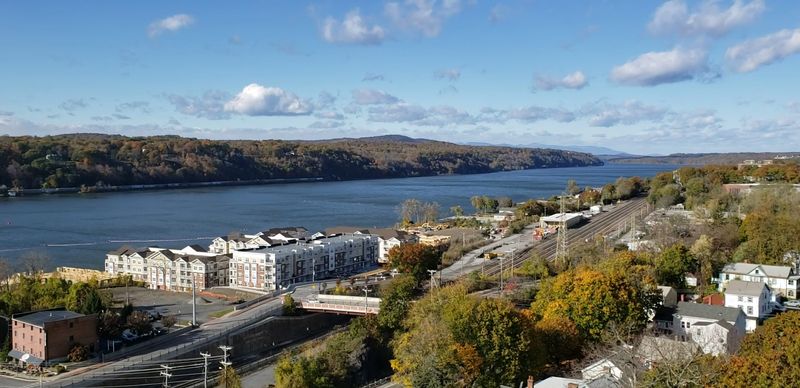
The mood shifts quickly here from city edge to wide-river perspective, and that transition is part of the charm.
Poughkeepsie’s waterfront feels grounded in transportation history, yet the river keeps pulling your attention outward toward distance and scale.
That push between urban structure and open landscape gave the walk unusual depth.
What we had never seen before was how strongly the surrounding infrastructure shapes the drama of the place.
Bridges, rail elements, shoreline activity, and long sightlines work together to create a waterfront that feels engineered and scenic at once.
It is not delicate beauty – it is bigger, sturdier, and more layered.
We found ourselves repeatedly looking up as much as out.
Views connected naturally to the larger story of the Hudson corridor, especially where the built environment frames the river rather than hiding it.
That relationship made the walk feel more dynamic than many polished promenades.
If you like waterfronts with a sense of scale and purpose, this one stands out.
The surprise in Poughkeepsie is how effectively it turns structural history, active movement, and broad river scenery into a single experience that feels both local and regionally important.
8. Schenectady Erie Canalway Promenade, Schenectady, Schenectady County
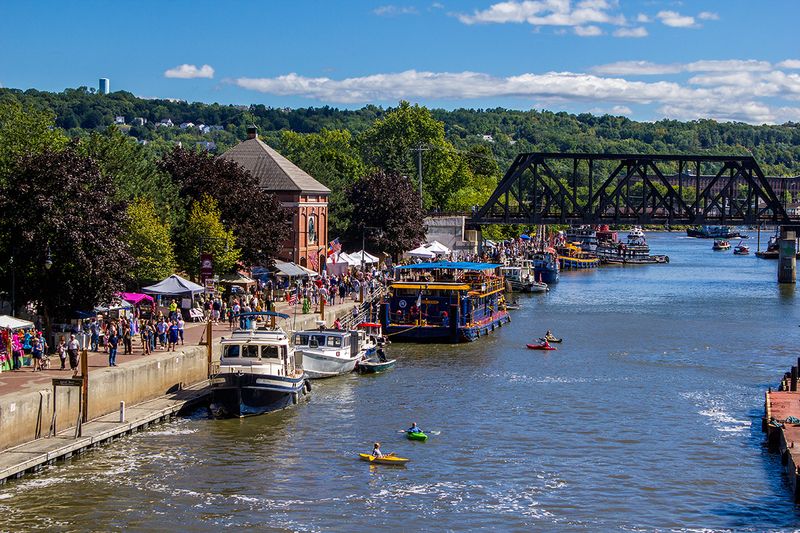
What first pulled us in was the quiet, the kind that makes every ripple and bicycle bell feel amplified.
This stretch in Schenectady does not shout for attention, which is exactly why the Erie Canalway Promenade catches you off guard.
Its calm surface and tidy path carry the weight of one of New York’s most transformative transportation stories.
The unexpected detail here was how easy it was to imagine movement from another century without losing sight of the present.
Interpretive elements, preserved alignments, and the canal’s deliberate geometry create a walk where history feels physically traceable.
You are not just reading about commerce and engineering – you are pacing alongside their footprint.
We were especially struck by the contrast between industrial legacy and the almost meditative atmosphere now surrounding it.
Birdsong, shaded stretches, and occasional openings across the water soften the setting in a way that feels restorative rather than museum-like.
That tension between utility and serenity is what made this promenade memorable.
For anyone who loves places that reveal themselves gradually, this walk delivers.
The real surprise is not a single landmark, but the way an old canal corridor can still shape the rhythm, identity, and imagination of a modern city.
9. Kingston Rondout Waterfront, Kingston, Ulster County
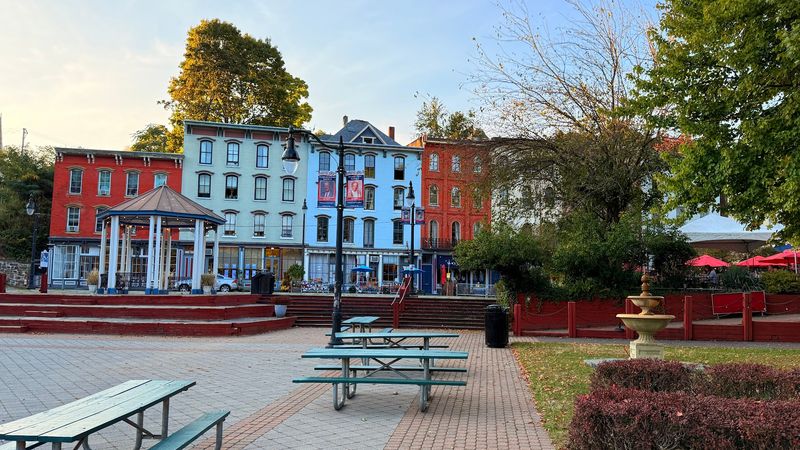
Before the water fully opens, there is already a strong sense of old maritime life in the air.
The Rondout district wraps you in brick facades, boat masts, creek reflections, and layers of commercial history that still feel tangible.
That atmosphere makes Kingston’s waterfront one of the most textured walks on this list.
The thing we had never seen before was how a relatively compact waterfront could feel so narratively rich.
At the Kingston Rondout Waterfront, the meeting of creek and Hudson, shipbuilding heritage, and preserved architecture creates a setting where nearly every angle suggests another chapter.
It feels lively without losing historical gravity.
We especially loved the way the water changes character depending on where you stand.
Some views feel intimate and harbor-like, while others hint at the broader Hudson beyond, giving the walk a layered geography that keeps it engaging.
That sense of transition is part of the magic.
Come expecting charm, but look closer for complexity.
What surprised us most was not just the beauty of the Rondout, but how effectively Kingston’s waterfront turns commerce, craftsmanship, and river culture into a place that still feels active instead of merely preserved.
10. Albany Corning Riverfront Preserve, Albany, Albany County
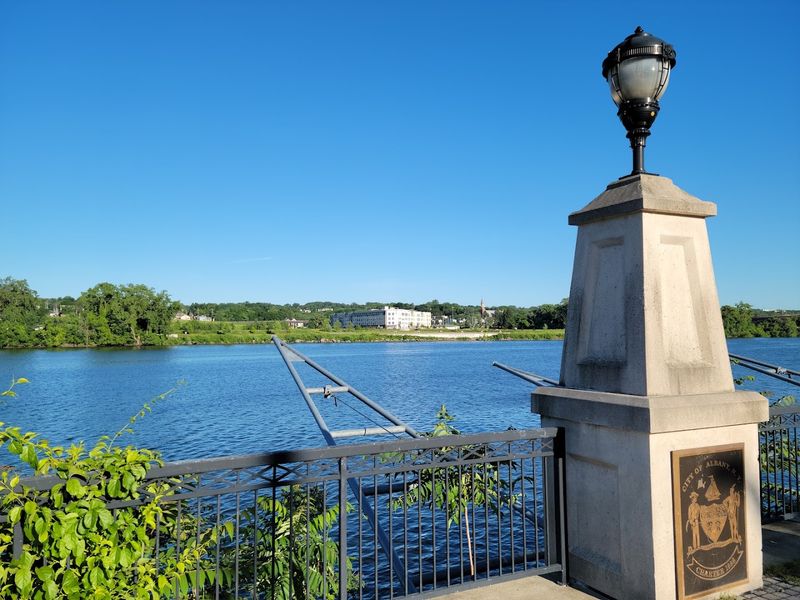
The first impression is not grandeur but contrast – reeds, water, traffic nearby, and then a surprising feeling of separation.
Albany’s Corning Riverfront Preserve occupies that fascinating edge where a capital city’s infrastructure meets recovering river habitat.
Because of that, the walk feels both urban and ecological from the very beginning.
What we had never seen before was a waterfront route that made environmental restoration such a visible part of the experience.
Instead of presenting the Hudson as a polished backdrop, this preserve invites you to notice wetlands, birdlife, and the practical realities of river stewardship.
That honesty gives the place unusual depth.
We were struck by how often the scene toggled between natural quiet and reminders of the city just beyond it.
Those interruptions did not ruin the atmosphere; they clarified why protected riverfront space matters here.
The preserve feels less like escape and more like coexistence done thoughtfully.
For walkers who enjoy places with a clear civic purpose, this one is deeply rewarding.
Albany’s surprise is that its riverfront preserve does not ask you to choose between scenery and substance – it delivers habitat, history, and perspective all in one memorable path.
11. Plattsburgh Riverwalk, Plattsburgh, Clinton County
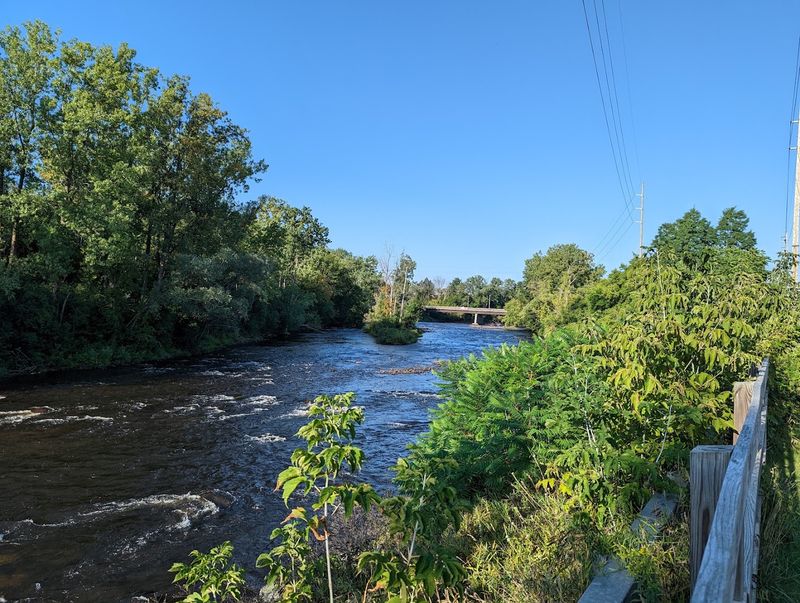
Cooler air, broader light, and a slower rhythm announce this walk before any landmark does.
Up north, Plattsburgh’s riverwalk feels shaped by open water, military history, and the distinct atmosphere of the Champlain region.
That combination gives it a character unlike anything we found farther downstate.
The thing we had never seen before was how the waterfront seemed to hold both frontier memory and everyday calm at once.
Along the Plattsburgh Riverwalk, the setting invites reflection on strategic geography, yet the present-day experience is gentle, accessible, and quietly scenic.
It never feels burdened by its past.
We appreciated how the path encourages long looks rather than quick snapshots.
Views toward the lake, changing weather, and the spacious northern sky create an almost borderland feeling, where landscape seems to stretch beyond the immediate city.
That sense of openness stayed with us.
If you are expecting a flashy promenade, this is not that kind of place.
Its surprise lies in restraint – Plattsburgh offers a waterfront where atmosphere, regional history, and expansive Champlain views come together in a way that feels calm, distinctive, and unexpectedly moving.