Iowa has a way of sneaking up on visitors who assume they already know what the Midwest has to offer.
Between ancient burial mounds overlooking the Mississippi and caverns that stay cool even in summer, the state is full of places worth slowing down for.
The Effigy Mounds and the Bridges of Madison County draw visitors for very different reasons, but both tend to leave people with the same feeling, that Iowa held something they didn’t expect.
From state parks with dramatic bluffs rising above river valleys to cave systems that feel like a different world underground, this state keeps handing you reasons to pull over and explore.
We had a loose list and open weekends, and what we found across twelve stops reshaped how we think about Midwestern road trips entirely.
Some of these places had us planning return visits before we even made it back to the car.
If you’ve been sleeping on Iowa, these twelve spots are your invitation to reconsider.
1. Iowa State Capitol, Des Moines, Polk County

Gold catches your eye before anything else, flashing above the skyline like a promise that something grand waits ahead.As you climb the hill, the building feels both stately and welcoming, with enough detail to reward even a slow wander around the grounds.
That first impression only grows stronger at the Iowa State Capitol in Des Moines, Polk County.
Completed in the nineteenth century, the capitol is famous for its gleaming central dome and its unusual five-dome design.Inside, you will find marble staircases, polished stone, historic chambers, and a level of craftsmanship that feels almost theatrical.
The law library is especially memorable, with towering shelves, spiral staircases, and a quiet beauty that surprises many first-time visitors.
I appreciate that this stop is not just for architecture fans or political history buffs.Tours explain how the building functions today while also highlighting art, symbolism, and stories about Iowa’s development.
Because admission is free, it is one of those rare places where the experience feels generous from the start.
If you want a destination that mixes beauty, history, and a stronger sense of place, this one delivers.Plan time to explore both inside and outside, because the grounds offer excellent city views and photo spots.
You will leave with a deeper appreciation for Iowa than you probably expected.
2. Maquoketa Caves State Park, Maquoketa, Jackson County
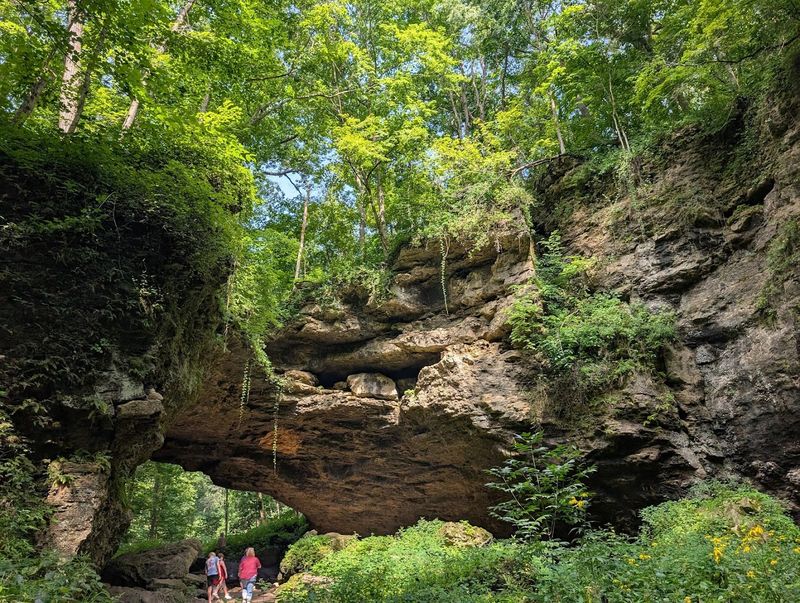
The air turns cooler, the light gets dimmer, and suddenly an ordinary day trip feels like the start of a real adventure.
Between narrow passages, dripping stone, and rugged trails, you get the kind of experience that makes you put your phone away and pay attention.
That is exactly why Maquoketa Caves State Park near Maquoketa in Jackson County stands out.
This park is home to more caves than any other state park in Iowa, and it packs remarkable variety into a manageable area.
Some openings are large and dramatic, while others require ducking, squeezing, and moving carefully through low limestone corridors.
The surrounding trails connect bluffs, natural bridges, overlooks, and wooded ravines, so the landscape stays interesting even when you are not underground.
I like that the park can be approached at different comfort levels.
You can enjoy scenic hiking and peek into accessible formations, or bring a more adventurous spirit and explore the tighter spaces with proper caution.
Because cave conditions and bat protections can affect access, checking current information before visiting is smart.
If you are looking for an Iowa attraction that feels unexpectedly wild, this one absolutely delivers.
Wear sturdy shoes, bring a flashlight, and expect to get a little muddy if you choose the more immersive routes.
3. Pikes Peak State Park, McGregor, Clayton County
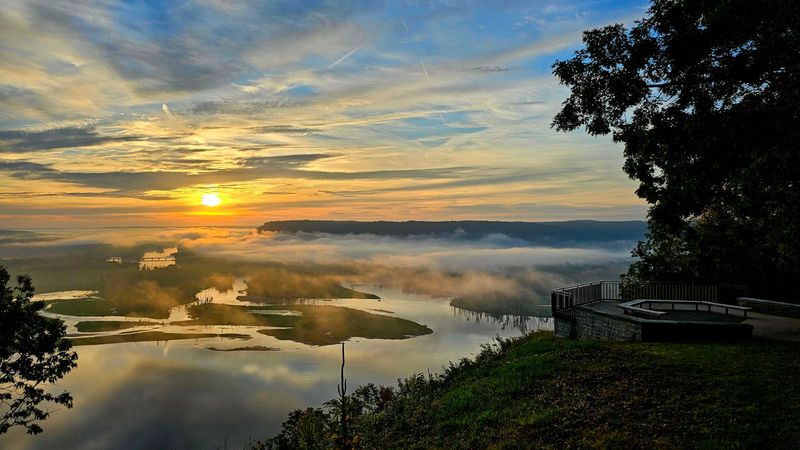
Few things reset your perspective faster than stepping onto a bluff and seeing miles of river country open beneath you.The view arrives all at once, broad and layered, with water, forest, and distant ridges creating one of Iowa’s most impressive panoramas.
That unforgettable scene belongs to Pikes Peak State Park near McGregor in Clayton County.
Named after explorer Zebulon Pike, the park overlooks the Upper Mississippi River and the meeting point of the Mississippi and Wisconsin rivers.Its signature viewpoint is the main draw, but the experience gets even better when you explore the trails leading through wooded slopes and down to Bridal Veil Falls.
Because the terrain shifts from lofty overlooks to shaded ravines, the park feels richer than a simple scenic stop.
I especially like how accessible the beauty is here.You can enjoy a dramatic vista without committing to a long backcountry hike, yet there is still enough trail variety to make the visit feel active.
Interpretive signs and picnic areas also make it easy to turn a quick stop into a fuller afternoon.
If your Iowa itinerary needs a place that delivers immediate wow factor, put this high on the list.Come with a camera, but expect the scale to look better in person than in any photo.
It is one of those overlooks that makes you stay longer than planned.
4. Bridges of Madison County, Winterset, Madison County
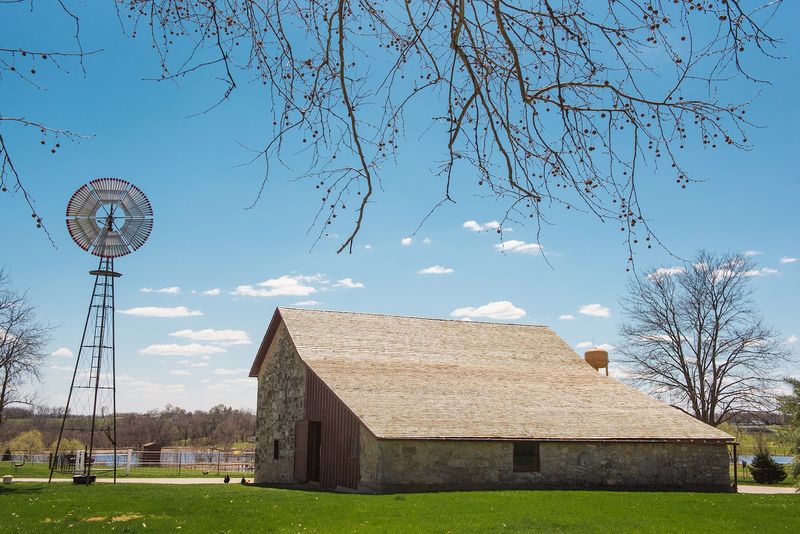
Some places feel wrapped in nostalgia before you even arrive, and this corner of Iowa knows exactly how to create that mood.
Quiet roads, rolling countryside, and old timber structures turn an ordinary drive into something slower and more romantic.
That charm defines the Bridges of Madison County around Winterset in Madison County.
These historic covered bridges were originally built in the nineteenth century and remain beloved for their craftsmanship and pastoral setting.
Several survive today, including Roseman, Holliwell, and Cedar Bridge, each with its own character and surrounding landscape.
Even if you have never read the novel or seen the film, the route still feels cinematic in a simple, authentic way.
I think the appeal goes beyond movie fame.
The bridges connect you to a time when rural engineering had personality, and they invite you to wander at a pace that modern travel often forgets.
Winterset also gives you reasons to linger, with a charming town square, local shops, and nearby historical stops.
If you want a scenic Iowa outing that blends beauty, story, and easy exploration, this is a great choice.
Plan a leisurely loop rather than a rushed checklist, because the roads and views are part of the experience.
5. Crystal Lake Cave, Dubuque, Dubuque County
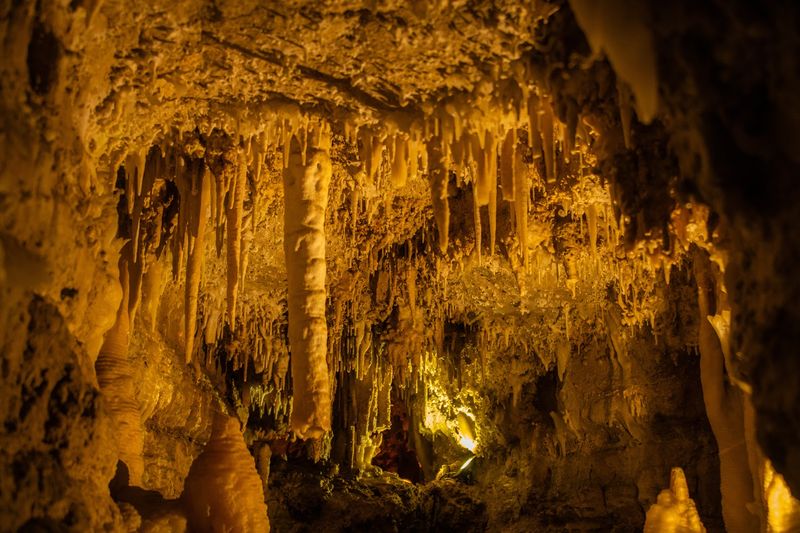
Descending underground changes the rhythm of a trip in the best possible way.
The temperature drops, the light softens, and every chamber seems to reveal another shape carved by time and mineral-rich water.
That sense of discovery defines Crystal Lake Cave near Dubuque in Dubuque County.
Opened for tours in the 1930s, this long-established show cave features stalactites, stalagmites, flowstone, and delicate formations that feel almost sculptural.
Guided visits help you understand both the geology and the cave’s history, which adds context without overwhelming the experience.
Unlike a rushed attraction, the tour gives you enough time to notice texture, color, and scale in the rock around you.
I enjoy how family friendly it feels while still offering genuine natural wonder.
The pathways and narration make the cave approachable for many visitors, yet the underground setting never loses its sense of mystery.
Because the cave is separate from the usual Iowa road-trip checklist, it feels like a real find.
If you are after something cool, unusual, and memorable on a hot day, this is a strong pick.
Pair it with time in Dubuque, and you can easily build a varied day around river views and underground exploration.
6. Backbone State Park, Dundee, Delaware County
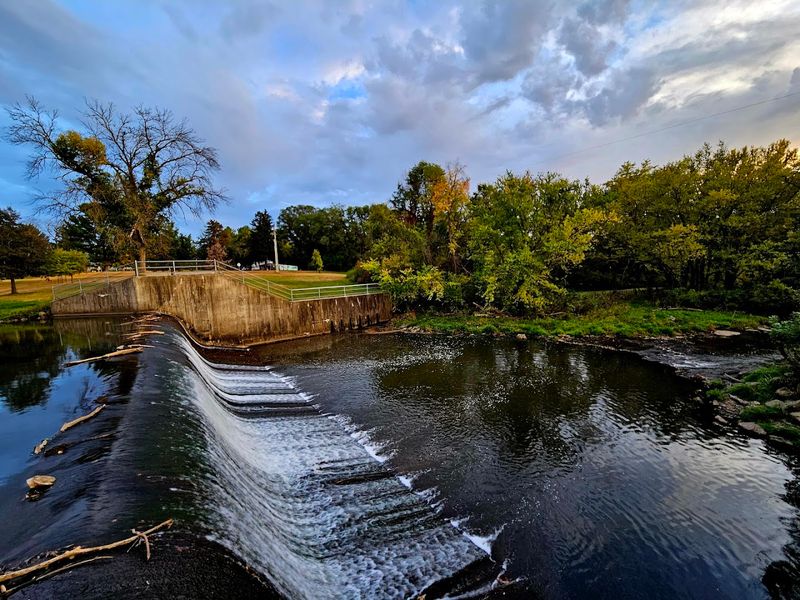
Adventure feels close at hand when cliffs, water, and winding trails all share the same landscape.
The terrain is rugged by Iowa standards, with limestone ridges that give the park a bold personality from the moment you arrive.
That distinctive character is what makes Backbone State Park near Dundee in Delaware County so memorable.
As Iowa’s first state park, Backbone combines history with a surprisingly dramatic outdoor setting.
Its namesake ridge, called the Devil’s Backbone, rises above the Maquoketa River and creates scenic overlooks, rocky corridors, and excellent hiking opportunities.
You can also camp, fish, kayak, climb in designated areas, or simply enjoy the stone buildings and picnic spots shaped by earlier generations.
I like this park because it offers more than one version of a good day outside.
If you want a strenuous trail, you can find it, but if your idea of fun is a slower paddle or a shady lunch by the water, that works too.
The mix keeps the park from feeling one-note, which is part of its enduring appeal.
If your trip through Iowa needs a place with texture, variety, and a little edge, Backbone deserves serious consideration.
Wear shoes with good grip and allow enough time to explore beyond the first overlook.
7. Iowa Great Lakes, Okoboji, Dickinson County

Bright water, dockside energy, and long summer evenings give this part of Iowa a vacation mood that feels different from the rest of the state.
You can spend the day boating, swimming, shopping, or just watching sunlight dance across the lake from a patio.
That lively mix defines the Iowa Great Lakes region centered around Okoboji in Dickinson County.
The area includes West Okoboji Lake, East Okoboji Lake, Big Spirit Lake, and several smaller bodies of water, each adding to the region’s appeal.
West Okoboji stands out for its depth and famously clear blue water, while nearby communities provide restaurants, amusement stops, trails, and resort-style lodging.
Because there is so much to do, the lakes work equally well for a family getaway, a couples weekend, or a nostalgic return trip.
I appreciate that the experience can be as active or relaxed as you want.
One hour you might be renting a boat or biking a trail, and the next you are lingering over ice cream and sunset views.
Even outside peak season, the shoreline atmosphere still makes the area feel special.
If you want an Iowa destination that feels playful, scenic, and undeniably summery, this is the one.
Book ahead in busy months and give yourself more than a single afternoon if possible.
8. Herbert Hoover Presidential Library and Museum, West Branch, Cedar County
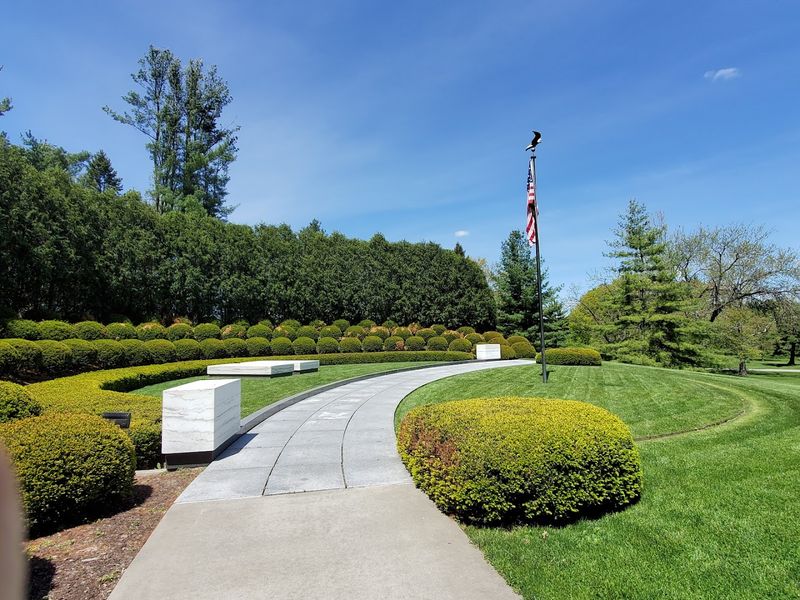
Quiet places often tell the biggest stories, especially when they trace the path from modest beginnings to world history.
This stop has that effect, drawing you into a more personal view of leadership, hardship, and the complicated demands of public life.
You feel it clearly at the Herbert Hoover Presidential Library and Museum in West Branch, Cedar County.
The museum explores Hoover’s life from his Iowa childhood to his engineering career, humanitarian work, presidency, and post-presidential years.
Exhibits provide context for major events like World War I relief efforts and the Great Depression, while nearby historic buildings deepen the sense of place.
His birthplace cottage and the surrounding national historic site help connect national history to a very local landscape.
I find this destination especially rewarding because it avoids flattening Hoover into a single chapter or headline.
You get a fuller understanding of his achievements, failures, and the era that shaped him, which makes the visit more thoughtful than purely celebratory.
That complexity is exactly what good presidential sites should offer.
If you enjoy American history with substance and context, make time for this stop.
The grounds are peaceful, the museum is well organized, and the setting encourages reflection rather than rushing.
9. Ledges State Park, Madrid, Boone County
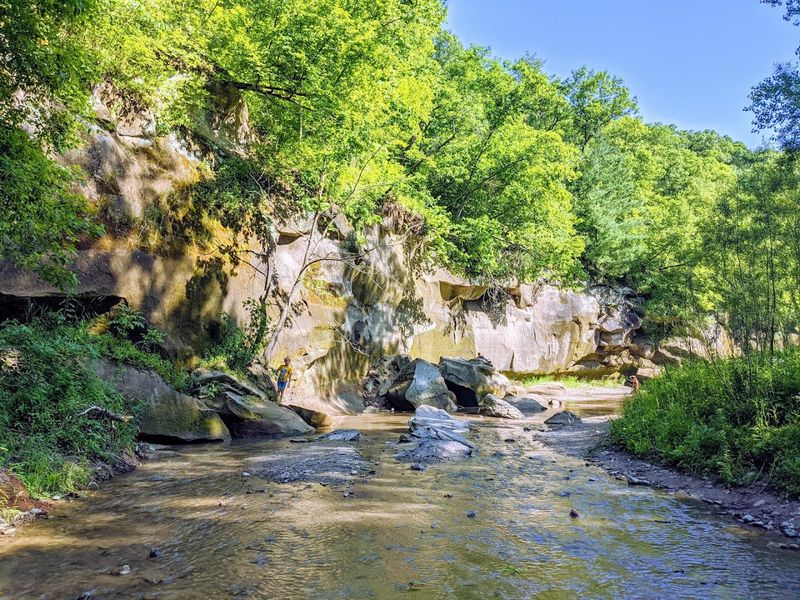
Water running over a road is usually a warning, but here it is part of the charm.
The park’s canyon setting creates a playful, immersive landscape where sandstone walls, shaded creeks, and low crossings make every visit feel a little adventurous.
That unusual appeal is what draws people to Ledges State Park near Madrid in Boone County.
The centerpiece is Pea’s Creek Canyon, where erosion has carved striking ledges and narrow passages through the soft stone.
Trails climb above the gorge to overlooks, then drop back into the cool, enclosed landscape, creating constant contrast between broad views and intimate spaces.
Stone architecture built by the Civilian Conservation Corps adds even more character without overpowering the natural setting.
I like this park because it feels interactive from the start.
You are not just looking at scenery from a distance, but moving through it, stepping across water, and noticing how the terrain shifts with every turn.
Conditions can vary after rain, so a little flexibility and the right footwear make a big difference.
If you are searching for a state park that feels distinctively Iowa yet surprisingly dramatic, this is a great pick.
Families, photographers, and casual hikers can all find something to enjoy here.
10. National Mississippi River Museum and Aquarium, Dubuque, Dubuque County
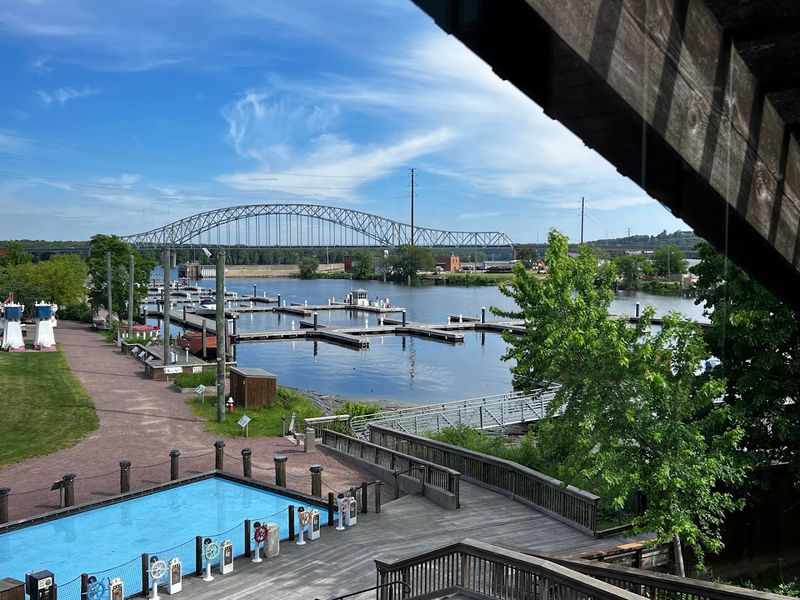
Rainy days and river towns are a perfect match when you find a place that brings the whole region to life indoors.
This attraction blends history, ecology, and hands-on discovery in a way that keeps both kids and adults genuinely engaged.
That balance is exactly what the National Mississippi River Museum and Aquarium offers in Dubuque, Dubuque County.
Located near the Mississippi on the city’s revitalized waterfront, the museum explores the river’s natural systems, cultural importance, and working heritage.
You will find aquariums, historical artifacts, live animals, interactive exhibits, and connections to topics ranging from wetlands to navigation and commerce.
The campus layout keeps things varied, so the visit never feels like a single long hallway of displays.
I appreciate how approachable the museum is without becoming shallow.
You can move quickly through the highlights or slow down and dig into the river’s role in shaping communities across the Midwest.
That flexibility makes it ideal for mixed groups with different interests and attention spans.
If your trip includes Dubuque, this stop deserves more than backup-plan status.
11. Effigy Mounds National Monument, Harpers Ferry, Allamakee County
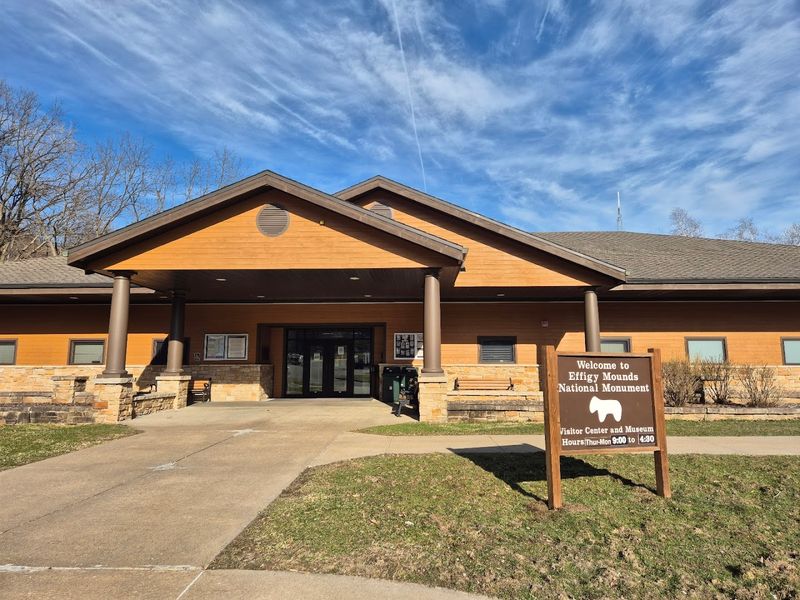
There is something quietly powerful about walking a ridge where history feels older than memory.You hear birds in the trees, catch glimpses of the Mississippi, and realize this landscape was sacred long before it became scenic.
That feeling settles in fully at Effigy Mounds National Monument near Harpers Ferry in Allamakee County.
This remarkable site preserves more than two hundred prehistoric mounds, many shaped like bears and birds.They were built by Native peoples for ceremonial, spiritual, and burial purposes, and the setting still carries deep reverence today.
When you hike the trails, the monument asks for curiosity, respect, and a slower pace than most roadside attractions.
The visitor center gives helpful context before you head uphill, and the boardwalks and overlooks make the experience accessible without ruining the wild beauty.I liked how the forest, bluff views, and earthworks all work together rather than competing for attention.
Nothing here feels flashy, yet almost every turn leaves a stronger impression than expected.
If you want an Iowa stop that is scenic, meaningful, and genuinely unlike anywhere else in the state, start here.Bring good walking shoes, give yourself time, and let the quiet do part of the storytelling.
It is the kind of place you remember long after the trail ends.
12. Toolesboro Mounds, Wapello, Louisa County
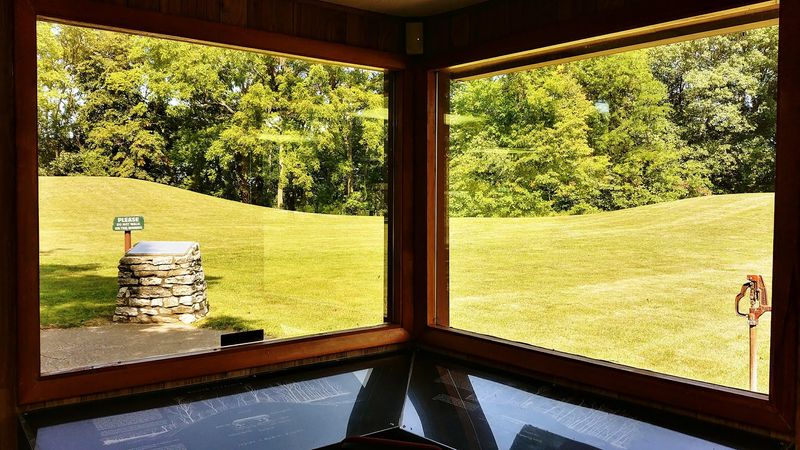
Some of the most meaningful travel moments happen in places that speak softly instead of demanding attention.
A blufftop setting, open sky, and ancient earthworks create a sense of age and importance that is easy to feel even before you know the full story.
That quiet significance defines Toolesboro Mounds near Wapello in Louisa County.
This archaeological site preserves burial mounds associated with the Hopewell culture, whose influence extended widely across eastern North America.
Although only a few mounds remain visible today, the location still offers a powerful connection to Indigenous history that predates Iowa’s modern identity by many centuries.
A small museum helps explain the site’s context, artifacts, and the broader cultural traditions connected to the mounds.
I think visits like this matter because they encourage humility.
You are standing in a landscape shaped by peoples whose histories are too often reduced to footnotes, and the right response is attention and respect.
The simplicity of the setting actually strengthens that lesson rather than diminishing it.
If you are interested in places that feel reflective, educational, and genuinely different, put Toolesboro on your list.
It is an important stop for understanding Iowa as a much older human landscape than most road trips reveal.