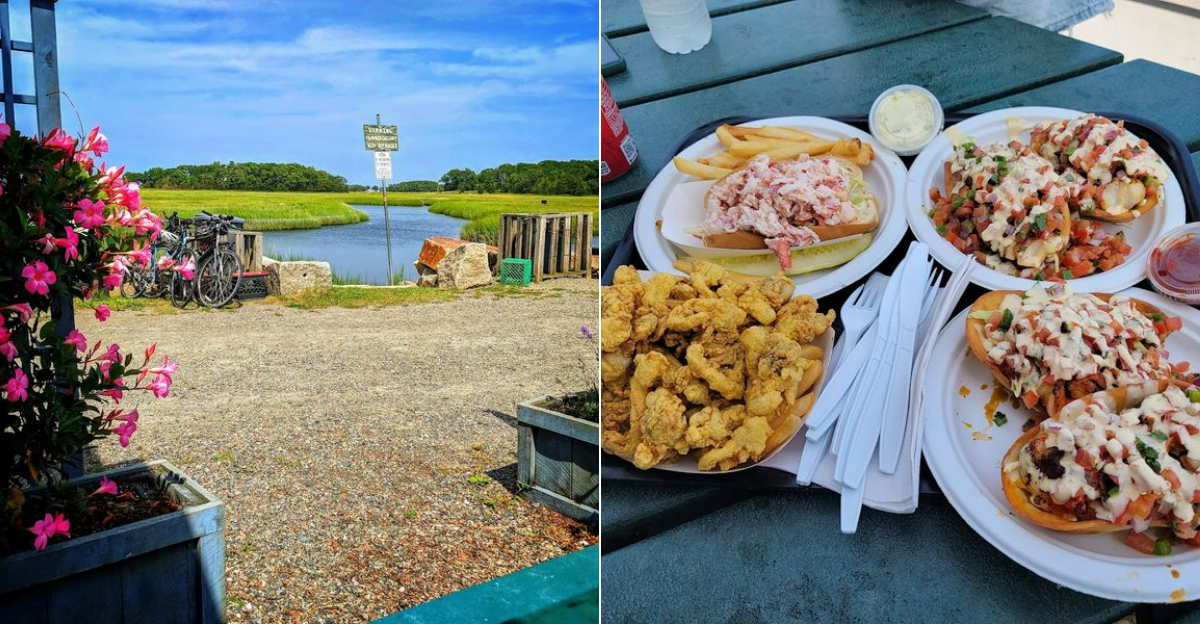
Tucked along a quiet two-lane road in Essex, Massachusetts, J.T. Farnham’s has been feeding hungry seafood lovers since 1941.
What makes this roadside spot so special is the combination of honest, no-frills cooking and one of the most beautiful natural backdrops you can find at a lunch counter — a sprawling salt marsh that stretches out right behind your picnic table. Whether you’re a lifelong North Shore local or someone making the trip for the first time, Farnham’s delivers something rare: food that actually lives up to the legend.
A Small Sign on a Two-Lane Road That Regulars Have Known for Decades
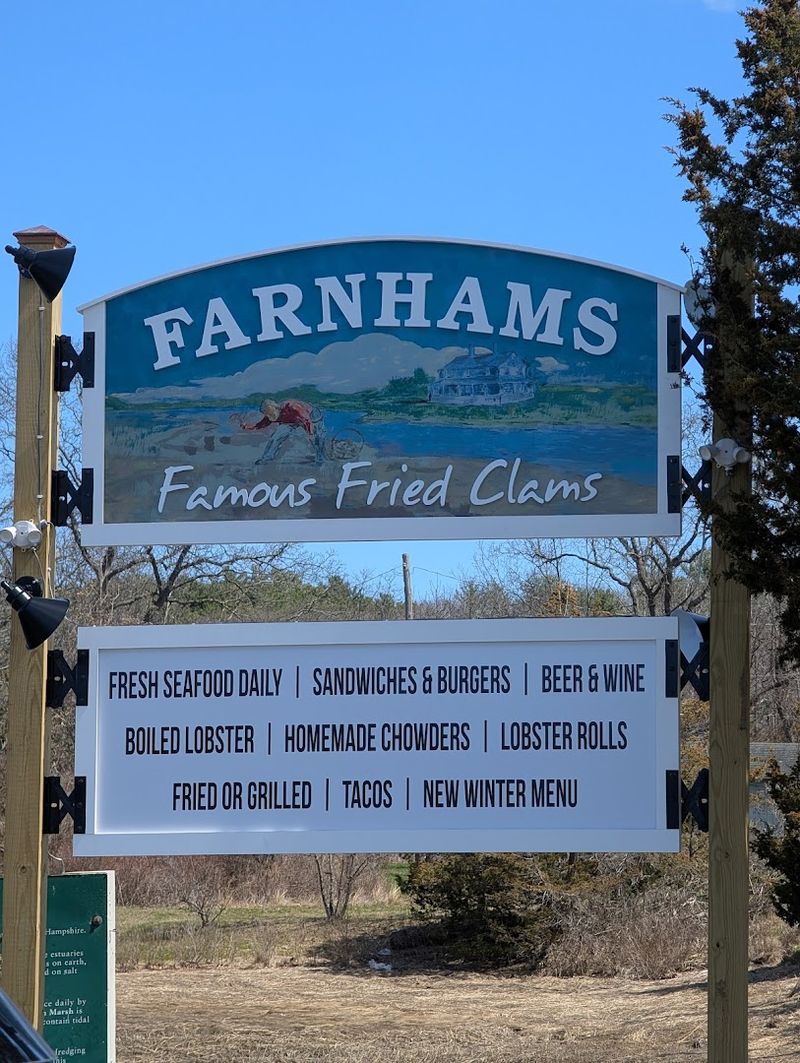
Some of the best meals in New England hide behind the smallest signs. J.T.
Farnham’s sits at 88 Eastern Ave in Essex, Massachusetts a stretch of road so low-key that first-timers often drive past it before doubling back. But the line of cars out front on a warm afternoon tells the real story.
Established in 1941, this place has been quietly earning its reputation for over eight decades without much fanfare or a flashy makeover. Regulars have been returning year after year, sometimes driving more than an hour each way just for a box of fried clams and a cup of chowder.
That kind of loyalty is earned, not marketed.
The building itself is unpretentious wooden, functional, and exactly what a roadside seafood stand should look like. No neon signs, no valet parking, no gimmicks.
Just good food served by friendly staff at a spot that has stayed true to what it always was.
Essex, Massachusetts Sets the Scene Before You Even Order
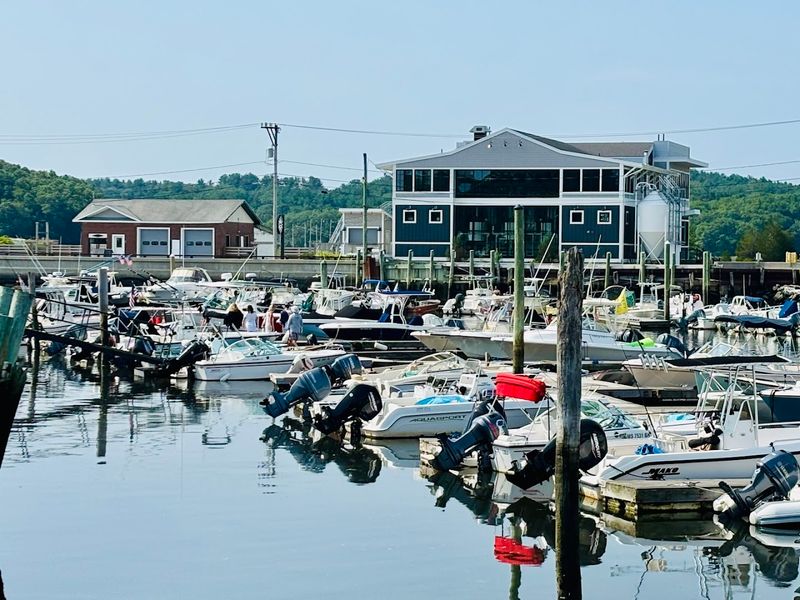
The drive to Farnham’s is half the experience. Rolling into Essex on Route 133, you pass antique shops, tidal creeks, and wide-open marshland that stretches toward the horizon.
The town has a maritime soul — it was once one of New England’s most productive wooden shipbuilding communities, and that working-waterfront character still lingers in the air.
Essex is a small town that doesn’t try to be anything it isn’t, and that honesty extends right to the restaurants along its main roads. Coming in from Gloucester or Ipswich, the landscape shifts into something quieter and more elemental — the kind of scenery that makes you slow down without being asked to.
By the time you pull into Farnham’s gravel lot, you’re already in the right headspace for a no-nonsense seafood meal. The town frames the meal before a single clam hits the fryer.
That context matters more than most people expect when they’re planning a food road trip on the North Shore.
The Salt Marsh View From the Deck Is the Detail People Remember
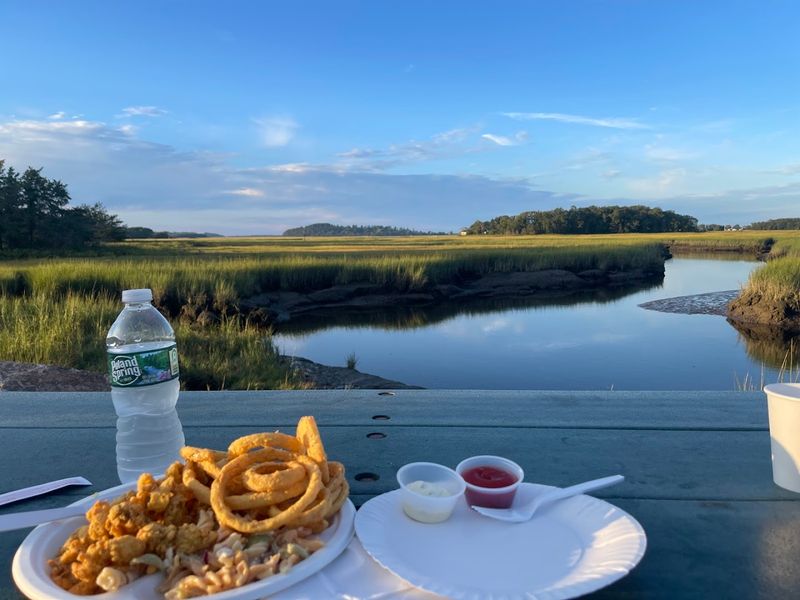
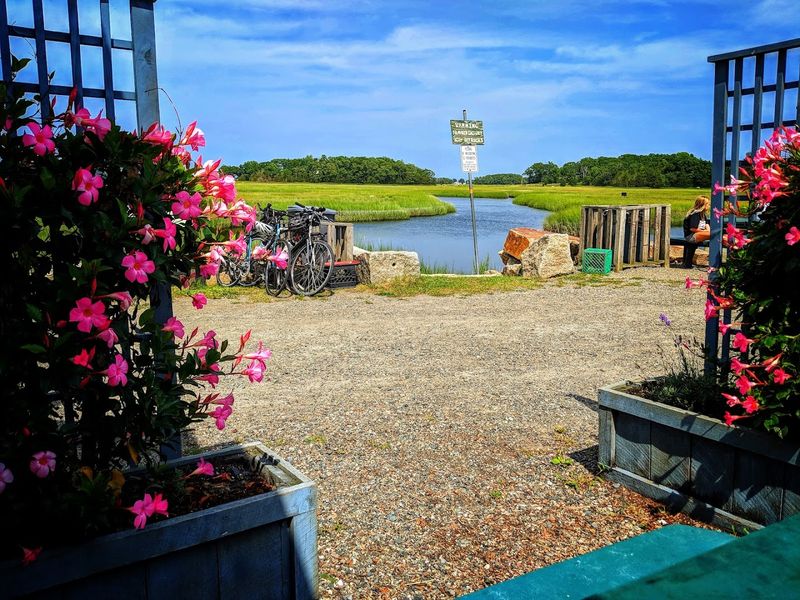
Ask anyone who has eaten at Farnham’s what they remember most, and there’s a solid chance the answer isn’t just the food — it’s where they were sitting when they ate it. The outdoor deck looks directly out over the Essex River salt marsh, a wide, flat expanse of grasses that shifts from deep green in summer to burnished gold in early fall.
Watching birds pick through the reeds while your fried clams cool down just enough to eat is a genuinely hard thing to replicate anywhere else. This isn’t a restaurant with a framed ocean print on the wall trying to set a mood.
The marsh is right there, real and tidal, doing its own thing regardless of the lunch rush.
Rustic picnic tables make up most of the outdoor seating, and they fill up fast on warm weekend afternoons. Arriving early gives you a better shot at a table with a clear, unobstructed view — and that view is absolutely worth planning around.
Whole-Belly Fried Clams Are the Reason Most People Make the Drive
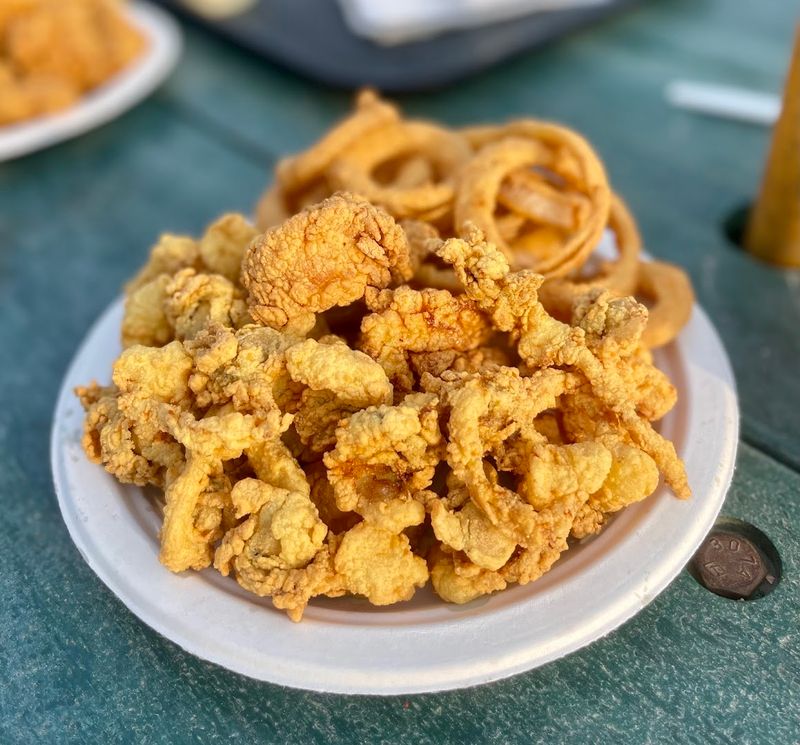
There is a reason people drive 60-plus miles round trip for these clams. Farnham’s whole-belly fried clams are consistently ranked among the best on the Massachusetts North Shore — a region where fried clams are practically a competitive sport.
The Food Network even awarded Farnham’s a trophy for best fried clams, beating out the nearby and equally legendary Woodman’s.
What makes them stand out is the restraint in the preparation. The batter is thin and light, fried in canola oil that doesn’t leave things greasy or heavy.
The whole-belly cut — not strips — means you get the full, briny, sweet flavor of the clam in every bite, including that tender belly that clam strip fans are missing out on.
For around $30, you get a generous portion with a side of your choice. The coleslaw is finely made and refreshing, and the house-made tartar sauce is the kind of condiment that actually enhances rather than covers up what’s underneath it.
Order these first, every time.
The Clam Chowder Earns Its Place on the Menu
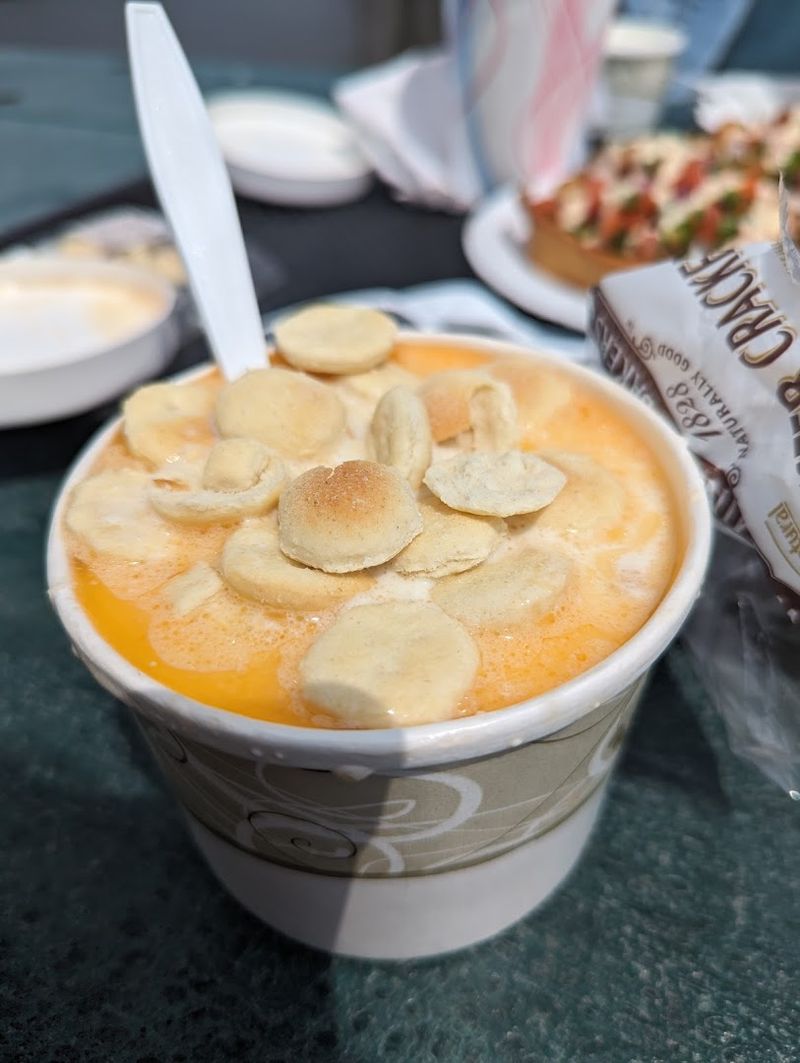
New England clam chowder is one of those dishes that separates the serious seafood kitchens from the ones just going through the motions. At Farnham’s, the chowder is made with real clams and carries a substantive, honest character that works whether you’re eating outside on a sunny July afternoon or ducking in from a gray November drizzle.
It’s worth noting that opinions on the chowder are passionate and occasionally divided — some reviewers find it exactly right, while others wish it were thicker or creamier. That kind of spirited disagreement is usually a sign that people care deeply about the dish, which is its own form of endorsement.
The scallop chowder has also drawn strong praise, with reviewers noting big, tender scallops that aren’t dried out.
If thick, stick-to-your-ribs chowder is your benchmark, you may want to taste before judging. But if you appreciate a clean, clam-forward broth that lets the seafood speak, Farnham’s version has plenty to offer on a cool coastal afternoon.
Fried Seafood Plates Come With the Classics, Done Consistently
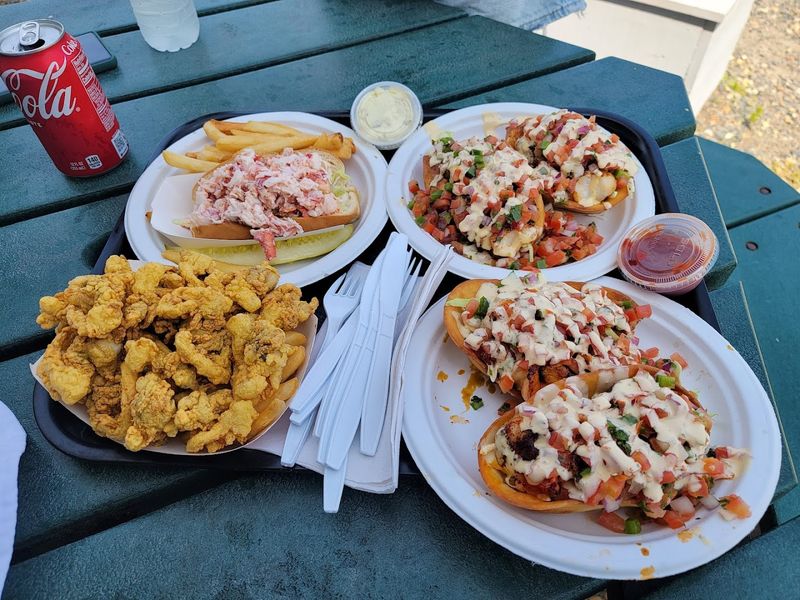
Beyond the famous clams, Farnham’s menu reads like a greatest-hits collection of North Shore fried seafood. Scallops, shrimp, haddock, oysters, clam strips, and lobster rolls all make an appearance, along with sides of fries, coleslaw, and onion rings that hold their own without trying to steal the spotlight.
The Fisherman’s Combo is a popular choice — a generous plate that stacks a fried haddock fillet over clams, shrimp, scallops, and onion rings. The haddock is piping hot and tender, and the scallops are cooked with care.
One reviewer raved about the blackened haddock tacos and buffalo bites, proving that Farnham’s has more range than its classic reputation might suggest.
The batter across the board is consistently described as firm, light, and not at all greasy — a technical achievement that matters a lot when you’re frying multiple proteins at once. Nothing on the menu is trying to be trendy, and that’s exactly what makes it work so reliably plate after plate.
The Ordering Setup Is Counter-Service, Old-School and Unpretentious
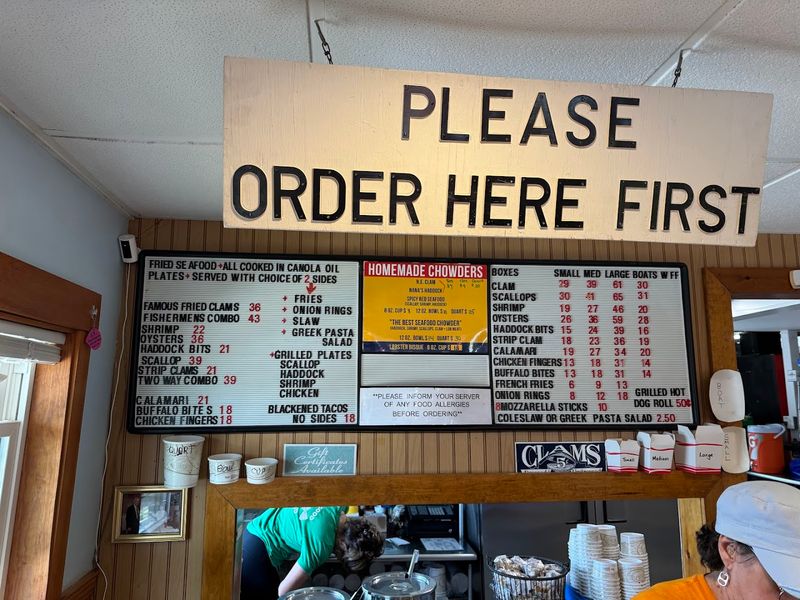
Walking up to the counter at Farnham’s and placing your order is part of the whole point. There’s no host stand, no table service, no reservation app to download.
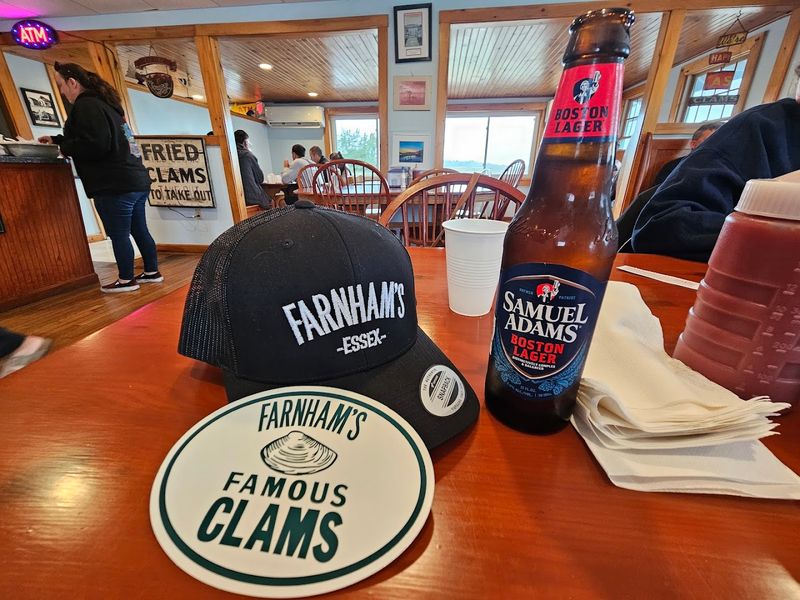
You order, you pay cash only, so come prepared or use the ATM on site and you wait for your number to be called. Simple, efficient, and completely unpretentious.
The inside of the restaurant has a warm, homey feel wooden settle bench seating, tables with chairs, and the kind of casual atmosphere where you don’t feel rushed or watched. Staff are consistently described in reviews as friendly and helpful, which goes a long way in a counter-service setup where the human interaction is brief but memorable.
That Food Network trophy for best fried clams sits on display inside, a quiet flex for a place that otherwise lets the food do all the talking. The counter-service format keeps things moving, keeps prices reasonable, and keeps the focus exactly where it belongs on what’s coming out of the fryer.
The Building and Layout Have Stayed True to Their Roadside Roots
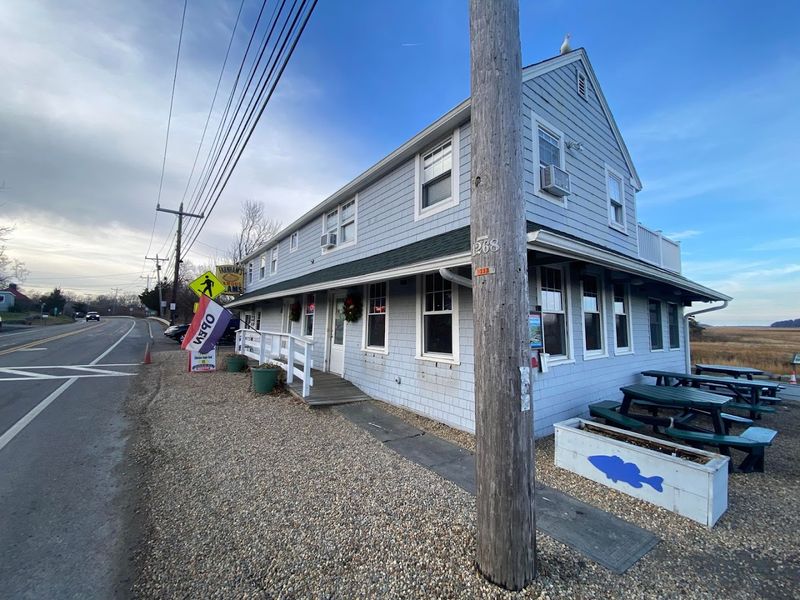
Farnham’s has not been renovated to look like a seafood restaurant. It simply is one and has been since 1941.
The building is a genuine example of the functional, no-frills design that characterized Massachusetts roadside seafood stands long before themed interiors and reclaimed wood became restaurant trends.
There’s something quietly radical about a place that hasn’t been redesigned to appeal to a newer audience. No shiplap walls with Edison bulbs, no Instagram-optimized signage, no curated vintage aesthetic.
The structure is what it is because it was built to serve food efficiently in a place where the real scenery is already outside, free of charge.
Regular visitors tend to mention this authenticity as a specific reason they keep coming back. The parking lot is small only seven or eight spots which means street parking is often necessary during peak season.
That minor inconvenience somehow adds to the charm rather than detracting from it, which tells you something about how much goodwill the food and setting generate.
Timing Your Visit Makes a Real Difference
Farnham’s operates seasonally, generally spring through fall, and the summer months bring steady, enthusiastic crowds. Warm Saturday and Sunday afternoons are the busiest windows, when the deck fills up fast and the line at the counter stretches back.
Weekday visits, especially close to the 11 AM opening time, tend to move faster and offer a better shot at outdoor seating.
One reviewer made the drive in mid-December and found the restaurant open with a warm, welcoming interior and full menu so it’s worth calling ahead or checking online during shoulder season rather than assuming it’s closed. Hours listed online are generally 11 AM to 7:30 PM daily, but schedules can shift, and closing early on slow or stormy days has been reported.
Planning around the crowd is a small investment that pays off in a noticeably better experience. Getting a marsh-view table on a clear afternoon with a short wait and a fresh box of clams in front of you is the version of this meal that people talk about for years afterward.
The Town of Essex Rewards a Longer Visit
Farnham’s makes for a great anchor to a full afternoon in Essex. The town’s Main Street has a well-known stretch of antique dealers that draws serious collectors and casual browsers in equal measure — the kind of shops where you can spend an hour and leave with something unexpected or nothing at all, and both outcomes feel fine.
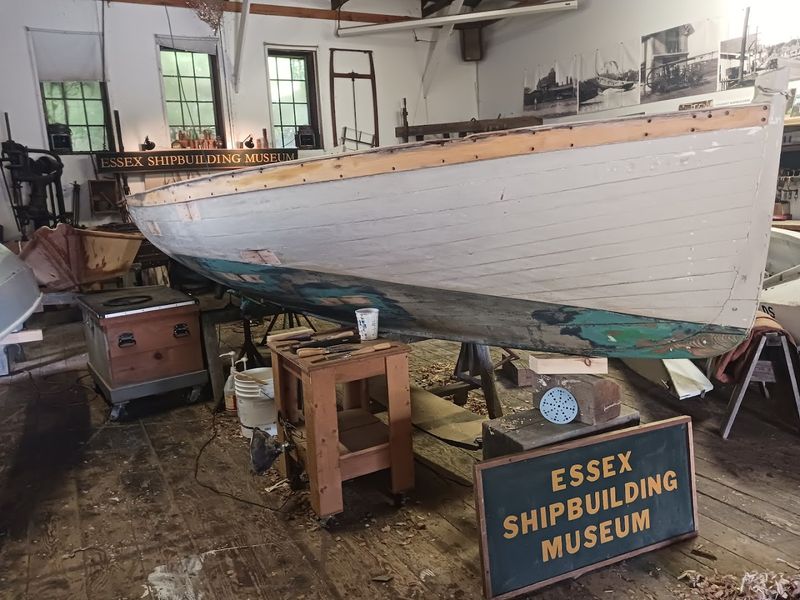
The Essex Shipbuilding Museum is a compact, genuinely interesting stop that puts the town’s boat-building history in clear context. Essex was once one of the most productive wooden shipbuilding communities in all of New England, and the museum does a good job of making that history feel relevant rather than dusty.
It’s the kind of place that takes about 45 minutes and leaves you with a better sense of why this town exists where it does.
Pairing a Farnham’s lunch with a slow walk through town and a stop at the museum turns a meal into a full day trip — one that doesn’t require a lot of money or planning to pull off well.
What Farnham’s Represents Is Harder to Replace Than It Looks
Plenty of newer seafood restaurants have better parking, more comfortable seating, and menus that change with the seasons. Some of them are genuinely excellent.
But Farnham’s offers something that newer places simply cannot manufacture — a specific, unrepeatable combination of honest food, a working salt marsh, and a physical space that hasn’t been updated to chase trends or attract a different demographic.
For people who grew up eating on the North Shore, walking into Farnham’s feels like continuity — a thread connecting summer afternoons across generations. One reviewer mentioned coming here for over 50 years.
Another brought a family member visiting from out of state and watched them understand, in one meal, what this coastline actually tastes like.
That’s the real thing Farnham’s is serving alongside the clams and chowder: a sense of place that is increasingly rare in American food culture. You can get fried seafood almost anywhere.
You cannot get this particular marsh, this particular kitchen, and this particular history anywhere else. That combination is worth the drive.