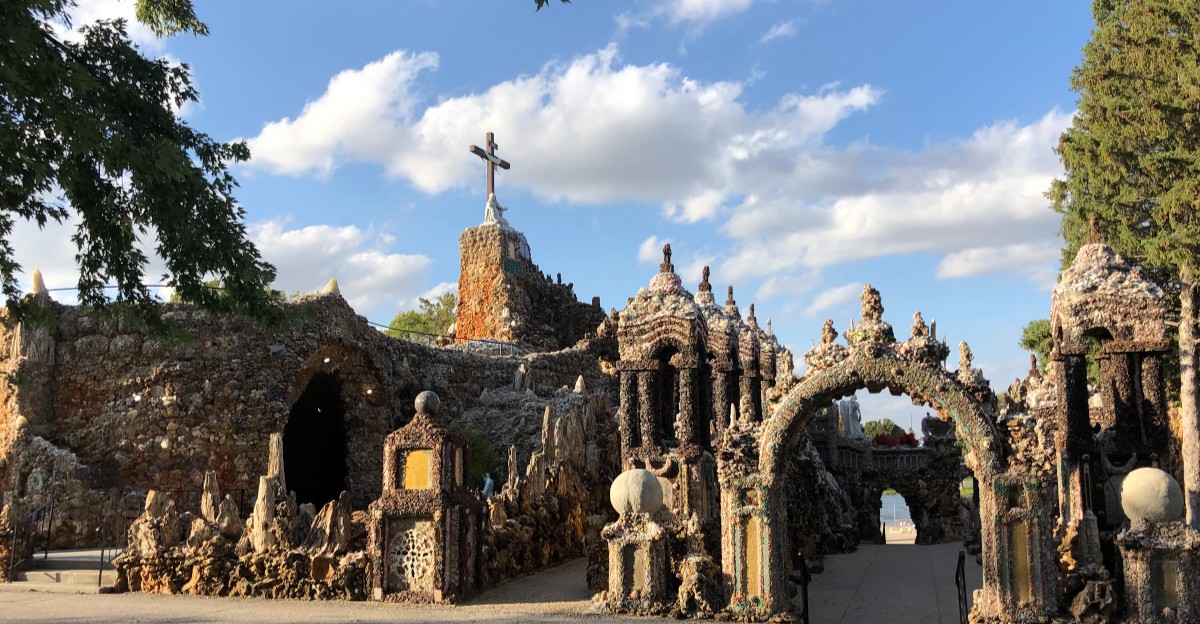
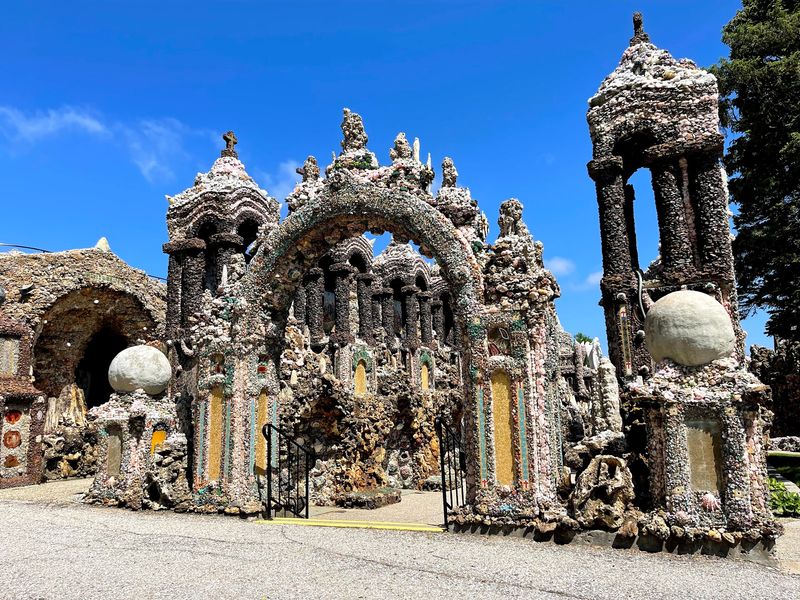
A priest spent 42 years building a shrine out of agate, amethyst, malachite, petrified wood, and seashells. He did it by hand, and it grew to roughly the size of a city block.
That alone should make you hit the brakes. Then you learn it holds what may be the most complete man-made collection of stones and minerals anywhere on Earth.
Some pieces even shine with 23-karat gold leaf.
I like how this place sits among Iowa farm fields and still feels like it belongs in a European travel guide. The gates never close, and there’s no ticket booth asking for cash.
I can’t imagine driving past without at least a peek. Nine connected grottos tell one big story in sparkling stone.
So how long do you think you’d last before pulling over?
One Priest, One Promise, and a Whole Lot of Rocks
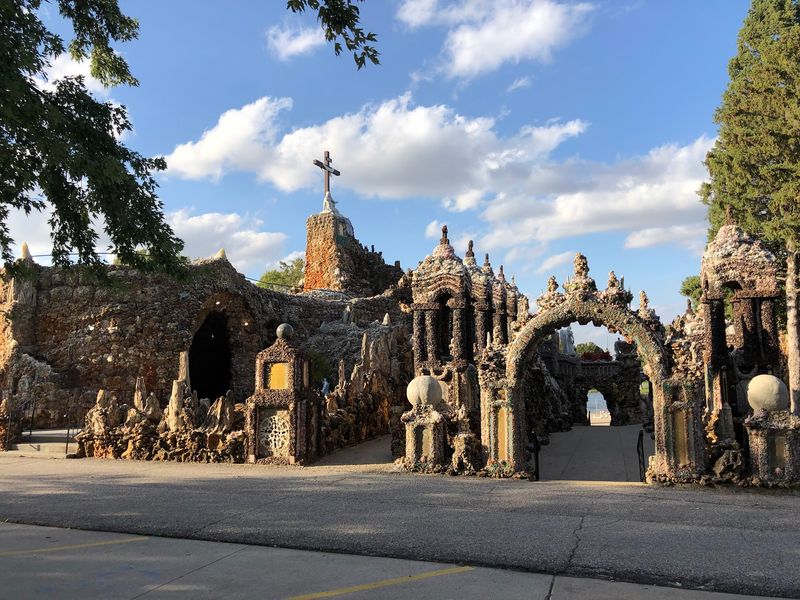
Back in his seminary days, a young man named Paul Matthias Dobberstein got seriously sick with pneumonia. He made a promise to build a shrine honoring the Blessed Virgin Mary if he recovered.
He got better, was ordained in 1897, and started collecting stones. That promise became the Shrine of the Grotto of the Redemption, and it’s still standing proud today.
Father Dobberstein was a German immigrant with serious patience. He officially began construction in 1912 and kept working for 42 years.
The work didn’t end with him, either. Father Louis Greving and parishioner Matt Szerensce carried the project forward into the early 1990s.
That’s roughly eight decades of hands placing stones one at a time. Today, the structures are carefully preserved and maintained, so the story keeps going.
I believe knowing this backstory changes how you see every wall. You stop noticing just pretty rocks and start seeing a lifetime of devotion.
It also explains why the shrine earned a spot on the National Register of Historic Places in 2001. That’s a big honor for a small town in Iowa.
Before you even park, you’re looking at a promise kept in stone. Pretty hard to top that as an opening act.
Your Inner Rock Collector Is About to Lose Its Mind
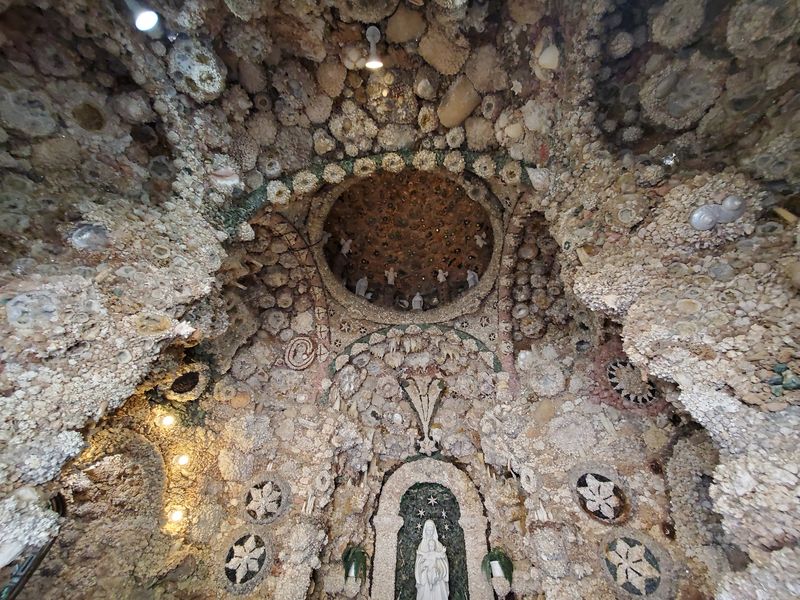
Polished agate. Amethyst.
Azurite, malachite, fluorite, jasper, topaz, pink quartz, and sparkly drusy quartz all crowd onto the same walls.
The list keeps going with calcite, pudding stone, geodes, fossils, shells, and petrified wood. Stones came from around the world, and the result is called the most complete man-made collection of its kind in one place.
Here’s a fun game for kids. Pick one color, like purple or green, and see how many different stones you can spot in that shade.
Adults will play too, honestly. Geodes split open to show crystal centers, and petrified wood looks like trees turned into glass.
The Grotto also works as an outdoor geological classroom. Teachers and curious families can learn the difference between minerals without opening a single textbook.
Take close-up photos, but don’t forget to step back. The tiny details form bigger patterns, and the big patterns form whole scenes.
Gold accents add extra drama. Some areas are trimmed in 23-karat gold leaf, which catches the light beautifully.
Bring a phone with lots of storage space. You’ll want pictures of stones you never even knew existed.
Nine Grottos Tell One Story, So Follow the Path
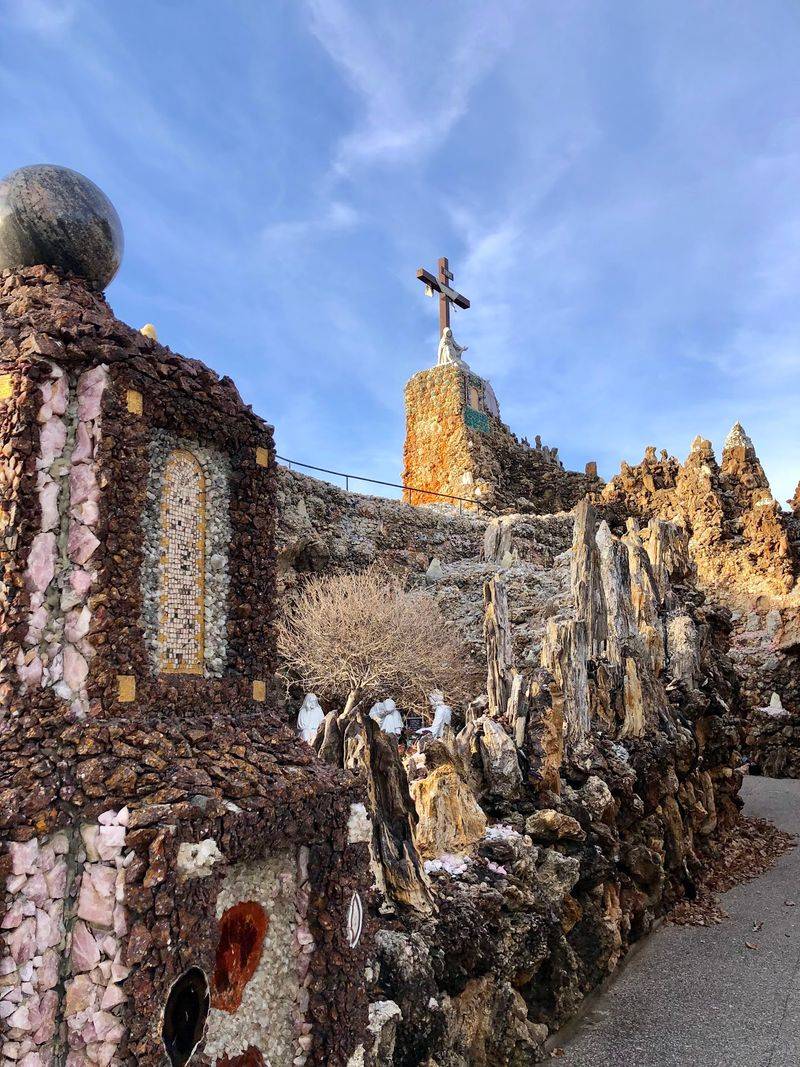
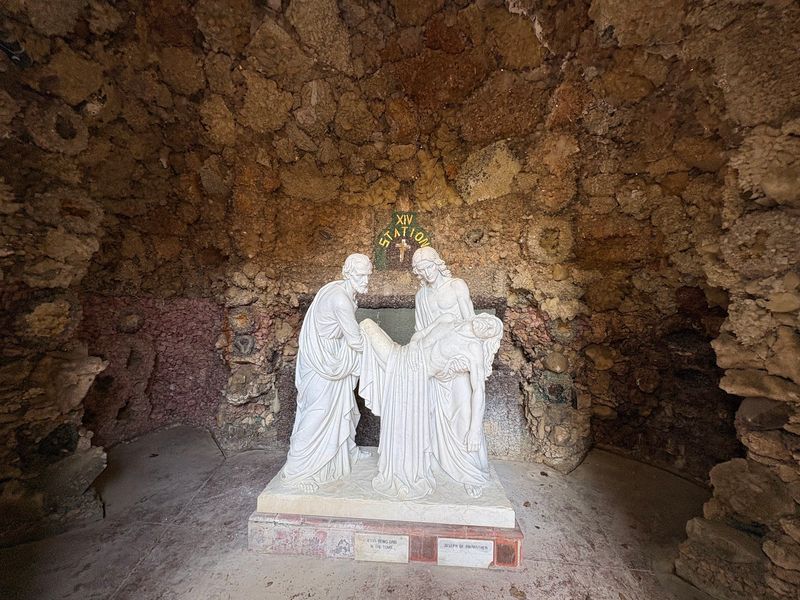
Think of the shrine as a storybook you walk through. Nine connected grottos show scenes from the life of Christ, all tied together by the theme of Redemption.
Statues, arches, passageways, and staircases guide you from one scene to the next. Each turn reveals a new chapter.
Many of the statues are hand-carved from Italian Carrara marble. That bright white stone stands out against the colorful walls around it.
The contrast makes each scene easy to read, even for younger visitors. Kids can point out familiar stories without needing a guide to explain everything.
Staircases add a little adventure. You’ll climb, peek through openings, and look down on sections you just passed.
Wear comfortable shoes, because the layout invites slow wandering. Rushing through would feel like skipping pages in a good book.
The Shrine of the Grotto of the Redemption is also a pilgrimage destination. Many people come for quiet reflection and spiritual growth, so a calm voice goes a long way.
Faith or not, the storytelling is easy to appreciate. It’s art, history, and craftsmanship rolled into one long, winding path.
The Gates Never Close, and Your Wallet Stays Happy
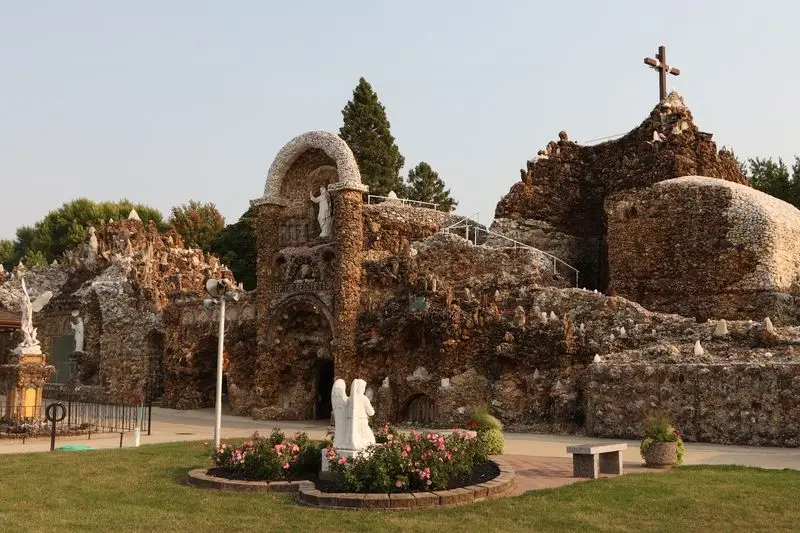
Road trippers, rejoice. The grounds are open 24 hours a day, seven days a week, all year long.
Even better, there’s no admission fee. Donations are encouraged, and they help keep this massive stone treasure in good shape.
That flexible schedule makes planning easy. Early bird before breakfast?
Fine. Late arrival after a long drive across Iowa?
Still fine.
Visiting at different times gives you different moods. Daylight shows off the colors, while evening adds a quieter feeling.
Winter is fair game too. Snow on the stonework sounds like a postcard waiting to happen, so bundle up and go.
Just remember the extras keep their own hours. The office, museum, gift shop, and guided tours run on seasonal schedules.
From May 1 through October, the museum and gift shop are generally open 9 a.m. to 5 p.m. From November through April, hours usually shift to 9 a.m. to 4 p.m., and the gift shop closes in January.
So the rule is simple. Come anytime for the Grotto, but aim for daytime if you want the full package.
A Guided Tour Turns Pretty Rocks Into Great Stories
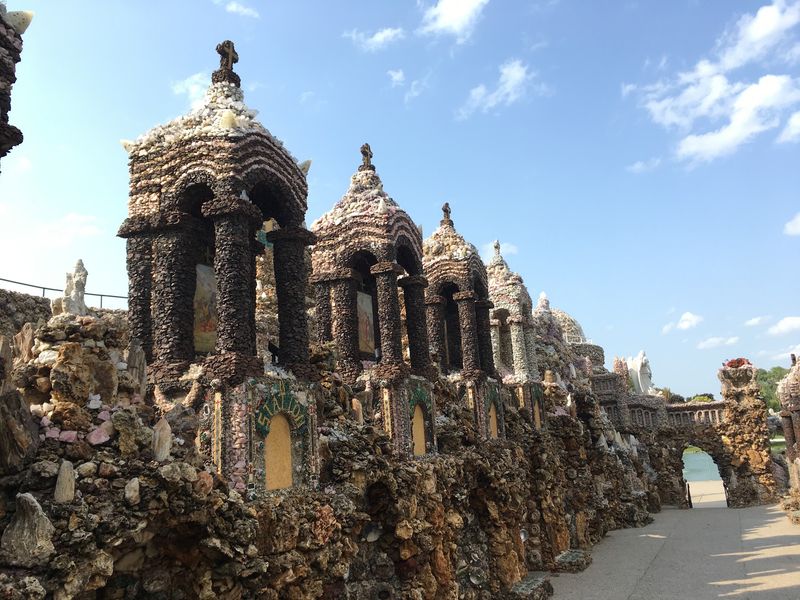
Wandering solo is lovely. Hearing the stories behind the stones is even better.
Guided tours typically run daily from April through October, between 10 a.m. and 5 p.m. If you want context, time your visit around one.
A guide can explain which scene you’re looking at and why certain stones were chosen. Those little details make the walls feel alive.
Self-guided visits work great too. You set your own pace and linger wherever something catches your eye.
Traveling with a crowd? Group tours are welcome at the Shrine of the Grotto of the Redemption.
Reservations are recommended for groups of 15 or more. Tours can also be customized, which is handy for schools, church groups, or family reunions.
Pro tip for planners. Check the seasonal schedule before you leave so you don’t miss the last tour of the day.
Either way, give yourself plenty of time. This isn’t a quick photo stop and back to the highway kind of place.
You might arrive planning twenty minutes and stay much longer. Consider yourself warned.
Don’t Skip the Museum, Because the Tools Tell Tales
Old hand tools might not sound thrilling. Then you realize they helped build a city-block-sized shrine.
The on-site museum displays tools used by Father Dobberstein, along with historical photos and news articles about the construction. Seeing them up close makes the whole project feel more human.
There’s plenty of sparkle, too. A large display of precious and semi-precious stones from around the world fills the museum.
It’s a great place to match names to stones. After the museum, you’ll start recognizing minerals out on the Grotto walls.
Want the full backstory? A 45-minute documentary video covers the shrine and its history.
That video is perfect for a hot afternoon or a chilly day. You get a break from the weather and a deeper look at the work.
I’d suggest visiting the museum before your walk if you can. The Grotto makes even more sense once you know how it came together.
Museum hours follow the seasonal schedule. Plan accordingly so you don’t arrive just as the lights go off.
Next Door Waits a Chapel With a Massive Amethyst
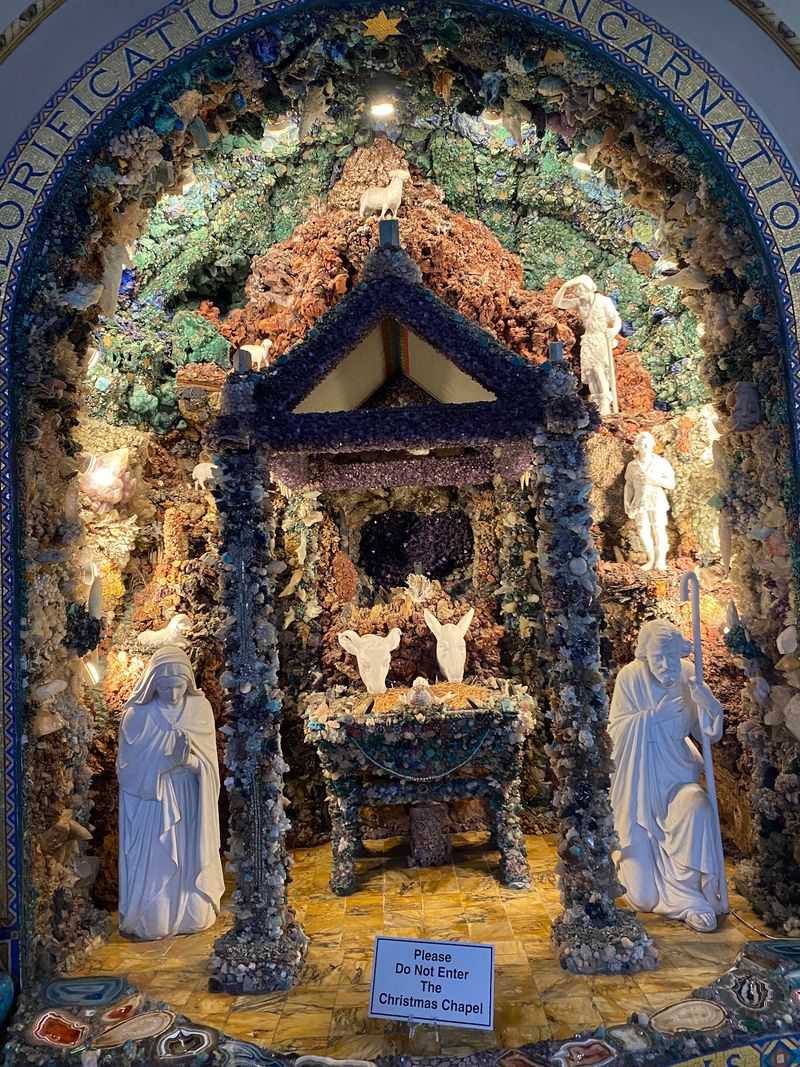
A 300-pound amethyst sits at the manger of baby Jesus. Yes, you read that right.
You’ll find it in the Christmas Chapel inside Saints Peter and Paul Catholic Church, right beside the Grotto. The chapel was built in 1929.
It also includes rocks from every country and major river around the globe. That’s a geography lesson set right into the walls.
Many visitors focus only on the outdoor grottos. Missing the church would mean skipping one of the coolest pieces of the whole experience.
The chapel shows the same love of stone found outside. It just packs that passion into a cozier, more intimate space.
Remember that it’s a working church. Keep voices low and be respectful of anyone praying.
Take a moment to admire that giant purple crystal. It’s hard to imagine hauling a 300-pound stone into place without modern machines.
The church sits steps from the Shrine of the Grotto of the Redemption at 208 1st Avenue NW, West Bend, IA 50597. You really have no excuse to skip it.
Pitch a Tent and Stay Close to the Sparkle
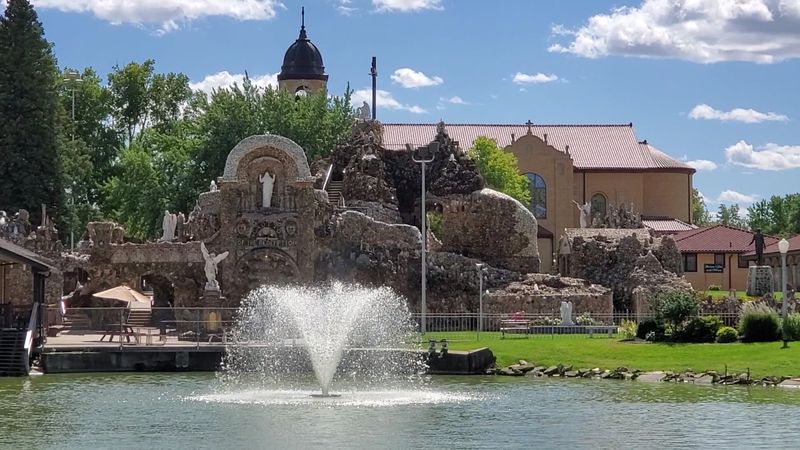
Why rush off when you can sleep a few steps away? The Grotto Campground gives road trippers a reason to stay overnight.
It offers around 53 to 55 sites for campers and tents. Amenities include 30 and 50 amp electrical hookups, water, showers, and a sewer dump station.
The season runs from April 15 to November 1, depending on the weather. Iowa springs and falls can be unpredictable, so stay flexible.
Sites are first-come, first-served. Arriving earlier in the day gives you a better shot at a spot.
Staying overnight opens fun options. You could catch the Grotto in morning light and again after dark.
Since the grounds never close, campers can enjoy quiet evening strolls. That’s a pretty special perk for the price of a campsite.
Don’t forget the pond and flower gardens either. They make a peaceful spot to stretch your legs after hours on the road.
Camping here turns a quick stop into a real mini-vacation. Your future self will thank you for slowing down.
Grab a Souvenir, Then Brag About Your Detour
Leaving empty-handed feels wrong after seeing that many gorgeous stones. Luckily, the gift shop has you covered.
You’ll find special occasion gifts, jewelry, and inspirational music. It’s an easy place to pick up something meaningful for friends back home.
Shopping here helps, too. Along with donations, it supports the care of a shrine that’s free to visit.
Remember the gift shop closes in January. Plan a winter trip outside that month if browsing matters to you.
The shrine keeps earning attention beyond the region. In 2026, it received a Geode Award from the Iowa Tourism Office for its big impact on tourism.
It also landed an Iowa Tourism grant for out-of-state advertising. Soon, even more travelers may be adding West Bend to their maps.
That’s a good reason to go sooner rather than later. You’ll get bragging rights before everyone else catches on.
Fields stretch for miles across Palo Alto County. Then this glittering wonder appears, and suddenly your road trip has a new highlight worth telling everyone about.