A carousel in the hills near Spring Green holds 269 animals, and not one of them is a horse. I read that twice to make sure it was real. It is.
That oddball detail sent me looking for more places like it. I found a cave discovered by accident when quarry workers blasted limestone in 1939.
I also found a lighthouse you reach by riding a tractor-drawn wagon across the water.
Wisconsin keeps surprises like these spread across its map, from lake islands to football stadiums. Some sit on glacier-carved land.
Others hold art, history, or rooms that hang over a valley.
I just can’t say no to a road trip with a reward at each stop. And these twelve landmarks feel like that kind of trip.
1. Wisconsin State Capitol

Madison’s tallest building isn’t an office tower or a hotel. It’s the Wisconsin State Capitol, and its granite dome rules the skyline.
The building was completed in 1917 after a fire badly damaged the earlier capitol in 1904. It sits on a narrow strip of land between Lake Mendota and Lake Monona.
That setting gives the whole city a pretty dramatic centerpiece.
Look up when you reach the top of the dome. A gilded bronze statue named Wisconsin stands there, and she measures over 15 feet tall.
She was hoisted into place in 1914, before the building was even finished.
Inside, the rotunda is a real jaw-dropper. Edwin Blashfield’s mural, The Resources of Wisconsin, decorates the dome overhead.
The interior also uses 43 kinds of stone from six countries, so bring your curiosity.
Free guided tours run daily, and they explain the history and symbols hidden in the details. In warmer months, an outdoor observation deck at the base of the dome opens up.
From there, you get wide views of downtown Madison and the lakes.
The Capitol also houses the Legislature, the Supreme Court, and the Governor’s Office. It became a National Historic Landmark in 2001.
Address: 2 E Main St, Madison, WI 53702
2. Taliesin
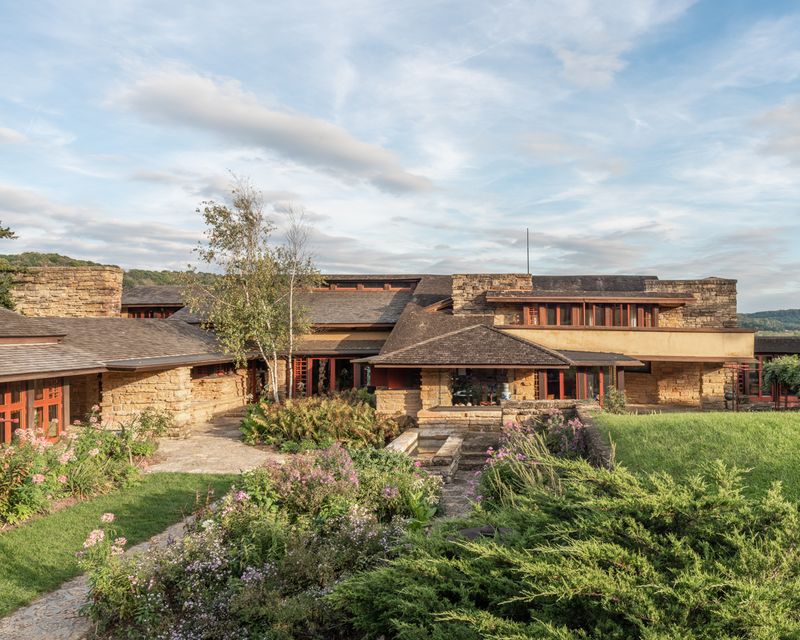
Frank Lloyd Wright didn’t want his home sitting on top of a hill. He wanted it built into the brow of one, so he named it Taliesin, a Welsh word meaning shining brow.
He began building here in 1911 on land tied to his Welsh family. Fires struck in 1914 and 1925, and he rebuilt both times.
The version you see today kept changing until he passed away in 1959.
The estate covers about 800 acres in the rolling hills near Spring Green. Its buildings span decades of Wright’s career, from the 1890s through the 1950s.
You’ll find his home, a drafting studio, a theater, and farm structures.
Tours start at the Frank Lloyd Wright Visitor Center, and shuttles carry you to the estate. Options include two-hour and four-hour tours.
Getting tickets ahead of time is a smart move.
Hungry after all that architecture talk? The Riverview Terrace Café is in a Wright-designed building too.
Taliesin was also home to the Taliesin Fellowship, an apprentice program Wright founded in 1932. In 2019, the site joined a UNESCO World Heritage listing of Wright’s works.
That’s pretty fancy company for a farm in Wisconsin.
Address: 5481 County Rd C, Spring Green, WI 53588
3. The House on the Rock
Some people collect stamps. Alex Jordan Jr. built an entire attraction on top of a 60-foot rock chimney and kept adding to it for decades.
Construction began in 1945, and the place opened to visitors in 1960. Today, the route stretches about three miles.
Wear comfy shoes and plan on spending half a day.
The star is the Infinity Room, built in 1985. It reaches 218 feet out over the valley and has over 3,000 pieces of glass.
Standing near the end feels a little like floating, in a good way.
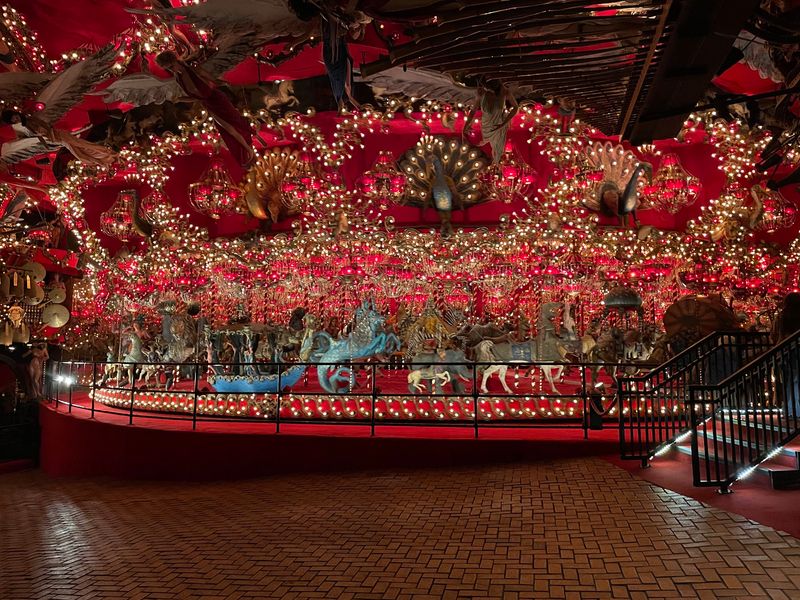
Then there’s the carousel. It’s billed as the world’s largest indoor carousel, with 269 animals and zero horses.
Thousands of lights and 182 chandeliers make it glow.
Other areas get just as wild. The Streets of Yesterday recreates an early 20th-century town filled with antiques.
The Heritage of the Sea features nautical exhibits and a 200-foot sea creature.
Music fans can wander through The Music of Yesterday, packed with automatic music machines. There’s also a Japanese-style garden with a 14-foot waterfall.
The attraction is closed Tuesdays and Wednesdays, so plan your trip around that. Buying tickets ahead is a good idea.
Address: 5754 WI-23, Spring Green, WI 53588
4. Apostle Islands National Lakeshore
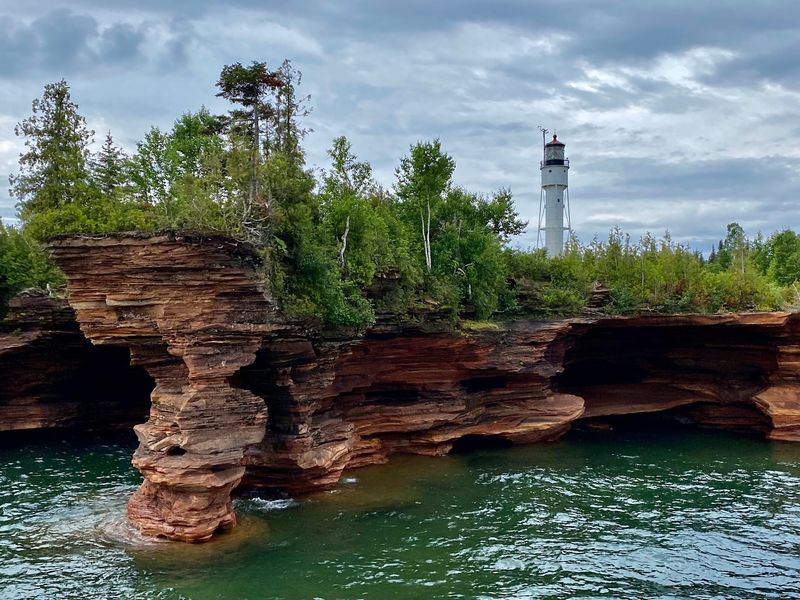
Lake Superior has been carving art into red sandstone for ages. The Apostle Islands are where you get a front-row seat.
This national lakeshore covers 21 islands plus about 12 miles of mainland shoreline. It sits at the northern tip of Wisconsin’s Bayfield Peninsula.
The headquarters visitor center is right in Bayfield.
Sea caves are the headline act. In warm months, kayaks are a popular way to paddle along the cliffs.
In winter, some of the same caves can turn into icy wonderlands when conditions allow.
Lighthouse fans, you’re in luck. The lakeshore has the largest and finest single collection of lighthouses in the country.
Raspberry Island, Sand Island, and Devils Island are among the spots with light stations.
Not a paddler? Guided cruises and island shuttles leave from Bayfield.
You can also hike roughly 30 miles of trails, camp, fish, or have a picnic.
The islands are part of the ancestral homeland of the Ojibwe people. Congress created the lakeshore in 1970.
Most of its land is now protected as the Gaylord Nelson Wilderness, named for the former Wisconsin governor and senator.
Address: 415 Washington Ave, Bayfield, WI 54814
5. Cave of the Mounds
On August 4, 1939, quarry workers set off a blast and found a cave nobody knew existed. Talk about a surprise on the job.
Cave of the Mounds opened for public tours in May 1940. It’s now a National Natural Landmark.
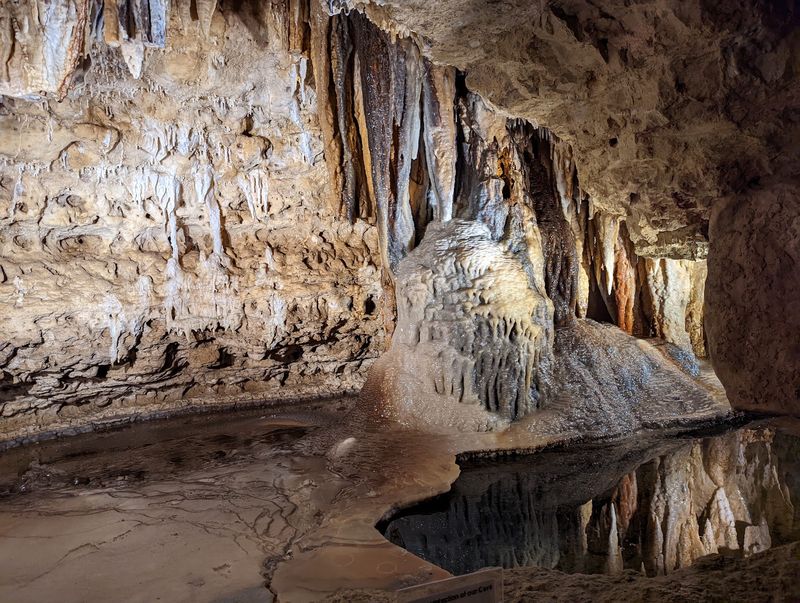
People call it the jewel box of America’s caves, and the formations explain why.
You’ll see stalactites hanging down and stalagmites rising up. Columns, curtains, lily pads, and twisty helictites fill in the rest.
Keep your eyes open for fossils of ancient sea creatures in the rock too.
Tours take about an hour on paved, well-lit paths. The cave stays around 50 degrees all year.
Bring a light jacket, even in July.
Back above ground, the fun keeps going. You can sluice for gemstones and fossils or crack open a geode.
Kids especially tend to love that part.
There are also gardens and hiking trails on the property. The Karst View Trail climbs toward the top of the Eastern Blue Mound for views of the Driftless Region.
A visitor center has natural history exhibits. The gift shop sells rocks, fossils, and other keepsakes for collectors of all sizes.
Address: 2975 Cave of the Mounds Rd, Blue Mounds, WI 53517
6. Cana Island Lighthouse
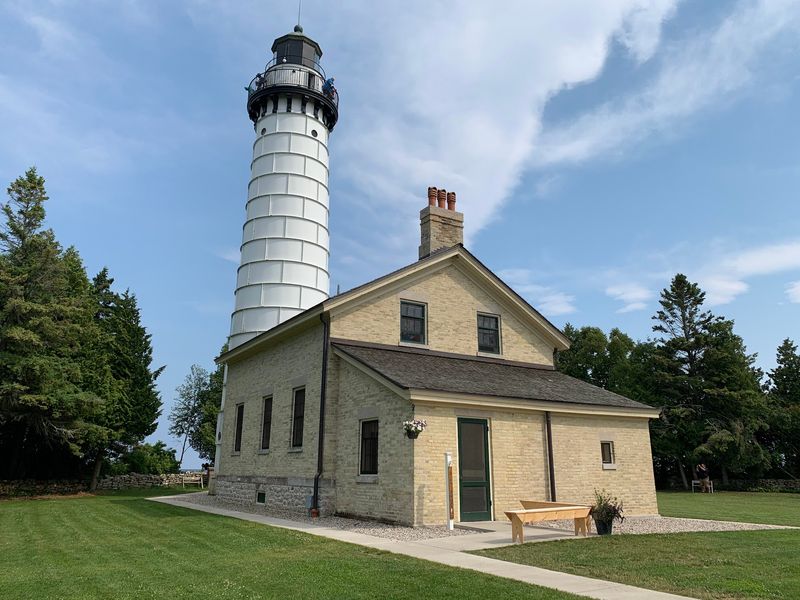
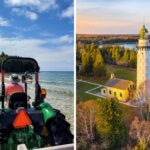
How many lighthouses let you arrive by tractor? Cana Island Lighthouse does, and that ride is half the fun.
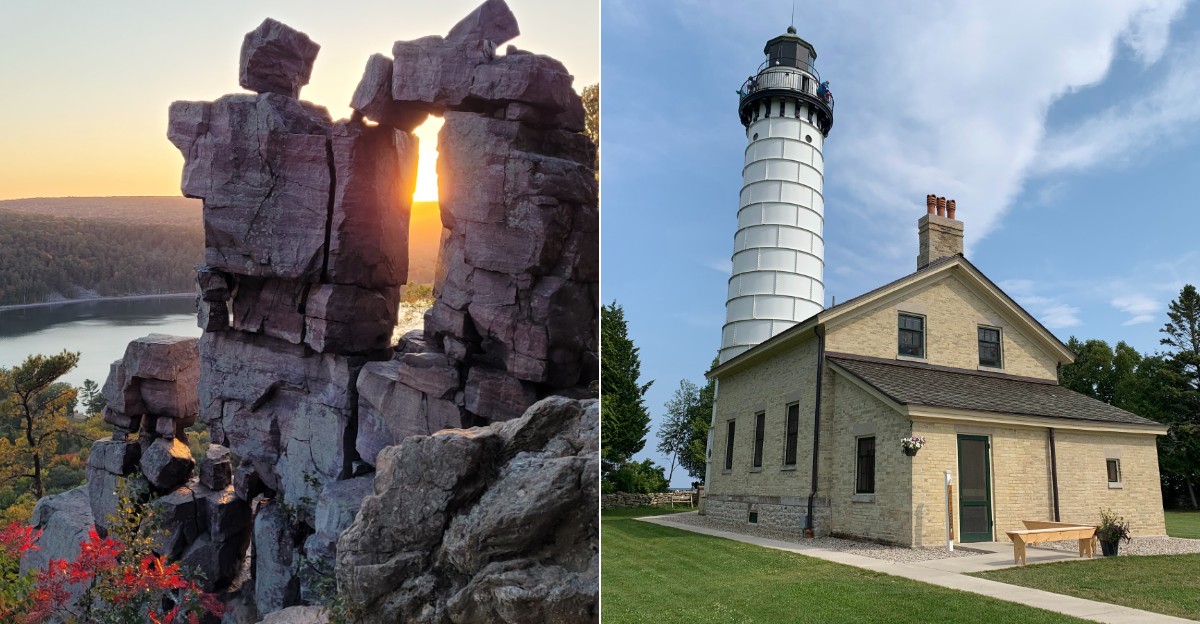
The light stands on a small island off the Lake Michigan shore near Baileys Harbor. A tractor-drawn wagon can carry you across the shallow water to the island.
You can also walk over when conditions allow.
This 19th-century lighthouse still has its original keeper’s quarters. Both are open to the public during the season.
Informative signs around the grounds share the story of life at the light.
The big moment comes when you climb the tower. From the top, you get sweeping views of the lake and the Door Peninsula shoreline.
It’s a solid workout with a pretty great reward.
The grounds are restored and easy to wander. Families will find it a good stop for kids who like boats, wagons, or climbing stairs.
There’s no restaurant on site, so pack a snack or plan to eat in town. Restrooms are available.
Active military visitors can get a discount.
Door County has plenty of scenic stops, but this one blends history and adventure nicely. It feels like a small expedition in one afternoon.
Address: 8800 E Cana Island Rd, Baileys Harbor, WI 54202
7. Devil’s Lake State Park
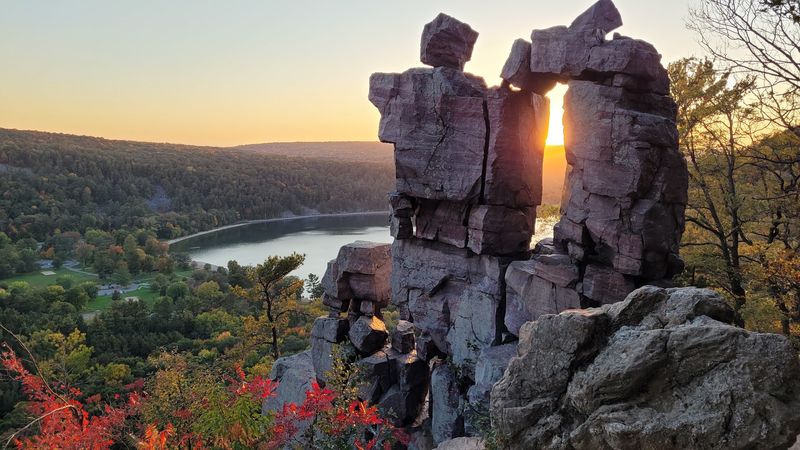
The rocks here are about 1.6 billion years old. The lake is a youngster by comparison, carved by glaciers roughly 12,000 years ago.
Devil’s Lake State Park sits in the Baraboo Range. Quartzite bluffs rise about 500 feet over a 360-acre lake.
It’s the largest and most visited state park in Wisconsin, and the views make that easy to understand.
Trails range from easy lakeside strolls to steep bluff climbs. The park is also part of the Ice Age National Scenic Trail.
Climbers, bikers, divers, and paddlers all find something to do.
Two sandy beaches welcome swimmers in summer. Kayak and canoe rentals are available seasonally on the south shore.
Picnic areas have grills, and there’s a playground for kids.
Winter changes the plan, not the fun. Cross-country skiing, snowshoeing, and ice fishing take over.
The Ho-Chunk Nation calls the lake Tee Wakącąk, meaning Sacred Lake. The park was founded in 1911.
Many stone buildings and trails were built by the Civilian Conservation Corps in the 1930s.
Camping is popular, with three campgrounds. Book ahead if you want a site on a summer weekend.
Address: S5975 Park Rd, Baraboo, WI 53913
8. Copper Falls State Park
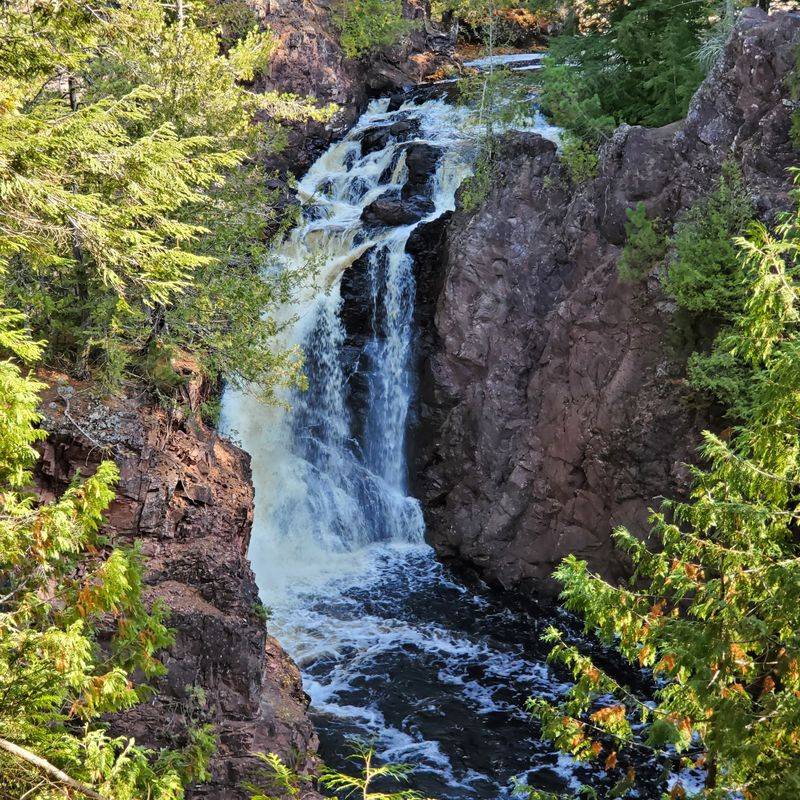
Waterfalls, gorges, and an ice cream stop in the same park? Northern Wisconsin really knows how to treat a hiker.
Copper Falls State Park sits near Mellen in Ashland County. The Bad River rushes through rocky gorges here, creating waterfalls and rapids.
It’s the kind of scenery that makes you stop mid-step.
You don’t need to be a trail expert to see the good stuff. Short, well-kept trails lead to the falls.
A popular 1.7-mile loop shows off some of the best views.
Along the way, boardwalks and bridges carry you over tricky spots. Informational plaques explain what you’re looking at.
That’s handy when your kids ask a hundred questions.
The park also has a beach for swimming. Fishing and biking are options, and the park stays open year-round.
Families get a large playground with slides and swings. Picnic tables and grills make lunch outdoors simple.
And yes, a convenience store sells ice cream. After climbing stairs near the waterfalls, that might feel like the real prize.
Bring good shoes and a camera with a charged battery. The falls look different in every season, so you might want to come back.
Address: 36764 Copper Falls Rd, Mellen, WI 54546
9. Interstate State Park
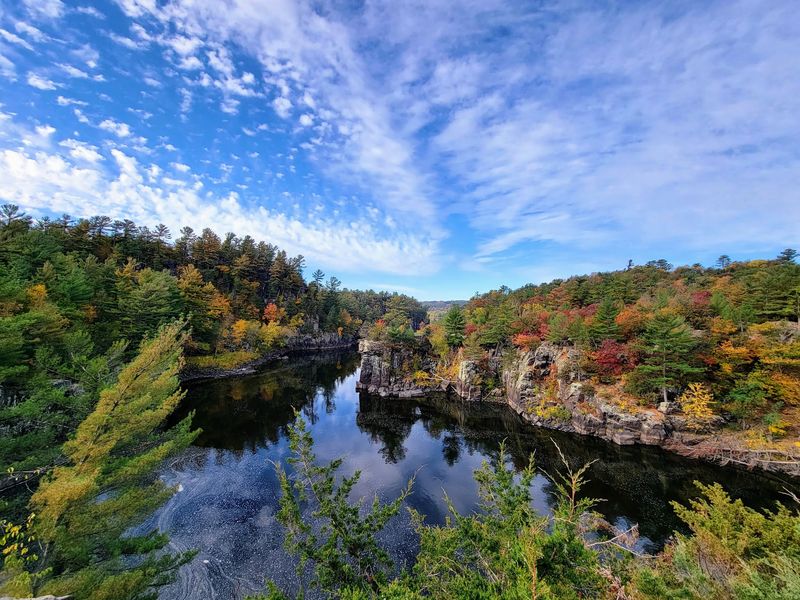
Being first comes with bragging rights. Interstate State Park is Wisconsin’s oldest state park, and it has the scenery to back that up.
The park sits along the St. Croix River on the state’s western edge. Rocky bluffs line a deep river gorge.
A waterfall adds a little extra drama.
Hiking is the main event. Some trails are rugged and rocky, while others have gentler slopes.
Many offer great lookouts over the river below.
The park also tells a big story about ice. Exhibits explain how Ice Age glaciers shaped this landscape.
It’s a fun way to understand what you just hiked through.
Need a break from the climbs? There’s a swimming beach for warm days.
Picnic tables, grills, and a playground round things out.
Dogs are welcome too, so your four-legged hiking buddy can join. Just keep an eye on the rocky edges.
The park is open daily from early morning until late evening. Saturday afternoons tend to be busiest, so weekday visits can feel calmer.
This corner of Wisconsin often gets overlooked by travelers. One trip to these cliffs might change that for you.
Address: 851 State Highway 35, St. Croix Falls, WI 54024
10. Basilica of Saint Josaphat

Milwaukee’s skyline has a big green surprise on the south side. It’s the copper dome of the Basilica of Saint Josaphat, and it’s hard to miss.
This Roman Catholic church is known for that soaring dome. It’s one of the city’s most impressive pieces of architecture.
Photos rarely capture the full size, so seeing it in person helps.
Step inside, and the colors take over. The interior is famous for its rich, detailed murals.
Your neck might get a little sore from looking up so much.
The basilica still serves as an active church. Visit with respect, especially if a service is happening.
A quiet stroll lets you notice more of the artwork anyway.
Visiting hours vary by day, and the building is closed on Tuesdays. Check the schedule before you go so you don’t end up at a locked door.
Parking is free in the lot and on the street. That makes it an easy add-on during a Milwaukee day trip.
Pair it with the art museum downtown for a day full of eye candy. One spot is modern, and the other is classic.
Together, they show off two very different sides of the same city.
Address: 2333 S 6th St, Milwaukee, WI 53215
11. Milwaukee Art Museum
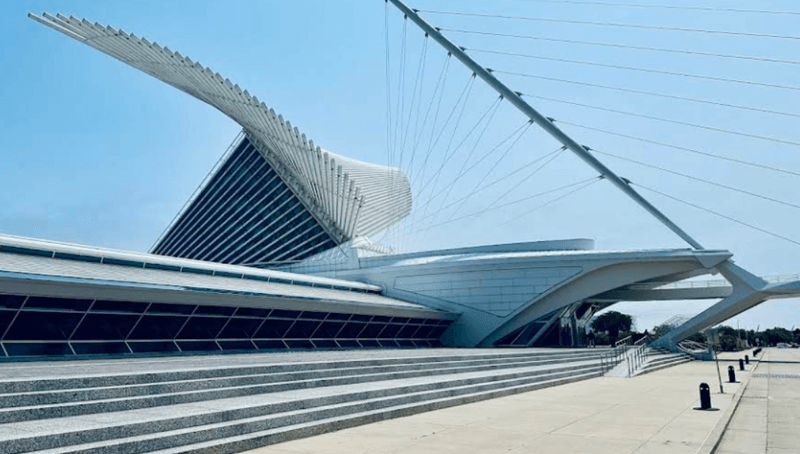
Most buildings stay put. This one spreads its wings, literally, over the Lake Michigan shore.
Santiago Calatrava designed the Quadracci Pavilion, which opened in 2001. Its Burke Brise Soleil has a 217-foot span.
The wings open and close during the day, like a giant bird getting ready for flight.
The building alone is worth the trip, but the art is the main course. The collection holds nearly 35,000 works.
You’ll find European and American paintings, decorative arts, folk art, Haitian art, and modern design.
Georgia O’Keeffe fans, take note. She was born in Wisconsin, and the museum holds one of the largest collections of her work.
The museum’s roots go back to 1888. Its campus also includes a 1957 building by Eero Saarinen.
So you’re seeing great architecture from several eras.
Families get kid-friendly activities and discounts for children. Docent-led tours help if you want some guidance.
There’s also a cafe and a gift shop.
Hours change during the week, and the museum closes Mondays, Tuesdays, and Fridays. Plan ahead so you catch those wings in action.
Address: 700 N Art Museum Dr, Milwaukee, WI 53202
12. Lambeau Field
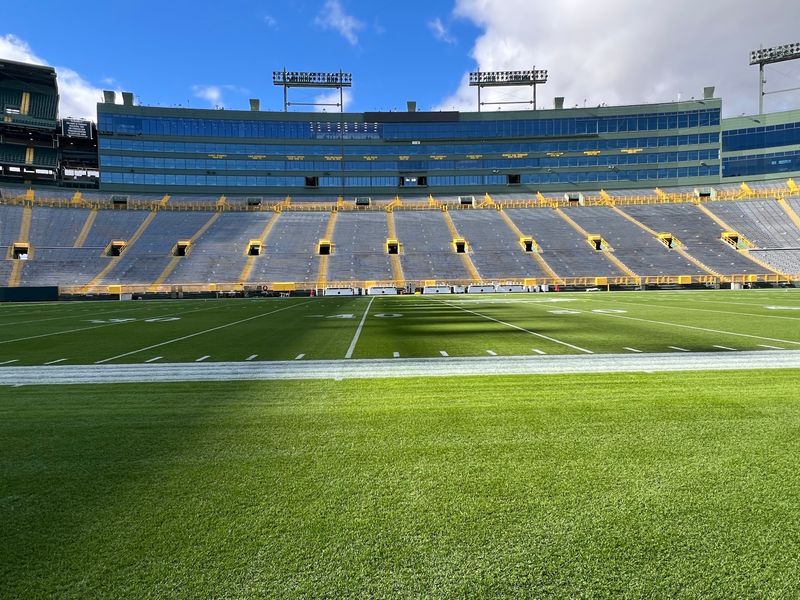
The Frozen Tundra earned its nickname at the 1967 Ice Bowl. Today, you can visit Lambeau Field all year, even without a game ticket.
The stadium opened in 1957 as City Stadium. It was renamed in 1965 to honor Curly Lambeau, the Packers’ founder and longtime coach.
It’s the oldest continuously operating stadium in the NFL.
Football fans could spend hours here. The Atrium holds the Green Bay Packers Hall of Fame and the Pro Shop.
Want some green and gold gear? This is the place.
Guided stadium tours take you behind the scenes. Depending on the tour, you might walk the team tunnel or see premium seating areas.
It’s a thrill even for casual fans.
Hungry? Restaurants are on site, so you won’t go far for lunch.
Next door, the Titletown District adds outdoor games, a playground, and a winter ice rink. That makes the trip fun for younger visitors who aren’t football experts yet.
The Packers are owned by their fans, which is rare in pro sports. That pride shows all over the stadium.
Wisconsin takes its football seriously, and this place proves it.
Address: 1265 Lombardi Ave, Green Bay, WI 54304