

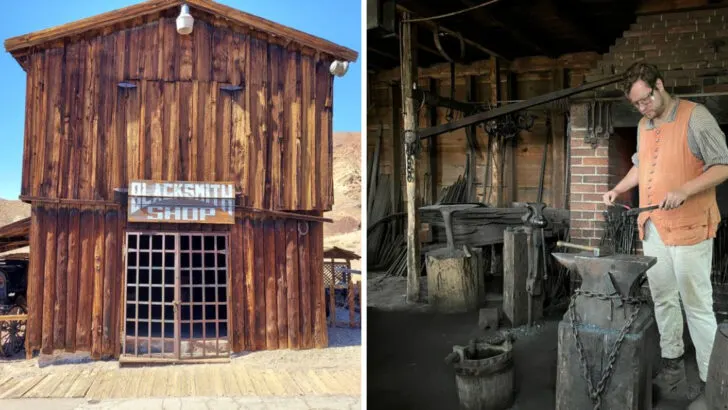
There is something magnetic about stepping into a working forge and feeling the floor hum under your boots.
Sparks fly, iron glows, and the steady ring of a hammer turns raw metal into useful art.
These living shops across America do more than recreate history, they let you stand close enough to smell the coal and learn how communities once ran.
Ready to plan a trip that puts craft, grit, and heritage right in front of you?
Blacksmith Shop — Harpers Ferry, West Virginia
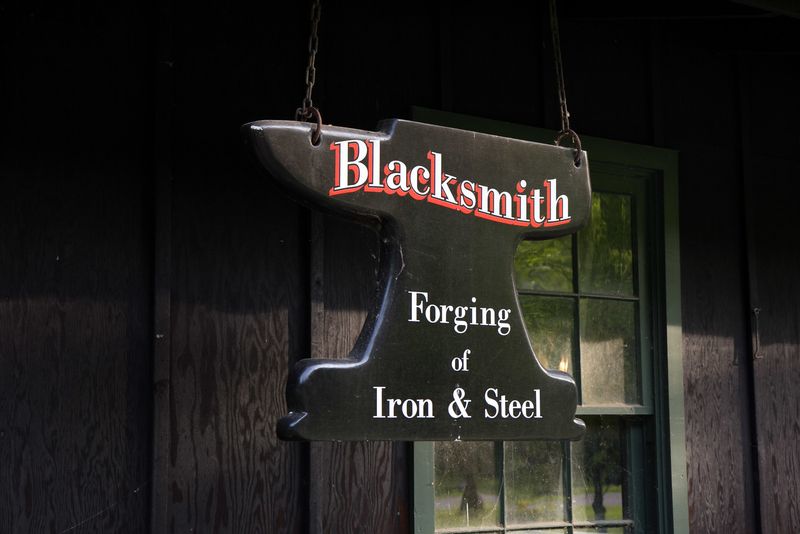
Harpers Ferry invites you to step into a living rhythm of iron and fire, where the clang of a hammer echoes against the Potomac and Shenandoah. In this working blacksmith shop, you watch iron heat to a cherry glow, then transform beneath practiced blows into hooks, hinges, and hardware.
The setting feels authentic because it is, surrounded by Civil War era streets, canal remnants, and the railroad that once demanded constant smithing skill.
Demonstrators show how coal fires are managed, explaining air control, steel temperatures, and the difference between wrought iron and mild steel. You can lean close enough to feel the heat, without stepping across the clear boundaries that keep the workspace safe.
As the smith draws out metal and tapers a point, the methods once essential to boatmen, soldiers, and shopkeepers become clear.
Here, blacksmithing is not a reenactment gimmick, it is an industrial heartbeat from the 1800s replayed in real time. You see why railroads needed spikes, why river traffic required specialized fittings, and how the war accelerated demand for reliable tools.
The craft bridges utility and beauty, and the forged pieces carry texture that machine parts miss.
Plan your visit to catch scheduled demos, since the shop follows daily interpretive hours that align with park staffing. Ask questions about quenching, hardening, and tempering, because the crew enjoys translating old techniques into simple, usable ideas.
You leave understanding why the forge sat near water, rail, and armories.
As you wander back into the town, the smell of coal lingers and so does the cadence of the hammer. That sound connects you to workers whose labor kept bridges, wagons, and weapons functioning.
At Harpers Ferry, history is not silent behind glass, it breathes, sweats, and sparks.
Blacksmith Shop — Mount Vernon, Virginia
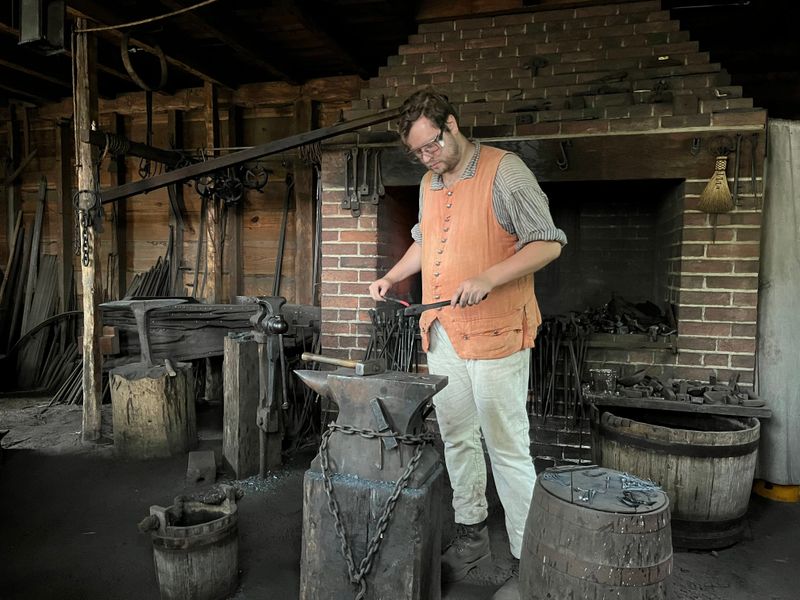
At Mount Vernon’s blacksmith shop, you can watch metalwork the way it supported an entire estate. The forge sits steps from the lanes where carriages rolled and fields that needed constant repair.
When the fire roars, it feels easy to picture gate hardware, hinges, and farm tools flowing from the anvil to the plantation’s daily rhythm.
Interpreters in colonial attire walk you through bellows control, iron selection, and the careful choreography between heat and hammer. You hear how Washington’s operations relied on smiths to keep plows cutting true and carts rolling.
The work remains practical, not decorative alone, and you can see the endurance built into each rivet and strap.
What stands out is the blend of elegance and grit. Mount Vernon exudes refinement, yet the shop reminds you that polished halls depended on tough hands and hot iron.
The smith might demonstrate a leaf finial or a hasp, explaining how small details make doors secure and tools comfortable.
Ask about charcoal versus coal, and how the colonial period handled steel shortages. The shop team often discusses resourcefulness, recycling broken parts into new stock, and forging repairs rather than discarding.
You walk away appreciating the circular economy that kept an estate resilient.
Plan time to explore the grounds before or after, since the context magnifies what you see at the anvil. The ring of hammer to steel cuts through the pastoral calm like a heartbeat you did not know you missed.
At Mount Vernon, the forge does not reenact the past, it reveals how an entire world ran on the craft you just witnessed.
Historic Washington Blacksmith Shop — Washington, Arkansas
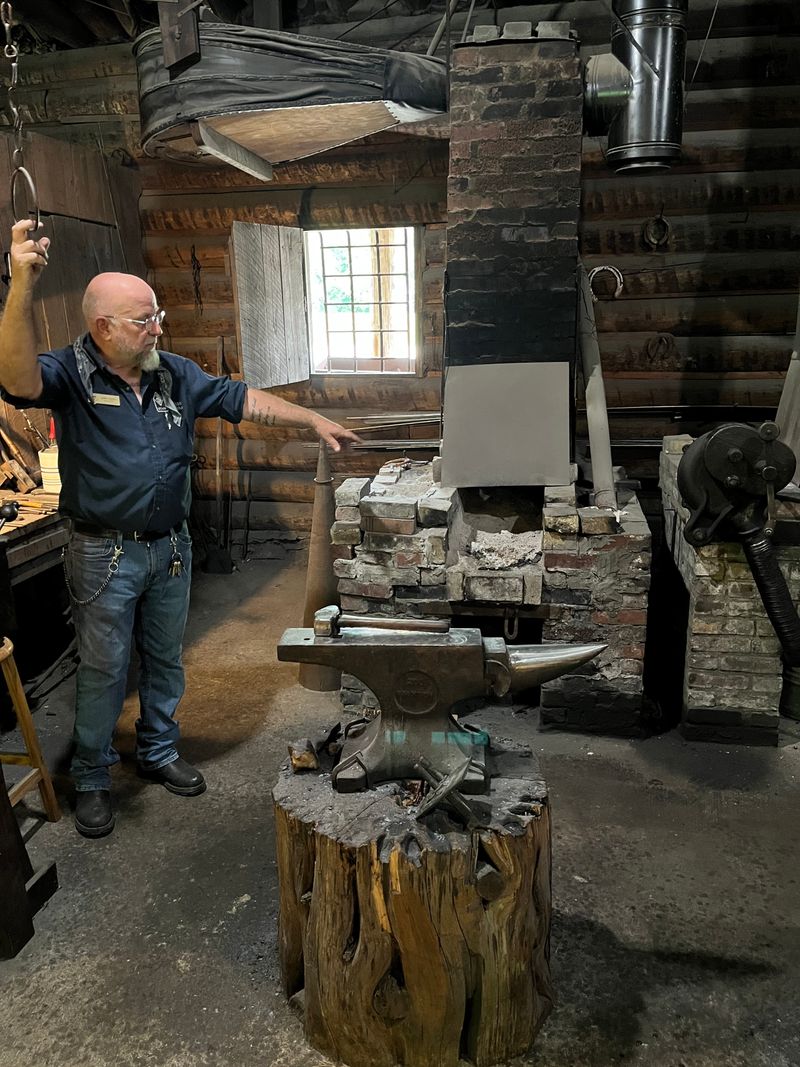
Historic Washington State Park lets you step into an 1800s frontier rhythm where the blacksmith kept wagons rolling and farms functioning. In the blacksmith shop, you stand close while iron warms and the smith draws out square stock into nails, hooks, and braces.
The dirt floor, timber posts, and stacked coal put you directly into rural Southern life.
Demonstrations focus on practical objects: hinges for cabins, straps for wagons, and repairs for plows. You hear how a frontier community relied on local skill because shipments were slow and expensive.
The smith explains tool maintenance, tempering chisels, and why good tongs are the secret to accuracy.
There is a rhythm to the work you feel in your chest. The hammer’s cadence, the hiss of quench water, and the bellows’ breath create a soundtrack that has not changed much in two centuries.
Instead of modern shortcuts, you watch careful heats and decisive blows, just enough force to move the metal without wasting energy.
Ask about the difference between wrought iron’s fibrous grain and later steels. The crew might demonstrate punching, drifting, and riveting, each step building a joint that holds under daily strain.
It is not flashy, but it is reliable, and that reliability built homes, wagons, and livelihoods.
After the demo, explore the town’s other trades so you see how the forge connected to carpenters, wheelwrights, and tanners. You realize every shop depended on the smith, from door latches to tool edges.
In Washington, Arkansas, the blacksmith shop is not a side display, it is the community’s hardware store, repair bay, and manufacturing line rolled into one.
Thaddeus Stevens Blacksmith Shop — Fayetteville, Pennsylvania
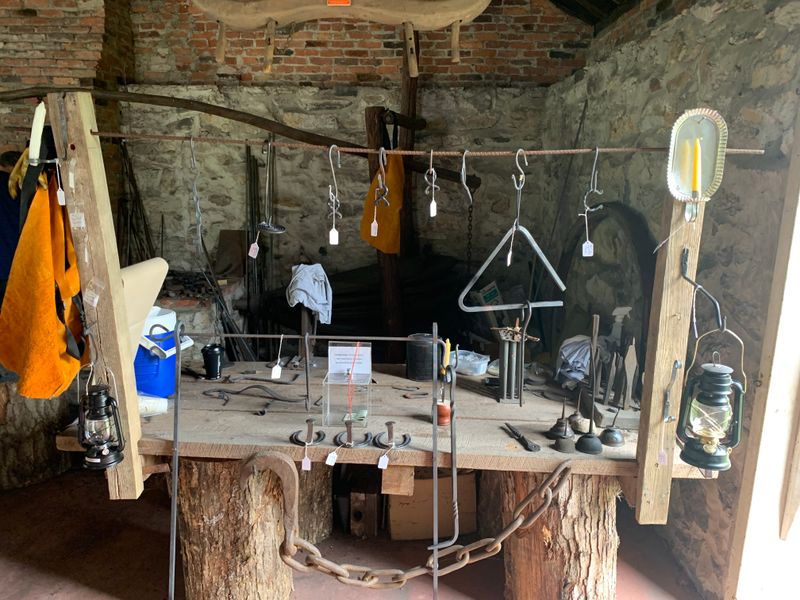
In Fayetteville, the Thaddeus Stevens Blacksmith Shop helps you trace the arc from traditional smithing to the iron industry that fueled American growth. Standing by the forge, you sense a crossroads where craft met manufacturing.
The tools look familiar, yet the talk turns to scale, output, and the push to standardize parts for expanding markets.
Demonstrators show how handwork set the standards machines later copied. You watch a strap hinge or clevis take form, then hear how shops like this informed patterns used in foundries and mills.
The process highlights precision, not speed, because good patterns require consistency.
You will appreciate the hybrid mindset within these walls. The smith still reads heat colors and controls the fire, but there is constant awareness of production, supply chains, and rail connections.
The shop becomes a bridge between village service and regional industry, where iron was no longer purely local.
Ask about tempering springs or hardening cutting tools, and you will hear how metallurgy evolved alongside demand. The crew may discuss the impact of anthracite coal and puddled iron, and why those innovations mattered to quality and cost.
It is a history of small choices adding up to big capacity.
Leave time to study the layout: the placement of the anvil to the forge, the location of swage blocks, and racks of tongs sized for tasks. You begin to see a workflow that reduces wasted steps, a production logic hiding inside craftsmanship.
In Fayetteville, the Stevens shop shows you how America moved from artisanal skill to industrial muscle without losing the heartbeat of the hammer.
Moravian Blacksmith Shop — Bethlehem, Pennsylvania
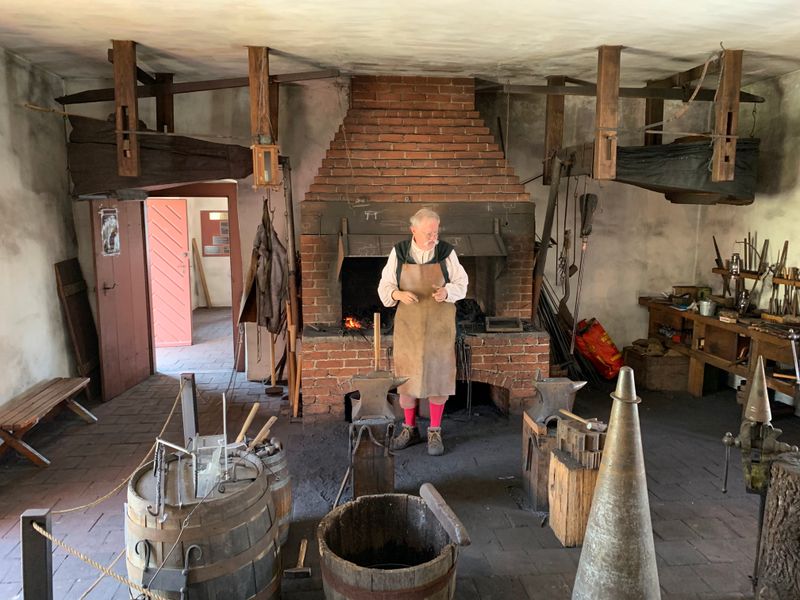
The Moravian Blacksmith Shop in Bethlehem emphasizes order, purpose, and community woven into every stroke of the hammer. You step into a space where benches, tongs, and swages line up with quiet intention.
The glow from the hearth falls across clean whitewashed walls, echoing the Moravian focus on discipline and service.
Demonstrators explain how Moravian trades supported settlement needs first, then outside markets. You watch straightforward work like making nails, hinges, and latches, then see decorative touches folded into utility.
Nothing here feels wasteful, and that restraint brings its own kind of beauty.
Ask about the communal workshop model, where skills were taught rigorously and apprentices advanced by demonstrated competence. The smiths discuss how quality control was management by conscience and craft pride.
When a hinge fits perfectly on the first try, you recognize the payoff.
The shop highlights precise heat control and careful hammer angles. You can observe drawing, bending, and upsetting with a rhythm that keeps metal aligned.
Quenching is not a dramatic sizzle but a measured step toward hardness and stability.
Beyond technique, this place invites you to consider values. The Moravian approach balanced productivity with stewardship, turning out dependable hardware that built trust.
As you leave, the forge’s gentle red fades behind you, but the reminder remains that good work starts with order, patience, and care.
Blacksmith, Historical Village — Glen Arbor, Michigan
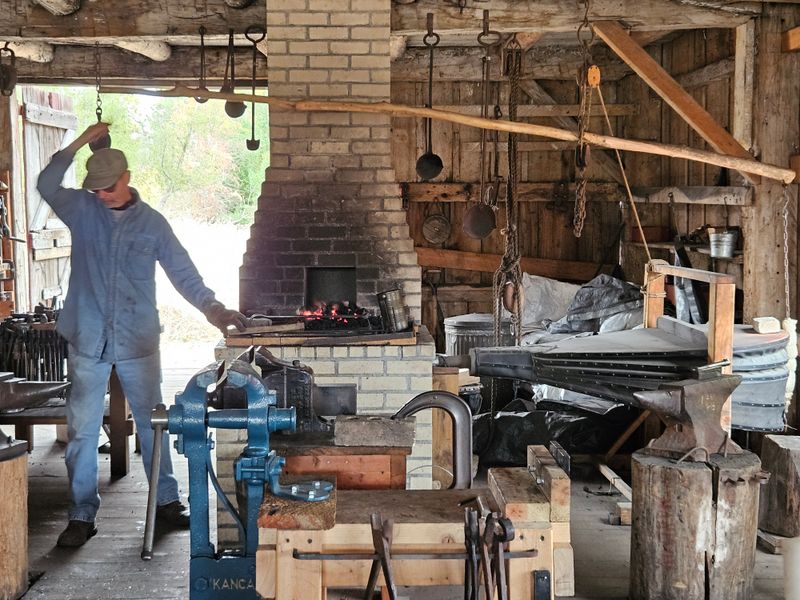
In Glen Arbor’s Historical Village, the blacksmith shop connects the Great Lakes to the frontier woods. You see anchor rings, chain links, and logging hardware that kept boats and teams moving.
The forge breathes, and the anvil sings, while the smith explains how lake weather punished weak parts and rewarded good steel.
Demonstrations focus on rugged, serviceable work. Think cant hook repairs, wagon tire work, and stout hinges for boathouse doors.
You watch hot collars tighten as they cool, a practical physics lesson you can feel through the floorboards.
The shop carries the scent of coal and varnished wood, and the tools wear the patina of hard use. The smith might show you how to draw out a spike or make a ring with a clean scarf weld.
There is nothing fussy here, just reliable technique and mindful heat control.
Ask about the transition from iron to early alloy steels in the region’s industries. You will hear how mills, docks, and camps shared repair networks that depended on a good smith’s judgment.
It was not glamour work, but it kept paychecks coming and boats afloat.
After the sparks settle, you can step outside and catch a breeze off the water, imagining skiffs bumping the pier. The connection between shop and shoreline becomes vivid, and you understand why village life revolved around dependable metalwork.
In Glen Arbor, the blacksmith’s steady hand held the community together, one rivet at a time.
Blacksmith Shop — Yermo, California
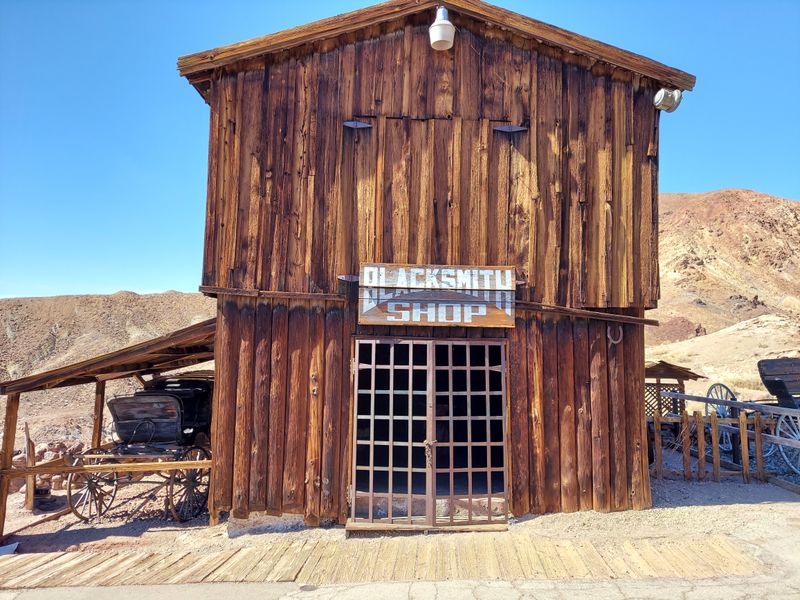
Yermo’s blacksmith shop gives you an Old West snapshot where dust, sun, and hot iron define the day. The desert air cuts sharp through the open doors while the forge roars.
You can imagine prospectors dragging broken picks inside and ranchers waiting on a quick shoeing or strap repair.
Here, the work is unapologetically practical. The smith demonstrates drawing out chisels, upsetting hammer heads, and punching eyes for picks.
You learn why quenching strategy matters in arid heat and how oil or water choices affect temper.
The setting feels cinematic, but the skill is real. You see a strap hinge take shape, struck with an honest pace that avoids overworking the metal.
A few careful heats do more than frantic pounding, and the lesson sticks.
Ask about making hardy tools for the anvil, then watch the smith use them to fuller a groove or set shoulders. The shop may also cover forge welding, a skill that earns respect fast in any blacksmith circle.
You leave with a sense that nothing goes to waste in a desert town.
As the sun slips lower, the forge’s orange competes with the light outside, and the anvil’s ring carries onto the street. Yermo’s shop shows how remote communities survived on ingenuity and repair culture.
If you want a gritty, hands on glimpse of Western working life, this is your stop.
Jerusalem Blacksmith Shop — Kingsville, Maryland
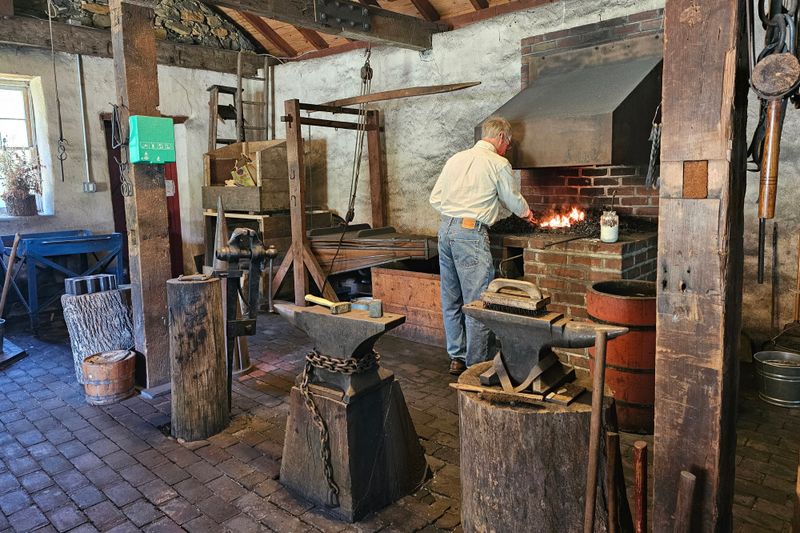
The Jerusalem Blacksmith Shop in Kingsville feels like stepping into a neighbor’s workspace that served an entire village. Modest in size, it holds everything necessary for hinges, hooks, tools, and small repairs.
You can see how a well arranged bench and a set of tongs become a complete toolkit.
Demonstrations show careful efficiency. The smith heats only the section needed, strikes precisely, and returns to the fire before the color drops too far.
You watch rivets peened tight and understand instantly why they last.
Ask about how customers ordered work. Often, folks brought patterns or broken parts, and the smith matched hole spacing and dimensions by eye.
That kind of memory and measuring skill still impresses today, even with digital tools everywhere.
The shop’s rural setting adds a peaceful backdrop. Birds call outside while the anvil rings, and you feel how steady craft work once anchored daily life.
Repairs were not inconveniences, they were an expected part of keeping farms and shops moving.
Before you leave, take a closer look at the swage block and hardy tools that shape curves and shoulders. Understanding those helpers makes the craft click, and you notice the elegance inside simple tasks.
In Kingsville, you find a small forge with big lessons about reliability, patience, and neighborly skill.
Hegarty Blacksmith Shop — Tamaqua, Pennsylvania

The Hegarty Blacksmith Shop in Tamaqua preserves a complete 19th century layout where every tool tells a story. You step onto plank floors and into a working diagram of how a small town shop was organized.
The forge sits near a window for light, the anvil sits where the smith’s body turns naturally, and racks of tongs hang by size.
Demonstrations are as much about workflow as metalwork. Watch how the smith sequences heats, keeps tools within reach, and moves from drawing to bending without wasted steps.
It is a master class in ergonomics long before the term existed.
Ask to see the fullering tools and swages used to standardize shapes. You will understand how consistency made orders easier to repeat, which kept customers loyal.
The shop also highlights repair culture, where mending a plow share could matter more than making something new.
The Tamaqua context adds industrial echoes from nearby coal and rail. You can imagine a steady stream of work: coupler pins, brackets, and hardware sized for a growing network.
The smith’s role was part craftsman, part local engineer.
Before you go, note the patina on the anvil face and the sway formed from thousands of strikes. That surface is a timeline of labor and learning.
At Hegarty, preserving the layout preserves wisdom, and you leave seeing how design and discipline turn a small shop into a dependable powerhouse.
Blacksmith Shop Museum — Dover-Foxcroft, Maine
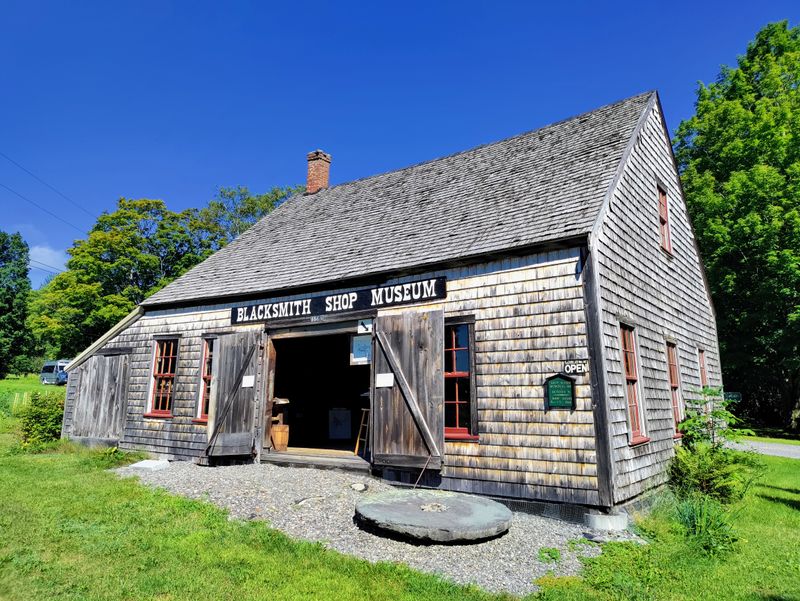
Dover Foxcroft’s Blacksmith Shop Museum brings New England’s practical ingenuity to life. The forge’s glow pushes back cool northern light while the smith shapes hooks, braces, and tool edges.
You feel the connection to farms and timber crews that needed tough hardware in tough weather.
Demonstrations often feature sharpening and tempering, a lifeline for axes and chisels. You will see careful color reading, from straw to blue, and hear how each hue signals hardness.
The process might look simple, but a good temper turns a day’s work from struggle into flow.
Ask about log drafting gear, chain repairs, and the fittings that kept sleds and wagons tight. The smith explains why reliable rivets and collars saved time in the woods.
You watch a scarf weld seal, and the joint becomes stronger than the stock around it.
The museum setting lets you linger without rushing. Tool displays trace decades of incremental improvements, each responding to local needs.
You will walk out noticing the design logic in even the plainest bracket.
Before leaving, breathe in the coal and pine scents and listen for the soft hiss of the quench. That sound pairs with the steady ring that seems to set a New England tempo.
In Dover Foxcroft, the blacksmith shop does not just show technique, it shows the temperament that made hard seasons workable.
Samuel D. Outlaw Blacksmith Shop — Onancock, Virginia
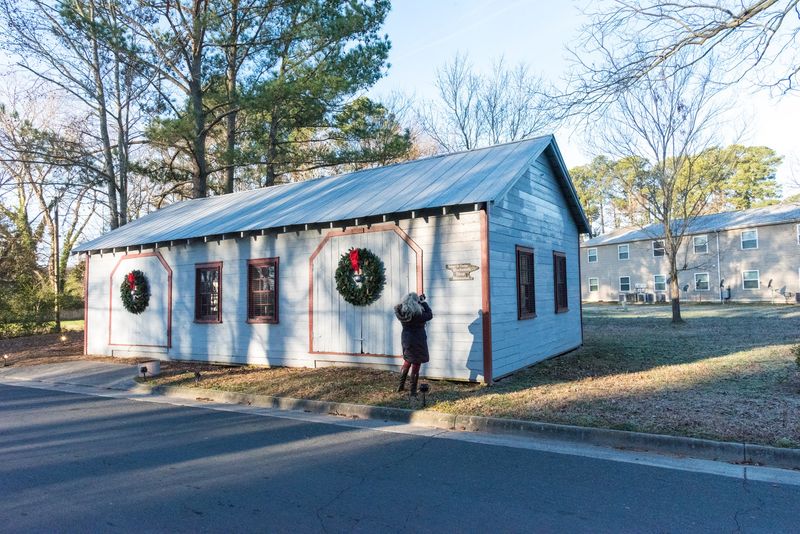
On Virginia’s Eastern Shore, the Samuel D. Outlaw Blacksmith Shop stands at the intersection of water and farmland.
You step into a compact, well organized space where both boat fittings and plow parts were forged. The balance of marine hardware and agricultural repairs reveals a working life tuned to seasons and tides.
Demonstrations might show ring bolts, chain mends, or strap hangers sized for docks. You will also see tool edges dressed for fieldwork, because harvests can not wait on dull steel.
The smith explains how salt air influences corrosion and why certain finishes or alloys stand up better.
Ask about riveting and clinching for boat ribs, and listen for the approach that avoids splitting wood under fasteners. The shop highlights how blacksmiths collaborate with carpenters and boat builders.
You get a sense of a coastal economy woven together by reliable parts.
The setting encourages conversation, and the crew welcomes questions about heat control and quench media. You might see a small forge weld or an upset tenon that locks a joint tight.
The best moments come when the smith narrates every move, turning technique into a story you can follow.
Outside, gulls and harbor light remind you why good iron matters. Hardware that holds in a storm or over a long season can save money and headaches.
In Onancock, the Outlaw shop shows how a blacksmith’s judgment travels from the anvil to the shoreline and straight into everyday life.
Matthew Edel Blacksmith Shop — Haverhill, Iowa
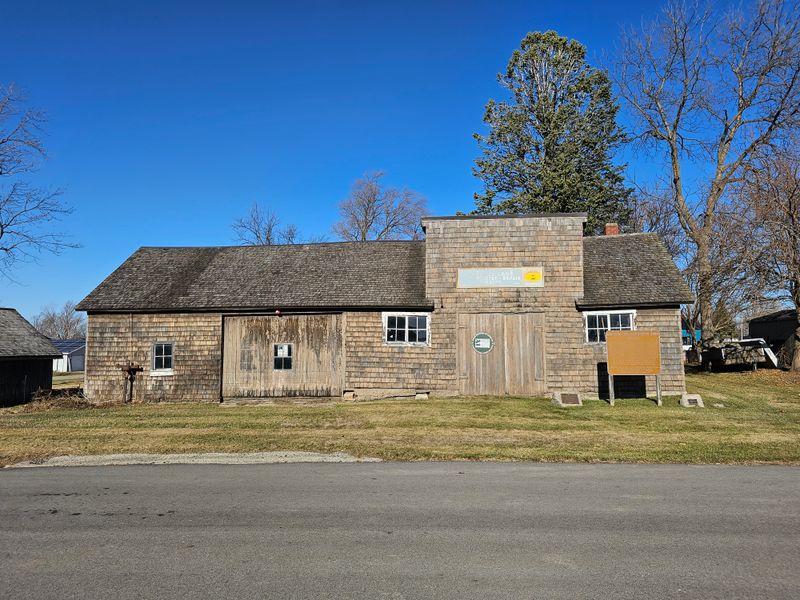
Haverhill’s Matthew Edel Blacksmith Shop captures the early 20th century moment when hand forging met small machinery. You see belt driven tools alongside the timeless anvil and forge.
The layout mirrors a business that handled farm fixes, wagon tires, and the new wave of mechanical parts.
Demonstrators show how a smith balanced tradition with efficiency. A power hammer or drill press might speed repetitive work, while heat and hand still shaped the tricky pieces.
You will notice a steady focus on tolerances, because small errors grow fast in moving equipment.
Ask about tire shrinking for wagons and how a heated iron tire was dropped onto a wooden wheel. The cooling clamp locked everything in place, a simple idea made powerful by physics.
The shop also explores bolt making, thread cutting, and getting a clean fit between iron and wood.
The atmosphere feels quietly industrious, less frontier romance and more dependable service. Customers came with urgent problems, and the smith turned around fixes that kept families working.
That repair first mindset deserves a comeback.
Before leaving, study the racks of tongs and hardy tools that reveal the shop’s job mix. You will see jaw shapes for round, square, and flat stock, proof that good holding equals good results.
In Haverhill, the Edel shop shows how innovation helps only when it respects the core craft beneath it.
Blacksmith Shop — San Diego, California
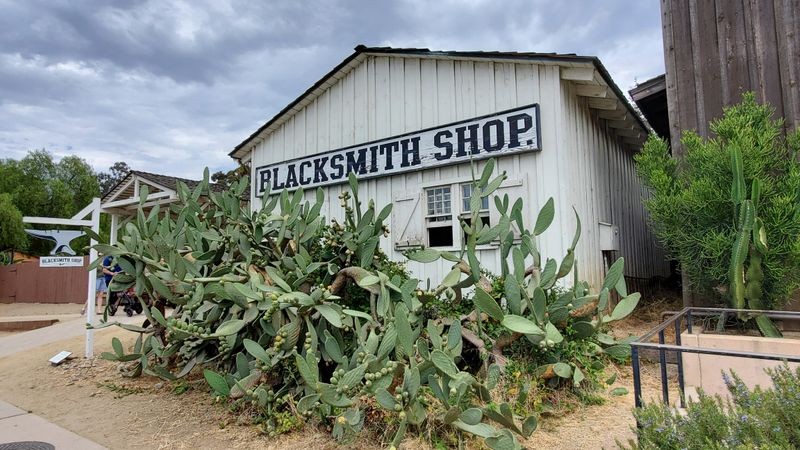
San Diego’s historic park blacksmith shop lets you experience early California settlement through the language of iron. The adobe and wood architecture frames a forge that glows against coastal light.
You watch the smith draw out nails, craft hardware, and explain how supplies arrived by ship or wagon.
Demonstrations lean into versatility. A single shop had to handle horse tack fittings, door latches, and odd repairs that walked in unannounced.
The smith narrates heat control and shows you how small hammer changes reshape a piece without overworking it.
Ask about charcoal versus coal in the region’s past and why fuel choice shaped technique. The discussion might touch on missions, ranchos, and how blacksmiths supported both.
You will see a hook or hasp appear from simple stock, ready for another century of duty.
The park setting makes it easy to combine with other trades and exhibits. That context turns a single demo into an interconnected story of growth, travel, and survival.
The craft reads like infrastructure in plain sight.
As you leave, the sound of hammer on anvil lingers in the plaza air. You can feel how this work tied together households, stables, and workshops across a sprawling landscape.
In San Diego, the forge reveals settlement history one bright spark at a time.
Stratford Blacksmith Shop — Stratford, Connecticut
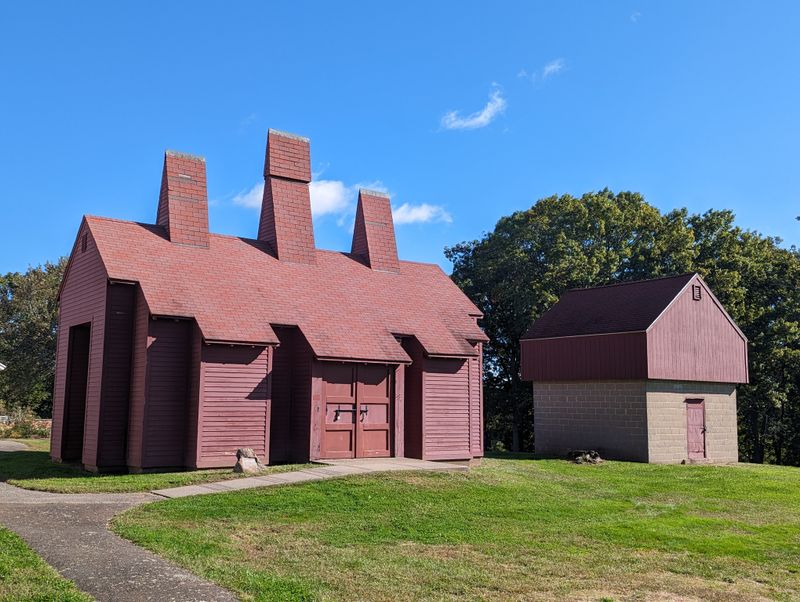
In Stratford, the blacksmith shop distills New England practicality into clear, repeatable steps. You stand close as the smith squares stock, forms shoulders, and bends clean curves.
The shop’s tidy order mirrors the dependable tools it produces for early town life.
Demonstrations often feature basic but essential items: nails, hinges, latches, and hooks. You learn how slight changes in hammer angle refine a taper, and why good tongs matter more than brute force.
The forge breathes steadily, and the pace never feels rushed.
Ask about case hardening and when a mild steel part needs a tougher skin. The smith may show you a simple box of charcoal that changes surface chemistry.
Those small insights make the craft feel accessible, even if your own hammer hand is untested.
The shop emphasizes fit and function over ornament. A latch that closes smoothly and lasts through winters earns more praise than a flashy flourish.
You start noticing hinges on old doors with a new respect for their quiet service.
Before heading out, take a last look at the anvil’s clean edges, proof of care and alignment. This place turns skill into reliability, one heat at a time.
In Stratford, you learn that good ironwork is not loud, it is simply right.
Wise Homestead Museum Blacksmith Shop — Erie, Colorado

The Wise Homestead Museum Blacksmith Shop gives you frontier Colorado in a single room of heat, grit, and purpose. The prairie wind slips past the door while the forge turns bar stock into hardware.
You watch wagon repairs and tool work that kept settlers moving through hard seasons.
Demonstrations focus on bending, punching, and riveting, the backbone of farm gear. You will see collars shrink in place, straps fitted, and holes drifted true.
The smith explains how to judge heat by color and sound, a skill that replaces fancy gauges with attentive senses.
Ask about the wagon tire process and why quenching a hot tire on a wheel matters. The steam, the smell, and the rapid clamp make a memory you will not forget.
The shop also covers hoe and shovel edges, turning dull tools into willing partners.
The museum context frames the forge as part of a homestead network. Carpentry, cooking, and livestock work all lean on reliable metal.
When hinges do not sag and tools bite cleanly, the day flows instead of fights.
Before you go, let the anvil ring settle in your chest a final time. It sounds like confidence.
In Erie, the Wise Homestead shop proves that frontier success was never luck, it was craft applied daily.