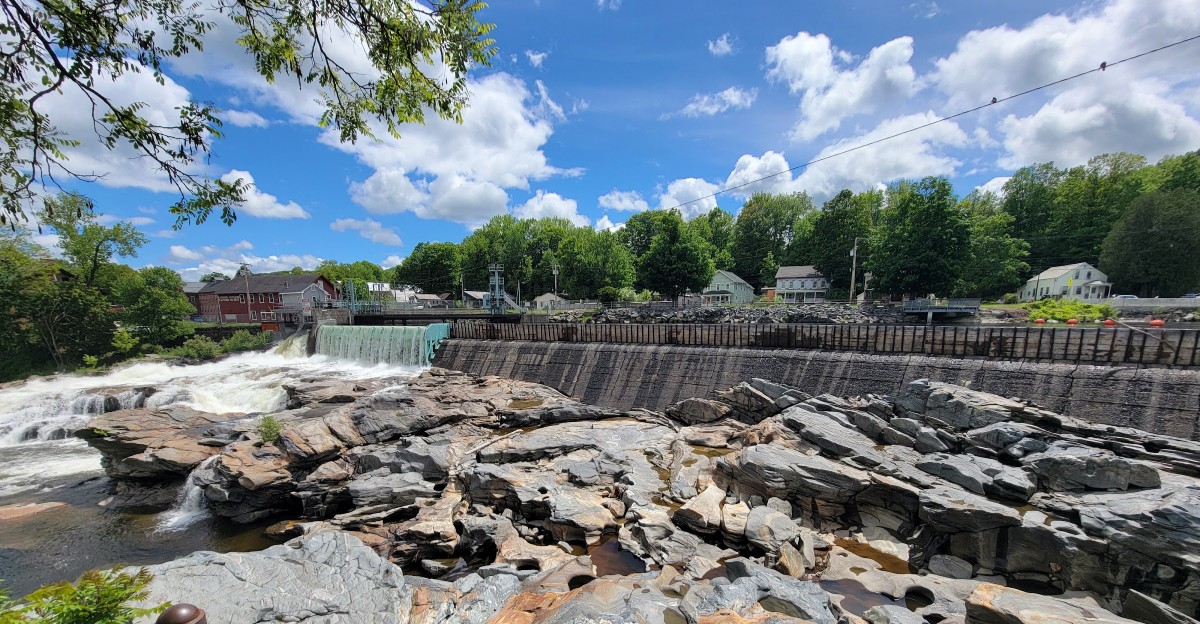
Imagine walking through a small Massachusetts town and spotting round holes carved into solid rock beside a rushing river.
That is the surprise waiting at the Shelburne Falls Potholes, where an overlook lets you study an unusual piece of natural history without a long hike or a trip into the woods.
The holes formed as moving water spun stones against the riverbed, leaving shapes that can look like bowls, wells, or giant footprints, and their story helps explain how powerful water can shape even the hardest rock over time.
Whether you stop for a quick photo or stay to listen to the falls, the view invites you to look closer, notice how the river changes with the season, and discover why this small spot in town makes such a big impression on visitors.
A Rock Puzzle Beside the River
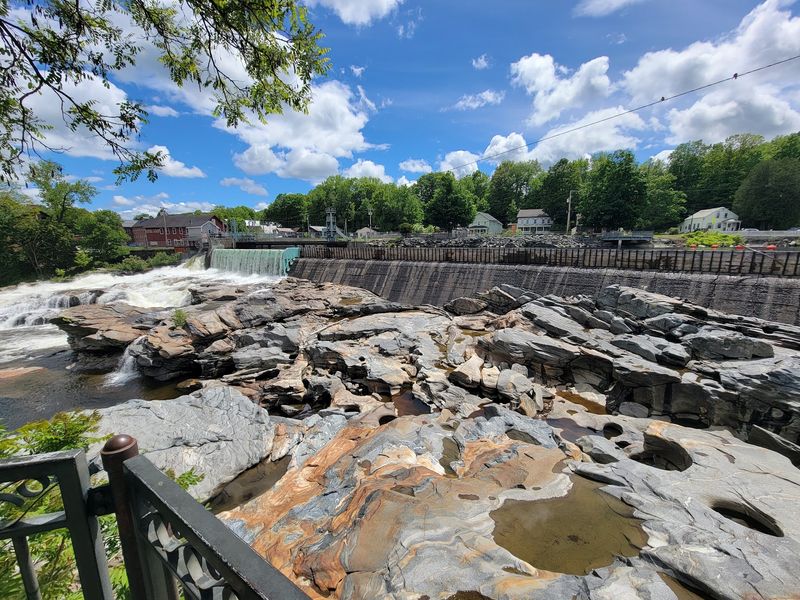
At first glance, the riverbed looks as if someone scooped neat bowls out of solid stone.
Those rounded hollows are the Shelburne Falls Potholes, and they make an ordinary stop in town feel like a geology mystery.
Look carefully and you will notice that the openings differ in size, depth, and shape.
Some resemble shallow dishes, while others appear more like narrow wells.
Their uneven pattern is part of the fun: nature did not follow a blueprint.
From the designated viewing area, try tracing each rim with your eyes and comparing it with the rock around it.
The potholes sit along the Deerfield River, so the scene can change dramatically between visits.
Low water may reveal more bare stone, while higher water can hide the holes beneath a fast current.
A photo taken on one day might look surprisingly different from one taken a month later.
Bring your curiosity, but leave plenty of space between yourself and the fenced edge.
The best way to enjoy the details is to slow down, scan the rock, and let your eyes adjust.
Even a brief pause can turn a strange pattern into a memorable lesson about the land.
How Spinning Stones Made the Holes
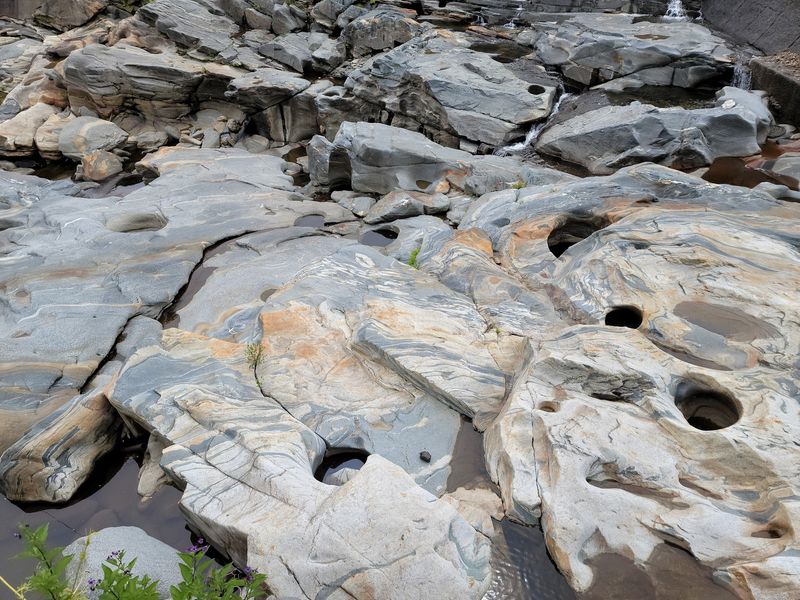
Picture a pebble caught in a tiny whirlpool, circling the same spot again and again.
Now imagine that motion continuing as powerful water carries sand and more stones across the riverbed.
Over a very long time, the grinding action can wear a rounded hole into rock.
That simple idea helps explain the unusual shapes at the Shelburne Falls Potholes.
Meltwater associated with the end of the last ice age helped drive strong flows through this area.
Stones trapped in swirling currents acted like rough tools, scraping and deepening openings in the bedrock.
You do not need special equipment to spot clues.
From the overlook, look for smooth, curved edges rather than sharp corners.
Compare the holes with nearby flat surfaces and picture how many turns it took to change one into the other.
The process was not a single dramatic blow.
It was more like rubbing the same spot with sandpaper for a very long time, except the river supplied the force.
That thought makes the view more impressive: ordinary rocks and moving water created something that now stops people in their tracks.
The Best View Stays Above the Water
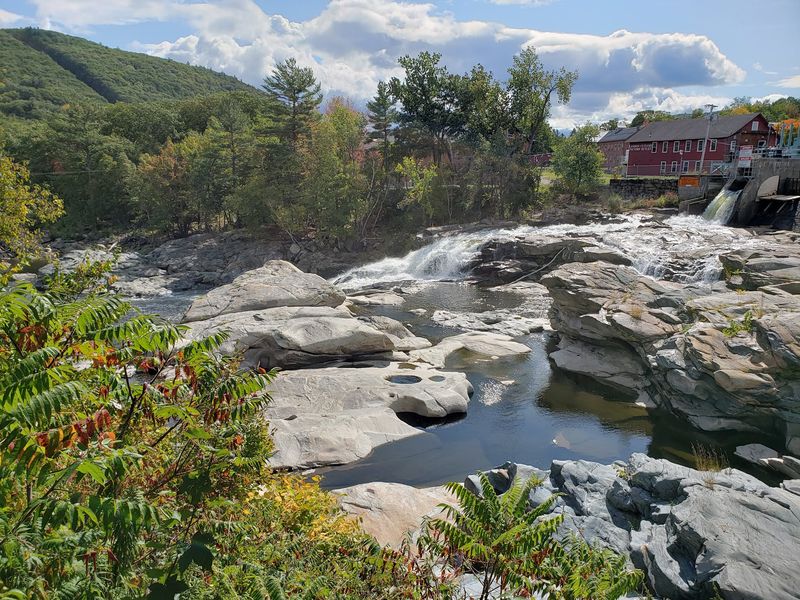
A good lookout can make you feel close to the action without putting you in the river.
At the Shelburne Falls Potholes, the designated viewing area offers a clear place to study the rocks and watch the current.
Visitors have also described benches where they can sit and take in the scene.
Plan to view the formation from the public area rather than climbing onto the riverbed.
Older photos may show people standing on the rocks, but current access is more limited.
Fences and posted boundaries deserve respect, even when the water looks calm from above.
For a better look, start with the whole stretch of rock, then focus on individual holes.
Change your position along the viewing area if space and signs allow.
A small shift can help you see a rounded edge that was hidden by shadow or glare.
If you bring children, point out the shapes together while keeping them beside you.
There is no need to reach the water to make the stop worthwhile.
The safe, elevated view gives everyone a chance to notice the potholes, hear the river, and enjoy the scene without taking a risky step.
Low Water Reveals the Details
Sometimes the river keeps its best details under wraps.
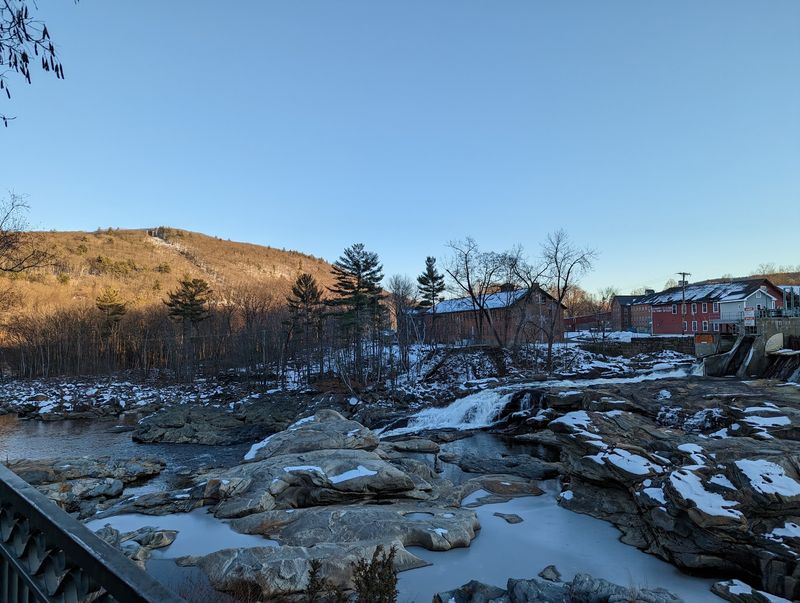
When the water level drops, more of the Shelburne Falls Potholes can appear above the current.
Their rims become easier to pick out, and you may see several rounded openings across the exposed rock.
Visitors have reported especially clear views during lower flow, including in late summer.
That does not make any particular date a sure bet, since river conditions can change.
Treat a low-water visit as a chance to observe, not a promise that every hole will show.
On a clear day, give your eyes time to move from the nearest rock to the farthest visible patch.
Light and shadow can make shallow bowls stand out.
If you take pictures, try one wide shot for the whole formation and a closer shot for the patterns.
Never step past barriers to improve your angle.
Wet stone can be slippery, and a river that looks gentle from the overlook may still move quickly.
If the holes are partly hidden, enjoy what you can see and consider coming back another time.
The changing view is one of the reasons the site stays interesting.
High Water Brings a Different Show
Hear a roar but cannot spot many holes?
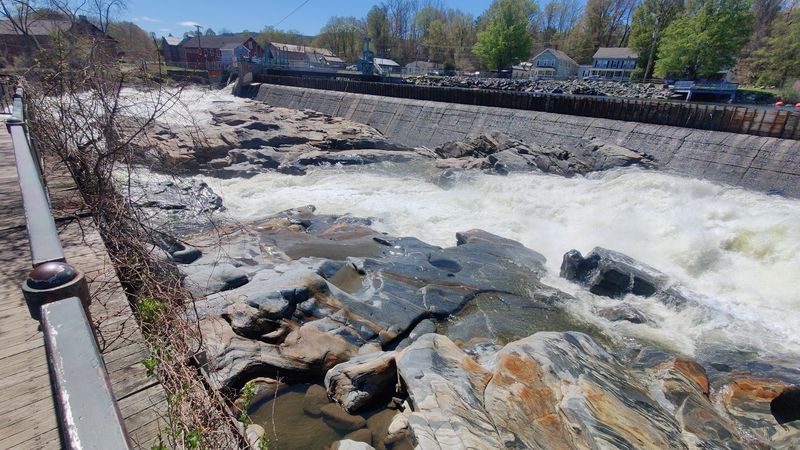
The Deerfield River may be running high enough to cover much of the rock.
A visit like that shows a different side of the Shelburne Falls Potholes: the force of water that makes this place so fascinating.
Several visitors say the potholes become hard to see during strong flows, while the rushing river remains striking.
Watch how the current changes speed around exposed rock and where spray rises.
From a safe viewpoint, those movements offer a lively picture of the power that helped shape the riverbed.
High water is also a firm reminder to stay behind railings and obey signs.
Never try to get closer for a photo, even if another person has done so.
Water levels and currents can shift, and smooth rock offers poor footing.
If seeing the holes themselves is your main goal, save the location and return when conditions are lower.
If you are already there, take a minute to listen instead of feeling disappointed.
The sound, motion, and partly hidden stone tell another part of the story.
A river does not need to reveal everything to be remarkable.
A Close Look at Ancient Bedrock
Rock can look tough and permanent, but its surface holds a record of change.
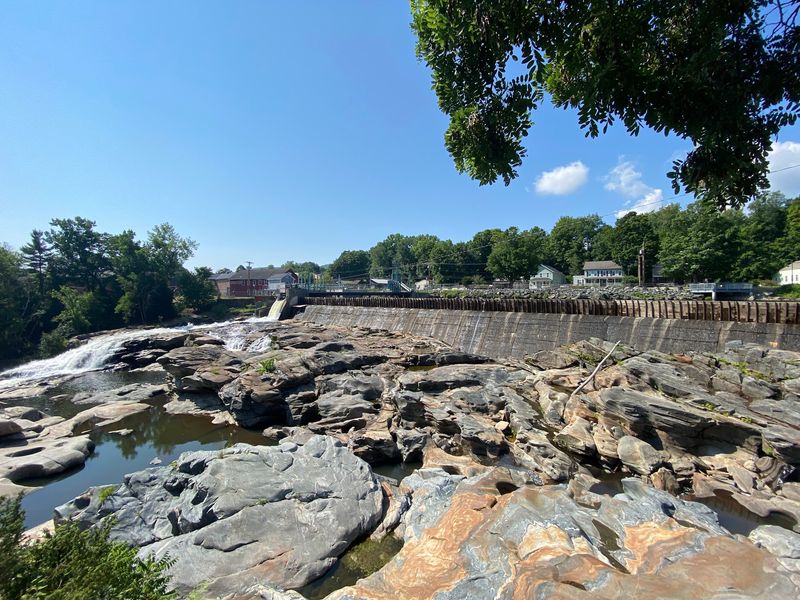
At the Shelburne Falls Potholes, smooth curves interrupt the rougher bedrock around them.
That contrast makes the formation a handy place to think about time on a scale much larger than a human life.
Look for differences between a hole’s rounded inside and the less regular stone beside it.
You may also notice that nearby openings do not all look alike.
Water and moving stones worked where the current carried them, leaving a pattern that feels scattered rather than planned.
Try making a quick sketch from the overlook if you enjoy drawing.
Circles do not need to be perfect.
Mark where you see water, exposed rock, and the darkest hollows, then compare your drawing with a photo you took from the same spot.
That simple exercise can reveal details you missed on your first glance.
It also works well for young visitors who like a small challenge.
Keep pencils and other belongings secure near the railing, and leave the site as you found it.
The rock has a long story to tell without anyone collecting a piece.
A Quick Stop With a Lasting View
Not every natural wonder requires hiking boots and a full afternoon.
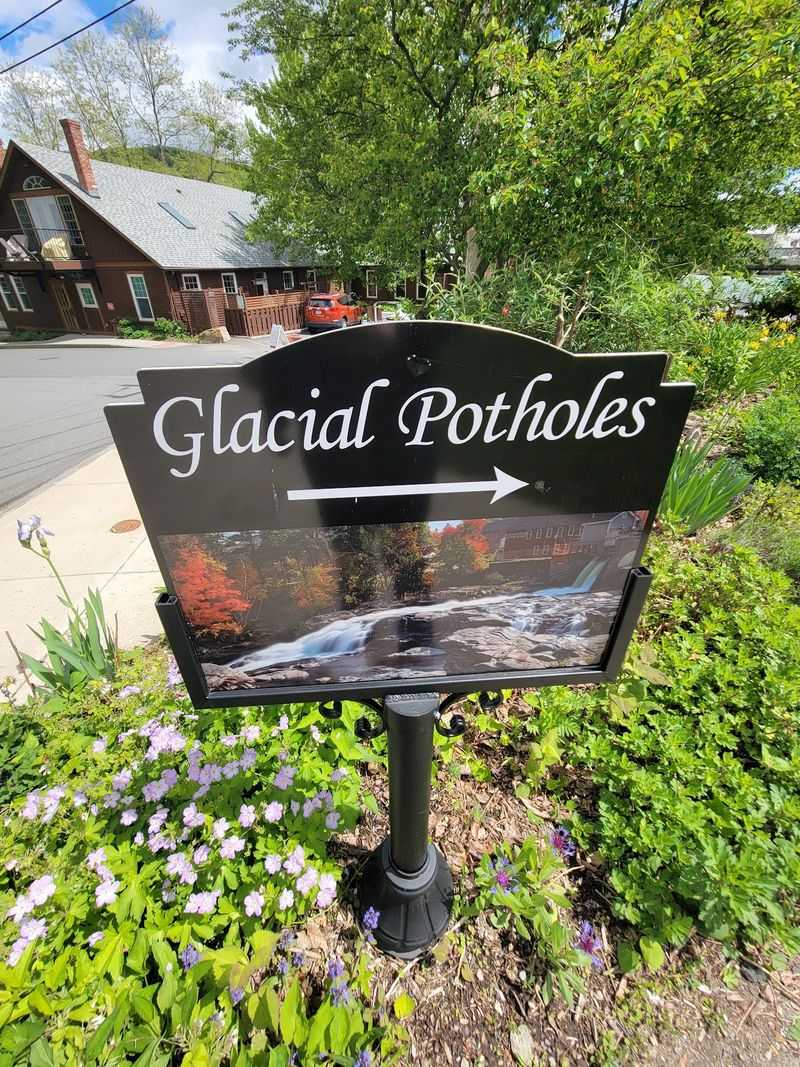
The Shelburne Falls Potholes sit close to the center of town, making them easy to add to a short visit.
The public viewing area gives you a place to pause rather than rush past the river.
Some visitors describe nearby parking and benches, but spaces and access can vary.
Follow local signs when you arrive, and allow enough time to find a legal spot.
Once at the overlook, give yourself more than a glance, even if you only have a few minutes.
Start by finding the largest holes you can see.
Then listen to the water and look for smaller curves at the edges of your view.
You may discover that the longer you stand still, the more shapes you notice.
Keep expectations practical.
This is primarily a place to look, not a spot for climbing down to the water or spending hours on the rocks.
Do not count on finding a bathroom at the viewpoint.
A little planning makes the stop more comfortable, while the easy access lets the river and stone remain the main event.
Light, Sound, and One More Look
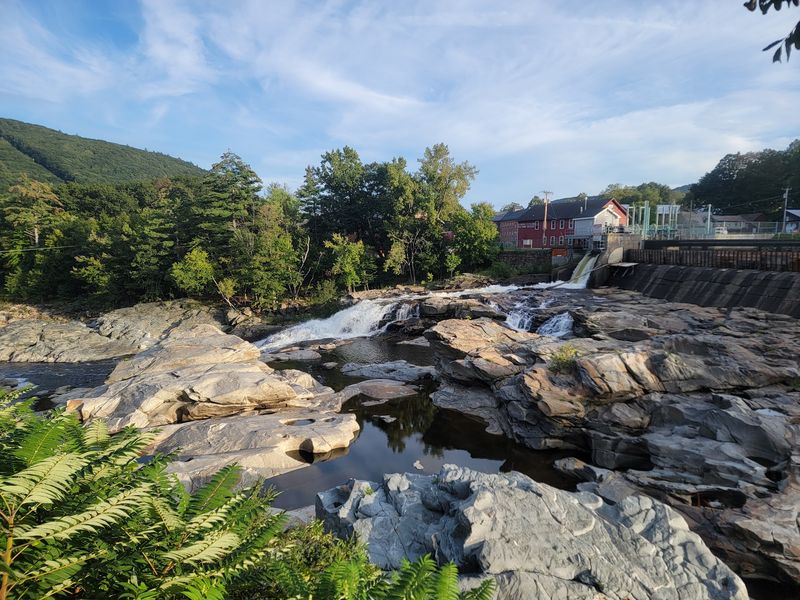
Golden light can turn a short geology stop into a scene you remember for years.
At the Shelburne Falls Potholes, sun on the rock may help reveal curves that are harder to see under flat light.
The river adds its own soundtrack, from a soft rush to a much louder roar.
For photographs, first check whether the water level exposes the holes.
Then look for a spot in the public viewing area where glare does not wash out the stone.
Late-day light can be lovely, but conditions matter more than any rule about the perfect hour.
Put your phone down for a moment after taking a picture.
Listen to the current and watch where it curls around the rock.
That small pause helps connect the shapes you see with the moving water that made them.
Before leaving, take one final look across the entire riverbed.
The potholes may stand out in a new way once you know their story.
Stay behind barriers, make room for other visitors, and take only memories and photos.
What appears to be an odd collection of holes is a lasting record of water at work.