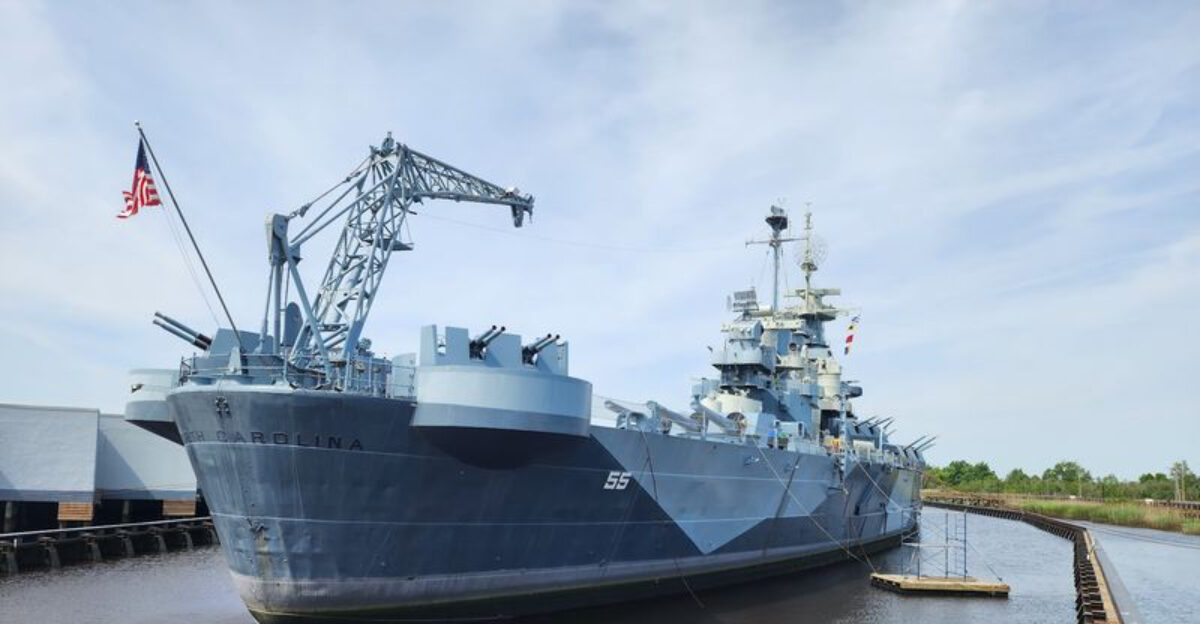
Moonlight hits the steel sides of the Battleship North Carolina, and suddenly history feels very close.
This famous World War II battleship in Wilmington is not just a museum, it is a place where visitors climb ladders, walk narrow halls, see huge gun turrets, and imagine what life was like for the sailors who served here.
Some people also say the ship has a spooky side, with strange sounds, heavy footsteps, and ghost stories that make an overnight visit feel even more unforgettable.
If you love history, mystery, or the idea of sleeping where brave crews once worked day and night, this ship deserves a spot on your North Carolina adventure list, so grab comfortable shoes, bring your courage, and get ready to explore one of the most memorable floating landmarks in the state after dark with friends or family who enjoy a good chill.
A Night Aboard a Steel Giant
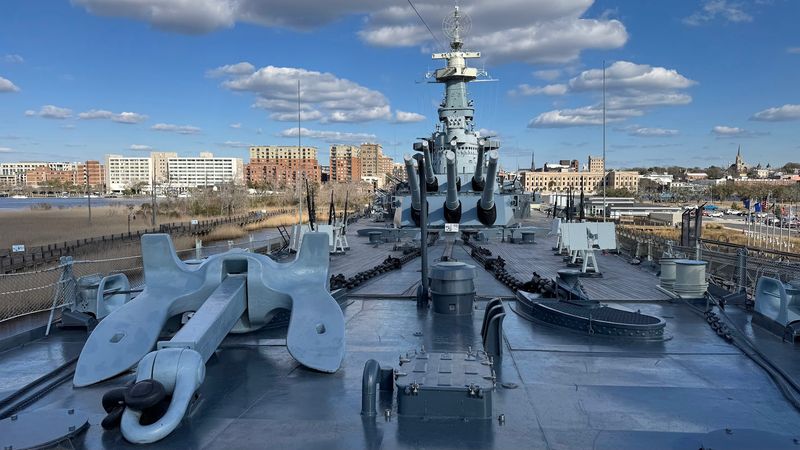
Steel walls feel different after sunset, especially when they belong to a World War II battleship with stories packed into every passageway.
Battleship North Carolina offers one of the most unusual historic experiences in the state because visitors can do more than look at displays from a distance.
You can walk through real spaces where sailors slept, ate, worked, sweated, and waited during wartime.
Overnight programs, when available, give groups a rare chance to settle in aboard the ship and feel how large, loud, and close life at sea could be.
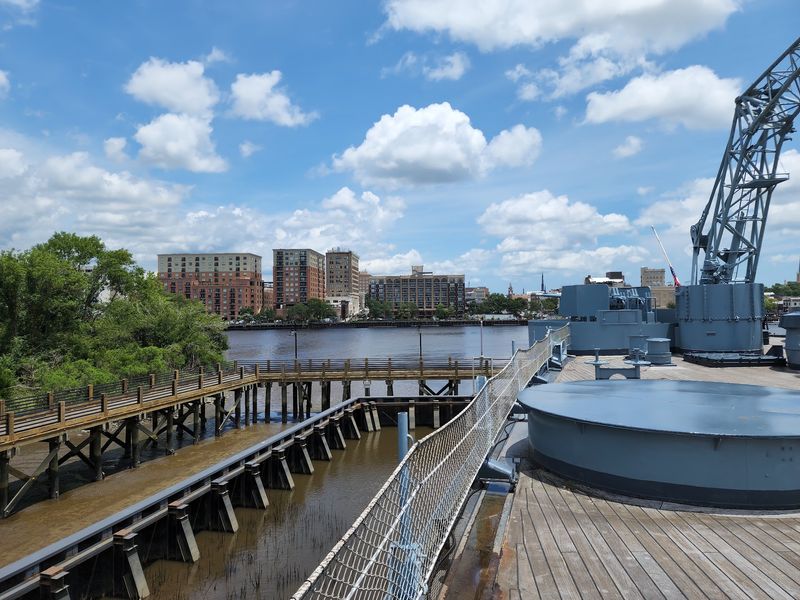
The ship sits at 1 Battleship Rd NE, Wilmington, NC 28401, across the Cape Fear River from downtown Wilmington.
Before planning a sleepover, check the official website or call the museum at +1 910-399-9100 for current overnight rules, dates, age limits, and group requirements.
Hours are generally 8 AM to 5 PM daily for regular visits.
Wear sturdy shoes, pack light, and prepare for steep ladders.
Once the crowds leave, every creak feels larger, and history starts to whisper.
Ghost Stories in the Passageways
A soft clang in an empty corridor can make even the bravest visitor pause and listen.
Many ghost stories linked to Battleship North Carolina come from the feeling of the ship itself.
Narrow halls, metal doors, old bunks, and echoing decks make sounds travel in strange ways.
Some visitors have shared stories of footsteps, distant voices, or the sense that unseen sailors are still moving through the ship.
The museum presents the vessel mainly as a memorial and history museum, so the spooky tales should be enjoyed with respect, not treated like a carnival scare.
That balance makes the experience stronger.
You are standing inside a ship that served during World War II and became a symbol of North Carolina pride.
More than a haunted attraction, it is a preserved workplace, home, and fighting machine.
If you visit at night, keep your group close and your voice low.
Read the signs, notice the bunks, and think about the men who lived there.
The shivers feel deeper when they come with real history.
Sleeping Where Sailors Once Rested
Bunks stacked tight together tell a story faster than any textbook ever could.
Life aboard Battleship North Carolina was crowded, busy, and built around duty.
Sailors did not enjoy roomy bedrooms or quiet nights.
They slept near shipmates, stored their belongings in small spaces, and woke when the ship needed them.
An overnight stay helps modern visitors understand that daily life at sea took patience and teamwork.
Even a simple walk through the crew areas can make you think differently about comfort.
Children and teens often connect with history here because the setting feels real.
Instead of reading about World War II from a desk, they can see the tight quarters, the work stations, and the places where young service members tried to rest.
Adults usually leave with the same reaction: respect.
Bring only what your group is allowed to carry, and expect basic conditions rather than hotel comforts.
That is part of the point.
The ship reminds guests that sailors served under pressure, with little privacy, in a floating city made of steel.
The Big Guns Bring the Drama
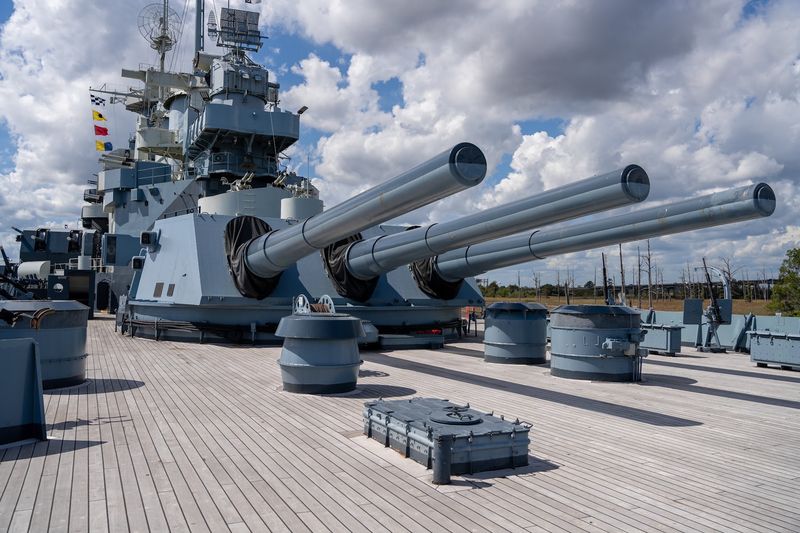
Those enormous guns do not need special effects to steal the show.
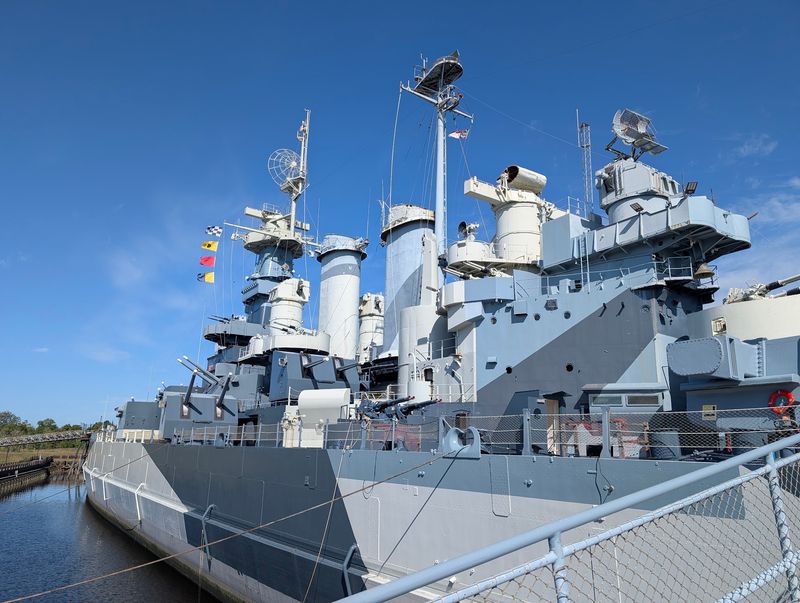
Battleship North Carolina carried powerful weapons during World War II, and the gun turrets remain one of the most memorable parts of a visit.
Standing near them gives you a quick lesson in scale.
Photos rarely prepare you for how huge the barrels look in person.
They stretch outward like steel tree trunks, pointing toward the river and sky.
The turrets also help visitors understand the serious work done aboard the ship.
Sailors had to load, aim, communicate, and react under stress.
It took training, strength, and trust.
When you explore nearby spaces, pay attention to the signs that explain how crews worked together.
The ship becomes less like a display and more like a giant machine powered by people.
For the best experience, give yourself time on deck before going below.
The open air helps you appreciate the ship’s size.
At night, the guns look even more dramatic, casting shadows that feel straight out of a wartime movie.
Ladders, Hatches, and Tight Turns

Your legs will notice this museum before your brain finishes reading the first sign.
Battleship North Carolina is famous for its steep ladders, narrow hatches, and twisting paths between decks.
Many visitors describe the tour as part history lesson and part workout.
That is not a complaint.
The ship remains close to its original layout, which makes the visit feel honest and hands-on.
You move the way sailors moved, though at a slower and safer pace.
Comfortable shoes are a must.
Avoid loose sandals, long skirts, or anything that makes climbing harder.
Younger children may need help on ladders, and anyone with knee, balance, or mobility concerns should plan carefully.
Some areas are easier to reach than others, and the main deck plus the outdoor walkway offer options for visitors who cannot explore every level.
Take your time and use the handrails.
If a space feels too tight, skip it without guilt.
The goal is not to conquer every corner.
The goal is to enjoy the ship safely while soaking up its remarkable past.
Hot Decks and Cool Planning Tips
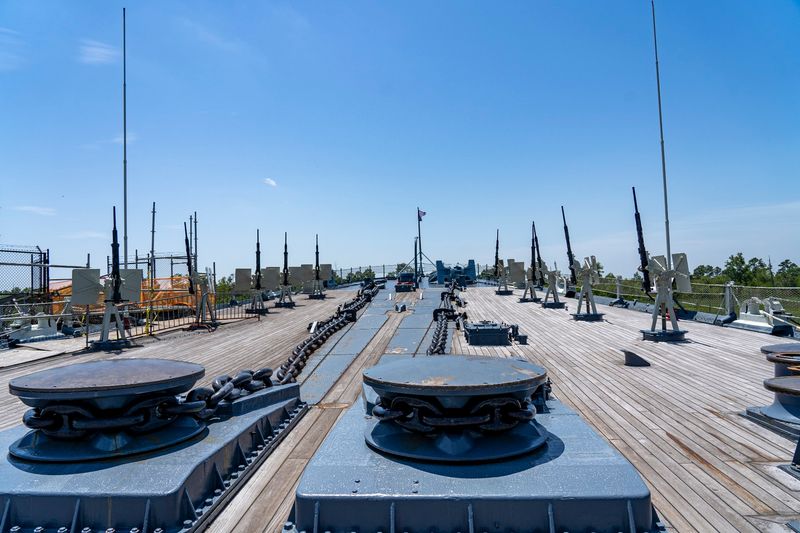
Summer turns a big metal ship into a history lesson with a side of sweat.
Visitors often mention that Battleship North Carolina can feel warm, especially below deck.
Fans help in some areas, but the ship is still a massive steel vessel in coastal North Carolina.
Planning ahead makes the visit much more comfortable.
Bring water, dress in light clothing, and take breaks when needed.
Restrooms and water options are available, but carrying your own bottle is smart if current rules allow it.
Most people spend about two to three hours exploring, though history fans can easily stay longer.
If you want fewer crowds and cooler air, try arriving early in the day.
Morning visits also give families more energy for climbing ladders and reading displays.
Do not rush through the visitor center or gift shop.
They add helpful background and support the museum’s upkeep.
Maintaining a ship this large is expensive, and ticket sales, tours, donations, and purchases help keep the battleship open for future visitors.
A Museum Ship That Still Feels Alive
Some museums ask you to stand back, but this one invites you to step into the story.
Battleship North Carolina is a history museum, yet it feels more active than a room full of glass cases.
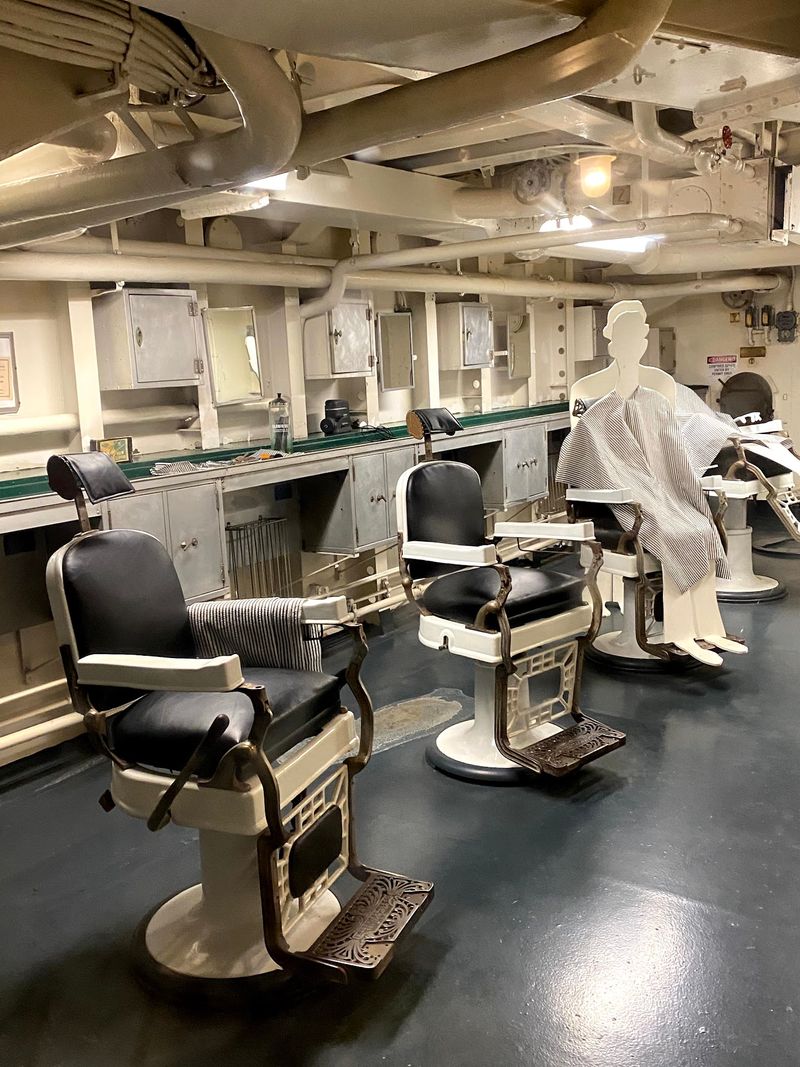
You can pass through mess areas, medical spaces, engine-related sections, officer areas, and crew rooms.
Signs explain what happened in each space, and many displays use photos or memories connected to the sailors who served.
That personal touch matters.
It turns metal rooms into human places.
Guided tours can make the ship even richer, especially if you enjoy details about equipment, battles, or everyday routines.
Reviewers often praise knowledgeable guides who bring the ship’s past to life.
Self-guided visitors also have plenty to see, but it helps to slow down and read the plaques instead of simply moving from room to room.
Watch for small corners that are easy to miss.
A dental room, medical lab, or control area may become your favorite discovery.
The ship rewards curious visitors who look twice.
Why the Overnight Feels Meaningful
Spending the night here is spooky, sure, but the lasting feeling is usually gratitude.
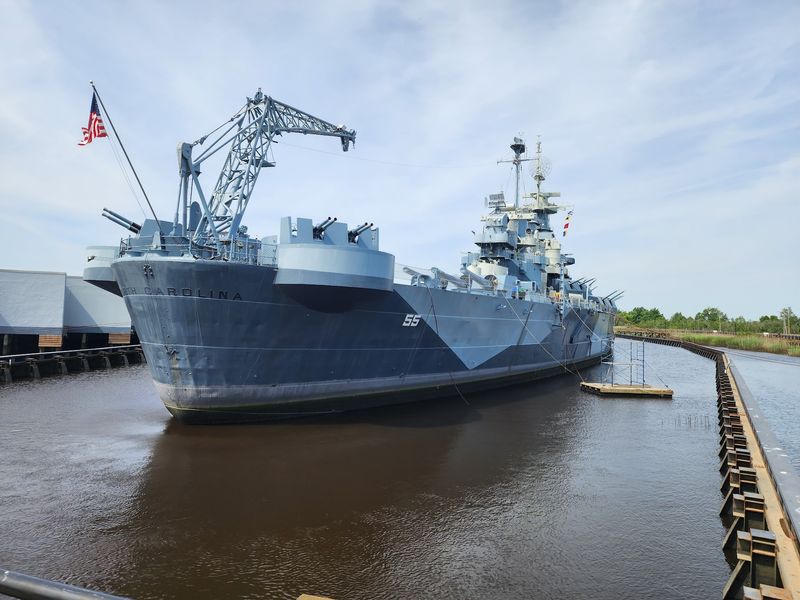
Battleship North Carolina served as a World War II battleship and now stands as a memorial to the people of the state who served and sacrificed.
That purpose gives every visit extra weight.
The haunted reputation may catch your attention, yet the real power comes from standing where sailors once faced danger far from home.
A nighttime stay can make that connection feel stronger because the ship grows quiet and the distractions fade.
Families, scout groups, history lovers, and curious travelers can all find something meaningful here.
Kids may remember the ladders and ghostly sounds first.
Adults may remember the cramped bunks, heavy guns, and names tied to wartime service.
Both reactions are valid.
Before you go, check the official Battleship North Carolina website for current tour choices, overnight availability, ticket details, and safety guidance.
Then arrive ready to listen.
The ship has stories in its steel, and some seem louder after dark.