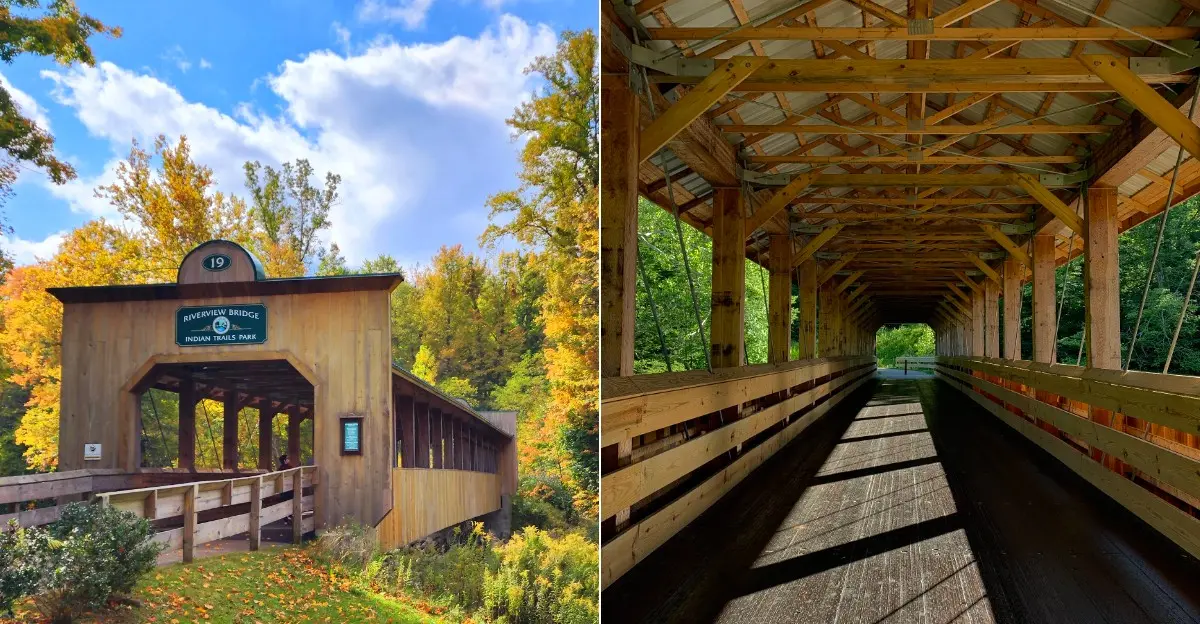
Some bridges simply get you across a river, but a few turn the crossing into the whole reason for the trip.
Smolen-Gulf Covered Bridge in Ashtabula County, Ohio, stretches roughly 613 feet over the Ashtabula River gorge.
That length makes it the longest covered bridge in the United States, and the best part is that you can walk it.
Pedestrian walkways run alongside the covered roadway, so families can stroll end to end while cars rumble through inside.
Autumn is a favorite time to visit, when the wooded gorge glows orange and gold around the weathered timber.
Bring comfortable shoes and a little patience for photos, because this is one walk you will want to take slowly.
Meet the Record-Setting Bridge
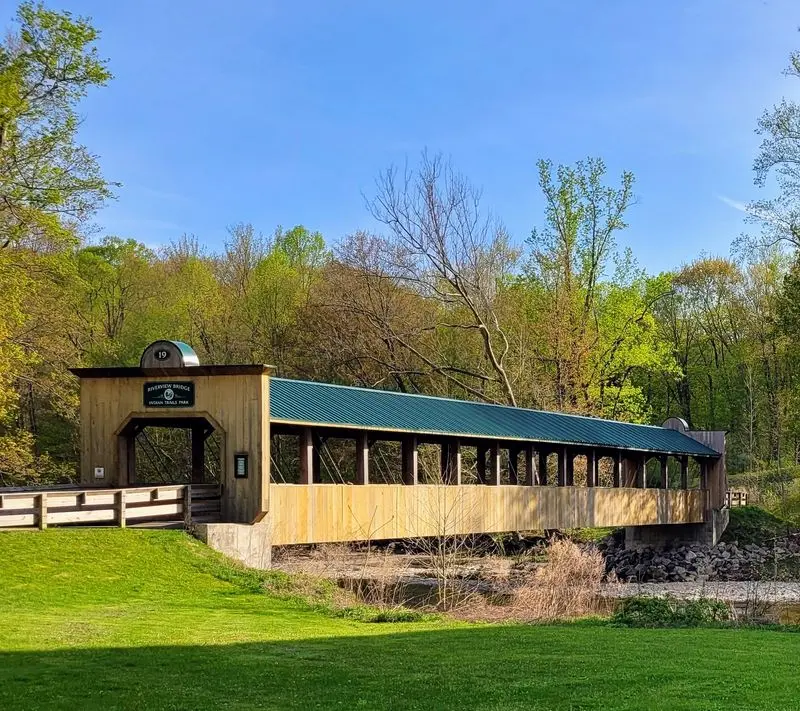
A wooden roof stretches so far across the valley that the other end can seem surprisingly distant. That first view is a good reason to pause before you cross. Smolen-Gulf Covered Bridge stands at 4878 Plymouth Ridge Rd, Ashtabula, OH 44004, and is known as the longest covered bridge in the United States.
Its span measures about 613 feet, giving visitors plenty of time to notice the size of the structure. Unlike many old covered bridges, this one carries everyday vehicle traffic. Separate walkways along its sides let people experience the crossing without walking in the driving lane.
Take a moment at the overlook to see how the bridge fits into the steep, wooded landscape. From there, its length makes more sense than it does in a close photograph. You can also watch cars pass through the covered roadway while people move at their own pace outside it.
The bridge is a working piece of engineering, not just a pretty backdrop. Treat it that way by staying in pedestrian areas and keeping children close. If you are planning a quick stop, allow extra time to cross on foot. The view changes as you go, and the full length is part of what makes the walk memorable.
Take the Walkway, Not the Road
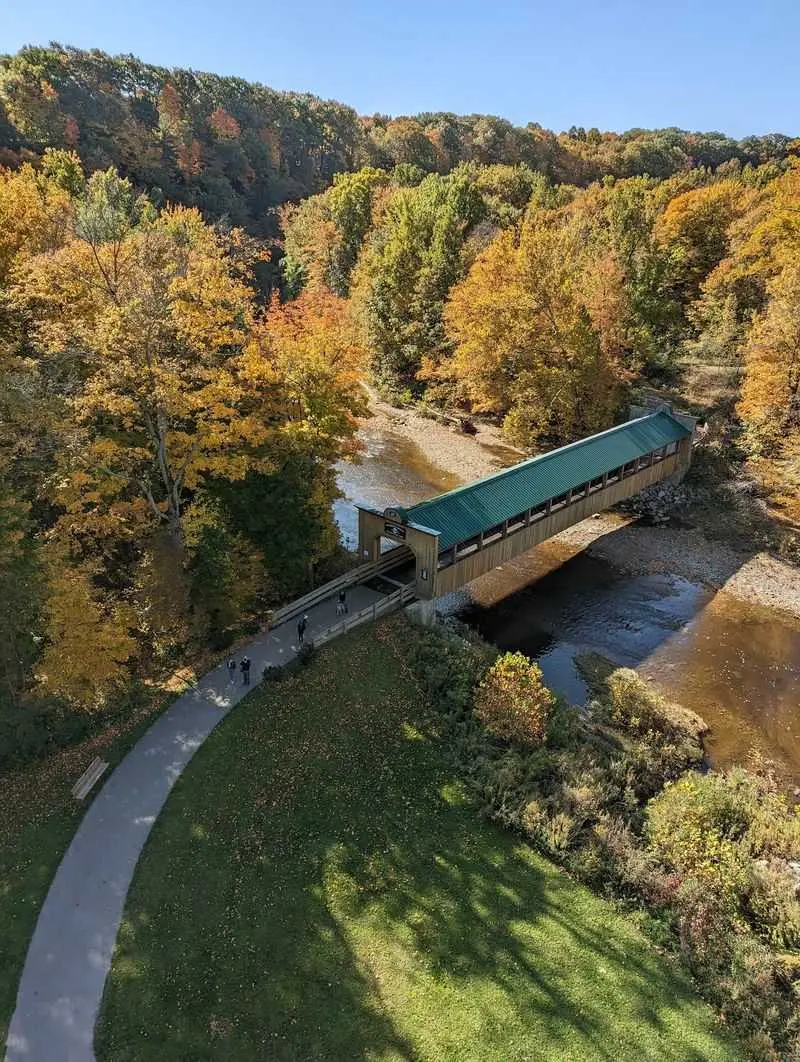
Footsteps feel different when a covered roadway is close enough to hear cars passing inside it. Luckily, visitors do not have to share the driving lane. Pedestrian walkways run along the sides of the big bridge, giving walkers their own space for the crossing.
Start by finding the marked walking area rather than following a vehicle through an entrance. Keep to the walkway, even if you want a closer look at the wooden beams. Traffic uses the bridge regularly, and a photo is never a good reason to step into the road.
The crossing is long enough to feel like a short outing instead of a few steps. Comfortable shoes help, especially if you plan to explore the paths afterward. If you bring a dog, use a leash and give other walkers room to pass.
Try walking across slowly, then turning around to notice details you missed on the first trip. One direction may offer a different angle on the river or hillside than the other. On busy days, pause where there is room instead of blocking the path. A careful crossing lets everyone enjoy the unusual feeling of walking beside such a large covered bridge while cars continue on their way.
Look Down at the River
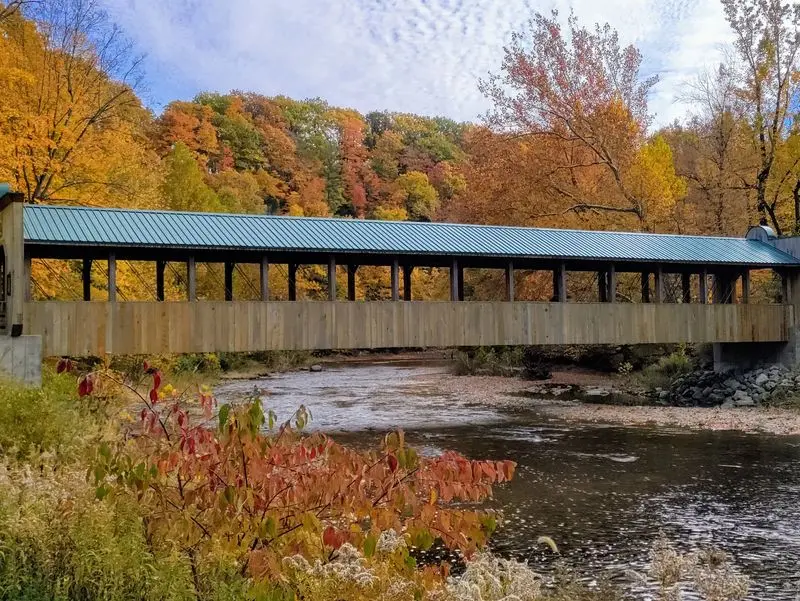
Far below the railing, the river gives the bridge its most striking view. Looking down helps you understand why such a long span was needed here. The crossing reaches over a wide valley, with trees and water adding depth to the scene.
Stop only where you can leave room for other people on the walkway. Hold phones and cameras securely before leaning toward a view, and never climb or sit on a railing. A dropped item may be impossible to reach safely from the banks below.
The water can look calm from above, but conditions change after rain or snow. If you later visit the riverside paths, keep a safe distance from slippery edges. Children may be eager to get closer, so agree on simple boundaries before leaving the bridge.
For photographs, include part of the wooden structure in the frame. That small detail shows just how high you are and makes the river view more than another landscape picture. You might also watch for reflections when the light is soft. Whether you spend a minute or much longer, the scene rewards a slower pace and gives you a fresh way to appreciate the size of the crossing.
See the Big Bridge from Below
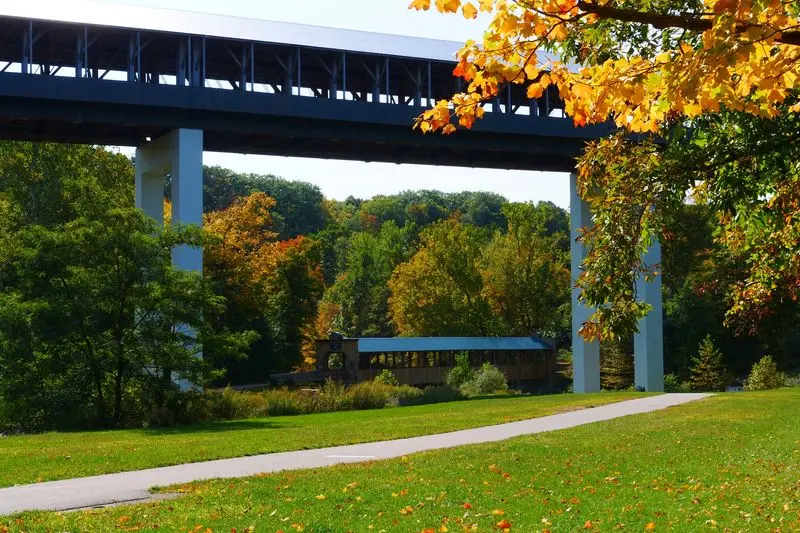
From the road, the bridge seems long; from below, it seems tall as well. A visit to the lower area gives you a second view of the same structure. Its wooden sides rise above the river and trees, making the design easier to take in.
Look for designated parking before heading down to explore. Visitors report parking choices near both the upper overlook and the lower walking area. Use paths rather than cutting down a slope, which may be muddy, steep, or hard to climb again.
Bring a camera if you like comparing views. A picture taken from below can show the full shape of the covered span in a way a walkway picture cannot. Stand back where the path allows, then try a frame that includes the water for scale.
The lower area also offers a quieter break from passing vehicles above. Listen to the river, notice the trees, and let others pass if you stop on a narrow section of trail. After rain, expect wet ground and choose shoes that can handle it. Seeing the bridge from two levels turns a simple crossing into a much fuller look at how it was built.
Find the Smaller Walking Bridge
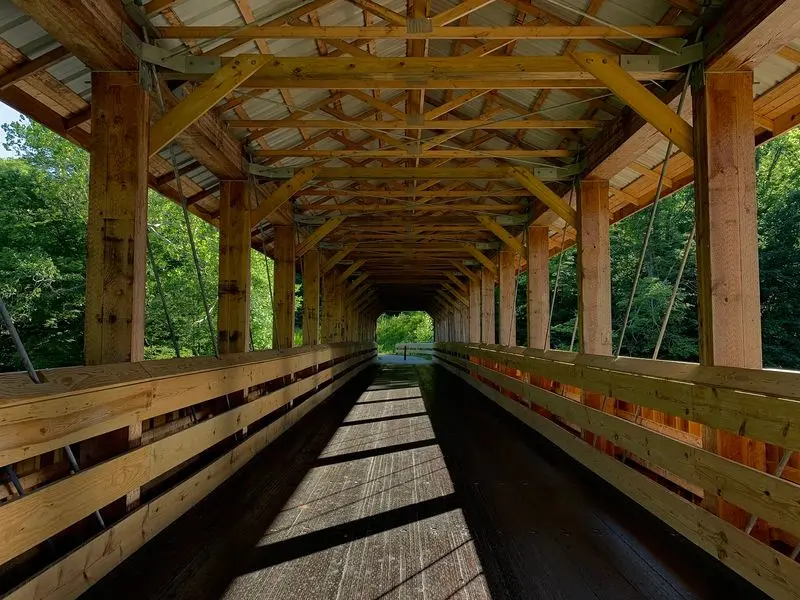
A second covered bridge adds a fun surprise to the walk below the main crossing. Instead of carrying cars, the lower bridge gives people a quieter way to cross on foot. Seeing both structures together makes this stop feel like two bridge visits in one.
Follow the established trail to reach the smaller bridge. Check signs along the route, and keep an eye out for other walkers or riders who may be using it. Its calmer setting is especially handy if your group wants to enjoy a covered crossing without nearby traffic.
From the lower bridge, look back toward the larger one when the view opens up. The two levels show how differently bridges can serve the same area. One handles vehicles high above the valley, while the other fits a slower trip close to the river.
Children often enjoy comparing their sizes, shapes, and sounds. Ask them which crossing feels longer and what they can hear from each one. Keep everyone together near the approaches, where paths can meet. The smaller bridge is not a replacement for walking the record-setting span, but it adds another memorable view and a peaceful place to pause before heading back.
Follow the Paths at Your Own Pace
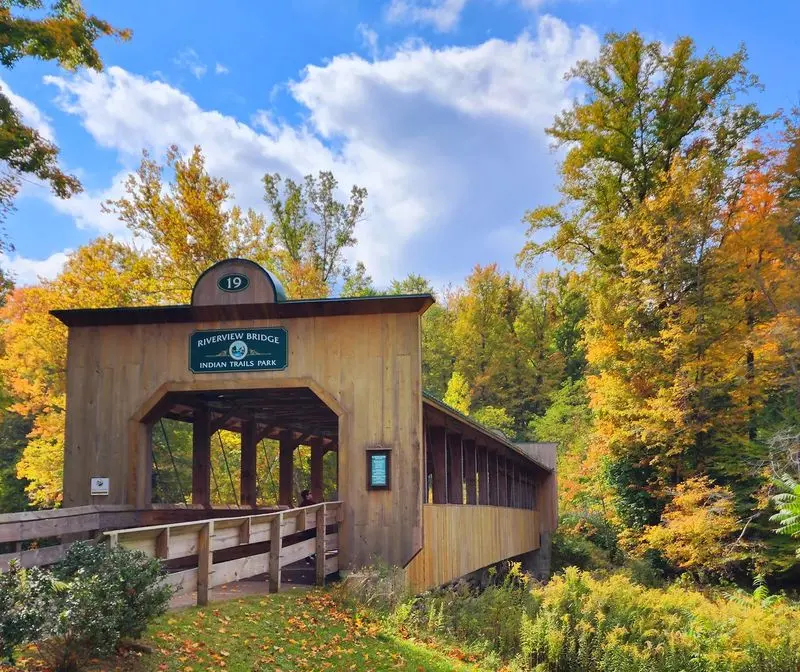
Not every visitor wants to turn around as soon as the crossing ends. Paths around the bridge offer a chance to stretch the outing and enjoy the wooded setting. Some sections are paved, while conditions on other paths may vary with the weather.
Before starting, choose a route that suits your group rather than assuming every trail will be equally easy. Look for posted information, notice where paths branch, and remember the way back to your parking area. A short walk can feel longer when you add photo stops and a second bridge crossing.
Wear shoes with reliable grip if the ground has been wet. Bring water on warm days, even if you expect to stay only a little while. A leash helps keep dogs close to you and away from other visitors.
There is no need to race through the area. Pause to watch the river or look up at the main span from a new angle. If a path is muddy or closed, turn back instead of making a new route through plants. That small choice protects the landscape and keeps the walk easier for the next person who comes along.
Choose Your Season for a Different View
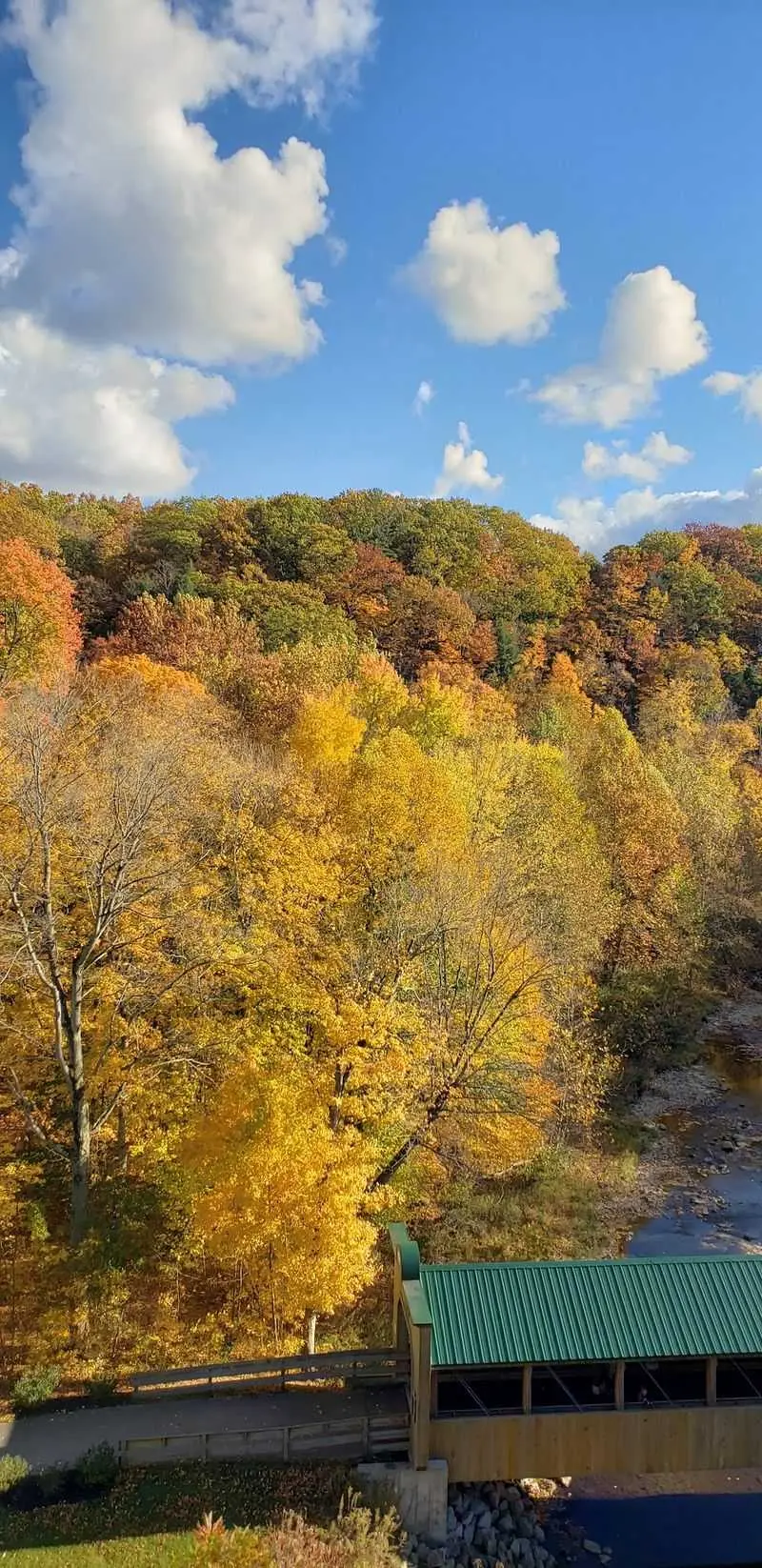
Autumn can turn the hills around the bridge into bands of red, gold, and orange. Summer brings leafy shade, while colder months may open clearer views through bare branches. Each season changes what you notice on the same walk.
For fall color, plan for changeable weather and bring a light layer. Leaves can hide wet patches on paths, so watch your footing near the lower area. If you hope to take pictures, softer morning or late afternoon light can make the wood and trees stand out.
A winter visit needs more care. Snow may make overlooks harder to use, and ice can affect walking areas. Check current conditions before setting out, and skip a crossing if the surface does not feel safe.
Warm weather is useful for visitors who want to spend more time exploring paths. Pack water, sun protection, and a plan for taking breaks. Whenever you visit, remember that the bridge is open to vehicle traffic, even when the surroundings feel quiet. Stay on the pedestrian walkway and dress for the day rather than the photograph you hope to take. A little planning makes the changing scenery easier to enjoy without rushing.
Plan a Comfortable Stop
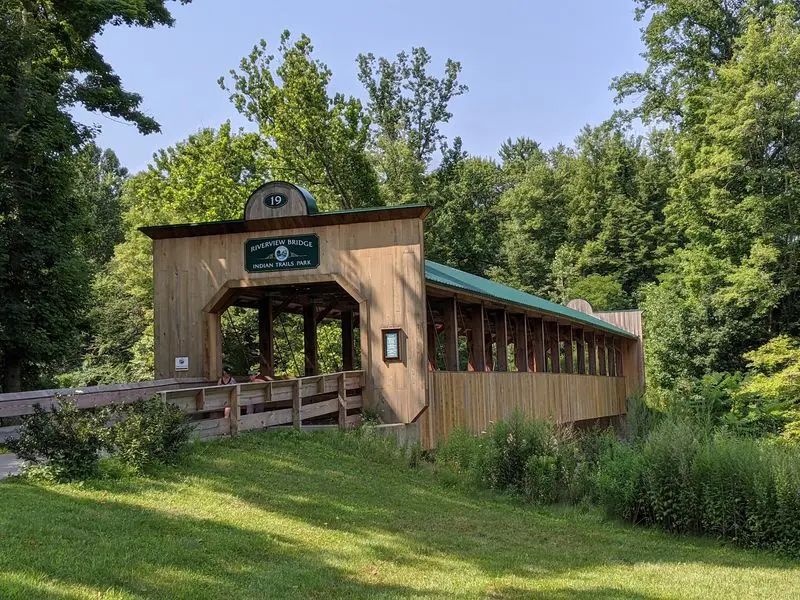
A good bridge visit starts before your first step onto the walkway. Decide whether you want a quick look from above or enough time to explore the lower area too. Visitors describe parking near the overlook and near the paths, but available spaces may change with crowds or conditions.
The landmark is listed as open around the clock. Daylight is still the easier choice for seeing signs, following paths, and enjoying river views. If you arrive after dark, do not count on trail lighting or open facilities.
Read the information boards if they are available during your stop. They can add context to the structure you are about to cross. Bring anything you need for a short walk, including water, comfortable shoes, and a way to carry out your trash.
Do not make restroom access the center of your plan, since visitor experiences with the facilities have varied. Set a meeting point if your group splits between the upper and lower areas. Before leaving, check that everyone is back and that nothing has been left behind. With those small details handled, you can spend less time sorting out logistics and more time enjoying the remarkable crossing.