Tucked deep inside the Wissahickon Valley Park in Philadelphia, Pennsylvania, sits a small but fascinating piece of American history — Kelpius Cave. Back in 1694, a group of German mystics led by Johannes Kelpius sailed to the New World, convinced the apocalypse was coming and that Pennsylvania would be the perfect place to wait for it.
Today, anyone can hike up the trail and actually step inside the same cave where this early doomsday group once prayed, studied, and watched the skies. It’s one of the most unusual and overlooked landmarks in all of Philadelphia.
Who Was Johannes Kelpius and Why Did He Come to Pennsylvania?
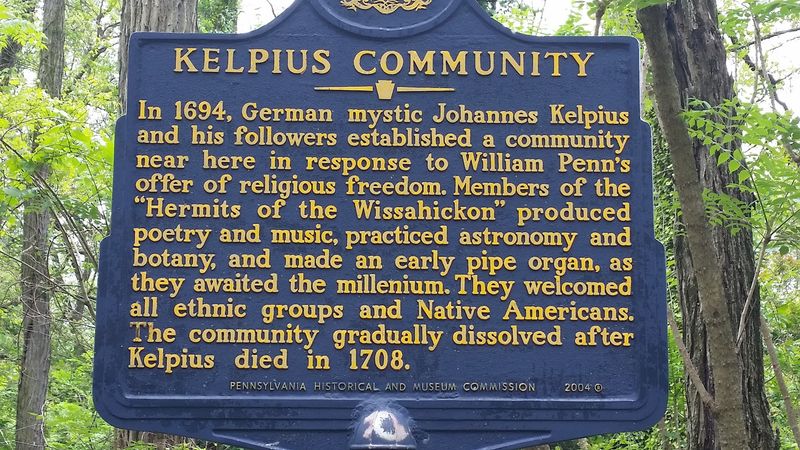
Few names in early American history are as strange and captivating as Johannes Kelpius. Born in Transylvania in 1667, he was a brilliant young scholar who studied theology and mysticism at a time when Europe was buzzing with apocalyptic prophecies.
By his early twenties, he had become the leader of a small but devoted group of German mystics who called themselves the Chapter of Perfection.
Kelpius believed deeply that the end of the world was near — specifically, that 1694 would bring a major spiritual transformation. He was convinced that the New World, far from the corruption of European society, was the ideal place to wait and prepare.
So he gathered roughly 40 followers and made the long, dangerous journey across the Atlantic to Pennsylvania.
William Penn had recently established Pennsylvania as a place of religious freedom, which made it an attractive destination for unconventional believers. Kelpius and his group settled along the Wissahickon Creek in Germantown, where they built a tabernacle, studied astronomy, practiced herbal medicine, and waited for a divine event that never came.
Kelpius died in 1708, still waiting, leaving behind a legacy that is equal parts tragic and fascinating.
The Chapter of Perfection — America’s First Doomsday Cult Explained
Long before modern doomsday groups made headlines, the Chapter of Perfection was doing something remarkably similar in the forests of colonial Pennsylvania. Founded in Germany and led by Kelpius, the group blended Christian mysticism, astrology, alchemy, and Rosicrucian philosophy into a unique spiritual practice centered on one core belief — that the apocalypse was coming very soon.
The group’s members were not uneducated fanatics. Many were scholars, musicians, and scientists who genuinely believed that careful study of scripture and the stars would help them pinpoint the exact moment of divine transformation.
They built a large log tabernacle on the ridge above the Wissahickon Creek, which served as both a church and a laboratory for their spiritual experiments.
Members took turns keeping watch on the roof of the tabernacle each night, scanning the sky for signs of the Second Coming. They also served the surrounding community generously, offering free medical care and education to local settlers.
While history sometimes labels them a cult, their story is more nuanced — a group of true believers who were ahead of their time in many ways, blending science and spirituality centuries before it became fashionable.
What the Cave Actually Looks Like Up Close
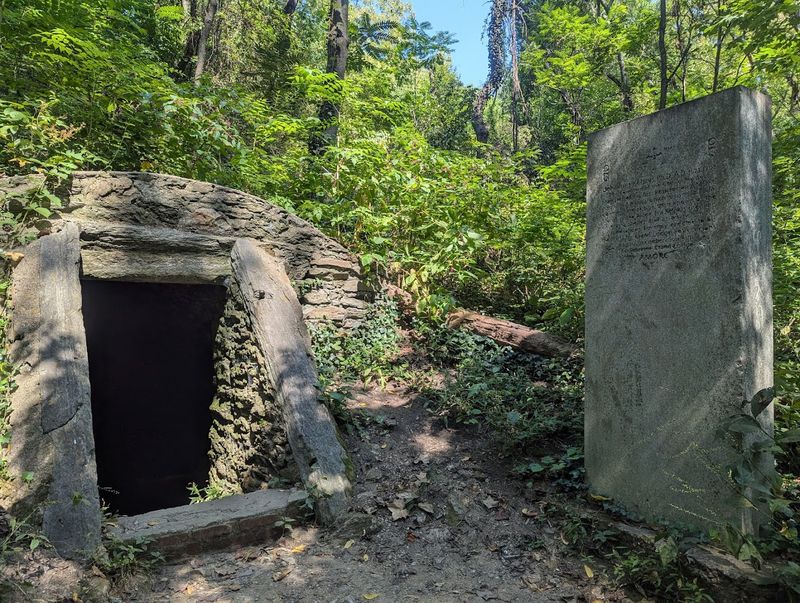
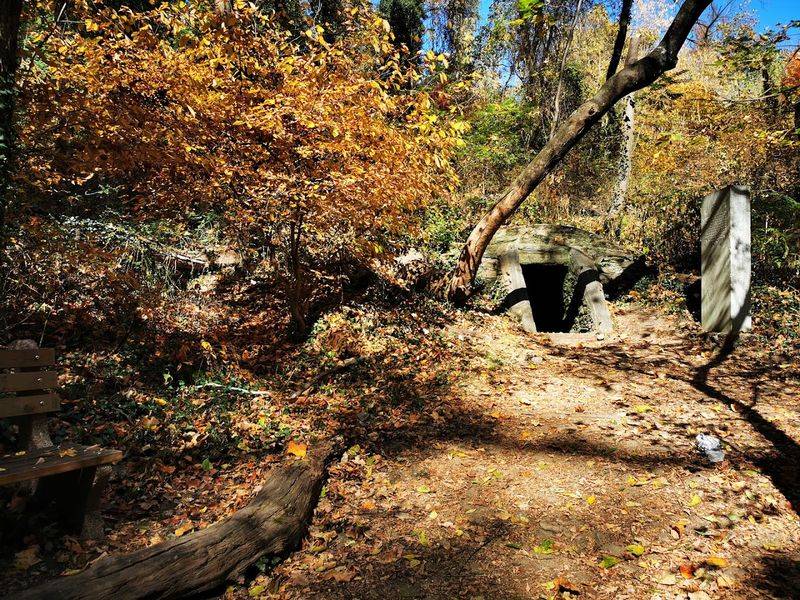
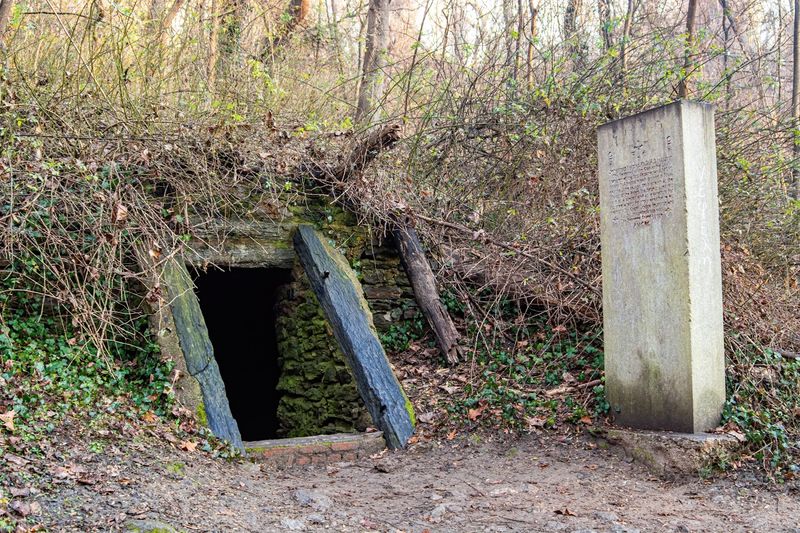
If you’re picturing a dramatic underground cavern with stalactites and winding tunnels, you might want to adjust your expectations before heading up the hill. Kelpius Cave is more accurately described as a small stone chamber dug into the side of a rocky hillside.
It’s roughly the size of a small bedroom — dark, damp, and surprisingly atmospheric given its compact dimensions.
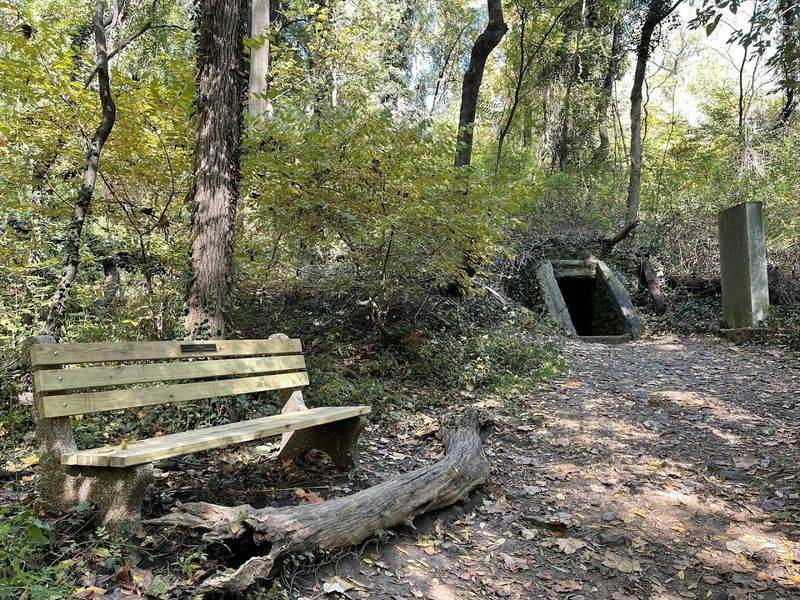
The structure is partially natural and partially man-made, with stone walls that have held up remarkably well over the centuries. A wooden door or gate typically marks the entrance, and a stone plaque nearby provides basic historical context for visitors who want to understand what they’re looking at.
The interior is dim and earthy, and on humid days, moisture clings to the walls, giving it a genuinely cave-like feel.
One reviewer described it perfectly as “a very dark, wet, historic hole in the ground” — which sounds underwhelming until you remember who used it and why. Kelpius reportedly retreated here for long periods of solitary meditation and prayer, seeking a direct connection with the divine.
Standing inside the same small space where a 17th-century mystic once waited for the end of the world is a genuinely eerie and memorable experience.
The Hike to Get There — What to Expect on the Trail
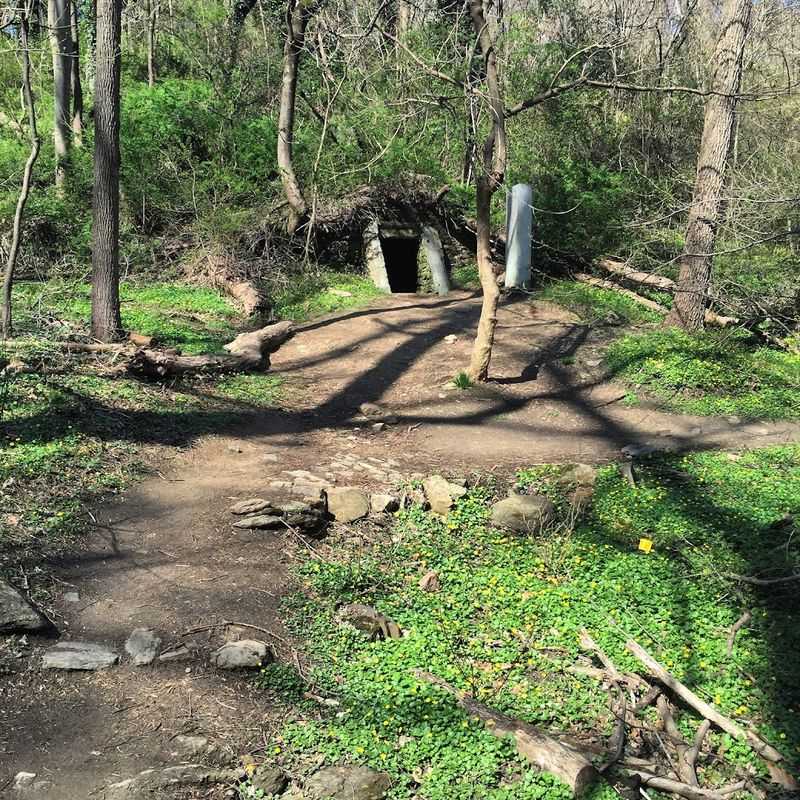
Getting to Kelpius Cave is half the fun. The cave sits within Wissahickon Valley Park, one of Philadelphia’s most beloved natural spaces, and reaching it requires a short but rewarding hike through some genuinely beautiful forest terrain.
Most visitors access the trail from Hermit Lane, located at 777 Hermit Lane, Philadelphia, PA 19128, where limited street parking is available.
The hike itself is not very long — most people reach the cave within 10 to 15 minutes from the main road, depending on which trail you take. The path winds through dense woodland, crosses near a seasonal creek bed, and climbs a modest hill before revealing the cave entrance tucked into the rocky slope.
Trail markers help guide the way, though some visitors note it can be a little tricky to find on your first visit.
The surrounding park is genuinely stunning, especially in fall when the leaves turn gold and orange. Wissahickon Valley offers miles of additional trails for those who want to extend their adventure after visiting the cave.
Bikers, joggers, and dog walkers share the paths, making it a lively and welcoming outdoor space. Wear comfortable shoes with good grip, since the terrain near the cave can be uneven and sometimes slippery after rain.
The Mystical and Spiritual Atmosphere Visitors Still Feel Today
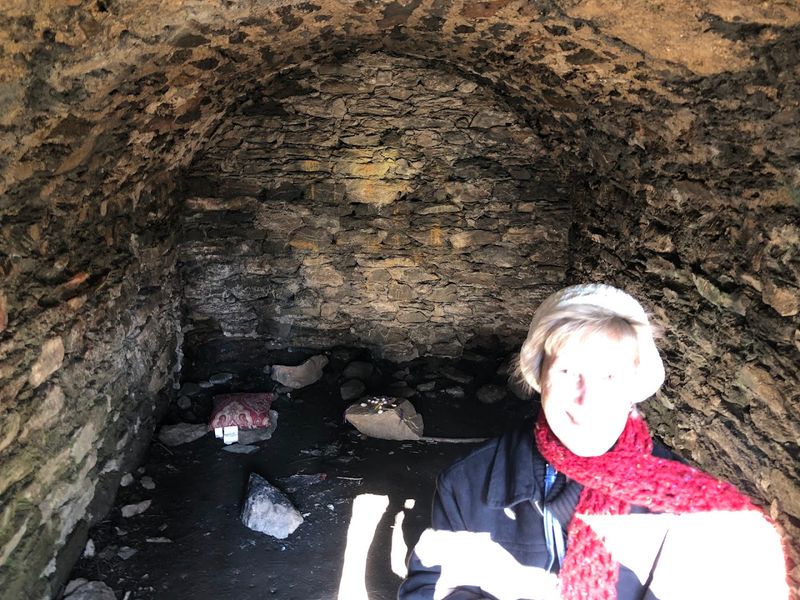
Something about Kelpius Cave seems to linger with people long after they leave. Scroll through the visitor reviews and you’ll find words like “mystical,” “inspiring,” “eerie,” and “synchronistic” appearing again and again.
One visitor wrote that they hadn’t even planned to find the cave — they stumbled upon it unexpectedly and felt it was a meaningful moment, almost like fate had guided them there.
That kind of reaction makes sense when you consider the history. This is a place where people once came specifically to seek spiritual connection, to meditate in isolation, and to watch for signs from the heavens.
That energy — whether you believe in it literally or simply appreciate it metaphorically — seems baked into the stone itself. The quiet of the surrounding forest only deepens the effect.
Visitors of all backgrounds, from curious history lovers to practicing spiritual seekers, report feeling something unique at this spot. It’s not flashy or dramatic.
There are no special effects or tour guides with microphones. Just a mossy rock chamber in the woods, humming with centuries of strange and sincere human longing.
If you’re the kind of person who appreciates places where history and mystery overlap, Kelpius Cave will not disappoint you.
How to Find Kelpius Cave — Practical Visitor Tips
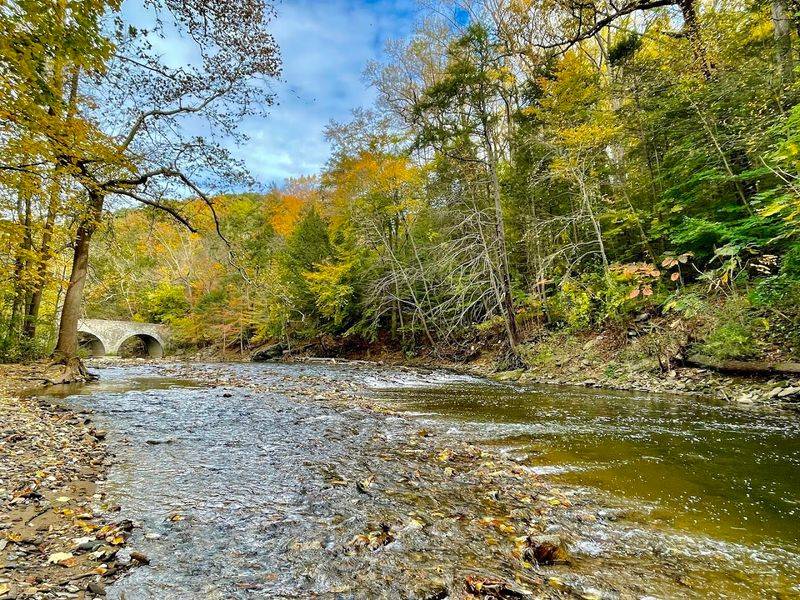
Planning a visit to Kelpius Cave is straightforward, but a little preparation goes a long way. The cave is located within Wissahickon Valley Park, and the most commonly used starting point is Hermit Lane in the Roxborough neighborhood of Philadelphia.
Plug 777 Hermit Lane, Philadelphia, PA 19128 into your GPS and you’ll be pointed in the right direction. Street parking is available on Hermit Lane, but be aware that car break-ins have been reported in the area — take all valuables with you on the trail.
The park is open daily from 9 AM to 8 PM, so early mornings and late afternoons are great times to visit if you want a quieter experience. The hike to the cave takes roughly 10 to 15 minutes at a relaxed pace.
Look for trail markers along the way, and keep an eye out for the stone plaque near the cave entrance, which gives a helpful overview of the site’s history.
Wear sturdy footwear since the terrain near the cave is rocky and can be muddy after rain. Bring water, especially in warmer months.
Cell service can be spotty in the valley, so consider downloading a trail map before you go. The Friends of the Wissahickon organization also offers guided hikes that include the cave as a stop.
Why Kelpius Cave Deserves More Recognition in American History
Most Americans learn about the Pilgrims and the Puritans when studying early colonial religious history, but the story of Johannes Kelpius and his followers rarely makes it into textbooks. That’s a genuine shame, because their arrival in Pennsylvania in 1694 represents one of the most unusual and thought-provoking chapters in early American life.
They were among the first organized religious communities in the colonies to blend scientific inquiry with spiritual devotion.
Kelpius’s hymns are considered some of the earliest pieces of composed music in American history. His writings on mysticism, though obscure, influenced later generations of American spiritual thinkers.
The group’s commitment to community service, religious tolerance, and personal spiritual discipline was remarkably progressive for the 17th century. And yet, their story remains largely unknown outside of Philadelphia history circles.
Kelpius Cave, rated 4.5 stars by visitors on Google with over 200 reviews, is proof that people respond powerfully to this story once they encounter it. Many reviewers say they came expecting little and left genuinely moved.
The cave itself may be small, but the ideas it represents — about faith, fear, community, and the human longing for meaning — are anything but small. A visit here is a reminder that American history is far stranger and richer than most people realize.
Why Wissahickon Valley Park Is Worth Exploring Beyond the Cave
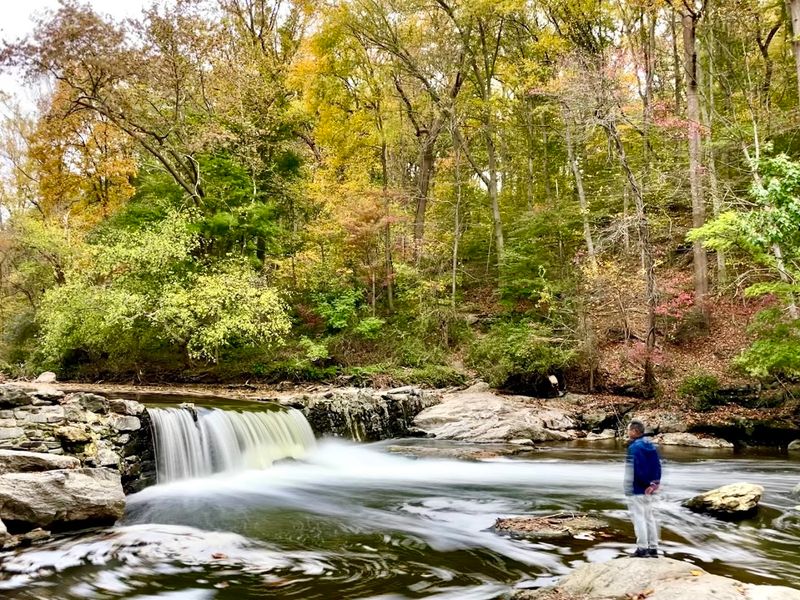
Kelpius Cave is the headliner, but Wissahickon Valley Park deserves serious credit as a destination all on its own. Stretching nearly 1,800 acres inside Philadelphia city limits, it offers over 50 miles of trails winding through dense forest, past creek crossings and old stone bridges.
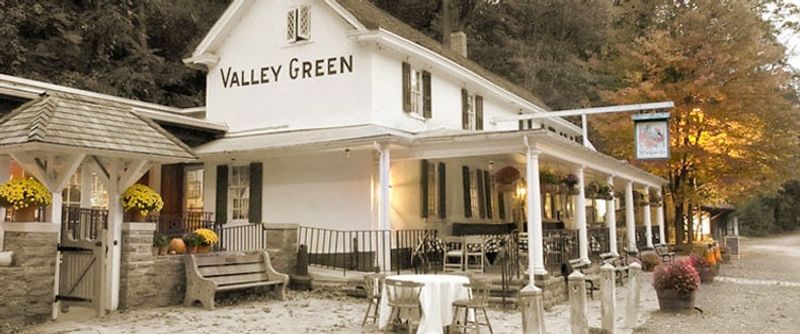
Valley Green Inn, a historic restaurant sitting right along the creek, has been serving visitors since the 1850s. You can grab a meal there after your hike — which feels almost surreal given how deep into nature the park feels.
Pack comfortable shoes, bring water, and give yourself at least two hours to properly soak everything in.
The Legacy of Kelpius in Local Folklore and Philadelphia Memory
Some historical figures fade quietly into textbooks, but Kelpius never quite disappeared from Philadelphia’s imagination. Local legends claim his ghost still wanders the Wissahickon gorge on foggy evenings, and stories of buried mystical artifacts have circulated for centuries.
One persistent tale suggests the Chapter of Perfection buried a mysterious box containing powerful sacred objects near the creek before the group dissolved.
Whether true or not, these stories kept Kelpius alive in the city’s memory long after his death in 1708. Philadelphia historians and paranormal enthusiasts alike have written about him for generations.
He occupies a unique space — part historical figure, part folk legend — and that combination is exactly what makes him so unforgettable to anyone who stumbles across his story.
Other Hidden Gems Along the Wissahickon — Extending Your Visit Beyond the Cave
Once you have visited the cave, there is genuinely no reason to rush back to your car. Wissahickon Valley Park stretches for miles and hides an impressive collection of historic surprises.
Valley Green Inn, a charming 19th-century restaurant sitting right on the creek, is just a short walk away and makes a perfect stop for lunch after your hike.
Lovers Leap overlook offers sweeping views of the gorge that feel almost unreal for a major American city. Covered bridges, old mill ruins, and carved Native American figures tucked along the trail reward curious walkers who slow down and look carefully.
Treat the whole park as an outdoor museum — the cave is just the opening exhibit.