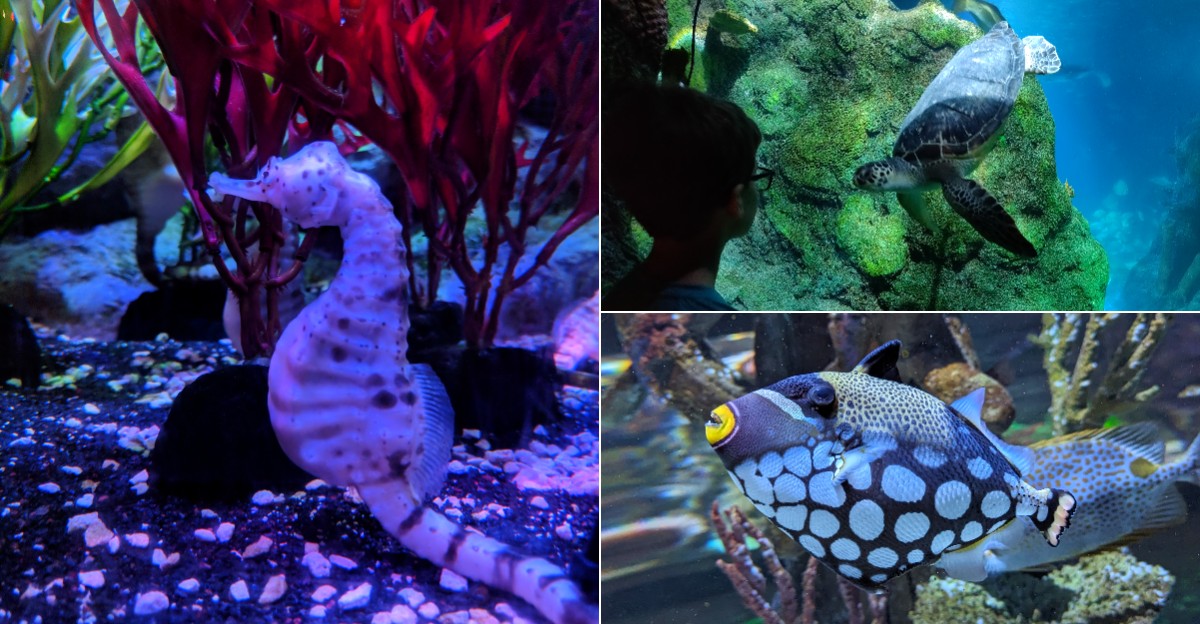
Blue light ripples across the walls as sharks and rays glide silently above your head.
SEA LIFE Charlotte-Concord sits inside Concord Mills in Concord, North Carolina, just outside Charlotte.
Its ocean tunnel lets families walk right beneath the water for an up-close look at marine life.
Colorful exhibits showcase everything from tiny seahorses and jellyfish to curious octopuses and schools of tropical fish.
Because it is indoors, it makes a perfect rainy-day or hot-summer outing, and it pairs easily with a day of shopping.
Book tickets ahead on busy weekends, bring your camera, and get ready for plenty of oohs and aahs.
Walk Beneath the Sharks
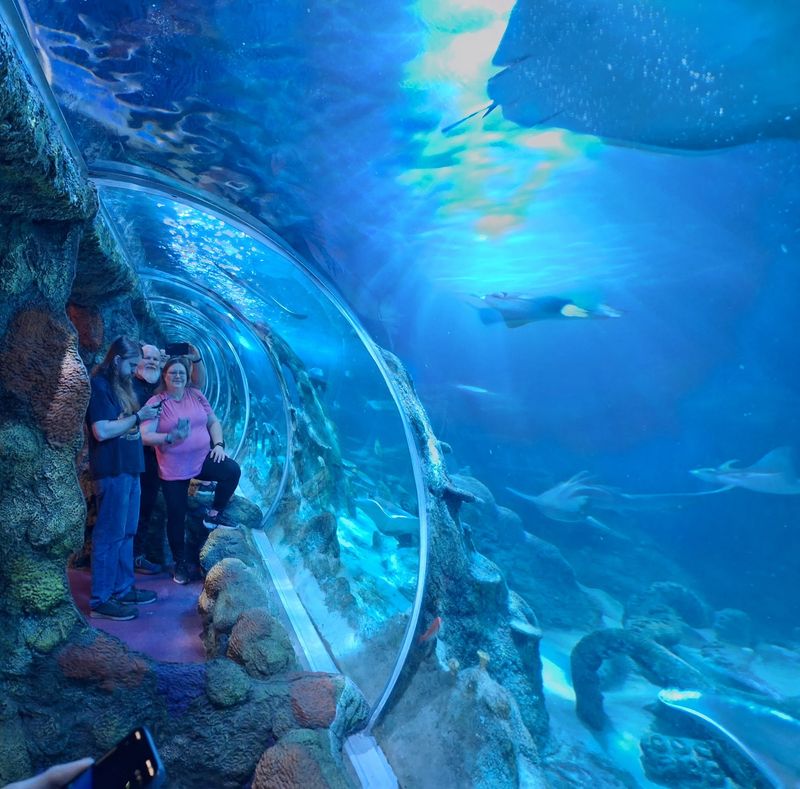
A shadow crosses the glass above you, and suddenly everyone stops walking. The underwater tunnel is the moment many visitors come to see: sharks can swim over your head while other animals pass along the sides. At SEA LIFE Charlotte-Concord, the curved viewing area makes it easier to notice how a shark moves through the water.
Look for the steady motion of its tail and the way its body turns without making a splash. Give yourself time to stand still rather than rushing through for a quick photo. An animal that was out of sight a minute ago may circle back into view.
The tunnel can feel snug when several groups enter together, so let others pass if you want a longer look. Keep small children close and remind them to watch where they step while looking up. For photos, hold your phone near the glass without pressing against it, and turn off the flash if asked.
Adults can make the visit more interesting by asking kids to compare the shapes of different fish. Which animals glide, and which ones dart away? Those small observations turn an exciting shark sighting into a simple lesson about life underwater.
Spot a Sea Turtle in the Big Tank
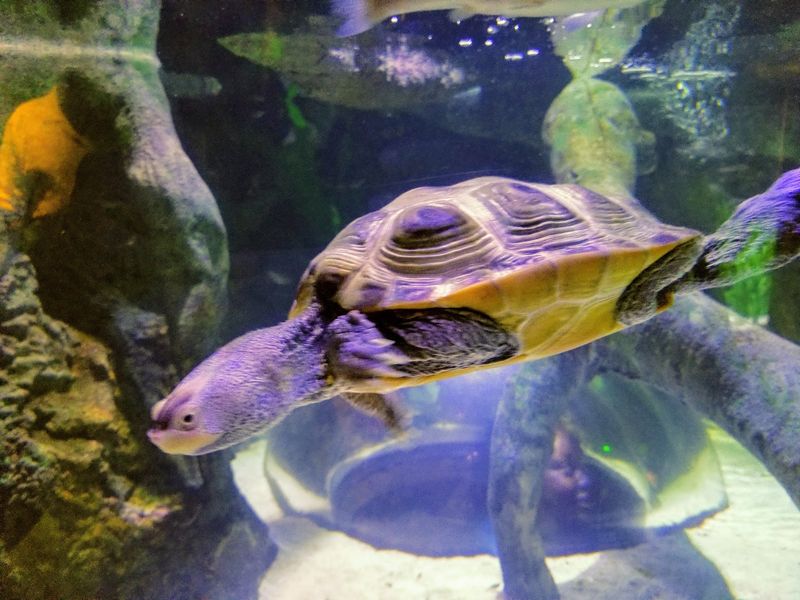
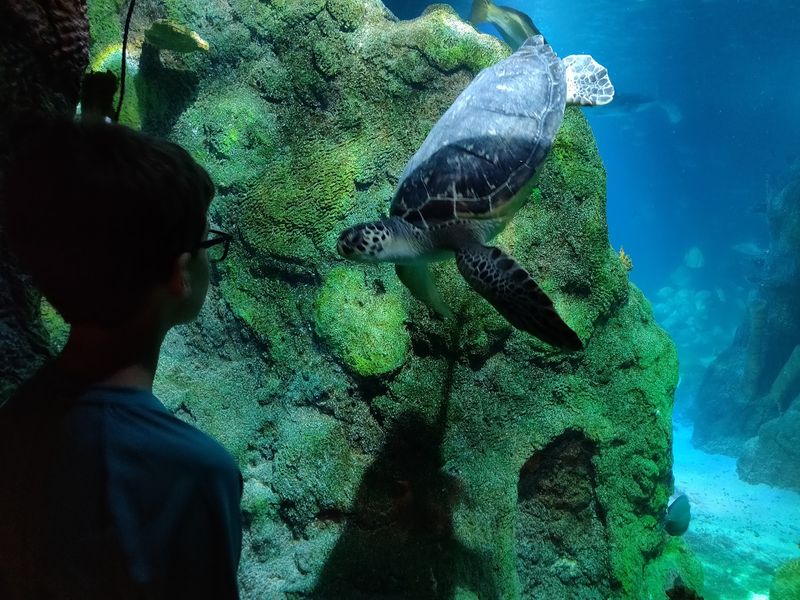
A sea turtle brings a slower rhythm to the big tank. While fish flick past in quick groups, the turtle may move across the water with broad, measured strokes. Visitors have reported seeing a green sea turtle here, making it a good animal to look for before and after walking through the tunnel.
Watch its front flippers for a moment. They work more like wings than the small fins you might expect on a fish. Then look at how the turtle rises and changes direction.
Finding it may take patience because animals choose where to swim. If you cannot see it right away, step aside for another family and try again later. A second pass through a viewing area can reveal something you missed the first time.
For children, a turtle sighting opens up easy questions about habitats. What does a turtle need that a fish does not? How is its shell different from the scales or smooth skin on nearby animals?
Read the exhibit signs for details about the animals on display, and ask a staff member if you are unsure what you have spotted. Seeing one animal clearly often teaches more than trying to count every creature in the tank.
Watch Stingrays Sweep Past
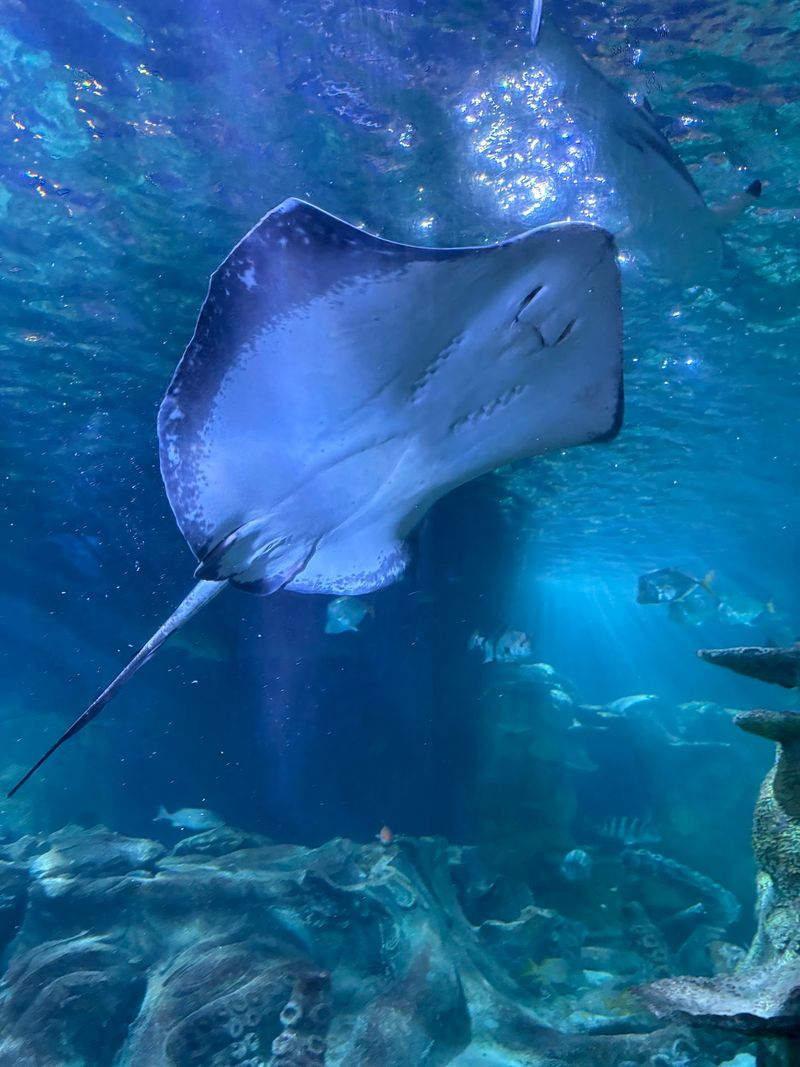
One broad shape seems to fly past the glass instead of swimming through it. That is part of the fun of watching stingrays. Their wide fins ripple through the water, giving them a look that stands apart from the quick, tail-driven motion of many fish.
Visitors have mentioned seeing stingrays among the aquarium’s sea creatures. When you find one, follow it with your eyes instead of chasing it from window to window. You may notice that its underside looks different from the top as it turns.
Children often enjoy comparing a ray with a shark in the same visit. Both can appear to glide, yet their bodies have very different shapes. Ask a child to describe each animal using a few simple words, such as wide, pointed, smooth, or flat.
A quieter viewing spot can help, especially if the glass is busy with other visitors. Take turns near the front so everyone gets a clear view. If an animal moves away, use the pause to read a sign or look for another creature nearby.
No sighting follows a set schedule, and that makes watching more interesting. A slow minute can become the best part of the visit when a ray turns toward the window.
Try the Touch Pool Carefully
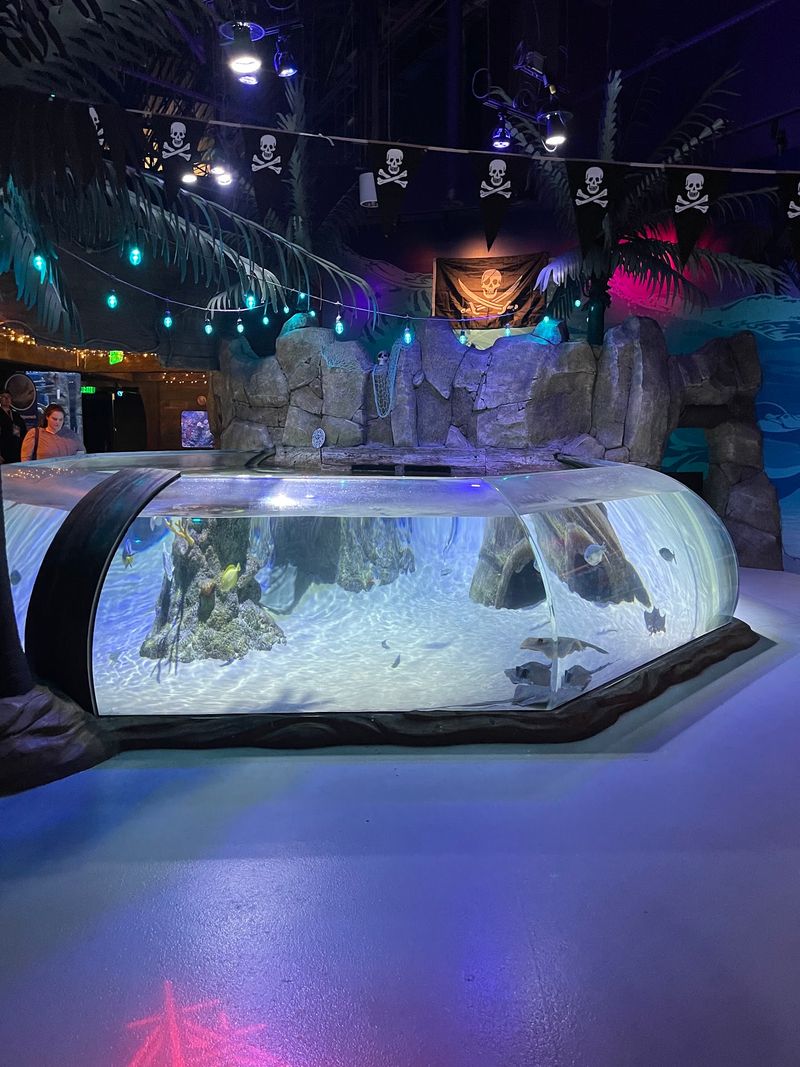
Seeing a sea star behind glass is fun, but a touch pool offers a different way to learn. Visitors have described a hands-on area with sea stars and helpful staff nearby. The experience can make familiar words like rough, firm, and bumpy feel much more real to a curious child.
Before anyone reaches into the water, read the posted rules and listen to the staff member. Some animals can be touched only in certain ways, and gentle hands help keep them safe. Ask which creatures are available to touch that day rather than assuming every animal in the pool is included.
Give younger children a simple job: use one or two fingers, move slowly, and keep the animal in the water. If a child feels unsure, watching is fine too. There is no need to turn a calm learning moment into a challenge.
Afterward, talk about how the animal felt and what its body might help it do. That short conversation gives the activity a purpose beyond checking it off a list. Follow any hand-cleaning directions before moving to the next exhibit.
The touch pool is also a good place to ask questions. Staff members can explain what you are seeing and help children treat living animals with care.
Find the Smaller Surprises
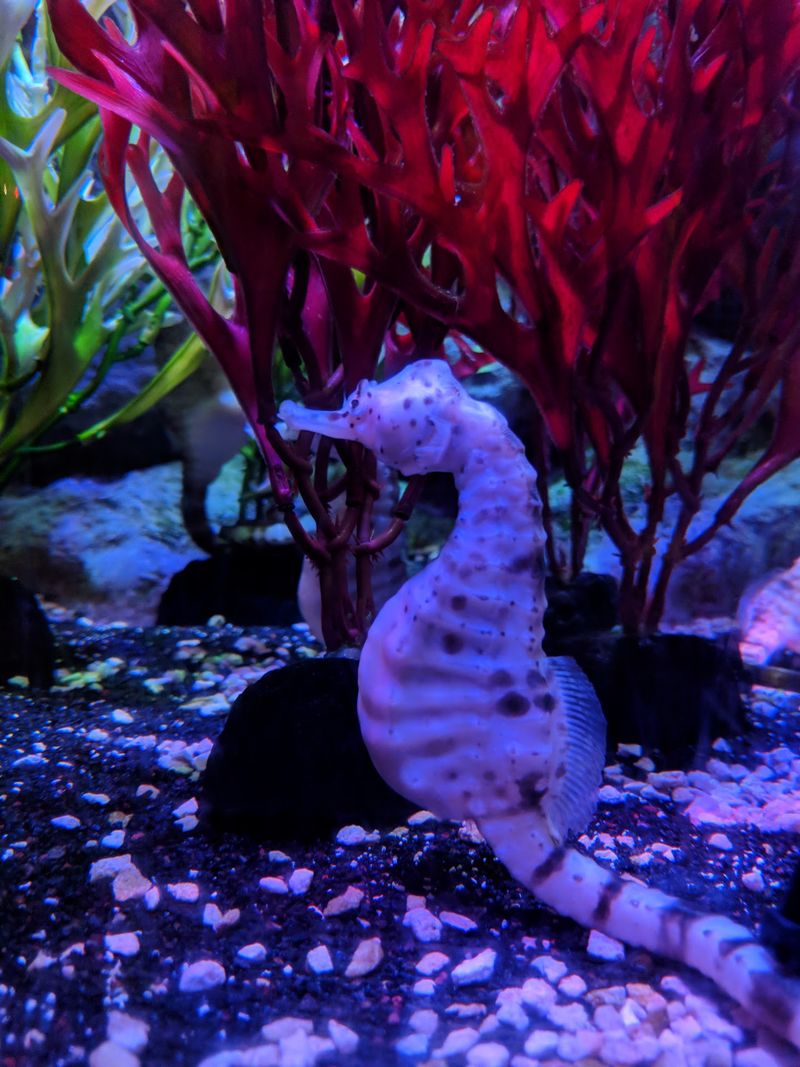
The biggest tank does not hold every memorable moment. A small viewing nook can bring you close to an eel, while another display might draw your eye to tiny fish you nearly walked past. Visitors have described a hidden-feeling tunnel near a moray eel and carefully themed habitats throughout the aquarium.
Slow down when the path bends or a display sits lower than eye level. Some views are designed for children, so adults may need to crouch to see what a young visitor sees. Look behind rocks and among plants before deciding a tank is empty.
Moray eels can be especially interesting to watch because their faces look so different from those of most fish. If you spot one, notice where it rests and how much of its body you can see. Do not tap on the glass to make it move.
Give each person in your group a turn choosing an animal that others should find. It turns a simple walk into a friendly search without needing extra equipment. Small details in the habitat can help start conversations about shelter and safety.
Taking your time also suits the size of this aquarium. There is no prize for finishing quickly, and a second look may reveal your favorite animal.
Make Time for Kid-Friendly Activities
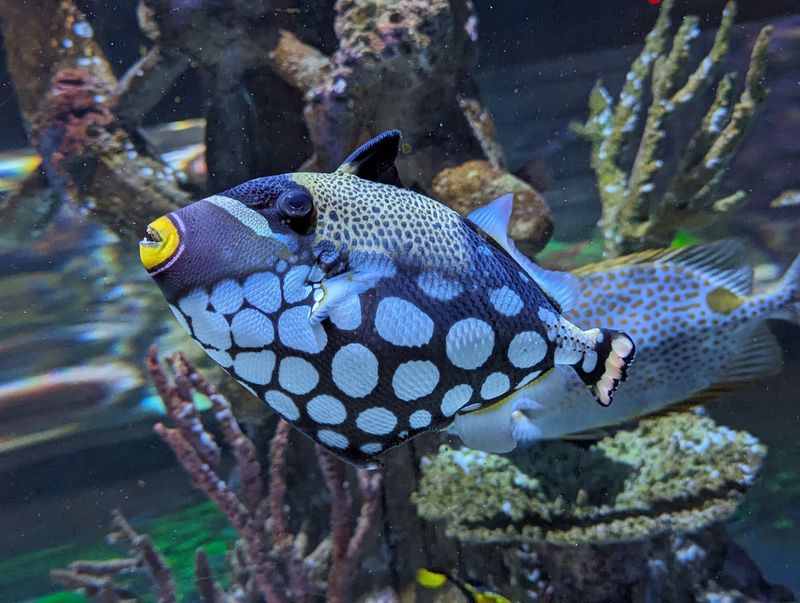
A child who has watched fish for half an hour may be ready to do something with their hands. Along with animal displays, visitors have reported play areas and activities such as drawing a fish and watching it appear on a screen. Those breaks can help younger guests stay interested without hurrying them through the exhibits.
Let children choose one activity that catches their attention. They may remember the fish they drew as clearly as the shark they saw overhead. When they finish, ask what colors or features they gave their fish and whether they noticed anything similar in a real tank.
Interactive displays also offer a helpful pause for families with different interests. One person can read an exhibit sign while another spends a little longer with an activity. Agree on a nearby meeting point before anyone separates, and keep young children within sight.
Activities may change, so treat past visitor reports as examples rather than a promise of what will be available. Check the current offerings when you arrive. If a station is crowded, return to it later instead of waiting in a tight group.
A relaxed pace gives children room to ask their own questions. Often, that curiosity is where the best learning begins.
Ask About a Behind-the-Scenes Tour
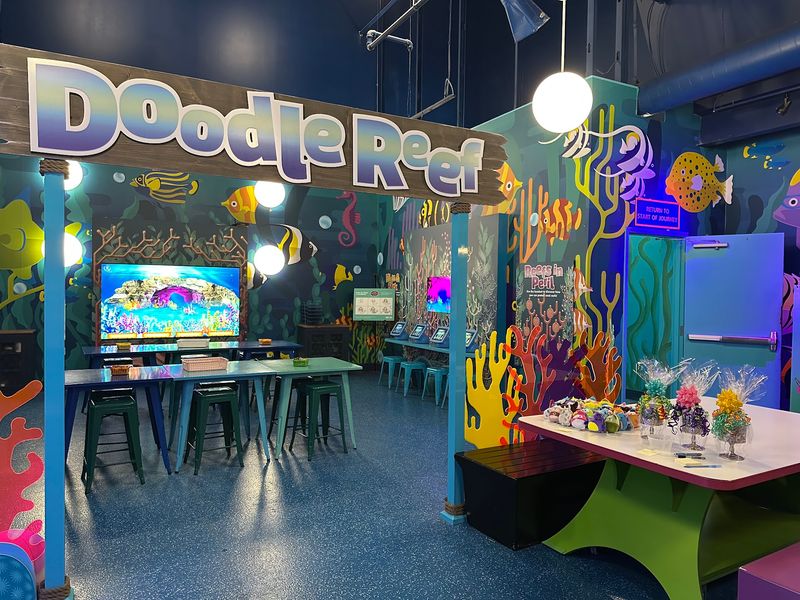
What happens on the other side of an aquarium window? A behind-the-scenes tour may answer questions that the main exhibits leave open. Visitors who took one have described guides explaining the aquarium and responding to questions from both adults and children.
Ask about current tour availability before planning your day around it. Tours may have separate tickets, limited spaces, or schedules that change. Checking the official website or speaking with staff can save your group from a last-minute disappointment.
If you join a tour, bring one question you genuinely want answered. You could ask how staff care for the animals, what different creatures eat, or how they keep the water suitable for each habitat. Listen closely, because the answer may change how you see the tanks afterward.
This option can appeal to older children who want more than a quick look at colorful fish. Younger visitors may enjoy it too, but consider whether they are comfortable standing and listening for a while. Follow the guide’s directions in any areas outside the usual visitor route.
A tour is not required for a good visit. Still, for a family eager to understand the work behind each display, it can add another layer to the experience.
Plan a Comfortable Visit
A little planning helps the shark tunnel feel exciting instead of rushed. The aquarium is at 8111 Concord Mills Boulevard, Concord, NC 28027, inside Concord Mills. Because it is a compact attraction, many visitors find that a thoughtful walk through the exhibits works better than expecting a full-day aquarium trip.
Check the official website for current hours, ticket prices, entry times, and any special activities before you leave home. Online tickets may offer savings, but prices and offers can change. If your family wants a tour or another add-on, check its details separately.
Allow time to pause at favorite tanks rather than judging the visit only by how long the route takes. Some guests move through quickly, while others spend an hour or more reading signs and talking with staff. A rainy day can bring more visitors, so patience near the tunnel and touch pool helps everyone enjoy them.
Families bringing a stroller should know that some viewing areas can feel tight. Visitors have mentioned a stroller parking area, but ask staff about the best option when you arrive. Wear comfortable shoes and set an easy meeting plan for your group.
Before heading out, invite everyone to name one animal they hope to see. That small goal can make the first exhibit even more fun.