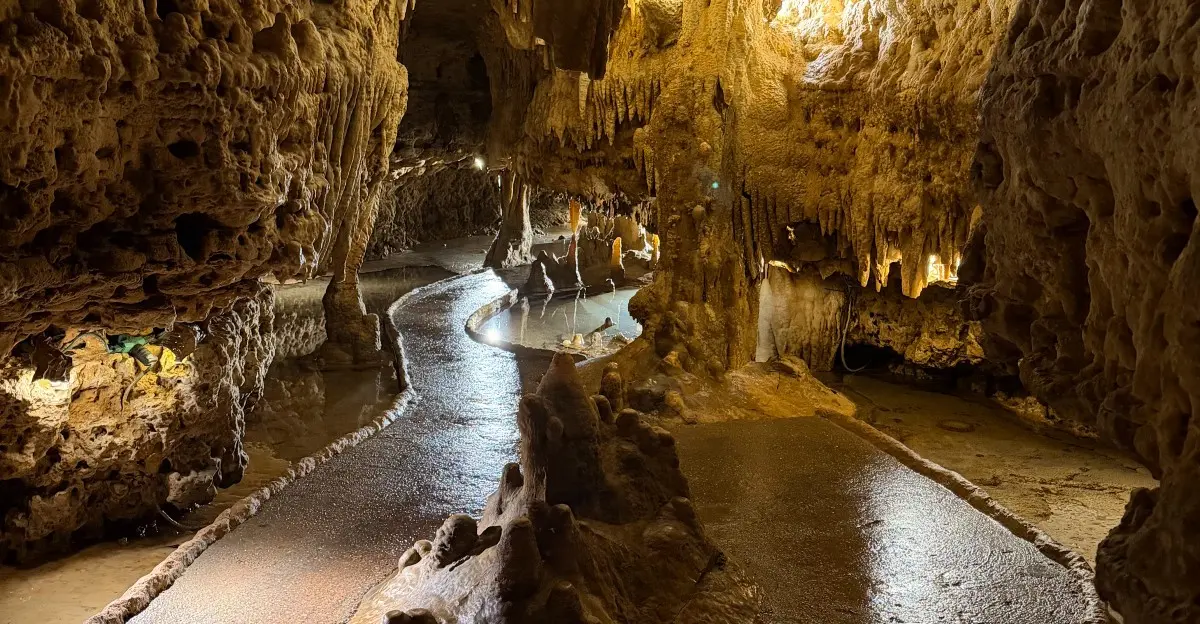
Beneath a quiet Wisconsin hillside, an underground adventure is waiting.
Cave of the Mounds in Blue Mounds takes you far below the fields into a world shaped by water, time, and limestone.
Stalactites, stalagmites, crystal formations, and winding passages make every turn feel like a discovery.
The story gets even better: this hidden cave was found by accident in 1939 when quarry workers blasted into the rock.
What they uncovered became one of Wisconsin’s most fascinating natural attractions.
Inside, temperatures hover around 50 degrees year-round, offering a welcome break from summer heat and winter chill.
Follow the winding pathways, gaze at formations that took thousands of years to form, and imagine the underground streams that helped carve this remarkable place.
If you love exploring places that feel completely different from the world above, this Wisconsin cave deserves a spot on your list.
A Cave Hidden Beneath Wisconsin Farmland
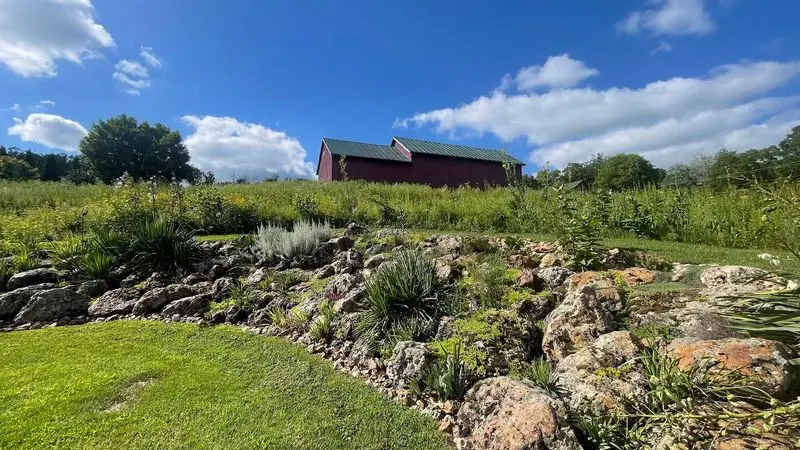
Imagine walking across an ordinary Wisconsin farm and never knowing that a massive underground world exists right beneath your feet. That’s exactly what happened for decades on the former Brigham Farm near Blue Mounds.
The land looked like any other dairy farm in southern Wisconsin, with its gently rolling hills and limestone outcroppings.
Workers had been quarrying limestone from the property for years without any hint of what lay below. The cave had remained completely hidden for thousands of years, sealed off from the surface world.
Nobody suspected that spectacular rock formations were developing in absolute darkness just beneath the soil.
When quarry workers accidentally blasted into the cavern on August 4, 1939, they discovered something truly remarkable. The limestone they had been cutting for building materials concealed a natural treasure that would soon become one of Wisconsin’s most popular attractions.
What started as an ordinary workday turned into a discovery that would change the landscape of Blue Mounds tourism forever.
Water Slowly Carved This Underground World
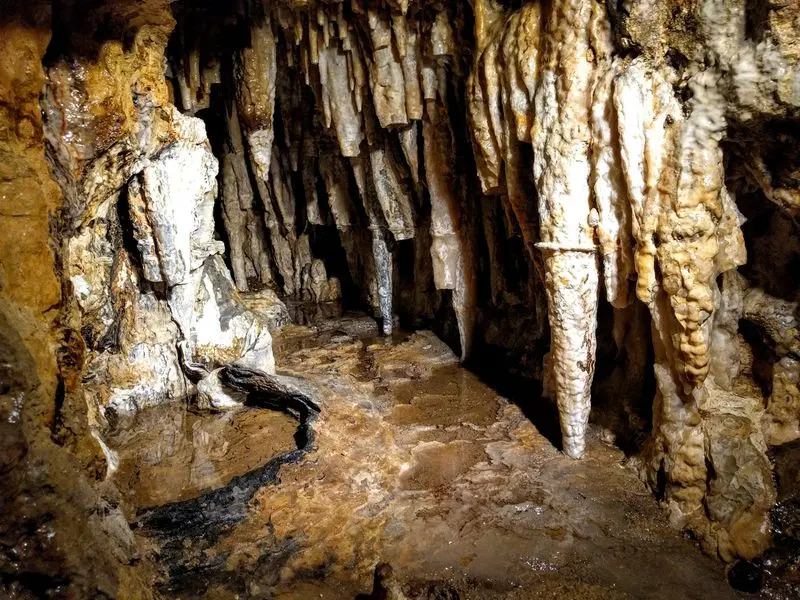
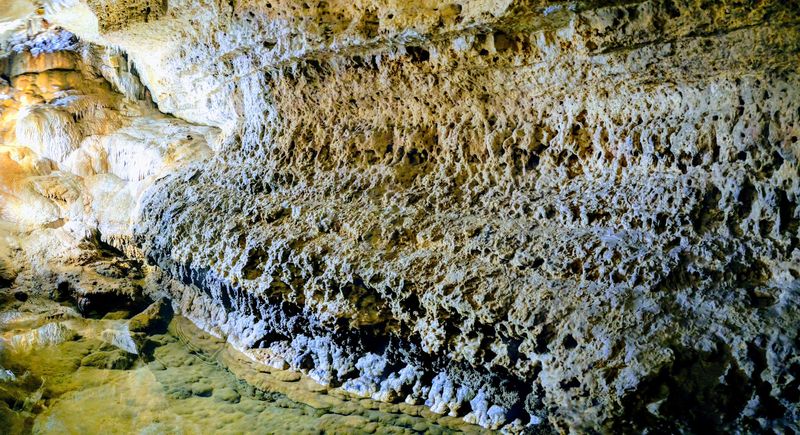
Water is the ultimate sculptor when it comes to creating caves. Over hundreds of thousands of years, slightly acidic groundwater seeped through cracks in the limestone beneath Blue Mounds.
This water picked up carbon dioxide from the soil and air, which made it even better at dissolving the rock.
The process happened incredibly slowly, molecule by molecule. As water flowed through the stone, it created tiny passages that gradually widened into larger tunnels and chambers.
Eventually, these underground streams carved out the beautiful cave system that visitors walk through today.
But the relationship between water and rock didn’t stop once the cave formed. Water continued to drip from the ceiling and trickle along the walls, bringing dissolved minerals with it.
When water evaporates or releases carbon dioxide, those minerals get left behind. Over immense stretches of time, these mineral deposits built up into the stunning formations that make Cave of the Mounds so special, creating a landscape that continues to change even now.
Follow The Underground Passageways
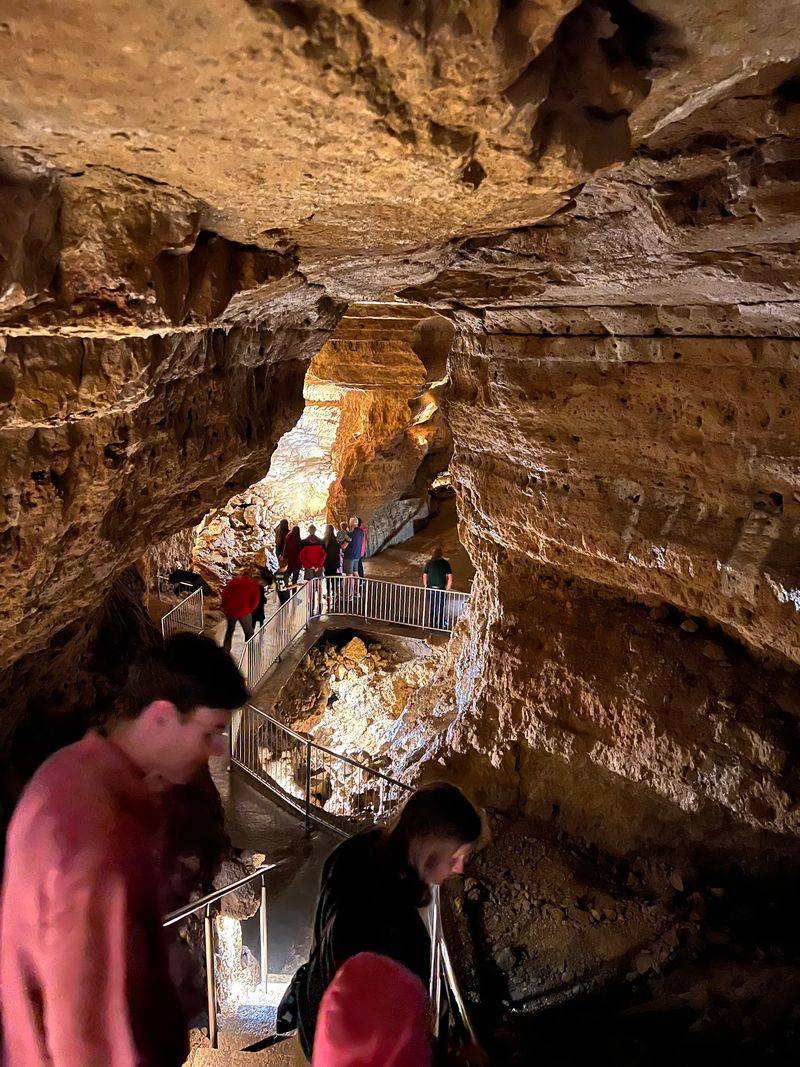
Your underground journey covers about 0.6 miles of paved pathways that wind through the cave’s chambers. The trails are well-lit, making it easy to see the formations and watch your step.
Walking at a comfortable pace with stops for explanations, most tours last between 45 minutes and an hour.
Knowledgeable guides accompany every tour group, sharing fascinating details about how the cave formed and what you’re seeing along the way. They point out specific formations, explain the geological processes at work, and share stories about the cave’s discovery and history.
This makes the experience educational and engaging rather than just a walk through dark tunnels.
The pathways take you through various chambers, each with its own character and formations. You’ll climb stairs, duck through lower passages, and enter larger rooms filled with spectacular mineral deposits.
While the cave is accessible to most visitors, it’s important to know that there are seven staircases and some uneven sections, so wheelchairs and walkers cannot be accommodated inside the cave itself.
Look For Stalactites, Stalagmites And Crystal Formations
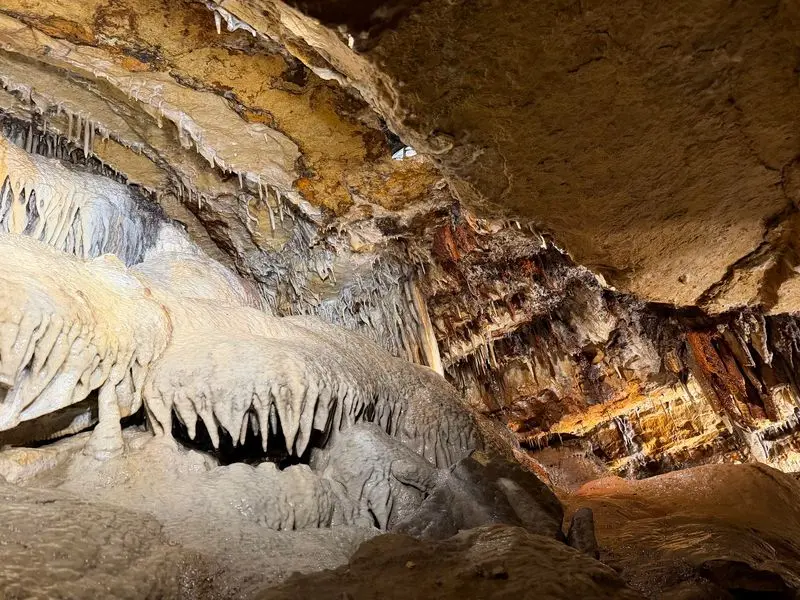
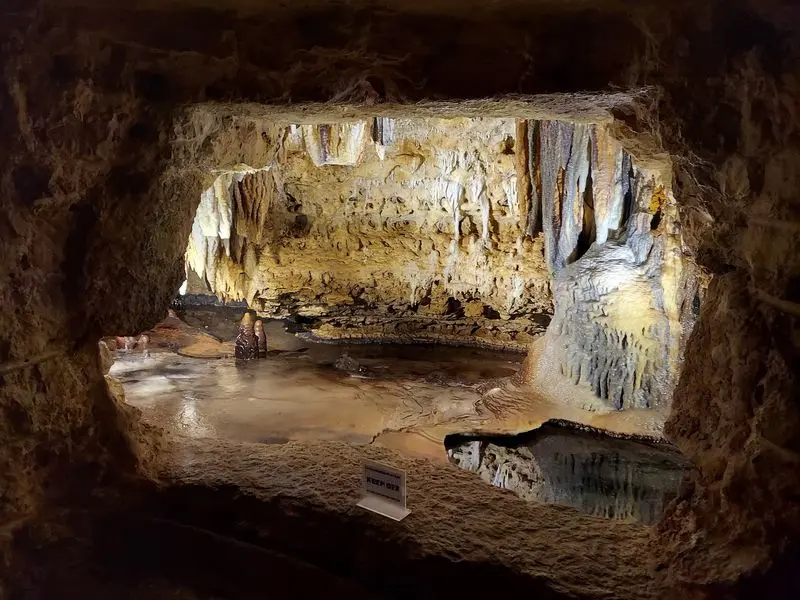
Walking through Cave of the Mounds feels like entering a natural museum filled with incredible rock art. Stalactites hang down from the ceiling like stone icicles, some thin as soda straws and others thick as tree trunks.
Stalagmites grow up from the floor, built drip by drip over thousands of years. Where stalactites and stalagmites meet, they form columns that stretch from floor to ceiling.
The cave is particularly famous for the variety and color of its formations. Minerals like iron oxide create warm oranges and reds, while calcite produces whites and creams.
Some formations look like frozen waterfalls, while others resemble delicate flowers or curtains of stone.
What makes these formations even more special is their age and scientific importance. Cave of the Mounds contains some of the oldest dated cave formations in the entire Midwest region.
Scientists have studied the growth patterns to learn about climate changes over thousands of years, making this cave valuable not just for its beauty but also for the geological history it preserves.
The Cave Stays Around 50 Degrees Year-Round
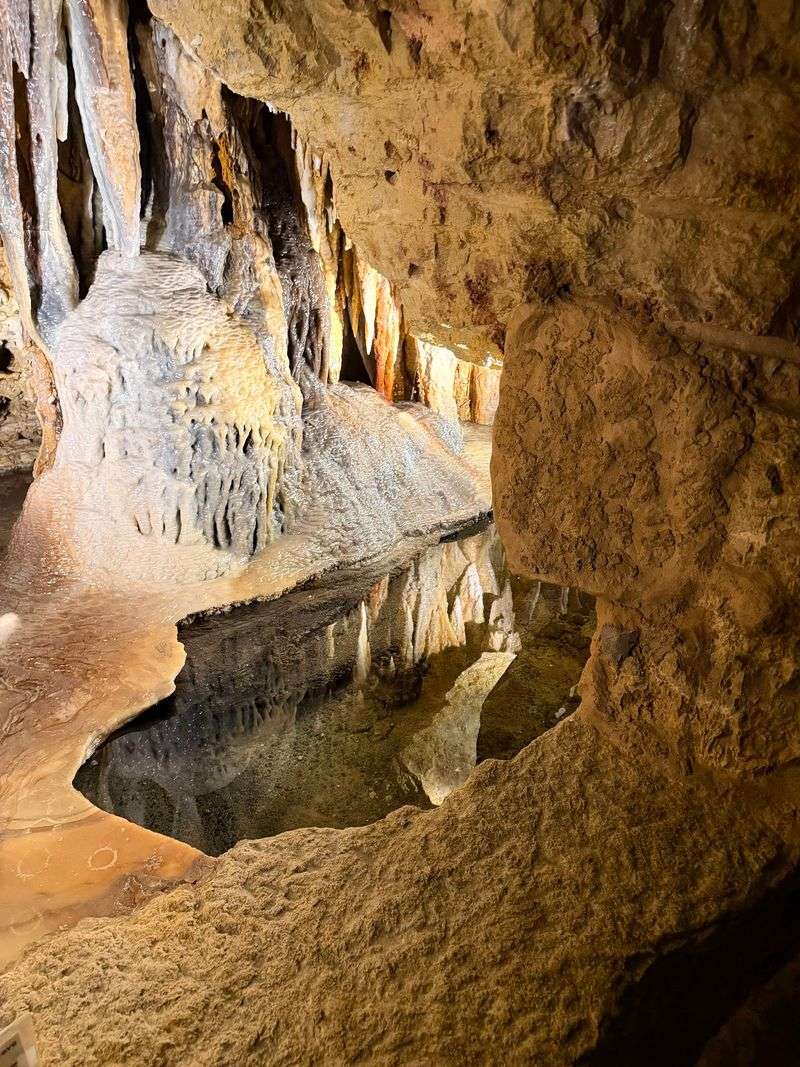
Here’s a detail that makes planning your visit much easier. No matter what the weather is like outside, the temperature inside Cave of the Mounds stays remarkably constant at around 50 degrees Fahrenheit, which is about 10 degrees Celsius.
This happens because the thick layers of rock insulate the cave from surface temperature changes.
On a blazing hot summer day when it’s 90 degrees outside, stepping into the cave feels wonderfully refreshing. The cool, constant temperature provides immediate relief from the heat.
In the dead of winter, when temperatures drop below freezing, the cave actually feels warmer than being outside.
Because of this steady temperature, you’ll want to bring a light jacket or warm layer no matter what time of year you visit. Even if it’s hot and sunny when you arrive, the 50-degree cave temperature can feel chilly after walking through the underground passages for 45 minutes.
Comfortable walking shoes are also important since you’ll be on your feet exploring the paved pathways and climbing stairs throughout the tour.
See A Cave That Was Discovered By Accident In 1939
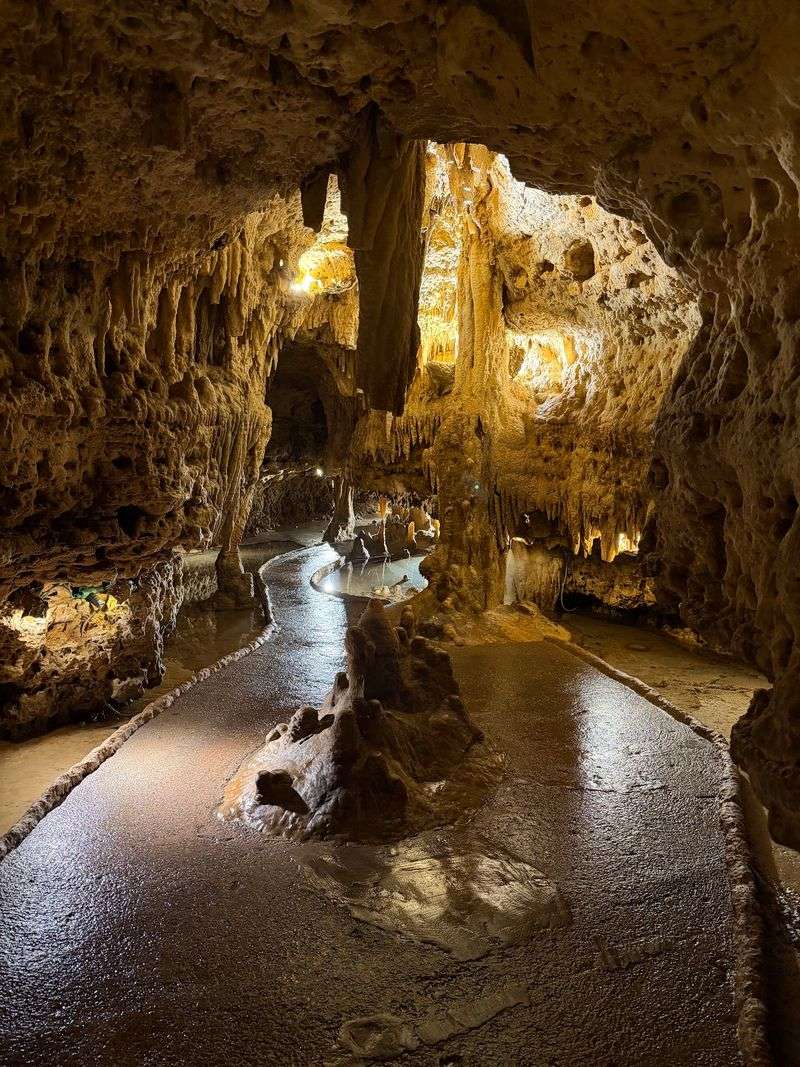
The story of how Cave of the Mounds was discovered reads like an adventure tale. On August 4, 1939, quarry workers were doing their usual job of blasting limestone from the hillside on the Brigham Farm property.
They had drilled several holes and noticed that some went much deeper than expected, which seemed odd but not necessarily alarming.
When they set off the dynamite blast that day, they got more than they bargained for. The explosion opened up a hole that revealed a previously unknown cave system.
Air rushed out of the opening, and the workers realized they had discovered something remarkable hidden beneath the ordinary-looking farmland.
Within just hours, the first brave explorers entered the newly exposed cave with lanterns to see what lay inside. What they found amazed them: beautiful rock formations that had been developing in complete darkness for thousands of years.
The discovery generated immediate excitement in the local community. Less than a year later, paths were built, lights were installed, and Cave of the Mounds opened its doors to the public for guided tours.
Explore More Than Just The Cave
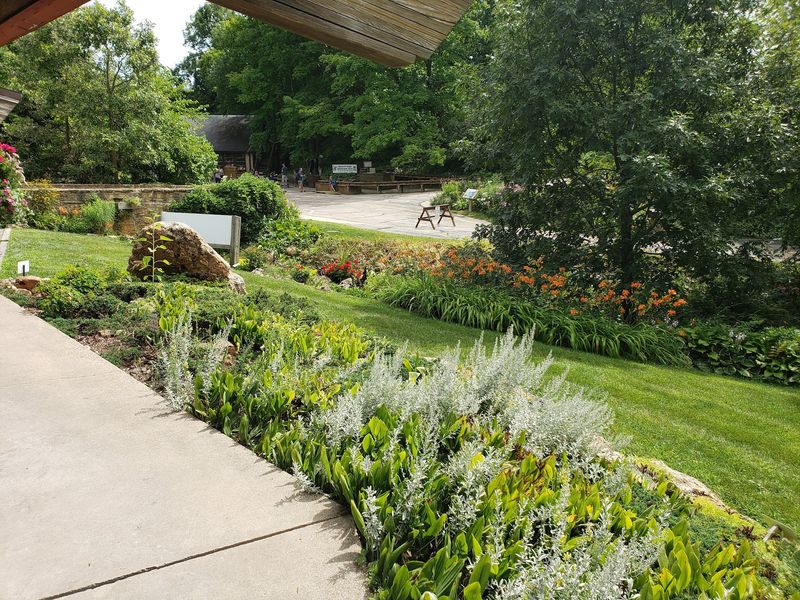
Your adventure doesn’t have to end when you emerge from underground. The Cave of the Mounds property offers plenty of reasons to stick around after your cave tour finishes.
The surrounding land has been developed into an engaging outdoor destination where families can easily spend several hours.
Hiking trails wind through the property, letting you explore the surface landscape that sits above the cave system. Prairie restoration areas showcase native Wisconsin plants and wildflowers, creating beautiful scenery that changes with the seasons.
Gardens offer peaceful spots to relax and enjoy the fresh air after your underground journey.
Kids particularly enjoy the gem sluice, where they can search for real gemstones and minerals in flowing water. Geode cracking is another popular activity that lets visitors crack open real geodes to discover the crystals hidden inside.
These hands-on experiences help children connect with geology in a fun, tangible way. Bringing a picnic lunch or planning extra time to explore these above-ground attractions can turn a simple cave tour into a full day of family entertainment and learning.
This National Natural Landmark Has A Bigger Story
In 1988, Cave of the Mounds received special recognition when it was designated a National Natural Landmark by the National Park Service. This designation is awarded to sites that contain outstanding examples of the nation’s natural history.
Only the most significant geological, ecological, or biological features receive this honor.
The cave earned this recognition because of its exceptional geological importance and the quality of its formations. Scientists value it for research purposes, and it serves as an important educational resource for understanding how caves form and develop over time.
The variety and condition of the formations make it particularly noteworthy.
One important thing to understand is that being a National Natural Landmark doesn’t mean Cave of the Mounds is a national park. It remains privately owned and operated by the family that has managed it since shortly after its discovery.
The landmark designation recognizes the cave’s scientific and geological significance, but visitors should know they’re visiting a privately-run attraction rather than a government-managed park. The family ownership has helped ensure consistent care and preservation of this natural treasure.
Leave The Formations Untouched
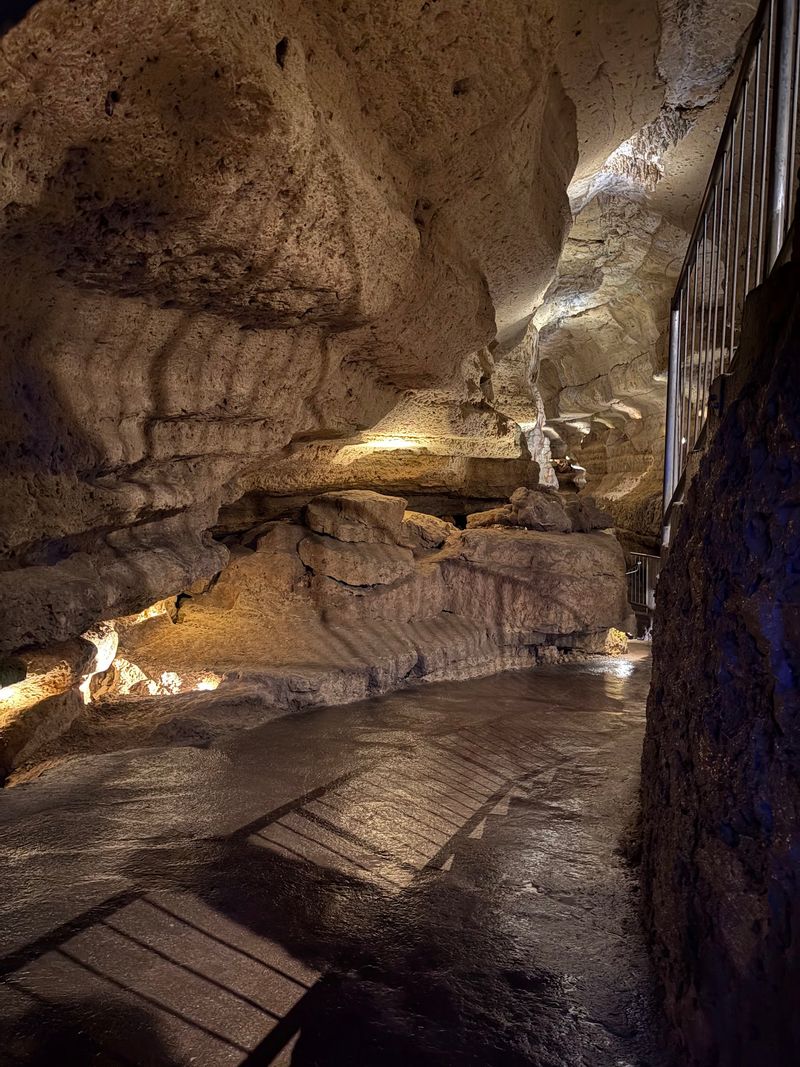
Conservation plays a critical role in preserving Cave of the Mounds for future generations. During your tour, guides will emphasize one simple but crucial rule: don’t touch the cave walls or formations.
This isn’t just about following rules; it’s about protecting something irreplaceable.
When people touch cave formations, the natural oils from human skin transfer onto the rock surface. These oils create a barrier that prevents water from depositing new minerals.
Essentially, touching a formation stops its growth in that spot. Since these formations develop incredibly slowly, over thousands of years, even a single touch can cause damage that persists for generations.
The formations you see today grew at a rate so slow it’s hard to imagine. A stalactite might grow only one inch every hundred years or even slower.
That means some of the larger formations are tens of thousands of years old. By keeping your hands to yourself and respecting the cave environment, you help ensure that these ancient geological wonders remain intact for your children and grandchildren to experience and appreciate just as you did.
Plan Your Visit
Getting ready for your Cave of the Mounds adventure requires a bit of practical planning. The cave is located at 2975 Cave of the Mounds Road in Blue Mounds, Wisconsin 53517.
You can reach them by phone at 608-437-3038 if you have questions before your visit.
The facility generally operates from 9 a.m. to 5 p.m. daily, with the first tours starting at 10 a.m. and the last tour entering one hour before closing time. The cave closes on Thanksgiving, Christmas Eve, and Christmas Day, so plan around those holidays.
Current admission prices are $26.99 for ages 13 and older, $16.99 for ages 4 through 12, and free for children 3 and under.
Remember that the cave maintains a constant 50-degree temperature, so bring that light jacket or sweater regardless of the season. The traditional guided tour takes about 45 minutes to an hour from start to finish.
Because the cave has seven staircases and uneven surfaces, wheelchairs and walkers cannot access the cave interior. After your tour, plan time for hiking, exploring the gardens and prairie, and trying activities like gem mining or geode cracking that add extra enjoyment to your visit.